Sri Lanka FM meets Iranian counterpart amid tea for oil deal starts

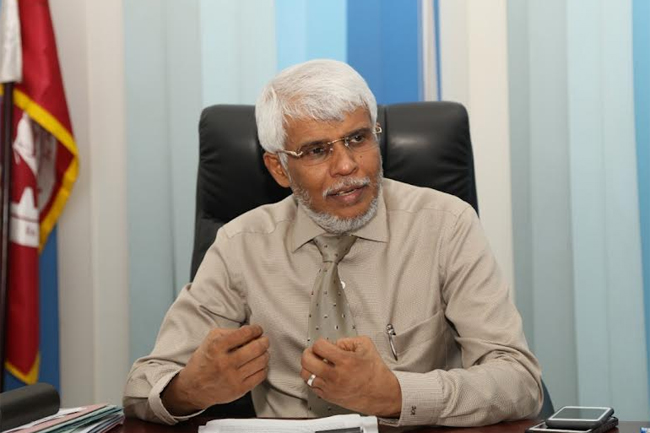
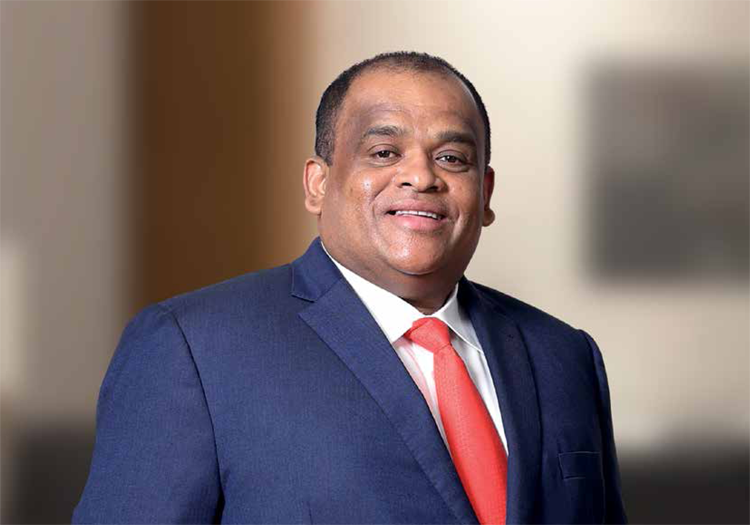
Sri Lanka’s Foreign Minister Ali Sabry met with his Irarian counterpart Hossein Amir-Abdollahian on Saturday (05) and discussed bilateral relations as the island nation is in the process of starting a crude payment through exporting tea to Tehran.

Sri Lanka inked a deal in December 2021 to set off export of tea to Iran against a legacy oil credit owed by state-run Ceylon Petroleum Corporation to the National Iranian Oil Company, without busting US sanctions.

However, the ‘oil for tea’ deal did not materialize until recent months due to some practical difficulties, both Iran and Sri Lankan officials have told EconomyNext.

Sri Lanka owes 4251 million for crude imported before the US imposed sanctions on Iran.

“Glad to meet with Hossein Amir-Abdollahian , the Foreign Minister of Iran at Iran Foreign Ministry in Tehran. We discussed expanding our bilateral interactions as well as on regional and international issues,” Sabry said in his official twitter platform.

Sabry has traveled to Tehran at the invitation of Iran’s Foreign Minister Abdollahian and is scheduled to meet President Ebrahim Raisi and some other senior officials of Iran in his four-day official visit.

The meetings will focus on a new area of bilateral relationship and explore new investments while the sanctions are on, a Sri Lankan Foreign Ministry official told Economy Next.

“Sri Lanka does not want to go against the sanctions, but it wants to have close relations with Iran,” the official said.

India aids Sri Lanka to fund its digital identity project

India has handed over an advance aid of INR 450 million to Sri Lanka to fund its digital identity project, a significant step in its digitalisation programme being implemented through the Indian grant assistance.

Sri Lankan president Ranil Wickremesinghe’s office said that the fund from the Indian government was given on Friday (August 4).

During a meeting at the Presidential Secretariat, key stakeholders, including Presidential Senior Adviser on National Security and Chief of Presidential Staff, Sagala Ratnayaka, State Minister of Technology, Kanaka Herath, Indian High Commissioner, Gopal Bagley, and First Secretary of the Indian High Commission, Eldos Mathew and others engaged in extensive discussions on the project’s execution.

“Signifying the Indian government’s commitment to the initiative, the Indian High Commissioner handed over a significant contribution of Indian Rs 450 million to Minister Kanaka Herath (State Minister of Technology), constituting 15 per cent of the total funds required for the successful implementation of the project as an advance payment,” a statement from the President’s Office said.

Ratnayaka stressed that there should be a well-defined timeline to ensure the project’s seamless execution.

Ratnayaka acknowledged the significance of the project in the economic recovery of the island nation and expressed gratitude to the Indian government for its unwavering support.

“High Commissioner handed over a cheque of INR 450 million to State Minister Hon @kanakadh, in the gracious presence of Hon @SagalaRatnayaka today for SLUDI (Sri Lanka Unique Digital Identity Project) project, which is being implemented through grant assistance by Govt of #India,” the Indian High Commission in Colombo posted on platform X, formerly known as Twitter.

The aim of the project is to collect biographic and biometric information, including facial, iris, and fingerprint data, which will be stored in a centralised system to issue identification cards as per the standards set by the International Civil Aviation Organisation (ICAO).

According to officials, the implementation of the project would lead to more effective and efficient delivery of government services, financial inclusion, poverty reduction.

The project commenced with the signing of a MoU between Sri Lanka and India in March 2022 and an Indo-Sri Lanka Joint Project Monitoring Committee (JPMC) for the Sri Lanka Unique Digital Identity Project (SL-UDI) was introduced.
(Indiatv/PTI)

Mattala Airport racks up losses over Rs. 42 billion in 5 years

As per a report of the National Audit Office (NAO), the total losses incurred by the Mattala Rajapaksa International Airport (MRIA) between 2017 – 2022 amounted to Rs. 42.81 billion.

Accordingly, the report indicated that the airport’s operating costs for the year 2022 amounted to Rs. 2.03 billion, which is, in fact, 26 times higher than its income. The airport had meanwhile incurred a loss to the tune of Rs. 22.21 billion last year.

Furthermore, while a rough estimate of one million passengers were expected at the MRIA annually, the NAO report revealed that only a total of 11,577 passengers had travelled through the Mattala Airport last year, while only 103,324 passengers have travelled via MRIA between 2017 and 2022.

The project to initially develop the MRIA costed Rs. 36.56 billion, while Rs. 19 billion had been obtained in foreign loans for the project.

It was further stressed that the MRIA was, in fact a project initiated by the government, and not one which was decided by the Airport and Aviation Services Sri Lanka (Pvt) Ltd.

Meanwhile NAO reports also revealed that the Batticaloa International Airport (BIA), which was opened in March 2018, has totaled an operating cost of Rs. 86 million over the past five years, however has failed to generate any income.

Posted in Uncategorized

Talaimannar pier to be re-constructed after 37 years

The Ports, Shipping and Aviation Ministry has planned to re-construct the Talaimannar Pier to facilitate passenger vessels from Rameswaram, India after 37 years.

The pier was destroyed and had been abandoned to deteriorate during the conflict era in the north. Accordingly, under the instructions of Minister Nimal Siripala de Silva, the Sri Lanka Ports Authority (SLPA) has been vested with the re-construction of the pier.

The estimated cost of the investment is Rs. 1,800 million. Parallel to the re-construction of the pier, about 10 acres of government-owned land bordering the port will be acquired for port infrastructure development activities.

Under these new developments, a modern passenger terminal and warehouse facilities will be constructed. It has also been decided to call for RFPs for these investments to be carried out under PPP. In the past, a passenger ferry service existed between Talaimannar and Danushukodi.

However, the Dhanuskodi port was completely destroyed due to cyclones. At present, India has completed developments at the Rameswaram Port, and the Indian government has declared clearance to commence a passenger ferry service between Mannar and Rameswaram.

The Minister emphasized that the commencement of the ferry service between Talaimannar and Rameswaram will also facilitate Sri Lankan pilgrims to India by providing low-cost travel facilities.

He also said that these measures will facilitate the exchange of goods between the two countries and will be a commendable opportunity to popularize the products of the people of northern Sri Lanka in India.

India’s newest airline set to fly international including Sri Lanka

India’s newest airline Akasa Air has added a 20th aircraft to its fleet, making it eligible to fly internationally. The carrier, which will complete one year of operations on August 7, has also become the first airline in Asia to have the Boeing 737-8-200.

Indian regulations require airlines to have at least 20 aircraft in their fleet to become eligible for international operations.

“Going from zero to 20 aircraft within 12 months is not just an Akasa record but a record that encapsulates the potential of the country,” said Vinay Dube, founder and CEO of Akasa Air. The airline has recorded the highest on-time performance for several consecutive months in 2023, he added.

The international routes that Akasa would be looking to explore include the Middle East, tips of Eastern Africa, Southeast Asia, Nepal, Sri Lanka and Bangladesh, Dube said in an earlier interview with Skift.

The airline plans to fly international later this year with a fleet of 72 Boeing 737 Max aircraft, with intentions to expand to 100 aircraft by 2025. Last month, the carrier ordered four more planes from Boeing, which are to be delivered in the next four years. It is also looking to hire some 500 employees to its workforce ahead of the international expansion.

Currently, Akasa operates more than 900 weekly flights across 16 Indian cities.

Posted in Uncategorized

Constitutional Council fails approve three names for independent commissions

The Constitutional Council has not approved the names to fill two vacancies in the National Election Commission and one member to the National Police Commission.

The Constitutional Council convened under the patronage of Speaker of House Mahinda Yapa Abeywardena at the Parliamentary complex.

They were due to approve three names for the independent commissions.

However, the council has not approved the names as planned.

Meanwhile, the Constitutional Council is due to convene once again on the 22nd of this month.

Posted in Uncategorized

India, Sri Lanka to begin talks on petroleum pipeline

New Delhi and Colombo are set to begin technical discussions that could pave the way for a multi-product petroleum pipeline between the two South Asian nations.

According to Indian Media, the project, which was announced during president Ranil Wickremesinghe’s visit to India in July, is expected to help Sri Lanka improve its energy security at an affordable cost.

Among other things, the meetings are expected to touch on the physical alignment of the petroleum pipeline.

A proposal, currently under discussion, is for the pipeline to run from Nagapattinam in Tamil Nadu to Jaffna in Northeast Sri Lanka.

However, these proposals are understood to be at a preliminary stage. The aim of the pipeline will be to improve Sri Lanka’s energy security at an affordable cost.

The talks follow the 2022 economic crisis that left the island-nation facing crippling shortages of energy.

Widespread power cuts and fuel shortages fuelled public discontent, which led to the fall of president Gotabaya Rajapaksa’s government, paving the way for Wickremesinghe.

Posted in Uncategorized

Ranil to press ahead with 13A; Expected to address Parliament next week

Sri Lankan President Ranil Wickremesinghe plans to press ahead with his quest for the full implementation of the 13th Amendment as part of his reconciliation efforts.

India’s The Hindu website quoting officials from the Sri Lankan President’s Office said that the minority Tamil community in Sri Lanka has been demanding the implementation of the 13th Amendment that provides for devolution of power to it.

The 13th Amendment (13A) was brought in after the India-Sri Lanka agreement of 1987. It created 9 provinces as devolved units with a temporary merger of the Northern and Eastern provinces.

The Hindu website quoted Presidential officials who said President Wickremesinghe would deliver a speech in Parliament next week when it is reconvened for its regular session.

The official from the President’s Office said that the President will outline his plan to implement it with all powers that could be granted to provincial councils.

During an all-party meeting last month, Wickremesinghe had said that all powers, except police powers, could be granted to the councils.

However, the main Tamil party — the Tamil National Alliance (TNA) — was adamant about holding the stalled provincial council elections at the talks.

Posted in Uncategorized

Foreign Minister Ali Sabry to visit Iran

Sri Lanka’s Minister of Foreign Affairs Ali Sabry is scheduled to undertake an official visit to the Islamic Republic of Iran from August 04 to August 07, 2023, the Foreign Affairs Ministry announced.

The official visit will reportedly take place on an invitation from the Minister of Foreign Affairs of Iran Dr. Hossein Amir Abdollahian, the ministry said in a statement

During the visit, the Foreign Minister is scheduled to pay a courtesy call on the Iranian President Dr. Seyyed Ebrahim Raisi and to hold meetings with the Iranian Foreign Minister Dr. Hossein Amir Abdollahian and other senior government officials, with a view to further strengthening the close relations between the two countries, it added.

The Minister is also scheduled to deliver a speech at the Institute of Political and International Studies of Iran, according to the Ministry of Foreign Affairs.

SL ranked 104th among Least Developed Countries in trade facilitation: Verité Research

Sri Lanka ranks 104th out of 125 developing and least developed countries (LDCs) in its implementation of trade facilitation measures over the last six years, a new study by Verité Research has found.

Alarmingly, 21 out of 35 LDCs have a higher rate of implementation than Sri Lanka, which has progressed only marginally from a rate of 29% in 2017 to 31.5% in June 2023.

Sri Lanka has also claimed to have less capacity than LDCs to implement trade facilitation measures. For example, the country has stated that it cannot implement over 69.3% of the trade facilitation measures without external assistance.

By contrast, developing countries and LDCs on average claim to require external assistance to implement only 21.7% and 40% of trade facilitation measures, respectively. Of the 125 LDCs and developing countries party to the World Trade Organisation’s Trade Facilitation Agreement (WTO TFA), only 10 countries (including Sri Lanka) have requested external assistance to implement over 69% of trade facilitation measures.

The study by Verité Research compared Sri Lanka’s progress in trade facilitation against its regional competitors, other developing countries, and least developed countries. Country-wise information published by the World Trade Organisation in its trade facilitation database was used for this comparison.

The database contains the commitments and notifications on the progress of the implementation of trade facilitation measures, by countries that are signatories to the WTO TFA.

Verité Research proposes three steps Sri Lanka can take to outperform LDCs and catch up with its peers. It also identifies 10 trade facilitation measures Sri Lanka can prioritise and implement without delay.

The first step is for Sri Lanka to take action to implement measures on its own, without delaying implementation by waiting for external assistance. For example, the country claims it cannot promptly publish information on trade procedures, taxes, fees etc., in a non-discriminatory and easily accessible manner, without external assistance.

However, 54% of the LDCs and 80% of the developing countries state that they have already implemented this, or can implement it on their own, without external assistance. This stance taken by Sri Lanka reflects poorly on the country and sends a negative signal to potential traders and investors.

The second step is to provide high-level leadership to overcome the resistance of government agencies to trade facilitation implementation and to influence the allocation of necessary resources to facilitate implementation. The National Trade Facilitation Committee (NTFC) of Sri Lanka, established to spearhead the implementation of trade facilitation measures, is co-chaired by the director general of Sri Lanka Customs and the director general of the Department of Commerce.

This is in stark contrast to countries like Vietnam, India, and Bangladesh, (all three have made better progress than Sri Lanka) where the NTFC is chaired by the deputy prime minister, cabinet secretary and minister of commerce, respectively.

The third step is the publication of the trade facilitation action plan and instituting a mechanism to monitor and report progress. For example, India has published its trade facilitation action plan online and has instituted a robust system to monitor its progress. As a result, the country has not only fully implemented all the trade facilitation measures included in WTO TFA, but is moving beyond WTO TFA by implementing additional measures to further facilitate trade.