China to Set Up Tech Lab at Arthur C. Clarke Institute

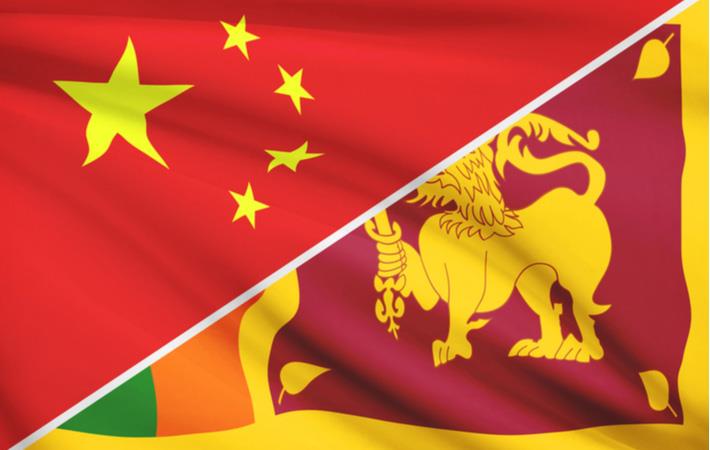
A delegation from the Wuhan University of Science and Technology in China has expressed interest in collaborating with Sri Lanka to explore the application of Artificial Intelligence (AI) and robotics across key sectors. One of the central proposals discussed is the establishment of a technology laboratory, potentially located at the Arthur C. Clarke Institute for Modern Technologies.

China has offered to support this initiative by providing the technological infrastructure free of charge. As part of the collaboration, the Arthur C. Clarke Centre has been proposed as the site for the new lab, which the Chinese side will fully equip with the necessary instruments.

The Chinese team has also proposed to train local personnel, ensuring knowledge transfer and the long-term sustainability of the project.

Minister of Science and Technology Prof. Chrishantha Abeysena told Ceylon Today that discussions are currently underway between scientists at the Clarke Institute and the Chinese delegation to move the initiative forward. He added that the Institute has been identified as an ideal location for the proposed laboratory.

Another proposed collaboration involves digitising operations at the Colombo Port. In addition to China, the Ministry of Technology holds Memorandums of Understanding (MoUs) with Pakistan and India. However, only the MoU with India is currently active, supporting an ongoing research programme. Several MoUs signed with China under the previous government remain inactive. The Minister noted that local research initiatives will be integrated into the new partnership with China.

Recently, all deans of agricultural faculties were invited to the Ministry to identify and discuss challenges in the agriculture sector. Following these consultations, affiliated Science and Technology institutions have been tasked with conducting targeted research to develop practical solutions.

Further strengthening bilateral ties, a Sri Lankan delegation recently visited an agricultural university in China, followed by a virtual meeting between academic and research institutions from both countries. The collaboration will also extend to veterinary science under a Government-to-government MoU.

According to Prof. Abeysena, the core focus areas under the China–Sri Lanka Science and Technology cooperation will include power, health, energy, and agriculture.

Maho–Anuradhapura rail gets Indian grant boost

The Government of India has released the first instalment of funding—amounting to approximately USD 2.5 million (around LKR 770 million)—for the installation of an advanced signalling and telecommunication system along Sri Lanka’s Maho–Anuradhapura railway line.

The project was jointly launched by the Prime Minister of India and the President of Sri Lanka during the latter’s high-level visit to India in April 2025. Originally planned as a Line of Credit (LoC) project costing USD 14.89 million, it was later converted into a full grant by the Indian government during the Sri Lankan President’s State Visit to India in December 2024.

The project is being implemented by Ircon International Limited, an Indian Public Sector Undertaking.

The new signalling system is part of broader Indian-supported upgrades to Sri Lanka’s Northern Railway Line, where tracks have already been modernised to allow trains to operate at speeds up to 100 kmph. The signalling upgrade is expected to further enhance safety, increase train frequency, and improve operational efficiency.

Key features of the system include real-time train tracking within block sections, centralised monitoring from a modern control centre, and the capacity to handle simultaneous train dispatch and reception at stations, helping reduce delays and streamline services.

Preliminary work on the project has already commenced, with completion expected by August 2026.

Posted in Uncategorized

Fresh resolution to be moved in September

The United Kingdom, along with the other members of the core-group, will move a fresh resolution to be adopted by the United Nations Human Rights Council (UNHRC) at its upcoming session in September with the primary objective of pursuing the Sri Lankan Accountability Project and other remaining matters, Daily Mirror learns.

Canada, Malawi, Montenegro, and North Macedonia are the other members of the core group.

The UNHRC adopted a resolution in October, last year extending the mandate of Resolution 51/1 on promoting reconciliation, accountability and human rights in Sri Lanka despite Sri Lanka’s rejection of it under the newly elected National People’s Power (NPP) government.

Sri Lanka rejected HRC resolution 51/1 and the preceding HRC resolution 46/1 under which an external evidence gathering mechanism has been established within the Office of High Commissioner for Human Rights (OHCHR).

General Secretary of the Ilankai Tamil Arachu Kadchchi (ITAK) M.A. Sumanthiran told Daily Mirror that he learnt from UK officials in London in recent times that such a resolution would be moved in September, this year for the UNHRC to press ahead with its Sri Lanka project.

“The current resolution will lapse in September. The new resolution will be brought in by the UK and the core group of countries to go ahead with what is remaining to be done,” he said.

UN High Commissioner for Human Rights Volker Türk concluded a four-day official visit to Sri Lanka from June 23 to 26, 2025, the first by a UN High Commissioner for Human Rights since 2016. During his visit, High Commissioner Türk engaged in discussions with high-level government officials, including the President Anura Kumara Dissanayake and Prime Minister Harini Amarasuriya.

He is expected to submit a report on Sri Lanka next week.

The UNHRC has repeatedly called for action on accountability and human rights issues related to the wartime.

The government has initiated legal action against some former military officers including former Navy Commander Nishantha Ulugetenna over past violations. The 60th session of the UNHRC is scheduled to take place from September 8 to October 3, 2025.

Posted in Uncategorized

Sri Lanka-China defence ties reaffirmed at PLA 98th anniversary celebrations

Deputy Minister of Defence, Major General (Retd) Aruna Jayasekara has highlighted the deep-rooted friendship between Sri Lanka and China, forged through centuries of cultural exchange and strengthened over 68 years of formal diplomatic relations.

The Deputy Minister of Defence made these remarks while addressing the event held to mark the 98th Anniversary of the founding of the Chinese People’s Liberation Army (PLA).

Addressing the event, the Deputy Minister commended the PLA’s 98 years of remarkable history, resilience, and evolution in overcoming the diverse challenges of modern warfare and security.

He also recalled the landmark state visit of the President to China in January this year. The Deputy Minister stated that the visit reaffirmed the shared values of independence, self-reliance, solidarity, and mutual assistance as enshrined in the historic Rubber-Rice Pact, while paving the way to further deepen the Strategic Cooperative Partnership between the two nations.

Deputy Minister Aruna Jayasekara also expressed profound appreciation for China’s steadfast defence cooperation with Sri Lanka, acknowledging its invaluable assistance during the three-decade conflict and its active role in post-conflict development initiatives that uplifted the livelihoods of war-affected communities.

Meanwhile, the Deputy Minister commended the PLA’s continued support in capacity building, training, and professional exchange programmes, particularly in strengthening the operational capabilities of the Sri Lankan tri-forces.

Posted in Uncategorized

2008 white van abduction case: Former Army officers acquitted

Colombo Additional Magistrate Pasan Amarasena ordered the release of two former military intelligence officers, Hemachandra Perera and Prabath Duminda Weeraratne, who were suspected of abducting and assaulting a journalist and two state officials in 2008.

The court ruled that the suspects be acquitted and released from all charges.

The decision was made on the basis that the prosecution had failed to prove the charges beyond reasonable doubts.

The suspects had been indicted under Sections 314 and 32 of the Penal Code by the Criminal Investigation Department (CID), based on allegations that during their involvement in state intelligence operations, they had abducted the victims in a white van and assaulted them.

The accused were alleged to have assaulted a journalist and a government diplomatic staff member in 2008 while engaged in state intelligence operations. The suspects were arrested in 2017 and held in remand custody for an extended period before being released on bail. The trial was recommenced in 2023.

Senior Counsel Shiras Nuredin and Counsel Farzan Mohamed appeared on behalf of the suspects.

During the trial, the defence argued that the suspects were not identified during an identification parade and presented alibis showing they were at different locations on the day in question. Based on these factors, the defence filed a motion seeking their release.

The court found that the evidence presented did not substantiate the charges and ordered the unconditional release of both suspects.

Posted in Uncategorized

President and Namal Rajapaksa on Same Flight to Maldives Amidst Arrest Warrant

President Anura Kumara Dissanayake and Sri Lanka Podujana Peramuna (SLPP) National Organiser Namal Rajapaksa were aboard the same flight to the Maldives today (28), even as a warrant was issued for Rajapaksa’s arrest.

The President was travelling to Malé on a state visit at the invitation of Maldivian President Mohamed Muizzu. Namal Rajapaksa, meanwhile, was reportedly heading to the Maldives for a function, according to his media unit.

Both were seated in the SriLankan Airlines flight UL 101 from Colombo to Malé.

Earlier in the day, the Hambantota Magistrate’s Court issued a warrant for Rajapaksa’s arrest after he failed to appear for a scheduled court hearing. The case relates to violent clashes that occurred in February 2017 between government supporters and protestors opposing the alleged takeover of private land for an industrial zone in which China was expected to hold a significant stake. Police had used tear gas and water cannons to disperse protestors during the incident.

Rajapaksa’s media unit stated that he has informed his legal counsel about his travel plans, and that the matter will be communicated to the court accordingly.

Posted in Uncategorized

Former Navy Commander Nishantha Ulugetenne remanded

Former Commander of the Sri Lanka Navy (SLN) Admiral (Retired) Nishantha Ulugetenne who was arrested earlier today by the Criminal Investigation Department (CID), has been remanded, Ada Derana reporter said.

He has been remanded until July 30 by the Polgahawela Magistrate’s Court.

The former Navy Commander was arrested by the CID over the disappearance of a youth from Pothuhera while he was functioning as the Director of Naval Intelligence.

Posted in Uncategorized

ICJ makes 07-point proposal to Govt on Chemmani mass grave

In light of the ongoing excavation at the Chemmani-Siththupaththi mass grave site in Jaffna, the International Commission of Jurists (ICJ) says it supports the urgent call by families of the disappeared and local human rights groups for international oversight and technical expertise.

Issuing a statement, the ICJ has made a 07-point proposal to the Government of Sri Lanka and recommendations to the UN Human Rights Council.

In its statement, the ICJ says that, as of 27 July 2025, 101 skeletal remains, including those of children and infants, had been recovered at Chemmani-Siththupaththi.

The ICJ further said that it considers that the excavation process is a necessary, initial step toward truth and accountability, and calls on the Government of Sri Lanka to ensure that all exhumation and investigative processes be conducted in full compliance with international human rights law and standards, such as the Revised United Nations Manual on the Effective Prevention and Investigation of Extra-legal, Arbitrary and Summary Executions (the Minnesota Protocol on the Investigation of Potentially Unlawful Death)—including concerning investigative practice and forensic science and the rights and dignity of the dead and their families.

“We must remember that behind every set of remains lies a family that has endured unimaginable suffering. These forensic investigations must be conducted with the utmost respect for human dignity and with the full participation of families. International oversight is required to ensure that these processes meet the highest professional and legal standards that the gravity of these crimes warrants”, said Mandira Sharma, Senior International Legal Adviser of the ICJ. “The Chemmani exhumations represent a critical juncture for Sri Lanka’s transitional justice process”, she added.

The Chemmani mass grave site came to national and international attention in 1998 following the confession of a Sri Lankan soldier implicated in the rape and murder of schoolgirl Krishanthy Kumaraswamy. It has since remained a potent and painful symbol of Sri Lanka’s long-standing legacy of impunity for grave human rights violations, including enforced disappearances. The renewed discovery of human remains almost three decades later at Chemmani-Siththupaththi in February 2025 highlights the continuing urgency of credible, transparent, rights-compliant and victim-centred investigations that are capable of leading to truth and accountability.

Sri Lanka has one of the highest numbers of cases of unresolved enforced disappearances world-wide, with estimates ranging between 60,000 and 100,000 individual cases, arising mostly from the armed conflict between the Sri Lankan Government and the Liberation Tigers of Tamil Eelam (LTTE) between 1983 and 2009. Following the end of the armed conflict, the Government established several commissions mandated to address post-conflict concerns, including the Lessons Learnt and Reconciliation Commission (LLRC), which largely prioritized reconciliation while providing a limited focus on accountability. Despite repeated appeals from families and international actors, the rights to truth, access to justice and effective remedies and reparation have largely been denied to victims and their families.

In 2015, Sri Lanka supported a resolution at the UN highest human rights body, the Human Rights Council (HRC), that called for the establishment of transitional justice measures, including a truth commission and a judicial mechanism with international participation. However, these commitments have remained largely unfulfilled.

The Office on Missing Persons (OMP), established in 2016 to investigate cases of enforced disappearance, was initially seen as a positive step. Yet, the institution has long suffered from politicization, limited independence, and a lack of public trust. Its failure to take meaningful action, let alone produce credible investigative outcomes over the years, has undermined its legitimacy and effectiveness. While the OMP is currently observing the excavation at Chemmani, now more than ever, the institution should assert its independence, actively engage with victims and their legal representatives, and operate in line with international standards on truth-seeking and accountability.

Given the longstanding failure of domestic institutions to deliver justice, since 2012 the UN Human Rights Council has through multiple resolutions mandated the Office of the UN High Commissioner for Human Rights (OHCHR) to monitor the situation, preserve evidence, and support accountability efforts, particularly through the Sri Lanka Accountability Project under Resolution 46/1.

The ICJ said it considers that the ongoing exhumations at Chemmani renders the need for sustained international oversight even more urgent.

The Chemmani exhumations must not be a mere forensic exercise, but an example of full compliance on the part of the authorities with Sri Lanka’s legal obligations under international law to investigate enforced disappearances and other crimes, identify victims, prosecute perpetrators when the evidence so warrants, and to provide effective remedies to the victims.

While exhumation and forensic examination of remains are essential first steps toward identification and accountability, Sri Lanka lacks a specialized national legal and institutional framework for the investigation of mass graves and enforced disappearances. Past investigations, including previous ones at Chemmani (early 2000s), Mannar (2018) and other mass grave sites, have failed to ascertain the truth, let alone deliver justice, with judicial processes either stalled or suppressed.

Stating that it supports the urgent call by families of the disappeared and local human rights groups for international oversight and technical expertise, the ICJ said the deployment of independent international forensic experts and human rights observers, such as those from the OHCHR and the International Committee of the Red Cross (ICRC); transparent and timely updates to families and the public; and protection of the chain of custody of evidence to enable future criminal accountability, are all required.

Sri Lanka is a State Party to the International Covenant on Civil and Political Rights (ICCPR), which, among other things, requires the State to protect the right to life (Article 6) and ensure an effective remedy for human rights violations (Article 2). Sri Lanka has ratified the International Convention for the Protection of All Persons from Enforced Disappearance (ICPPED) and adopted the International Convention for the Protection of All Persons from Enforced Disappearance Act, No. 5 of 2018. However, this legislation has been wholly ineffective in practice, with no successful prosecutions, no effective investigations, and no detailed procedures to be followed in the conduct of exhumations.

International instruments and practices underscore that the investigation at Chemmani must not only aim to identify remains, but also to uncover the full chain of responsibility for the underlying crimes, uphold the rights of victims and their families, and preserve the grave site in accordance with both evidentiary and human rights standards.

The ICJ further said it welcomes that the families of the disappeared are represented by legal counsel during the excavation process. However, effective legal representation must be part of a broader framework that guarantees victims’ rights throughout the investigation, including access to information, participation in decision-making, and psychosocial and protective support. International human rights law, as affirmed by the UN Human Rights Committee, requires that families be enabled to contribute evidence, propose lines of inquiry, and receive updates during all stages of the investigation.

At a time when the UN Human Rights Council is soon to decide on the prospect of continued international scrutiny over grave human rights violations of the past in the country, the credibility of Sri Lanka’s commitments to address the legacy of such violations through transitional justice mechanisms rests heavily on how it responds to Chemmani.

The victims and their families deserve nothing less than truth, justice and effective remedies, including guarantees of non-repetition. Proper investigation and accountability in this case could become a model for investigating other mass grave sites. However, this will only be possible if there is genuine political will, adequate resources, and a victim-centred approach guided by international standards.

In light of this, the ICJ has called upon the Government of Sri Lanka to:

Fully comply with international standards, including the Minnesota Protocol, in investigating the Chemmani mass grave.

Engage independent international forensic experts and human rights observers to ensure the independence, quality and credibility of the investigations.

Provide psychosocial, legal, and protective support to families of the disappeared, enabling their meaningful participation throughout the process.

Preserve and rigorously document all evidence to support future efforts toward criminal accountability.

Fully implement Sri Lanka’s 2018 law on enforced disappearances and provide for clear prosecution guidelines and victim-centred procedures.

Establish an independent Special Office to investigate and prosecute serious crimes by State officials, including enforced disappearances, with adequate resources, expertise, and international support.

Publicly disclose findings from all past and present mass grave investigations, promoting transparency and truth.

Additionally, the ICJ has urged the UN Human Rights Council to:

Renew its resolution on Sri Lanka at its forthcoming 60th session in September-October 2025, reflecting the latest developments, such as the exhumations at Chemmani.

Extend the mandates for OHCHR monitoring and the Sri Lanka Accountability Project, in recognition of ongoing impunity and the necessity of international oversight consistent with Sri Lanka’s international law obligations.

TAMIL NATIONAL HEROES DAY 42 ND REMEMBRANCE DAY

Tamil National Heroes Day 25 & 27 07-2025

Welikada Prison Massacred 42 nd Remembrance Day

எமது போராளிகளின் அர்ப்பணிப்பை அர்த்தம் உள்ள அரசியல் தீர்வை நோக்கி நகர்த்துவோம்

42nd Anniversary of Black July 83, TELO Leaders and Fifty three Tamil prisoners were murdered in the maximum security Welikade prison, In the July 83 anti-Tamil program Sinhala thugs, ruling UNP party cadres, sections of Sri Lankan troopers, and Sri Lanka Police killed more than 3000 Tamils and destroyed property worth billions of rupees.


“Black July”: Anatomy of the July 1983 Anti-Tamil Pogrom By D.B.S.Jeyaraj

“All changed, changed utterly” is a powerful line from ‘Easter, 1916’, the famous poem of William Butler Yeats. The poem by W.B. Yeats was about the Irish Easter uprising in 1916, its cruel suppression and how all changed utterly in Ireland. In Sri Lanka “all changed” and “changed utterly” for the Tamil people 40 years ago.The catastrophic events of July 1983 drastically altered the lives of large numbers of Tamils in Sri Lanka.

As is well-known , widespread anti-Tamil violence erupted forty -two years ago during the fourth week of July in 1983.Although the tragic history of post-independence Sri Lanka records that the Tamils of Sri Lanka were subjected to mass –scale mob violence in the years 1956, 1958, 1977, 1981 and 1983, the anti-Tamil violence of July 1983 was the most horrible of them all.

Around 3500-4000 Tamils and some Muslims -mistaken for Tamils- were killed. Thousands were injured. Some of the injured were killed in hospitals. There were over 200,000 displaced persons as a result. 130,000 were housed in makeshift refugee camps. More than 2500 business enterprises ranging from huge factories to petty boutiques were damaged or destroyed. The number of houses and dwellings damaged or destroyed has not been fully estimated yet.

The mass scale deaths, destruction, displacement, deprivation and despair suffered by the Tamils both Sri Lankan and Indian made them characterise those days in July as a dark period in their lives.The extent to which the Tamils were diminished in that month made them call it “Black July”.

The tragic happenings remain vividly etched in memory even after 40 years as the “Black July” of 1983. I have written about the dark events of July 1983 extensively in the past. However, I intend re-visiting the events of that cruel month with the aid of such writings in these columns to denote the 42nd anniversary of the”Black July” terrible pogrom.

Colour

When writing about “Black July” one is conscious of the negative connotations in using the colour “black” to describe something bad and evil and the colour white for pure and good. In this age of “Political Correctness” these usages have been challenged and debunked as insidious vestiges of racism. Wittingly and unwittingly these usages keep promoting racist stereotypes of colour. Nevertheless it is difficult to adopt such a politically correct stance in the Sri Lankan context as the description “Black July” has pervaded national consciousness. Avoiding such reference would be particularly impossible in writing about the tragic incidents of July 1983.

Pogrom

Another point is about terminology.What happened in July 1983 was not spontaneous violence or ethnic riots but a planned pogrom. A “Pogrom” is defined as a form of violent riot , a mob attack, either approved or condoned by government or military authorities, directed against a particular group, whether ethnic, religious, or other, and characterized by killings and destruction of their homes, businesses, property and religious centers.

The word pogrom is of Russian origin and means “to destroy, to wreak havoc, to demolish violently” in the language. Pogrom became commonly used in English after a large-scale wave of anti-Jewish violence swept through south-western Imperial Russia encompassing present-day Ukraine and Poland from 1881-1884. Later more bloodier waves of pogroms broke out from 1903–1906, leaving thousands of Jews dead and wounded.

What happened in July 1983 was that there was a pre-planned conspiracy to launch a systematic, widespread attack against Tamil life, limb and property on a massive scale. All it required was a powerful incident to be the provocative pretext to justify such an attack. The ambush in Jaffna of an army patrol by the Liberation Tigers of Tamil Eelam(LTTE) on 23 July resulted in 13 soldiers being killed. This incident provided the excuse of being the flashpoint of tension that triggered off the anti-Tamil violence that followed.

Sinhala People Blamed by JR

The Sinhala people were collectively blamed for the violence by the then President Junius Richard Jayewardene (JR) and his United National Party (UNP) Government. This was done to deflect blame falling on the Govt.

There is, however, a major flaw in attributing the dark events of Black July ‘ to the Sinhala people on the whole. It is correct that the perpetrators were Sinhala and the victims Tamils. But it was by no means a mass uprising of the entire Sinhala race against Tamils. If that had happened few Tamils would have been left to tell the tale

The majority of Sinhala people was horrified at what happened and forced to be helpless onlookers, while a minority of their ethnicity unleashed havoc in the name of their race and country.The mobs on a burning spree went in search of fuel chanting the slogan “Rata Jathiya Bera Ganna, Petrol Thel Tikkak Dhenna” (To save the race and country give a little petrol and oil)

It is possible that a section of the people who were non –participants may have been supportive of the anti–Tamil violence and sanctioned it by their silence.But most of the Sinhala people were against what happened then. It cannot be forgotten that a large number of Sinhalese protected and saved Tamils often at great personal risk. Many Muslim people too gave shelter and protection to their Tamil neighbours in those dark days.

In this regard it would be useful to look at what happened in 1990 between Tamils and Muslims also. The LTTE evicted the Muslim people en masse from the North in October 1990. The tigers also gunned down large numbers of innocent Muslim civilians during prayer at a Mosque in Kattankudi. There was a massacre in Eravur also. Most Tamils were shocked and mortified by the LTTE’s horrible conduct. But there was little they could do about it because they were powerless against the powerful LTTE. This was the case in July 1983 too. The Sinhala people were powerless in the face of officially sanctioned unofficial mobs.

JR’s Deplorable Conduct

President JR ayewardene’s conduct in July 1983 was most deplorable. Some days before the violence, in an interview to the British newspaper “Daily Telegraph”JR reportedly stated “I am not worried about the opinion of Jaffna people now… Now we can’t think of them. Not about their lives or of their opinions about us. …The more you put pressure in the North, the happier the Sinhalese people will be here.”

Even as the anti-Tamil vilence was continuing, JR addressed the nation via TV on July 28. In that he indirectly blamed the Sinhala people and said the violence was a natural reaction. Instead of reaching out to the victimised Tamil people the then President announced that legislation would be brought to forbid secessionism.This is what JR reportedly stated then –

“Because of this violence by terrorists, the Sinhala people themselves have reacted … the time has now come to accede to the clamour and national request of the Sinhalese people……. other than through bringing legislation to deprive those in positions of influence who campaign for separation of their civic rights, we cannot see any other way by which we can appease the natural desire and request of the Sinhalese people to prevent the country being divided.

Thondaman Refutes JR

A few days later Ceylon Workers Congress (CWC)President and Rural Industrial Development Minister Saumiamoorthy Thondaman also addressed the nation via TV . In that he refuted JR’s allegation against the Sinhala people. This is what Thondaman reportedly said on August 2nd –

“At a time when the community of people of Indian origin has been torn asunder of its roots where it had existed for over 100 years, we are constrained to look at the claim which some make that the recent pogroms are a Sinhalese uprising against us … In our thinking it is the work of well organised groups who had gone on the rampage, rioting, looting and setting on fire … ..It is more than unfortunate that these elements of disaster, these squads of goondas and rabble have been allowed to parade the streets freely causing havoc and inflicting misery of such proportions with impunity”

International Commission of Jurists

In spite of the attempts to rationalise the July 1983 anti-Tamil violence as a “Sinhala backlash to 13 Soldiers being killed by Tamil Tigers” evidence uncovered during the past years have proved conclusively that “Black July” 1983 was a definite Pogrom and not a spontaneous reaction of the Sinhalese . Notwithstanding the efforts of then President Jayawardene to tarnish the Sinhala people as being collectively responsible for this carnage, respected observers such as Paul Sieghart of the International Commission of Jurists exposed the real state of affairs.

As Sieghart himself points out in his report (Sri Lanka: A Mounting Tragedy of Errors) “Clearly this (July 1983 attack) was no spontaneous upsurge of communal hatred among the Sinhala people – nor was it as has been suggested in some quarters, a popular response to the killing of 13 soldiers in an ambush the previous day by Tamil Tigers, which was not even reported in the newspapers until the riots began. It was a serious of deliberate acts, executed in accordance with a concerted plan, conceived and organized well in advance”.

Bishop Lakshman Wickremesinghe and Rev.Soma Perera

The 1983 Black July violence was a watershed in the contemporary history of the Island. Black July aroused the conscience of many Sinhala people. Indeed it cannot be forgotten that a great deal of Tamils escaped danger only because of the courageous protection extended by their Sinhala friends and neighbours.
There were well meaning efforts by several persons to make amends and reach out to Tamils.Notable among which were the initiatives taken by the Anglican Bishop of Kurunegala. Rt. Rev. Lakshman Wickremasinghe and Methodist Church President Rev. Soma Perera.

Rev.Soma Perera wept openly at the Methodist Church Conference and made an emotional speech seeking forgiveness from his Tamil brethren. Rev.Perera however was openly criticized by the well- known legal eagle HL de Silva for this. Some others mocked Rev.Soma as “Somawathie”for his perceived weakness and urged him to wear the saree.

Bishop Lakshman Wickremesinghe the paternal uncle of President Ranil Wickremesinghe and the maternal uncle of former Parliamentarian Rajiva Wijesinghe was away from the Island when black July occurred. After returning home and ascertaining all the facts, Bishop Wickremesinghe wrote his pastoral letter in September 1983. The letter was a brilliantly heart -warming piece of writing that was full of compassion, erudition, understanding and wisdom. Sadly the beloved Bishop passed away in October 83.

The following is an extract from Bishop Wickremesinghe’s pastoral letter –

What Happened at the End of July 1983?

“There are theories and there are facts. Theories vary. Some say that the originators were left-wing groups aided by foreign powers. Others say that the originators were thugs and private hirelings of powerful politicians connected with the Government. Still others say that both these groups were involved for different motives. This is not the place to discuss these rival theories.”

“The facts however cannot be denied. Thousands of Tamils old and young and even little children were assaulted, robbed, killed, bereaved and made refugees. They saw their homes, possessions, vehicles, shops and factories plundered, burnt or destroyed.”

“These people were humiliated, made to live in fear and rendered helpless. Business premises run by Tamils or Indians were selected and burnt. The homes and possessions of Tamils in the professions and government services were also selected and destroyed. On two occasions Tamils were selected and killed in Welikade prison. Such selectiveness indicates a prepared plan of action. “

“It is not that poor Tamils were also not killed or made refugees. They were. It is simply that in their case the mobs did not reveal a method in their madness. But there was more. A large number of people lost their employment as a result of destruction, and these included not only Tamils but Sinhalese and others. Even some kovils, churches and vicarages were not spared.”

“As a result of all this, economic development and foreign exchange suffered an immense loss. Public services were disrupted. Our image abroad was damaged.”

“The people responsible for all this violence and destruction and suffering were mostly Sinhalese. The fact that Ja-Ela, Wattala, Kotahena, Kelaniya and the Galkisse-Wellawatte areas were places where mob-rule was evident points to some Christians being involved. “

“Those Sinhalese responsible were not confined to Buddhists. People other than Sinhalese may also have been part of certain mobs on the rampage. And according to available evidence, the police and armed forces were seen in different places, to be either inactive spectators or active supporters of these mobs who attacked the lives and properties of Tamils.’’

“Sri Lanka” The Holocaust and After”.

One of the best books that came out in the aftermath of the July 83 violence was “Sri Lanka” The Holocaust and After”. It was written by an unknown author L. Piyadasa. It was known that L. Piyadasa was a pseudonym. Who then was L. Piyadasa? I personally thought it was Regi Siriwardene. I asked him about this later but Regi denied he was the author.

The mystery about this remarkable book was cleared up for me when the well – known writer, researcher and Social activist C.R. Hensman passed away. I had read some of Hensman’s books and had met him in the eighties on a few occasions in Colombo at the International Centre for Ethnic Studies, Marga Institute and Centre for Society and Religion. It was after his demise that Hensman’s daughter Rohini informed me that her father was L.Piyadasa.

CR Hensman writing as L.Piyadasa describes the July 1983 violence as a pogrom and makes a solid case against the JR Jayewardene regime for it. The introductory paragraph in the book encapsulates July 83 perfectly-

“Shops, Banks, Offices and Restaurants in the Capital’s crowded City Centre and Main Streets being burnt while the Police looked on. Thousands of houses ransacked and burnt, sometimes with women and children inside. Goon squads battering passengers to death in trains and on station platforms and, without hindrance, publicly burning men and women to death on the streets! Remand prisoners and political detainees in the country’s top prison being massacred. The armed forces joining in and sometimes organizing this pogrom against members of Sri Lanka’s two Sri Lankan minority communities. The nation’s President and top ranking cabinet members publicly justifying the pogrom!” It is clear therefore that in spite of the attempts to rationalise the July 1983 anti-Tamil violence as a “Sinhala backlash to 13 Soldiers being killed by Tamil Tigers”

Response of Senior Ministers on TV

One of the lamentable features of that Pogrom was the abominable response of JRJ and senior ministers on television. Not even one word was uttered in sympathy for the victims of the violence.As stated earlier JR indirectly blamed the Sinhala people and said it was a natural reaction. Instead of reaching out to the victimised Tamil people the President announced that the 6th Constitutional amendment would be brought soon to disawow secessionism.

State Minister Anandatissa de Alwis spoke about a hidden hand, a foreign hand being responsible. He said there was a three stage conspiracy to provoke clashes between the Sinhalese and Tamils, the Sinhalese and Muslims and Buddhists and Christians.

Lands and Mahaweli Development Minister Gamini Dissanayake warned Tamils that it would require 14 hours for Indian troops to come and rescue them but the Sinhalese could destroy them in 14 minutes if they wanted to.

Trade and Shipping Minister Lalith Athulathmudali was sorry that people had to queue up again for essentials as a result of the violence.

Finance Minister Ronnie de Mel gave a lecture in history about Sena and Guttiga the south Indian horse traders who de-throned King Suratissa and reigned in Anuradhapura for 22 years.

Cyril Mathew the Industries and Scientific Affairs minister dubbed as the Industrious minister of Anti-Tamil affairs raised the Indian bogey and saw an alien hand behind the conspiracy that led to the July 83 violence.

His cabinet colleague Rural Industrial Development minister Saumiyamoorthy Thondaman denied it and said elements inside or close to the Govt were responsible. As mentioned earlier Thondaman also refuted JR’s charge about Black July being a spontaneous Sinhala reaction.

Questions About Black July

What was the backdrop against which black July happened in 1983? What was the prevailing political situation in the country when the LTTE ambushed an army patrol near the post box junction in Thirunelvely(Thinnaively( in Jaffna on 23 July 2023? Why did the JR Jayewardene led UNP Govt suppress the fact that the army in Jaffna had gone on the rampage after the attack and killed many innocent Tamil civilians? Why did the Govt bring the bodies of the 13 soldiers killed in Jaffna to Colombo for a mass funeral in Kanatte thereby triggering off anti – Tamil violence? Why did the Govt issue a press release about the LTTE attack and deaths of soldiers despite a very strict media censorship being in force then? These and other related questions would be delved into in detail in the second part of this article.

D.B.S.Jeyaraj can be reached at dbsjeyaraj@yahoo.com

Posted in Uncategorized