How can Sri Lanka solve its economic crisis?

A Chatham House paper had explained how Sri Lanka can solve its economic crisis.

The paper was penned by Former Minister Kabir Hashim and Talal Rafi, an economist with Deloitte Economics Institute.

It noted that the aim in addressing economic structural flaws is to promote long-term economic growth, reduce poverty and create a stable country.

Since the economic crisis began last year, an additional four million Sri Lankans have sunk below the poverty line in addition to the three million who were already there, which amounts to a third of the population.

One result of this has been an exodus of people leaving the country which is resulting in a brain drain. The publication noted that human talent needed for the recovery is seeking opportunities abroad, which will have repercussions beyond this generation.

The country is also caught in the geopolitics played out between the United States, Europe and Japan on the one side and China on the other. But of all countries, India has the most at stake, as Sri Lanka is an immediate neighbour with a shared culture and history.

The Chatham House paper penned by Former Minister Kabir Hashim and Talal Rafi, an economist with Deloitte Economics Institute noted that for change to happen, there has to be consensus not just between the political parties but among state institutions, religious establishments and trade unions. If not, the changes will not be sustainable.

Full Text:

Ranil Wickremesinghe took over as president of Sri Lanka in July 2022 when the country was in the middle of its worst economic and political crisis since independence in 1948. His predecessor, Gotabaya Rajapakse, had been forced out of power after facing mass protests prompted by 12-hour power cuts and persistent fuel and food shortages. The nation was bankrupt.

Wickremesinghe brought in the International Monetary Fund and has focused on reaching macroeconomic stability and driving tough but much-needed structural reforms. Today, as Sri Lanka embarks on its 17th IMF programme, it has a unique opportunity to restore stability and push forward sustainable growth. President Wickremesinghe should start by creating an independent central bank, restructuring state-owned enterprises, extending trade liberalization and improving the business climate.

The mood is ripe for change as the fallout from the economic crisis has been felt by all the different ethnicities, religions and classes that came together last year to protest. But as the situation in Sri Lanka improves with inflation and interest rates coming down, the momentum for reform could slow. As Winston Churchill said, ‘Never let a good crisis go to waste’, advice Sri Lanka should take to heart.

At the peak of the economic crisis, there was virtually no opposition to the IMF or the need for reform, but opposition is beginning to grow. Many critics who were previously nervous to speak out are now more emboldened and the government will face challenges in implementing reform.

First, there is a lack of economic understanding in the population. This plays into the hands of politicians wanting to whip up opposition and put the government on the back foot.

Second, political instability can disrupt reforms. A stable government is needed to set the agenda for change and the president will face a challenge as a presidential election is due next year. The closer Wickremesinghe gets to the election, the more pressure he will be under from his party to embrace populist policies rather than pursue unpopular reforms.

Third, implementing reforms can be tough in Sri Lanka due to its weak institutions. Implementing policy changes through a maze of bureaucracy can be difficult and time-consuming, which allows time for opposition to gain momentum.

The aim in addressing economic structural flaws is to promote long-term economic growth, reduce poverty and create a stable country. A lot is at stake for the country. Since the economic crisis began last year, an additional four million Sri Lankans have sunk below the poverty line in addition to the three million who were already there, which amounts to a third of the population.

BRAIN DRAIN

One result of this has been an exodus of people leaving the country which is resulting in a brain drain. Human talent needed for the recovery is seeking opportunities abroad, which will have repercussions beyond this generation.

It also means that Sri Lanka’s crisis is affecting countries beyond its borders. Sri Lankans fleeing as illegal immigrants are a concern for countries as far away as Australia. But the biggest impact is being felt by India, which will only get worse if the economy collapses.

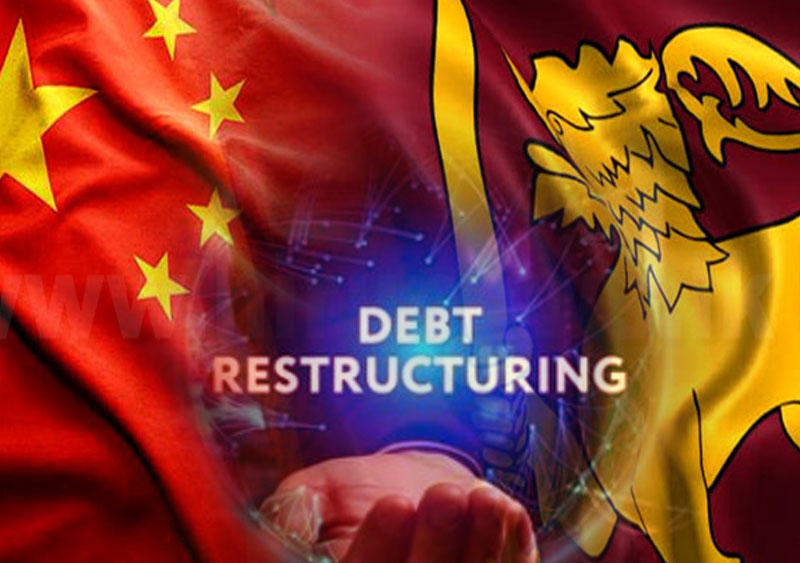
Sri Lanka’s economic stability and growth are also important to its creditor nations such as China, Japan and India and to mostly western-based international sovereign bondholders. They are keen to see the implementation of the IMF programme so the economy can recover.

The country is also caught in the geopolitics played out between the United States, Europe and Japan on the one side and China on the other. But of all countries, India has the most at stake, as Sri Lanka is an immediate neighbour with a shared culture and history.

For change to happen, there has to be consensus not just between the political parties but among state institutions, religious establishments and trade unions. If not, the changes will not be sustainable.

A HISTORY OF LARGE DEFICITS

Sri Lanka has a history of fiscal mismanagement resulting in large deficits. Populist policies which have included expensive subsidies have led to governments spending more than their revenue. A primary budget surplus has only been achieved four times in the 75 years since independence. Fiscal deficits have been largely due to debt and monetary financing better known as printing money.

An independent central bank which can focus on price stability is essential as current monetary policy has been politicized. If the central bank is not independent, it risks being used for political objectives such as printing money to fuel populist policies or keeping interest rates down at the risk of increasing inflation. The IMF programme places central bank independence as a key priority.

In 2021, Sri Lanka’s state-owned airlines reported losses of more than 1 per of Sri Lanka’s GDP, while the floor set by the IMF for social security spending is 0.6 per cent. In 2021, 86 per cent of Sri Lanka’s revenue went on paying salaries and pensions of state sector employees, which is unsustainable.

State-owned enterprises have a reputation of fostering corruption. Privatization of these organizations should be strongly considered. A few other options would be restructuring them, forming public-private partnerships or setting up a holding company like Temasek in Singapore.

If they are not restructured, Sri Lanka runs the risk of large fiscal deficits which will increase debt, raise inflation and inflict the opportunity cost of not being able to spend more on education, health and infrastructure. The main opposition to state-owned enterprises would come from trade unions as they see the state sector as their turf.

A SMALL WINDOW TO CASH IN

Sri Lanka ranked 99th on the World Bank’s ‘ease of doing business’ table. A one-stop investment window would be an ideal solution. Many businesses wanting to invest in Sri Lanka would prefer faster approvals and shorter setting up times to tax incentives. By not making it easier to conduct business, Sri Lanka runs the risk of losing out on investments to its regional peers.

While 70 per cent of international trade involves global value chains, Sri Lanka, as one of the world’s most protected economies, has not been able to capitalize on this. Sri Lanka only has three free trade agreements despite being uniquely positioned to be a trade hub.

By not utilizing its strategic location, Sri Lanka risks being left behind. With many countries in South Asia and Southeast Asia opening their economies, Sri Lanka has a short window to cash in on this.

Posted in Uncategorized

Japan reiterates conditions to resume stalled projects in Sri Lanka

Japan has reiterated that stalled projects in Sri Lanka will resume only after the debt restructuring process is completed.

FUJIMARU Satoshi, Minister of State in the Cabinet Office of Japan, and YAMAMOTO Kozo, former Minister of State for Regional Revitalization and Regulatory Reform, called on President Ranil Wickremesinghe at the Presidential Secretariat today (31).

During the meeting, they discussed the stalled development projects in Sri Lanka, which were previously supported by the Japanese Government.

“The parties agreed to restart these projects once the credit optimization process in Sri Lanka is completed. Additionally, they decided to involve officials from the Japanese Embassy in Sri Lanka in conducting an investigation related to these projects,” the President’s Media Division said.

The Japanese delegation, including Mizukoshi Hideaki, Ambassador of Japan to Sri Lanka, President’s Senior Advisor on National Security and Chief of Staff Sagala Ratnayaka, and President’s Senior Adviser on Economic Affairs Dr. R.H.S. Samaratunga were among those who attended the meeting.

Posted in Uncategorized

UNP Deputy Leader Ruwan Wijewardena Announces Party’s Plan for 2024 “Election Year”

In anticipation of the upcoming political landscape in 2024, United National Party (UNP) Deputy Leader Ruwan Wijewardena has revealed the party’s strategic approach.

Wijewardena stated that the year 2024 will be an eventful “election year,” as the nation will be facing a presidential election, a general election, and a provincial council election.

To enhance their chances, the UNP is considering the formation of an alliance to contest these crucial elections.

Wijewardena said the party, which was decimated at the last Parliamentary election, was gearing up for the challenges ahead and is determined to make a significant impact on the political landscape in 2024.

NPP is ready to take over govt’s responsibility – Anura Kumara

Leader of the National People’s Power (NPP) Anura Kumara Dissanayake has called on the government to resign without allowing the country to further deteriorate.

Addressing a demonstration organised by the NPP in Colombo today (31), the MP claimed that his party is ready to take on the responsibility of governing the country.

The protest march was organized by the NPP in Colombo today urging the government to stop the alleged looting of the Employees’ Provident Fund (EPF).

However, the Fort Magistrate’s court had issued an order restricting the movement of the protesters holding demonstrations near 18 locations including the Presidential Secretariat, President’s House and the Ministry of Finance.

As such, the National People’s Power held their protest in front of the Fort Railway Station, which was attended by senior members of the NPP including its leader Anura Kumara Dissanayake.

“Do we have to wait until the government loots the funds deducted from our salaries? We should not allow that to happen”, the NPP’s leader said.

Commenting further, Dissanayake questioned what the government has done with loans obtained under the guise of construction projects, while accusing that they have completed the projects by utilizing 25% of those funds, while looting the remaining 75%.

“That is why this country has been bankrupted. After bankrupting the country, they are attempting to loot the EPF and ETF of the people”, he alleged.

“How much further should we be patient? The working people must take lead against these actions.”

“My request to the government is simple. Please leave now without further deteriorating this country. The National People’s Power is ready to take the responsibility of leading this country along with the people”, Dissanayake said.

Posted in Uncategorized

Sri Lanka continues to militarise the state, despite the Rajapaksas’ fall – himalmag.com

Ayoung man from the North, arrested and detained several times for many years under the draconian Prevention of Terrorism Act (PTA) and finally discharged from all cases, continues to receive visits from military intelligence officials, who coerce him to work as an informant for them. A mother of a disappeared person attending the 18 May memorial in Mullaitivu for those killed at the end of Sri Lanka’s civil war receives non-stop phone calls from an officer of the Criminal Investigation Department, who wants to know whether she is attending the event. A politician holding a meeting in Jaffna on the destruction of a Hindu temple and construction of a Buddhist temple in its place engages in an altercation with police intelligence officers who surveil the meeting, refuse to show identification to prove they are police, and then run away. The politician and members of his party are arrested for obstructing the police officers from performing their duty. While all these incidents happened in 2023, such occurrences are not new. The octopus-like security apparatus that grew during Mahinda Rajapaksa’s tenure as president of Sri Lanka, and the resultant surveillance and attempts to curtail the rights of local populations in extra-legal ways, has been part of the reality of the people living in the conflict-affected North and East of Sri Lanka since the end of the war in 2009.

Gotabaya Rajapaksa, Mahinda’s brother and a former army officer, who was also the secretary of the ministry of defence at the end of the war, led the post-war militarisation drive in these regions. It appeared to have three aims. One was to reward the military for defeating the separatist Liberation Tigers of Tamil Eelam (LTTE) by giving it increased space and resources, as well as power to influence governance. The second was, through the dispensation of patronage, to ensure military loyalty and military protection for the Rajapaksas. And, finally, the aim was also to curtail civil activism, political activity and dissent, particularly in the North and East.

Since the end of the armed conflict the military’s role has extended into policy-making and drafting law.

For a long time, the rest of the country ignored militarisation since it impacted mainly the North and East, and the largely Tamil population concentrated in these areas. Moreover, since the country was in the grips of nationalist euphoria after the military’s victory over the LTTE, militarisation went unnoticed among the Sinhalese community or was viewed as benign. The successful militarisation of the North and East emboldened the government and the security sector to attempt to mainstream the same tactics of repression in the Sinhala-dominated South, by embedding the military in state structures and legalising militarisation through laws such as the Bureau of Rehabilitation Act and the Anti-Terrorism Act, thereby making it a de-jure rather than just a de-facto reality. This is but the natural evolution of the process of militarisation the Rajapaksas set in motion following the end of the war.

Setting their sights

Militarisation is the common thread that connects many repressive initiatives of the state, in particular the different wars it has claimed to fight, due to which it claims it has the authority to restrict human rights. For instance, successive presidents, as well as the commander of the army and the secretary of the ministry of defence, have consistently equated the “fight against drugs” with the “fight against terrorism”, and drug eradication is often discussed as an issue of national security. After winning the war against terror, in Sri Lanka’s case against the LTTE, which the government has used as a badge of honour to deflect any criticism of its actions, that goal has now been replaced by the “war against drugs”. This is illustrated by a statement from Shavendra Silva, a former commander of the army and chief of defence staff, who has said, “The security forces, which eradicated terrorism in the country 10 years ago, have been given a new task – to combat drug trafficking. We have given instructions to all Security Forces commanders … to take speedy measures to nab drug smugglers.”

Militarisation was also one of the tools the Rajapaksas used to change social values and public perceptions of what is acceptable in a democracy.

Likewise, the treatment of persons with drug dependence is equated with the rehabilitation of former LTTE combatants. For instance, when discussing the role of the Bureau for Commissioner General of Rehabilitation in a 2020 report, the secretary of the ministry of prison reform and prisoner rehabilitation stated:

On the back of successful rehabilitation process of misguided combatants, the task of rehabilitating drug addicts and reintegrating them into society as productive citizens has been assigned to the Bureau of the Commissioner General of rehabilitation as drug addiction has become a burning social issue.

Militarisation was also one of the tools the Rajapaksas used to change social values and public perceptions of what is acceptable in a democracy. By normalising military involvement in civilian activities – ranging from civil administration to running large agricultural farms and a chain of hotels – they popularised an authoritarian and militarised form of governance.

As the military was provided increasing de-facto authority in civil governance, its view of its own role began to change and extend beyond its mandated role in a democracy. The commander of the security forces in the North stated in 2009 that they “will be engaged in a new role of developing the region”, illustrating the military’s understanding of its expanded role in post-war Sri Lanka. Since then, this perception of the military’s expanded brief has only grown. Even the Yahapalana (Good Governance) government under Maithripala Sirisena, which temporarily unseated the Rajapaksas from power, did little to demilitarise or at a minimum divest from the businesses run by the military. With Gotabaya, who drove militarisation during Mahinda’s tenure, being elected president in 2019, the military took centre stage again. This is demonstrated by a statement by Kamal Gunaratne, a retired general and currently the secretary of the ministry of defence, at a ceremony at the Sri Lanka Military Academy in 2020, where he said that “the military is also expected to engage in the nation-building campaign in keeping with the President’s vision ‘Vistas of Prosperity and Splendour’ in the drive towards a brighter and prosperous future.”

Constructing a web of repressive laws

Since the end of the armed conflict the military’s role has extended into policy-making and drafting law. For instance, in 2013, the army compiled a report regarding the recommendations of the Lessons Learnt and Reconciliation Commission, a body created by Mahinda Rajapaksa ostensibly as a truth-and-reconciliation exercise after the war. The report emphasised the need for monitoring the activities of non-profit organisations due to security concerns. It clarified that “bona fide organisations” would face no limitations on their operations, but suggested that all international organisations, international non-governmental organisations and local non-governmental organisations should face screening and oversight by the defence ministry to prevent any potential threats to national security.

Even during the relatively progressive Yahapalanaya regime, the military was part of the process of drafting the proposed Counter Terrorism Act. Its involvement was reflected in the contents of the draft law, which empowered the military to engage in policing activities and restricted and undermined constitutionally protected rights. The Anti-Terrorism Bill the current government under Ranil Wickremesinghe presented in March 2023, the contents of which are largely identical to that of the Counter Terrorism Bill is yet another attempt to legalise and legitimise the role of the military in the sphere of civil governance.

The government’s proposed new laws are insidious and dangerous as they can be used in conjunction to detain a person, or at the very least to trap them within the legal process for even several years, all without evidence.

The government’s proposed new laws are insidious and dangerous as they can be used in conjunction to detain a person, or at the very least to trap them within the legal process for even several years, all without evidence. For example, the Bureau of Rehabilitation Act can be used with the proposed anti-terrorism law to send a person to “rehabilitation” at the discretion of the attorney-general. The Anti-Terrorism Bill empowers the attorney-general to suspend and defer instituting criminal proceedings, or in instances where criminal proceedings have begun to withdraw the indictment, on certain conditions if the offence has not caused death or grievous bodily injury, nor endangered the state and people of Sri Lanka. One of these conditions is the accused persons “voluntarily” participating in a rehabilitation programme. Since the Bureau of Rehabilitation Act contains a section that says “any other person as may be identified by law as a person who requires rehabilitation” can be sent for rehabilitation, it can be used to send people arrested under the proposed Anti-Terrorism Act to rehabilitation programmes.

In the past, when the state did not have enough evidence to indict a person under the PTA, it compelled them to undergo rehabilitation by making them believe they could be indicted or would spend many years in detention. During this process, the persons had no access to the evidence against them and no knowledge of whether there were grounds for charges to be filed. These persons, who often had no legal representation and no legal knowledge, typically agreed to “voluntary” rehabilitation due to fear that the state could indefinitely detain them. Although the Anti-Terrorism Bill requires the attorney-general to apply to the High Court and obtain its sanction for the conditions imposed, the role of the judge is limited. The judge only has to notify the person of the conditions imposed, give the person a hearing and “obtain” the person’s “consent” for rehabilitation. The judge does not have the authority to decide whether there is evidence to institute criminal proceedings against the person or if such conditions should be imposed at all.

From “rehabilitation” to repression

The Bureau of Rehabilitation Act is the latest in a continuum of repressive laws enacted by successive (mainly Rajapaksa-led) governments that target specific communities by demonising and portraying them as deviant and in need of being “rehabilitated”.

The evolution of the Bureau of Rehabilitation Act can be traced to the end of the civil war, when nearly 12,000 persons were sent to “rehabilitation” as they were alleged to be former LTTE combatants. In reality, most were not combatants according to the definition of a combatant under international humanitarian law. The “rehabilitees” were persons who were employed in the offices and other structures of the LTTE, which dispensed services in LTTE-controlled areas and were often the only employment options available. Most such persons did not take part in hostilities, and many that did were forcibly recruited during the last stages of the war. Among these were persons who were recruited only a few days before the end of the war.

The intent of these rehabilitation programmes appears to be to disempower and control certain populations. This intent continues to drive lawmaking in Sri Lanka and has continued to surface in dealing with many populations, including persons with drug dependency and even protesters.

The Bureau of Rehabilitation Bill as earlier proposed was an attempt by the government to formalise and legalise the military’s involvement in the rehabilitation process. Following a Supreme Court determination, the government did not ultimately include in it several provisions empowering the military to engage in rehabilitation. Yet there remain provisions that allow the secretary to the ministry of defence to be involved in the rehabilitation process. For instance, the secretary of the defence ministry has been included in the council of the Bureau, and the secretary’s power extends to recommending the person the minister – assigned the subject of the Bureau of Rehabilitation – appoints as the commissioner-general of rehabilitation.

The bill grants the power to any member of the armed forces or coast guard to search any person, vehicle, vessel, train, or any premises or land without any prior authorisation, warrant or oversight, which can lead to the abuse of power.

Following its failure to empower the armed forces in the Bureau of Rehabilitation Act, the government has included similar powers in the proposed Anti-Terrorism Bill gazetted in March 2023. As per this bill, the armed forces have the power to arrest a person if they have “reasonable grounds to believe (a person) has committed an offence”, and they do not have to hand over the arrested person to the police immediately or even as soon as possible but are given 24 hours to do so. Moreover, the bill grants the power to any member of the armed forces or coast guard to search any person, vehicle, vessel, train, or any premises or land without any prior authorisation, warrant or oversight, which can lead to the abuse of power. Similarly, it allows members of the armed forces to take any document or article into custody.

The bill’s definition of terrorism is broad and could potentially be used to criminalise acts of civic activism. The proposed law usurps the power of the judiciary and allows for a long period of administrative detention, with judges reduced to rubber stamps without the power to decide whether a person should be detained. Instead, the power lies in the hands of deputy inspector generals of police, of which there are 50 at present. The proposed law also undermines the powers of the Human Rights Commission of Sri Lanka by establishing a parallel institution (an Independent Review Panel) to receive and inquire into complaints of alleged violations of fundamental rights during the implementation of the proposed law.

The powers of the already all-powerful president are expanded by this bill, which allows the president to proscribe organisations on the recommendation of the inspector general of police or the government, so long as the president “has reasonable grounds to believe” the organisation is engaged in an act amounting to an offence under the proposed law or is acting in “an unlawful manner prejudicial to the national security of Sri Lanka.” Proscription would impose prohibitions on recruiting members or conducting meetings and programmes. It is to be issued for one year and can be extended by a year, ad infinitum. There is no transparent process or objective criteria stipulated for such proscription, nor for evidence to be presented to justify such a step, at least for the renewal of proscription. Additionally, the president is granted the power to declare any place a “prohibited place” on the recommendation of the inspector general of police or any of the commanders of the three branches of the armed forces. There are no checks on this power and no time limit on the period for which a place can continue to be declared prohibited.

There is no transparent process or objective criteria stipulated for such proscription, nor for evidence to be presented to justify such a step, at least for the renewal of proscription.

After Aragalaya

The Aragalaya, or struggle, that forced Gotabaya’s resignation as president in 2022, saw a violent state response to mass protests centred mostly in the country’s South, with the government employing the military in the manner it has long used in the North and East. Armoured personnel carriers were seen on the streets of Colombo, and the military used violence, surveillance and harassment against peaceful protesters, much as it routinely does against activists, journalists and many other groups deemed to be threats by the government, such as the families of the disappeared in war-torn regions. It was then that the Sinhala public in the South began to question the military’s role in the civil sphere, and the term “militarisation” began seeping into public discourse in the South. However, the resulting discussions were limited to the military’s bloated budget and did not extend to the militarisation of the North and East, which was accomplished through the establishment of numerous military camps after the end of the war, the on-going occupation and acquisition of private lands by the military to further expand its camps, the surveillance and harassment of civil society and increased military involvement in the civic sphere.

These issues are clearly viewed as controversial and people fear they will be subject to state scrutiny and possibly reprisals if they speak publicly about them. The expansion of the discourse on militarisation in the South and among populations earlier unaware or unconcerned about the issue can be viewed as progress – but these groups’ reluctance to address aspects of militarisation that target and impact mainly the Tamil population shows that the military’s actions in relation to the North and East remain the elephant in the room that the South does not want to address.

AMBIKA SATKUNANATHAN
Ambika Satkunanathan is a human-rights advocate. During her tenure as the commissioner at the Human Rights Commission of Sri Lanka, between 2015 and 2020, she led the first ever national study of prisons undertaken by the commission.

Posted in Uncategorized

Sri Lanka inflation to temporarily fall below single digits: monetary report

Sri Lanka’s inflation will temporarily fall below single digits, the central bank said in the maiden monetary policy report issued under its flexible inflation targeting regime.

“According to the present baseline forecast, headline inflation is projected to temporarily dip below mid-single-digit level, and subsequently stabilise around the targeted level in the medium term,” the central bank said in the monetary policy report.

“The projected path for headline inflation indicates a further declining trend, contributed by tight monetary and fiscal policy actions undertaken thus far.”

From September 2022 to July 2023, the central bank has created only 0.47 percent inflation, according to the Colombo Consumer Price Index.

A fan chart projection, which is a probability function shows a high probability of inflation almost touching zero in the very near term.

Sri Lanka’s central bank has allowed market rates to prevail up to now, but is now threatening to bring down interest rates by administrative remit.

In the run up the sovereign default, the agency to boost growth, the imposed deposit controls and printed tens of billions of rupees to target a call money rate and also longer-term bond yields, and in 2018 also used dollar swaps to inject money, mis-target rates and depreciate the rupee, critics have shown.

When a reserve collecting central bank prints money to mis-target rates and boost output, the resulting external instability and loss of confidence, requires very high interest rates to fix, which then results in bad loans and a growth slowdown.

In the second quarter of 2023, economy may still contract, compared to last year, the central bank said.

A recovery may be seen after that.

If Tamil issue not resolved, North East will be annexed as a part of India – Selvam MP warns

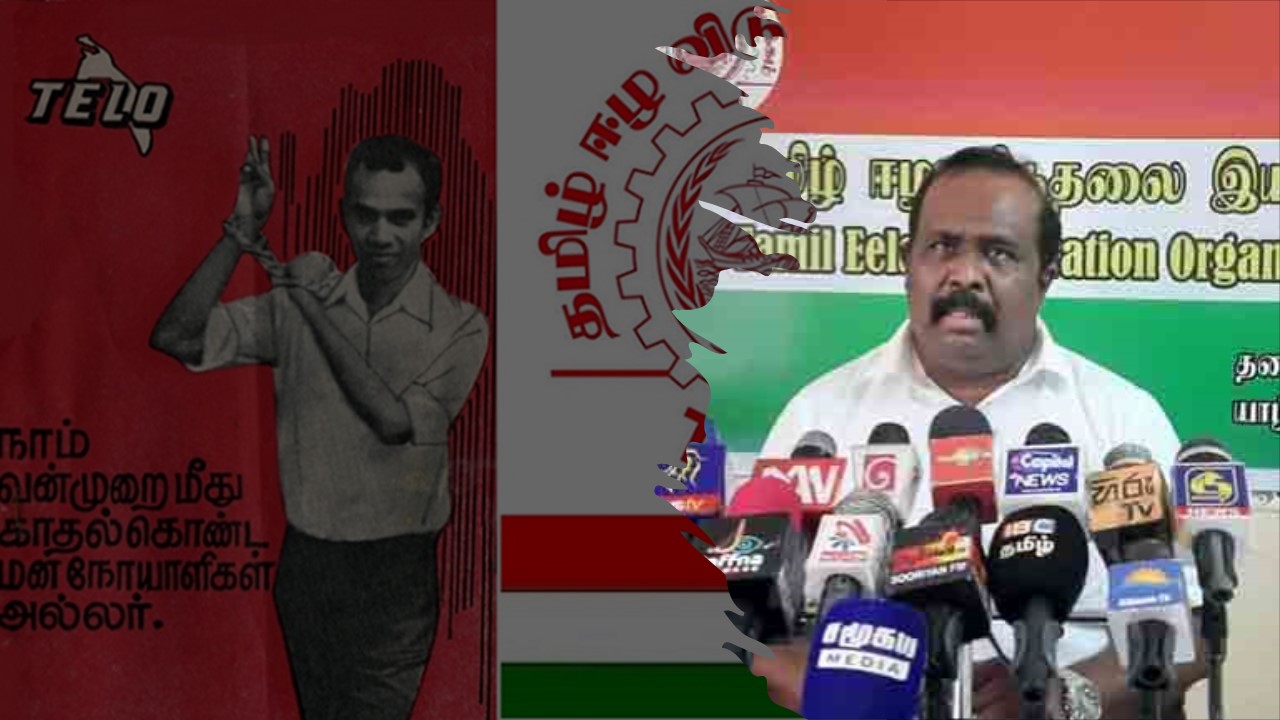
Selvam Adhikalanathan, president of the Tamil Eelam Liberation organization (TELO), said that if no solution is found for the Tamils, they should demand that the North-East should be annexed as a part of India.

Selvam Adikalanathan, Member of Parliament of Vanni District, said that only through this, the sovereignty of Tamils can be protected.

He also alleged that the Sinhala leaders were acting only to drink the blood of the Tamils.

He mentioned that the government leaders are not thinking about making the country strong, but thinking about how to paralyze the Tamils.

Despite our many differences, we must unite for our people, He also requested that the different groups of the Tamil diaspora should also be united in this unity.

Selvam Adhikalanathan said that the Tamil Eelam Liberation Organization will do the work of uniting everyone without talking about nationalism.

Posted in Uncategorized
Tamil National Heroes Day

40th anniversary of Welikada prison massacre commemorated

The 40th anniversary of the Welikada prison massacre was commemorated at Valvettithurai, Jaffna. The massacre which resulted in the murder of 53 political prisoners was instigated during the Black July pogrom by prison officials.

The memorial was held under the leadership of Tamil MP M K Sivajilingam.

Among the victims were:

Selvarajah Yogachandran alias Kuttimani(TELO), Nadarajah Thangavelu alias Thangadurai(TELO), Nadesathasan(TELO), Jegan Alias Sivarasa(TELO), Dhevan, Sivan Anpalagan(TELO), A. Balasubramaniam, Surash Kumar, Arunthavarajah, Thanapalasingham, Arafat, Anpalagan Sunduran, P. Mahendran, Ramalingam Balachandran, K. Thillainathan, K. Thavarajasingham, S. Subramaniam, Mylvaganam Sinnaiah, G. Mylvaganam, Ch. Sivanantharajah, T. Kandiah, S. Sathiyaseelan, Kathiravelpillai, Easvaranathan, K. Nagarajah, Gunapalan Ganeshalingam, S. Kularajasekaram, K. Krishnakumar, K. Uthaya Kumar, R. Yoganathan, S. Sivakumar, A. Uthayakumar, A. Rajan, G. Amirthalingam, S. Balachandran, V. Chandrakumar, Yogachandran Killi, Sittampalam Chandrakulam and Master Navaratnam Sivapatham.

On the 25th July 1983 Nadarajah Thangavelu alias Thangadurai, Sellarasa “Kuttimani” Yogachandiran, leader of the Tamil Eelam Liberation Organisation (TELO) and Ganeshanathan Jeganathan, a political writer, had their eyes gouged out in mockery before being killed by Sinhalese inmates at the high security Welikada prison in Colombo. A total of 37 Tamil prisoners were murdered the same day, and 18 more were killed two days later.

Indian Navy’s indigenously built Khukri-class Missile Corvette Khanjar to be in Trincomalee from July 29 to 31

The Commanding Officer of the Indian Naval Ship, Commander NVS Phani Kumar will be calling on Commander Eastern Naval Area. Further, various professional interactions will be conducted on VBSS, Gunnery and Missile Operations. A reception is planned to be hosted onboard for senior officials from Military and Civil administration. Before departure a Maritime Partnership Exercise with Sri Lanka Navy Ship off Trincomalee is planned on 31 July.

In order to further people-to-people connect and familiarize the people with Indian Navy and its capabilities, the ship will be open for a visit by school children. In addition, public will have the opportunity to visit the ship on 30 July 2023 at Trincomalee Port. The ship will also carry out a Yoga Session, Beach Cleaning and Special School in Trincomalee.

The visit of the Indian Naval Ship Khanjar, a Khukri-Class Corvette, is also significant in view of the potential for cooperation between India and Sri Lanka for augmenting capabilities of Sri Lanka Navy for efficiently addressing shared challenges for maritime security in the region.

It may be recalled that Indian Naval Submarine Vagir had earlier visited Colombo from 19-22 Jun 2023 for celebrating the International Day of Yoga (IDY-2023). Visits by Indian Navy vessels to Sri Lanka further strengthen the camaraderie and interoperability between the Navies of the two neighbours, in keeping with India’s SAGAR (Security and Growth for All in the Region) doctrine and ‘Neighbourhood First’ policy.

The never ending talks on ethnic issues By M.S.M Ayub

The All-Party Conference (APC) held on Wednesday (26) was the second one to be called so and convened by President Ranil Wickremesinghe with a professed view of finding a lasting solution to the ethnic problem in the country. It must be recalled that he convened another “All Party Conference” on December 13 last year for the same purpose.

Interestingly, Wednesday’s conference was not another session of the conference held in December. Although the December conference resulted in several follow-up meetings between the President and the north-based Tamil political parties, they ended with Tamil parties expressing disappointment over the government’s failure to keep its promises made during the December 13 meeting.

Another interesting factor is that both the “All-Party” conferences did not happen to be “all-party conferences” in their essence, as one or more influential political parties had boycotted them. The National People’s Power (NPP) led by the Janatha Vimukthi Peramuna (JVP) did not attend Wednesday’s meeting, claiming that the government was going to hoodwink the country and divert people’s attention from the economic crisis by convening this conference.

President Wickremesinghe met several Tamil political parties on the day before his two-day visit to India which commenced on July 20 and informed them that he was prepared to implement the 13th Amendment to the Constitution without granting Police powers to the Provincial Councils.

That was a stand-alone meeting and it is got nothing to do with the so-called APCs held on December 13 and last Wednesday. Neither did the President announce at that meeting that he would call an APC after his India visit.

Hence, one has to conclude that Wednesday’s “APC” has been decided during or after that visit, owing to the mood of the Indian leaders over the President’s announcement that the Police powers would not be granted to Provincial Councils.

Going by this history of talks leaders of the government and the Tamil community seem to hold talks for another two or three decades or eternally on the subject
This argument is being vindicated by the fact that Wednesday’s meeting was announced to the media first by Foreign Minister Ali Sabry and not by the President or Prime Minister Dinesh Gunawardena, who handles the subject of provincial councils.

Police and Land Powers that are not being enjoyed by the Provincial Councils since the institution of those councils in 1988 have in fact been devolved (granted) to them from the beginning.

However, they can enjoy those powers only when the President formulates the relevant mechanisms for it which are provided for by the 13th Amendment. That is, the President has to create Provincial Police Divisions under Deputy Inspectors General of Police (DIGs), in order to implement police powers in full while a land commission has to be appointed in respect of land powers.

None of the Presidents including J.R. Jayewardene during whose tenure these powers among others were devolved to Provincial Councils formulated those mechanisms.

Chandrika Kumaratunga who demanded these mechanisms be created when she was the Chief Minister of the Western Province in 1994 too did not think it fit to do so when she assumed Presidency in the same year.

Despite the merits and demerits of provincial councils enjoying Police Powers, President Wickremesinghe’s statement that Police Powers would not be awarded to the Provincial Councils was a clear U-turn from his earlier stance.

He, during the budget debate in December last year, stated that a solution to the ethnic problem would be found before the 75th Independent Day which fell on February 4, this year. Then the Tamil parties threw a challenge to him to implement the 13th Amendment in full and hold the provincial council elections before January 31 which he accepted.

The Tamil parties demand that the 13A be implemented fully before finding a lasting solution to the ethnic problem and the President’s positive response to it indicates both parties’ agreement that the solution so suggested is something beyond the 13A.

The Tamil parties demand that the 13A be implemented fully before finding a lasting solution to the ethnic problem and the President’s positive response to it indicates both parties’ agreement that the solution so suggested is something beyond the 13A
Also by acknowledging the full implementation of 13A, the President takes the responsibility to empower provincial councils to enjoy all powers devolved to them including police and land powers.

Then, addressing a gathering on this year’s National Thai Pongal Day (January 15) ceremonies in Jaffna Wickremesinghe said that 13A would be implemented within the next two years.

Subsequently, again he changed his plan by claiming that he would agree with the Tamil parties on the solution to the ethnic problem, during his speech at the May Day rally of his party, the United National Party (UNP).

Since these mind changes had not divorced Police Powers from the Provincial Councils, his announcement about 13A sans Police Powers on the day before his India visit would have been a bombshell for the Tamil parties.

The irony of Wednesday’s ‘All Party Conference’ is that it was held against the backdrop of hundreds of discussions the government held with the Tamil Parties, Tamil armed groups, especially with the LTTE and with Indian leaders as well as deliberations within all party conferences and Parliamentary Select Committees (PSC) since the 1950s for the same purpose.

Several important pacts and accords were also agreed upon during some of these meetings.

After the failed Bandaranaike – Chelvanayagam pact of 1957 and Dudley – Chelvanayagam pact of 1965, President J.R. Jayewardene convened a round Table conference in 1984 amidst growing hostilities between the armed forces and the Tamil armed groups.

When it failed Indian government arranged a meeting between the representatives of the government and Tamil parties as well as armed groups in the Bhutanese Capital Thimphu in 1985 which also collapsed with its second round. Jayewardene convened another all-party meeting famously called the “Political Party Conference” (PPC) in 1986.

Against this backdrop, India imposed the Indo-Lanka Accord of 1987 on Sri Lanka, after several rounds of negotiations with the Sri Lankan government and the Tamil groups which resulted in the creation of provincial councils. When the LTTE reneged on the accord the other Tamil groups except for the EPDP also attempted to find new solutions.

Hence, President Ranasinghe Premadasa initiated talks with the LTTE and convened another All-Party Conference in 1989 where the representatives of the LTTE also participated in. Opposition parties boycotted the conference after the first meeting of it, as the agenda had only a speech by the President. Everything collapsed when the LTTE resumed fighting in June 1990.

President Chandrika Kumaratunga again started talks with the LTTE in 1994 which also failed in July 1995, when the LTTE resumed their Eelam war. And a Parliamentary Select Committee was also appointed in 1997 to find a solution to the national question. After about 60 meetings it ended without a final report being produced. Kumaratunga presented a new draft Constitution as well in 2000, focusing on the solution to the ethnic problem. Ranil Wickremesinghe as Prime Minister initiated talks with the LTTE with international mediation in September 2002 and both sides agreed upon a federal mechanism in December.

President Mahinda Rajapaksa in 2006 appointed an All-Party Representative Committee (APRC) the interim report of which was presented in 2008 was never published.

The Yahapalana Government in its turn presented a report through a Constitutional Assembly and it was rejected by Sinhalese nationalist parties as well as some influential Tamil parties.

The Prime Minister of that government, Ranil Wickremesinghe, now holding meetings for the same purpose. Going by this history of talks leaders of the government and the Tamil community seem to hold talks for another two or three decades or eternally on the subject.