IMF reforms, debt restructuring vital for SL’s economic recovery: Japanese envoy

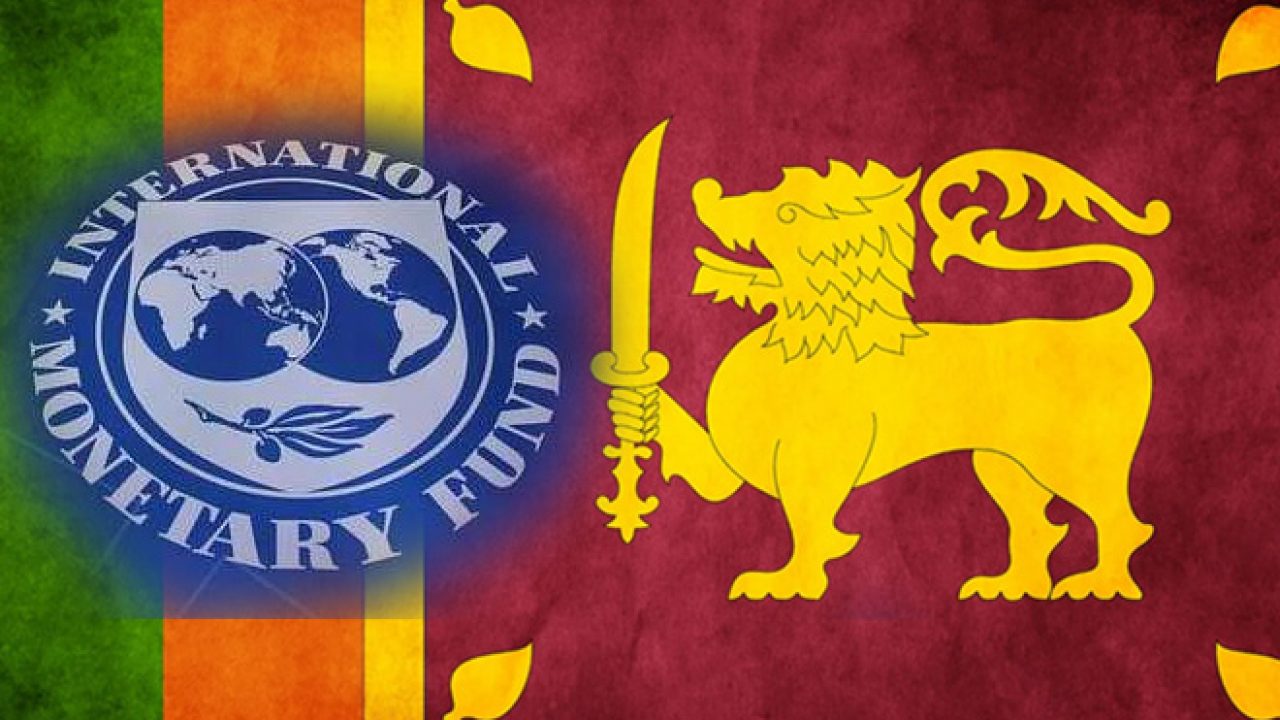
Ambassador of Japan to Sri Lanka, Mizukoshi Hideaki recently emphasised the importance of Sri Lanka completing the International Monetary Fund (IMF) reforms and finalising debt restructuring negotiations for the economic recovery of the country.

“These things will result in better sovereign credit ratings, access to international capital markets,” the ambassador highlighted while addressing the recently concluded 44th Annual General Meeting of the Sri Lanka-Japan Business Council.

“Over the past several months, we have been witnessing several positive signs regarding the economy, including moderated inflation rates and accumulation of foreign reserves. In particular, the approval of the IMF programme in March, resulting in US$ 3 billion support for Sri Lanka over 48 months, marked an important milestone towards economic recovery.

This approval has catalysed further financial support from bilateral and multilateral creditors, such as the ADB and World Bank, enhancing trust from the international community and investors. Another significant progress is observed in the ongoing debt restructuring process. Japan, alongside France and India, launched and chaired the official creditors’ meeting, providing solid cooperation for the debt restructuring,” ambassador Hideaki said.

“Furthermore, the implementation of these reforms will improve the investment and business climate through financial stabilisation and streamlined administrative procedures via digital transformation,” he noted.

Thus, he requested the people of Sri Lanka to fully recognise the necessity of these reforms and take ownership in seeing them through.

“As such, Japan firmly backs such measures to enhance transparency, efficiency, and consistency. To boost foreign reserves more, it is crucial to revive and bolster foreign exchange and sectors including garment manufacturing, tea cultivation, tourism, and remittances from overseas workers in the immediate term,” the envoy added.

Meanwhile, Mahen Kariyawasan was appointed as the new President of Sri Lanka-Japan Business Council for 2023-2024.

Posted in Uncategorized
Tamil National Heroes Day

TAMIL NATIONAL HEROES DAY 40TH REMEMBRANCE DAY

Tamil National Heroes Day 25-07-2023

Welikada Prison Massacred 40th Remembrance Day

எமது போராளிகளின் அர்ப்பணிப்பை அர்த்தம் உள்ள அரசியல் தீர்வை நோக்கி நகர்த்துவோம்

40th Anniversary of Black July 83, TELO Leaders and Fifty three Tamil prisoners were murdered in the maximum security Welikade prison, In the July 83 anti-Tamil program Sinhala thugs, ruling UNP party cadres, sections of Sri Lankan troopers, and Sri Lanka Police killed more than 3000 Tamils and destroyed property worth billions of rupees.

THE MADRAS HINDU OF 10TH AUGUST 1983

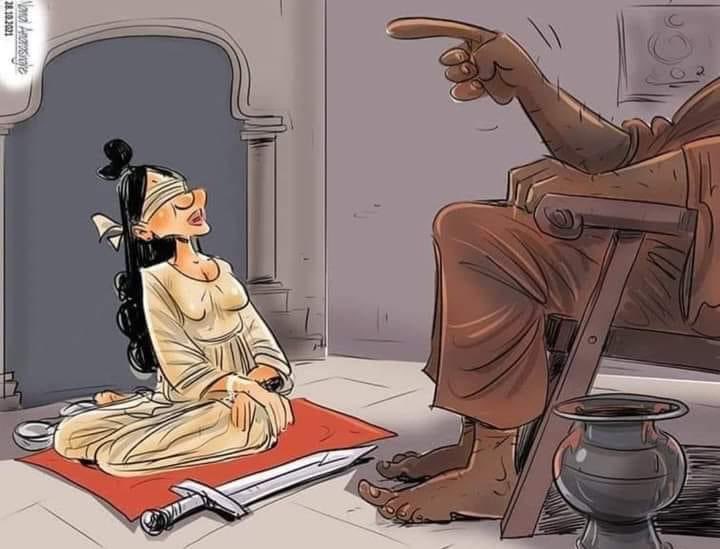
“Selvaraja Yogachandran (TELO), popularly known as Kuttmuni, a nominated member of the Sri Lankan parliament who was one of the 52 prisoners killed in the maximum security Wellikade prison in Colombo two weeks ago, was forced to kneel in his cell, (where he was under solitary confinement), by his assailants and ordered to pray to them. When he refused, his tormentors taunted him about his last wish, when he was sentenced to death. (He had willed that his eyes be donated to someone so that at least that person would see an independent Tamil Eelam.) The assailants then gouged his eyes. He was then stabbed to death and his testicles were wrenched from his body. That was confirmed by one of the doctors who had conducted the post-mortem on the first group of 35 prisoners. According to S.A David,[iii] the thirty-five Tamils were then heaped in front of the statue of Gautama Buddha in the yard of the Welikade prison and when some yet alive raised their heads they were clubbed to death.The second round of killings on July 27 was lead by Sepala Ekanaike, undergoing life imprisonment for the hijacking of an Alitalia plane on its flight from Delhi to Bangkok a year previously. Sinhalese prisoners convicted of murder, rape and burglary charges were handpicked by the warders, who after plying them with liquor, let them loose on the remaining Tamil political prisoners. Seventeen prisoners were killed on this occasion.

Remembering Black July – 40 years since the pogrom

Today we mark 40th years from the horrors of the anti-Tamil pogrom of 1983, when Tamils were killed by Sinhala mobs backed by the then UNP government and state forces.

Sinhala rioters halt a minibus searching for Tamils Armed with electoral rolls, Sinhala mobs targeted Tamil homes and businesses looting and ransacking property. Driven from their homes, particularly in Colombo, over 3000 Tamils were massacred, whilst thousands more were effectively deported by the state to the North-East.

Eye witness reports described mobs chasing Tamils down the street with knives and setting them alight alive. Many hundreds of women were raped. Tamil political prisoners locked up in Welikada jail, deep within the island’s south, were also targeted as prison guards allowed Sinhala inmates to slaughter them.

We look back at events through international press coverage at the time:

21 Jul 1983 – The Times:

“The Government yesterday imposed local and foreign press censorship on all news about national security, law and order, essential supplies, and incitement to mutiny, riot or civil commotion.”

23 Jul 1983 – The Montreal Gazette

“The officials said 17 prisoners died in a jailbreak at the Welikada jail in the capital of Colombo, where 35 Hindu Tamil prisoners were massacred Monday by fellow inmates belonging to the nation’s Buddhist Sinhalese majority. Guards also opened fire yesterday on rioting Tamil prisoners in the jail of Jaffna, 386 kilometres north of Colombo killing three of them”

26 Jul 1983 – The Daily Telegraph:

“Motorists were dragged from their cars to be stoned and beaten with sticks. Others were cut down with knives and axes. Mobs of Sinhala youth rampaged through the streets, ransacking homes, shops and offices, looting them and setting them ablaze, as they sought out members of the Tamil ethnic minority. A mob attacked a Tamil cyclist riding near Colombo’s eye hospital. The cyclist was hauled from his bike, drenched with petrol and set alight. As he ran screaming down the street, the mob set on him again and hacked him down with jungle knives.”

27 Jul 1983 – The Times:

“Here in Britain some of the 25,000 Sri Lanka Tamils blamed the start of the fighting on an incident last week in which three teenage girls at a bus-stop near Jaffna in the north of Sri Lanka were allegedly abducted and raped by soldiers. On girl was later said to have committed suicide.

They also claim another atrocity in which six schoolboys were shot and killed by troops and police in the same area. They blame these incidents for prompting the attack by Tamil guerrillas on a Sri Lankan Army vehicle on Saturday, in which 13 soldiers were killed.”

27 Jul 1983 – The Times :

“These mostly involved in the present troubles are the Ceylon Tamils, a highly educated, superior minority, who feel victimized by the Sinhalese. Not only are there fewer industrial opportunities for them in the north but Tamil boys have been discriminated against in winning places at university”

“Despite their minority status the Tamils for years held top jobs in business and administration under the British, jobs they have mostly since lost under Sinhalese rule. The cause of the present violence must therefore be seen in part economic terms”

28 Jul 1983 – The Times :

“Smoke from hundreds of shops, offices, warehouses and homes blew idly over Colombo yesterday. Any business, any house belonging to, or occupied by a Tamil has been attacked by gangs of goondas (hooligans) and the resulting destruction looks like London after a heavy night’s attention from the Luftwaffe.”

“Government officials yesterday estimated that 20,000 business had been attacked in the city and declared that there was a pattern of organisation and planning in the rioting and looting.”

“One of the principal reasons for Britain’s delay in granting independence to its former colony was because of fears that the majority would tyrannize the minority Tamils. But the majority Sinhala speakers feel that they are threatened by 40 million Tamil speakers in India.”

29 Jul 1983 – The Montreal Gazette :


“Addressing the island nation on radio and television for the first time since violent clashes between majority Sinhalese and minority Tamil erupted six days ago, Jayewardene said the Tamil movement “should have been banned long, long ago. The Sinhalese will never agree to the separation of a country that has been a united nation for 2500 years,” Jayewardene said.

People who advocate separatism the president said, would lose all their “civic rights”, be banned from holding any office and preventing from practising a profession.”

A government official also confirmed that 130 Sinhalese sailors of the Sri Lankan navy broke from their barracks in the port city of Trincomalee Monday and burned 175 houses in a Tamil neighbourhood, killing one Tamil and wounding 10 others.

A Norwegian tourist reported seeing a Sinhalese mob pour gasoline on a minibus full of about 20 Tamils in Colombo and set it on fire. From Oslo, Eli Skarstein was quoted as saying, “Colombo was burning when we left. Women, children and old people were slaughtered. Police and soldiers did nothing to stop this genocide.”

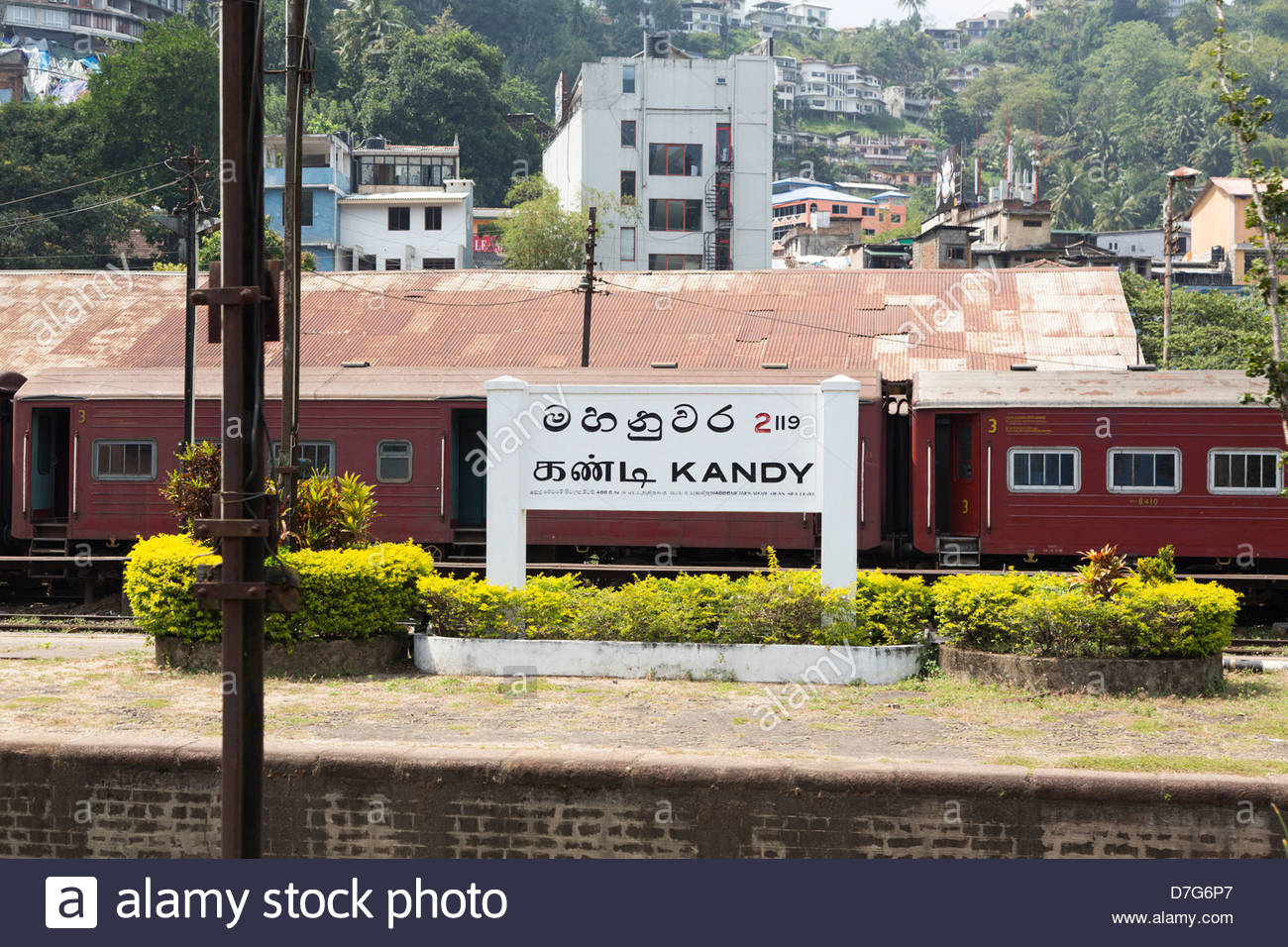
Douglas Liyanage, secretary of the ministry of state, acknowledged that Sinhalese passengers on a Colombo-bound train from the central Sri Lanka town of Kandy had attacked Tamil passengers they suspected of carrying weapons. Passengers said one of the Tamils was chased naked and bleeding through the railway cars until he fell dead and was thrown off.

The wave of killings was touched off by the ambush and slaying of 13 Sinhalese soldiers by Tamil insurgent guerillas over the weekend. But the violence grows out of a century of deeply-rooted hatred, along with differences of language and religion between the Buddhist Sinhalese and the Hindu Tamils.”

29 Jul 1983 – The Times :

“Political parties advocating the partition of Sri Lanka will be banned, President J R Jayawardene announced yesterday as news emerged of a second massacre in Colombo’s main jail.

In an attempt to appease the mobs which have attacked Tamil homes and businesses, the President declared that those seeking partition will “lose their civil rights and cannot hold office, cannot practise professions, join movements of organizations”.

Mr Jayewardene said in a nationwide broadcast: “The government has not decided that the time has come to accede to the clamour and the request, the natural request, of the Sinhala people that we do not allow the movement for division to grow any more.”

29 Jul 1983 – The Age :

“Frustrated expectations of increased self-rule for the Tamil community, coupled with Government fears that its support from the majority Sinhalese was slipping, appear to have been the primary combustibles that ignited the worst violence in this scenic island nation since 1948.”

01 Aug 1983 – The Sydney Morning Herald :

“The Sri Lankan Government has cracked down on political opponents and appealed for public support, saying ethnic bloodshed on the island is part of a foreign-inspired plot to overthrow it.”

04 Aug 1983 – The Times:

“Sri Lanka Army personnel actively encouraged arson and the looting of Tamil business establishments and homes in Colombo. … Absolutely no action was taken to apprehend or prevent the criminal elements involved in these activities. In many instances army personnel participated in the looting of shops.”

Black July’s 40th anniversary functions disrupted

Police and a certain group had disrupted the functions in Colombo to mark the 40th anniversary of the Black July of 1983, said organizers.

A function by North-South Brotherhood near Borella cemetery was interrupted by unknown persons, who accused organizers of receiving funds from NGOs to level genocide charges against the military.

In the meantime, the Socialist Youths Union faced a water cannon attack by the police on their protest march near Town Hall, while being accused of trying to hold a procession against the law.

Organizers said these were against the freedom of expression.

Posted in Uncategorized

Sri Lanka Rupee: Asia’s Best to Worst in Three Weeks

The Sri Lankan rupee has turned into Asia’s worst-performing currency from being the best in the first half of the year, and is poised to extend losses amid headwinds from interest-rate cuts and loosening of import controls.

The currency has tumbled more than 6% this month as it fell a 14th day on Monday, on track for its longest daily losing streak in almost five years.

That’s a stark reversal from its stellar performance in the first six months of this year, when the rupee was Asia’s top performer with a 19% advance. The currency may further weaken by 8% by year-end, according to Natixis SA.

Demand for dollars is rising as the crisis-hit nation eases import controls on more goods such as tiles and medical supplies.

Sri Lanka cut its benchmark rate for the second consecutive meeting early this month amid faster disinflation, a move that’s also weighed on the currency.

“The trade balance will go more negative and more rate cuts may come as inflation is cooling rapidly,” said Haoxin Mu, an economist at Natixis SA in Hong Kong.

Mu forecasts a further 8% depreciation in the rupee to about 355 per dollar by the end of the year.

Posted in Uncategorized

Sri Lanka-born BBC newsreader George Alagiah dies aged 67

BBC newsreader George Alagiah has died at the age of 67, British media reported on Monday.

The Sri Lanka-born journalist – the face of BBC One’s News At Six since 2007 – was diagnosed in 2014 with stage four bowel cancer, which had spread to his liver and lymph nodes.

He endured two rounds of chemotherapy and several operations, including the removal of most of his liver.

In October 2015 he announced his treatment was over and returned to BBC News At Six on 10 November.

Alagiah joined the BBC in 1989 and spent many years as one of the corporation’s leading foreign correspondents before moving to presenting.

In a statement, his agent Mary Greenham said: “I am so terribly sorry to inform you that George Alagiah died peacefully today, surrounded by his family and loved ones.

“George fought until the bitter end but sadly that battle ended earlier today.

“George was deeply loved by everybody who knew him, whether it was a friend, a colleague or a member of the public. He simply was a wonderful human being.

“My thoughts are with Fran, the boys and his wider family.”

BBC director-general Tim Davie said: “George was one of the best and bravest journalists of his generation who reported fearlessly from across the world as well as presenting the news flawlessly.

“He was more than just an outstanding journalist, audiences could sense his kindness, empathy and wonderful humanity. He was loved by all and we will miss him enormously.”

Labour leader Sir Keir Starmer tweeted: “Deeply saddened by the news of George Alagiah’s passing.

“A much-loved face of BBC News for decades, George will also be remembered for his brilliant, fearless journalism as foreign correspondent. He rightly won awards for his evocative, boundary-pushing reporting.

“British journalism has lost a talent. My thoughts are with his family and loved ones.”

Alagiah first began hosting the 6pm news bulletin in early 2003, but stepped up to front it solo four years later following the departure of his co-host, Natasha Kaplinsky.

He was previously a prominent foreign correspondent, often as a specialist in Africa with coverage of civil wars in Somalia and Liberia, as well as the genocide in Rwanda 20 years ago.

Throughout his career, he interviewed central political figures, among them former South African president Nelson Mandela, Archbishop Desmond Tutu, and ex-Zimbabwean leader Robert Mugabe.

Before joining the BBC, Alagiah worked as a print journalist and went on to write a number of books including A Home From Home, which looked at what it means to be British.

Throughout his illustrious career, he also presented other shows such as Mixed Britannia, looking at the UK’s mixed-race population.

He was made an OBE in the 2008 New Year Honours.

Alagiah was born in the Sri Lankan capital of Colombo in 1955 to Tamil and Christian parents. The family relocated to Ghana when Alagiah was six to escape anti-Tamil violence in Sri Lanka.

During the BBC’s coverage of the 2004 Asian tsunami, he returned to the country to find that his grandfather’s former home had been destroyed in the natural disaster.

The journalist spent part his of childhood in Ghana in west Africa where he moved with his engineer father Donald and mother Therese.

The family moved to England when Alagiah turned 11.

It was the landmark Watergate investigation which inspired Alagiah, aged 17, to start a career in media.

Before starting with the BBC in 1989, Alagiah was based in Johannesburg as developing world correspondent for South Magazine.

He was named Amnesty International’s journalist of the year in 1994 for reporting on the civil war in Burundi and also won the Broadcasting Press Guild’s award for television journalist of the year.

He was also part of the BBC team that won a Bafta Award in 2000 for its reporting of the conflict in Kosovo, one of several prizes he received during his broadcasting career.

After first presenting BBC Four News in 2002 he went on to co-anchor the corporations 6pm news bulletin, first alongside Sophie Raworth and then Natasha Kaplinsky.

From 2007 he was the programmes sole presenter while he was also a relief presenter for News at Ten.
He interviewed several world leaders including Nelson Mandela, Robert Mugabe and former UN Secretary-General Kofi Annan.

In 2008, he was made an OBE in the New Year Honours list for services to journalism.

Away from journalism, Alagiah was a published author and his debut novel was shortlisted for a Society Of Authors award.

His thriller The Burning Land, about corruption and homicide in South Africa, was in the running for the Paul Torday memorial prize, which is awarded to a first novel by a writer over 60.

Source: Sky News/Daily Mail

Posted in Uncategorized

AG says Ketagoda’s motion on LG bodies unconstitutional

The Attorney General’s Department yesterday informed the Supreme Court that specific provisions of the Private Member’s Motion submitted by Sri Lanka Podujanaa Peramuna (SLPP) MP Jayantha Ketagoda, which aimed to re-convene dissolved Local Government bodies without holding elections is in violation of the constitution.

The bill proposed by the MP aimed to amend the Municipal Ordinances pertaining to urban councils and municipal councils, granting the subject minister the authority to recall Local Government Institutions for a period of time as deemed necessary.

An Additional Solicitor General representing the Attorney General in court said that if the bill is to be passed, it must be done through a special majority in parliament and requires a public referendum.

The Additional Solicitor General made the announcement regarding the bill when 27 petitions filed against the proposed legislation by MP Jayantha Ketagoda were brought up for examination. The petitioners are seeking an order from the Supreme Court declaring the bill unconstitutional. Ketagoda’s proposal has faced strong criticism from various parties, with many condemning it as a significant threat to the people’s sovereignty, which is safeguarded in the Constitution.

40 Years After The Anti-Tamil Pogrom Of July 1983: Root Causes Remain Unaddressed By Lionel Bopage

Enough has been written about the anti-Tamil pogrom of July 1983, and everyone knows who the perpetrators were. It remained the darkest chapter in Sri Lanka’s history till the end of the armed conflict in May 2009. However, pre-1983 history had seen many campaigns of anti-Tamil violence in 1956, 1958, 1961, 1964, 1974, 1977 and 1981. The anti-Tamil pogrom of July 1983 set the stage for the two-and-a-half-decade-long civil war. And the UNP regime led by then President JR Jayewardene set the strategic framework for simultaneously eliminating the political threats posed to his autocracy by the LTTE in the north and east and the JVP in the south.

This strategy ultimately resulted in the death of about two hundred thousand people, mostly civilians, and the displacement of hundreds of thousands of people who became refugees in their own country and overseas. It gave rise to many thousands of war widows, orphans, and victims of psychological and mental scars. Entire villages with women and children were wiped out. This carnage was unleashed to forcefully establish the dominance of the privileged Sinhala ruling elite over the rest of the populace.

The root causes of the national question that gave rise to this carnage have not yet been addressed by the successive governments of the last forty years. The prelude to it all was a series of discriminatory policies and laws the successive regimes implemented against the non-majoritarian communities, specifically against the Tamil community. Before proceeding to the main objective of this article, it is necessary to provide an abridged context in which the pogrom was launched.

Via the Ceylon Citizenship Bill 1948, the first regime of independent Sri Lanka disenfranchised a million of Malaiyaha[1] workers of Indian origin. Its alleged intent was to facilitate the acquisition of citizenship, but the actual political intent was to deny citizenship to the Malaiyaha workers. This was because they mostly voted for the left oriented candidates. The enormous contribution many generations of Malaiyaha workers had made to the country’s economy was disregarded. Unfortunately, the country, in particular the Sinhalese, is yet to fully appreciate the massive contribution they are continuing to make.

Thus began the de-democratising politics of the country. Since then, the process of disempowering the Tamil community through legislation, state violence and terror proceeded at the expense of building a Lankan nation and identity. Some believe that this process was pursued to reduce the Tamil population, and their parliamentary representation, in order for the Sinhalese to procure a two-thirds majority in the then Ceylon’s House of Representatives. By doing so, it was hoped that Tamils will not be able to prevent the parliament from adopting any policies that will affect them. However, the competition between various political parties in the South followed a process of ethnic outbidding – a process of compartmentalising communities by their ethnolinguistic and religious backgrounds. To do so, they pledged adopting more and better anti-minority, pro-Sinhala slogans. Sadly, this process continues to date.

Historically speaking, the Sri Lanka Freedom Party established by Mr. SWRD Bandaranaike, and its coalition regime, did start this process with its opportunistic Official Language Act of 1956. Commonly known as the Sinhala Only Act, it replaced English with Sinhala and excluded Tamil in official use. There are still many people who do not realize that this Act compelled Tamils to learn Sinhala in order to obtain, retain or receive a promotion in employment. Prior to that they were learning Sinhala at schools on their own volition. The Act also placed the Sinhalese at a disadvantage by turning them mono-lingual and thus, restricting generation after generation of Sinhalese of their upward mobility. Even now, only those affluent families can afford to send their kids to international schools or overseas to receive an education in English.

The Bandaranaike-Chelvanayakam and Dudley-Chelvanayakam Pacts signed between the Government of Sri Lanka and the Tamil political leaders were unilaterally abrogated by the government due to pressure from the extremist Sinhala Buddhist nationalists. They have no regard for the plural nature of the Lankan society. For them the country is solely a Sinhala-Buddhist nation. Thus, for the ruling elite and those in opposition, ethnic, linguistic, and religious chauvinism provided a secure way of coming to power and retaining power.

Sinhalese were continuously relocated from the South to areas where Tamils were dominant – with state-aided programs – causing demographic change for pro-Sinhala electoral advantage. And discrimination continued in favour of the Sinhala ruling elite. In 1972, the regime led by Mrs. Sirimavo Bandaranaike introduced a new Constitution that favoured Sinhalese and Buddhism, and a policy of standardization for university entrance. As a result, Tamil students were required to gain higher marks for university admissions than their Sinhalese counterparts.

These discriminatory measures were implemented in an ongoing environment that involved violence. In the fifties, the Bandaranaike regime used mob violence to suppress satyagrahas and non-violent protests by Tamils. In 1958, the mob violence led to about 300 deaths. Using this as a pretext, the Bandaranaike regime declared emergency and deployed army to the north and the east of the island. Strict orders were given to Colonel Richard Udugama as the Commander to clear the militant elements, even by shooting them[2]. In a similar manner, in 1977, Mr. JR Jayewardene’s regime sent Brigadier Tissa Weeratunga to Jaffna with instructions to ‘wipe out terrorism within six months’. Both Udugama and Weeratunga were allegedly responsible for many atrocities committed in the pre-eighties in the north and east.

The parliamentary representation of the Tamils was unable to address the issues their constituencies were facing. At the 21 July 1977 General Elections, in the south the Jayawardene-led UNP regime was elected to power with a five-sixths majority, while in the north and east, Mr SJV Chelvanayakam led Tamil United Liberation Front (TULF) took the Vaddukoddai Resolution to the electorate, asked for a mandate to establish a separate state, called Tamil Elam, and received an overwhelming mandate. Mrs. Bandaranaike’s Sri Lanka Freedom Party lost all but 5 seats, and Mr. Amirthalingam became the Leader of the Opposition by a quirk of fate – an unthinkable and unacceptable outcome for the majority Sinhalese. This set the stage for the August 1977 anti-Tamil violence, the worst against Tamil civilians until then, hard on the heels of the regime change. The government did little to control this violence as it was state sponsored. And democratic ways of expressing a people’s will was under serious threat.

Under these circumstances, the Tamil youth believed that all democratic means of achieving their legitimate rights and aspirations had been closed, and armed struggle is the only way. The intent of the militant Tamil youth was to free their people from the discrimination they had been subjected to for so long. As such, the taking up of arms by Tamil youth represents nothing more than the failure of the post-independent Ceylon/Lanka to address the most significant issue of building the Lankan nation by uniting communities rather than dividing them along their ethnolinguistic and religious backgrounds.

The first attack on the army was in October 1981, which appears to have been carried out to coincide with the welcome parade arranged for the new Army Commander Tissa Weeratunga, who was promoted to the post for the state terror he had committed in Jaffna. Since then, attacks on army convoys and patrols were on the rise. Whenever the security forces could not track down the attackers, they turned on the civilians. This sort of attacks on civilians has been nothing new. History shows that during many conflicts worldwide, irrespective of who the attackers were, civilians are the ones who bear the brunt of the violence.

In 1983, the infectiously anti-Tamil political leadership within the UNP regime made the situation worse. The pogrom was not spontaneous, but a carefully planned violent attack on Tamils. It was meticulously planned by ministers like Cyril Matthew, monks like Alle Gunawansa Thero who was a close associate of President J R Jayawardene, and other extremists. Most of the time ministers like Cyril Matthew maintained their own armed squads and were operating above the law. One can observe that this trend continues to date. The irony is the Liberation Tigers grew in strength, with many youngsters fleeing the south due to the pogrom joining their ranks.

Prior to the pogrom, there was violence against Tamils in Vavuniya, Trincomalee, and at the Peradeniya campus in Kandy. In May 1983, an army convoy was ambushed and the security forces went on rampage. They shot dead 51 innocent civilians at various places in the Jaffna Peninsula. During another such ambush in June in Vavuniya, the Navy retaliated similarly. Colombo was abounded with rumours that the government was going to wreak a final solution to sort out the Tamil militancy. When 13 soldiers were killed by the LTTE ambush in Thirunelveli on 23 July, the regime found the excuse to launch their long thought-out plan.

The government not only proscribed the LTTE and other similar organisations but the JVP, the NSSP, and the CP were also proscribed in July 1983, initially under the emergency laws. Later on, the proscription continued under the PTA. This took away fundamental rights of those who were arrested. They could be held without charge or trial for up to 18 months, and confessions obtained under duress were made admissible in Court. This was an extension of what the Bandaranaike regime did in 1972 by establishing the Criminal Justice Commissions Act. The regime’s policy was to somehow or other terrorise the Tamil populace into submission.

I, too, was detained in July 1983, allegedly for leading the anti-Tamil pogrom! Prior to that many JVP comrades in Colombo briefed me as to what happened during the pogrom, such as the use of electoral lists to trace the whereabouts of Tamils, organising mobs to attack them, and transporting them in vehicles belonging to the Ceylon Transport Board and other state agencies. I myself already witnessed what those mobs did in the streets of Colombo.

During my detention I provided the horrific information I had about the ministers and monks who were at the forefront of the pogrom to the CID investigators. Instead of investigating those who were really involved, they endeavoured to change my political affiliation from the JVP to the UNP, led by Mr Jayewardene. Political authorities must have asked them not to arrest those really involved in the violence. There were a few arrests in Kandy and Nuwara Eliya, but the Police were asked to release them.

During the pogrom that lasted from July 25 to 29, a total of 53 Tamil political detainees held in the Welikada Prison were also massacred (35 prisoners on 25 July, and 18 prisoners on 27 July). To my knowledge, there have been no effective investigations whatsoever about the Black July pogrom or any of the previous violence launched against Tamils in different parts of the island. There were several mechanisms established that might have addressed some of the issues to a certain extent, such as the Presidential Truth Commission[3], the Lessons Learnt and Reconciliation Commission, the Office on Missing Persons, the Office for National Unity and Reconciliation etc. However, nothing much fruitful has eventuated from these mechanisms.

Most of these mechanisms became ineffective due to the partisan nature of the established mechanisms, political interference, and disregard for any positive recommendations made. The Commissions have been heavily criticised by international human rights groups, the UN Panel of Experts, and civil society organisations due to their limited mandates, alleged lack of independence, and their failure to meet minimum international standards or offer protection to witnesses. This raises the question of whether these mechanisms have been established to be used as tools by the government to prevent an independent international investigation of the most horrible abuses that occurred.

Five thousand or more Tamil civilians were barbarously killed with several hundred made to disappear. Thousands injured and some of them killed while undergoing treatment. Mobs have set Tamil people alight while being alive. Many hundreds of women had been raped. Tens of thousands properties such as homes, businesses and industries belonging to Tamils were attacked, destroyed and set on fire while the security forces were looking on. Over two hundred thousand civilians including business leaders, professionals and others became displaced and had to seek refuge elsewhere[4]. More than a hundred thousand fled to India as refugees, some of them still living in Indian refugee camps under squalid conditions and extreme difficulties.

Despite President Jayewardene and his regime laying the blame for the pogrom on the Sinhalese people[5], many Sinhalese risked their lives to find shelter and save Tamils who had been the victims of the mob attacks by the extremist elements. The nationalists of the extreme kind, and chauvinists, would have been supportive of the violence, but the majority seemed to have become powerless bystanders. However, under the international gaze (especially for India and its people), the regime first attempted to shift the blame on the Sinhalese people as a whole[6], and then on some of the leftist political entities.

The regime did not stop the process of de-democratisation. The sixth Amendment[7] to the Constitution was enacted on 8 August. The parliamentarians that represented the Tamil people in the north and east of the country were forced to cease serving as Members of Parliament.

The main reason for the non-occurrence of mob violence after 1983 was the escalation of the state’s war efforts. One could consider the whole July 1983 episode as an exercise launched by the state to escalate and legitimize its war in the north and east of the country. Since the pogrom days, the occurrence of brutal events in the northeast became more frequent and continuous. The armed conflict came to an end with the defeat of the LTTE in May 2009.

Sri Lanka is a signatory to the UN Convention on the Prevention and Punishment of the Crime of Genocide. The Convention defines Genocide as “an act committed with intent to destroy, in whole or in part, a national ethnic, racial or religious group”. Those who say that there was no genocide in Sri Lanka has never presented any facts or pertinent arguments to debunk the widely held belief. The definition does not refer to the numbers killed, but the intent of the processes undertaken – such as making people to disappear and killings that were carried out in state prisons, setting the Jaffna Public Library ablaze , destroying cultural and religious symbols of the Tamil people, and the policies implemented to creating conditions to prevent the survival of a community – such as economic blockades curtaining the supply of essential needs of life.

None of such incidents are known to have been properly investigated and the perpetrators punished, rather almost all defendants were released on some spurious technical grounds. If we holistically look at the discriminatory policies and activities adopted by successive governments, they will definitely fall within the scope of the definition of genocide. The anti-Tamil pogrom planned and executed in July 1983, and other actions taken and not taken by the governments since then, fall within that scope.

One million Tamils were displaced since the pogrom. Most of them settled overseas, largely in Western countries. They were mainly professionals and experts in diverse spheres of knowledge such as medicine, engineering, accounting, teaching, law, science and commerce. Sri Lanka lost their valuable contribution to its socio-economic, health and infrastructure development. Many countries gained from Sri Lanka’s loss with such professionals making a vast contribution to the prosperity of their adopted countries. It is not only the Tamil youth that attained such a transformation but also the Sinhala and Muslim youth who encountered state terror.

What enduring loss the pogrom has caused to the peoples of Sri Lanka! Is there any wonder that Sri Lanka has become such a failed state?

During an official visit to Australia in February 2017, Mr Ranil Wickremesinghe, the current President and then Prime Minister, asked the Lankan diaspora, both Sinhalese and Tamils, to come back and help Sri Lanka to revive. One wonders if he had any idea about the damage the 1980s regime, of which he was part and parcel as a minister, had done to these people in terms of the trauma inflicted on the first Tamil generation and the second Sinhala generation – who had to flee their motherland fearing death and destruction.

Is it justifiable for the government of Sri Lanka to simply ask for their return, without first addressing the state of affairs in the country and make appropriate conditions for their return? Many of them have been yearning to return to their land of birth and serve the people and the country. But the conditions are not ripe yet. The state needs to ensure that all citizens of Sri Lanka irrespective of their caste, creed, ethnicity, language and religion will be treated with equality and dignity in an environment of tolerance, understanding and safety.

The economic dividends many people in the South expected did not materialise but percolated upwards. The state has not entirely compensated for the colossal damage the pogrom had inflicted. With nearly a million Tamil people relocating, a majority of Tamils in the country live outside the north and east. Most of the advocates for separation appear to be operating from the overseas. And authoritarianism, family bandyism[8] and cronyism are once again attempting to masquerade as patriotism.

With the fundamentalists and extremists escalating ethnic and religious tensions once again aimed at diverting people’s attention away from the current poly-crisis, it is difficult to predict what the future holds. After the Holocaust, not many believed that fascism would survive. But all over the world the dark spectre of fascism and Nazism is raising its ugly head once again with a hue and cry. With the ruling elite and their henchmen trying to find new enemies in Sri Lankan and overseas, one cannot expect a rebuilt and reconciled nation in the near future.

All decent people working towards a better, fairer, and reconciled future for themselves and their future generations will hope that there will never be another pogrom like July 1983. Nevertheless, there is an intrinsic danger of recurrence of the likes of the July 1983 pogrom, and all Sri Lankans should be conscious of the need for eternal vigilance in this regard.

As I have pointed out to the Truth Commission in October 2001[9]:

“In approaching the issue of reconciliation and nation-building, it is critical to appreciate the fact that human rights violations did originate with colonialism and evolved to the current extent during the last five decades since the independence. Under all circumstances special privileges, oppression and exclusion result in the revolt of the oppressed at the first opportunity available. The oppressive state then resorts to force to maintain its unjust rule. Repressive regimes are needed to prop up doctrines of racial superiority, pursuit of narrow interests and special privileges for any one family, class, religion, language or race all premised on the exclusion of the majority of Sinhala, Tamil, Muslim and other peoples.

“The discriminatory regime against its vast majority of peoples and its violent consequences are not an aberration by a few individuals or groups. It has been systematic, deliberate and a matter of policy. Over the years, a system of government has been built in which there is no accountability and transparency; security considerations and military operations are given the highest priority. These circumstances resulted in curtailing individual and group rights of all peoples.

“Therefore, the basic premise in correcting those historical injustices is for the majority of Sri Lankans to pay allegiance to developing, with appropriate consultation and without harming the interests and rights of individuals and groups, a democratic constitution and a culture of tolerance, respect, fairness, equality and dignity of individuals and groups that goes with the constitution. The civic society has to take responsibility for promoting and utilising to the maximum effect the rights that have been attained, and ensure that transparent and accountable government becomes the realpolitik.”

Conclusion

The anti-Tamil pogrom of July 1983 harmed the Tamil people who lived in the South simply because they were Tamils. The intention was to destroy the economic base of Tamils in the South, specifically in Colombo and other urban centres, and for the Sinhala ruling elite to acquire that base. Neo-liberal political and economic greed has no bounds. Nevertheless, we need to strive for the right of any citizen of Sri Lanka to live wherever they chose to if they can afford.

The pogrom was, among other things, a reflection of the economic war of the Sinhala ruling elite to destroy the economic bases held by other nationalities, whether they are Tamil or Muslim, or Chetty. The pogrom, and its extension of nearly 25-year armed conflict, destroyed the Tamil economic base in the South as well as in the North. And successive governments employed their powers for direct oppression. So, why should one be surprised when the Tamil community demands devolution, decentralization, and even separation?

The country has sunk to the rock bottom of economic crisis and moving deeper and deeper into debt with the acquiring of more and more foreign loans. Large chunks of these debts include monies borrowed for the financing of the long and destructive civil war. Already the state has mortgaged future generations to diverse creditors, both domestic and overseas. Despite the impermanent respites like the one Sri Lanka is passing through now, the burden will be back with utmost severity. The state has no genuine intention of resolving the national question and as such, the economic crisis, as the two are intertwined, and are of use to the ruling elite to maintain their corrupt practices.

The ‘Aragalaya’ protest movement last year, was an expression of the aspirations of the majority of Sri Lankans for democratic and better governance and an inclusive and tolerant society. Those aspirations are yet to be realised with the state building vast barriers to curtail their vision for Sri Lanka. Still, I believe there will be many opportunities to fight for achieving their goals. But ending the colonial constructs that all successive regimes have been making use of to thwart peoples legitimate aspirations is the first step. Such aspirations need to include tolerance, reconciliation, transparency, accountability, inclusivity, and protection of everyone’s human rights.

Unless the people decide to get rid of the colonial constructs imposed upon them in respect of economy and the form of the state, the future will continue to remain gloomy.

[1] Poor and illiterate Tamil plantation workers of Indian origin brought to the island by the British to do slavish work in their tea estates.

[2] Kumarasingham H. 2013, A Political Legacy of the British Empire: Power and the Parliamentary System in Post-Colonial India and Sri Lanka, Ch 6, 168

[3] The commission estimated nearly 300 people were killed and 18,000 properties destroyed and recommended compensation. To my knowledge, no compensation has been made and not a single criminal proceeding followed.

[4] The total loss has never been assessed.

[5] Dissanayake T. D. S. A. 2004, War or Peace in Sri Lanka. Popular Prakashan, 78.

[6] Saying that it was a spontaneous reaction of the Sinhala people against the killing of the 13 soldiers in Jaffna.

[7] 3. “(1) No person shall, directly or indirectly, in or outside Sri Lanka, support, espouse, promote, finance, encourage or advocate the establishment of a separate State within the territory of Sri Lanka.” https://www.lawnet.gov.lk/sixth-amendment-to-the-constitution-2/

[8] A term commonly used in Sri Lanka in the past, to refer to ruling clans such as the Bandaranaike and the Rajapaksas.

[9] Cooke M C 2011, The Lionel Bopage Story: Rebellion, Repression and the Struggle for Justice in Sri Lanka, Agahas Publishers, pp. 525 – 563

Posted in Uncategorized

University of Jaffna students commemorate Black July

Students from the University of Jaffna held a commemoration event to remember the thousands of Tamils that were murdered by state-sponsored Sinhala mobs during the 1983 anti-Tamil pogrom.

The students and staff at the university lit a flame and paid floral tributes to mark 40 years since the massacre.

A black flag was also hoisted at half mast at the university entrance.

Between 23rd July and 30th July 1983, Sinhala mobs targeted Tamil homes and businesses, looting and ransacking property. Driven from their homes, particularly in Colombo, over 3000 Tamils were massacred, whilst thousands more were effectively deported by the state to the North-East.

Eye witness reports described mobs chasing Tamils down the street with knives and setting them alight alive. Hundreds of women were raped. Tamil political prisoners TELO founders Thankathuari and Kuttimanei locked up in Welikada jail, deep within the island’s south, were also targeted as prison guards allowed Sinhala inmates to slaughter them.