Canadian Prime Minister remembers Black July victims and renews calls for accountability for human rights violations in Sri Lanka

Canadian Prime Minister Justin Trudeau issued a statement today to mark the 40th anniversary since the 1983 anti-Tamil pogrom where thousands of Tamils were killed by state-sponsored Sinhala mobs.

In his statement, Trudeau said:

“The brutality of Black July escalated tensions in what became a decades-long armed conflict that led to the death of tens of thousands of people, and trauma that communities continue to endure today.”

“On this sombre day, we join Tamil-Canadians and Tamil communities around the world to remember the victims, honour the survivors, and recommit ourselves to always stand against hate and violence,” he added.

Trudeau also highlighted that after Black July, thousands of Tamils fled Sri Lanka to find safety in other countries. He noted that at the time, the Canadian government estbalished a Special Measures program in 1983 and “1,800 Tamil people chose to come to Canada to build a new life – creating one of the largest Tamil diasporas in the world.”

Yesterday, Trudeau met with Tamil victim-suvivors to listen to their testimonies from Black July.

“I had the opportunity to meet with many Tamil-Canadians to hear their tragic memories of Black July, join them in honouring the memories of those lost, and thank them for the many important contributions they have made – and continue to make – to our country,” he said in his statement.

President convenes APC on July 26

President Ranil Wickremesinghe will convene an All Party Conference (APC) on July 26 to make the Party Leaders aware about the programmes implemented and programmes expected to be implemented with regard to the national reconciliation.

Leaders of all political parties and independent groups representing Parliament have already been invited to participate in this conference which will be held on July 26 at the President’s Office.

The President has presented a comprehensive proposal for reconciliation and devolution and for furthering the multifaceted aspects of the development plan in the North and he has invited all the party leaders in the Parliament to work with consensus for the sake of national unity regarding these measures.

President Ranil Wickremesinghe previously emphasised that he has submitted the best proposal related to solving the problems of the people of the North and East, and that the Tamil party leaders should decide whether to take it forward or not.

The President emphasized that the government has not in any way raised any preparation for the integration of the Northern and Eastern Provinces or any discussion about it and that the purpose of this programme is not to get political benefits but to solve the problems of the Tamil people in the North East.

The President intends to fully implement the 13th Amendment of the Constitution only if all the Party Leaders representing the Parliament agree to a full division of powers.

The President is of the opinion that the agreement of all the Party Leaders representing the Parliament is necessary for granting the Police powers mentioned in the 13th Amendment of the Constitution and for that a 2/3 majority in the Parliament is also required.

After the completion of the preliminary work on the division of powers, bills regarding the running of the affairs of the provincial councils are also to be submitted to the Parliament. Under the 13th Amendment of the Constitution of the Republic, the power to make decisions regarding certain subjects is transferred to the Central Government and those subjects must be declared legally.

The draft for the Office of National Unity and Reconciliation has been forwarded to the Attorney General to examine its constitutionality and it is to be submitted to the Parliament soon and the National Action Plan on Reconciliation drafted by the Office of National Unity and Reconciliation (ONUR) will also be submitted to the Cabinet soon, the President stated in the discussion held on the July 18 with Tamil Parliamentarians representing the North and East.

(sundayobserver.lk)

Posted in Uncategorized

No final decision by EU on GSP+

The European Union will make its final decision on the continuation of the GSP + concessions for Sri Lanka when their review for this year concludes.

Until a final announcement from the EU is made the bloc has allowed for the existing concessions to be continued temporarily for another four years.

Once the final decision of the EU is announced that some analysts believe could happen any time closer to the end of this year or even in January 2024, the existing concessions will cease and the new decision will become effective.

Joint Apparel Association Forum (JAAF) spokesman Yohan Lawrence points out that this is favourable for Sri Lanka as this would mean the current scheme gets rolled over for another four years.

“It probably works in our favour,” he said adding that it is possible there would be another review cycle again.

The EU in a twitter post on July 19 stated “As negotiations for our new GSP+ arrangement are still ongoing between the EU’s co-legislators, the European Commission has proposed a four year extension to the current scheme until 31 Dec 2027 so that countries like Sri Lanka, don’t lose their preferential access in the interim.”

Posted in Uncategorized

Jeevan to consult hillcountry MPs over utilisation of Rs. 3 bn Indian grant

CWC General Secretary and Water Supply and Estate Infrastructure Development Minister Jeevan Thondaman yesterday (23) said that he intended to consult lawmakers representing the hill country regarding Indian grant of Sri Lanka Rs 3 bn exclusively for the Indian origin Tamil community here. The new entrant to parliamentary politics said that their proposals would be submitted to New Delhi through the High Commission here.

Minister Thondaman said so in response to The Island query as to how he intended to proceed in the wake of the grant announced by Indian Prime Minister Narendra Modi during talks with the Sri Lanka delegation, led by President Wickremesinghe. Minister Thondaman, who had been on Wickremesinghe delegation, said that the Indian grant would be utilized primarily to uplift education and health sectors.

The CWC contested the last general election on the SLPP ticket.

The Indian High Commission in Colombo quoted Foreign Secretary Vinay Kwatra as having told the media in New Delhi, soon after the conclusion of talks at Hyderabad House, India would implement a development package exclusively centered for the Indian origin Tamil community.

Kwatra said: “This year, as you would all know, marks the 200 years of the arrival of the Indian origin Tamil community in Sri Lanka and to commemorate this significant moment of history the Prime Minister announced that the Government of India will be implementing a development.”

Minister Thondaman said that their focus would be particularly on the education sector. According to him, the Delhi discussions covered the 13th Amendment to the Constitution, energy and economic development, and development of Indian Origin Tamil Community. “I highlighted that providing infrastructure facilities alone will not empower the up country but providing quality education will provide sustainable transformation.”

Tamil Progressive Alliance (TPA) leader Mano Ganeshan issued a statement appreciating the grant announced by Premier Modi.

Posted in Uncategorized

“Black July” One of the darkest days in Sri Lanka’s history

Today (23) is a day that brings back the memories of one of the darkest days in Sri Lankan History.

Today (23) marks 40 years since “Black July” a day on which Sri Lankans who had been living in peace and harmony for thousands of years were divided and pitted against each other, all for the selfish political goals of a few.

The violence that gripped Sri Lanka on a day like today, 40 years ago split our society in half and changed the course of our nation forever.

The violence on that day claimed the lives of many of our brothers and sisters and the destruction to property on that day was immeasurable.

The events that led up to this bloodshed are written in Sri Lanka’s history books and one thing that is clear is that this day of violence was not an isolated incident.

This bloodshed was the result of the political decisions of Sri Lanka’s post-independence leaders, which divided and shattered Sri Lanka’s society.

These political decisions were made to serve the selfish political aspirations of a few and not for the greater good of Sri Lanka.

The rulers consolidated their power while their families’ places in Sri Lanka’s political sphere were assured.

What happened to the people of Sri Lanka?

The people were divided while the economy was in tatters. Thousands of innocent people lost their lives. While this incident was a direct result of the selfish political aspirations of a few, we must not forget the brave Sri Lankans who worked against this violence and bloodshed.

While a few in power worked to sow the seeds of hatred, there were those who protected their fellow citizens at great risk of their own safety.

The story of those who risked their lives to protect their fellow brothers and sisters amidst the chaos speaks volumes of what true Sri Lankan patriotism and brotherhood should be.

Sri Lanka is a stark example of what happens to a nation divided on religious and racial grounds.

The only hope for a better Sri Lanka is to move forward as one people, united in our ambition to become a developed nation.

Posted in Uncategorized

First two Sinopec fuel shipments to arrive in August

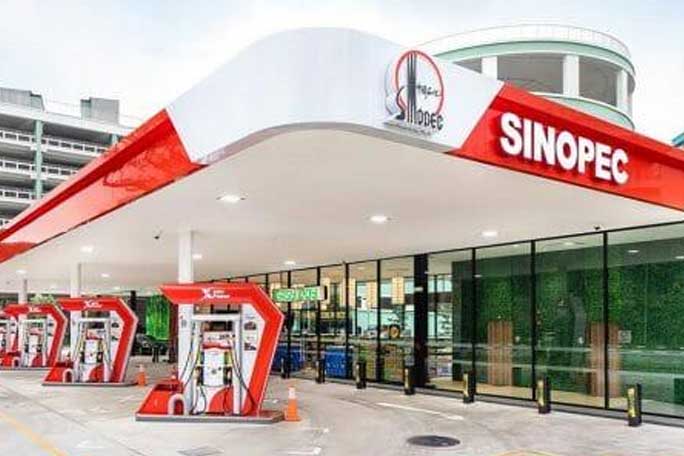
The first two shipments of fuel under the agreement with China’s Sinopec are due to arrive in Sri Lanka next month, State Minister of Petroleum D.V. Chanaka revealed.

Accordingly, Chanaka stated that the two shipments are expected to arrive in the first week of August.

Meanwhile, he assured that a Maximum Retail Price (MRP) will be stipulated by the Government to all fuel companies under the price formula from August.

Sri Lanka signed a contract agreement with Sinopec in May this year, in response to the ongoing foreign exchange crisis.

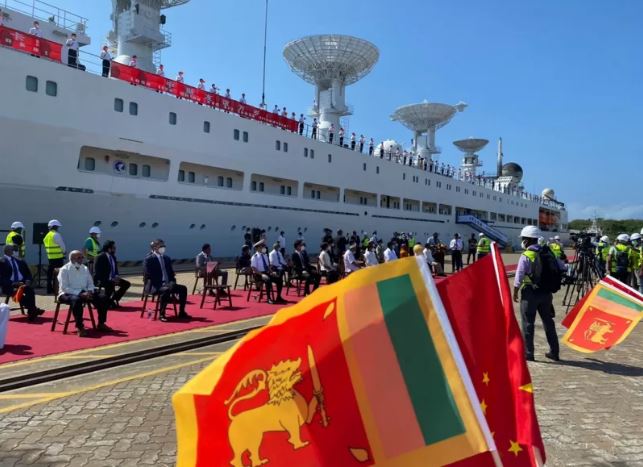
Under the new deal the Chinese firm will be given a 20-year licence to operate 150 fuel stations and will also be able to invest in 50 new fuel stations.

Meanwhile, steps will be taken to replace the fuel price formula with a maximum retail price, thereby creating a fuel competitiveness that benefits the country, State Minister D. V. Chanaka said.

The State Minister also said that it is expected to take a decision regarding the QR code after discussing it with all the parties in the future.

He expressed these views today (23) during a press conference themed ‘Collective Path to a Stable Country’ held at the Presidential Media Centre (PMC).

State Minister of Power and Energy D. V. Chanaka further commented;

The Ministry of Power and Energy was one of the hardest-impacted ministries during the country’s economic crisis. There was an era of oil queues. After President Ranil Wickremesinghe took office, Minister Kanchana Wijesekera took up the challenge of solving the fuel crisis.

There were no dollars in the country at that time. Only two of the 28 fuel suppliers registered with the Ceylon Petroleum Corporation offered to provide fuel to the country. Such was the situation then.

The country’s dollar reserves began to stabilize thanks to President Ranil Wickremesinghe’s sound economic policy. On the other hand, in accordance with Minister Kanchana’s management strategy, it was possible to supply fuel to customers in accordance with the quantity of dollars available in the country by using the QR code.

The fuel queues started to shorten two or three days after the QR code was implemented. The percentage of fuel delivered by QR code is currently being gradually increased.

As the State Minister, Minister Kanchana assigned me four key duties, including ensuring a consistent flow of fuel and boosting competitiveness.

It was decided to establish a fuel procurement program for a year rather than just a few months in order to ensure a steady supply of fuel. Previously, while soliciting bids for fuel, the fuel was purchased based on the amount of room that was available in our warehouses. An effort was made to research the Singaporean system instead.

Later, tenders were called in lieu of the conventional procedure on days when the price was the lowest in the world.

Previously, there were no arrangements to maintain buffer reserves. So far, steps have been taken to maintain a reserve of 30,000 litres of fuel including petrol and diesel. We are in charge of additional 60 million dollars in addition to the money needed for daily expenses.

After studying the existing methods in the world, a new method was introduced in this country. Accordingly, we no longer pay any advance. Fuel tankers coming to Sri Lanka should be fully stocked in our warehouses. After that, the necessary purchases for the week are made with the dollars available in the Ceylon Petroleum Corporation.

There are several advantages here. Risk fees were completely eliminated. This new system has the potential to save 300 million dollars per year.

We previously only paid late fees. But as of right now for the first time, we have earned 13 million dollars in late fees from fuel companies only in the first half of this year. The first installment of 3 million dollars is being collected before the 18th. The remaining amount of 10 million dollars will be fully recovered from the suppliers.

In order to increase fuel competitiveness, agreements have been reached with three major internationally registered companies. This will increase competition and offer a sound remedy for the current dollar issue.

By the first week of next month, a ship of Sinopec Company is scheduled to arrive in Sri Lanka. Sri Lanka signed a contract agreement with Sinopec in May this year, in response to the ongoing foreign exchange crisis.

Until now, the fuel price formula existed only for Ceylon Petroleum Corporation. Instead, steps will be taken to set a maximum retail price using the price formula to affect all companies through this new system.

Thus, the Ministry will decide only the maximum retail price in the future. The companies will then be able to provide fuel at a price of their choice subject to the maximum price. This will create competition among fuel companies resulting in reduced fuel prices.

Posted in Uncategorized

A Reflection On Forty Years Since The ‘Black July’ Anti-Tamil Pogrom In Sri Lanka By K. Mukunthan

The cause-and-effect of 1983 anti-Tamil pogrom

It is forty years since the 1983 anti-Tamil pogrom (‘Black July’) in which an estimated 3,000 Tamils died, hundreds of thousands displaced, and millions worth of Tamil properties destroyed. A crime of monumental proportion to which no one was ever held responsible. During the peak of the violence, J.R. Jayewardene, the president at that time, said, “I am not worried about the opinion of the Jaffna (Tamil) people; now we cannot think of them, not about their lives or their opinion………. really if I starve the Tamils out, the Sinhala people will be happy” – supposedly reflecting the mood in the South of the country and exposing his own attitudes towards the non-Sinhala populace.

Undoubtedly, Black July was the tipping point on Tamil people’s history in Sri Lanka. It is no exaggeration that almost every Tamil was made to feel they did not belong to the country, and they would always be second class citizens. Even for their basic physical security, they were transported to the North-East of the country where they had historic links and were the majority.

‘Black July’ did not happen in a vacuum. In fact, there was an air of inevitability about it. The seeds were planted decades earlier – discriminatory Citizenship Act, Official Language Act and educational policies, colonization schemes that altered the demography in Tamil majority areas, abolition of power-sharing pacts under hardline Sinhala Buddhist pressure, the burning of the Jaffna Public Library, enactment of the Prevention of Terrorism Act (PTA) and ensuing routine police and army brutality, and many other anti-Tamil riots of a lesser scale.

The impact of ‘Black July’ was immediate, global, and far reaching. Every Tamil who could find a way to leave the country left. The incipient armed resistance grew big enough to fight a protracted war that lasted two and a half decades with devastating consequences to all. Militarized Sri Lanka grew more authoritarian where human rights were violated without conscience, impunity reigned, and corruption became endemic. The International Community, and India in particular, started to play an ever-increasing role in Sri Lankan affairs, often with charitable intentions.

The longer term impacts

Today, Sri Lanka is economically nearly bankrupt. The excessive violence committed by the armed forces to end the war in 2009 has been a subject of much international scrutiny. A few Sri Lankan top political and military leaders are personae non gratae in many countries. Sri Lanka is often cited as a country that was so promising only a few decades ago but managed to squander everything. Without oversimplification, most of Sri Lanka’s ills can be attributed to a single source – its inability to manage a pluralist society without pandering to majoritarian chauvinism. In effect, what should have been an immense strength, became its defining failure.

Forty years may be a short time in a country’s history, but this is typically half the lifetime of an average person. Many a youth who fled Sri Lanka after ‘Black July’ are now grandparents in some corner of the world. ‘Black July’ was the exodus moment for the Tamil people in Sri Lanka, with nearly one-third of Tamils from North-East Sri Lanka origin – loosely defined as ‘Tamil Diaspora’ – now living in many countries across the world with transformational impact on both, those who left and others who are left behind.

Tamil diaspora phenomenon

Tamil Diaspora settled in most western countries could be characterized as one of the success stories among the recent migrant communities. Building on their inbuilt values of education and hard work, they have many notable achievements – professionally, economically, and through social and political impact in their new home countries. On top of it, they have shown immense passion and commitment to maintaining and passing on their linguistic, religious, and cultural traditions to the next generation. And there was the added incentive – the will to cherish and enhance their identity in countries that did not impose the obstacles they faced in their birth country.

But this romantic notion of migrant success is only part of the story. There are many who lead unsettled and difficult lives – whether as refugees in Indian camps or in other countries without legal certainties or, working physically demanding jobs in harsh climates to meet the economic demands of theirs and the loved ones they left behind. Older people often lead lonely lives in unfamiliar environments with unfulfilled dreams of spending their old age in a homely, village environment. Also, the challenges faced by the young generation caught up between different cultural norms and value systems are not trivial.

Tamil people in Sri Lanka

Compared to those in the diaspora, Tamil people living in Sri Lanka face exceptional challenges. Their areas are de-populated and many lead limited social lives, with their relatives and friends already moved overseas. Parents living alone in their old age with no children to look after has become the new normal. For young people, opportunities are limited, with their regions near the bottom in terms of economic development and educational achievements. The impact of militarization and war related displacements and disappearances continue to haunt them. A generation that took the brunt of the war is still languishing in unpalatable conditions.

In terms of political rights and empowerment, the sense of being second-class citizens in their home country still lingers. The promises given by different Sri Lankan Governments related to accountability, transitional justice, political resolution, and reconciliation remain just that. The political outcome Tamil people achieved after decades of struggle – power devolution through Provincial Councils – remain ineffective with no political will on the part of the Government for full implementation.

A multi-faceted, pragmatic approach

Sri Lanka appears to be a country that resists meaningful change even after historic events such as ‘Black July’, end of war in May 2009, and the Aragalaya resistance in response to the unprecedented economic crisis. Perhaps, only slow and progressive changes are what is possible in an intransient political system that has dominated the country for decades. What the Tamil community, including those in the diaspora, can do under such circumstances?

For the Tamil diaspora, the influence and leverage we can have on our governments’ Sri Lanka policies (including at the UN) are fundamental to our advocacy efforts. But what has often been overlooked is the need to engage with all key stakeholders in Sri Lanka and develop a deeper understanding of the aspirations and fears of each community.

Tamil politics for the past several decades has been driven by the fear of losing its uniqueness and identity in the land where they have been living for centuries. It is also a fact that despite being the dominant majority, the Sinhalese community also suffers from a feeling of insecurity due to certain historical and geographical considerations. There also appears to be some paranoia about Tamil diaspora, with no sympathetic consideration given for their hardship and suffering due to displacement and migration.

We believe it is the responsibility of all communities and their leaders to take steps to reduce both the fear and insecurity of the other. It is in this matter that many politicians have not only failed but, in fact, exploited peoples’ fear for their own political benefits.

It is also unfortunate that ethnic and religious harmony in Sri Lanka has been viewed almost exclusively through a political prism, and the role of the civil society and religious leaders in promoting them has been rather marginal.

Tamil diaspora engagement

Forty years after Black July, Tamil diaspora is confident and capable, and many among them are willing to explore different ways of contributing to the betterment of the Tamil people, and indeed all communities living in Sri Lanka.

While the possibilities are varied, many believe that with genuine and progressive inter-religious and civil society dialogue, including with the participation of Tamil diaspora, Sri Lanka can inch towards a truly pluralist country – a country where no community feels fearful of losing its identity or pride of place, and ‘Black July’ will appear only in history books, never to be repeated.

*Dr. K. Mukunthan is a Director of Global Tamil Forum (GTF) where he is a Senior Member of the Strategic Initiatives Team.

Posted in Uncategorized

Indo-Lanka land bridge: Special PSC to decide on proposal

President Ranil Wickremesinghe has informed senior members of the Indian Government that the Sri Lanka Parliament, following recommendations from a special Parliamentary Select Committee (PSC), will decide on the proposal to build a land bridge connecting India and Sri Lanka, The Sunday Morning learns.

India’s External Affairs Minister S. Jaishankar, during a meeting with President Wickremesinghe on Thursday (20) in New Delhi, had underscored the importance of developing connectivity between the two countries. Wickremesinghe had also agreed that connectivity was important for the two countries.

It is learnt that President Wickremesinghe had proposed the launch of a fully-fledged ferry service between Sri Lanka and India, where vehicles too could be taken between the two countries.

A highly-placed Government source told The Sunday Morning that the Indian side had proposed the building of a land bridge connecting the two countries and the President had observed that it would depend on approval by the Parliament of Sri Lanka.

Wickremesinghe, it is learnt, had told the Indian External Affairs Minister that the proposal would be put before Parliament and a special PSC would be tasked with studying the matter and making recommendations to Parliament.

President Wickremesinghe had also conveyed this message to Indian Prime Minister Narendra Modi during the meeting between the two leaders on Friday (21).

India’s External Affairs Ministry Secretary Vinay Mohan Kwatra told the media last week following Wickremesinghe’s meeting with Jaishankar that the two countries were exploring new ways of improving connectivity between India and Sri Lanka.

SLPP in crisis while President strengthens his position

In a year and three days, Ranil Wickremesinghe has remained President, there is no gainsaying, much has been done to ease the hardships to people from the bankruptcy his predecessor Gotabaya Rajapaksa caused. Lengthy queues are no longer for fuel, cooking gas and what have you.

However, the journey towards fuller economic recovery remains. Other than accelerating efforts, the difficult task is the inability to place a timeline to alleviate all those woes. A comforting factor, spelt out by ruling party politicians, boasts of at least one timeline. They claim that from September, there will be no need to call the country bankrupt. A corollary of that would be that the economy would have improved even further. Of course, one is reminded of their projections last year about the IMF’s Extended Fund Facility (EFF). The coming attraction was repeated almost every month since late last year until it finally arrived in March. The Domestic Debt Optimisation (DDO) got underway after a much-hyped campaign. A few understood and many remain confused. There is suspense over the next EFF tranche in September.

From the time he assumed office, one is not wrong in saying that President Wickremesinghe, who heads a Sri Lanka Podujana Peramuna (SLPP) government, has been preoccupied with arresting a deteriorating economy. The rot became worse after Gotabaya Rajapaksa fled the country. When he returned and ensconced himself in a second government bungalow at Stanmore Crescent, (the first at Malalasekera Mawatha which he complained was “too noisy,”) he sat down with confidants one day to do some soul searching. He told one of them that there were three persons responsible for what he called “misleading” him and the resultant unprecedented chaos. One was a bureaucrat, and the two others were connected to the military. It was the responsibility of one of the two to keep him updated on all ground developments. One was related to protests. However, he had been found wanting on many occasions. One of the listeners asked the former President, “Why did you not sack him if he caused such damage?” The answer left the questioner speechless. “I felt sorry for the poor fellow. That would have ended his career.”

The officer remains to date but the boss who gave him his job was forced out. The moral – in high office sympathy for a favourite overlooking colossal blunders could place a nation in peril. The bureaucrat was faulted for his “erroneous” actions and the officer for allegedly “acting on his own agenda.” In another development, this officer has become the subject of a top-level probe by the Criminal Investigation Department. It must be mentioned that the trio were hand-picked by Gotabaya Rajapaksa for their jobs. He consulted them before making decisions on economic or security matters.

Bribery and corruption

As the leader of the SLPP government, President Wickremesinghe’s other top priority areas were either left out or received less attention. Among a lengthy catalogue, one can say, was the increase in bribery and corruption. True, an anti-corruption law was passed in Parliament this week. This Act, when it comes into effect, will repeal the Bribery Act (Chapter 26), the Commission to Investigate Allegations of Bribery or Corruption Act, No. 19 of 1994 and the Declaration of Assets and Liabilities Law No. 1 of 1975.

The new Bribery Commission that will be established under the Anti-Corruption Act will consist of three members appointed by the President on the recommendation of the Constitutional Council (CC). The Commission will consist of one person who has expertise, reached eminence, and has at least twenty years of experience in law while the other two persons will be those who have expertise, reached eminence and have at least 20 years’ experience in one or more of the following fields:- (i) investigation of crime and law enforcement; (ii) forensic auditing; (iii) forensic accounting; (iv) engineering; (v) international relations and diplomatic services; (vi) management of public affairs; or (vii) public administration.

The President will appoint one among the three Commission members as Chairman of the Bribery Commission on the recommendation of the CC.

The Commission will also have a Director-General appointed by the President on the CC’s recommendation. In a historic first, private sector entities, too, have been brought under the ambit of the Commission to Investigate Allegations of Bribery or Corruption through the new Anti-Corruption Act.

The Act contains provisions for the protection of public officials and employees of private entities who act as informers, witnesses or “whistleblowers”; who expose acts of bribery or corruption. The crime of sexual bribery too has been added as an offence coming under the provisions of the new Act.

Many amendments were introduced to the Bill at the committee stage on Wednesday (19). These included amendments proposed by the Supreme Court (SC), the government and the opposition. One such significant amendment to Clause 162 of the bill ensured that the President too fell within the scope of the new law. The President had earlier been excluded from the bill in view of the definition of a “public official” which had only mentioned officials from the Prime Minister downwards. In its determination into Fundamental Rights petitions challenging the bill, the Supreme Court, however, ruled that excluding the President from the application of the provisions of the bill is “arbitrary and impinges on the sovereignty of the People which includes a right to a Government free of bribery or corruption.”

The new Act will also compel officials from the President and the Prime Minister downwards to submit their assets and liabilities declarations. As such the new Act will apply to many officials who were previously not covered by assets and liabilities declaration legislation. Presenting the bill to Parliament earlier, Justice Minister Wijeyadasa Rajapakshe said that at present, there was no follow-up mechanism to ascertain whether these declarations were correct or not. The only consequence for failure to submit assets and liabilities declarations was a fine of Rs. 1000. Under the new Act that was passed, however, all those coming under its scope must submit assets and liabilities declarations annually. This can be done online if they prefer. Even after retirement, the officials must continue submitting their assets and liabilities declarations for two years from the date of retirement.

During the hearing into the FR petitions challenging the constitutionality of the bill, some of the petitioners’ lawyers argued that select clauses of the bill infringed on the Right to Information (RTI) Act. As per an undertaking given by the Attorney General’s Department to the SC, a sub-clause was added at the Committee Stage to Clause 136 clarifying that the provisions of the RTI Act would apply to the Anti-Corruption Act. The opposition had urged the government to introduce an amendment at the committee stage to give retrospective effect to the bill.

During the Committee Stage on Wednesday, Chief Opposition Whip Lakshman Kiriella said the opposition had repeatedly asked Justice Minister Rajapakshe to include a clause clearly stating that the Bill would have a retrospective effect. Minister Rajapakshe, though, countered that the Bill already states clearly enough that it will have a retrospective effect.

For a long period now, even before the Anti-Corruption law was introduced, bribery and corruption have been on the rise. Even a ruling party parliamentarian was caught red-handed with gold and smartphones in his personal baggage. He smuggled the contraband from Dubai through the VIP Lounge at the Bandaranaike International Airport. He remains free to use this facility again and no action has been taken against him. Crime has galloped and murders are on the rise with Police in most parts of the country unable to arrest the trend. The free availability of weapons has led to an increase in killings. Two other vices which have assumed huge proportions are the smuggling of cigarettes and the manufacture of illicit liquor. The demand for illicit cigarettes and liquor has risen after the government announced price increases for these items.

If these have remained the ground realities for the SLPP government led by President Wickremesinghe, that is now changing significantly. The question that looms large is whether the new developments this week signal early signs of a widening rift within the SLPP. For the first time, SLPP General Secretary Sagara Kariyawasam publicly opposed on Friday President Wickremesinghe’s offer of the 13th Amendment to the Constitution, without Police powers, as an instrument to resolve the ethnic conflict. The offer was first made during a meeting of Tamil political parties and government sources said it was also raised when the President held talks with Indian Prime Minister Narendra Modi on Friday.

The Indian Premier, however, had taken up the position during talks with President Wickremesinghe that 13A should be implemented in full. That would mean the provinces should have their own Police force. He has also further insisted that the elections to Provincial Councils should be held. Nevertheless, the references were not reflected in the official statements. It was Indian Foreign Secretary Vinay Mohan Kwatra who made the revelation at a news conference. Last Monday, ahead of his visit to New Delhi, President Wickremesinghe obtained a series of approvals from the cabinet of ministers. Among them was one which said that all documents would be signed by Milinda Moragoda, Sri Lanka’s High Commissioner in New Delhi.

True, most Tamil political parties have already opposed the move. At least five smaller parties have also written to Premier Modi, ahead of the President’s visit, asking him not to endorse the move. In this instance, that is not the issue. The question is how Kariyawasam was making a conclusive assertion that President Wickremesinghe “has no moral right to make such a statement.” It is very well known not only in political circles but also in the SLPP that Kariyawasam is a staunch supporter of Basil Rajapaksa, the party founder. The question is whether the SLPP did discuss the matter and take a formal decision. If so, it would have been reflected in the form of a statement from the party. Here, he is voicing Basil Rajapaksa’s words to convey that it was the view of the SLPP.

It comes at a time when Basil Rajapaksa’s own standing in the SLPP has come down and he is said to command the support of only around 20 to 21 MPs. A good number of SLPP parliamentarians have voiced their support for President Wickremesinghe. Is Basil Rajapaksa, therefore, using his regular medium to trigger a power crisis within the SLPP? It was only weeks earlier that he voiced publicly that he had confidence in President Wickremesinghe’s leadership. It is known within the SLPP that his efforts to secure ministerial portfolios for more MPs did not materialise.

A detailed report on President Wickremesinghe’s visit to New Delhi appears elsewhere in this newspaper. What was released after talks on Friday between the two leaders was a five-page Vision Statement which among factors dealt with Promoting Connectivity, Catalyzing Prosperity: and India-Sri Lanka Economic Partnership. The mission statement concluded with the following paragraphs: “To establish land connectivity between Sri Lanka and India for developing land access to the ports of Trincomalee and Colombo, propelling economic growth and prosperity in both Sri Lanka and India, and further consolidating the millennia-old relationship between the two countries. A feasibility study for such connectivity will be conducted at an early date.

“Both the leaders directed respective officials concerned to expedite realisation of this shared vision, which will not only impart long-term direction and significant momentum to bilateral cooperation for growth and prosperity in both countries and in the wider region, but also set the future direction of a dynamic India-Sri Lanka relationship, founded on enhanced mutual confidence and trust.”

The centerpiece of the latest Indo-Sri Lanka dialogue is a deal to jointly develop Trincomalee as an energy hub. An oil pipeline is also to be constructed across the Palk Strait. Ahead of the New Delhi visit, President Wickremesinghe was armed with a 16-page document that listed the various measures the government has adopted or proposed to adopt towards ethnic reconciliation.

Even the main opposition , which has been exhorting in the past for the full implementation of 13A expressed reservations. Its General Secretary Ranjith Madduma Bandara told the Sunday Times “We are unaware of what President Wickremesinghe is planning to concede. On such a matter of utmost national importance, he has not thought it fit to consult us, the largest opposition in the country.”

The recent weeks have seen an escalation of political shadowboxing. In what appears as a counter to a small but influential faction of the SLPP, a strong countermove has come from another section. It is led by Negombo district parliamentarian Nimal Lanza, a one-time confidant of Basil Rajapaksa. He said yesterday that he would formally announce the formation of an independent group. “So far, we have 40 MPs supporting us. We need to raise this figure to 50,” he told the Sunday Times. If his contention is correct, those numbers, whether it is 40 or 50 would have to come from the SLPP. Lanza, who coordinates political activity from the Presidential Secretariat to help President Wickremesinghe, said that his independent group would set up an office in Gampaha in the coming weeks. A surprise inclusion in this caucus is Sugeeswara Bandara, private secretary to ex-President Gotabaya Rajapaksa. Does that mean the former President is throwing his weight against the SLPP? Like Lanza, Bandara also operates from the Presidential Secretariat. It is no secret that political opinions between Gotabaya Rajapaksa and his brothers Mahinda and Basil are sharply divided. During the protests (aragalaya) last year, he sought the removal of both from the cabinet of ministers.

Election Commission and President’s Secretary hold special discussion on elections

A special discussion took place between the officials of the Election Commission and the President’s Secretary, focusing on the upcoming election process.

Chairman of the Election Commission, R.M.A.L Ratnayake, confirmed the participation of the Secretary of the Ministry of Finance and a group of Treasury officials in the meeting.

During the discussion, particular attention was given to the arrears owed to the Election Commission from the Treasury. The President’s Secretary instructed the Treasury officials to take necessary actions for the prompt disbursement of funds.

Furthermore, the budget estimate for next year’s election expenditure will be sent to the Treasury without delay. This includes the budget estimate for the presidential election, which will be calculated based on the election day for the following year.

Posted in Uncategorized