The Ranil Wickremesinghe Government is currently facing the first review of the International Monetary Fund (IMF) financial aid package for Sri Lanka while accelerating the country’s debt restructuring programme.
The IMF commenced the review of Sri Lanka’s Extended Fund Facility (EFF) on Thursday (14) through a meeting with officials from the Presidential Secretariat, with the President out of the country attending the G77 confab in Havana, Cuba and then travelling onwards to the US to attend the UN General Assembly (UNGA) in New York. The IMF review is expected to take place during a two-week period.
The IMF team is led by Senior Mission Chief Peter Breuer and Deputy Mission Chief Katya Svirydzenka.
Meanwhile, in the latest progress update on Sri Lanka’s performance in relation to the IMF programme, Verité Research has stated that Sri Lanka verifiably met 38 of the 57 trackable commitments that were due for completion by end-August in its 17th programme with the IMF.
The end-August update on the programme by ‘IMF Tracker,’ an online platform by Verité Research, has shown that the progress on 11 commitments remains “unknown,” while eight have been classified as “not met”.
As for the debt restructuring programme, Acting Finance Minister Ranjith Siyambalapitiya said last week that the Government was hopeful of finalising the Domestic Debt Optimisation (DDO) programme in the coming week, with headway being made in relation to several key issues.
Meanwhile, the restructuring of bilateral debt continues to show signs of reaching finality around end-October despite President Wickremesinghe’s hopes of having a plan in place before his mid-October visit to China.
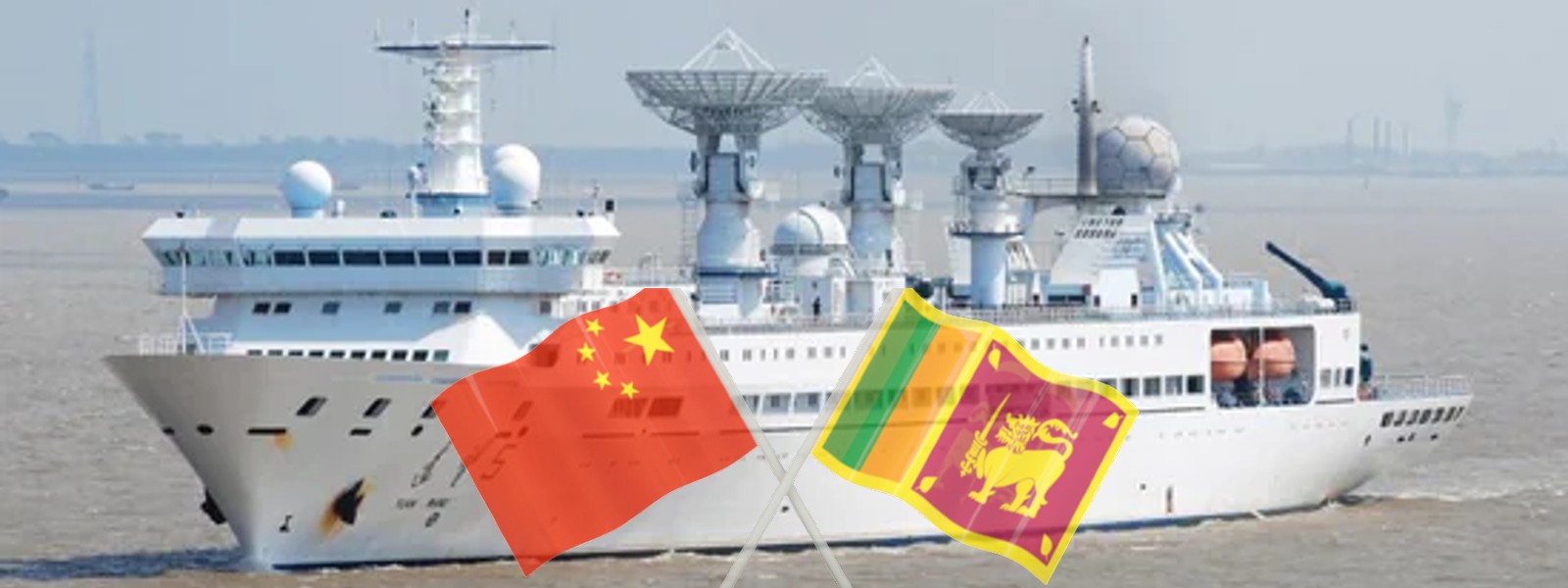
It is interesting that amidst the economic battles, the Sri Lankan Government continues to face geopolitical challenges – this time with another Chinese research vessel, the Shi Yan 6, attempting to visit Sri Lanka next month.
It is learnt that the Wickremesinghe Government remains resolute on its stance that the Chinese vessel cannot be permitted to dock in Sri Lanka next month and that the request could be considered for a date in November. However, media reports last week stated that the relevant Chinese vessel had left China and was on its way to the South Asian region.
Nevertheless, the Sri Lankan Government maintains that permission is yet to be granted along with the date on which the Chinese vessel could call in Sri Lanka.
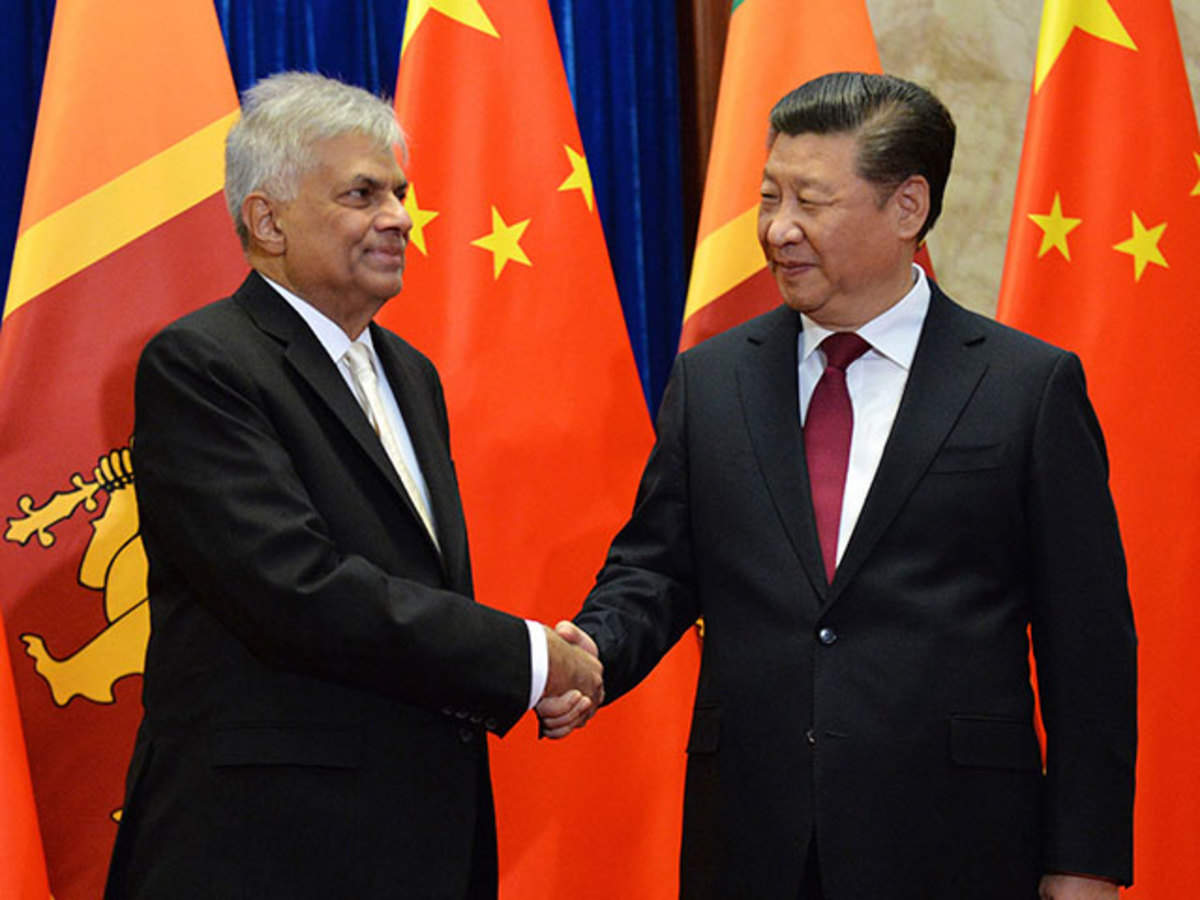
The Sri Lankan Government is in an unenviable position in terms of balancing neighbouring India as well as China, since both are key bilateral creditors of Sri Lanka.
G20 support
Meanwhile, G20 world leaders have expressed commitment to redouble efforts to resolve ongoing debt distress cases like Ghana and Sri Lanka, the US White House has said in a statement.
The White House statement has noted that US President Joe Biden had called on the G20, which met in India last weekend, as leaders in the global economy to provide meaningful debt relief so that low- and middle-income countries can regain their footing as they seek to recover from compounding economic shocks of the last few years and invest in critical development needs.
“Leaders in New Delhi committed to redouble efforts to resolve ongoing debt distress cases – like Ghana and Sri Lanka. President Biden made it clear that the United States expects meaningful progress by the World Bank and IMF Annual Meetings in October,” the White House statement has noted.
The White House has added that the G20 summit in Delhi is a major step forward in providing solutions to the most pressing issues.
Meeting Banerjee
President Wickremesinghe left Sri Lanka on Wednesday (13) morning on an official tour of Cuba and the US, with a transit in Dubai.
During his transit in Dubai, Wickremesinghe had met West Bengal Chief Minister Mamata Banerjee in the lounge. The President had engaged in a friendly chat with the Indian Chief Minister and had asked if she was going to lead the opposition alliance in India.
Wickremesinghe had told Banerjee that he was on his way to Cuba and Banerjee, who was also in transit, had later tweeted that she was pleased to meet President Wickremesinghe.
A video clip of the meeting between Wickremesinghe and Banarjee shows the Sri Lankan President asking if it was okay for him to ask her (Banarjee) a question and when she agrees, he asks if she is going to lead the opposition alliance in India.
The Chief Minister is seen responding saying it will depend on the people.
Wickremesinghe, after sharing a light-hearted moment with the Chief Minister, is seen inviting her to visit Sri Lanka.
SJBer backs off
Meanwhile, main Opposition Samagi Jana Balawegaya (SJB) Parliamentarian from the Monaragala District, W.H.M. Dharmasena, who was due to accompany the President in his delegation to the UNGA, had backed out of the trip to New York at the last minute.
It is learnt that when the final arrangements were being made for the presidential entourage’s visit to the US, the President’s staff had been informed that the SJB MP had backed out of the trip, saying that he did not want to upset his Party Leader (Opposition and SJB Leader Sajith Premadasa).
While the President left the country first to Cuba on Wednesday (13) morning, the President’s delegation to New York had left the country yesterday (16) morning.
Core Group concerns
Meanwhile, the ongoing 54th session of the UN Human Rights Council (UNHRC) in Geneva saw the international community once again expressing concerns over Sri Lanka and the slow progress being made in honouring commitments to the council.
The Core Group on Sri Lanka – Canada, North Macedonia, Malawi, Montenegro, the UK, and the US – has called for effective governance reforms and also noted the arbitrary use of laws to suppress dissent.
The Core Group has said that Sri Lanka has made important recent commitments on land issues and devolution of political authority.
“We encourage Sri Lanka to turn these commitments into meaningful action and deliver long-awaited results. Sri Lanka still has a long way to go to fulfil commitments to justice, accountability, and reconciliation,” the Core Group has told the UNHRC during its 54th session.
The Core Group has also noted preparations for a truth and reconciliation commission and has emphasised on the importance of an inclusive participatory process in the establishment of any mechanisms to advance transitional justice to gain the confidence of all affected communities, in line with international best practices.
The Core Group has further called on Sri Lanka to work with the High Commissioner and his office and remains ready to support Sri Lanka in addressing HRC Resolution 51/1.
India’s strong message
India, however, conveyed a strong message to Sri Lanka at the UNHRC last week, with India’s Permanent Representative to the United Nations and Other International Organisations in Geneva Ambassador Indra Mani Pandey stating that Sri Lanka has been slow in implementing its commitment.
Pandey has noted during the Interactive Dialogue on the Office of the United Nations High Commissioner for Human Rights (OHCHR) report on ‘Promoting reconciliation, accountability and human rights in Sri Lanka’ at the UNHRC that India has taken note of reaffirmation by the Government of Sri Lanka on the implementation of its commitments.
“However, progress on the same is inadequate and we urge the Government of Sri Lanka to work meaningfully towards early implementation of its commitments to ensure that the fundamental freedoms and human rights of all its citizens are fully protected,” he has said.
Pandey has urged the Sri Lankan Government to “work meaningfully” towards early implementation of its commitments to ensure fundamental freedoms and human rights of all its citizens, including Tamils, are fully protected.
“As a close neighbour and friend of Sri Lanka, India has consistently supported Sri Lanka’s efforts towards the relief, rehabilitation, resettlement, and reconstruction process in Sri Lanka since 2009,” he has noted.
India has always been guided by two fundamental principles of support to the aspirations of Tamils for equality, justice, dignity, and peace, as well as unity, territorial integrity, and sovereignty of Sri Lanka, Pandey has further stated.
Pandey has further reiterated India’s desire to see the full implementation of the 13th Amendment to the Constitution.
“We hope that the Government of Sri Lanka will fulfil the aspirations of Tamils for equality, justice and peace and its commitment to implement the 13th Amendment and conduct Provincial Council Elections to ensure a life of respect and dignity for Tamils in Sri Lanka,” he has added.
Govt.’s rejection
However, responding to the OHCHR update, the Sri Lankan Government last week said it has consistently rejected Resolution 46/1 and 51/1 that led to the setting up of the ‘Accountability Project’.
“We also reject the written update, its conclusions and recommendations,” the Government has said.
“We reiterate that it goes beyond the mandate that member states conferred on the council by UNGA Resolution 60/251,” the statement read.
“These resolutions are intrusive and polarising. It is upheld only by a handful of countries for reasons unrelated to human rights, and based on their vote bank domestic politics. Many countries have already raised serious concerns on the budgetary implications of this resolution given its dubious mandate. Sri Lanka has repeatedly pointed out that this is an unproductive and unhelpful drain on the resources of the council and its members. For all the reasons stated above, Sri Lanka will not cooperate with it,” it has noted.
However, the Government has also said Sri Lanka will continue to engage constructively with other mechanisms of the council that have been productive and beneficial to its people, such as the Universal Periodic Review process.
Budget 2024
Meanwhile, on the local front, the Wickremesinghe Government is making arrangements to present its 2024 Budget and is expecting to introduce more proposals to widen the tax base to increase State revenue through next year’s Budget.
State Minister Ranjith Siyambalapitiya has said that the Government intends to implement 65% of the strategies proposed by the committee appointed to recommend revenue-generating strategies by the end of 2023.
He has noted that 25% of the strategies presented to the President to widen the tax base and increase State revenue will be implemented through circulars set to be issued in October, while 40% will be implemented through the upcoming Budget 2024.
According to Siyambalapitiya, the remaining measures mentioned in the strategy report, which was presented to President Wickremesinghe in July, will be implemented as the overall economy starts going forward, as those require amending specific acts related to other Cabinet ministries.
“We don’t expect, under any circumstance, to raise the current tax rates further,” he has added.
Reshuffle issues
Meanwhile, the Wickremesinghe Government is likely to witness some changes prior to the 2024 Budget presentation due in November.
Talk of reshuffling State Ministers by Wickremesinghe upon his return from attending the UNGA has irked a group of State Ministers. Their concern is that reshuffling State Ministers alone will not resolve the issues in the Government, especially with regard to the clashes among Cabinet and State Ministers, without addressing the root causes.
These State Ministers are of the opinion that the failure to assign specific duties to them, failure of senior ministry officials to get State Ministers involved in ministry activities, and corruption among some ministers as well as ministry officials are the issues that need to be addressed, rather than carrying out a reshuffle of State Ministers.
However, members of the Government also believe that the President will proceed with a Cabinet reshuffle, with several ministerial portfolios also facing the likelihood of being reshuffled.
While President Wickremesinghe has the provision to make eight new ministerial appointments in line with the Constitution, reports from some Government sources note that only four new appointments are likely to be made during the upcoming reshuffle.
Meanwhile, the ruling Sri Lanka Podujana Peramuna (SLPP), which had submitted a list of names of its MPs to be appointed to the Cabinet months ago, maintains that there is no truth to such reports as the ruling party has not been informed of any preparations for a Cabinet reshuffle.
Party seniors claim that if there was a move for a Cabinet reshuffle, President Wickremesinghe would have discussed it with the SLPP, which is the ruling party, but there has been no such discussion thus far.
SLPP General Secretary Sagara Kariyawasam noted that the SLPP had sought more portfolios for SLPPers when the President had assumed office, but this had not happened thus far. “However, our request (for more portfolios) is still valid,” he has added.
State Ministers’ woes
Meanwhile, the woes of the disgruntled State Ministers continue, with some of them now having to clash with the secretaries of their respective ministries.
A group of around 35 State Ministers, including Suren Raghavan, D.B. Herath, Chamara Sampath Dasanayake, Arundika Fernando, Shantha Bandara, and Lasantha Alagiyawanna had recently met the President and Prime Minister, where they had complained they were unable to work with the ministry secretaries as well. Some of them had also criticised their subject ministers.
RW meets State Ministers
President Wickremesinghe has also hinted at the gazetting of specific subjects for State Ministers in the coming days.
The State Ministers had first met Prime Minister Dinesh Gunawardena and informed him that they were not willing to work in the current situation as they were being totally neglected by the Cabinet Ministers and have not been entrusted with any authority or responsibility.
The Premier had then taken the State Ministers to meet Wickremesinghe on 4 September, where they had a special discussion with the President.
“When the ministers and State Ministers were appointed by former President Gotabaya Rajapaksa, specific responsibilities were given to the State Ministers and the relevant gazette notifications were published. They had some direct duties. However, what President Wickremesinghe did was to appoint Cabinet Ministers and State Ministers and direct the Cabinet Ministers to gazette what they felt was better for the State Ministers under them. Only Urban Development and Housing Minister Prasanna Ranatunga and Plantation Industries and Industries Minister Dr. Ramesh Pathirana have done it though,” a State Minister who had attended the meeting with the President noted.
The President, at this point, had observed that he would look into the matter and had also informed the State Ministers that their issues would be resolved through a committee comprising the Secretaries to the President and Prime Minister.
RW-Basil talks
Prior to President Wickremesinghe’s departure to Cuba on Tuesday (12), he had a key meeting with SLPP National Organiser Basil Rajapaksa.
While Wickremesinghe and Basil had met on several occasions since the former assumed office, most of the discussions were held on a request made by Basil. However, this time around, it was the President who had invited Basil for a meeting.
President’s Chief of Staff Sagala Ratnayaka had also been present at the meeting, which had lasted for about one hour.
When Basil last met Wickremesinghe in August, the discussion was focused on new appointments to the Cabinet of Ministers, with a focus on SLPPers. Although the issue of elections was also discussed at the meeting, there was no finality on which elections would be held first.
However, it is the issue of appointing more SLPPers to the Cabinet that had caused friction between Wickremesinghe and the SLPP.
It is learnt that the President had indicated his desire to carry out a reshuffle of State Ministers upon his return to the county from the US during this meeting with Basil. However, it is also learnt that Wickremesinghe had refrained from giving out the details of the planned reshuffle and whether new portfolios would be assigned to the SLPPers included in Basil’s list of names of SLPP MPs deserving of Cabinet portfolios.
However, SLPP General Secretary Kariyawasam, when questioned about the meeting between Wickremesinghe and Basil, said that such meetings were very common and frequent since the SLPP was the main coalition partner of the Wickremesinghe Government.
Talk of SLPP candidate
Meanwhile, after hearing about the meeting between the President and Basil, many SLPP ministers and State Ministers had made their way to the Party Headquarters to inquire about the discussion and the matters discussed.
During the meetings between Basil and these senior SLPPers, some SLPPers had asked Basil if the next Presidential Election had been discussed during Wickremesinghe’s meeting and whether the SLPP would back Wickremesinghe during the next Presidential Election.
However, Basil had posed an interesting question to the SLPPers. He had asked what the SLPP members as well as people in their electorates had said around six months ago about the President and the Government. The SLPP ministers had said that the people had said at the time that President Wickremesinghe and his Government should win at the next elections.
Basil had then asked what the same people were saying at present and the SLPP ministers had said that the people were disgruntled with the President and the Government. Afterwards, Basil had observed that the SLPP would have to field its own candidate at the next Presidential Election.
It is this reason that resulted in Basil loyalist, SLPP MP Ranjith Bandara, making an open statement that the party had decided on fielding its own candidate. Bandara reiterated that the candidate would be named at the appropriate time.
EC says no to SLPP
The SLPP, which is on a reforms path, is continuing to push for either the holding of Local Government Elections, nullification of the nominations handed for the polls, or suspension of the circulars that restrict the candidates from engaging in official duties.
However, the Election Commission (EC) has informed that it cannot fulfil a request made by the ruling SLPP to suspend the relevant circulars, which have allegedly caused various difficulties to the candidates who submitted their nominations for the Local Government Elections.
SLPP General Secretary Kariyawasam has told the media that they had been instructed by President Wickremesinghe to write to the Election Commission and convey their concerns regarding the difficulties faced by the Local Government Elections candidates. “We wrote to the Election Commission seeking the suspension of the relevant circulars. They have, however, informed us that there is no possibility to do so,” he has said.
He has further said that they had, on several occasions, informed the President of the difficulties faced by those who had submitted nominations for the Local Government Elections, due to the related election laws and circulars.
“More than 80,000 people, including Government servants, have submitted nominations. They have become helpless now. The Government servants have been transferred to distant areas and their salaries and allowances have been curtailed. There should be some relief for those who came forward in the name of democracy.”
Kariyawasam has also noted that the President must declare a stance on the matter before the presentation of the Budget 2024 later this year.
“We will be able to see if financial allocations will be made in the Budget 2024 to hold the Local Government Elections, but we cannot let these candidates continue to suffer until then. There should be some immediate relief for them. If it is not done, everyone will be reluctant to contest elections in the future. That is a serious threat to democracy.”
Sirisena’s call
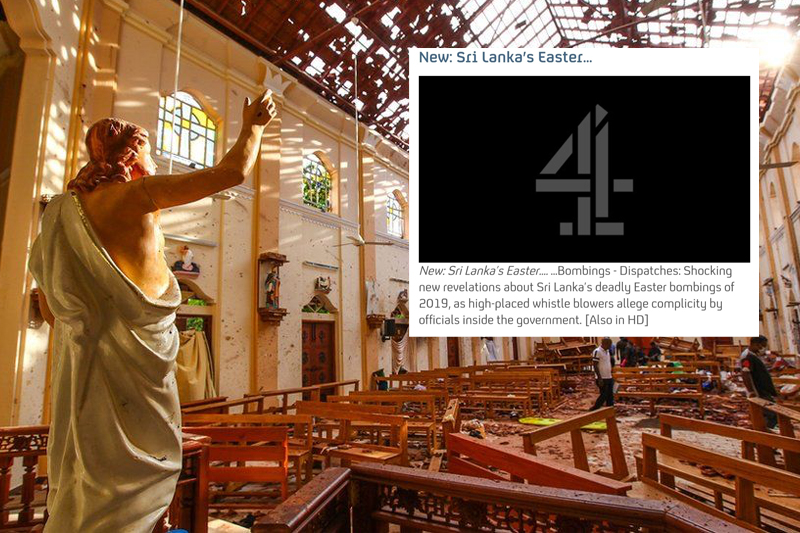
Meanwhile, the controversial video of the UK-based Channel 4 on the Easter Sunday attacks continue to dominate the local political scene.
President Wickremesinghe last week appointed a three-member committee headed by retired Supreme Court Justice S.I. Imam to investigate Channel 4 allegations about the Easter attacks. Retired Air Force Commander Jayalath Weerakkody and President’s Counsel Harsha A.J. Soza were appointed as members of the committee.
However, it is no secret that the public has lost any faith in these committees ensuring justice, given the many reports and recommendations related to the 2019 Easter Sunday attacks probe at the hands of the President.
It is in such a backdrop that Sri Lanka Freedom Party (SLFP) Leader, former President Maithripala Sirisena, who is facing litigation over his failure to avoid the attacks, has called for an international probe into the 2019 Easter Sunday attacks. He has made these calls in light of the revelations made by Channel 4.
Sirisena told the media on Wednesday (13) that although several allegations had been made against him in relation to the terror attacks over the last four years, the British television channel’s documentary had shed a different light on those who should be held responsible for the attacks.
“We are also raising our voices and calling for an international probe into the attacks, as proposed by the United Nations. I have been judged with regard to this matter for four years and court orders have also been given. But when you look at the Channel 4 documentary, it is clear that what actually took place is something completely different to what was perceived,” Sirisena has claimed.
Meanwhile, SLPP Parliamentarian Namal Rajapaksa has said that foreign government agencies which deal with terrorism should conduct a fresh investigation into the Easter Sunday attacks.
“Organisations that deal with terrorism from the UK, India, and the US should conduct a fresh probe into the Easter Sunday attacks instead of various TV channels or Non-Government Organisations (NGOs),” Namal has said, noting that the SLPP would support such a move.
He has added that television channels and NGOs do not have the capacity to investigate terror organisations.
Govt. to clarify
Meanwhile, the Government is to clear doubts that have arisen with regard to the appointment of a committee to look into allegations made by Channel 4 in its recent documentary on the 2019 Easter Sunday attacks and the Ministry of Defence’s denial of such during the adjournment debate on the terror attack and national security scheduled for Thursday (21) and Friday (22).
Following the announcement that President and Defence Minister Ranil Wickremesinghe would appoint a committee headed by a retired Supreme Court Judge to investigate the allegations made by Channel 4, the Catholic Church has questioned the basis of the appointment of such a committee when the Defence Ministry, headed by Wickremesinghe, had already denied the exposé made by Channel 4, deeming such ridiculous.
Top-level sources within the Defence Ministry have stated that the Government will respond to all such concerns during the debate to be held on the Channel 4 claims on Thursday and Friday.
SLFP’s new appointment
Meanwhile, the ongoing clash within the SLFP took a new turn with SLFP Parliamentarian Sarathi Dushmantha Mithrapala being appointed as the Acting General Secretary of the party.
The appointment was made by the party’s Central Committee at a meeting on Monday (11).
SLFP Leader Sirisena had suspended the party membership of the party’s General Secretary Dayasiri Jayasekara.
Mithrapala was previously considered a Jayasekara loyalist and was even among the signatories to a letter initiated by Jayasekara, where Sirisena was accused of destroying the party’s identity.
Supporting Dayasiri
However, Jayasekara continues to maintain his stance as an SLFPer and claimed that ‘the father’ (Sirisena) was being misled and was now having a misunderstanding with the son (Jayasekara)’ when he visited his constituency recently.
Meanwhile, members of the Freedom People’s Council (FPC) have signed a letter to SLFP Leader Sirisena in support of Jayasekara.
The decision to send the letter to Sirisena was reached at an Executive Committee meeting of the FPC that was recently held at the Waters Edge hotel in Battaramulla. Jayasekara had also been invited for the meeting.
Seeing Jayasekara at the FPC meeting, it was speculated that he had joined the group of SLPP dissidents. However, Jayasekara reiterated that he would not leave the SLFP.
The FPC meeting was convened by SLFP member Thilanga Sumathipala and was also attended by MPs Prof. G.L. Peiris, Wimal Weerawansa, Udaya Gammanpila, Prof. Charitha Herath, Weerasumana Weerasinghe, and Ven. Athuraliye Rathana Thera.