Four days more for Maithripala to pay compensation over Easter bombings

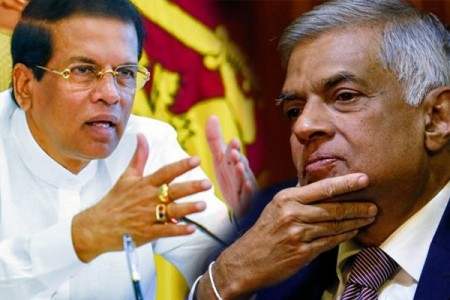
The deadline to former President Maithripala Sirisena and other accused individuals to pay compensation for failing to avert the Easter Sunday bomb attacks will come to an end on Wednesday (July 12).

In a verdict on January 12, the Supreme Court ordered former President Sirisena to pay a sum of Rs. 100 million while former IGP Pujith Jayasundara and former SIS director Nilantha Jayawardhane were ordered to pay Rs. 75 million each as compensation, former Defence Secretary Hemasiri Fernando was ordered to pay Rs. 50 million and former National Intelligence chief Sisira Mendis was ordered to pay Rs.10 million within four months from January 12.

The Court held that these respondents had violated the fundamental rights of petitions filed over the Easter Sunday attacks.

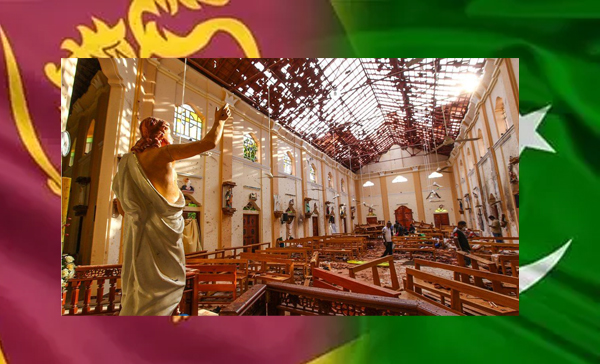
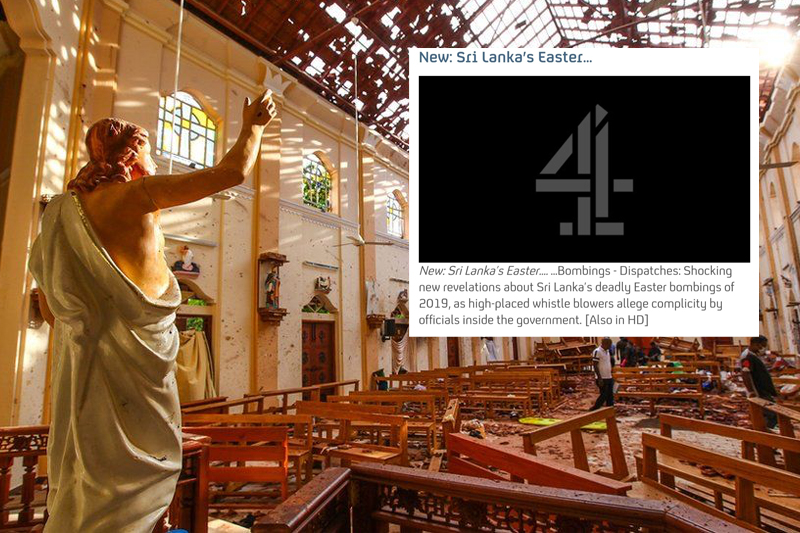
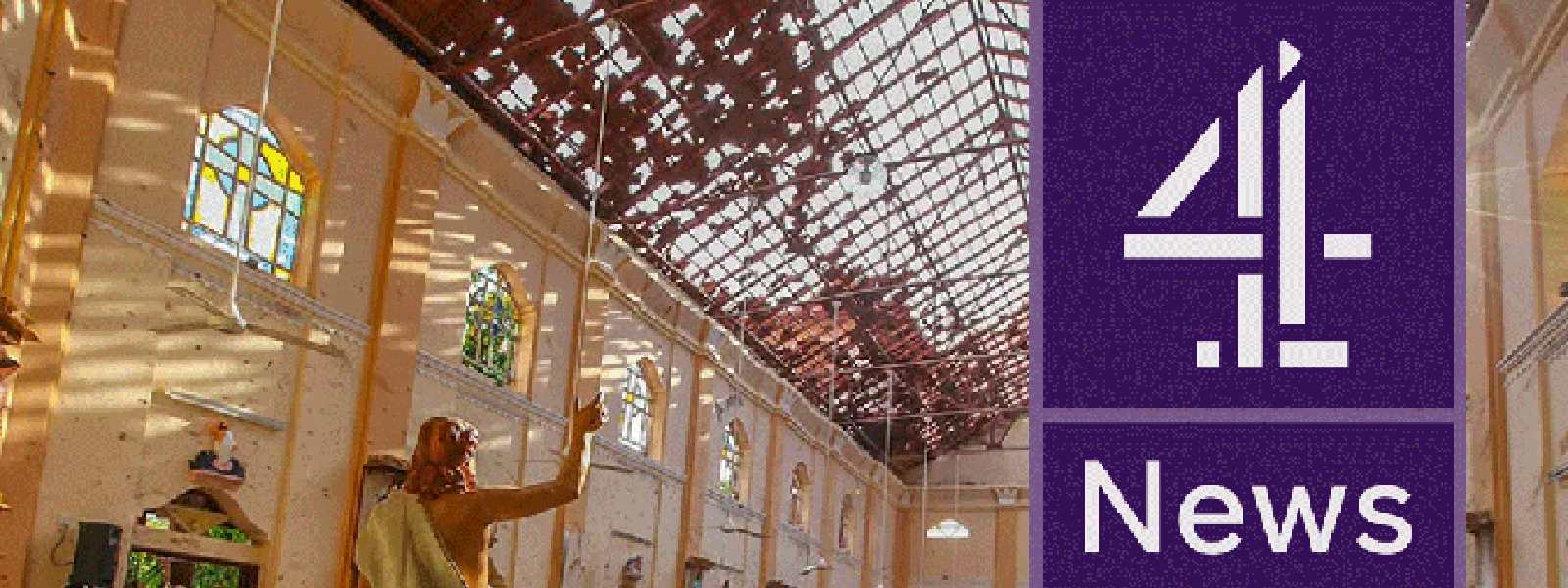
The Easter bombings, the worst attacks in Sri Lanka since the civil war ended in 2009, took place on Easter Sunday in 2019, targeting three churches and three luxury hotels across Sri Lanka, killing 270 people and injuring over 500.

Posted in Uncategorized

JVP accuses SLPP of helping President supersede Parliament

Sri Lanka Podujana Peramuna (SLPP) has allowed President Ranil Wickremesinghe to supersede Parliament with regards to public finance, JVP National Trade Union Coordination Centre Convenor Wasantha Samarasinghe told The Island.

He said the same Parliament that was unaware that Sri Lanka was going to default on April 2022, have voted for the resolution to restructure domestic debt without any understanding of its consequences.

The Government Printer, who had a million reasons to delay the printing of ballot papers for the local council polls, has worked on a Poya Day to issue a special Gazette notification about the domestic debt restructuring process, recently passed in Parliament, Samarasinghe said.

Samarasinghe added that Gazette has been issued by President Ranil Wickremesinghe in his capacity as the Minister of Finance under the Registered Stock and Securities Ordinance, No. 07 of 1937.

“Sri Lanka Podujana Peramuna (SLPP) MPs made Ranil the President. Now the SLPP has given Ranil power over public finance. The Parliament was given power over public finances because a single person should not have such power. However, it is obvious that Ranil now takes decisions on public finance on his own,” he said.

In this gazette, the President has given the Secretary to the Ministry of Finance, Economic Stabilization, and National Policies, and the Registrar of Public Debt the following powers; to offer to any holder of any stock or securities issued in Sri Lanka under the provisions of the Ordinance or any other enactment the option of converting or exchanging, as the case may be, the holding as of 28th June 2023 or part thereof; to convert or exchange, as the case may be, any stock or securities issued in Sri Lanka under the provisions of the Ordinance or any other enactment held by holders into Treasury Bonds to be issued under the Ordinance and to specify the manner in which payment of interest is made and the conditions subject to which such Treasury Bonds may be converted or exchanged, as the case may be, under the Ordinance.

“In April 2022, Sri Lanka declared bankruptcy. The Parliament didn’t know that we were going to default until the MPs saw the press release issued. The same Parliament has passed the resolution on domestic debt restructuring,” he said.

The domestic debt stock is about 42 billion U.S. Dollars. President Wickremesinghe said that he wants the foreign creditors to waive off 17 billion dollars, Samarasinghe said. That’s about 40 percent of the foreign debt stock.

“The President added that local debt holders must also waive off about 40 percent of the value of the debt. He said that there should be equity. However, it is the EPF and other pension funds that is taking a cut. Parliament has approved the stripping down of the EPF and the gazette issued is a part of laws that will be amended to implement what was approved by the Parliament,” he said.

Neither the President nor the Central Bank or Treasury officials have revealed how much of the domestic debt will be restructured, Samarasinghe said.

“122 MPs voted in favour of this resolution. I challenge anyone of those 122 MPs to tell us the amount of local debt that will be restructured,” he said.

The former MP said that for years EPF funds have been invested in sectors that gave less than market rates in return. Now, the government has officially declared that EPF will only get nine percent interest rate till 2038, he said. This is well below what people would have got if they invest in Treasury Bonds.

“EPF has loaned the government significant amounts of money at below market rates for a long time. We have asked the government to appoint representatives from unions and employers to the board that makes decisions on EPF. There are 2.4 million active accounts and 67,000 employers. Shouldn’t they have some representation? This is the largest fund in the country, but the money is being handled without any transparency,” he said.

In 2018, EPF was strapped with a 14 percent tax, up from 10 percent. The Central Bank governs the EPF finds, and it is also entrusted with restructuring domestic debt, and this is a clear conflict of interest. Meanwhile, the owners of the fund have no say in how their money is used.

There are 117 superannuation funds. Each year, due to the lowering of interest rates, workers will lose between 600 and 1000 billion rupees a year from EPF alone, he said.

“The government doesn’t let workers invest in higher-yielding sectors. The Central Bank invests EPF funds in things that give it low returns. After doing that, it proposes to further cut benefits for the workers. Between 2008 and 2012, EPF money was invested in stocks, and workers lost three billion rupees. Over the years, money was invested in SriLankan and other bad bets. How much money did the EPF lose due to the bond scam?” Samarasinghe asked.

Samarasinghe said that the government has done nothing to increase foreign revenue, and once the country starts to pay external debt, the dollar will significantly appreciate against the rupee.

Tamil leaders jointly urge Canadian Director of South Asian Affairs to urge Sri Lanka to implement 13 A

“President Ranil Wickremesinghe talks a lot. He does less. The international community including Canada, America, India, European Union, Australia and Japan should urge President Ranil Wickremesinghe with one voice to implement the 13th amendment in the Constitution and first drum up his integrity. Canada needs to take the initiative. Canada has a right to this as a country that has given shelter to a large number of Tamils who have left the country.”

A top Canadian official had discussions in Sri Lanka covering a range of issues including reconciliation and accountability.

The Canadian High Commission in Colombo said that Marie-Louise Hannan, Director General, South Asia at Global Affairs Canada has concluded a visit to Sri Lanka.

“She met, Tamil Progressive Alliance leader Mano Ganesan MP, Tamil Eelam Liberation Organization leader Selvam Adikalanathan MP, Democratic People’s Liberation Front leader D. Siddharthan MP. They have insisted in person to the Director General of South Asian Affairs of the Canadian Ministry of Foreign Affairs, Maria Louise Hanan.

“The 13th Amendment is not a complete solution to the national race problem. We know this. But before making new laws, let President Ranil Wickremesinghe enact the 13th Amendment Power Sharing Act and the 16th Amendment Language Rights Act in the Constitution. The international community should emphasize it. Today we are tired of talking with the Sri Lankan government. Similarly, we are getting tired of talking about the same thing to the international community” – they said.

In this regard Mano Ganesan MP. In a Twitter post,

“Celebrating pluralism, power sharing, 13th amendment, language rights and equality were usefully discussed with the Canadian side,” he said.

The representatives of the Tamil party leaders representing the Tamil people in this country told the Director General of South Asian Affairs of the Canadian Ministry of Foreign Affairs and the Canadian Ambassador to Sri Lanka that they will never accept this country as a country that belongs only to the Sinhalese Buddhist and they will fight against any Colombo government that promotes such a policy.

Tamil Leaders said that they are getting tired of talking to the government about their aspirations and they are getting tired of explaining to the international community.

The Canadian side told the Tamil party leaders who met them that it was news to them.

The Canadian party told the party leaders that they understand what the Tamil leaders said today.

Sri Lanka rejects core recommendations of UN Human Rights Council

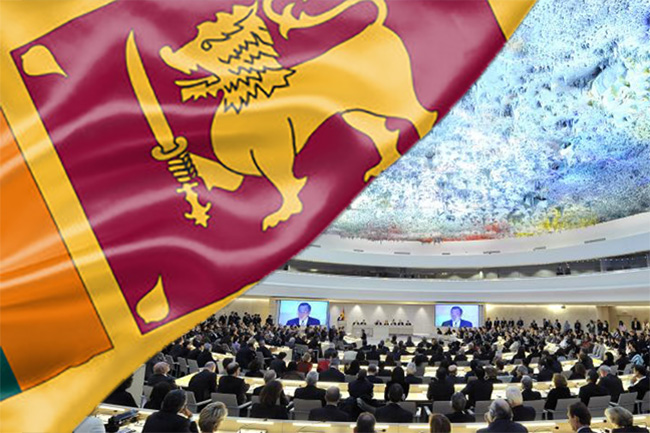
Sri Lanka has rejected key recommendations made by the UN member states at the Universal Periodic Review (UPR) of the island nation placed before the 53rd session of the UN Human Rights Council (UNHRC).

The recommendations included credible transnational justice and reconciliation, accountability, implementing the Council’s recommendations, and ending the culture of impunity.

The reply of the Sri Lankan government is expected to be discussed on July 10 at the UNHRC. The UPR on Sri Lanka was led by the troika of Algeria, the United Kingdom, and Qatar.

Sri Lanka has acknowledged the UPR as a helpful voluntary peer-review process that fosters the sharing of good practices by UN member states in the implementation of human rights commitments and obligations and also facilitates a cooperative approach for countries to domestically fulfill human rights obligations that have been voluntarily undertaken.

While most recommendations are just formal in nature, important ones pertaining to human rights and accountability have been outrightly rejected by the Ranil Wickremesinghe-led government.

The recommendation from its close neighbour India does not speak about accountability for alleged war crimes. Even so, its recommendation to “continue to take measures to ensure that the fundamental freedoms and human rights of all its citizens, in particular all Tamil-speaking citizens, are fully protected” has only been partially accepted.

Most Western nations have called for tougher actions on the human rights front. The recommendations put forward by Australia, Netherlands, Germany, Norway, New Zealand, and the United States of America calling for such tougher actions were outrightly rejected by the Sri Lankan government in its response to the UNHRC.

The United States of America has put forward what is apparently the strongest of all the recommendations. It calls for ending the culture of impunity. “End impunity for human rights violations, abuses, and harassment, especially against members of ethnic and religious minority communities, by holding those responsible to account, including security forces and government officials, and implementing commitments under Human Rights Council resolutions”.

Australia, Norway, Netherlands, and New Zealand have called for the full implementation under the UNHRC resolution 51/1 which calls upon the Government of Sri Lanka in addressing the underlying causes of the crisis, including impunity for human rights violations and economic crimes.

“The United Nations High Commissioner for Human Rights urges the new Government to embark on a national dialogue that would advance human rights and reconciliation and to carry out the deeper institutional and security sector reforms needed to prevent the recurrence of violations of the past”.

Australia in its recommendation has called to “Fully implement a credible transitional justice and reconciliation mechanism consistent with Human Rights Council resolution 51/1 and renew commitments made under Council resolution 30/1”.

Apart from promoting reconciliation, accountability, and human rights in Sri Lanka the Kingdom of Netherlands has not only recommended implementing UNHRC resolution 51/1 but also 30/1 and 46/1.

Germany wants to ensure the independent work of the Office of Missing Persons (OMP) and the Office for Reparations (OR).

“Implement fully the recommendations in Human Rights Council resolution 51/1 and take steps to implement an inclusive transitional justice process in the country” Norway said in its recommendation.

New Zealand in its recommendation called upon Sri Lanka to act in “accordance with resolution 51/1, constructively promote post-conflict reconciliation, domestic accountability, and human rights”.

Sri Lanka in its reply to the oral observations of the Deputy High Commissioner of the UNHRC Nada Al-Nashid in ensuring accountability and in particular the role of the OMP said, it has provided responses to 159 cases in the last two years “brought to its attention by the UN Working Group on Enforced Disappearances (WGEID)”.

However, the government has not responded to thousands of cases reported to the OMP, which has not even found a single person who surrendered, handed over, or went missing.

“Any allegation of disappearance reported to the Police is duly investigated and information on such cases was provided in the National Report of Sri Lanka. The Government has taken measures to investigate all reported cases of alleged disappearances including those related to the last phase of the conflict,” had been the government’s response.

Victims of those who have disappeared or gone missing after being handed over to the state security forces during and after the war have found no tangible investigations over their complaints and none have either been found or the families given a convincing answer.

Four Human Rights organisations recently released a report on mass graves in Sri Lanka and the state’s complicity in hampering investigations into those. War-affected Tamils fear for the life and safety of their near and dear ones who have gone missing at the end of the war 14 years back.

The government has now announced the establishment of a Truth and Reconciliation Commission (TRC), instead of setting up a transitional justice mechanism with international participation which had been the longstanding demand of Tamil war victims.

Sri Lanka’s longest ongoing protest led by women, mostly elderly mothers in search of their kith and kin, is continuing beyond 2300 days.

Human rights activists point out that the Sri Lankan government lacks the political will to investigate allegations of war crimes as the state security forces are the prime accused.

Over 150,000 Sri Lankans leave for overseas jobs in 2023

Over 150,000 Sri Lankans have left for overseas job this year so far.

Deputy Deputy General Manager of the Foreign Employment Bureau Gamini Senarath Yapa says that most of those who left for overseas employment, booked their flights to the Middle-East.

He also believes that by the end of this year over 300,000 will leave for job overseas.

He says that these statistics are only of those registered in the Foreign Employment Bureau.

Posted in Uncategorized

Sri Lankan mother pleads with Australian PM to stop son’s deportation

A Tamil mother has called on Australian Prime Minister Anthony Albanese to intervene to stop her son being deported to Sri Lanka where she fears he could be slain.

Reeta Arulruban arrived in Australia from Sri Lanka by boat in 2012 and was granted permanent residency after more than a decade on temporary protection visas.

She tried to sponsor her son Dixtan but the Immigration Department refused his application in 2016.

Three years later, he managed to seek asylum in Australia arriving by plane but has been detained in Melbourne ever since.

The department last month issued a removal notice for Mr Arulruban, ordering he be deported.

As a member of the Tamil minority group, his mother fears he could be tortured or killed in Sri Lanka.

“Please prime minister, please reunite my son with me, who is the only remaining family member I have,” Ms Arulruban told AAP through an interpreter.

“The prime minister was brought up by a single mother – I hope he understands the bond between a mother and a son.”

Ms Arulruban said no one in the government was listening.

“Please help me and other refugees,” she said.

“I want all the people (refugees) to be given permanent residency.”

Her husband was killed in a massacre in 2009, when tens of thousands of civilians were caught between government troops and Tamil Tiger armed rebels during civil war.

Ms Arulruban, 55, experienced sexual assault at a military camp in 2012.

Her 26-year-old son’s Australian protection application was refused and he has exhausted all avenues for appeal.

Ms Arulruban’s appeal to the prime minister is her last real hope.

“I went through a lot of trauma, I went through sexual assault, I escaped and came to Australia,” she said.

“I was hoping to reunite with my son and they are trying to take him away from me.”

The department said it would not comment on individual cases.

“Individuals who no longer hold a valid visa are expected to depart Australia,” a spokesperson told AAP.

Nina Merlino, a lawyer acting for Mr Arulruban, confirmed she was filing an injunction against the department’s removal notice.

The Tamil Refugee Council said the community was devastated by the looming separation.

“Reeta and Dixtan have yearned for more than a decade to reunite and rebuild their lives in peace after such a traumatic past,” the council’s Renuga Inkapumar said.

(Courtesy AAP)

Posted in Uncategorized

‘No second chance’ to save Sri Lanka, central banker warns

The man charged with clawing Sri Lanka out of bankruptcy says he had warned about economic calamity years before it hit — and was pressed into retirement for his troubles.

Central bank chief Nandalal Weerasinghe was asked to return to the island nation last year to help steer it through a financial collapse that triggered months of food shortages, petrol queues and nightly blackouts.

The 63-year-old says his mandate coincides with Sri Lanka’s one final opportunity to rescue itself from a cycle of economic shocks that stretches back decades.

“There’s no excuse this time, no second chance, we have to get it right this time,” he told AFP at his Colombo office this week.

“This is where I think crisis is an opportunity.”

Weerasinghe was the Central Bank of Sri Lanka’s number two when Gotabaya Rajapaksa was elected president in 2019 on populist promises of generous tax cuts.

Government debt soared as Rajapaksa pursued an unorthodox policy of printing exorbitant amounts of money while holding down exchange and interest rates to spur growth.

“As the senior deputy governor, I always raised concerns,” Weerasinghe said.

But with Rajapaksa’s administration steamrolling objections from him and other senior central bankers, Weerasinghe said he felt he had no option but to take early retirement.

“Obviously I saw if those policies continued in that way… we’ll end up in a situation that I said at that time was exactly what happened,” he added.

Weerasinghe had decamped for a quiet life in Australia, spending time with his children and hitting the golf course five days a week, when Rajapaksa asked him to come back and helm the central bank.

He returned to a country in chaos, its currency in freefall and the government days from defaulting on its $46 billion foreign debt.

The Covid-19 pandemic had dealt a hammer blow to already precarious public finances, as the island’s lucrative tourism industry shuttered and remittances from Sri Lankans working abroad dried up.

Foreign exchange reserves had almost been exhausted, leaving importers unable to buy goods necessary to keep the economy functioning.

Supermarket shelves were empty, long lines snaked from fuel stations, and thermal power stations were forced to ration electricity for 13 hours each day.

By July, Rajapaksa had fled the country after months of protests demanding his resignation for mismanaging the crisis.

– ‘China on board’ –

Rajapaksa’s successor, Ranil Wickremesinghe, has sought to repair the nation’s finances through a $2.9 billion International Monetary Fund bailout.

The rescue package commits Sri Lanka to an austerity regime of steep tax hikes and an end to generous consumer utility subsidies, both of which have proven deeply unpopular.

Its passage was reportedly held up for months when China — Sri Lanka’s largest bilateral creditor — resisted agreeing to a haircut on its loans.

Chinese debt has been controversial politically, with Rajapaksa and his elder brother Mahinda — himself a former president — accused of taking Beijing’s money to finance costly vanity projects.

Weerasinghe said the delays to the IMF package were understandable because Beijing was a relatively “new player” to bilateral lending.

“China is fully on board, and agreed to support Sri Lanka and help Sri Lanka to come out of this crisis,” he said.

– ‘End of the story’ –

Last year brought Sri Lanka’s worst economic downturn in its 75-year history as an independent nation, with GDP contracting 7.8 percent and inflation hitting 70 percent at its peak.

But the island’s tea- and tourism-dependent economy is no stranger to shocks, with foreign exchange shortages triggering recessions and government rationing of consumer goods numerous times in prior decades.

Sri Lanka had already gone to the IMF cap in hand 16 times before last year, but failed to stick with agreed-upon reforms, giving it a serious credibility gap.

Weerasinghe said the country had two choices this time around: if it sticks to its current IMF programme, its economy would return to normal within “two to four years”.

If it did not, Sri Lanka would no longer be indulged if it fell off the wagon and returned to its spendthrift ways at the first sign of stability, he warned.

“This time, the 17th time with the IMF, is different,” he said.

“If you are trying to go back to another programme, that will be most difficult, and I think that will be the end of the story.”

Posted in Uncategorized

Jaffna – Chennai flights to resume from July 16

During the “Transcending Borders – Transforming Lives” programme organized by the Indian Tourism Federation at the Bandaranaike International Memorial Conference Hall in Colombo yesterday, President Ranil Wickremesinghe expressed his belief that the tourism industry would significantly contribute to the country’s foreign exchange earnings in the coming decade.

The President highlighted that comprehensive plans had already been formulated to enhance Sri Lanka’s appeal as a tourist destination and stressed that promoting tourism could lead to an increase in per capita income.

President Ranil Wickremesinghe also emphasized the importance of collaborative efforts among all the BIMSTEC countries to develop the BIMSTEC region into a thriving tourism hub, transcending national borders.

Addressing the event, Indian High Commissioner Gopal Bagle announced the expansion of flights between Chennai and Jaffna, which now operates only four times a week, to begin operations on a daily basis starting from July 16. He further mentioned ongoing efforts to resume the long-discontinued ferry service between the two nations, which had remained inactive for several decades.

Probe into Mullaitivu ‘mass grave’ begins

The Mullaitivu Magistrate and the Police conducted a visit to the suspected mass grave site in the Kokkuthoduvai village, Mullaitivu yesterday (6). This visit marked the resumption of an investigation into the human skeletons discovered on 29 June 2023, during the digging of the ground to install a pipeline for a drinking water project.

The area was tightly secured, preventing access to the public, as the Magistrate conducted an inquiry into the mass grave.

When news of the detection of human skeletons broke on 29 June, villagers quickly gathered at the site. The excavation work was immediately halted and the matter was reported to the Magistrate’s Court by the Police.

The Mullaitivu Magistrate yesterday (6), in the presence of a Judicial Medical Officer (JOM), Police, lawyers, officials from the forensic department, water supply board, department of archaeology, telecom, and the Ceylon Electricity Board, visited the area. The main road in the Mullaitivu-Jaffna Route was closed off for excavation, as the site was located by the Main Road.

Several NGOs have recently raised concerns that approximately 20 identified mass graves have been left unattended.

Posted in Uncategorized

President-toppling Sri Lanka activist girds for new revolt

Student leader Wasantha Mudalige remains lionised by many for channelling public anger at an unprecedented economic crisis into a movement that shook the foundations of Sri Lanka’s political system.

At the height of last summer’s unrest, he helped spearhead a siege of government buildings in Colombo that saw once-loved premier Gotabaya Rajapaksa chased into a humiliating exile.

The 29-year-old, whose cherubic face belies his history of fierce confrontations with riot police, spent months behind bars on terror charges for his efforts.

“We had a very warm welcome,” Mudalige told AFP outside a court appearance in June, while recounting his arrival at jail alongside two confederates.

“Even the prison guards were very supportive. They saw us as the heroes who got rid of Gota.”

Mudalige said his incarceration was a necessary “sacrifice” in the unfinished battle to reform Sri Lanka’s political system.

Now free on bail, he said lingering economic woes have left Sri Lanka bristling with discontent, frustrated with its new president — and ready for another revolt.

“Although we got rid of Gota, we have not been able to win the ‘system change’ that we demanded,” Mudalige said.

“We don’t think the government can go on for long,” he added. “When you analyse the situation, there is no way the government can continue.”

‘They had no alternative’
As head of the Inter-University Students’ Federation (IUSF) at the time, Mudalige stood at the forefront of last year’s street protests.

Alongside him was a broad coalition of saffron-robed Buddhist monks, minority activists and ordinary citizens outraged by government corruption and mismanagement of the island’s worsening economic tailspin.

“They had no alternative but to take to the streets because they had no fuel, no food, no electricity… people were dying in petrol queues,” Mudalige said.

In July the IUSF and its allies laid siege to the Presidential Palace in Colombo.

Rajapaksa, once lauded by the island’s Sinhalese majority for helping crush a decades-long Tamil separatist insurgency, was forced to evacuate the residence through a secret backdoor and temporarily fled the country.

Protesters streamed through the compound, gaping at its opulent furnishings and frolicked in its pool in the revelry that followed.

Rajapaksa’s successor, Ranil Wickremesinghe, quickly sought to restore order by directing police to arrest the movement’s leaders.

Mudalige was caught in the dragnet the following month when police snatched him off the street as he left a demonstration against the crackdown.

He spent 167 days in custody, the longest stretch of detention of all those who participated in last year’s revolt.

The most serious charges against him were eventually dropped after Amnesty International and other rights groups condemned his jailing.

‘Anarchist political forces’
Wickremesinghe has sought to restore Sri Lanka’s ruined finances with an International Monetary Fund bailout that commits his administration to an austerity programme.

The chronic food and fuel shortages that inflamed public anger last year have since ended as the government reined in public spending.

But steep tax hikes, and the end of generous subsidies on electricity and fuel, have been deeply unpopular.

Wickremesinghe says the reforms are necessary to bring Sri Lanka out of bankruptcy and restore economic growth.

He pledged in February to press ahead “regardless of the obstacles that anarchist political forces seek to create”.

His administration has maintained a tough line against protests, with periodic demonstrations quickly dispersed by tear gas and water cannon trucks.

Mudalige said his detention and that of other protest leaders was an effort by the government to forestall a repeat of last year’s unrest.

But he warned the public’s frustrations over the spiralling cost of living would inevitably bring people back to the streets, unbowed by the threat of violence.

“The government is using the police and the military to suppress any dissent. It is like pressing down a rubber ball in a basin of water,” he said.

“You can’t do it for long. It will inevitably bounce to the top.”

Source:France24.com