Falling Hindu population in Sri Lanka provinces a cause of concern: Tamil Nadu BJP president

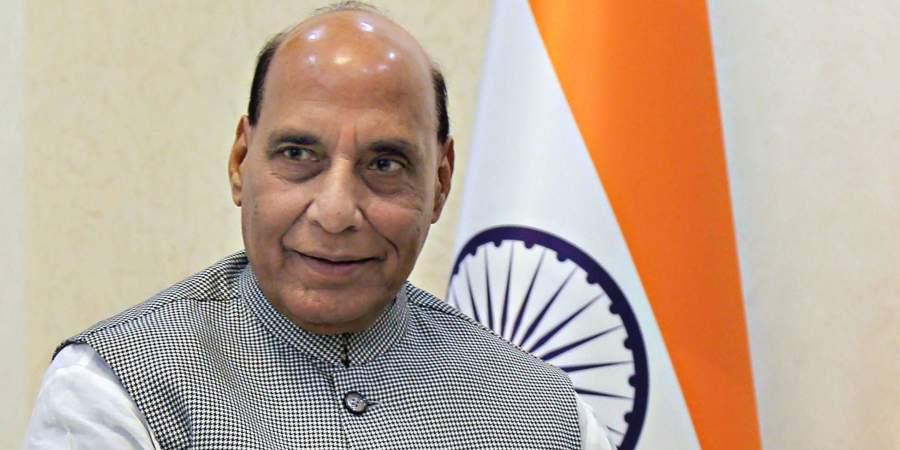
Tamil Nadu BJP president K Annamalai has expressed concern about the declining Hindu population in the north and eastern provinces of Sri Lanka, where Tamils form the majority, the Times of India reported.

In the UK for a week-long visit, Annamalai on Tuesday spoke on the historical and cultural ties between India and Sri Lanka at a chamber in the House of Lords in London.

The event was organised by Britain Tamil Sangam and Sangamam UK, a UK-based Tamil cultural organisation. In his speech, Annamalai highlighted the alarming decrease in the Hindu population in Sri Lanka’s north and eastern provinces.

“The significant decline in the Hindu population in the north and eastern provinces of Sri Lanka is an area of concern. This trend is worrisome as it will have a detrimental impact on the region’s culture in the years to come,” said Annamalai.

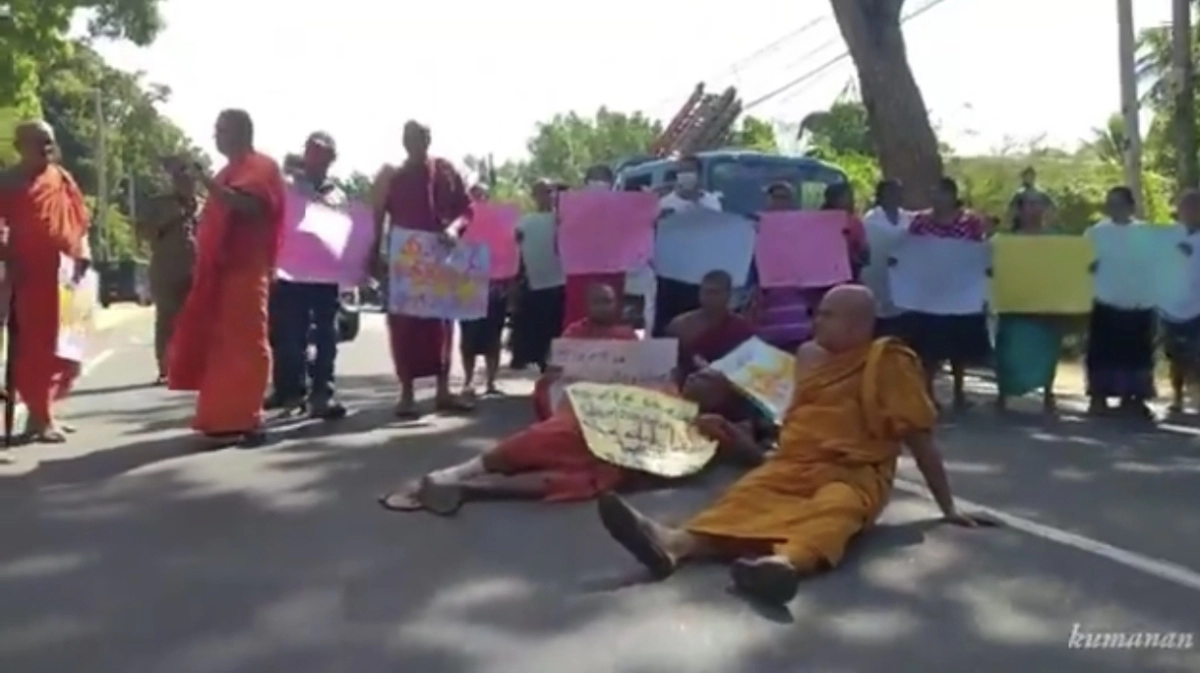
He further pointed out the emergence of Buddhist archaeological sites in the north and eastern provinces, which has caused tensions between Tamils and Buddhists. “The northern and eastern provinces have maintained a unique culture and identity for more than a thousand years. However, the recent appearance of Buddhist archaeological sites in these areas has resulted in tension between Tamils and Buddhists. Resolving this issue is crucial for lasting peace and finding a permanent solution in the coming decade,” added Annamalai.

During his visit to the UK, Annamalai conducted several meetings with the Tamil diaspora, emphasising the nine-year achievements of the BJP government in India and India’s contributions to the Sri Lankan Tamil community in recent years.

Source: Times of India

China urged to play greater role in financial system after SL bailout exposed flaws

Sri Lanka’s crippling debt crisis and the long wait it had to endure until receiving a bailout from international creditors forced emerging markets to re-evaluate the existing global financial structure, according to economists and diplomats at the World Economic Forum on Wednesday.

They also noted that the world needs a more efficient financial architecture, where China can play a more prominent role in terms of solving emergencies and amplifying the voices of developing countries.

Sri Lankan Minister of Foreign Affairs Ali Sabry said that since negotiations started in September 2021, it took almost eight months to receive assurances from creditors before the South Asian nation eventually received the first payment as part of the US$3 billion bailout from the International Monetary Fund (IMF) in April.

“By that time, countries are under real stress, and countries could fall apart. So it’s important that something ready-made has to be there,” Sabry told a panel on the second day of the World Economic Forum’s 14th Annual Meeting of the New Champions in the northern Chinese city of Tianjin.

Despite a US$600 million loan from the World Bank in April last year, Sri Lanka defaulted on its debt for the first time in its history in May 2022, eventually becoming the first country in the post-coronavirus era to declare bankruptcy in July.

The coronavirus pandemic pushed world debt to over an unprecedented level of US$300 trillion in 2022, according to the Institute of International Finance, with developing countries particularly vulnerable due to the large amounts accumulated, as well as depreciating currencies and interest rate increases.

However, the fundamental problems in the IMF and other international financial institutions remain, according to Jin Keyu, a professor of economics at the London School of Economics and Political Science.
The issues include a mismatch of credit cycles, as well as the insufficient global emergency liquidity for developing countries, which has left a gaping hole to be filled, Jin told Wednesday’s panel.

“The international global credit cycle is pretty much based on US monetary policy. But US monetary policy is designed to serve US domestic conditions, not the international arena,” she said.

“So I think this is a place where China can play a role … [with] China being the second largest economy and not synchronised credit cycles with the US and often a big provider to emerging market liquidity.”

As the developing world’s single largest creditor after the World Bank, China has lent huge amounts of capital to fund projects via its Belt and Road Initiative – Beijing’s strategy to link more than 60 countries into a China-centred trade network, largely through investments and infrastructure projects.

In August, China announced plans to cancel a series of interest-free loans to 17 African countries amid a growing rivalry with the West and accusations that it is creating “debt traps” on the continent.

China also said it would also rechannel US$10 billion of its IMF special drawing rights – an international reserve asset managed by the international financial institution – to African countries to help with the recovery from Covid-19 pandemic and the debt crisis.

“It is time that [different types of creditors and economies] pull their resources together and come out with some sort of an architecture, which immediately addresses this kind of an emergency to prevent a cascading effect on many of the economies and ultimately leading into a global slowdown,” Sri Lanka’s Sabry added.

China and the United States also have to coordinate better among their central banks and be real global financial anchors, Jin added.

“But the current problem is that the domestic challenges in China are also great, it would like to do more international lending, but it has to be substantially cut back because of the domestic debt issues and because the economy, pretty much everywhere around the world, is doing very poorly,” she said.

But Jin stressed that despite China’s role as a substantial creditor to lower income countries, around 60 per cent of the debt flows are from the private sector, while a significant portion originates from financial institutions.

“The current issue is really a global shock and global structural problems like demographics that are pressing down on these issues. And it’s not up to China alone to resolve it,” she added.

Jin also pointed to a better design of international financial architecture, a greater representation of emerging markets voices in the coordinating process, and a greater role for China’s central bank and yuan denominated lending as crucial elements.

“Global economic growth is universally slowing down, which will affect the repayment ability of relevant countries and China’s lending ability,” said Peng Peng, executive chairman of the Guangdong Society of Reform, a think tank connected to the provincial government.

“Large-scale projects may be put on hold. In particular, the geopolitical environment is uncertain, and domestic recovery is weak. It is wise to slow down the pace of development.”

Posted in Uncategorized

Kumar; “The tiger who growled within the lion’s den”

The cold-blooded killing of former All Ceylon Tamil Congress (ACTC) leader and well-known lawyer Kumar Ponnambalam in Colombo on 5 January 2000 sent shock waves throughout Sri Lanka and the Sri Lankan Diaspora when it happened 23 years ago. Gaasinather Gangesar Ponnambalam known popularly as Kumar Ponnambalam was killed in his car at Ramakrishna Terrace, a lane that links Ramakrishna and Vivekananda roads on the sea side in Wellawatte. His body with fatal gunshot wounds was found slouched on the driver’s seat.

Kumar Ponnambalam was the son of Ganapathipillai Gangaser Ponnambalam (GG Ponnambalam) a famous lawyer, legislator and former cabinet minister. Kumar’s son Gajendrakumar Gangaser Ponnambalam is currently an MP in Parliament. Unlike his father GG or his son Gajen, Kumar was never able to win an election and become an MP. Nevertheless he was for more than two decades an active politician championing Tamil rights courageously in Sri Lanka and abroad.

The circumstances surrounding Kumar Ponnambalam’s murder were described in detail in an article headlined “The killing of Tamil Congress Leader Kumar Ponnambalam” by this column on 14 June 2023. This follow up article will focus on who was allegedly responsible for Kumar’s death though none have been prosecuted or convicted in the past 23 years.

As stated in the previous article, “The Sunday Leader” newspaper edited by Lasantha Wickrematunge gave wide coverage to the Kumar Ponnambalam murder in the months that followed. As is well-known The Sunday Leader motto was “unbowed and unafraid”. I also used to write several articles and columns for Sunday Leader then. The newspaper boldly published many news items and articles that exposed the powers that be on multiple fronts. Ultimately Lasantha paid the supreme price when he was brutally killed in broad daylight at Ratmalana on 8 January 2009.

The Sunday Leader published many articles and news stories relating to the Kumar Ponnambalam killing in those days. Many of these were under the by line “The Insider”. Some were by senior journalist Frederica Jansz who succeeded Lasantha as editor later. Among these Sunday Leader scoops was the confidential report submitted by SSP Bandula Wickramasinghe to the then president Chandrika Bandaranaike Kumaratunga.

SSP Wickramasinghe’s report

This report implicated the sons of the then Power and Energy cabinet minister and deputy defence minister Anuruddha Ratwatte’s sons Mahendra and Lohan Ratwatte. The report by SSP Wickramasinghe dated 7 September 2000 was published in The Sunday Leader of 23 December 2001. This is what the report stated:

Report of Senior Superintendent of Police to President Kumaratunga

Chandrika Bandaranaike Kumaratunga,

Her Excellency the President,

The Democratic Socialist Republic of Sri Lanka,

Temple Trees,

Colombo 03.

Bandula Wickramasinghe,

Senior Superintendent of Police,

Director, Colombo Detective Bureau.

No. 50, Gregory’s Road, Colombo 7, Sri Lanka.

September 7, 2000

Your Excellency,

Report on Mr. Mahen Ratwatte and Mr. Lohan Ratwatte

Herewith I annex a report on the above subjects, as requested by Your Excellency

On July 28, 2000 a case of house breaking and theft was reported, the stolen goods were valued at Rs. 1.3 million. The Colombo Detective Bureau sleuths arrested the main suspect Mohammed Thahir and he confessed that he had given a brand new ‘Hoover’ vacuum cleaner valued at Rs. 20,000 to one Sudath Ranasinghe RPC 12559 attached to the Sri Lanka Police Reserve Head Quarters. RFC Ranasinghe was arrested and he too confessed that the stolen vacuum cleaner was given as a gift to Mahen Ratwatte who is employed at George Steuarts. Mahen Ratwatte who is the son of the Honourable Minister of Power and Energy and Deputy Minister of Defence Anurudha Ratwatte. On the statement made by RPC Ranasinghe the vacuum cleaner was recovered from the house of Mahen Ratwatte at Link Homes housing scheme at Madiwela.

On May 21, 2000 the officer in charge of CDB, IP Nuwan Vedasinghe received a call from RPC Ranasinghe and he had stated that the president of the All Ceylon Tamil Congress, Kumar Ponnambalam (Attorney-at-law) was murdered by his henchmen, namely underworld activists Moratuwa Saman and Sujeewa, on the instigation of Mahen Ratwatte. Few weeks prior to the assassination of Ponnambalam, Mahen Ratwatte had told Moratuwa Saman and RPC Ranasinghe in Sinhalese ayi yakko sinhala minissu marannay, puluwannam ara Kumar Ponnambalam jathi wadi wagay thadi demelek marapanko. As per the instigations of Mahen Ratwatte, RPC Ranasinghe master planned the assassination and got friendly with Kumar Ponnambalam, posing as one ‘Shantha.’

On January 5, 2000 ‘Shantha’ personally went to the house of Kumar Ponnambalam’s around 8.30 in the morning and lured him promising …………. As arranged, Moratuwa Saman and Sujeewa waited for the arrival of Ponnambalam, and the both of them fired five rounds from their pistol. Ponnambalam succumbed to his gunshot injuries. After the assassination, the RPC immediately informed Mahen Ratwatte about the killing.

On May 21, 2000 RPC Ranasinghe contacted OIC CDB, from telephone number 08-223993 which is at the guesthouse belonging to the Petroleum Corporation at No. 15, Dumindu Mawatha, Watapoluwa, Kandy. I too contacted RPC Ranasinghe on the above telephone number and he informed me that the most wanted underworld criminal Dhammika Perera is present at the above guesthouse. RPC Ranasinghe promised to surrender to the CDB, and informed me and the OIC CDB to make him a crown witness. But however, he was prevented from surrendering by Mahen Ratwatte. I contacted Mahen Ratwatte and spoke to him requesting from him to surrender RPC Ranasinghe, but Mahen Ratwatte prevented his appearance and told me ‘why are you worried, all the top people know about the assassination.’ Though several requests were made to Mahen Ratwatte by me and my OIC IP Nuwan Vedasinghe, RPC Ranasinghe surrendered to the Mount Lavinia courts.

Harbouring of underworld criminal Dhammika Perera of Rajagiriya

Besides the information provided by RPC Ranasinghe, my private informants have brought to my notice that Ranasinghe had been harboured by Lohan Ratwatte and Mahen Ratwatte and at present Dhammika is being kept at his mothers home on top of a hill close to Mahiyawwa cemetery, Kandy. It is also common knowledge amongst Kandy residents that Dhammika Perera travels along with Lohan Ratwatte in a tinted four-wheel drive vehicle.

My private informants have also brought to my notice that during the Wayamba elections, Lohan and Mahen Ratwatte had been transporting Dhammika Perera in their Pajero vehicle for their protection.

Dhammika Perera is one of the most wanted under world criminals, wanted for 17 murders:

Bandula Wickramasinghe,

Senior Superintendent of Police, Director, Colombo Detective Bureau

“Wikipedia” entry on the killing

The “Wikipedia” summarised most of the reports and articles in The Sunday Leader about the killing in its entry on Kumar Ponnambalam. Here are extracts from Wikipedia:

“According to The Sunday Leader Ponnambalam’s killing was organised by Baddegana Sanjeewa, a member of Kumaratunga’s Presidential Security Division. Acting on Sanjeewa’s instructions Reserve Police Constable Sugath Ranasinghe, posing as Shantha, became friendly with Ponnambalam. On the day of the killing Shantha lured Ponnambalam to Wellawatte where gangsters M. A. Kalinga (alias Moratu Saman) and Tharawatte Ajith (alias Sujeewa) were waiting to kill Ponnambalam. After the killing, the killers are alleged to have gone to the office of a deputy minister and shown the murder weapon, which belonged to Mahendra Ratwatte, Kumaratunga’s second cousin and son of deputy defence minister Anuruddha Ratwatte, and Ponnambalam’s mobile phone as proof.”

“According to The Sunday Leader Kumaratunga tried to protect Ponnambalam’s killers after the assassination. In February 2002 The Sunday Leader published a transcript of a telephone conversation between Ranasinghe and OIC Nuwan Wedasinghe of the Criminal Detective Bureau (CDB) which further implicates Mahendra Ratwatte in Ponnambalam’s killing. The Sunday Leader has claimed that it has received a sworn affidavit from CDB director SSP Bandula Wickremasinghe that Mahendra Ratwatte was involved in Ponnambalam’s killing.”

“Ranasinghe, Moratu Saman and Sujeewa were eventually arrested by the police after which Ranasinghe implicated in Mahendra Ratwatte in Ponnambalam’s killing. According to the police the three detainees had confessed to killing Ponnambalam and Satana editor Rohana Kumara on a contract from a private party/patriotic group.”

“Sanjeewa was shot dead on 2 November 2001, allegedly by Dhammika Perera, a member of the Sri Lankan mafia. His body was found slumped in the driver’s seat of his Nissan Serena, with six shots in Pagoda Road, Colombo.”

“Notorious gangster Moratu Saman was shot dead on 18 May 2003 in Moratuwa by gangster Thoppi Chaminda.”

“Ranasinghe was shot dead on 20 August 2003 in Moratuwa as he returning from Moratuwa Magistrates’s court in a rickshaw.”

Mahendra Ratwatte

It could be seen therefore that three of the four suspects implicated in the Kumar Ponnambalam killing were themselves killed subsequently. None were charged in courts over Kumar’s murder. Mahendra Ratwatte who had allegedly encouraged or instigated the killing was reportedly quizzed by the Police and let off. Though 23 years have passed the Police have not indicted anyone. Ironically two reserve Police constables and two underworld gangsters are allegedly involved in Kumar Ponnambalam’s killing. Kumar’s death was a great loss to the Tamil people.

Service to Tamil community

A commendable feature about Kumar was his service to the Tamil community as a lawyer. There was a time when Kumar was a successful lawyer arguing a variety of cases and minting money in the process. He even learnt Sinhala and conducted his cases in that language. He had transformed himself later into a virtual Tamil rights lawyer. Most appearances were over PTA and emergency regulation detentions, cases under PTA, writs of habeas corpus, trials relating to alleged army offences like the Kokkatticholai massacre and cases of human rights violations.

He took up unpopular causes like appearing for some of the accused in the Central Bank bombing incident for example. At the same time he had his own code. When some of his clients were implicated in the attempted murder of EPDP leader Douglas Devananda at the Kalutara jail he refused to appear for them. It must be remembered that when Kumar took his oaths (owing allegiance to Sri Lanka’s unitary constitution) under the Sixth Amendment, he explained it as being necessary to retain his eligibility to practise his profession as a lawyer.

Kumar Ponnambalam was also very frank and forthright. To use a cliche he did not mince his words. Diplomacy was absent. This earned him a lot of enemies. Also it sometimes blunted his communicative capacity. Nevertheless it has to be acknowledged that he did not hesitate to confront the high and mighty in the process. By doing so he drew attention to many of the acts of commission and omission affecting the Tamil people.

Criticism of Kumaratunga

At a time when most Tamil politicians in the Island had only praise for Chandrika Kumaratunga’s magnanimity it was the lot of Kumar to dissent. He was in that sense the irrepressible boy who shouted out that “the emperor had no clothes”. Kumar Ponnambalam was the one man Tamil opposition to the PA regime, and his criticism of President Kumaratunga was quite vitriolic.

Another remarkable thing about him was his courage. He seemed to have acquired an immense degree of personal and political courage over the years. As to whether the abrasive style and content of the challenges posed by him achieved any worthwhile result is another matter but there is no denying that his very act of confrontation itself was a factor to be reckoned with.

As he himself has stated on more than one occasion Kumar believed that a Tamil had to say what he had to say staying right in Colombo. There was a time when his father aroused a collective Tamil pride within the community by his slogan “Thamilan endru solladaa, Thalai nimirnthu nilladaa” (State you are a Tamil and stand erect holding your head high). In recent times the son personified that slogan.

Display of courage

This display of courage has been described as foolhardy and exhibitionistic by his critics. Yet there is no denying that it did strike chords that were mutually antagonistic. Many Tamils were impressed by Kumar while most Sinhalese were angry. In particular Tamil expatriates, who took very little notice of him earlier were amazed at Kumar’s bravura. Whenever he travelled abroad he was always asked how he was courageous enough to stay on in Colombo and take on the Government openly. Kumar would reply with characteristic immodesty, “It’s in my blood”.

His open support of the LTTE in particular made a great impression. He has been described as the “Tiger who growled within the lion’s den”. He was very much a darling of the Tamils abroad. He may have never won an election in Sri Lanka but if he solicited expatriate Tamil votes Kumar would have been a sure winner.

Another notable trait was his persevering fighting spirit and never say die attitude. His party the All Ceylon Tamil Congress had become a caricature of its former self. Only a handful of members remained Kumar himself had been consistently rejected by Tamil voters, be it in Jaffna or Colombo. A lesser person would have called it quits and retired to enjoy a luxurious lifestyle that was very possible given his immense wealth. But this man would bounce back each time and move on from election to election.

His greatest political ambition was to enter Parliament, a goal that constantly eluded him. Nevertheless by his political resilience and recent reorientation of his political ideology Kumar managed to endear himself to a large segment of the Tamils.

Whatever Kumar Ponnambalam’s new strident Avatar in politics those who knew him well were aware that he was not a Tamil racist though he espoused an extremely hawkish Tamil line. In that respect he was very much a mirror image of some counterparts in Sinhala politics who mouth communal drivel but in personal life are non-racist.

Son of Colombo soil

Kumar was in reality a Colombo Son of the Soil. He was in his element when going for the Royal Thomian. It was his background and connections that enabled him to a very great extent to remain in Colombo and espouse the Tiger line. It was also that which helped greatly in getting his point across to the Sinhala dominated media.

But another aspect that helped him in his lifestyle that bordered on political brinkmanship was the fact that he was never taken seriously by the English speaking elite. To them he was merely GG’s “Junior”. Indeed Kumar’s predicament in his younger days was his being compared and contrasted with his father. Ponnambalam senior was the standard by which Ponnambalam junior was measured. It took years for him to outgrow this. Despite his controversial views those who knew him well regarded him only as an “enfant terrible” of Tamil politics. Despite his tigerish growls to some he was at best like Chairman Mao’s description of imperialism – a paper tiger.

Sadly the enfant terrible of Tamil politics was perceived by some sections of the Sinhala masses as a dangerous Tiger living in their midst. Kumar himself contributed to that perception by his public pronouncements and writings. The real LTTE cadres in Colombo do not advertise the fact that they are LTTE for obvious reasons. But Kumar though no disciple of Prabhakaran was asserting that he was a follower of the Tiger philosophy.

As the LTTE itself has stated in the statement issued after Kumar’s death, he was the “only Tamil leader who openly and fearlessly supported the armed freedom struggle of the Liberation Tigers”. He kept on flaunting it in the face of his adversaries and went on taunting them.

Challenges to the State

According to Kumar’s relatives, he knew death was inevitable. Yet he carried on as usual, issuing challenges to the State. When President Kumaratunga issued a warning to supporters of the LTTE in Colombo, Kumar took up the challenge and brazenly flung down the gauntlet.

One supposes that those who ordered Kumar’s assassination must have been pleased with themselves for getting rid of Kumar dubbed as the “de facto spokesperson of the LTTE in Colombo”.

But what was lost on these killers was the fact that Kumar being alive was a living testament to the tolerance of Sinhala society. As long as he was allowed to speak out fearlessly and forthrightly from Colombo, the democratic credentials of the governments in power were enhanced. The fact that Kumar could speak, write and act the way he did was proof of the permissiveness and accommodative ability of the “Sinhala” state. The fact that many newspapers, owned and edited by Sinhalese provided considerable space to publish his articles and statements was also an extension of this tolerant state of mind. In that respect the felling of Kumar in one stroke or to be exact two rounds of gunfire reflected perhaps, a changing situation in Sri Lankan society towards intolerance.

(The writer can be reached at dbsjeyaraj@yahoo.com.)

Posted in Uncategorized

Petitions against postponement of LG polls: SC rejects preliminary objections by the State

The Supreme Court yesterday (27) rejected preliminary objections filed by Attorney General Sanjay Rajaratnam and Secretary to the Ministry of Finance Mahinda Siriwardana, seeking the dismissal of two Fundamental Rights (FR) petitions filed against the postponement of the 2023 Local Government (LG) elections.

The two FR petitions have sought a court order confirming that the postponement of the 2023 Local Government elections was a violation of the public’s fundamental rights.

The relevant order was issued by a five-member bench of the Supreme Court, comprising Justices Buwaneka Aluvihare, Priyantha Jayawardena, Vijith Malalgoda, Murdhu Fernando and Gamini Amarasekara.

Two FR petitions were filed by the National People’s Power (NPP) and the People’s Action for Free and Fair Elections (PAFFREL), seeking a court order that the postponement of the 2023 LG polls, which were initially due to be held on 09 March, was a violation of the fundamental rights of the people of Sri Lanka.

Posted in Uncategorized

Gazette issued to convene Parliament on Saturday

Speaker Mahinda Yapa Abeywardene has issued a special Gazette notification convening the Parliament at 9.30 a.m. on Saturday (01 July).

Earlier on Sunday (25), the ruling party MPs had reportedly been notified to remain in Colombo by cancelling all other visits outside Colombo including overseas travel, since the debt restructuring proposal is scheduled to be tabled in the Parliament for adoption this week, as per the political sources.

However, President Ranil Wickremesinghe had also mentioned that the debt restructuring programme will be presented to the Cabinet on Wednesday, and that it will be presented to the parliament and before the Committee on Public Finance (COPF) on Friday (30).

Speaking in an interview with FRANCE 24 on the sidelines of the Summit for a New Global Financing Pact in Paris, he also stated that the programme will be debated in parliament on Sunday and will be approved by parliament.

Posted in Uncategorized

World Bank to provide $500 mn budgetary support to Sri Lanka

Sri Lanka will enter into an agreement with the World Bank for $500 million in budgetary support after the cabinet approved it on Tuesday, the biggest funding tranche for the crisis-hit nation since an International Monetary Fund deal in March.

The island nation of 22 million is emerging out of its worst economic crisis in seven decades and its economy is expected to shrink 2% this year before returning to growth next year, following last year’s record contraction of 7.8%.

Reuters reported last week that the World Bank is likely to approve $700 million in budgetary and welfare support for Sri Lanka at its board meeting on June 28, out of which $200 million will be for welfare programmes.

The government said on Tuesday that funding from the lender will come in two tranches.

Source – Reuters

Posted in Uncategorized

The black holes of mass graves BY Sumudu Chamara

If the Government of Sri Lankan is serious about dealing with the past, it must commit to having international observers at all exhumations of mass graves, for the country has failed to achieve satisfactory results despite decades of various forms of attempts. Strengthening the domestic legal and policy frameworks, ensuring transparency, and genuine and knowledgeable interventions by the political authority is necessary, if the country is to succeed in dealing with the exhumation of mass graves.

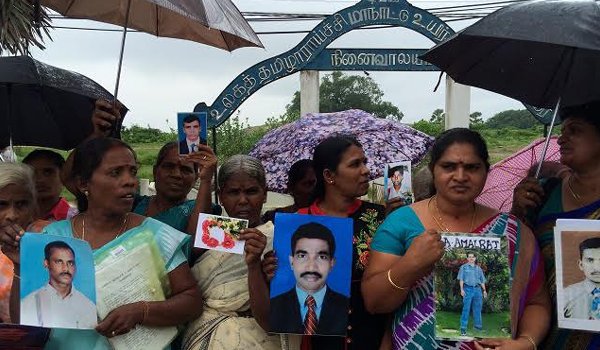
This was underscored by several human rights organisations, at the launch of a joint report titled “Mass Graves and Failed Exhumations in Sri Lanka”, which was released last week in Colombo. Among the organisations that were involved in the drafting and issuing of the report were the Journalists for Democracy in Sri Lanka (JDS), the Families of the Disappeared (FoD), the Centre for Human Rights and Development (CHRD), the International Truth and Justice Project (ITJP), the International Centre for Ethnic Studies (ICES), and the Women’s Action Network (WAN). Activists and affected families addressed the event.

ITJP Executive Director Yasmin Sooka noted that documenting the crimes, collecting the evidence and preserving it is just the first step, and that even 30 years later, the struggle for truth, without which the guarantee of non-recurrence remains elusive, is still ongoing. She added: “Accountability is not an optional exercise; it is essential for building a future for all Sri Lankans.”

Meanwhile, expressing concerns that after three decades and 20 attempted exhumations, only a handful of bodies have ever been identified and returned to families, FoD’s Brito Fernando said: “We all know that tens of thousands of bodies lie in shallow graves all over the island, so we cannot describe this dismal rate of progress as bad luck. It is a clear lack of political will.” Expressing similar sentiments, CHRD Executive Director and attorney K.S. Ratnavale, who has represented families in mass grave cases, also opined that there is a total lack of political will with regard to mass graves-related investigations and enforced disappearances in Sri Lanka.

Decades of failure

“The multiple failures in exhumations provide further evidence that the Government is unable or unwilling to ensure accountability for the alleged commission of core international crimes and other serious human rights violations, regardless of when they happened or during which conflict,” the report concluded, adding that this is in total violation of the rights of victims, including their right to truth. In this context, it added, the Government is obliged to develop measures to fulfill the rights of individuals seeking information on the reasons for and circumstances of the abuse suffered, which includes investigations of gross human rights abuses resulting in mass graves.

Adding that under international law, the State is obliged to take a number of positive and affirmative actions with regard to mass graves, the report explained: “Under international law, the protection of the sites of mass graves is of paramount importance in order to preserve the integrity of the remains, the associated evidence and the lines of enquiries. Protection measures should safeguard human remains against contamination, desecration, robbery, scavengers and the movement and relocation of bodies to secondary sites, where a perpetrator is seeking to evade detection. If a State lacks the political will, or is unable to fulfill these obligations, the international community has a responsibility to assist. If the Office on Missing Persons (OMP) as a State body, is unable to assist victims’ families and to perform this role in an independent and transparent manner, then the international community including the International Committee of the Red Cross (ICRC) or International Commission on Missing Persons (ICMP) needs to step in.”

The report raised concerns about the genuineness and impartiality of the steps taken to look into the issues pertaining to mass graves, claiming that many of the failures identified in the report, including the lack of involvement of the families, the limited forensic capacity, the unclear procedures, and political interferences, among others, amount to deliberate steps by the State to thwart the victims’ right to know the truth, which it said were in violation of international and domestic law. These failures have also been recorded by key United Nations (UN) Special Procedures, including the UN Working Group on Enforced or Involuntary Disappearances (WGEID) and the UN Special Rapporteur on truth, justice, reparations and guarantees of non-recurrence, regarding which the Special Rapporteur has stated: “It is unusual for middle-income countries like Sri Lanka to have such problems.” “Sri Lanka urgently needs to improve its scant expertise on the investigation and prosecution of ‘system crimes’, in other words, crimes that involve the systematic and coordinated use of State organs and those that result in large-scale violations and abuses of international human rights or international humanitarian law. This would include specialised expertise on investigations, forensics and the design of prosecutorial strategies. Improving judicial capacities regarding system crimes is as necessary as it is urgent.” This is in a context where, though some progress has been made since the said Special Rapporteur’s last visit to Sri Lanka in 2017 and the 2020 report, including through the work of the OMP, much remains to be done in order to ensure that exhumations are done in line with international standards and established good practices.

The report further underscored in its conclusion that Sri Lanka also needs to enact a specific law and policy governing the management of mass graves, including their identification, preservation and investigation over time and for future generations. This may include establishing a legal entity that is independent of politicians and is transparent.

Way forward

A number of steps need to be taken to address the abovementioned situation, as per the report, which put forward recommendations for the Government with regard to restoring past exhumations, and for the OMP and the international community including the ICRC and the ICMP with regard to future exhumations.

The Government was urged to take a number of steps concerning the affected families. Appointing a family liaison officer for each of the exhumations where relatives continue to wait for answers, actively engaging with people who suspect their relatives to be among the bodies exhumed, giving relatives an opportunity to identify the remains and any possessions and artifacts recovered to date, returning any identified remains to their families, and ensuring that psychosocial support is provided to victims’ families, particularly when in contact with law enforcement officers, were among them.

Among the other recommendations were, enacting a specific law and policy on the management of mass graves and exhumations, which includes their identification, preservation and investigation over time, regarding which it was noted that preservation should include the safe storage of skeletal remains removed from graves or the soil and to ensure that the chain of custody remains intact. Establishing a legal entity made up of representatives of the Government, local authorities, forensic experts, families and communities concerned to have oversight of the issue of mass graves and exhumations, was another recommendation. In addition, the Government was recommended to refrain from conducting any new exhumations until the new legal and policy framework is in place and the forensic capacity has been fully strengthened, and to enact the proposed Inquest Act, commit to always having international observers at any exhumations and to actively involve international forensic experts whenever the complexity of the task requires it, restructure the Attorney General’s (AG) Department, create an independent public prosecution service in order to ensure that any prosecutions resulting from the exhumations are conducted in an independent and impartial way, send Sri Lanka’s preliminary report to the Committee on Enforced Disappearances after full consultation with the civil society and families of the disappeared, strengthen the OMP, and drawing up a national exhumation policy, clarifying the role of individual agencies as part of the national transitional justice policy.

The recommendations for the OMP and the international community including the ICRC and the ICMP included, establishing a professionally-skilled specialist unit to probe into the locations of other possible mass graves, reinforcing their forensic capacity and ensuring that it has adequate resources, examining without undue delay all locations of potential mass graves and creating a database to ensure their protection, and strengthening judicial independence, including in respect of the security of their tenure, the conditions of service, personnel administration and disciplinary matters in the judiciary including promotions and dismissals as well as training on international crimes.

Posted in Uncategorized

Rs. 4,500 million from India to enhance Northern signalling system

The Northern Railway started in 1905. Due to terrorist threats, the train service from Vavuniya to Kankesanthurai (KKS) on the Northern Railway was completely stopped. After June 1989, no train ran beyond Vavuniya. The closed railway line, which had been closed for more than 25 years, resumed services in 2009 after the end of the terrorist threat and the reconstruction of the line under Indian assistance. The railway line, which was completely renovated, was rebuilt so that it could travel at a speed of over 100 kilometres per hour with a modern railway signaling system.

But Vavuniya, which was the Northern railway terminus for over 25 years, was a busy railway station. At that time, 10 passenger trains and two fuel trains ran daily from Colombo to Vavuniya. In addition to running 12 trains daily, the railway line from Mahawa to Vavuniya (to Omanthai) gradually weakened due to the running of service trains and additional trains. This situation further deteriorated with the import of M-10 class heavy duty locomotives from India. The locomotives were running on a 100-year-old railway line, further weakening the railway line from Mahawa Junction to Vavuniya.

Indian loan assistance

Due to this situation, Indian loan assistance was provided for the complete renovation of the Northern Railway. The complete reconstruction of the railway line from Mahawa Junction to Omanthai under two main phases was started on January 8. A complete renovation of the track was undertaken from Anuradhapura to Vavuniya and from Vavuniya to Omanthai under the first phase.

The total length of the railway line from Mahawa Junction to Omanthai is 128 kms. This track has not been fully renovated for over 118 years. Train journeys from Colombo to Jaffna will resume after the completion of the first phase. But the problem is that the train runs at 68 km/h from Mahawa to Anuradhapura. And the speed is limited to 10 km/h in some places. Thus the railway track will also be completely modernised in the second phase under Indian aid.

However, since the rainy season is coming, the Railway Department and India’s IRCON have reached an agreement to maintain the train service and close the railway again for six months from January 2024. The total cost of this project is US$ 91.27 million. The total distance of the railway line from Mahawa to Omanthai is 128 kms and 66.4 kms is covered by the section from Mahawa to Anuradhapura. A team of 600 workers and around 200 pieces of machinery will be used to execute the project.

Tablet signal system

The railway line from Mahawa to Anuradhapura will be renovated by removing the present tablet signal system set up during the British period and replacing it with a colour signal system. As a result, train delays will be minimal and train safety will also be at a high level. Until now, one train had to run from a main station and wait for the next train to reach the station ahead of it. After the installation of the new signalling system, two trains can run fast one after the other in one direction. Hence, the drivers will be able to run the train safely.

From the Mahawa Junction to Anuradhapura, there will be six modernised railway stations. Among them are Ambanpola, Galgamuwa, Senarathgama, Tambuttegama, Talawa and Shravastipura. Apart from this, the two sub-stations of the Randenigama and Anuradhapura New Town will also be developed. Along with the renovation of the railway line, the positions of Galgamuwa, Tambuttegama and Talawa stations will also change. The Galgamuwa and Talawa railway stations will be moved near the highway and an access road will be built from the Tambuttegama railway station to the highway.

Rs.4,500 million has already been allocated under Indian loan assistance for the complete modernisation of the railway colour signal system. After the construction of this line, it will be possible to travel to Anuradhapura in less than three hours from Poson (June) 2024. Commenting on this issue, Railway General Manager W.A.D.S. Gunasinghe said that since the ground needs to be strengthened for the construction of the railway line, it will be necessary to stop the train operation completely and carry out the renovation work.

He said that after the complete construction of the track, it will be possible to travel to Jaffna in about five hours and in the future, efforts will be made to give priority to the transportation of passengers and goods. Under this project, the length of the loop line (the train stopping line without a platform at major stations) will be increased and a train with a length of about 20 carriages can be parked on that line.

Passenger ferry service

The General Manager said that all railway stations will also be modernised to match the colour signal system. As a passenger ferry service will also be started from KKS to India, the rail service to the North will become more popular. Jaffna-bound passengers on Alliance Air flights from Chennai will also be able to use the railway to come to Colombo. The Indian IRCON company has also used local technology in the reconstruction of railways. Under this program, vehicles such as tractors were used for the renovation work of the railway track. After the renovation work on the railway line from Mahawa to Omanthai is started from next January, the train service between Anuradhapura and Jaffna will still run, but the railway will suspend the trains running on the Northern route from Colombo except for the Rajarata Rajina train from Beliatta in the deep South.

The Railway Department will get much revenue in the future due to the modernisation of the railways. Also, some new trains will have to be added to the fleet. When the Indo-Lankan sea travel begins, not only the people of the North but also those in the South will use the railway as it is an inexpensive way to reach the entire country.

When the Northern railway line from Mahawa Junction to Omanthai was undergoing modernisation work, Minister of Transport, Highways and Media Dr. Bandula Gunawardena, paid special attention to it and negotiated Indian assistance for it. The country is indeed fortunate to have completed its first phase this coming July.

JVP files FR case in SC against Govt. attempts to restructure domestic debt

A fundamental rights petition was filed by the President of the Inter Company Employees Union and Janatha Vimukthi Peramuna (JVP) member Wasantha Samarasinghe and five others before the Supreme Court yesterday against the attempts by the Government to restructure domestic debt.

The petition filed against 46 respondents consisting of State officials requested the court to issue an order that would prevent the curtailment of loans obtained by the Government from the Employees’ Provident Fund (EPF) and Employees’ Trust Fund (ETF) in the proposed local debt restructuring endeavours intended to be undertaken by the Government.

Among the 46 respondents named in the petition was the Governor of the Central Bank of Sri Lanka, the Secretary to the Ministry of Finance and Officials of the EPF and ETF. Attorney-at-Law Sunil Watagala appeared on behalf of the petitioners.

Speaking to the media outside the Supreme Court premises, Watagala said part of the funds obtained from the EPF and thereafter invested by the Government is now to be cut down under its plans to restructure domestic debt. “This will affect both government and private sector employees. This move violates the 14 (1) (g) provision in our constitution,” he claimed. The Counsel said therefore the petitioner is requesting the court to issue an order preventing the Government from cutting down its loans obtained from the funds.

Chinese EXIM Bank pledges to engage SL negotiators

The Export-Import Bank of China (EXIM), a key lender to Sri Lanka, assured that it would hold talks with Sri Lanka’s negotiators to attain debt sustainability, Foreign Minister Ali Sabry said.

The Minister who is in China on an official visit held talks with EXIM Bank Chairman Wu Fulin and held talks with the ongoing debt restructuring process. He said the Chinese bank assured it would constructively work with Sri Lankan negotiators and contribute towards Sri Lanka’s economic recovery and future growth.

Sri Lanka suspended payment of foreign debt in April, 2022. Currently, the government has initiated action to restructure its debts in accordance with the International Monetary Fund (IMF) programme.

Japan, India and France have formed a common platform for talks among bilateral creditors to coordinate the restructuring of Sri Lanka’s US $7.1 billion of debt. Loans from China account for 10 percent of the total external borrowings.

Posted in Uncategorized