UN chief assures support for Sri Lanka recovery, debt sustainability: president’s office

United Nations (UN) Secretary General Antonio Guterres has expressed his and the UN’s support for Sri Lanka’s economic recovery and debt sustainability endeavours in a meeting with President Ranil Wickremesinghe.

A statement from the president’s media division (PMD) said on Friday June 23 that Guterres had assured Wickremesinghe of “strong commitment to assisting Sri Lanka” when the two met on the sidelines of the Summit for a New Global Financial Pact on Thursday June 22 in France.

Guterres had also commended the progress made by Sri Lanka in achieving the country’s Sustainable Development Goals (SDGs), recognising the efforts undertaken to address pressing social and environmental challenges, the PMD statement said.

President Wickremesinghe had updated the UN chief on the progress made in Sri Lanka’s economic recovery and debt restructuring efforts. He had also presented the Sri Lankan government’s “ambitious climate prosperity plan”.

Guterres was apprised of the “significant strides achieved in the process of economic recovery and the ongoing initiatives to restructure the country’s debt”, the PMD statement said, adding that the president had also highlighted Sri Lanka’s commitment to implementing sustainable economic policies and fostering a resilient financial framework to ensure long-term stability.

In terms of climate prosperity, Wickremeisnghe had outlined what the PMD statement called comprehensive strategies aimed at mitigating the adverse impacts of climate change while promoting sustainable development. The plan emphasises the importance of renewable energy, conservation efforts, and climate-resilient infrastructure, it said.

13 flights cancelled in five days – Dayasiri

About 70 pilots attached to SriLankan Airlines had resigned during the past six months, Opposition Leader Sajith Premadasa said yesterday in Parliament.

“There are fewer than 260 pilots at SriLankan now. Another 18 are to join Emirates soon,” he said.SriLankan needs 330 pilots to operate its flights optimally, Premadasa said.Meanwhile, from 18 to 22 June, SriLankan Airlines have cancelled 13 flights, Sri Lanka Freedom Party (SLFP) MP Dayasiri Jayasekera said in Parliament on Friday.The passengers of these flights had to be accommodated in star class hotels, he said.

“We don’t know how much money was spent to pay for the accommodation. But it’s obvious that dozens of million rupees must have been spent”.

The flights of Sri Lankan Airlines are delayed because of a union action taken by pilots and engineers and not because of sudden illnesses of pilots as stated by the government, he said.They have resorted to union action because the government had not paid them an allowance that was due during the COVID period, the SLFP MP went on to say.

“The government wants to sell SriLankan Airlines. So they are deliberately running it to the ground. Buses that carry air passengers are not allowed to enter the airport premises. People are compelled to walk a long distance, dragging their luggage,” he said.

Sabry defends Bogollagama’s nomination

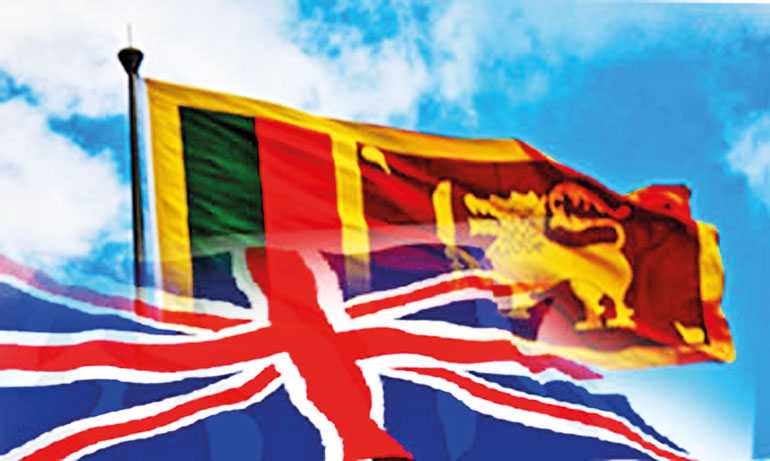
Foreign Minister Ali Sabry defended the nomination of former Minister Rohitha Bogollagama as Sri Lanka’s next envoy to the UK.

He said that Bogollagama’s nomination was well thought out and was taken following discussions between himself and President Ranil Wickremesinghe.

Speaking to Daily Mirror ‘On Fire’, Sabry said that Bogollagama was nominated to the post taking into consideration his former role as Foreign Minister.

Sabry said that Bogollagama’s former post will be handy in a station like London.

He said that President Ranil Wickremesinghe had discussed the matter with him before it was decided to nominate Bogollagama to the post in the UK.

“It was a well thought out decision,” Foreign Minister Ali Sabry said.

The Minister also said that Sri Lanka’s Foreign Service lacks officers to man all the stations, as a result of which it needs others to be appointed to key posts.

He also defended the political appointments made to overseas missions saying most of them have delivered.

Posted in Uncategorized

RW reveals story behind how he became President

In a determined push to address Sri Lanka’s debt crisis and foster reconciliation, President Ranil Wickremesinghe outlined plans to finalize the debt restructuring process by September. Collaborating closely with parliament, the President aims to develop a comprehensive strategy for resolving the nation’s financial burdens.

President Ranil Wickremesinghe participated in the 40th anniversary event of the International Democrat Union (IDU) in London on the 19th and the 20th of June and joining the forum with former Canadian Prime Minister (Conservative Party) Chairman of the IDU, Mr Stephen Harper, he explained the circumstances that paved the way for his presidency and the country’s journey towards economic recovery.

While debt restructuring remains a key priority, President Wickremesinghe noted that his primary focus lies in completing vital structural reforms. Aiming to accelerate economic liberalization and attract increased investments, which are intended to bolster Sri Lanka’s financial prospects and drive a more favourable balance of trade in the long term.

Amidst questions regarding the duration of the process, the President expressed confidence that substantial headway will be achieved by 2024. Building on prior initiatives as the former Prime Minister, President Wickremesinghe continues the progress made and engages with members of Parliament representing Tamil areas. Significantly, agreements have been reached on crucial issues, including the establishment of a truth and reconciliation commission, the drafting of legislation, and the presentation of a new anti-terrorist law to Parliament. Resolving the differences between the government and opposition on three major issues, one of them being the definition of terrorism, has been settled by a court ruling.

Furthermore, he said that efforts have been made to address land-related concerns in the North and East regions, with progress being made on settling these disputes. The Missing Persons Office has taken steps towards utilization, and discussions have yielded potential solutions, which have been shared with Tamil parties. President Wickremesinghe said he anticipates presenting a comprehensive process by the end of July, acknowledging the time required for the necessary legislative procedures.

Following are excerpts of the interview;

President Ranil Wickremesinghe;

If I look back to May-June last year, Sri Lanka was on the verge of chaos. No one seemed willing to take charge or show leadership. I found myself in a peculiar position. In the 2019 Presidential Election, our party wanted to adopt a populist approach, so they chose our deputy leader as their candidate. Unfortunately, as I had anticipated, he suffered a significant defeat.

Then the COVID pandemic struck, and in August 2020, we went ahead with the election. Personally, I believed that we should stick with the IMF program. This program, which we had initiated in 2016, required Sri Lanka to commit to a primary surplus and reduce subsidies. We diligently worked towards these goals, and by 2018, we managed to achieve a primary surplus of USD 300 million. While it was a modest amount, it gave us a starting point to build upon.

However, the new government that came into power subsequently decided to cancel the IMF agreement. It was at that point that I advocated for revisiting the IMF and requesting them to reinstate the agreement. Furthermore, I suggested that we explore other options to raise USD 5 billion.

During my tenure as Prime Minister, I had engaged in negotiations with the Japanese, Indians, and other parties for projects worth approximately USD 4 billion. Unfortunately, all those projects were ultimately cancelled. Despite this setback, some members of my own party believed that our approach was too narrow and opted for a populist stance, eventually breaking away from the party.

As a result, for the first time in history, my party was left with just one member in parliament, which happened to be me. Meanwhile, the breakaway faction had gathered 50 members.

On May 9 of the previous year, riots erupted, leading to the burning of the residences of 65 government members of parliament. Consequently, the Prime Minister at the time, Mr. Mahinda Rajapaksa, was compelled to resign. That night, I engaged in discussions with a government member to explore how I could be of assistance. The following day, the President reached out to the leader of the opposition and the leader of the breakaway faction, asking them to assume the position of Prime Minister. However, the leader of the breakaway faction declined the offer.

During this period, I had been advising the President to seek assistance from the IMF and the World Bank. Subsequently, the government insisted that I should become Prime Minister and nominated me for the position with their support. I expressed my concern about being the only member of the party and questioned the feasibility of having a Prime Minister under such circumstances. However, they reassured me that they would support me and initiated negotiations with the IMF.

In the previous year, our debt services amounted to approximately $8 billion. By April 2022, our financial situation had deteriorated to the point where we had to declare ourselves bankrupt. However, as we began to recover and the government started functioning, a wave of protests emerged. On July 9, a group of organizers managed to gather a significant number of people in Colombo, something unprecedented in scale.

Shockingly, these protesters went on to invade the official residence of the President. Faced with this unexpected threat, the President had to flee to the harbour and board a ship belonging to the Sri Lankan Navy. Later that afternoon, party leaders convened a meeting, during which they demanded the President’s resignation and proposed that I assume the role of acting President. However, the opposition insisted that I should also resign. I stood firm and reminded them that according to the constitution, a person with a majority vote in parliament must be found before I could resign.

Meanwhile, urged by some media outlets, the protesters targeted my house and set it on fire, assuming I would be compelled to leave.

However, I remained steadfast and refused to back down.

The following day, I was asked to resign, while some others advocated for the Speaker to take over. However, both propositions were rejected. I maintained my position and refused to resign.

On Monday, with the cabinet assembled, we held a televised meeting, while the President had already left the country for the Maldives. Meanwhile, the protesters resolved to seize the Prime Minister’s office and take control of Parliament.

Two days later, a fierce battle ensued outside the Prime Minister’s office, lasting approximately six to five hours. Despite the escalating situation, I refrained from ordering the use of firearms. Eventually, the protesters managed to break into the Prime Minister’s office, with the military accompanying them. In the afternoon, they began marching towards Parliament. Recognizing the gravity of the situation, I instructed the Chief of Defence to issue a statement, emphasizing that the protesters must not take over Parliament. The opposition leader supported this stance.

I then directed the army commander, reminding him of his responsibility to protect the parliamentary building. I stressed that we could deploy the best battalion in Sri Lanka, even without arms, to confront the protesters. Remarkably, the unarmed battalion successfully managed to quell the protests, but unfortunately, 24 soldiers were injured in the process.

At that moment, I realized that it was time for me to step in and assume control. The President had already submitted his resignation, yet nobody was willing to allow me to be sworn in as the acting president within any official buildings. I made a conscious decision not to utilize Parliament or the Chief Justice’s residence, nor any of the other buildings occupied by ministers. Instead, I had to resort to a family temple near my house. Early in the morning, I went to the temple, accompanied by the Chief Justice, where I took my oath of office. In order to maintain secrecy, the priest requested that the location of the temple not be disclosed. There was a photograph capturing the moment I was being sworn in, but the temple’s whereabouts remained unknown.

Soon after, we had to proceed with the presidential election. In the meantime, I took necessary steps to restore law and order. I firmly stated that these were not mere protests, but actions intended to overthrow the government and disrupt the Sri Lankan parliament. I had a responsibility to put an end to it.

Although a number of protesters were initially arrested, they were later released, which only served to embolden them further. Even the presidents of the Bar Association stood in solidarity with them. Recognizing the gravity of the situation, I consulted with the Attorney General and realized that the protesters were attempting to attack Parliament. As a result, I issued detention orders and apprehended two or three individuals. It was the only viable approach to address the escalating crisis.

Eventually, the Prime Minister’s office was cleared as the army intervened, followed by the clearance of the President’s office and residence.

When it came time for the election, the circumstances were quite peculiar. On one side, there was the government party led by the Rajapaksa clan, whom we were opposed to, and on the other side, there was the opposition. Surprisingly, I discovered that I had support from both the government party and the opposition, and they urged me to contest the election. Responding to their call, I entered the race and emerged victorious, winning by a margin of 135 votes. Once I assumed the presidency of Sri Lanka, I promptly issued an order prohibiting any form of demonstrations in the country for one week, aiming to restore peace and stability.

As a result of these efforts, we successfully managed to restore order. We reached out to the large number of individuals who were attempting to disrupt peace and sent them a message, urging them to support the government in its endeavour to re-establish law and order. The silent majority, including businesses and individuals in the villages, stood behind this cause, even if they may not have specifically supported me personally. Their support was for the restoration of law and orders itself.

Having achieved stability, I proceeded to take additional measures to address the prevailing economic crisis. One of our key decisions was to initiate negotiations with the International Monetary Fund (IMF).

I plan to finalize the debt restructuring after September. As I move forward, I will be working on Sri Lanka’s debt restructuring strategy with the parliament. However, my main focus is on completing the necessary structural reforms. I aim to promptly liberalize the economy and attract more investments to Sri Lanka. In the long run, it is crucial to have investments that will improve the balance of trade in our favour. So, why should this process take so much time? Nonetheless, I am confident that by 2024, we will have much greater control over the situation.

Mr Stephan Harper

And ultimately, what you’re conveying is, I believe, a message that applies to all of us. While the economic problems may vary in severity across our countries, challenges still exist. The only viable solution in the long run is a program driven by the private sector.

President Wickremesinghe

A market-oriented, credit-integrated growth strategy is the only available option. I genuinely believe there is no other solution, and this has been the case for thousands of years.

Mr Stephen Harper

Well, Winston Churchill famously remarked that all forms of government are dreadful, except for democracy. We observe that societies often experiment with socialism, protectionism, corporatism and populism until they ultimately realize that conservatism is the only path to economic growth. However, let’s shift gears because a significant portion of our discussion revolves around global affairs and foreign policy. While we represent a diverse group here, it is evident that we predominantly represent the Global North, whereas you hail from the Global South. Considering your geographical position, where do you envision Sri Lanka’s future foreign focus? Which countries serve as its strategic allies, and what risks do you anticipate in the upcoming phase?

President Wickremesinghe

Sri Lanka’s primary strategic allies in Asia are the Southern Asian region. Additionally, we maintain relationships with the Middle East, India, Japan, China, and Australia. Looking westward, we engage with Europe, the United Kingdom, Commonwealth countries, and South Africa.

Mr Stephen Harper

In a world where trade pressures, the on-going COVID pandemic, and especially the conflict in Ukraine, have contributed to a growing polarization or tension between the United States and its allies on one side, and China and its allies on the other, how does a country in your position, in terms of economic growth, position itself? Where do you see Sri Lanka fitting into this scenario, and how do you navigate the complexities that arise from such dynamics?

President Wickremesinghe

Essentially, our stance aligns with the Global South, and we emphasize sharing that perspective. Both the United States and China are crucial partners for us. Their involvements in the Pacific region and the Belt and Road Initiative, along with the ASEAN outlook on the Indo-Pacific, are all compatible. The rise of China has contributed to the rise of Asia, so it is vital for us to ensure China’s continued economic development. However, that alone is insufficient for our region. We also need ASEAN, India, and the Middle East to witness growth over the next 20 to 25 years. While we have managed to strike a balance by leveraging relationships with various countries, we also value our association with the United States. Sri Lanka’s foreign policy has consistently aimed to prevent the militarization of the Indian region, yet we have supported the United States from the very beginning. Currently, we are urging everyone to collaborate with us in Sri Lanka to assume the chairmanship of IORA (Indian Ocean Rim Association) to safeguard freedom of navigation in the Indian Ocean. Simultaneously, we advocate for freedom of navigation in the Pacific. The three main issues need to be addressed collectively rather than one dominating over the other. China must engage in constructive dialogue with African countries to resolve these matters and reduce tensions.

Mr Stephen Harper

I’d like to delve deeper into the China question. It is often emphasized that the United States is essential for our security while China’s support is critical for our economy. We have to navigate both relationships, and undoubtedly, Chinese investments and business have played a significant role in Sri Lanka. However, I’ve noticed substantial issues regarding the debt obligations left by China. Could you provide some insight into this matter?

President Wickremesinghe

China holds the position of being both the largest bilateral creditor and the largest debtor as a private investor. Initially, China was unsure about how to approach the debt restructuring. They took time, while the United States offered assistance, followed by Japan and India with a combined amount of 3.5 billion. We utilized approximately 2.5 billion, and the United States also provided support. This marked the beginning of our progress. We engaged with the Paris Club, excluding India and China initially, but later India joined. Meanwhile, we were engaged in discussions with China, which were complicated due to their party conference in November. Eventually, they decided to stand by us. Then, in Sri Lanka, we proposed the Common Platform and suggested India join the platform while China attended as an observer. They expressed their willingness to engage in bilateral discussions with us, but their primary focus seems to be on bilateral discussions with the International Monetary Fund (IMF). The IMF ensures all parties are informed and involved. Currently, we are working on the platform for creditors and engaging with China, but I cannot predict how this will work out with other debtor nations.

Mr Stephen Harper

I have two more questions, but we are running a bit behind schedule. However, I must ask you about an important point of discussion here, considering your unique perspective from the Global South. Your country has significant trade relations with both Ukraine and Russia. Could you elaborate on how you envision the desired outcome in this context?

President Wickremesinghe

When it comes to the majority of the Global South, we have chosen to stay out of this conflict. Some countries within ASEAN have taken positions, with some working actively, while others remain neutral. A few have voted in favour of the revolution. From the beginning, it has been our belief that this issue could have been resolved through peaceful means. Our primary goal is to prevent the conflict from escalating and to ensure a peaceful settlement. As someone mentioned before, history has shown that major wars often originate in Europe. Our commitment lies in supporting a peaceful resolution in Ukraine. The question remains about how we can achieve this and bring Russia to the negotiating table. President Ramaphosa has led a delegation to both Russia and Ukraine in an effort to facilitate dialogue. However, we have yet to witness the conclusion of these negotiations, which will undoubtedly require time. The conflict has had significant repercussions on countries affected by disruptions in fuel and food supplies.

Mr Stephen Harper

Under your predecessor’s regime, you have talked about war, you had civil war in Sri Lanka, and we all know how the predecessor’s regime ended. Given all the challenges, how do you promote reconciliation between the Tamil community and the country as a whole?

President Wickremesinghe

When I was the Prime Minister, I started the process, so I am continuing from where I have ended. I am speaking with the members of Parliament representing the Tamil areas and we have come to agreements on many issues. On the truth and reconciliation commission, the legislation has been drafted. On the new anti-terrorist law has been presented to the Parliament. There were three major issues difference between the government and opposition two of which have been resolved. The third one finally has been resolved by court as to what the definition of terrorism is. They were looking for my views, I said let the court decide and we will go along with whatever the court says. There was a question of lands being inquiring from the Tamils in the North and East. The land issue is been settled and the missing persons office is taking step to resolve the issue. We have gone through half of the issues and come up with the solutions which I have given to the Tamil parties.

Japanese Destroyer reaches the Colombo Port

IKAZUCHI (DD-107) of the Japan Maritime Self-Defense Force arrived at the port of Colombo on a formal visit this morning (22nd June 2023).

The visiting ship was welcomed by the Sri Lanka Navy in compliance with naval traditions.

IKAZUCHI (DD-107) is a 150.5m long Destroyer which is manned by a crew of 207. She is commanded by Commander TANAKA Hiroaki.

Meanwhile, Captain of the ship called on Commander Western Naval Area, Rear Admiral Suresh De Silva at the Western Naval Headquarters today.

During the ship’s stay in Colombo, the crew members are expected to visit some of the tourist attractions in the country.

Concluding her official visit, IKAZUCHI (DD-107) will depart the island on 23rd June.

Posted in Uncategorized

Sri Lanka’s BIA let Uber, PickMe in after harassment, overcharging complaints: minister

Sri Lanka’s Aviation Ministry permitted Uber and PickMe to operate at the Bandaranaike International Airport (BIA) for a fee after passengers complained of harassment and overcharging by other taxi drivers, Minister Nimal Siripala de Silva said.

Responding to a statement by opposition leader Sajith Premadasa, de Silva told parliament on Thursday June 22 that a conventional ‘airport taxi’ charges 6,750 rupees for a trip to Colombo from the airport whereas an Uber or PickMe cab would charge only around 3,500.

The government has so far earned revenue in excess of five million rupees by allowing Uber and PickMe drivers to park at the BIA, he said.

“This was not given to them free of charge,” said de Silva, responding to Premadasa’s claim in parliament the previous day that the livelihood of over 2,000 taxi drivers were threatened by “prioritising” Uber and PickMe, two smartphone app-based ride hailing services.

Premadasa told parliament on Wednesday that, as far as he was aware, no proper procurement process had been followed in selecting the two companies who he claimed were allowed to advertise at the BIA premises.

In his statement on Wednesday, the opposition leader said the government must prioritise the livelihoods of 1,057 taxi drivers represented by six associations and a further 1,000 taxi drivers whose income had taken a hit from the pandemic and other factors. While he acknowledged the need for modern solutions, Permadasa said modernisation should not be at the expense of the existing small-scale operators.

“Why deprive the livelihood of 2,200 families to make way for two large scale corporations? That is wrong,” said Premadasa.

Minister de Silva said in his response the next day that he was disappointed that “so many people” were taking Premadasa for a ride.

“None of these vehicles are foreign owned. Uber and [PickMe] drivers are all Sri Lankans,” he said, adding that much of the fare goes back to the individual drivers though the two companies earn a commission.

Most tourists already have Uber installed on their phone, said de Silva. He also argued that it was only fair to facilitate an affordable cab ride home to domestic workers and other Sri Lankans returning to the island.

“Everyone has the right to use either Uber or [PickMe] when they land to go home,” he said.

“We received many complaints from passengers that they’re harassed by people asking them if they need a taxi. This is really ugly,” said de Silva.

Taxi services that run on apps also keep a record of their journeys, which would make it easier to locate a driver or a vehicle in the event of an incident, he said, adding that the ministry’s reasoning was to employ new technology to provide some relief to passengers.

In March 2023, a BIA official said it was considering giving designate parking slots for PickMe after other three wheeler drivers were seen harassing tourists using the system.

Premadasa in his statement on Wednesday did not say that Uber or PickMe should be left out. He said he was simply making a case for protecting the livelihoods of the 2,200 taxi drivers. Critics, however, argued that not fostering competition between the different players would only serve to benefit a politically-connected group rather than the consumer.

Chief government whip Prasanna Ranatunga responding to Premadasa on Wednesday said that, when he was aviation minister, there was demand from tourists to make ride-hailing services available at the airport.

“Tourists have gotten used to ordering a taxi from an app. This happens at any international airport the world over. This was a demand for a long time,” he said, adding that a mechanism for including these services were discussed for some time.

Ranatunga suggested that the ‘airport taxi’ drivers register for Uber or PickMe to supplement their income while continuing to offer their own service.

“The vehicles you speak of only get a trip maybe once every two days. So they can use it the other days,” he said.

Premadasa urged Ranatunga to consider the plight of the traditional taxi operators, most of whom are constituents of the former aviation minister.

“There are over 2,000 families. We can’t force people to join Uber or PickMe. There is freedom and human rights in this country. They have a right to decide their livelihood,” said Premadasa.

“What I’m saying is, why not make these changes while protecting their livelihoods? What is the procurement process?” he added.

Premadasa also claimed that taxis registered with the airport are generally prioritised at international airports in “many countries”, a claim contested by Minister de Silva who claimed on Thursday that some 800 airports globally allow passengers to call an Uber.

“Protect their livelihoods, and manage this without destroying their lives,” said Premadasa, who also noted that Uber and PickMe have been allowed to advertise at the BIA while the six taxi driver associations have not.

Ranatunga responded that the associations have each been allowed a counter at the airport.

“Tourists can come to their counters. Uber and PickMe have not been given counters. They can only advertise at their parking spot,” he said.

Ranatunga also alluded to an alleged politicisation of the matter. He said that various associations were formed under successive governments resulting in an “unnecessary” issue.

The minister claimed a “mafia” was in operation.

Premadasa insisted, however, that he raised the matter in good faith with the income of 2,200 families in mind and not on behalf of some alleged mafia.

He once again urged the government to prioritise the taxi drivers while also letting Uber and PickMe participate.

Minister Ranatunga reiterated that drivers can do both.

“From a tourism perspective, tourists generate dollar income so they must be allowed that privilege. We’re not forcing people to sign up for Uber or PickMe. While running their own taxi, they can earn some additional income through them by signing up for those services. This will protect their job too. This was our proposal,” he said.

Posted in Uncategorized

Keheliya threatens to resign as Health Minister

Health Minister Keheliya Rambukwella has threatened to resign from his post if he is unable to resolve the shortage of medicines in the market.

Speaking in Parliament today, Rambukwella said that a legal issue and shortage of funds had resulted in a crisis in importing drugs.

Rambukwella said that a special discussion is to be held with the Finance Ministry to try and resolve the issue.

The Minister said that if he feels he is unable to address the drugs shortage issue then he will inform Parliament.

Rambukwella said that he has decided not to continue as Cabinet Minister if he is unable to resolve the issue.

He said that the responsibility of the issue will have to be taken by him no matter what the circumstances are.

Posted in Uncategorized

SF Doesn’t Want Anymore Questions on Presidential Candidacy

Member of Parliament Field Marshal Sarath Fonseka has urged journalists not to repeatedly inquire about his potential candidacy in the upcoming Presidential election. During a recent interaction with the media, Fonseka made a plea, stating that such questions put him in a difficult position.

Fonseka emphasized that if anyone were asked the same question, they would express their interest in being a candidate. He requested journalists to understand this perspective and avoid posing the question repeatedly, as it becomes inconvenient for him.

Despite not addressing his own potential candidacy directly, Fonseka emphasized his commitment to the voters of the Samagi Jana Balawegaya (SJB). He stated that he would not betray the trust placed in him by breaking away from the party. This highlights his loyalty to the SJB and his determination to honor the confidence voters have placed in him

Posted in Uncategorized

Dissident SLPP MP asks Prez to give up Finance portfolio

Dissident SLPP MP Gevindu Cumaratunga yesterday (21) said that President Ranil Wickremesinghe should give up the Finance portfolio to ensure that the Parliamentary Budget Office (PBO) could achieve the objectives it was established for.

He said that political interference in PBO couldn’t be prevented as long as the appointing authority, in this case the President, also served as the Finance Minister.

Cumaratunga, who is also the leader of civil society group Yuthukama, said that having declared that the executive shouldn’t hold any ministerial portfolio, other than Defence, President Wickremesinghe has held the Finance portfolio since July last year.

When The Island pointed out that the Opposition had been quite clearly divided over the PBO and seems to be unable to reach consensus on such a vital issue, lawmaker Cumaratunga said he raised the issues at hand during the debate on the Second Reading of the PBO Bill on Tuesday (20). The Bill was passed without a vote.

MP Cumaratunga said that none of the concerns raised by him were addressed as the Parliament enacted the Bill to pave the way for PBO mandated to forecast budgets and also estimate the costs of election manifestos upon request.

According to the Bill:

“The Parliamentary Budget Office shall be an independent body and accountable to Parliament.

(4) The independence of the Parliamentary Budget Office shall be respected at all times.

(5) No person shall cause undue influence, or interfere with the operation and administration of the Parliamentary Budget Office.

“The objectives of the Parliamentary Budget Office shall be to assist –

(a) Parliament in the performance of its public finance responsibilities under the Constitution; and

(b) Any recognized political party or any independent group, through the provision of independent, non-partisan analysis related to the budget, the medium-term economic and fiscal outlook, and the cost implications from a financial, revenue and expenditure perspective of policy proposals as provided for in this Act.

Subject to the provisions of this Act, the Parliamentary Budget Office shall provide analytical assistance to –

(a) any Committee or Member of Parliament on matters related to public finance, including budget proposals, economic and fiscal forecasts and projections, and costing of proposed policies and Bills; and

(b) a recognized political party or an independent group to cost any proposal in its manifesto in the period immediately before an election; and

(c) Parliament, generally, by providing analyses and briefings on matters necessary for or conducive to the objectives of the Parliamentary Budget Office.

Addressing the Parliament on Tuesday, the MP questioned why President Wickremesinghe couldn’t choose one of those MPs who voted in the House last July to elect him as the President to complete the remainder of Gotabaya Rajapaksa’s five-year term, as the Finance Minister.

The very purpose of the PBO would be undermined if the President constitutionally empowered to approve the recommendations of the Constitutional Council regarding the two key appointments to the proposed outfit, also served as the Finance Minister, MP Cumaratunga said.

Referring to the significant role the Public Finance Committee played in the overall PBO operation, MP Cumaratunga questioned how President Wickremesinghe intervened to appoint Dr. Harsha de Silva as Chairman of that Committee. The Yuthukama chief alleged that the President shouldn’t have under any circumstances summoned only members of the Public Finance Commission and advised them especially against the backdrop of the relationship between the watchdog committee and PBO.

MP Cumaratunga also expressed serious concern over the PBO receiving direct funding from external and domestic sources at the expense of its independence. Referring to the USAID funding Parliament and the Bar Association, the MP underscored the pivotal importance in the government ensuring sufficient funds for the PBO.

MP Cumaratunga pointed out the contradictory government stand regarding outside funding. The President advised the Archaeology Department against receiving external funds but in the case of PBO it could do so, MP Cumaratunga said.

Gotabaya ordered police records destroyed to stall mass grave probes, report alleges -AP

Sri Lanka’s former President Gotabaya Rajapaksa was accused in a report released Thursday of tampering with police records in order to hamper investigations into mass graves discovered in an area where he was a military officer at the height of a bloody Marxist insurrection in 1989.

The report by activist groups including the International Truth and Justice Project, Journalists for Democracy in Sri Lanka and Families of the Disappeared said even though hundreds of remains were unearthed in some 20 exhumations of mass graves in the past three decades, no action has been taken to identify the victims and return their remains to their families.

Tens of thousands of remains could still be buried in undiscovered mass graves, it said.

None of the numerous commissions of inquiry established by successive Sri Lankan governments were mandated to look into mass graves. Instead, efforts to uncover the truth were stymied, the report said.

When mass graves were discovered and investigations began, judges and forensic experts were transferred abruptly, families’ lawyers were denied access to sites, no effort was made to find living witnesses, no post-mortem data was collected and, in the very rare cases where someone was convicted, they were later pardoned, it said.

“It is a story of a lack of political will — an inadequate legal framework, a lack of a coherent policy and of insufficient resources. For the families of the disappeared it is a story of unresolved tragedy; the bereaved are forced to live and die without ever finding their loved ones,” it said.

Rajapaksa’s alleged role in the exhumations of mass graves was an example of political interference, it said.

The report said Rajapaksa, then a powerful defense official, ordered the destruction of all police records older than five years at police stations in the region after mass graves were discovered in the Matale district of central Sri Lanka in 2013.

The mass graves were suspected to date from the time of a violent Marxist insurrection in 1989, when Rajapaksa, as a military officer, was involved in counter-insurgency in the region.

The report called for action against Rajapaksa and senior police officials involved in the alleged hampering of the investigations.

Rajapaksa was elected president in 2019 but was forced to resign last year amid angry public protests over the country’s worst economic crisis in history.

Sri Lanka has faced three major armed insurgencies, including a 25-year separatist civil war, since gaining independence from the British 75 years ago.

An office created in 2017 to trace details of those reported missing in the conflicts received 21,374 complaints including from family members of security forces.

The report recommended enactment of special laws and policies to manage mass graves and exhumations, including their identification, preservation and investigation. It also recommended strengthening forensic capacity in the country, the creation of an independent public prosecution service to ensure that prosecutions resulting from exhumations are conducted in an impartial manner, and the establishment of a skilled unit to look into other potential mass graves.