Turkish Education Minister Lands in Sri Lanka for Economic Talks

Turkish Minister of National Education Yusuf Tekin arrived in Sri Lanka this morning (24), accompanied by an eight-member delegation aboard a Turkish Airlines flight.

The visiting delegation was received at Bandaranaike International Airport by Sri Lanka’s Deputy Minister of Trade, Commerce, Food Security and Cooperative Development, R.M. Jayawardena, along with Turkish Ambassador to Sri Lanka.

The Turkish officials are in the country to participate in the third session of the Sri Lanka–Turkey Joint Committee on Economic Cooperation, aimed at strengthening bilateral ties in trade, education, and development.

During their visit, Minister Tekin and his delegation are scheduled to meet with President Anura Kumara Dissanayake and Prime Minister Harini Amarasuirya to discuss avenues for enhanced collaboration between the two nations.

Posted in Uncategorized

Pakistan Army’s Top General Meets Sri Lankan Defence Leaders

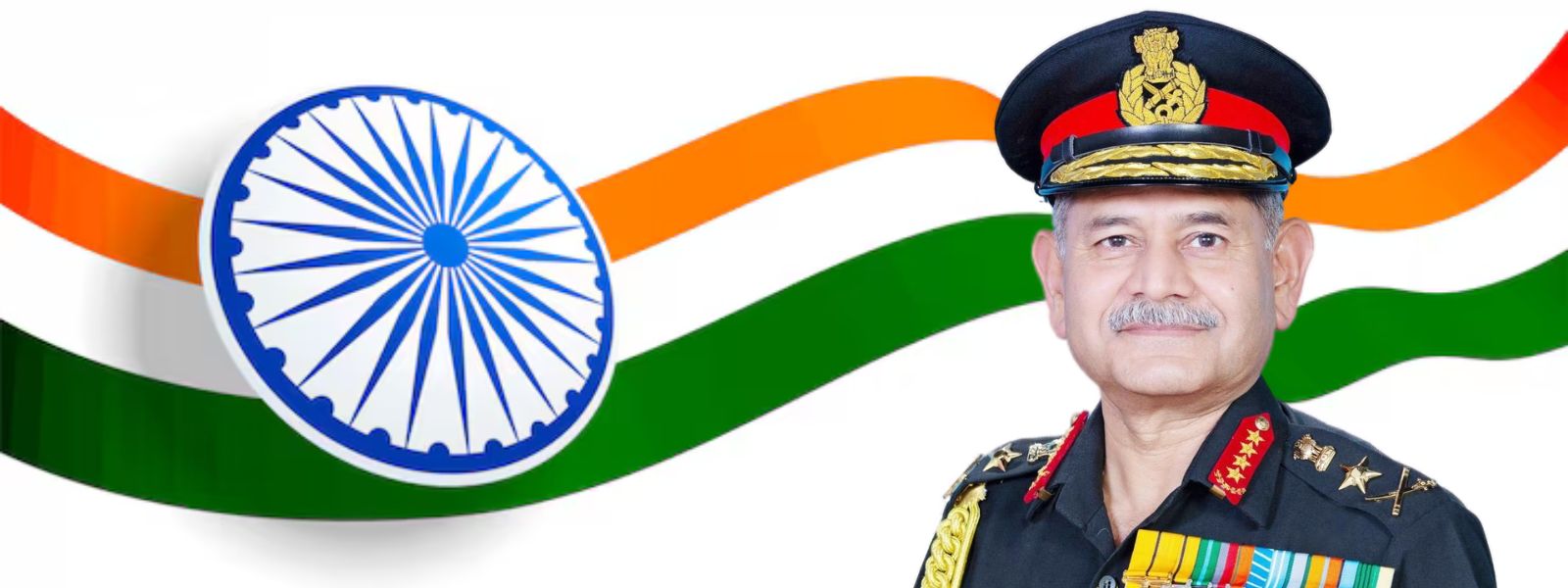
Lieutenant General Syed Aamer Raza, Chief of General Staff of the Pakistan Army, arrived in Sri Lanka on July 22 for an official visit aimed at enhancing bilateral defence cooperation.

During his visit, Lieutenant General Raza paid courtesy calls on Deputy Minister of Defence, Major General Aruna Jayasekara (Retd) and Defence Secretary, Air Vice Marshal Sampath Thuyacontha (Retd) in separate meetings.

He was accompanied by Colonel Muhammad Farooq, Defence Advisor to the High Commission of Pakistan in Sri Lanka.

The delegation engaged in constructive discussions focused on capacity building, exchange of best practices, and strategic preparedness, particularly in the context of natural disaster response.

Major General Jayasekara (Retd) acknowledged Pakistan’s longstanding support in providing military training opportunities to Sri Lankan personnel, which have significantly contributed to professional development and regional collaboration. He also referenced the Sri Lanka–Pakistan Bilateral Defence Dialogue held in Islamabad in April, emphasizing its role in strengthening multi-domain defence partnerships.

In his meeting with the Defence Secretary, Lieutenant General Raza reaffirmed Pakistan’s commitment to deepening strategic cooperation. Both parties expressed appreciation for the ongoing collaboration between the two nations’ defence establishments and emphasized the importance of sustained high-level engagements to promote regional security and mutual understanding.

Posted in Uncategorized

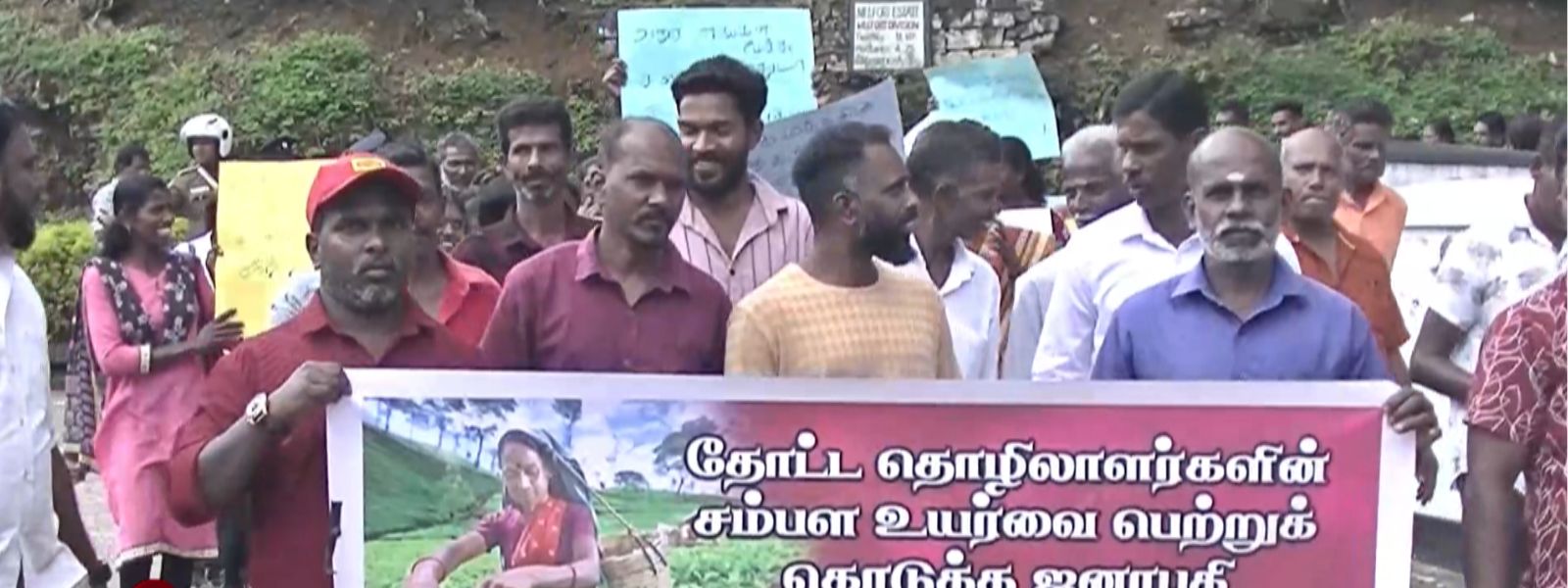
Speaker certifies National Minimum Wage for Workers Amendment Bill

Speaker of House Dr. Jagath Wickramaratne on Wednesday (23) endorsed his certification on the three Bills, the Budgetary Relief Allowance of Workers (Amendment) Bill to amend Act No. 36 of 2005, the Budgetary Relief Allowance of Workers (Amendment) Bill to amend Act No. 4 of 2016, and the National Minimum Wage for Workers (Amendment) Bill.

The Second Reading debate on the three Bills was held yesterday (22), and were passed by Parliament.

The three Bills were presented to Parliament for the First Reading on June 03, 2025.

Accordingly, the Budgetary Relief Allowance of Workers (Amendment) Bill (to amend Act No. 36 of 2005) shall come into operation as the Budgetary Relief Allowance of Workers (Amendment) Act, No. 9 of 2025; the Budgetary Relief Allowance of Workers (Amendment) Bill (to amend Act No. 4 of 2016) shall come into operation as the Budgetary Relief Allowance of Workers (Amendment) Act, No. 10 of 2025; and the National Minimum Wage for Workers (Amendment) Bill will come into operation as the National Minimum Wage for Workers (Amendment) Act, No. 11 of 2025.

By the provisions of the Budgetary Relief Allowance of Workers (Amendment) Act, No. 9 of 2025, the payment of the Budgetary Relief Allowance of Workers is deemed to have been discontinued with effect from March 31, 2025 and to have come into operation from April 01, 2025, the Department of Communication of Parliament said in a statement.

Further, by the provisions of the Budgetary Relief Allowance of Workers (Amendment) Act, No. 10 of 2025, the discontinuation of the payment of the Budgetary Relief Allowance, operative from March 31, 2025, is deemed to have come into operation from April 01, 2025.

In addition, the principal amendments introduced by the National Minimum Wage for Workers (Amendment) Act, No. 11 of 2025, are as follows:

1. For the period from April 01, 2025 to December 31, 2025:

National minimum monthly wage: Rs. 27,000 (an increase of Rs. 9,500)
National minimum daily wage: Rs. 1,080 (an increase of Rs. 380)
2. From January 01, 2026 onwards:

National minimum monthly wage: Rs. 30,000 (a further increase of Rs. 3,000)
National minimum daily wage: Rs. 1,200 (a further increase of Rs. 120)
Further, the Budgetary Relief Allowance has been incorporated as a component of the workers’ wage.

The Act is deemed to have come into operation with effect from April 01, 2025, according to the Department of Communication of Parliament.

facebook sharing button Share

Sri Lanka to join China-ASEAN Expo in September as special partner

Sri Lanka will join as a Special Partner Country for the 22nd China-ASEAN Expo (CAEXPO) scheduled for Sept. 17-21 in Nanning, capital city of south China’s Guangxi Zhuang Autonomous Region, the expo secretariat confirmed on Wednesday.

A high-level Sri Lankan government delegation led by senior diplomatic officials will attend the event. National key enterprises, including port companies and spice companies, will participate to deepen economic and trade ties with China and ASEAN.

Sri Lanka will hold a national image exhibition, product display and national promotion event during the expo.

Introduced at the 11th CAEXPO, the Special Partner Country mechanism invites Regional Comprehensive Economic Partnership (RCEP) member states or Belt and Road participating countries outside China and ASEAN. This makes the expo a platform to boost exchanges and create business opportunities between China, ASEAN and beyond. Sri Lanka previously held the role at the 13th CAEXPO.

China-Sri Lanka cooperation currently spans infrastructure, energy, port development and other sectors, helping strengthen bilateral economic and cultural ties.

Posted in Uncategorized

More bodies of children among new skeletons uncovered at Chemmani mass grave

Excavations at the Chemmani mass graves in Jaffna have uncovered eight more human skeletal remains, including what is believed to be the remains of a small child, alongside personal items such as an object resembling a child’s feeding bottle.

The discoveries were made during the second phase of forensic excavation at two sites designated by the courts as “Forensic Excavation Site No. 01” and “Forensic Excavation Site No. 02” in Chemmani, Jaffna.

Tuesday marked the 17th day of the court-sanctioned 45-day excavation phase, during which the latest remains were identified. The previous day (Monday), seven skeletal remains were also discovered at the same sites. These are expected to be exhumed on Wednesday, bringing the number of skeletal remains identified in just two days to fifteen.

This phase of excavation work in Chemmani has now spanned 26 days in total and led to the complete exhumation of 65 human remains thus far. The total number of bodies identified so far, stands at 80.

The presence of the suspected child’s remains and associated objects such as the milk bottle and pieces of cloth has raised further concerns over the demographics of those buried at the site, as it points to further involvement of Tamil children among the victims.

The Chemmani mass graves have long been tied to allegations of extrajudicial killings carried out by the Sri Lankan military, particularly in the 1990s following the army’s occupation of the Jaffna peninsula. Survivors, families of the disappeared, and human rights organisations have repeatedly called for independent investigations into these graves, many of which are believed to contain the remains of Tamils who were abducted, detained, or summarily executed.

Monday also saw the arrival of officers from the Criminal Investigation Department (CID), who have now taken over the investigation following an order by the Inspector General of Police. Until now, the Sri Lankan Police in Jaffna had been overseeing the process. The CID’s involvement reportedly sparked disputes at the excavation site, though details remain limited.

As excavations continue, local civil society organisations have urged full transparency and the involvement of international forensic experts to ensure the integrity of the investigation. The latest findings have renewed demands for a credible international mechanism to address mass atrocities committed in the North-East.

Posted in Uncategorized

Pakistan’s Top Army Chief Meets Sri Lankan Army Commander

Lieutenant General Syed Aamer Raza, the Chief of General Staff (CGS) of the Pakistan Army who is currently on an official visit to Sri Lanka, visited the Sri Lanka Army Headquarters on Tuesday (22) accompanied by a high-level military delegation.

Upon arrival, the visiting delegation was welcomed with military honors in accordance with traditional army customs.

Lieutenant General Lasantha Rodrigo, Commander of the Sri Lanka Army, extended a warm reception to his Pakistani counterpart.

During the visit, both parties engaged in discussions focused on strengthening bilateral military cooperation, with emphasis on regional security, stability, and peace-building initiatives. Talks also covered future collaboration in joint military training programs, intelligence sharing, and defense operations.

Ranil’s emergency regulations in 2022 violated fundamental rights – SC rules

The Supreme Court, in a majority decision, today ruled Fundamental Rights have been violated through then Acting President Ranil Wickremesinghe’s orders to disperse the ‘Aragalaya’ protestors from Galle Face on 17 July 2022, by resorting to Emergency Regulations under the Public Security Act.

The majority of the judges on the three-member bench held that the Emergency Regulations promulgated by the then Acting President under Section 2 of the Public Security Act were arbitrary, and therefore, invalid.

Chief Justice Murdu Fernando and Justice Yasantha Kodagoda delivered the majority verdict.

However, Justice Arjuna Obeysekara, also a member of the bench, in his separate judgment, stated that the declaration of Emergency Regulations by the Acting President did not constitute a violation of fundamental human rights.

The fundamental rights petitions were filed by the Centre for Policy Alternatives (CPA), former Commissioner of the Human Rights Commission of Sri Lanka (HRCSL) Ambika Satkunanathan, and the Liberal Youth Movement.

Additionally, the Court ordered the government to bear the legal costs incurred by the petitioners.

Posted in Uncategorized

Committee of Inquiry finds IGP Deshabandhu Tennakoon guilty of all allegations, recommends his removal

The Committee of Inquiry appointed to investigate and report its findings on Inspector General of Police Deshabandhu Tennakoon in respect of acts of gross abuse of power, has found him guilty of all allegations leveled against the IGP.

At the commencement of today’s (22) Parliament proceedings, Speaker of House Dr. Jagath Wickramaratne confirmed that he has received the full report of the Committee of Inquiry which has recommended the removal of Deshabandhu Tennakoon from the post of IGP.

The Speaker announcing the findings noted that the committee has unanimously found guilty of all charges brought against IGP Deshabandhu Tennakoon under section 8(2) of the Removal of Officers (Procedure) Act, No. 5 of 2002.

Speaker Dr. Jagath Wickramaratne also noted that it is a historic occasion, since this is the first time in the constitutional process of Sri Lanka that a Committee of Inquiry of this nature has recommended the removal of an IGP from the post.

The Speaker stated that he is obliged to place the findings of guilt in the form of a resolution in the order paper of Parliament which will be voted by Members of Parliament on a future date.

Speaker Dr. Jagath Wickramaratne also ordered the report be tabled in Parliament.

The Speaker said he intends to release the report of the committee to the general public considering the public interest in the matter and the obligation of the Parliament.

He noted that now it is the duty of the MPs to ratify the findings of the Committee of Inquiry.

The Committee of Inquiry was chaired by Supreme Court Justice P.P. Surasena and consisted of Justice W. M. N. P. Iddawala and E. W. M. Lalith Ekanayake, Chairman, National Police Commission (Ex-officio).

Resolution to appoint a Committee of Inquiry in terms of Section 5 of the Removal of Officers (Procedure) Act, No. 5 of 2002, to remove the Inspector-General of Police Deshabandu Tennakoon from the office of the Inspector-General of Police for misconduct and gross abuse of power of his office in terms of Sections 3(d) and 3(e) read with Section 5 of the said Act was passed in Parliament on April 04, 2025.

The blood of victims in mass graves cries for justice

Several mass graves have been discovered in our land. All of them allegedly linked to rogue elements within the police and armed forces of the state. The victims — as always civilians- come from both majority and minority communities and range from women and children to the old and the infirm.

The victims of these mass killings, be they in mass graves at Sooriyakanda or Chemmani, were tortured sometimes for days to months on end, subsequently killed and unceremoniously dumped into pits which turned into the sites now being excavated as mass graves.

This is not something new. Many heard screams of the tortured, but were afraid to speak for fear of repercussions. We all witnessed the protests of mothers, wives and relatives of the disappeared. Journalists Prageeth Eknaligoda, Sivaram and Richard de Zoysa are classic examples. The late Richard’s mother identified one of his abductors, a senior police officer.

With the killers still roaming free, the culture of impunity within the forces and their political backers continued to grow. Soon it led to mass killings and dumping of large numbers of persons killed. Even members of the clergy who should have demanded justice for the victims sought to protect murderers under a cloak of patriotism and damned those who demanded justice as being unpatriotic.

Is it any wonder today that a vast majority of people refuse to co-operate or complain of nefarious deeds committed by members of the police, armed services and their political backers.

This year saw a shift from past practice. The current president initially said he would not participate in a ceremony commemorating a ‘War Heroes Memorial’ function. Sadly, socio-political pressure proved too much for him and the nation saw him participate in the ceremony.

The president’s capitulation brought to mind memories of an earlier premier who tore up a pact with Tamil leaders of the day which could well have prevented the three-decade ethnic war from ever happening. In the end, that premier fell victim to an assassin’s bullet by the very forces he was trying to appease.

A number of our political leaders have been closely linked to one or the other of these extra-judicial killings associated with the military and/or the police. Some of the mass graves were identified as far back as 1994 and excavations were conducted. But as in the case of the late Richard de Zoysa, the killers still roam free.

We hold no brief for blood-stained insurgents like Prabakaran or Wijeweera. But they too, were victims of extra judicial killings. Both were killed in cold blood with no recourse to the systems of justice. What difference whether the killer dons a uniform or is a paid mercenary?

The question which arises is, why are we as a people not concerned that the perpetrators of these crimes have not been prosecuted and brought to justice?

Our present president, whose Constitutional duty it is to protect and defend the rights of citizens, freed the systems of justice to inquire into the alleged mass graves at Chemmani. Excavations have revealed the remains of young children at this grave site. The problem is whether vested politico-religious interests will permit him to continue in his bid to implement justice.

Over the weekend we witnessed a protest against the excavation of the Chemmani graves opposite the UN headquarters in Colombo. Why are some among us against bringing to book rogue elements responsible for such crimes? These rogue elements are responsible for unlawful killings of Sinhalese, Tamils and Muslims irrespective of race, religion or ethnicity.

We need to applaud efforts of the present regime to bring to book these killers. We need to restore the faith of our people in the forces of law and order.

As Jerome A. Millers ays in his ‘Blood of Abel’ injustice does not just taint the past; it has the capacity to ruin the future.

We trust our present leaders will not succumb to pressure, but will continue their efforts to bring justice not only to the victims at Chemmani but other victims around the country.

Sri Lanka’s economic output tipped to surpass pre-pandemic peak in 2026 – Bloomberg Economics

Sri Lanka’s economy is poised for a significant rebound, with projections indicating that the nation’s output will exceed its 2018 pre-pandemic levels by next year.

A recent Bloomberg Economics report forecasts a continued economic recovery through this year and the next, buoyed by strong domestic tailwinds, even as the potential trade headwinds loom.

The report projects a robust gross domestic product (GDP) growth of 5 percent in 2024, followed by a 3.5 percent expansion in 2025 and 2.9 percent in 2026. This sustained growth trajectory is expected to propel the economy past its 2018 peak, signalling a remarkable turnaround after a period of economic hardship.

Fuelling this optimistic outlook are several positive domestic factors. Falling borrowing costs, a direct result of the Central Bank of Sri Lanka’s (CBSL) 825-basis-point rate cuts, are expected to boost credit demand. Consumer spending is also likely to receive a lift from the rising wages, a recent cut in income taxes and near-zero inflation anticipated for 2025.

The tourism sector, a vital component of the Sri Lankan economy, is experiencing a strong resurgence. The first half of 2025 saw a 16 percent year-on-year increase in visitor arrivals, reaching 1.2 million and surpassing the pre-pandemic peak of 2018. The government initiatives such as a global tourism promotion campaign and visa-free entry for citizens of several countries are contributing to this revival.

Furthermore, improved investor sentiment, bolstered by successful debt restructuring and adherence to the International Monetary Fund (IMF) loan targets, is playing a crucial role in the recovery. The recent approval of the fifth tranche of the IMF bailout, amounting to US $ 350 million, has further boosted confidence among investors.

However, the report also highlights the potential risks, with the primary concern being uncertainty surrounding the US reciprocal tariffs. An assumed increase in these tariffs on Sri Lankan exports to the US from the current 10 percent to 30 percent from August 1, 2025, has been factored into the growth estimates.

While the government is negotiating to lower these tariffs, a prolonged period of higher rates could significantly impact exports, particularly textile products and potentially lead to a rise in unemployment. According to an in-house global trade model, a 30 percent reciprocal tariff rate could reduce exports to the US by approximately 36 percent and place 0.6 percent of GDP at risk over the next three years.

On the monetary policy front, with inflation expected to rise from July, after a period of deflation, there is limited scope for further rate cuts by the CBSL. The report suggests a possible 25-basis-point cut in September to 7.5 percent to mitigate any economic impact from higher tariffs, which would likely mark the end of the current easing cycle. Inflation is projected to average 0.2 percent this year, a significant drop from 20.5 percent in 2023 but is expected to climb to 5.6 percent in 2026.