Did you attend Natasha’s comedy show? Police will quiz you

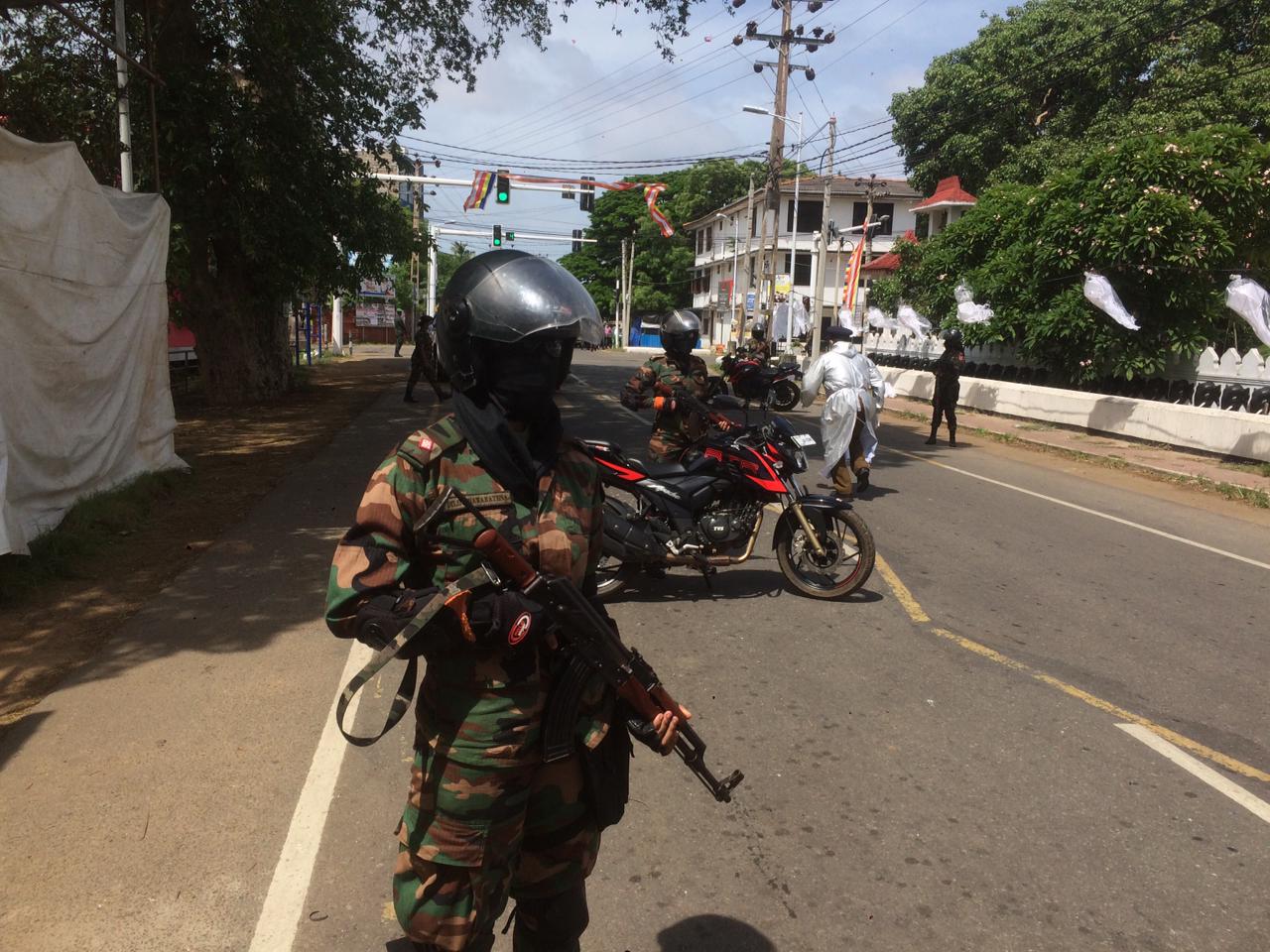
The Criminal Investigations Department (CID) is conducting investigations to identify and record statements from those who were present at Nathasha Edirisooriya’s stand-up comedy show held in Colombo, where certain disrespectful remarks were made on Buddhism.

Police spokesman SSP Nihal Thalduwa said the Cyber Crimes Investigation Unit of the CID is conducting further investigations into the incident.

He said the police will record statements from some of the attendees as well.

On Saturday, the CID launched an inquiry following several complaints that Nathasha Edirisooriya, a stand-up comedian, had allegedly made disrespectful remarks on Buddhist philosophy and culture as well as Christianity during a stand-up comedy show at a leading girl’s school in Colombo in April this year.

The video of the show went viral on social media last week, sparking a protest against her remarks. Later the suspect on an online video publicly apologized for the controversial statements she had made. The particular video was also removed from the social media platform.

The CID on Sunday arrested Nathasha Edirisooriya at the Katunayake airport while she was trying to leave for Singapore. She was later remanded till June 07 by Fort Magistrate Thilina Gamage

Bandaranaike MemoriaI International Conference Hall cemented Sino-Lankan ties By P. K. Balachandran/Sunday Observer

The Bandaranaike Memorial International Conference Hall (BMICH), which celebrated its 50th anniversary on May 10, has a symbolic value in modern Sri Lankan history. It symbolised independent Sri Lanka’s desire to be more than a beautiful island in the Indian Ocean and play an influential role in international affairs on par with other newly independent countries of Asia and Africa.

The vision of the then Prime Minister, Sirimavo Bandaranaike, was not to become part of any power bloc but to play an independent role to bridge the gap between the Western and Soviet blocs and promote peace and amity in the world.

Mrs.Bandaranaike, who had already attained global stature as the world’s first woman Prime Minister (1960), desired a platform to project the new role she had envisioned for Sri Lanka. In view of the Western world’s hostility to Sri Lanka owing to the controversy over rubber prices and the move to take over Britain’s military bases, the Prime Minister turned to China. Though aligned with the Soviets, the Chinese had rescued Sri Lanka from a severe rice and foreign exchange crisis in the early 1950s by entering into a Rice-Rubber barter deal in 1952.

Even though Sri Lanka desperately needed to import rice and there was a foreign exchange shortage (just like Sri Lanka experienced last year), the US was not willing to give a US$ 50 million loan to buy rice. Nor was it offering a fair price for Lankan rubber. At the same time, Communist China was facing a bad shortage of rubber as the US had banned the sale of rubber, a strategic material, to Communist China then fighting a war against the US in the Korean peninsula.

On its part, China needed to assert its independence against a hostile US which, in China’s opinion, had denied it its rightful place in the UN and the UN Security Council.

International Role

To play its new-found international role, Sri Lanka needed a large and modern international conference hall. China’s help was sought, and it was given free. The result was the Bandaranaike Memorial International Conference Hall named after Mrs. Bandaranaike’s husband and former Prime Minister SWRD Bandaranaike, who had initiated the post-independence movement against Western domination.

“SWRD” had become Prime Minister in 1956. In 1957, Chinese Prime Minister Zhou Enlai and Vice Premier He Long, visited Sri Lanka. During the visit, SWRD and Zhou Enlai jointly adopted the Five Principles of Co-existence and the Bandung Principles for the achievement of World Peace.

On February 4, 1957, SWRD invited Zhou Enlai to be chief guest at the ninth Sri Lankan Independence Day celebrations. According to a bilingual book on the BMICH entitled “A Symbol of China-Sri Lankan Friendship”, Zhou Enlai spoke in pouring rain “which moved the audience”. SWRD was assassinated just two years later.

In February 1964, when SWRD’s widow, Sirimavo Bandaranaike was Prime Minister, Chinese Communist Party Vice Chairman Song Qingling and Premier Zhou Enlai visited Lanka. It was during this visit that “Mrs. B” requested China to help build a modern and capacious conference hall. The request was granted promptly and China decided to gift the building. It was an outright grant, not a loan.

The work was assigned to the Beijing Industrial Building Design Institute of the Ministry of Works with the design principles enunciated by Zhou Enlai himself. His principles were as follows: The building scale shall be appropriate for Sri Lanka’s conditions and requirements. It shall adapt to the tropical climate and reflect the local style. The internal facilities and equipment shall be modern.

The Building Design Institute sent a delegation to Sri Lanka headed by its Vice President Yuan Jingshe and included Chief Architect Dai Nianci. The delegation members were in Sri Lanka for four months, touring the entire country to see for themselves local building styles, culture, customs and beliefs so that the BMICH accords with the local culture and style.

Highest Gift

The delegation collected a large amount of basic data on the materials available, physical conditions, and climate changes and finally produced an exact model. After inspecting the model, Mrs. B said excitedly: “I thank Prime Minister Zhou Enlai for sending us the highest gift. I thank China for the outstanding contributions Chinese experts have made for the project. The BMICH is a symbol of China-Sri Lanka friendship”.

Architect Dai Nianci, who had a deep understanding of Sri Lanka’s natural and human environment, proposed the classical practice of having a symmetrical, octagonal layout with a colonnade. He suggested that the building be painted white which is favored in tropical architecture and is also favoured by traditional Sri Lankans. Due to the tropical climate, ventilation was very important and that was achieved by maximizing natural ventilation, although the main hall and function/banquet halls would be air-conditioned.

However, it was only on November 24, 1970, that the Sri Lankan Government commenced work on the BMICH. Prime Minister Bandaranaike broke the ground in the traditional way with a “mammoty” to signify the start of construction. China had sent 400 technicians, 40 engineers and managers and 60 carpenters to do the construction work.

Since ceramic tile technology was not well developed in the 1970s, each tile was chosen carefully to make the flooring smooth. Steps were taken to keep termites away.

Both Zhou Enlai and Mrs. Bandaranaike were constantly monitoring the project with the latter visiting the site often. The Sri Lankan Chief Engineer of the project, Damodaralingam, got along well with his Chinese counterparts and ensured perfect coordination.

Initially, language was a barrier and communication was through sign language. But before long, the locals picked up some Chinese and the Chinese picked up some Sinhala.

Once, a number of Chinese suffered from food poisoning. The Government hospitalised all 200 workers as an abundant precaution. Given the shortage of hospital beds at that time, local patients gave up their beds for the sake of the suffering Chinese.

Challenges

It was not easy for workers from the colder parts of China to put up with the intense heat of Colombo. The BMICH construction site at Bullers Road (now Bauddhaloka Mawatha) also had monkeys, snakes and mosquitoes as it was virtually a jungle back then. Though no one was bitten by a snake, the Chinese embassy had on stand-by a doctor with knowledge of local anti-snake drugs. Still, snakes would interfere with the work or choose to surprise workers while they were at lunch.

Workers would also be woken up by ant bites. When local workers told the Chinese that ants were averse to the smell of newspaper ink, the Chinese embassy started sending newspapers to the workers.

On completion of the work, there was a fitting ceremony in which a stage play called “Path to Brightness” written and directed by Chandrika Bandaranaike, daughter of the Prime Minister and future President, was staged. The play was made into a film and was sent to Premier Zhou Enlai along with a model of the BMICH set with rubies. The model is now in the Asia Gift Pavilion at the National Museum in China.

Set in 13 hectares and with a floor of area of 32,540 sq meters (in 2013), the BMICH is a grand, spacious and airy structure. Its vast open and verdant space makes it an ideal place for large and small conferences, university convocations, public gatherings, shows and exhibitions. It has parking space for around 500 cars and now houses the first-ever bus deployed by the Sri Lanka Transport Board (SLTB) in 1957, a Mercedes which is still roadworthy. The annual book exhibition (indoor/outdoor) is the biggest event held at the BMICH. Several SAARC Summits and other international conferences have been held at the BMICH.

The hall came in handy in 1976, when the fifth Non-Aligned Movement (NAM) Summit was held in Colombo with nearly 120 Heads of State and Government attending. The delegates told Premier Bandaranaike that the assembly hall was much better than the halls in which previous summits were held and on par with even those in the developed world. Premier Bandaranaike told the Chinese envoy that the summit would not have been such a huge success if it was not for the magnificent BMICH.

It was completely renovated by Chinese personnel around 10 years back with China bearing the expenses. Today, in a fitting symbol of the Sino-Lanka friendship, the Chinese Embassy is right opposite the BMICH.

Source: A symbol of China-Sri Lankan Friendship: The Documentary and Engineering Technology of the Bandaranaike Memorial International Conference Hall, Beijing, 2013

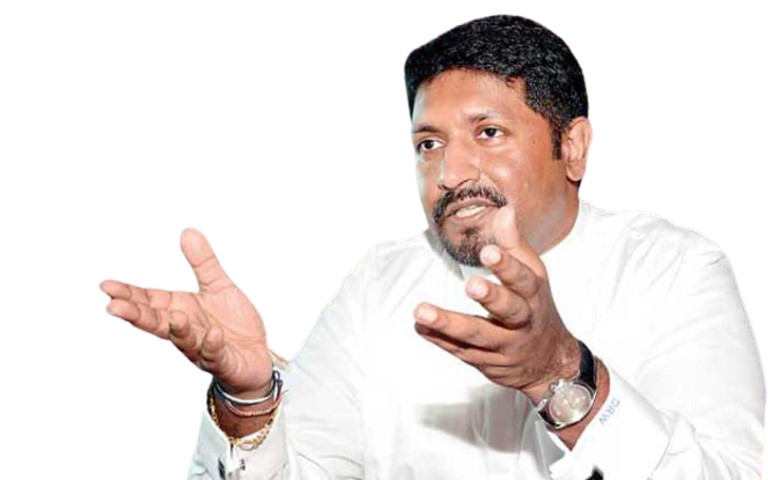
Several SJB MPs keen to work with the UNP -Hakeem

Leader of the Sri Lanka Muslim Congress Rauff Hakeem says several Members of Parliament of the Samagi Jana Balawegaya are of the view of that the SJB and the United National Party should work together.

Speaking during an event in Kundasale, MP Hakeem said they can work with the President if he is willing to implement their policies for the sake of the country.

He said however, the President is being controlled by the Sri Lanka Podujana Peramuna, at present.

MP Rauff Hakeem said they are willing to discuss policy matters with the President, since, everyone has a responsibility to help revive the country’s economy.

MP Hakeem added that any agreement or discussion should be based on policy and not with the intension of luring MPs towards the government.

Posted in Uncategorized

India says it has done more for Sri Lanka than IMF

India has done more for Sri Lanka than the International Monetary Fund (IMF), Union Minister for External Affairs Dr S Jaishankar said.

The Modi Government, he underlined, is working on developing an “extended neighbourhood” that involves islands in the Indian Ocean, Gulf countries and nations in South-East Asia.

“What we are also trying to do today is for a bigger, influential and ambitious India. We are trying to expand what should be our neighbourhood. We look at what this extended neighbourhood should be. It could be islands in the Indian Ocean, nations in South-East Asia and Central Asia, or Gulf countries. The relationship with the UAE and Saudi Arabia has undergone an enormous transformation. From what was a traditionally much more constricted view of our neighbourhood, we have undertaken something much more ambitious,” said Jaishankar during a talk on “Modi’s India: A Rising Power” at Anant National University in the city.

Pointing out how the world has become more uncertain, volatile and turbulent, Jaishankar underlined it was time to use the “complex global landscape” for the betterment and growth of India. The pandemic and the Ukraine-Russia conflict has helped to build “resilient and reliable supply chains”, “domestic capacities” and “trusted relationships,” he highlighted.

A Rajya Sabha MP from Gujarat, Jaishankar also spoke about the “linkages” and “perception” India has developed in the last nine years under the leadership of Prime Minister Narendra Modi.

“If you are the biggest in your neighbourhood, then it is in our interest that our other neighbours have a share in our prosperity, happiness and are linked to us. That will happen if we are generous and have a non-reciprocal way of engagement. Many of our neighbours like Bangladesh or Nepal and Bhutan are today linked with us through roads, railways, and waterways. We have electricity grid connections; there are fuel supplies. In many ways, they benefit from the scale and economy of India,” Jaishankar said while addressing an audience largely composed of students and faculty members from the private university.

“The linkages and perception today of India in the neighbourhood has changed. Nothing illustrated that more dramatically than what happened to Sri Lanka. Last year, when they went through a very deep economic crisis, we stepped forward in a way we ourselves have never done before. What we have done for Sri Lanka is bigger than what the IMF has done for Sri Lanka. If any of you have visited Sri Lanka recently, then you will note the popular perception that has accrued from this action,” he added.

Speaking about India’s relationship with China, the Union minister said, “The challenge from China is complicated. But in the last three years, it has been particularly visible in the border areas. There are clearly responses that are required and those responses have been undertaken by the government and a lot of it is to ensure that no attempt is made to unilaterally change the status quo in the border areas. We will ensure peace and tranquillity. It is the basis of our relationship. If peace is disturbed, it cannot be that the relationship remains unaffected.”

Both India and China, he said, will have to find some “kind of equilibrium” where there is mutual respect, sensitivity and recognition. “Today, if we see that respect, sensitivity and recognition, we can have a better relationship with China. But if we do not, then we have to stand up for our rights. We need to be firm in asserting our positions. That is unfortunately the current situation,” he added.

“Modi’s India is different from its predecessors. It is different in its outlook,” he said while speaking about the decisive mandate and vision the Prime Minister has secured. “Modi’s India is a return to a political dispensation that has a majority in Parliament,” Jaishankar emphasised, pointing out that such a majority did not exist from 1989 to 2014.

Source:The Indian Express

NPP to rejoin the fight demanding elections

The National People’s Power (NPP) says that it will join the struggle once again demanding an election, from June 08.

Leader of the NPP, MP Anura Kumara Dissanayake emphasized that all 2023 Local Government election candidates who have submitted nominations will arrive at the Election Secretariat on June 08.

He made these remarks while addressing a meeting held at the Weersinghe Playground in Ahungalla.

Posted in Uncategorized

Commercial and logistics hub: Scrutiny over land for Chinese firm

The agreement signed recently between the Sri Lanka Ports Authority (SLPA) and China Merchants Port Holdings to build a commercial and logistics hub in the Colombo Port has come under scrutiny as ports trade unions claim that the Government has secretly handed over the land to China without following the State-approved tender procedure.

Speaking to The Sunday Morning, Janatha Vimukthi Peramuna (JVP)-affiliated All-Ceylon General Ports Employees’ Union (ACGPEU) Deputy General Secretary G. Niroshan said that the land had been handed over to a Chinese company for a project on a Build-Operate-Transfer (BOT) basis.

“There have been concerns regarding this deal. Despite our protests, the Government went ahead as it had been planned before and handed it over to China. They have only Cabinet approval and they didn’t follow the proper tender process,” he charged.

The agreement was signed between the SLPA and China Merchants Port Holdings in Colombo to jointly build the South Asia Commercial and Logistics Hub in the Colombo Port.

It was previously reported that there was a proposal from China to establish a cargo service supply centre as a joint Public-Private Partnership (PPP) in the Battenberg area of the Colombo South Harbour.

A proposal has been submitted by the Chinese-controlled Colombo International Container Terminals (CICT) to establish a cargo service supply centre within a portion of land – 5.3 hectares (ha) in extent – adjoining the South Asia Gateway Terminals (SAGT) and surrounded by the Colombo Port City, the CICT, and the East Container Terminal (ECT).

However, the ports trade unions are opposed to the proposed project, claiming that it can cause a loss of nearly Rs. 2.8 billion annually.

They allege that the SLPA will lose control over the cargo service supply as a result of letting CICT undertake the business.

The unions allege that the Government is trying to rent out the 5.3 ha land situated at a prime location in Colombo to CICT at a monthly rent of Rs. 800,000.

Cabinet approval had been granted for the proposal submitted by then Ports and Shipping Minister Rohitha Abeygunawardena to appoint a negotiation committee and to take further actions as per the recommendations of that committee.

As reported, China Merchants Port Holdings has said that it was teaming up with Sri Lanka’s Access Engineering and Colombo Port to set up a $ 392 million logistics centre as a BOT project.

The South Asia Commercial and Logistics Hub will be a 50-year BOT project, with Colombo Port holding a 70% stake and Access Engineering and SLPA holding 15% each.

The statement said the project would “result in an infusion of $ 126 million in addition to an upfront payment of $ 26 million after the agreement is signed”.

An eight-storey building with a capacity of 530,000 cubic metres will be built in the centre of Colombo Port. Construction will begin in the second half of 2023 and is expected to be completed by the end of 2025.

It will be linked to the Bandaranaike International Airport in Katunayake via a port access elevated highway.

It will also offer several services, including multi-country consolidation, container freight station, general warehousing, and value-added services.

When contacted by The Sunday Morning, SLPA Spokesman Chitral Jayawarna said that the relevant information regarding the agreement was not available at the SLPA as it was being handled by the Ports and Shipping Ministry.

Attempts to contact the Ports and Shipping Ministry were unsuccessful.

Posted in Uncategorized

UK seeks Sri Lanka’s cooperation to curtail number of illegal immigrants

British High Commissioner Sarah Hulton has requested the Minister of Pulic Security Tiran Alles to cooperate in the efforts taken to prevent Sri Lankan nationals from entering the United Kingdom as illegal immigrants.

Hulton visited Alles earlier this week, with the UK Foreign, Commonwealth and Development Office Director, Ben Mellor, during his visit to Sri Lanka.

They further discussed the Prevention of Terrorism Act (PTA) at length, during which Minister Alles commended the recently introduced laws in Britain, adding that they were ‘essential’ in order to maintain law and order within a country.

Matters pertaining to four persons currently being detained under the PTA were also raised during the discussion, to which Alles explained that all four persons were being detained on suspicion of their involvement in the Easter Sunday terror attacks of 2019.

High Commissioner Hulton also noted that a training workshop would be organised, via Zoom, to educate Sri Lankan police officers on the proper use of the country’s rules and laws.

Mellor, along with Sarah Hulton, also met with a wide range of stakeholders in Colombo, Jaffna and Galle.

Commenting on the matter, Hulton said, “It was great to accompany our UK Director across three provinces this week, meeting important stakeholders across civil society, businesses and government. We had productive discussions about local concerns and priorities, and economic and development opportunities.”

During their visits to Galle and Jaffna, the visiting diplomat met with the governors of the Northern and Southern Provinces, toured a Red Cross Project site to hear about how UK funding has impacted vulnerable communities, and visited Jaffna University and the historic Jaffna Library.

Meanwhile, in Colombo, they met with the Minister for Public Security Tiran Alles, State Minister for Finance Shehan Semasinghe, and Foreign Secretary Aruni Wijewardane.

Posted in Uncategorized

VIP smuggler MP travelled to Dubai six times since March this year

Honoured as Very Important Persons (VIPs), most users of the hallowed gateway to the world, the VIP Lounge at Bandaranaike International Airport, are Members of Sri Lanka’s Parliament.
Officials dare ask questions when they arrive or depart. An added perk for these VIPs is the free refreshments they receive at State expense. This is whilst they relax in the well-cushioned sofas for their baggage to be rolled in or out. That is again for cursory approval by Customs.

At least for once, that changed last Tuesday morning. Flydubai, an Emirati government-owned low-cost airline, was to touch down at the Bandaranaike International Airport just past 9 a.m. Ahead of the arrival of flight FZ 547, a Boeing 737, the Revenue Task Force (RTF), a Customs unit (one of three) that functions from Orugodawatte in Colombo received a tip-off. These three units are manned by some expert Customs top investigators who have laid bare several rackets. Functioning under the direct command and control of the Director General of Customs, the RTF monitors all imports and exports. That is to ensure goods imported into the country are cleared on payment of all levies. They are authorised to carry out surprise checks at airports, courier services, warehouses, and other similar places.

Playing a key role in the RTF team was an officer known for his daring actions. In one instance, he sealed the warehouse of a liquor manufacturing company though the owners had very close connections with the minister in charge. In another, he seized a luxury vehicle gifted by a businessman to the son of a powerful politician, who is also in politics. Customs said that the young politician was aware that duty on the vehicle had not been paid and had been using the vehicle freely.

The RTF team was instructed by Director N. Samaratunga and included Nalin Premaratne, Superintendent of Customs, U. Indrajith, Superintendent of Customs, Nalin Premaratne, Senior Deputy Director of Customs and the Operations were handled by Aruna Amerasinghe, Deputy Superintendent of Customs. Others in the team were two Customs officers, two Customs Guards and two Customs Inspectors. The ten-man team that went to work immediately found that Mohamed Fairoon, described as an “assistant” (or helper) to M.A. Raheem Ali Sabri, Member of Parliament for Puttalam District, had flown to Dubai a day ahead of the MP. He was returning to Colombo last Tuesday with Sabri in the same Flydubai airline flight. Plans were carefully mapped out and put into effect.

A high-ranking Customs source said the three RTF teams are more prone to secrecy due to personal security threats. The source confessed that the personnel in the unit were still “absolutely cautious” and “very nervous” when it came to tip-offs that related to politicians. “They did not wish to take a chance. A small error could be the end of their career,” he noted and pointed out “that the officer concerned, in this instance, was so cocksure. He took “a very high risk but it paid off,” said the senior officer who did not disclose the front runner’s name for reasons of personal security.”

When the Flydubai flight arrived, Fairoon disembarked and went to the terminal building of the Bandaranaike International Airport. He picked up his baggage and walked through Green Channel – one that is meant for those who had no dutiable goods to declare. He was immediately accosted by a Customs officer who had been specially assigned to the area. He also temporarily seized the two mobile phones Fairoon was using. A check on his baggage revealed he had 19 mobile phones (a well-known brand) in his baggage. He was imposed a fine of Rs 100,000 and the phones were confiscated. Later, the two mobile telephones he was using were returned.

At the same time as this was going on, Sabri arrived at the terminal building of the airport and was received by an official of the Sri Lanka Airport and Aviation Services Ltd. This is a customary exercise. Through the VIP lift in the terminal, the officer escorted Sabri to the VIP Lounge. There, he sat on a sofa in the Crystal room, one of two such rooms in the VIP lounge. He had his hand luggage with him. The official had left to ensure Sabri’s baggage was sent to the VIP lounge.

When two pieces of baggage belonging to Sabri arrived at the VIP Lounge, a Customs official said they wanted to examine them. Usually, they are loaded straightaway into a vehicle. He was asked whether there was anything to declare and the reply “I have 40 mobile telephones.” He was asked again whether there was anything else. He said there was some gold. It is then that Customs officers began examining his luggage. They found 2600 grammes of gold. It was in a plastic box sealed with an adhesive tape. In another plastic box, Customs said, they found 800 grammes of gold jewellery. It was sealed with insulating tape. Customs officials thereafter discovered 91 mobile telephones.

They escorted Sabri to one of their offices located just next to the VIP Lounge. There, they recorded his first statement. The Customs source said in the statement Sabri admitted to the gold and the telephones being part of his own baggage. However, there was a contradiction. A receipt of ownership from Dubai Customs, held by Fairoon, had declared that the gold belonged to him. This receipt was authority to carry the gold outside Dubai and is a legal requirement in that emirate. This aspect was also recorded in the statement by Customs officers.

When the recording of the statement was over, Sabri was driven to their office in Orugodawatte by the RTF team. Further interrogation of Sabri took place here. Thereafter Sabri was released only when the fine imposed on him was paid up.

Personnel of the Revenue Task Force examined the passport of Sabri. His name is listed there as Raheem Ali Sabri. He held Sri Lanka Passport No: D 5658824.

The senior Customs official disclosed that he was allowed to make a few telephone calls. He had made a call to the Director General of Customs, P.B.S.C. Nonis. He had sought his release on the grounds that he was a parliamentarian. Sabri, the official revealed, telephoned Saman Ekanayake, Secretary to the President. The latter, he disclosed, had given two sets of instructions to them. One, the official said, was to immediately apprise the Speaker of Parliament, Mahinda Yapa Abeywardena, giving details of the incident. The other, he disclosed, was to “take strong deterrent action” against violations of law and procedures. The Customs launched an immediate inquiry.

It was to make some shocking revelations. Parliamentarian Sabri, now identified as a smuggler, has made six different trips from Colombo to Dubai within just seven weeks since March, this year. Here are the details: Left on (1) March 10, 2023 and returned on March 19, 2023, (2) Left on April 9, 2023 and returned on April 16, 2023, (3) Left on April 26, and returned on May 2 2023, (4) Left on May 5 2023 and returned on May 7, 2023, (5) Left on May 11 2023 and returned on May 14, 2023, (6) May 5 2023 and returned on May 23, 2023. Besides admitting in his statement to travelling from Colombo and returning on the days listed, Sabri’s passport has also been date-stamped as proof of both arrival and departure at the two points.

Also incriminating, the senior Customs official said, were receipts that have been seized from Sabri’s possession. “They included receipts for a quantity of gold he had procured from a dealer in Dubai,” the official disclosed. That included a part of the quantity seized as well as those procured earlier.

On Friday night, Sabri boarded Flydubai flight FZ 570 to Dubai. This will make it his seventh trip to Dubai since March, this year and comes after he was caught by Customs with contraband. It has now come to light that Sabri is also running a business in Dubai secured in his official position as a parliamentarian.

Customs imposed a penalty of Rs 7.4 million on Sabri. It was promptly paid up. The official said that they were empowered to impose penalties that formed three times the value of contraband they detect. “In this instance,” he pointed out, “the fine has been mitigated in terms of Section 160 of the Customs Ordinance. Therefore, he said, “a fine that constituted only ten per cent of the value of the contraband has been imposed. He said this was in conformity with Section 129 of the Customs Ordinance which said:

“129. Every person who shall be concerned in importing or bringing into Sri Lanka any prohibited goods, or any goods the importation of which is restricted, contrary to such prohibition or restriction, and whether the same be unshipped or not, and every person who shall unship or assist, or be otherwise concerned in the unshipping of any goods which are prohibited, or of any goods which are restricted and imported contrary to such restriction, or of any goods liable to duty the duties for which have not been paid or secured, or who shall knowingly harbour, keep, or conceal, or shall knowingly permit, or suffer, or cause, or procure to be harboured, kept, or concealed, any such goods, or any goods which have been illegally removed without payment of duty from any warehouse or place of security in which they may have been deposited, or into whose hands and possession any such goods shall knowingly come, or who shall assist or be concerned in the illegal removal of any goods from any warehouse or Place of security in which they shall have been deposited as aforesaid, or who shall be in any way knowingly concerned in conveying, removing, depositing, concealing, or in any manner dealing with any goods (83, 83 of 1988) (83, 83 of 1988) (83, 83 of 1988) (83, 83 of 1988) (83, 83 of 1988) (83, 83 of 1988) (66, 83 of 1988) Person concerned in importing prohibited or restricted goods, whether unshipped or not, and persons unshipping, harbouring or having custody of such good, to forfeit treble the value or, one hundred thousand rupees (19,Law 35 of 1974) (67, 83 of 1988) liable to duties of customs with intend to defraud the revenue of such duties or any part thereof, or who shall be in any way knowingly concerned in any fraudulent evasion or attempt at evasion of such duties or any part thereof, shall in each and every of the fore-going cases forfeit either treble the value of the goods, or be liable to a penalty of one hundred thousand rupees, at the election of the Director-General.”

According to the senior Customs official, this is the second time a large fine has been imposed by Customs. The previous occasion, he said, was when a container load of cigarettes was detected.

According to another government source, pressure on the Customs came because voting on the expulsion of Janaka Ratnayake, Chairman of the Public Utilities Commission of Sri Lanka (PUCSL) was to take place on Wednesday afternoon. They had wanted Raheem Ali Sabri in Parliament, He, however, voted in support of Ratnayake. He claimed, again in sections of the media, that he did so because both the President as well as the Prime Minister had not helped him. Through this totally outlandish statement, Ali Sabri is accusing the country’s two leaders, the number one and two, of not helping him to smuggle contraband. This remark by itself is not only audacious but is highly unbecoming of a parliamentarian. If he had thrown mud at his own Muslim community, he has added insult to injury with those puerile remarks. There is nothing to prevent a full inquiry by the Criminal Investigation Department (CID) which could, besides other issues, unravel the brains behind the smuggling ring. Ironically, there remains a question of whether the CID itself is up to the task. They have fumbled the investigation into the case of Dinesh Schafter. By the admission of their own bosses, even the probe into the protests (aragalaya) last year is being re-started. They have confessed to this before the Court of Appeal.

Ali Sabri, now a proven smuggler, was elected MP at the 2020 parliamentary elections under a Muslim National Alliance (MNA). However, he entered politics through the All Ceylon Makkal Katchchi (ACMK) led by Rishad Bathiuddin, a one-time cabinet minister. The latter has disowned any responsibility and declared it was a matter for Parliament to decide.

In his defence, Ali Sabri has told sections of the media that the contraband he smuggled to Sri Lanka did not belong to him. He claimed that he was bringing it on behalf of a friend. That makes his case worse. The contraband did not arrive in Sri Lanka under a friend’s name. It was in Ali Sabri’s personal luggage. The Customs have clearly recorded this in their own testimony. However, top Customs officials, the Sunday Times learnt, had told government leaders that they suspect he could be a carrier for a rich smuggling ring that had been sending him on regular runs to Dubai. The senior official declared “We have had information about activities by Sabri in the past but acted very cautiously.” They had claimed that the intelligence information they have received as well as the pattern of operations has raised several questions in this regard. However, as far as the Customs are concerned, about the Ali Sabri smuggling case, the matter is closed since he has paid the fine imposed on him.

On Thursday, 20 opposition political party members met and decided to call upon Ali Sabri to tender his resignation as a Member of Parliament. “We decided that he should resign forthwith since he has brought disgrace upon all MPs,” declared Udaya Gammanpila, leader of the Pivithuru Hela Urumaya. He said Ali Sabri’s conduct was most reprehensible, and he could not remain an MP. He revealed that if Sabri did not heed the demand of the parliamentarians, they would move a resolution in Parliament. Parliamentarian Gammanpila, a former minister, said during President J.R. Jayewardene’s tenure, when then parliamentarian Anura Daniel was caught smuggling gold into Sri Lanka, he was ordered to resign immediately. This, he did. However, a Parliament official said that an MP cannot be removed through a resolution.

Posted in Uncategorized

Indian cruise ship to launch operations to Sri Lanka

Cordelia Cruises is all set for its first international voyage to Sri Lanka in early June, and the new route is likely to boost the Indian cruise traffic by 25-30 per cent, according to a top official.

The cruise liner, currently operating for domestic destinations, has witnessed a revival in the post-COVID era. The occupancy rate has averaged between 78-85 per cent, with consecutive sold-out summer holiday cruises, the official added.

”Sri Lanka is truly the jewel of the Indian Ocean. The nation is moving forward with great determination and courage, and we stand with them in true partnership,” said Cordelia Cruises CEO Jurgen Bailom in an interview with PTI. ”We are certain that this alliance will prove (to be) successful and bring forth great opportunities for both nations and businesses,” he added.

Cordelia will sail on June 5 from Chennai. Sri Lankan President Ranil Wickremesinghe is likely to attend a special reception planned on June 7 to celebrate the sailing debut, according to the official.

With the steady recovery of the Sri Lankan economy, Cordelia’s fortunes are likely to improve, prompting the company to consider acquiring new cruise ships in the near future.

Sri Lanka’s tourism industry is on the path to recovery after facing its worst economic crisis. The country welcomed over 7,00,000 tourists in 2022, including a high volume of traffic from India.

According to reports, in 2023, the country expects to host 1.55 million visitors and earn USD 2.7 billion in much-needed tourism revenue.

When asked about the possibility of a new cruise route to Sri Lanka, Bailom said, ”Yes, certainly. That’s on the cards. Indians love cruising, and they have welcomed us into their holidays and hearts”.

Earlier, Bailom expressed that although the Indian government was making efforts to promote cruises in India, the credit lines and banking systems of Indian lenders were not conducive for the cruise industry, which runs into millions.

Bailom also highlighted that Sri Lanka Tourism had been conducting aggressive international campaigns and roadshows, including in India, to regain momentum in the tourism industry, which was impacted by the events connected to the economic crisis.

To overcome the crisis, the International Monetary Fund approved a bailout loan of USD 3 billion to the Sri Lankan government in March. This support will be provided under the Contingent Emergency Response Component (CERC). India has also extended a helping hand to the crisis-hit nation.

Currently, Cordelia Cruise operates a 210-metre-long cruise vessel– ‘The Empress’ with 11 decks. It sails to destinations such as Goa, Kochi and Lakshadweep on the west coast, departing from its home port in Mumbai.

Starting in the June-September period, ‘The Empress’ will sail on the east coast from Chennai, usually marking a seasonal transition in operations, ensuring cruise availability uninterrupted throughout the year. It may also cruise to other destinations on the east coast like Vizag. (PTI)

Concerns raised over Sri Lanka’s continued use of PTA

Amnesty International has raised concerns over the Sri Lankan Government’s continued use of its draconian anti-terror law, the Prevention of Terrorism Act (PTA), despite repeated assurances to repeal the legislation, while ignoring calls to issue a serious moratorium against its use.

Amnesty noted that 4 persons, Mohamed Asfer Mohamed Anas, Mohamed Jusair Abdul Hameed Jabir, Mohamed Azeez Abu Bakr Siddique, and Rawutar Naina Asnar Marrikar were arrested by the Sri Lankan Police on 18 May 2023 for charges under the Penal Code and the PTA in connection with the 21 April 2019 bombings.

“As we have raised our concerns before, the PTA facilitates arbitrary arrests and prolonged detention without trial. The law has been used time and time again to target minorities, without any fair or due process safeguards, including against extracting confessions under torture and duress,” Amnesty International said.

According to information provided by the Police to the Fort Magistrate, the authorities intend to record statements from at least 4 more persons who we fear may also be subjected to arrests under the PTA.

“These are worrying developments especially in a context where the Government is hoping to bring in a new Anti-Terrorism Act which, amongst other issues, seeks to further expand the definition of what constitutes an act of terror,” Amnesty International said.

Amnesty said that those arrested must be immediately released or if credible evidence persists, they must promptly be charged with an internationally recognisable crime using fair trial standards.

The human rights group also urged the Sri Lankan Government to ensure investigations into the 21 April 2019 bombings are conducted promptly and impartially in line with international human rights standards.