President to leave for Singapore and Japan tomorrow

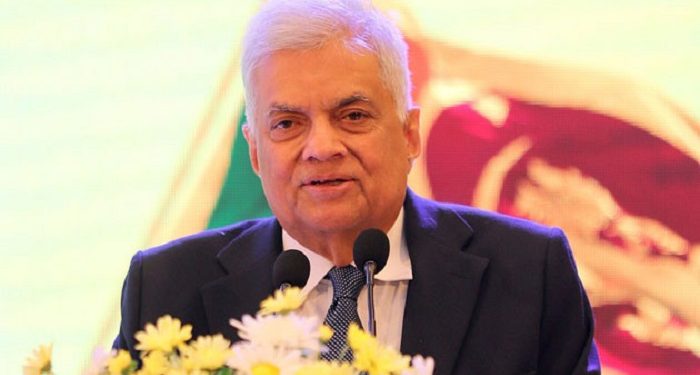
President Ranil Wickremesinghe is scheduled to leave for Singapore and Japan tomorrow.

The Office of the President said, during the five-day visit, President Wickremesinghe is scheduled to meet Prime Minister of Singapore Lee Hsien Loong and Japanese Premier Fumio Kishida.

The President is scheduled to discuss the agreement with the International Monetary Fund, debt restructuring process, investment opportunities and several other matters with both Singaporean and Japanese leaders.

The President is scheduled to return to the country on Saturday.

Posted in Uncategorized

Ruling Party issues notice of Mandatory Attendance to all Govt. MPs amid key bill debate

The ruling party alliance has sent a written message stating that all members of parliament representing the ruling party must attend parliamentary proceedings this week.

A senior MP from the ruling party says the announcement was made through a brief three-line message. According to the MP, a three-line announcement is used for important bills like a budget referendum or a constitutional amendment.

As a result of this announcement, MPs are temporarily not allowed to travel abroad during this time. If an MP fails to attend parliamentary proceedings after being notified, they must provide reasons for their absence. The proposal to remove Janaka Ratnayake from the position of Chairman of the Public Utilities Commission will be discussed in Parliament on May 24th, and a vote will be held on the same day.

The Sri Lanka Podujana Peramuna has already stated that it will vote in favor of the proposal. However, the Samagi Jana Balawegaya and the Jathika Jana Balawegaya have announced that they will vote against it. Meanwhile, Basil Rajapaksa, the national organizer of the Sri Lanka Podujana Peramuna, has returned to the island. Sagara Kariyawasam, the General Secretary of the Sri Lanka Podujana Peramuna, says that Basil Rajapaksa returned to the island on Friday morning after having left for Dubai on May 7th.

G7 takes stand against China’s “economic coercion”

As the G7 leaders sent a strong message to Russia by inviting Volodymyr Zelensky to Hiroshima, another rival was also on their minds – China.

British Prime Minister Rishi Sunak said China posed “the greatest challenge of our age” in regards to global security and prosperity, and that it was “increasingly authoritarian at home and abroad”.

And in not one but two statements, the leaders of the world’s richest democracies made clear to Beijing their stance on divisive issues such as the Indo-Pacific and Taiwan. But the most important part of their message centred on what they called “economic coercion”.

It’s a tricky balancing act for the G7. Through trade their economies have become inextricably dependent on China, but competition with Beijing has increased and they disagree on many issues including human rights.

Now, they worry they are being held hostage.

In recent years, Beijing has been unafraid to slap trade sanctions on countries that have displeased them. This includes South Korea, when Seoul installed a US missile defence system, and Australia during a recent period of chilly relations.

The European Union was particularly alarmed when China blocked Lithuanian exports after the Baltic country allowed Taiwan to set up a de facto embassy there.

So it is unsurprising that the G7 would condemn what they see as a “disturbing rise” of the “weaponisation of economic vulnerabilities”.

This coercion, they said, seeks to “undermine the foreign and domestic policies and positions of G7 members as well as partners around the world”.

They called for “de-risking”- a policy that Ms von der Leyen, who is attending the summit, has championed. This is a more moderate version of the US’ idea of “decoupling” from China, where they would talk tougher in diplomacy, diversify trade sources, and protect trade and technology.

They have also launched a “coordination platform” to counter the coercion and work with emerging economies. While it’s still vague on how this would work exactly, we’re likely to see countries helping each other out by increasing trade or funding to work around any blockages put up by China.

The G7 also plans to strengthen supply chains for important goods such as minerals and semiconductors, and beef up digital infrastructure to prevent hacking and stealing of technology.

But the biggest stick they plan to wield is multilateral export controls. This means working together to ensure their technologies, particularly those used in military and intelligence, don’t end up in the hands of “malicious actors”.

The US is already doing this with its ban on exports of chips and chip technology to China, which Japan and the Netherlands have joined. The G7 is making clear such efforts would not only continue, but ramp up, despite Beijing’s protestations.

They also said they would continue to crack down on the “inappropriate transfers” of technology shared through research activities. The US and many other countries have been concerned about industrial espionage and have jailed people accused of stealing tech secrets for China.

At the same time, the G7 leaders were clear they did not want to sever the cord.

Much of their language on economic coercion did not name China, in an apparent diplomatic attempt to not directly point a finger at Beijing.

When they did talk about China, they stood their ground in a nuanced way.

They sought to placate Beijing, saying their policies were “not designed to harm China nor do we seek to thwart China’s economic progress and development”. They were “not decoupling or turning inwards”.

But they also put pressure on the Chinese to cooperate, saying that a “growing China that plays by international rules would be of global interest”.

They also called for “candid” engagement where they could still express their concerns directly to China, signalling their willingness to keep communication lines open in a tense atmosphere.

We won’t know how, privately, Chinese leaders and diplomats will take the G7’s message. But state media in the past has hit back at the West for trying to have it both ways, by criticising China while also enjoying the fruits of their economic partnership.

For now Beijing has chosen to fall back on its usual angry rhetoric for its public response.

China had clearly anticipated the G7’s statements and in the days leading up to the summit, its state media and embassies put out pieces accusing the US of its own economic coercion and hypocrisy.

On Saturday evening, they accused the G7 of “smearing and attacking” China and lodged a complaint with summit organiser Japan.

They also urged the other G7 countries not to become the US’ “accomplice in economic coercion”, and called on them to “stop ganging up to form exclusive blocs” and “containing and bludgeoning other countries”.

It is worth noting that China has also sought to create its own alliances with other countries, and late last week just as the G7 summit kicked off, it hosted a parallel meeting with Central Asian countries.

It’s still not clear if the G7’s plan will work. But it is likely to be welcomed by those who have called for a clear strategy to handle China’s encroachments.

Indo-Pacific and China expert Andrew Small praised the statement as having “the feel of a real consensus”, noting that it expressed the “centre-ground” view of the G7.

“There are still major debates playing out around what ‘de-risking’ actually means, how far some of the sensitive technology export restrictions should go, and what sort of collective measures need to be taken against economic coercion,” said Dr Small, a senior transatlantic fellow with the German Marshall Fund think tank.

“But there is now a clear and explicit framing around how the economic relationships with China among the advanced industrial economies need to be rebalanced.”

Source – BBC

Mahatma Gandhi Scholarships awarded to 300 students across Sri Lanka

Prestigious Mahatma Gandhi Scholarships, provided by the Government of India, were awarded to 300 Advanced Level school students from all 25 districts across Sri Lanka earlier this week.

The scholarships were awarded by Indian High Commissioner Gopal Baglay, Minister of Education Susil Premajayantha and State Minister of Education Aravindh Kumar at a special ceremony held at the Ministry of Education on Thursday (May 18).

In a media release, the Indian High Commission said an amount of LKR 2,500 per student is provided to Advanced Level students on merit cum means basis to the top six students from each district every month under this scholarship.

This year, scholarships were awarded to two batches simultaneously due to COVID during the year 2021 – 2022.

Congratulating students for their achievements, the Indian high commissioner stressed the importance of bilateral cooperation in education sector for the bright future of youth in both the countries.

Drawing parallels between The Buddha and Mahatma, he stated that the ideals of Mahatma Gandhi hold good even in the fast-changing world.

Underlining the close cultural links between India and Sri Lanka, he called on the young students to utilize the opportunities available in India, where rapid advances are taking place in the field of education.

The Indian envoy expressed confidence that the young students of Sri Lanka would be a great source of strength for both India and Sri Lanka in future.

Minister Premajayantha thanked Government of India for providing not only Mahatma Gandhi Scholarships, but also various other Scholarships and opportunities in prestigious institutions including IITs.

He said that these initiatives proved to be instrumental to the growth of Sri Lanka’s Human Resource. The minister also paid tributes to Mahatma Gandhi for his ideas and thoughts about education. Further, he expressed gratitude to Government of India for extending support for text book printing in Sri Lanka for school children.

Apart from Mahatma Gandhi scholarships, Government of India offers around 210 scholarships annually in various fields including Engineering, Technology, Arts, Science, Indigenous medicine etc. to Sri Lankan students.

More than 400 fully paid Scholarship slots are also available under ITEC scheme for Government officials in Sri Lanka to enhance their domain knowledge. In addition, thousands of seats are also available to Sri Lankan students in India under “Study in India” programme, the Indian High Commission said further in its statement.

Foreign Minister summons Canadian envoy over PM Trudeau’s genocide claims

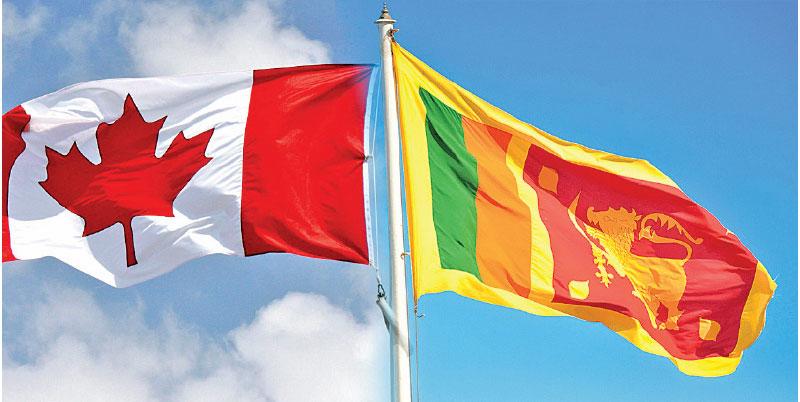
Sri Lanka Foreign Minister Ali Sabry has condemned and rejected outright the genocide claims made by Canadian Prime Minister Justin Trudeau pertaining to Sri Lanka’s three-decade-long civil war.

Sabry conveyed this when he summoned Canadian High Commissioner Eric Walsh to the Ministry of Foreign Affairs on Friday (May 19).

Minister Sabry stated that this ‘politically motivated’ statement was divisive and was issued for domestic political consumption in Canada.

Sri Lanka vehemently rejects this unsubstantiated allegation of ‘genocide’ relating to the country’s almost 3 decades of terrorist conflict perpetuated by the LTTE, Sabry to the Canadian envoy.

He observed that the ‘inaccurate and provocative’ allegations in the statement will lead to polarizing Sri Lankans at this particular juncture when the Government is working towards economic stability, peace and reconciliation for all.

He emphasized that the arbitrary and erroneous use of ‘genocide’ on Sri Lanka is driven by a small section of the politically motivated anti-Sri Lanka elements in the Diaspora with a separatist agenda.

The Sri Lankan government, as a long-standing bilateral partner, has urged the co-operation of the Canadian Government and encourage a mutually supportive relationship between the two countries, whilst constructively engaging the community of Sri Lankan heritage in Canada to work towards realizing our common objectives of inclusive development and sustainable peace.

Posted in Uncategorized

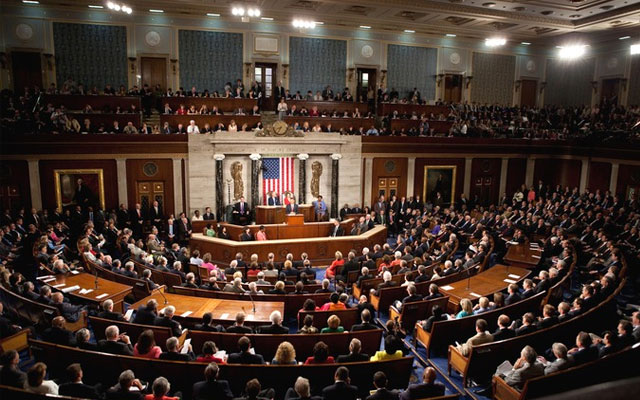
US Congress members introduce Resolution calling for a referendum For Eelam Tamils and referral of Sri Lanka to the ICC

US Congresswoman Deborah Ross (NC) and US Congressman Bill Johnson (OH) introduced a bipartisan Resolution today calling for a referendum for Eelam Tamils to be “democratically and equitably represented” as well as a “lasting peaceful political solution”.

The Resolution comes as the Tamil nation marks 14 years since the massacre at Mullivaikkal where Sri Lanka’s forces killed tens of thousands of Tamils in the final weeks of the armed conflict.

The Resolution points out the Sri Lankan military’s continuing occupation and oppression of the Tamil homeland. It points to the denial of freedom of expression implemented in 6th Amendment that prevents Tamils calling for their independence. It also quotes the U.S. Assistant Secretary of State in 2006 who advocated for Eelam Tamils’ rights in their traditional homeland “to rule their own destinies and to govern themselves in their homeland”.

The Resolution calls for the referral of Sri Lanka to the International Criminal Court and recognises Eelam Tamils’ traditional homeland.

The Resolution further acknowledges that the 26 year long armed conflict led to the deaths of tens of thousands of Tamils, “disappearances, abuses and displacements” and noted Sri Lanka’s “impunity for human rights violations”.

Although 14 years have passed since the Tamil genocide in 2009, successive Sri Lankan governments have failed to hold the perpetrators accountable and instead promoted perpetrators to prominent political positions. Moreover, in 2020 Sri Lanka reneged on its commitments made to the United Nations Human Rights Council in 2015.

The resolution highlights that “no effort has been made to bring to justice those who are alleged to have committed war crimes and crimes against humanity, no investigations have begun even on emblematic cases, evidence gathering is hindered through arbitrary arrests and threats by the state[…]”.

The resolution resolves that the House of Representatives:

Acknowledges the 14th anniversary of the end of the war in Sri Lanka and offers its deepest condolences to all those affected by the conflict;

Honours the memory of those who died and reaffirms its solidarity with the people of all communities in Sri Lanka in their search for reconciliation, reconstruction, reparation and reform;

Commends the UNHRC for prioritising the collection and preservation of evidence related to human rights violations, a process that must not be interfered with by the Government of Sri Lanka;

Recognises the bravery and commitments of advocates for justice across all communities in Sri Lanka, including the Tamil families of the disappeared, whose protests and demands for answers have at times been met with threats, intimidation, and harassment by government security forces;

Urges the international community to advocate for and protect the political rights and representation of the historically oppressed northeastern region of Sri Lanka and work towards a permanent political solution to address the underlying issues that led to ethnic conflict and ensure nonrecurrence of violence;

Encourages the promotion of universally accepted democratic principles and systems on the island of Sri Lanka, including through the use of the referendum process to ensure that peoples of all ethnicities, including the Eelam Tamil people, are democratically and equitably represented on the island;

Recommends the US explore investigations and prosecutions pursuant to the recommendations of the UN High Commissioner for Human Rights;

Urges the US to work with the UN General Assembly, the UN Security Council, and the UNHRC to establish a credible and effective international mechanism for accountability for the grave crimes committed during the war in Sri Lanka; and

Encourages the Secretary of State to leverage the US position on the UN Security Council to pursue a referral of Sri Lanka to the International Criminal Court, as outlined in the February 2021 report on Sri Lanka from the UN High Commissioner for Human Rights, which describes “the referral of the situation in Sri Lanka to the International Criminal Court” as one option to “advance criminal accountability and provide measures of redress for victims”.

Posted in Uncategorized

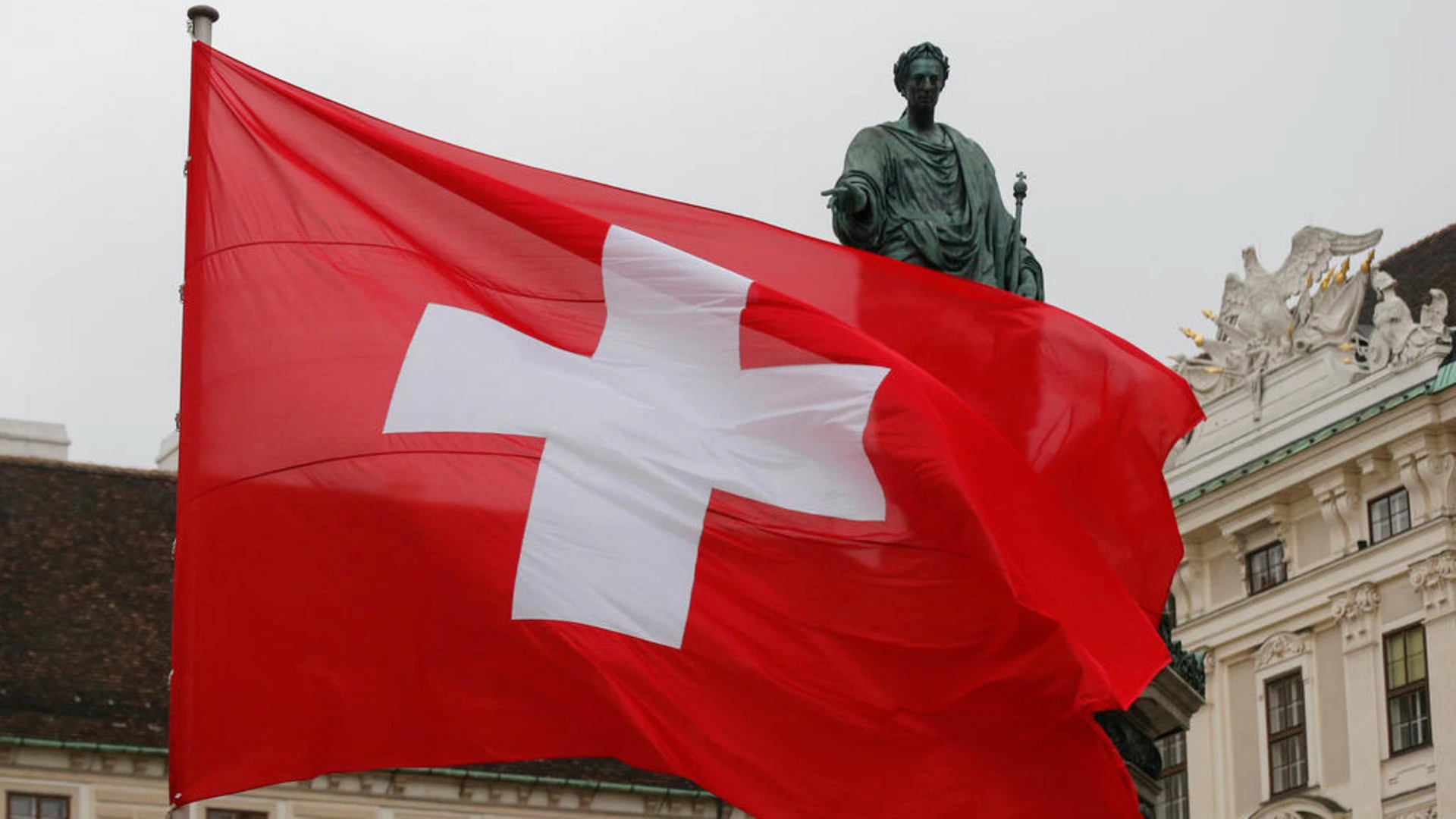
Swiss MPs call for international investigation into Sri Lankan war crimes

Marking the 14th anniversary of the genocide at Mullivaikkal, Swiss MPs have released statements calling for the establishment of an international investigation into war crimes committed during the final stages of the armed conflict.

Co-President of the Socialist Swiss Party, Fabian Molina MP, stated on Twitter:
Similarly, National Councillor, Claudia Friedl, stated on Twitter:

In the final stages of the armed conflict, an estimated 169,796 Tamil were slaughtered during a brutal military campaign by the Sri Lankan military. The Sri Lankan army engaged in the indiscriminate shelling of hospitals, food lines and government-designated “no-fire” zones. National Councilor

Posted in Uncategorized

Lankan envoy in India meets Uttar Pradesh CM, Yogi Adityanath

Sri Lanka and Uttar Pradesh resolve to further strengthen tourism, cultural and religious exchanges and people-to-people contacts

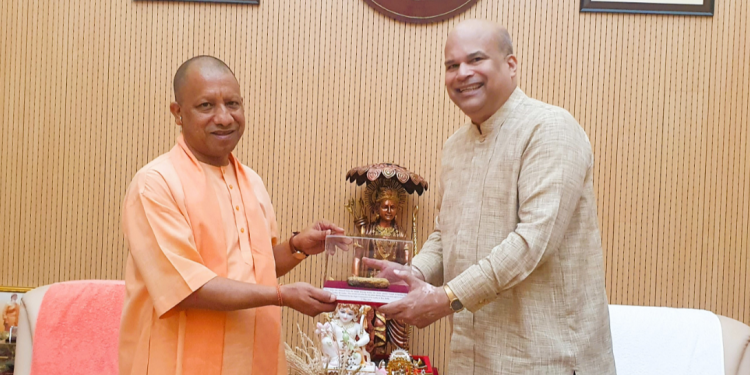
Sri Lanka and Uttar Pradesh of India resolved to further strengthen the cooperation in the fields of tourism, culture, religion and people-to-people contacts when the Sri Lankan High Commissioner to India Milinda Moragoda met with the Chief Minister of the State Shri Yogi Adityanath in Lucknow.

This was the second meeting that High Commissioner Moragoda had with the Chief Minister of the most populous State in India since the former took office in New Delhi in 2021.

The Chief Minister extended a warm welcome to High Commissioner Moragoda and his delegation. The discussion that followed centred around the ancient and strong cultural and religious affinities between Uttar Pradesh and Sri Lanka and the ways to further strengthening them through tourism as well as religious and cultural exchanges. Following from the discussions between the High Commissioner and the Chief Minister in October 2021 when they last met, the importance of promoting the Ramayana Trail in Sri Lanka and the Buddhist Trail in Uttar Pradesh through a formal framework was discussed.

Symbolizing the close relations between Buddhism and Hinduism as well as Uttar Pradesh and Sri Lanka, High Commissioner Moragoda proposed to plant a Bo sapling from Rumassala in Ayodhya, which is believed to be the birthplace of Lord Rama. Rumassala is a prominent Ramayana site in Sri Lanka.

On this occasion, two large photographs of Sri Lankan origin were presented to the Chief Minister of Uttar Pradesh to be installed at the Varanasi International Airport, marking the 75th anniversary of the establishment of Indo-Lanka diplomatic relations, which falls this year. The photographs feature two murals painted by the eminent Sri Lankan painter Solias Mendis in the Kelaniya Rajamaha Vihara, depicting Arahat Mahinda, delivering the message of the Buddha to King Devanampiyatissa upon arriving in Sri Lanka, and the arrival to Sri Lanka of Theri Sanghamitta, bearing the right-hand branch sapling of the Sri Maha Bodhi tree.

Similar photographs have been installed at the Kushinagar International Airport, Ahmedabad International Airport, the Rashtriya Swayamsevak Sangh (RSS) Headquarters in Nagpur and office of the State Minister of External Affairs and Culture at the National Gallery of Modern Art in New Delhi. As part of an ongoing programme to celebrate the 75th anniversary of Indo-Lanka diplomatic relations, action has been initiated to install similar photographs at Buddha Gaya International Airport as well.

High Commissioner Moragoda also presented to Chief Minister Yogi Adityanath, a stone obtained from the stream flowing besides the Seetha Amman Temple in Seetha Eliya (Ashoka Vatika) in Sri Lanka, which is believed to be the site where Seetha was held captive according to the Ramayana. The Chief Minister thanked the High Commissioner for this religiously significant memento, and also recalled how the latter presented a large Shila from the same premises to the Ram Mandir construction project in Ayodhya in October 2021.

Bhikkhu-in-charge of the Sarnath Centre of the Mahabodhi Society of India in Varanasi Ven. R. Sumiththananda Thero, and senior officials of the High Commission of Sri Lanka in New Delhi were also present on this occasion.

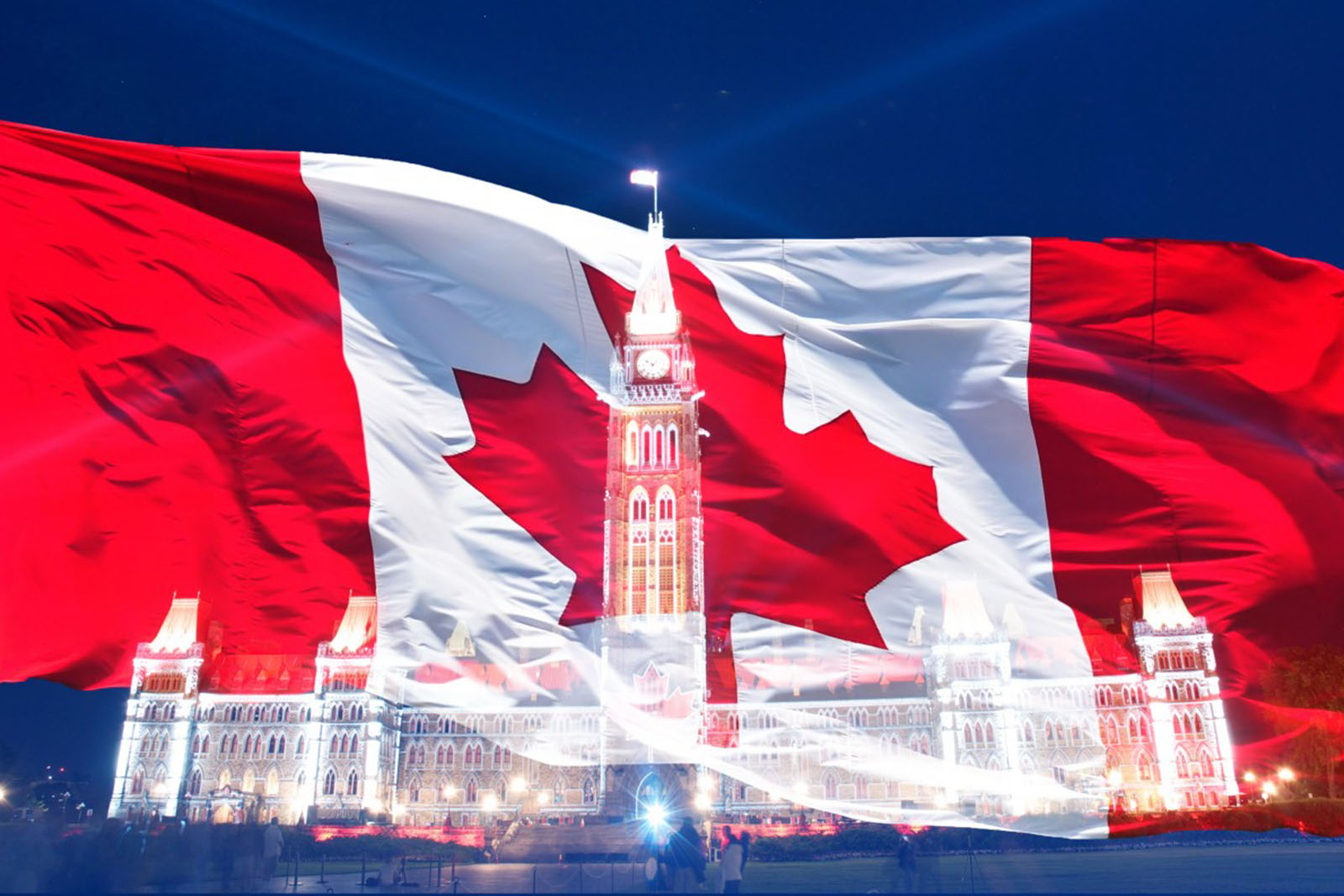
Canada locks horns with Sri Lanka after Trudeau’s statement

Hot on the heels of the 14th anniversary of the war victory,Sri Lanka is heading for a diplomatic battle with Canada once again after Canadian Prime Minister Justin Trudeau made a statement yesterday in recognition of what is called ‘Tamil Genocide Remembrance Day, the day when the war ended in Sri Lanka 14 years ago .

Sri Lankan Foreign Minister Ali Sabry said Sri Lanka denounces the statement which he cited unhelpful to the reconciliation process locally .

The Canadian leader in his statement said, “Today, we reflect on the tragic loss of life during the armed conflict in Sri Lanka, which ended 14 years ago. Tens of thousands of Tamils lost their lives, including at the massacre in Mullivaikal, with many more missing; injured, or displaced. Our thoughts are with the victims, survivors, and their loved ones, who continue to live with the pain caused by this senseless violence.

The stories of Tamil-Canadians affected by the conflict – including many I have met over the years in communities across the country – serve as an enduring reminder that human rights, peace, and democracy cannot be taken for granted. That’s why Parliament last year unanimously adopted the motion to make May18 Tamil Genocide Remembrance Day. Canada will not stop advocating for the rights of the victims and survivors of this conflict, as well as for all in Sri Lanka who continue to face hardship.

In October 2022, we joined our international partners in adopting an United Nations Human Rights Council (UNHRC) resolution that calls on the Sri Lankan government to address the human rights, economic, and political crises in the country. Canada has been a global leader in the adoption of other UNHRC resolutions calling for freedom of religion, belief, and pluralism in Sri Lanka – essential elements to secure peace and reconciliation in the years to com – and we will continue our work to safeguard human rights across the world. And in January 2023, our government imposed sanctions against four Sri Lankan government officials in response to human rights violations on the island.

On behalf of the Government of Canada, I invite all Canadians to recognize the many contributions that Tamil-Canadians have made – and continue to make – to our country. I also encourage everyone to learn more about the impact of the armed conflict in Sri Lanka, and express solidarity to all those who suffered or lost loved ones,”

The Global Affairs Ministry of Canada had informed in advance to the Sri Lankan authorities about the statement to be made . Daily Mirror learns that the Sri Lankan authorities requested for recognition of local reconciliation efforts , but it had not been acceded to by the Canadian authorities.

Canada’s Ontario province has declared the Tamil genocide week despite protests by the Sri Lankan government

Posted in Uncategorized

Canadian PM remembers Tamil victims of Sri Lanka’s war

Canadian Prime Minister Justin Trudeau remembered the Tamil victims of the war in Sri Lanka.

Issuing a statement to mark Tamil Genocide Remembrance Day, Trudeau said that Canada will not stop advocating for the rights of the victims and survivors of the conflict.

“Today, we reflect on the tragic loss of life during the armed conflict in Sri Lanka, which ended 14 years ago. Tens of thousands of Tamils lost their lives, including at the massacre in Mullivaikal, with many more missing, injured, or displaced. Our thoughts are with the victims, survivors, and their loved ones, who continue to live with the pain caused by this senseless violence,” Trudeau said in a statement.

He said that the stories of Tamil-Canadians affected by the conflict – including many he has met over the years in communities across the country, serve as an enduring reminder that human rights, peace, and democracy cannot be taken for granted.

“That’s why Parliament last year unanimously adopted the motion to make May 18 Tamil Genocide Remembrance Day. Canada will not stop advocating for the rights of the victims and survivors of this conflict, as well as for all in Sri Lanka who continue to face hardship,” he said.

Trudeau recalled that in October 2022, Canada joined its international partners in adopting a United Nations Human Rights Council (UNHRC) resolution that called on the Sri Lankan Government to address the human rights, economic, and political crises in the country.

“Canada has been a global leader in the adoption of other UNHRC resolutions calling for freedom of religion, belief, and pluralism in Sri Lanka – essential elements to secure peace and reconciliation in the years to come – and we will continue our work to safeguard human rights across the world. And in January 2023, our government imposed sanctions against four Sri Lankan government officials in response to human rights violations on the island,” he said.

On behalf of the Government of Canada, Trudeau invited all Canadians to recognize the many contributions that Tamil-Canadians have made – and continue to make – to Canada.

He also encouraged everyone to learn more about the impact of the armed conflict in Sri Lanka, and express solidarity to all those who suffered or lost loved ones.