Sri Lankan baker ‘cried’ when he won best baguette in Paris

A Paris baker of Sri Lankan origin said he “cried” when he heard he had won best baguette in the French capital this week and would be delivering the bread to the presidential palace.

“I cried because we are foreigners and we came here to learn how to make traditional French bread,” Tharshan Selvarajah told AFP on Thursday.

“I am very happy to have won the prize.”

Fifteen baguette connoisseurs on Wednesday selected Selvarajah’s version of the iconic French bread as the best among 175 anonymous contenders.

Members of the jury, including six ordinary Parisians, had to rate dozens of baguette on their taste, crust, crumb, air bubbles, and overall aspect.

“Don’t drink at the start or you won’t be able to make it to the end of the tasting,” Paris official Olivia Polski warned judges before they started.

A video she shared on Twitter shows her then ringing up the baker based in eastern Paris to tell him the good news.

Selvarajah told AFP he always makes his long loaves “with love”, while “smiling, laughing and singing”, and the result is well-cooked, delicious and crusty.

He has won 4,000 euros (RM19,500) and the opportunity to supply baguettes to the presidential palace.

(TheStar)

Posted in Uncategorized

Athi Lingeswaran temple priest and member released on bail following arrest by Sri Lankan police

The priest and member of Athi Lingeswaran temple were released on bail yesterday after they were arrested by Nedunkeni police.

Nedunkeni police summoned the priest and temple member yesterday for further investigations relating to the vandalism of the Athi Lingeswaran temple in March but were later arrested and taken to Vavuniya Magistrate court where the judge presiding over the case released them on bail.

In March, the Athi Lingam consecrated to Lord Siva in Vedukkunaari hill in Nedunkeni, Vavuniya was destroyed and discarded in the shrubbery surrounding the temple. Additionally many idols such as the idols of Pillaiyaar, the Mother Goddess Amman, and village deity Bhairavar were stolen from the temple.

The judge clarified that, contradictory to what was reported in the media earlier, while the police has to provide security for the poojas and to the worshippers at the temple, no restorations or changes are to be made to the temple itself.

The judge once again reiterated to the police to conduct the necessary further investigations in order to arrest those who had vandalised and destroyed the temple.

Lankan photo journalist Ishara Kodikara gets an honorable mention in HRW awards

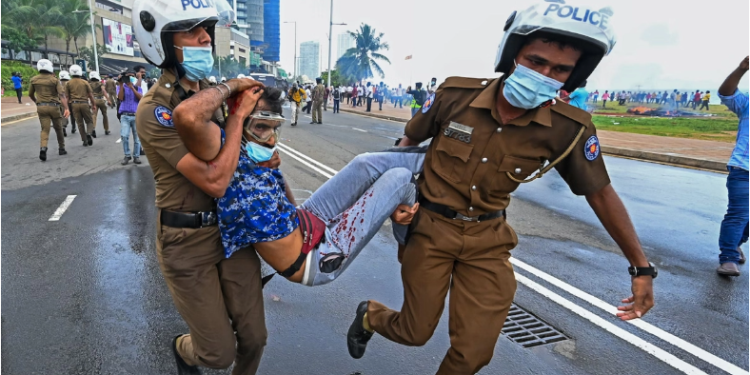
An AFP photojournalist in Sri Lanka has won recognition at the Human Rights Press Awards 2023 for his work during the political upheavals that eventually led to the ouster of Gotabaya Rajapaksa from the presidency in July 2022, a statement said.

Ishara Kodikara, 41, won an honourable mention in the “photography series” category of the awards organized by the New York-based Human Rights Watch, Arizona State University and the Reynolds Centre for Business Journalism.

“This award is a recognition for your hard and excellent work covering the daily protests in Colombo last year,” AFP’s Hong Kong-based Photo Director for the Asia-Pacific region, Mladen Antonov said in the statement.

“On behalf of all of us here in Hong Kong and from the photo management in Paris, please accept once more our warm congratulations!”

Ishara joined AFP in 2008 and is attached to its Colombo bureau. He has also photographed political upheavals in the Maldives and the 2015 earthquake in Nepal in addition to covering international cricket tournaments in Sri Lanka and abroad.

AFP’s Kabul bureau won the first prize in the breaking news category and recognised for their work “under deadline pressure with speed, accuracy and high-quality writing on a single human rights-related news event.”

Present in 151 countries, AFP offers news coverage on a vast range of subjects, and often from rarely covered locations, and the presence in the field allows AFP to diversify its sources, the statement said. A recognized hallmark of AFP journalism is also the attention it pays to human interest stories.

Images, which are increasingly the key element of news coverage, now account for half of the agency’s turnover, and live video broadcasts (around 40 a day) are among the most popular products.

The full list of 2023 Human Rights Press Awards can be accessed here: https://humanrightspressawards.org/2023-winners/

PC Elections (Amendment) Bill: SC to submit its determination to Speaker

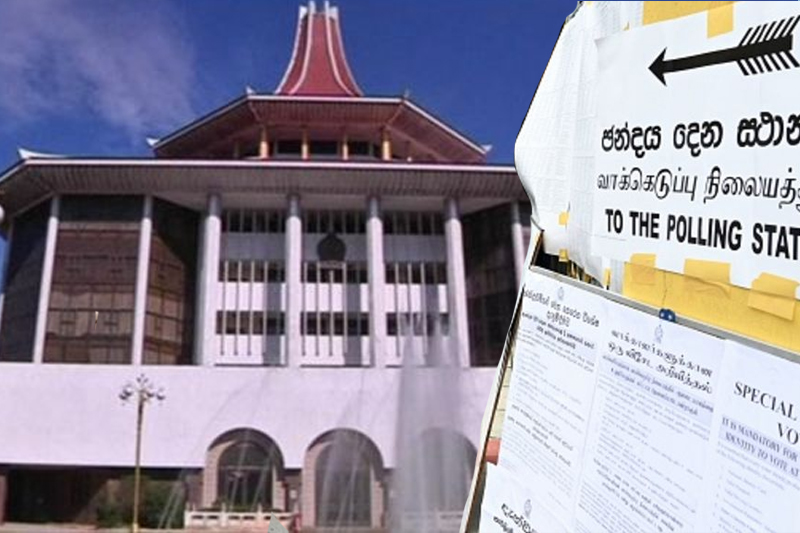
The Supreme Court today (May 12) concluded the hearing of the petitions challenging Jaffna District MP M.A. Sumanthiran’s Provincial Council Elections (Amendment) Bill presented to the parliament as a private member’s Bill.

Accordingly, the Supreme Court will duly convey its determination to the Speaker of Parliament.

The president of Patriotic National Movement Gunadasa Amarasekara and another party had lodged the petitions, challenging the constitutionality of the proposed Bill.

Appearing on behalf of the petitioners, Attorney-at-Law Kanishka Witharana said pointed out that certain clauses in the Bill affect the people’s right to vote, and thus sought the Supreme Court to issue an order stating that the Bill needs to be passed by a two-thirds majority of the parliament and a referendum.

Concluding the hearing of the petitions, the Supreme Court judge bench said its determination on the matter would be delivered to the Speaker of Parliament.

The Tamil National Alliance (TNA) parliamentarian’s PC Election (Amendment) Bill was published in the government gazette recently.

If the parliament enacts the Bill, the Provincial Council Elections (Amendment) Act No. 17 of 2017 will be repealed.

Further, the provincial council elections can be held under the old voting system if the Bill is adopted.

China requests to expand H’tota mushroom cultivation

The Chinese Ambassador to Sri Lanka has requested the Ministry of Agriculture to further expand mushroom cultivation in the Hambantota District.

The Minister of Agriculture Mahinda Amaraweera mentioned that Chinese Ambassador Qi Zhenhong has requested him to take steps to further expand the mushroom cultivation that is currently being done in the Hambantota District.

There are many species of mushrooms in this country, but the species that can be grown commercially are the straw mushroom, the button mushroom, the oyster mushroom, the Shiitake mushroom and the abalone mushroom.

The Hambantota District is currently cultivating mushrooms, but most of the farmers grow only two or three types of mushrooms. Zhenhong has mentioned that there are about 29 species of mushrooms with high nutritional value, suitable for human consumption, and that steps should therefore be taken to popularise mushrooms as a food in Sri Lanka, which is a very popular food among the people of China.

Currently, there are a large number of Chinese nationals in the vicinity of the Hambantota Port, so the people of that area can earn a lot of income by growing mushrooms.

Accordingly, it has been reported that Amaraweera has advised the Department of Agriculture to take necessary measures to expand mushroom cultivation in the Hambantota District. The Minister also stated that the Ambassador had mentioned that the Chinese Government is ready to provide all necessary support for the expansion of the mushroom cultivation in the Hambantota District.

Posted in Uncategorized

Provincial Councils Election (Amendment) Bill gazetted

The Bill to amend the Provincial Councils (PC) Elections Act, presented by Jaffna District MP M.A. Sumanthiran as a Private Member’s Bill, has been published in the government gazette.

If the parliament enacts the Bill, the Provincial Council Elections (Amendment) Act No. 17 of 2017 will be repealed.

Further, the provincial council elections can be held under the old voting system if the Bill is adopted.

The Tamil National Alliance parliamentarian’s bill to amend the PC Elections Act was first published in the government gazette on October 11, 2019 as a private member’s proposal.

Meanwhile, Speaker of Parliament Mahinda Yapa Abeywardena announced to the House on Wednesday (May 10) that he has endorsed the certificate on the Inland Revenue (Amendment) Bill in accordance with Article 79 of the Constitution.

The said Bill was passed in Parliament on April 28th 2023.

Accordingly, given the certification by the Speaker, the “Inland Revenue (Amendment)” Bill will come into effect as the “Inland Revenue (Amendment)” Act No. 04 of 2023.

Posted in Uncategorized

UN Special Rapporteurs slam Sri Lanka’s unduly wide definition of terrorism By P.K.Balachandran

The United Nations Special Procedure Experts (Rapporteurs) on various aspects of human rights have addressed the Sri Lankan President, pointing out serious flaws in the Anti-Terrorism bill now in parliament, particularly its unduly wide definition of terrorism.

The new Anti-Terrorism Act (ATA) is expected to replace the controversial Prevention of Terrorism Act (PTA) of 1979.

The Rapporteurs also slammed the Rehabilitation Act passed by parliament on 18 January 2023. They criticize the lumping of drug addicts with suspected terrorists and ex-combatants and giving the military overall control over the rehabilitation process.

Definition of Terrorism

The experts want the Lankan government to do the following:

Employ definitions of terrorism that comply with international norms; ensure precision and legal certainty, especially when this legislation may impact the rights of freedom of expression, opinion, association, and religion or belief; institute provisions and measures to prevent and prohibit arbitrary deprivation of liberty; ensure enforcement of measures to prevent torture and enforced disappearance and adhere to their non-derogable prohibition; and enable overarching due process and fair trial guarantees, including judicial oversight and access to legal counsel.

The experts’ five recommendations are:

1. Amend the definition of terrorism and other vague provisions and ensure that the definitions and language employed are in compliance with Sri Lanka’s international human rights obligations.

“States should ensure that counterterrorism legislation is limited to criminalizing conduct which is properly and precisely defined on the basis of the provisions of international counterterrorism instruments and is strictly guided by the principles of legality, necessity, and proportionality.”

“The definition of terrorism in national legislation should be guided by the definition found in Security Council resolution 1566 (2004) and also by the Declaration on Measures to Eliminate International Terrorism and the Declaration to Supplement the 1994 Declaration on Measures to Eliminate International Terrorism, which were approved by the General Assembly.”

“Counterterrorism legislation should be in compliance with human rights obligations, protection of due process, and in line with the international prohibition against arbitrary detention.”

“The ATA (Bill) lacks precision in key definitional aspects of terrorism and expands the scope of terrorist acts, creating opportunities for misuse due to broadly worded and vague definitions of terrorist acts.”

2. Comprehensively review the proposed legislation and consult diverse stakeholders and affected communities to precisely define what speech is prohibited consistent with the requirements of article 19(3) of the ICCPR to ensure no unlawful interference with the freedom of expression and opinion, as well as of association.

3. Amend provisions concerning arrest and detention to prevent the continued arbitrary arrest and detention of individuals inconsistent with international law standards; review and amend the bill in consultation with civil society and relevant stakeholders to limit the subjectivity in carrying out arrests.

4. Review and amend to ensure that there are standards and criteria, including record-keeping procedures, set out to ensure that a person has not been detained outside the bounds of the law before being handed over to the police station.

The Rapporteurs say that the bill “retains the most problematic and exceptional features” that may also allow, as alleged under the PTA. There could be unlawful deprivation of liberty across pre-trial detention. Bail may be denied. There could be undue delays in trials. Self- incriminating confessions could be obtained through torture or other forms of ill-treatment in the absence of legal safeguards against such practices.

The bill provides for wide arresting authority to “any police officer, member of the armed forces or a coast guard officer,” to “arrest without a warrant” on the basis of a range of factors that include mere suspicion.

The Rapporteurs say that “given the overly broad definition of terrorism and the subjectivity of provisions that go beyond reasonable grounds, these provisions would continue to present a high risk of misuse and violation of human rights and fundamental freedoms.”

They have asked the government to ensure the enforcement of measures to prevent torture and enforced disappearance and adhere to their absolute and non-derogable prohibition.

The provisions within the bill may provide the circumstances leading to arbitrary detention, enforced disappearance, and torture, cruel, inhuman, or degrading treatment, as it has been alleged under the PTA, they point out.

5. Ensure provisions to prevent extended deprivation of liberty without due process, and correct lacunae in judicial oversight of detention practices. The Rapporteurs recommend close review and amendment in consultation with civil society and other stakeholders.

The Rapporteurs recognize that some judicial oversight of the arresting authorities has been improved in the bill. However, the bill’s provisions on definitions, and detention and restriction orders, could still thwart due process and fair trial guarantees, they say.

“Such practices may allow systematic detention without trial, a practice that is inconsistent with your Excellency’s Government’s international legal obligations.”

They further point out that ‘judicial involvement’ under the PTA, which consisted of a decision made by the Attorney General, “confirmed but not fully reviewed by a judge,” continues to be paralleled in the bill through the limitations placed on the authority of Magistrates.

“This does not amount to a proper judicial process, which is required in any restriction imposed on the right to liberty,” the Rapporteurs point out.

Rehabilitation Act

On the Rehabilitation Act, already passed, the Rapporteurs say that it unfairly dumps drug addicts with terror suspects and “misguided combatants” and combines kinetic and security-focused features with curing drug addiction, causing concerns for human rights.

“We draw a distinction between voluntary and consent-based processes of rehabilitation for legitimate health purposes that would be compatible with the right to the highest attainable standard of health,” they say.

The Rehabilitation Act establishes a new administrative structure operated by the Ministry of Defense to oversee and operate the rehabilitation centers. Objecting to this, the Rapporteurs say: “We state unequivocally that the administration of such centers by military personnel who are not competently trained social or medical staff is in violation of the fundamental rights of those arbitrarily detained in such circumstances.”

Noting that section 27(2)) empowers officials operating such centers or in contact with detained persons, to use undefined “minimum force” to “compel obedience” from detainees, the Rapporteurs say that the authorization of the use of force against arbitrarily detained persons further compounds the harms experienced in detention.

“We note that the use of force against persons detained without judicial oversight is simply inconsistent with your Excellency’s Government obligations under international human rights law,” the Rapporteurs say.

In February 2023, the Sri Lankan parliament passed the Bureau of Rehabilitation Bill with 23 votes in favor and 6 votes against. Only 29 MPs were present in the 225-seat parliament for the vote.

EX-Combatants’ Protection

Calling for ex-combatants’ protection, the Rapporteurs point out that under applicable international humanitarian law, combatants should receive specific protections, and at the end of hostilities all prisoners should be released (and repatriated) without delay, except those held for trial or serving sentences imposed by judicial process as per article 142, Geneva IV; Additional Protocol I, Article 85(4)(b).


Posted in Uncategorized

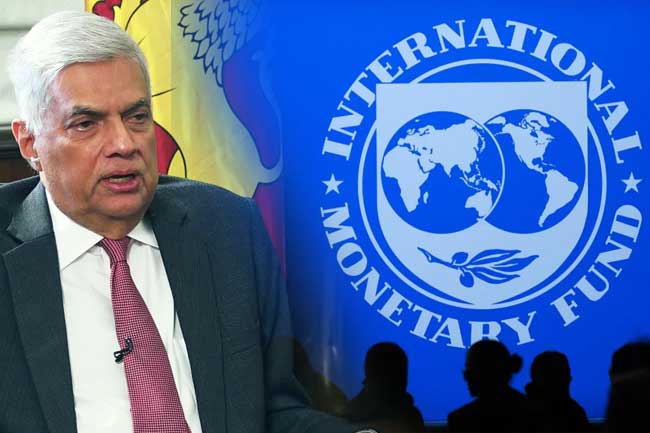
IMF staff team to meet with President Ranil today

The staff team of the International Monetary Fund (IMF) will arrive in Sri Lanka today (May 11).

The IMF said this visit comes as part of the regular consultations between the global lender and the island nation, ahead of the first review mission later this year.

The delegates of the global lender will be staying in Sri Lanka until May 23. They are to call on President Ranil Wickremesinghe this morning soon after the arrival, according to Finance State Minister Ranjith Siyambalapitiya.

According to an IMF statement, the Director of its Asia and Pacific Department, Krishna Srinivasan will be joining this visit from May 12-15.

The IMF staff team will convene a press briefing on Monday evening (May 15) in Colombo, chaired by Krishna Srinivasan, the IMF’s Director of Asia and Pacific Department; Peter Breuer, the Asia and Pacific Department’s Senior Mission Chief for Sri Lanka; and Sarwat Jahan, the IMF Resident Representative in Sri Lanka.

The IMF staff team’s visit comes days after the first meeting of Sri Lanka’s official bilateral creditors committee, during which the island nation’s authorities formally presented a request for debt treatment. China, Saudi Arabia and Iran were in attendance as observers.

The committee, co-chaired by India, Japan and France, consists of 17 members and includes Paris Club creditors as well as other official bilateral creditors.

Last month, France, India and Japan unveiled a common platform for talks among bilateral creditors to co-ordinate restructuring of Sri Lanka’s debt.

Sri Lanka owes USD 7.1 billion to bilateral creditors, government data show, with USD 3 billion owed to China, followed by USD 2.4 billion to the Paris Club of creditor nations and USD 1.6 billion to India.

The government also needs to renegotiate more than USD 12 billion of debt in eurobonds with overseas private creditors, and USD 2.7 billion of other commercial loans.

The Extended Fund Facility (EFF) program of the IMF approved by its executive board in March 2023 comes with strict conditionalities for economic reforms.

Sri Lanka had to secure assurances from official bilateral creditors that they would help debt relief and/or financing to restore debt sustainability consistent with the IMF-supported EFF program, as well as an assessment that the authorities are making good faith efforts to reach a private agreement with private creditors.

As these requirements were met ahead of the IMF Board meeting in March, the IMF approved the 48-month extended arrangement of 2.286 billion SDR (Special Drawing Rights), which amounts to USD 3 billion, for Sri Lanka.

Sri Lankan authorities are now working closely with its creditors to coordinate and make swift progress towards the debt treatment that restores debt sustainability under the EFF program.

Sri Lanka becomes failed state in prevention of Thalassemia: Paediatrician

Sri Lanka has become a failed state in terms of prevention of Thalassemia, and it is revealed that three percent of Thalassemia patients are carriers of the disease, a consultant pediatrician at the Paediatrics Department of the Kelaniya University, Professor Sachith Mettananda, said.

Addressing the media, he said Sri Lanka is at the forefront among the countries where Thalassemia is prevalent.

Other countries in the world where Thalassemia is prevalent have been able to prevent the occurrence of the disease among their people, he said.

But Sri Lanka has not been able to achieve such a positive situation.

“About 2,000 children are diagnosed with Thalassemia annually in Sri Lanka. A marriage between Thalassemia carriers may produce children with Thalassemia symptoms,” Prof. Mettananda said.

“Due to the myths about Thalassemia, most people are tempted during marriages to hide the fact that they have thalassemia,” he said.

“The indifference by all the responsible people in Sri Lanka as well as the public regarding the prevention of this disease,
Thalassemia, has been a major issue in establishing the status of Sri Lanka as a failed state,” he said.

Nearly 2,000 Thalassemia patients have been identified from several districts in the country.

The majority of the patients are receiving treatment from the Kurunegala, Ragama and Anuradhapura Thalassemia Treatment Centers. “People with Thalassemia may need a blood transfusion about once a month. Blood transfusions are very safe, but they can cause a build-up of excess iron in the body. So you will need to take medicine to remove the excess iron,” the professor said.

Therefore, everyone in the country should undergo a compulsory blood test to identify the status of Thalassemia before their marriage, he said.

“People should consider undergoing such a medical test as their personal responsibility,” Professor Mettananda added.

Posted in Uncategorized

Sri Lanka requests debt treatment in first bilateral committee meeting, says Paris Club

Seventeen countries have come together to form an official creditor committee to discuss Sri Lanka’s request for a debt treatment, the Paris Club said in a statement. The first meeting of the committee was held on May 9th, 2023, and was co-chaired by India, Japan, and France. The committee includes Paris Club creditors and other official bilateral creditors.

During the meeting, Sri Lankan authorities formally presented their request for debt treatment and reiterated their commitment to transparency and comparability of treatment towards their official bilateral creditors. The IMF and World Bank representatives presented the latest macroeconomic developments regarding Sri Lanka and their relationship with the country.

The creditor committee welcomed the passage of the resolution for implementation of the IMF-supported program by the Sri Lankan Parliament on April 28, 2023. The committee will now pursue its work to find an appropriate solution to Sri Lanka’s external debt vulnerabilities, consistent with the parameters of the IMF program.

Private creditors and other official bilateral creditors are being urged to provide debt treatment on terms that are at least as favorable as the ones agreed by the creditor committee, in line with the comparability of treatment principle. The committee also reiterates its invitation to other bilateral official creditors to formally join the creditor committee.

The members of the creditor committee are representatives of countries with eligible claims on Sri Lanka. Paris Club members with no eligible claims, as well as China, Saudi Arabia, and Iran, attended the meeting as observers. Representatives of the International Monetary Fund and the World Bank Group were also present.