New governors are expected to be appointed for five provinces

President Ranil Wickremesinghe has asked governors of several provinces to resign, according to the President’s Office.

A senior spokesperson of the President’s Office said that the resignation of governors when a president resigns and a new president is appointed is similar to the resignation of the cabinet when the prime minister resigns.

However, after the current president took office, the governors did not resign according to that tradition, so the President waited for some time for them to resign, said the spokesman.

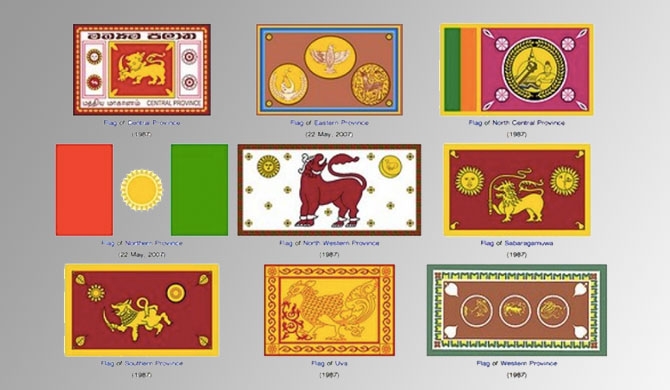
Accordingly, the President’s office has informed the governors of several provinces to resign. Sources in the President’s Office state that these include the Northern, Eastern, Sabaragamuwa, Uva and North-Western provinces.

After the resignation of those governors, new governors will be appointed after the President’s return to the country from his visit to the UK.

Meanwhile, Mrs. Anuradha Yahampath, Governor of the Eastern Province, has hinted that she will have to resign from the post of Governor in the next few days. While addressing a Vesak ceremony held last night (6) in Trincomalee, Mrs. Anuradha Yahampath said that this may be the last time she will address the people of the province as the governor.

Posted in Uncategorized

Police attempt to disrupt protest against north land grabbing thwarted

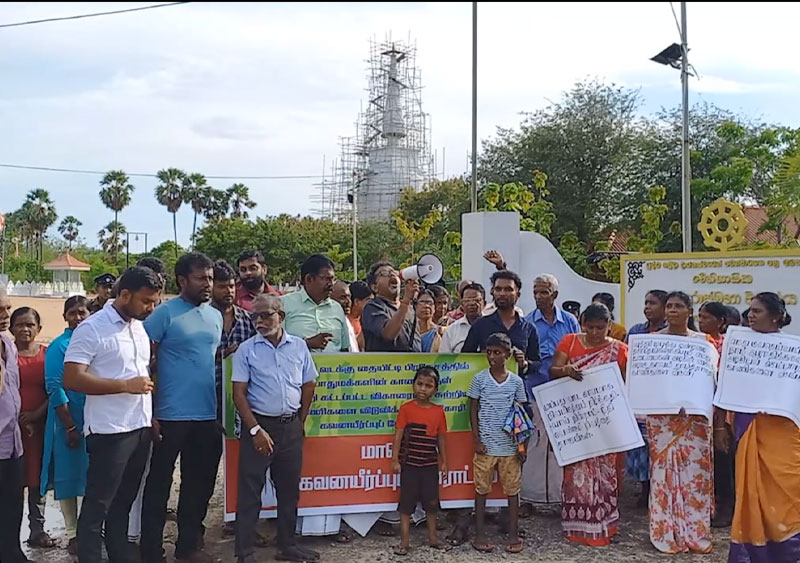
An attempt by the police to disrupt a protest in Kankesanthurai in the north against alleged land grabbing, by preventing supplies to Tamil protestors, has been thwarted.

A three day agitation began on May 03 against a temple newly-constructed by the Army in Walikamam North.

Protestors charged private land had been acquired without the permission of the area’s land officer to construct Tissa Vihara.

Five protestors arrested by the police have been released on bail.

Mallakam magistrate Gayatri Selavan visited the place said people had a right to protest.

The Army said the pinnacle of the Stupa at the temple was placed on April 27.

It added that the temple dates back to third century BC and was built by King Devanampiyatissa.

However, protestors say 6.2 acres of land belonging to 14 Tamil families had been acquired by force to build the temple.

On the first day of the protest, police and the protestors were involved in a heated exchange of words, after which the police barricaded the area and prevented water, food and medicines from reaching them. On the following day, the Human Rights Commission intervened and the supplies resumed.

Tamil MPs Mavai Senadhiraja, Sivagnanam Sridharan, Dharmalingam Siddarthan, M.A. Sumanthiran and Angajan Ramanathan visited the protestors and extended their support.

Sumanthiran said the Thelippalai regional development committee decided in 2021 not to permit the temple’s construction and the divisional secretary too, has not given the permission.

Mano Ganesan slams Ranil’s rhetoric on Tamil issues

Claiming that nothing progressive has taken place with regard to the issues faced by the Tamil community and estate workers under the leadership of President Ranil Wickremesinghe, Opposition Parliamentarian and Tamil Progressive Alliance Leader Mano Ganesan said that the former should “walk the talk” concerning the same.

Speaking to The Daily Morning, Ganesan said that the President has been making various statements from time to time that he would take steps to resolve the issues faced by the Tamil community and estate workers. “Wickremesinghe has been talking a lot to local and foreign media about this matter. He even said that he would resolve the Tamil national issue by Independence Day (4 February). Nothing progressive has been done. So, I tell him to walk the talk without merely making statements.” He also said that the Wickremesinghe led Government had not paid attention to the issues faced by the estate workers, particularly in the upcountry areas. “There are many underprivileged and undernourished families among the estate workers. Various surveys have proven it. We have requested the Government to ensure that such families are included in the social security beneficiaries’ lists, but it is not happening. This is very unfortunate. Can the Government not understand that there is no way for them to survive?,” he queried.

President Wickremesinghe had been pledging to resolve the issues faced by the Tamil community, particularly in the North and the East, and the estate sector workers. The frequent issues that they face include the detention of certain individuals under the Prevention of Terrorism (Temporary Provisions) Act, the occupation of their lands by the military forces and the non-implementation of the 13th Amendment to the Constitution. The President also had several rounds of discussions with Tamil MPs regarding the resolution of such issues.

President attends Commonwealth Summit in London

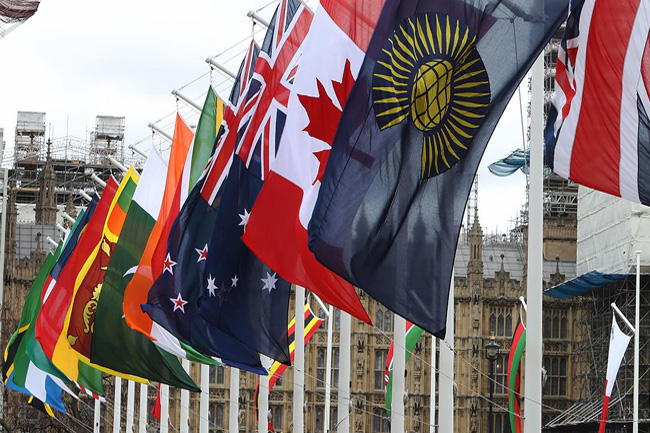
President Ranil Wickremesinghe is currently attending the Commonwealth Leaders Meeting being held at the Commonwealth Secretariat in London, United Kingdom (UK).

Wickremesinghe also met with Rwandan President Paul Kagame in London, to discuss potential areas of cooperation on agriculture and healthcare between the two nations, the President’s Media Division (PMD) reported.

Accordingly, they proposed an exchange of visits by the relevant ministers and discussed military cooperation , while President Wickremesinghe also offered training for rapid response to natural disasters.

The Head of State left for the UK last morning (04 May), in order to attend the coronation ceremony of King Charles III, which is due to be held tomorrow (06 May) at the Westminster Abbey.

Thus, taking advantage of the gathering of the Presidents and Heads of Government of Commonwealth countries who are currently in London for the ceremonial event, a Commonwealth Summit was held by the Commonwealth Secretariat today.

Posted in Uncategorized

Circular on Monday to reinstate state employees contesting LG polls: Minister

The circular to reinstate state employees who are contesting the Local Government elections will be issued by the Ministry of Provincial Councils and Local Government on Monday, State Minister Janaka Wakkumbura said.

“The Ministry will issue the circular after the approval by the Election Commission on Monday. Accordingly, these candidates will be reinstated to the nearest service requirement outside of their electorates,” he said.

Posted in Uncategorized

Canada to support economic stabilization of Sri Lanka

The High Commissioner of Canada to Sri Lanka Eric Walsh has said that the Canadian government will continue to support the economic stabilization program in Sri Lanka.

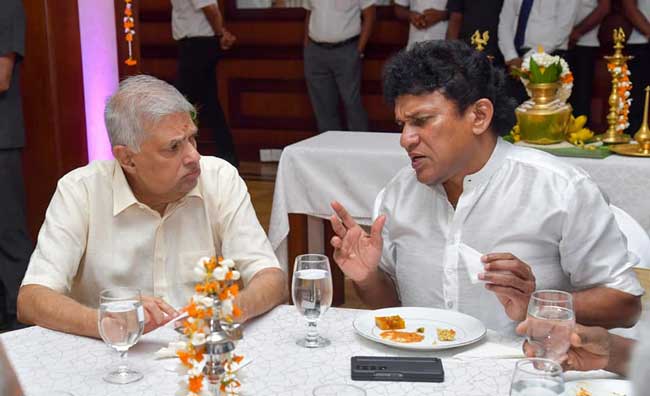
The High Commissioner has given this assurance during a discussion with the Acting Minister of Finance Shehan Semasinghe held Wednesday at the Ministry of Finance.

The Canadian High Commissioner expressed his appreciation for the reforms carried out by Sri Lanka for the economic recovery program, the Minister said.

During the discussion Minister Semasinghe has pointed out that Sri Lanka values resilience and determination of Sri Lankan citizens for stabilization of the economy.

The High Commissioner further mentioned that the Government of Canada will continue to support the implementation of development programs in Sri Lanka and we discussed on the government’s priority on agriculture modernization and assisting SMEs.

Posted in Uncategorized

Sri Lanka’s farmers learn lessons from organic debacle -FT.COM

When former president Gotabaya Rajapaksa abruptly banned chemical fertiliser imports in mid-2021, he turned Sri Lanka into a case study for how not to do organic farming.

The restrictions — which caught agricultural officials and farmers by surprise — sparked chaos in the agricultural sector. The lack of alternatives led to sharp drops in output, with harvests of rice and other crops falling. This, in turn, stoked a severe economic crisis, which culminated in the country’s default on $40bn in foreign debt last year. The once-fertile island is now dependent on food grants and imports to manage a hunger crisis.

Even though Rajapaksa reversed the ban about six months later, fertiliser supplies in Sri Lanka never normalised. Russia’s invasion of Ukraine in 2022 pushed up prices globally, while a lack of foreign currency in Sri Lanka led to severe shortages and rationing of imported fertiliser. A bag of urea that cost Rs1,500 ($4.65) shot up to as much as Rs40,000 before falling to a subsidised price of Rs10,000 ($124), says Ahilan Kadirgamar, a sociologist at the University of Jaffna.

Farm organisers and agricultural experts in Sri Lanka say that — even if many farmers have no intention of ever going “organic” again — the disruption to chemical fertiliser supplies has highlighted the importance of finding alternatives to help insulate them from future shocks. And a number of small-scale initiatives and pilots to explore those alternatives are now under way across the country.

“What farmers are doing on the fertiliser front is they’re experimenting,” says Kadirgamar, who is also chair of a rural co-operative federation. “They’re trying to use less fertiliser, or a mix of organic compost and fertiliser, but there’s no sort of conclusive direction in terms of how they’re going to go forward.”

Some of these schemes predate Rajapaksa’s fertiliser ban. Kadirgamar says that four co-operatives in Sri Lanka’s north started running small organic compost factories from 2018 onwards, using ingredients such as dried leaves and cow dung to create natural fertilisers.

The idea was never to replace chemical fertilisers, Kadirgamar says, but to reduce dependence on them. He adds, however, that demand form alternatives is trending higher as farmers try to offset the high cost of fertiliser, and some co-operatives are considering producing more organic compost. “From the farmers’ point of view, it’s just about survival,” he says.

While on the campaign trail to become president in 2019, Rajapaksa had railed against the dangers of chemical fertilisers to human health and the environment. But few expected the import ban, which some critics say was motivated not by environmental concerns but by an ill-advised attempt to stem falling foreign currency reserves.

If that was the aim, it failed, and the country’s bankruptcy fuelled mass protests that forced Rajapaksa out of office in July last year. The turmoil attracted worldwide attention, and was seen in some quarters as a cautionary tale about the risks of rethinking farming — with Tucker Carlson, then a host on Fox News in the US, calling Sri Lanka a “victim of ESG”.

JM Soorasena, who grew up in a farming family and is now president of the country’s Agriculture and Environment Professional’s Cooperative Society, acknowledges Rajapaksa’s move was damaging for advocates of sustainable farming methods, like himself.

“They didn’t have any good plan, they didn’t have any infrastructure,” he says of the government, adding that officials still “don’t know how to practice” organic farming.

Shamila Rathnasooriya, a co-ordinator with rural non-profit organisation Movement for National Land and Agricultural Reform (Monlar) says that, after the ban: “Farmers didn’t know how to do organic agriculture and they were seeing a drop in yield. Due to this experience, farmers don’t believe in organic agriculture.”

Monlar is now trying to change that, and works with about 2,000 farmers across the country to teach them alternative farming methods.

It distributes seeds for crops such as suwandel, an indigenous variety of rice, and green gram or vegetables that Rathnasooriya says are well suited to the country’s climate. It then trains farmers in organic farming methods such as preparing jeevamrutham, a fertiliser made from cow dung, cow urine, sugar and flour that is used in neighbouring India.

Rathnasooriya says Monlar encourages participants to start by testing the techniques on half an acre of their land, and to expand it if they see good results. If successful, he says, farmers enjoy a “similar amount of harvest, and they see the multiplication and improvement of micro-biodiversity”.

Ultimately, though, these efforts remain small scale. Kadirgamar says there is little sign that industrialised agricultural businesses in Sri Lanka are following suit, even if the ban also showed “they need to be much more careful in [fertiliser] use”.

Either way, Soorasena says the future of fertilisers in Sri Lanka will be tied not to sustainability, but to politics. With nearly a third of the country’s workforce engaged in agriculture, subsidising chemical fertilisers is a useful vote winner, he argues. “It’s not economical, but political.”

Foreign fuel suppliers to enter Sri Lanka’s retail market in a month

Sri Lanka’s Minister of Power & Energy Kanchana Wijesekera said that 450 fuel stations have been categorized into 3 separate groups of 150 to be made available to the new foreign fuel service operators.

At the meeting with the owners & management of fuel stations, it was revealed that the new foreign fuel service operators will enter the Sri Lankan fuel market within a month.

Sri Lanka’s Minister of Power & Energy Kanchana Wijesekera met with owners & management of fuel stations at the Foundation Institute in Colombo on Thursday (4) morning.

The minister tweeted that he met the first two groups of owners & management of Fuel stations that will be made available to new suppliers.

Both sides had discussed dealership allocation to new suppliers, categorizing mechanism, new agreements, pricing formulas, benefits of new suppliers, dealer margins, government policy & regulations.

Sri Lanka awarded retail fuel licenses to three foreign firms, namely, China’s Sinopec, United Petroleum Australia and US-based RM Parks, which is in collaboration with Shell.

The cabinet granted approval to allocate 150 dealer-operated fuel stations for each new supplier, and for A further 50 fuel stations to be established by each selected company.

Posted in Uncategorized

Sri Lanka can prosper if it achieves debt sustainability: IMF official

Sri Lanka can be put on the path to prosperity if it achieves debt sustainability, an International Monetary Fund (IMF) official said, noting that the island nation must also confront the challenge of restructuring domestic debt without hurting financial stability.

IMF Asia and Pacific Department Director Krishna Srinivasan speaking at an event on Wednesday May 03 said the Sri Lankan government is working on resolving some of these issues and will “flesh out a strategy.”

“Hopefully very soon. That’s the next step,” he said.

Srinivasan was addressing the media on the regional economic outlook on Asia and the Pacific.

The official also noted that inflation has come down in Sri Lanka, albeit from having gone “through the roof”.

The ongoing IMF programme, Sri Lanka’s 17th, is one which emphasises macroeconomic stabilisation and bringing down inflation, he said, adding that inflation is a tax on the poor.

“Fiscal consolidation is based on revenue based consolidation. That’s partly because Sri Lanka has among the lowest in terms of revenue mobilisation, tax collection. And that goes back to the policy mistake they made pre-pandemic, wherein they cut taxes across the board, whether it’s VAT, corporate tax, and personal income tax. So the [IMF]-supported programme is a revenue-based consolidation [programme] which provides stability to the economy,” he said.

Srinivasan was referring to widely criticised tax cuts that were introduced soon after the election of then President Gotabaya Rajapaksa in late 2019. However, a recent IMF-backed hike in progressive personal income tax in Sri Lanka has been met with resistance from a minority of the working population that earns more than most Sri Lankans but are well-organised and are backed by the country’s leftist and left-leaning parties.

Srinivasan also noted that Sri Lanka was a quintessential case of a country running twin deficits.

“You had a large increase in the fiscal deficits, putting pressure on the external accounts, reserves falling, exchange rate falling,” he said, adding that this prompted the country to approach the IMF for a fresh programme.

The IMF programme also relies on Sri Lanka reining in inflation and addresses governance and corruption issues, he said.

“It’s the first country in Asia which has had a deep diagnostic on the issue of governance and corruption and that will feed into the programme going forward,” said Srinivasan.

In early April, Sri Lanka gazetted a new anti-corruption bill in a bid to address corruption vulnerabilities, a prerequisite for the much-needed 2.9 billion US dollar extended fund facility that came with the IMF programme.

Srinivasan said the programme will see a floor established on how the country should support its poor and vulnerable and to “make sure that the fiscal support they provide is temporary and targeted to the people who need it most.”

“It’s a very comprehensive programme and fiscal consolidation by itself will not be enough,” he added.

On inflation, which is on a downward trend and is predicted by the Central Bank to reach a single digit level by year end, the IMF official acknowledged that inflation has come down but from high levels.

“So this is again a work in progress. Inflation has to come down durably because – let’s not forget, inflation is the worst kind of tax on the poor and the poor and the vulnerable are hurting the most. So you want to get inflation under control. That’s something which, again, in terms of monetary policy, with support of fiscal policy – [that the authorities have] to bring inflation down to levels which are reasonable,” he said.

Sri Lanka must also make good-faith efforts to reach a debt agreement with its creditors, whether bilateral or private, said Srinivasan.

The country’s foreign minister, Ali Sabry, told Channel News Asia on Wednesday that the government is optimistic (“fingers crossed”) that the South Asian nation, still recovering from its worst currency crisis in decades, is on track to completing its debt restructuring programme before the IMF reviews its programme in September.

“We’re confident that just like we managed to secure debt restructuring assurances from our friend and creditors, we should be able to restructure it,” said Sabry.

Commenting on Sri Lanka’s growth trajectory, Srinivasan said the country has made a mild recovery after a contraction of 8.7 percent in 2022 followed by a 3 percent contraction in 2023.

“But the issue will be for Sri Lanka to implement the programme well so that debt can be made sustainable, which is a big difference from previous programmes, and the country can be put on the path to prosperity,” he said.

Recalling that Sri Lanka’s debt was assessed by the IMF to be unsustainable, Srinivasan said before the programme could be approved by the IMF board, Sri Lanka had to embark on a “path towards restoring sustainability”, which includes restructuring debt to all creditors – private creditors, official creditors, and to some extent, domestic debt, for the simple reason that debt sustainability is quite a big challenge in Sri Lanka.

“But when you restructure domestic debt, you have to make sure that you also safeguard financial stability. These are issues on which the government is currently working and [unclear whether he said ‘will’ or ‘we’ll’] flesh out a strategy on that, hopefully very soon. That’s the next step,” he added.