Rebuilding north: Weaving hopes and dreams through apparel sector

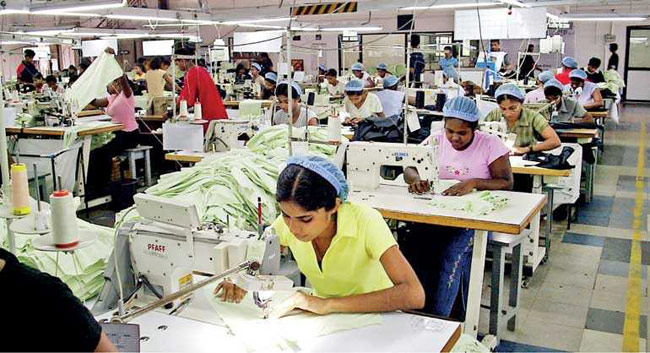
When the civil war in Sri Lanka ended in 2009, the apparel sector was one of the first industries to enter the Northern Province, hoping to infuse much-needed investment to rebuild the community. Over a decade later, the apparel industry remains the only large manufacturing sector that has ventured North to set up large-scale operations employing over 8000 individuals in the region.

Among them are Dianna, Durkadevi and Harshani, who have been dedicated employees with leading apparel manufacturing companies in the north for nearly a decade. They share their stories of dreams, personal growth, opportunities manifested and how employment through the apparel sector has placed within reach a future filled with possibilities.

Located over 340 kilometres from Sri Lanka’s capital city of Colombo – Kilinochchi and Vavuniya have been in the throes of a thirty-year civil war which ended in 2009. While this brought about post-war socio-economic challenges, an urgent need to rebuild the livelihoods of the community was imperative.

Recognising the role the sector plays in the development of the country, this paved the way for companies like MAS Kreeda Vaanavil, Omega Line Vavuniya and Hirdaramani Industries, who were among six companies to enter the Northern Province, to provide job opportunities in the war-torn region and infuse further investment into the economy.

It is no easy feat to set up operations in a rural location. It took at least three years until factories could open their doors. But its impact on employment and the communities have been immense. With over 80% of employees being women in these factories, the female labour force participation rate has steadily increased over the years. For a number of these women this was their first entry into formal employment. This saw the need to introduce programmes that uplift women and create further opportunities towards financial independence.

Creating a workspace that considers the well-being of its employees and environment has also been a critical factor for which the industry already had established a track record of moving factories out of congested Industrial zones to more remote locations. Manufacturing plants are set up on greenfield sites with an emphasis on sustainable operations and reducing the industry’s environmental footprint. From creating LEED or green building certified facilities, introducing renewable energy sources like biomass and solar energy, to responsible chemical use to attain zero toxic status in all products and processes, factories in the north have made a long journey to go beyond just compliance with regulatory frameworks and building sustainability into their core operations.

A large part of the exports of these companies are to the EU and qualify for the EU’s GSP+ scheme. The current scheme comes to an end in 2023 and Sri Lanka will need to reapply for the new scheme that comes into effect in 2024. Many companies in the north and east are dependent on GSP+ which is essential to their growth strategy, especially for the workforce which produces apparel primarily for European countries. These factories are a testament to the effectiveness of the scheme which have then benefitted these communities like no other industry.

Empowering women
With a name alluding to the ‘Rainbow’ usually attached with hope, MAS Kreeda Vaanavil currently employs over 2000 individuals in the Northern Province. Having opened its doors in 2012, the factory produces over eight million pieces annually for its primary market in Belgium, with over 80% of its products exported under the GSP+ scheme.

Under the MAS 2025 Social Sustainability Strategy, “Empowering Women” was recognised as a standalone pillar, for which a number of initiatives including Women Go Beyond (WGB) have played an essential part to ensure career advancement and skills development.

As part of the company’s journey in sustainable systematic change, empowering 100% of women on the factory floor, creating a world-class workplace and introducing meaningful employment have been an ethos for MAS Holdings.

This commitment was reflected on the factory floor, where women like Dianna, who has been working with the company for nearly ten years and hails from Jaffna, were provided growth opportunities for single mothers like herself. From a sewing operator to now a team leader heading seventy associates, her goal is to only move upward in life.

“My family’s, and my future would have been uncertain if factories like this did not exist in Kilinochchi. When I joined the industry, I did not know how to operate a sewing machine, but I was trained by my supervisors and given the opportunity to grow, even though I did not finish school. I joined the company during a critical time in my life when I didn’t even have a source of income. When I saw how the women were working here, I was inspired to know that I, too, could be financially independent. This is hope,”she says with a smile.

Cross-collaboration and learning opportunities
Travelling further south within the Northern Province is Omega Line, which commenced operations in Vavuniya in 2013. The company supports the livelihoods of over 2600, amongst whom over 88% are women. The apparel manufacturer produces over 34 million pieces annually under the GSP+ scheme.

The heart and soul of the company are women from the region which has enabled Omega Line to spearhead several female empowerment programmes, some of which provide growth opportunities for operator-level staff to enter management.

Under Calzedonia, its parent company in Italy, Omega Line gives its team the opportunity to experience cross-collaboration training in its headquarters in Verona, Italy, a unique initiative given to selected factory-level staff.

Residing close to the factory with her mother and sister is Durkadevi, one of the few female technicians at Omega Line. She looks forward to travelling to Italy to visit the parent company for further training. Her entrance to the apparel industry was one of self-reflection. She says that although she initially joined as an auditor, she shifted to the technical department as her management saw her capabilities in this area.

“When I stepped foot in the factory for the first time, I told myself this opportunity is for me. I came with hopes and dreams of one day being able to put food on the table without difficulty or purchase new clothes, which was something I could not afford to do earlier. But never did I think that I would get to travel overseas for training opportunities which would give me exposure to learn skills from countries like Italy,” she said proudly.

Promoting equal opportunity
Located a few minutes away from the Vavuniya Town, Hirdaramani Fashions commenced operations in 2012 and is also a company that gives prominence to women empowerment programmes. During the war, the abandoned building was once riddled with bullet-holes. Today, the building has been transformed into a state-of-the-art facility, housing over 1400 employees who produce over 2.5 million pieces a month. 80% of the products are exported to the EU under the GSP+ scheme.

With a largely female workforce, the ‘The Wonders of Wellbeing’ (WOW) programme is a holistic strategy that integrates well being into the business agenda and culture. It’s based around five key pillars – mental, relational, physiological, economic, and environmental – and includes a wide range of tools and initiatives to achieve measurable impact.

From teaching tools to improving financial literacy among employees, to creating equal workplace opportunities, the company also appoints wellbeing champions to embed wellness into the organisational culture by advocating it daily at factory level.

Harshani Priyarathne, who has been with the factory since its inception as a recorder in the cutting department, says companies like Hirdaramani have provided learning opportunities for her, even though she could not complete her Advanced Levels due to financial difficulties. Her husband too has been working at the factory for over two years as a store supervisor for which both have been given the opportunity to rise up the ladder and earn a stable income to look after their child.

“I always say the factory is like a campus, where you are allowed to learn various skills in apparel manufacturing compared to other industries,” Harshani stressed. “When I began at Hirdaramani Industries, there was only one building. I was sent to Colombo for training to learn Enterprise Resource Planning (ERP) to be implemented in the Vavuniya factory, where I also trained my colleagues. This was a great learning opportunity which gave me the confidence to build a career in the apparel sector.”

“I want to be a manager and I am currently doing a diploma in apparel management. I take pride in the work I do because the contribution of the apparel sector is immeasurable. I always say there are opportunities in the apparel sector for everyone, and it doesn’t matter if you are qualified or not.”

Though Dianna, Durgadevi and Harshani entered the apparel sector by chance, it paved the way for career growth and learning opportunities. Their stories are among hundreds in the Northern region where women are given financial freedom to support families and discover their potential. To unleash the true potential of the North for exemplary women like them, requires concerted efforts by the Government and relevant stakeholders. This means further strengthening relationships built with countries in the EU, and availing of the benefits of GSP+ to boost trade for the development of the community at large.
Posted in Uncategorized

Karannagoda says former military official, US ambassador behind his ban

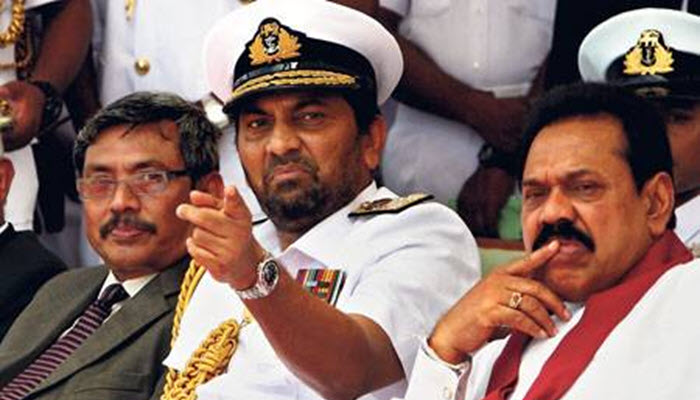
While expressing surprise on the US decision to blacklist him and his family from entering US, North Western Province Governor Wasantha Karannagoda yesterday said that there is ‘something else’ behind the move.

“I have some doubts about the move and believed that there is something else behind this,” the former Navy Commander Karannagoda said adding that, “It was a surprise to me that 14 years after the war, suddenly the US has taken a decision to blacklist me.”

He also said he believed that a former military official and the US ambassador are behind the move.

The former Commander also accused the State Department for refereeing information that were documented by NGOs and other investigations to impose the ban on him. “It is a shame for the State Department to refer some NGOs reports to designate me,” he said.

US blacklists Sri Lanka former Sri Lankan Naval Commander over war killings

The United States said Wednesday it would refuse visas on human rights grounds to a Sri Lankan provincial governor who had been charged with killings during the island’s long civil war.

A Sri Lankan investigation accused former navy chief Wasantha Karannagoda, among others, of abducting teenage children of wealthy families and killing them after extorting money.

Authorities in 2021 dropped charges, prompting an outcry from human rights groups, and he was soon named governor of North Western Province by then president Gotabaya Rajapaksa, who served as defense chief when Sri Lanka defeated the Tamil Tiger rebels in 2009.

Secretary of State Antony Blinken said allegations against Karannagoda remained “serious and credible” and that neither the governor nor his wife would be allowed to visit the United States.

“The United States reaffirms its commitment to upholding human rights, ending impunity for human rights violators, acknowledging the suffering of victims and survivors and promoting accountability for perpetrators in Sri Lanka,” Blinken said in a statement.

The action on human rights comes as both the United States and India voice alarm over inroads in Sri Lanka by China, the island’s biggest creditor.

Sri Lanka last year defaulted on its external debt and saw angry protests that toppled Rajapaksa over economic mismanagement that brought acute food, fuel and medicine shortages.

A UN panel has said 40,000 civilians may have been killed in the last stages of the 37-year conflict. Government officials deny abuses.

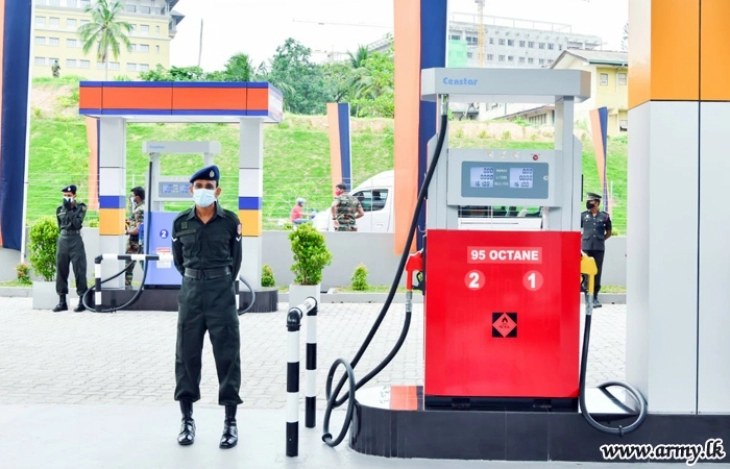
US-based RM Parks-Shell Company to begin operations in Sri Lanka in June

The US-based RM Parks-Shell Company is scheduled to begin operations in Sri Lanka in June.

The matter was conveyed by the company during a meeting with local officials.

RM Parks-Shell was one of the four fuel sector companies selected by the government recently to operate in the country.

Accordingly, RM Park-Shell Company will commence business operations of importing, distributing and selling fuel in Sri Lanka in the first week of June after signing an agreement with the Ceylon Petroleum Corporation.

During the meeting with officials of the Ministry of Power and Energy, the Central Bank of Sri Lanka, the Board of Investment, Ceylon Petroleum Corporation and the Petroleum Storage Terminal Limited discussions have been held regarding necessary business licenses, agreements, policies, infrastructure, contractual dates and the timeframe to commence operations in Sri Lanka.

Meanwhile, a team of Sinopec officials and technical experts visited Sri Lanka to finalise the agreements and commencement of operations and the sale of fuel in the country.

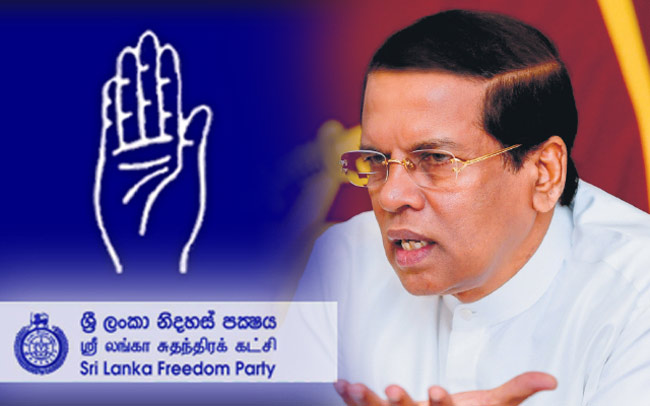
Sri Lanka’s centre-left SLFP will vote in favour of IMF deal: former president

The Sri Lanka Freedom Party (SLFP), which now sits in the opposition after it broke ranks with the ruling coalition, will vote in favour of the country’s International Monetary Fund (IMF) programme, SLFP chairman and former President Maithripala Sirisena said.

Speaking at an event on Wednesday April 26, Sirisena said any conditions imposed on Sri Lanka by the IMF that were not agreeable to the country can be renegotiated.

“What is my position on the IMF? The five years of my government was with the IMF. There are certain conditions there that we cannot agree with, which we must renegotiate.

“This Friday, the SLFP will definitely vote in favour of the IMF facility,” he said.

The SLFP is a centre-left party which has now been reduced to a handful of legislators after leading many election-winning coalitions over the decades since its founding in the 1950s. The SLPP, controlled by former President Mahinda Rajapaksa and his family, is an offshoot of the SLFP, a party that has – at least on paper – traditionally resisted what it and its allies have deemed the imperial machinations of the West-led global economic order.

Sri Lanka’s parliament is currently debating the IMF deal after the international lender approved a 2.9 billion US dollar extended fund facility to the crisis-hit island nation.

President Ranil Wickremesinghe told parliament Wednesday morning that new legislation will be enacted to facilitate the agreement and proposed reforms.

Sri Lanka is still recovering from the impact of the 2022 currency crisis, its worst in decades, and a number of opposition parties including the main opposition Samagi Jana Balawegaya (SJB) had repeatedly called for immediate negotiations with the IMF for a bailout, which the then Sri Lanka Podujana Peramuna (SLPP)-led government resolutely ignored.

Staff-level agreement was finally reached for a four-year EFF in August 2022, with IMF board approval being granted in March 2023.

It is expected that the IMF programme, Sri Lanka’s 17th so far and likely the first to have at least some of its objectives fully realised, will be passed this Friday with the support of most parties represented in parliament save for a few smaller parties in the opposition.

Posted in Uncategorized

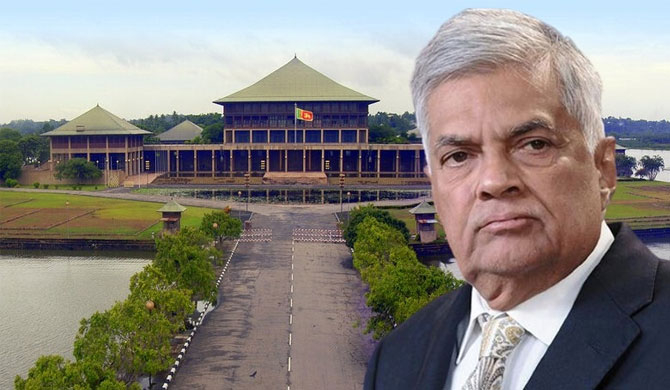
Presidential plea to Parliament to pass IMF deal

President Ranil Wickremesinghe yesterday made what transpired as a frantic appeal to Parliament to back the critical $ 2.9 billion Extended Fund Facility from the International Monetary Fund (IMF) as critical for the future stability and prosperity of Sri Lanka.

In a special statement delivered to Parliament President Wickremesinghe announced that Sri Lanka is on the path of renaissance and is re-emerging as a success story, with the expectation of support from the entire nation to carry it forward.

Wickremesinghe also spoke about the IMF agreement, which he presented to Parliament. He acknowledged that the country had failed to implement previous agreements with the International Monetary Fund, despite entering into 16 such agreements. However, he emphasised that there is no other active option for Sri Lanka but to sign an agreement with the IMF. President Wickremesinghe reassured the public that the restructuring of local debt would not harm members of the Employees’ Provident Fund. Furthermore, he stated that a social safety net has been implemented to protect low-income people and create financial stability in the country.

“We have entered into agreements with the IMF 16 times in the past, but we have not fully implemented them. On the 17th occasion, when we achieve stability, we must address our long-term weaknesses and move forward with a new program,” the President said during the debate on the latest bailout by the multilateral funding organisation.

“One of the points to address is debt restructuring talks with our bilateral countries and private creditors. We want to restructure these loans, as failure to do so will result in a loss of liquidity. In order for the Government to move forward, the restructuring must be done in rupees or dollars. The Government wants to obtain funds for this service.

“Therefore, we must first negotiate with foreign creditors. We hope to initiate these discussions soon, with domestic debt restructuring also being considered. A final decision has not yet been made, but it is important to discuss this issue. Negotiations cannot be held with terms and conditions already in place. It is easier for us to join negotiations without conditions,” the President said.

He said every aspect must be given special attention to ensure that no one is harmed in the process. “Some banks may express their inability to cope with the program, but it is important for them to accept it in order to move the economy forward. There are concerns that the stock market may collapse, and some may not be able to offer different conditions. However, decisions will be made in Parliament, and appropriate measures will be taken to ensure that no harm is done to anyone, such as the members of the Employees Provident Fund,” Wickremesinghe emphasised.

He also said the Government has initiated necessary programs to support the poor, and the World Bank has provided funding for this. We are currently implementing a program to give aid to those who truly deserve it and remove those who do not. “Our aim is to create financial stability and protect the low-income people,” the President said.

He pointed out that stability alone is not enough for Sri Lanka.

“Actuality, the nominal GDP for 2019 was just $ 89 billion during this period. The gross domestic product will be the same in 2028 as it was in 2019. If we stay with the growth rate of 3%, we can lose the national income of nine years. If we maintain the current growth rate of 3%, we may lose nine years of national revenue. Furthermore, it has been predicted that the Sri Lankan GDP will decrease by around 3% in 2023,” the President said.

“Economic positivity will likely be confirmed in the fourth quarter of 2023. If the economy grew at least 3% or 7% each year starting in 2019, our GDP would be worth $ 110 billion. But if we go to 5%, it will be $ 130 billion. In fact, we believe we will be able to reach 3% or 4% in the first two to three years.

“Following that, we must aim for a growth rate of at least 6% to 7% over this time period. That should be agreed upon by everyone in this House. However, this may be done at 7% or 8%. We have opportunities for that. That is why we are restructuring the entire legal system. Some regulations have to be removed. Some people wonder why corporations are being sold. They can be better run by the private sector. We leave them to the private sector,” Wickremesinghe pointed out.

The President emphasised that Sri Lanka has no other option but the IMF agreement.

“There have not been alternative suggestions. If there is no other alternative, let’s approve this. I also urge the opposition to work together. Let’s get both parties together and pass this,” he appealed to MPs.

“There are policies and initiatives in place for the first five years. Let’s discuss them. There is a national assembly. In particular, there are other committees. Let’s make the entire Parliament a Government to implement this program. Let’s get together for this. There may be differing viewpoints. However, everyone must back this initiative,” he stressed.

He warned that if Sri Lanka doesn’t accomplish this, the country would be betraying the youth.

“Their future has been destroyed. Think about the youth of the country. Don’t just think about grabbing power only. If this program is not done, none of us will be able to survive in another two or three years. So I urge everyone to come together to approve this. After that we will come together and prepare the set of policies required until 2048. I also urge you to provide support to implement the program during the next five years,” President Wickremesinghe urged the Parliament.

Posted in Uncategorized

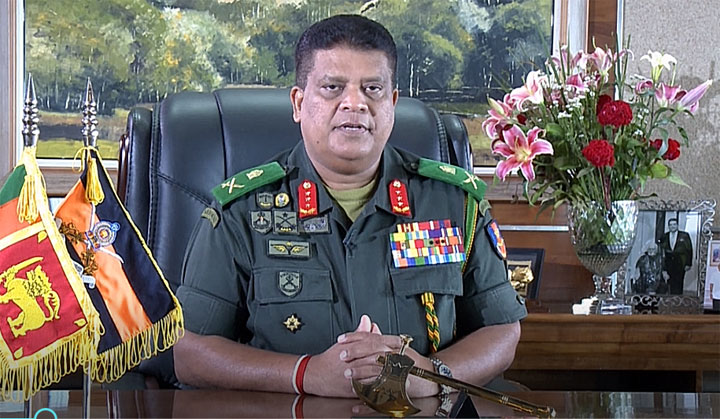
MoD denies allegations against Shavendra by Wimal Weerawansa

The Ministry of Defence today denied allegations by National Freedom Front (NFF) Leader MP Wimal Weerawansa against Chief of Defence Staff and former Army Commander Shavendra Silva in which he alleged that General Silva supported the conspiracy to create an interim administration in Sri Lanka using the ‘Aragalaya’ anti-government protests in 2022.

Addressing an event, MP Weerawansa had alleged that the first plan by those behind the protests on May 09, 2022 was to assassinate the then Executive President and the defence heads inside the President’s House and that General Shavendra Silva’s visit to India, aroused suspicion.

Deputy National Security Advisor Level Meeting of the Colombo Security Conclave, a security conference organized between friendly countries in the South Indian Ocean region, was held in India on 07 July 2022.

The MoD emphasized that under the directions and approval of the then President of Sri Lanka and the Defence Ministry, General Shavendra Silva participated in the meeting representing the Government of Sri Lanka.

Accordingly, the Ministry of Defence further emphasized that the above statement of the MP is baseless and General Silva was on an official visit to India in July 2022 to attend the meeting of the Colombo Security Conclave with the approval of the then President and Ministry of Defence.(

Posted in Uncategorized

US envoy disappointed with lies in Wimal’s book

The US Ambassador to Sri Lanka, Julie Chung, has expressed disappointment with the book written by MP Wimal Weerawansa which she says should be labeled “fiction.”

She said that the MP has made baseless allegations and spread outright lies in his book.

“I am disappointed that an MP has made baseless allegations and spread outright lies in a book that should be labeled “fiction.” For 75 years, the US & SL have shared commitments to democracy, sovereignty, and prosperity – a partnership and future we continue to build together,” the Ambassador tweeted.

Weerawansa had alleged that both India and the US had asked former President Gotabaya Rajapaksa to remove then Prime Minister Ranil Wickremesinghe before resigning as President.

However, he said that Gotabaya Rajapaksa had refused to comply.

The MP also alleged that Ambassador Julie Chung had visited Speaker Mahinda Yapa Abeywardena and requested him to take office as President once Gotabaya Rajapaksa resigns.

However, the Speaker had reportedly stated that under the Constitution it is the Prime Minister who will become the next President if the President steps down.

Weerawansa had made these claims in a book released this week.

Easter attacks: Church receives full CoI report from Alles

Minister of Public Security Tiran Alles has handed over the complete report of the Presidential Commission of Inquiry (CoI) that investigated the Easter Sunday terror attacks of 21 April 2019, to the Catholic Bishops’ Conference of Sri Lanka (CBCSL).

Speaking to The Daily Morning, an official of the Ministry of Public Security said that the report had been handed over to CBCSL President and Kurunegala Bishop, Harold Anthony Perera, with the approval of the President and Minister of Defence, Ranil Wickremesinghe.

When contacted by The Daily Morning, the National Director of Communications of the CBCSL, Jude Chrishantha Fernando confirmed the receipt of the said report in the form of six compact discs (CDs). “Perera has received six CDs. Alles has informed that those CDs contain the complete report of the CoI. We will make a statement after referring to them,” he said.

The CoI was appointed to investigate the said terror attacks by then President and incumbent Opposition Parliamentarian Maithripala Sirisena. It has made several recommendations including the filing of criminal charges against Sirisena, former Defence Ministry Secretary Hemasiri Fernando, former Inspector General of Police Pujith Jayasundara, former State Intelligence Service Director, Senior Deputy Inspector General of Police (SDIG) Nilantha Jayawardena, former Chief of National Intelligence, retired DIG Sisira Mendis and several others.

The final report of the CoI was tabled in the Parliament on 8 April 2021, but the witness records were not released, reportedly due to legal reasons. In February 2022, all the volumes of the report including the related witness records were handed over to the Speaker of the Parliament Mahinda Yapa Abeywardana. However, several parties including the Church had been accusing the Government of not releasing certain sections of the report, in an alleged attempt to cover up the truth behind the terror attacks.

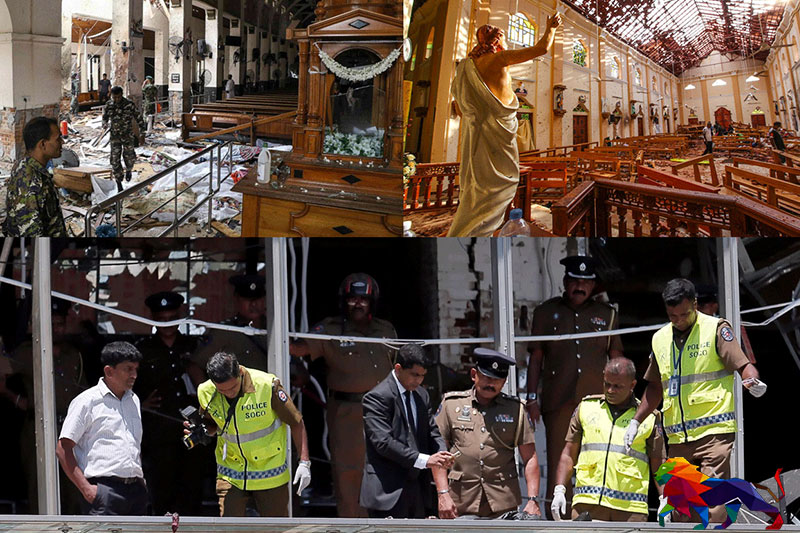
On 21 April 2019, Easter Sunday, three Churches (St. Sebastian’s in Katuwapitiya, St. Anthony’s in Kochchikade, and the Zion Church in Batticaloa) and three luxury Hotels in Colombo (Cinnamon Grand, The Kingsbury, and Shangri-La) were targeted in a series of coordinated suicide bombings. Later that day, another two bomb explosions took place at a house in Dematagoda and the Tropical Inn Lodge in Dehiwala. A total of 269 people were killed in the bombings, including about 45 foreign nationals, while at least 500 were injured.

Posted in Uncategorized

Sri Lanka in talks for US$350mnn IMF deal linked ADB loan

Sri Lanka’s cabinet of ministers had authorized the Secretary to the Treasury to negotiate a 350 million US dollar loan from the Asian Development Bank, Transport Minister Bandula Gunawardana said.

The ADB loan is linked to a 3.0 billion US dollar International Monetary Fund program. According to the IMF program at least 650 million Us dollars is expected from the ADB in 2023 for budget support.

“It is not only the money from the IMF that comes from the program, there are also other funds,” Minister Gunawardana said.

The loan is to provide economic stability and governance, the statement said.

A 1.5 million dollar technical assistance grant will also be provided. ADB is also supporting Sri Lanka’s power sector reforms and banking sector stability.

Separately, the cabinet also approved taking the next steps to get a 150 million loan from the World Bank to bolster stability in the banking system.