No musical shows, political meetings at Galle Face Green from 20 April

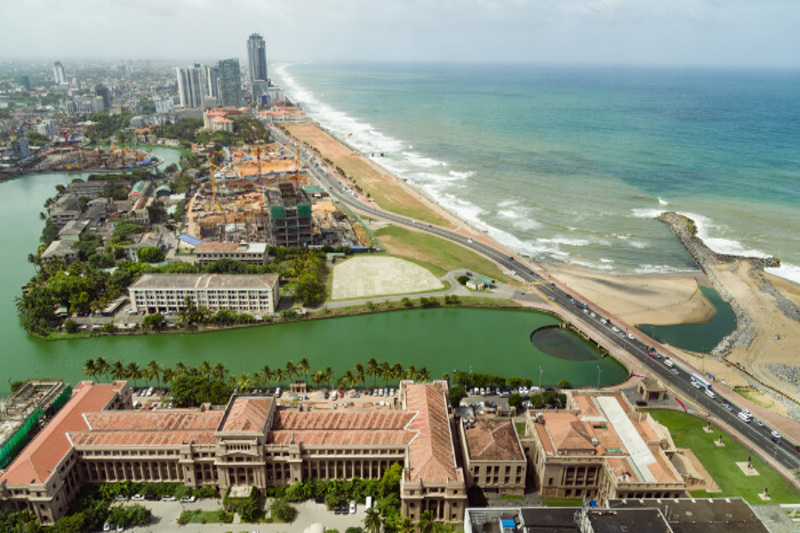
The Cabinet of Ministers has decided not to grant permission to use Galle Face Green for shows, political meetings or other activities that will damage the beauty of the grounds from the 20th of April.

The Sri Lanka Port Authority has undertaken to develop the Galle Face Green as a social responsibility (CSR) project, and the Authority has spent about 220 million rupees for the development work that has been done so far, a statement on cabinet decisions said.

The Cabinet noted that 6.6 million rupees have been spent for the repairs of property damage that have occurred during last year’s Aragalaya protests alone.

The Galle Face Green is supposed to be maintained so that the public can spend their free time, but the grounds are often damaged by musical performances and other activities involving large gatherings of people, making it difficult to maintain the beauty and scenic nature of the premises.

Therefore, with effect from 20th April, the Cabinet of Ministers has decided not to grant permission except for religious activities to use Galle Face Green for musical performances, political meetings or other activities that damage the beauty of the grounds.

LG polls should precede presidential election – G.L.

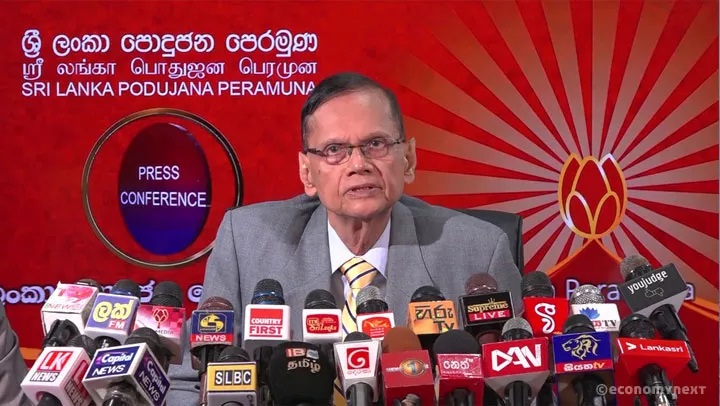
The local government polls should precede the presidential election, stresses constitutional expert Prof. G.L. Peiris.

The Freedom People’s Congress (FPC) MP told the media today (17) the law permits presidential election to take place only between September 18 and October 18 next year.

A successor president cannot call an election after four years, except through a parliamentary resolution with a two-third majority passage, said Prof. Peiris.

The constitution cannot be changed for petty political gains, and any change should have a public mandate, he noted.

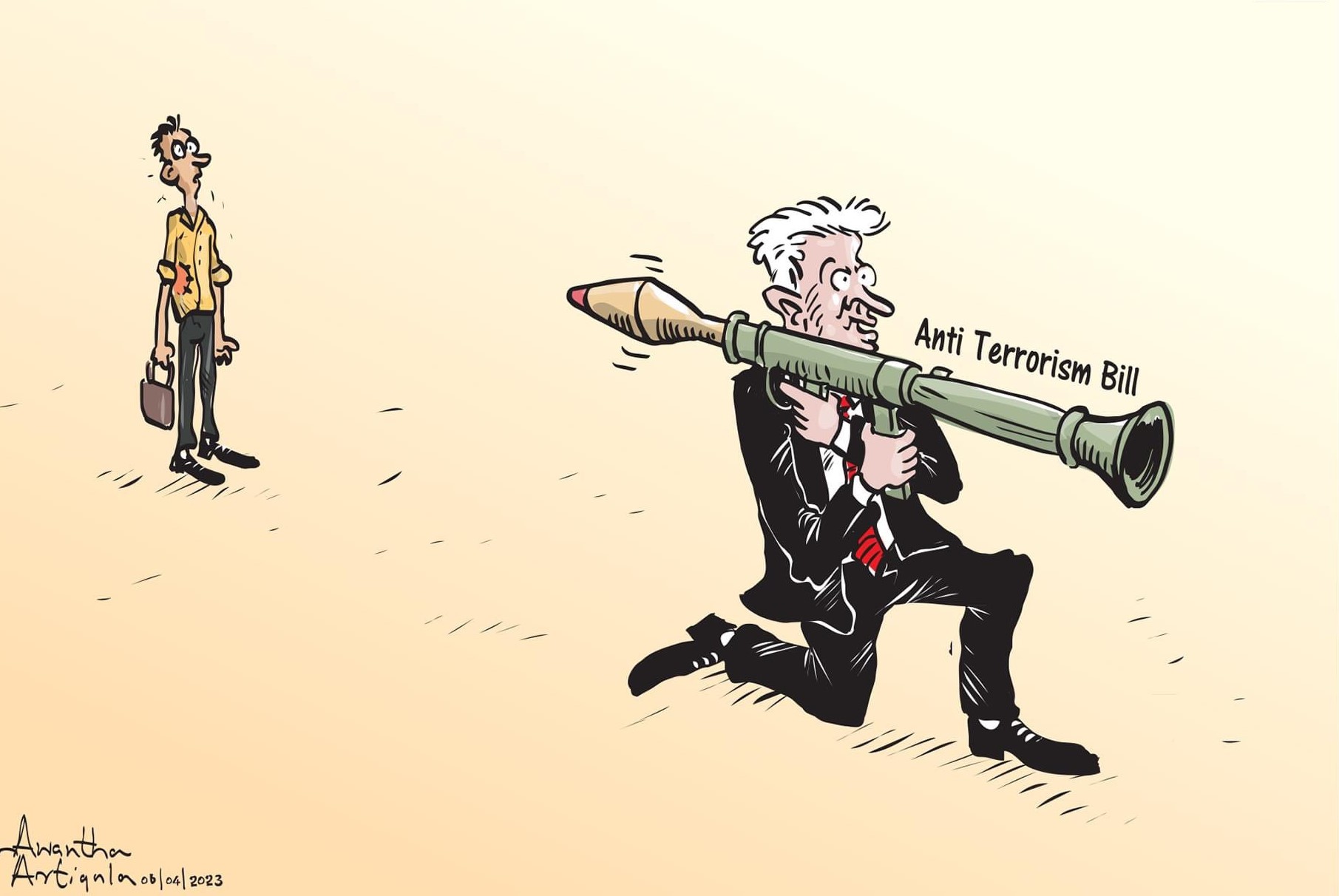
Speaking further, the MP warned the proposed anti-terrorism bill will evaporate media freedom.

There was no transparency whatsoever in the government’s talks with the IMF, and the pact with the global lender would not be supported by any FPC MP, he added.

President to make fresh clarion call for all-party national government

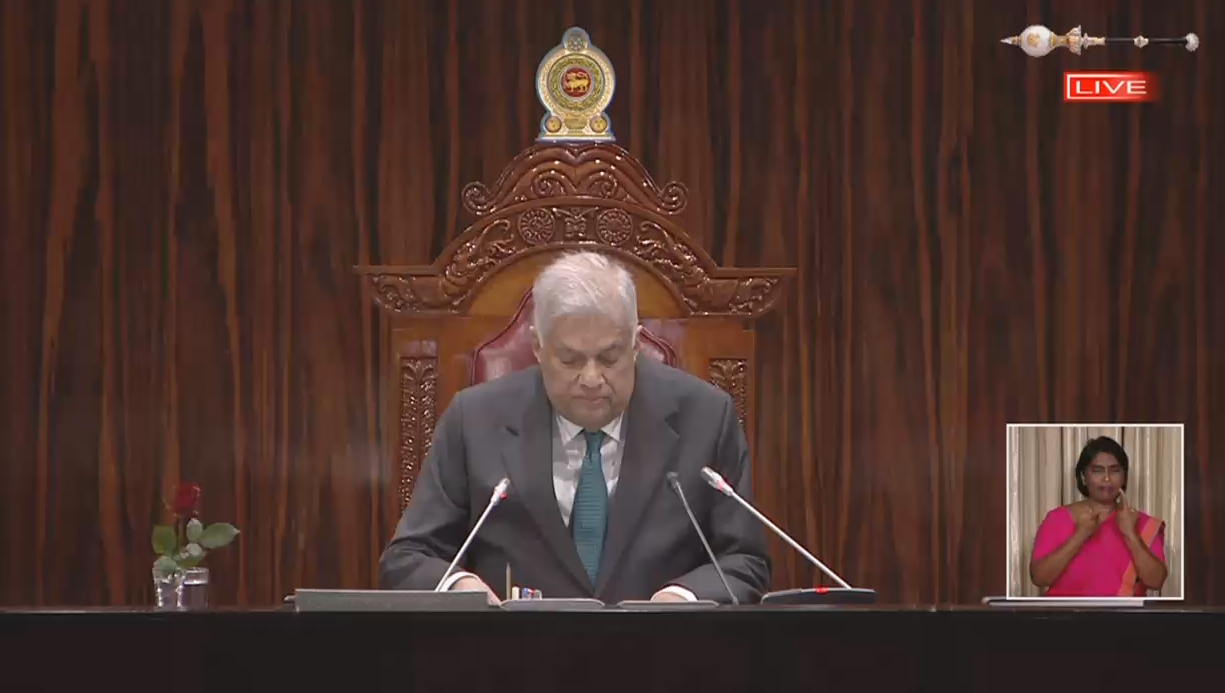
President Ranil Wickremesinghe is expected to make a fresh call for the formation of an all-party government when Parliament takes up the debate on the IMF bailout programme next week, a senior opposition party leader said on Monday.

In March, the International Monetary Fund (IMF) approved a $3 billion bailout programme to help Sri Lanka overcome its economic crisis and catalyse financial support from other development partners, a move welcomed by Colombo as a “historic milestone” in the critical period.

“He (Wickremesinghe) will make an open invitation to all political parties to join the national government when the Parliament meets on April 25 to debate on the IMF bailout programme,” Mano Ganesan, the leader of the Tamil Progressive Alliance, told the media.

President Wickremesinghe, also the country’s finance minister, is keen to win the approval of the 225-member assembly for the IMF bailout package, which is a timely antidote to Sri Lanka’s economic travails. In July last year, Wickremesinghe urged lawmakers from all political parties to put their differences aside and work towards lifting Sri Lanka out of the throes of the economic crisis.

The Sri Lanka Podujana Peramuna (SLPP) party led by the powerful Rajapaksa family voted for Wickremesinghe, the leader of the United National Party (UNP), as the president in July last year. Wickremesinghe currently heads a cabinet of SLPP ministers. Sri Lanka is in the midst of its worst economic crisis since its independence from Great Britain in 1948, triggered by a severe paucity of foreign exchange reserves.

In April last year, Sri Lanka declared its international debt default due to the forex crisis. Earlier this month, Sri Lanka’s election commission said the local body polls, which were scheduled to be held on April 25, were postponed indefinitely due to an acute shortage of funds.

Source: PTI

Posted in Uncategorized

After 75 Years of Independence Sri Lanka has become a “failed state” says Chandrika Kumaratunga By Meera Srinivasan/The Hindu

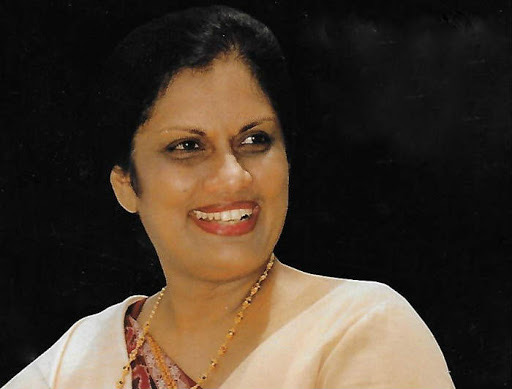
Despite possessing enviable social indicators at the time of Independence in 1948, Sri Lanka, at 75, is a “failed state”, former President Chandrika Bandaranaike Kumaratunga said on Sunday.

“Seventy-five years is a long time for a nation to achieve considerable progress. Even after 450 years of destruction by colonial rulers, at Independence, Sri Lanka possessed some of the best socio-economic indicators. Today, at 75, Sri Lanka is a failed state,” she said, delivering the UNESCO Goodwill Ambassador Madanjeet Singh Memorial Lecture of 2023, in an online event, organised by the South Asia Foundation and the Asian College of Journalism, Chennai.

“We are incapable of managing the affairs of the state,” said the 77-year-old former head of state, who hails from one of Sri Lanka’s most powerful political clans.

“The government has declared bankruptcy — a very rare situation for any country in the world; the economy is in tatters; peasant agriculture and small and medium industries are struggling to survive, or have already closed down; tourism sector is at an all-time low; large industries are retrenching employees and new jobs will be a long time coming,” Ms. Kumaratunga said. The situation “compelled” Sri Lanka to seek an IMF facility coming with “ very stringent” conditions, she said

While President Kumaratunga has earlier blamed the Rajapaksas for the country’s economic collapse, she underscored corruption and Sri Lanka’s failure at “essential nation building” as key factors leading to the current crisis.

“Widespread corruption at every level”, had become the “gospel of Sri Lankan politics”, and had seeped down the major pillars of democratic governance, including the judiciary, the police, and the public service. Further, independent Sri Lanka failed to “weld together” the diverse ethnic and religious communities to form a united pluralistic state, Ms. Kumaratunga said.

Historically, the island’s majority Sinhala-Buddhist community had felt discriminated against by the colonial rulers. “Although Independence gave the majority community an opportunity to correct this, sadly that did not happen,” she added.

“The solution they adopted was to arrogate all the privileges of economic and social development exclusively to themselves. The just resolution of the minorities’ question would have been to guarantee equal rights to all citizens and a system of political power-sharing with the minorities. We have failed to do this for 75 years,” the two-time President said.

Sri Lanka’s present Constitution, introduced by President J.R. Jayewardene in 1978, “is not a democratic one”, Ms. Kumaratunge contended, recalling how her own draft proposals for a new Constitution in 2000, widely considered progressive, could not be taken forward owing to lack of support.

Outlining the “root causes” for Sri Lanka’s failures, she said that while the country functions as a modern, emerging economy financially, it is “mired in the practices of a backward, semi-feudal society”, in the social and cultural spheres. “Eleven out of the 14 people that have governed Sri Lanka until now have hailed from five families,” she said, in an apparently self-critical reference to the country’s famous ruling clans, including her own family. All main political parties invariably played the “ethno-religious card” in every election, she added.

Referring to last year’s historic street protests, Ms. Kumaratunga said “a cataclysmic socio-political upheaval shook the nation to its very core”.

“An entire nation, young and old rose up, demanding radical changes in the existing system of governance, of the ethics and values of leaders. Citizens of all ethnic, religious communities, irrespective of political affiliations, came together spontaneously, without any known leaders to demand a new country, a better Sri Lanka,” she said, calling for a “total overhaul” of governance, with new, principled leaders.


Sri Lanka and UK to convene Strategic Dialogue on 18 April in London

Foreign Secretary Aruni Wijewardane will participate in the inaugural UK-Sri Lanka Strategic Dialogue at Foreign Secretary level on 18 April 2023 at the Foreign Commonwealth and Development Office (FCDO) in London, Foreign Affairs Ministry announced.

UK Minister of State in the FCDO Anne Marie Trevelyan will open the dialogue, which will be conducted with the participation of Sir Philip Barton, Permanent Undersecretary of the FCDO.

The inaugural Strategic Dialogue is convened at the invitation of the FCDO at the important juncture of the 75th anniversary of diplomatic relations between Sri Lanka and the United Kingdom this year.

The Strategic Dialogue will provide a forum for both sides to discuss the multifaceted relations between the two countries.

On the sidelines of the dialogue, Foreign Secretary Wijewardane will have a bilateral meeting with Assistant Secretary General of the Commonwealth Prof. Luis G. Franceschi and interact with members of the All-Party Parliamentary Group (APPG).

Posted in Uncategorized

SLPI concerned over implications on freedom of expression by ATA

The Sri Lanka Press Institute (SLPI), its constituents and affiliated organisations are deeply concerned over the proposed Anti–Terrorism Act (ATA) and its implications on freedom of expression.

The ATA was published on 22 March 2023 (Gazette notification dated 17 March 2023), and was drafted to replace the Prevention of Terrorism Act (Temporary Provisions) Act No. 48 of 1979 (PTA).

The SLPI is of the opinion that the presented bill has several controversial elements that are not conducive for the media community.

The proposed bill consists of an overbroad and vague definition of “acts of terrorism” that can be interpreted in a manner which curtails the freedom of expression.

The broad powers vested within the proposed bill enables the criminalisation of speech that is likely to be understood as an encouragement or inducement to commit or prepare for terrorism, with the burden of proof on the defendant to show that was not their intention.

These offences also apply to those who publish, distribute, sell, or transmit publications that could be interpreted as materials supporting acts of terrorism.

According to the Bill, confidential information could be any information having an ‘adverse impact’ on ‘national security/defence’ which includes ‘any information not in the public domain’. Therefore, the broad and vague classification of ‘confidential information’ could place media personnel in a precarious position in the due course of executing their duties, as many offences which fall under the criminal law could now be reframed as ‘terrorist offences’.

It is evident that the Constitutionally guaranteed fundamental rights of citizens, in terms of freedom of speech and expression, freedom of assembly and association, and freedom to dissent are threatened through the proposed ATA. While the SLPI understands the need to amend the PTA, it also endorses caution in making amendments that could undermine democracy and good governance.

Posted in Uncategorized

Sri Lanka given more time to repay Bangladesh’s $200m loan

Bangladesh has extended the repayment period of Sri Lanka’s $200 million loan it had given by six more months.

Earlier, the Sri Lankan central bank sought time from Bangladesh to make the first installment of the $200 million credit by March this year, hoping that it would be able to restructure its debt by then.

However, the restructuring was not done.

Now, Sri Lanka is seeking six more months and said it would make its first installment by August this year and another installment by September, said Bangladesh Bank Governor Abdur Rouf Talukder while speaking to a group of journalists after a meeting with P Nandalal Weerasinghe, governor of the central bank of Sri Lanka, at the 2023 Spring Meetings of the World Bank Group and the International Monetary Fund (IMF) in Washington on Friday.

The Sri Lankan governor confirmed that it would need no further extension, Talukder said.

When a loan repayment period is extended, it is not free of cost. It adds more interest, he also said.

Sri Lanka, facing its worst economic crisis in history, borrowed the fund in May 2021.

Colombo could not start repaying the loan and announced its external debt default in April of 2022 amid a deepening crisis.

The loan repayment period has been extended thrice.

As per the agreement with Sri Lanka, Bangladesh was supposed to receive an interest payment of Libor plus 2% if the amount was returned in three months.

The Libor, the acronym for London Inter-Bank Offered Rate, is a benchmark interest rate at which major global banks lend to one another in the international interbank market for short-term loans.

The three-month Libor averaged around 0.53% in 2021.

Last month, Sri Lanka secured a $2.9 billion programme from the IMF to tackle its huge debt burden.

The country owes $7.1 billion to bilateral creditors, with $3 billion owed to China, followed by $2.4 billion to the Paris Club, and $1.6 billion to India, said Reuters on Friday.

The government also needs to renegotiate more than $12 billion of debt in eurobonds with overseas private creditors, and $2.7 billion on other commercial loans.

Source – Dhaka Tribune

Posted in Uncategorized

No more announcements of LG polls dates – election chief

No more dates will be announced for the local government polls until funding and other requirements are made available, said Election Commission chairman Nimal Punchihewa.

He has told Neth News the EC had discussed matters with all the official authorities, with none left.

The election was postponed on April 11 for the second time.

Meanwhile, delimitation commission chairman Mahinda Deshapriya expects the LG polls to take place before either August 12 or September 15.

He has told ‘Mawbima’ that nominations already accepted would be unaffected by the delimitation process that has been finalized.

Nothing has been reported about a cancellation of the nominations accepted, he said.

Posted in Uncategorized

Paris Club says aims to start Sri Lanka debt negotiations

PARIS : The Paris Club of creditor governments aims to start negotiations to restructure Sri Lanka’s debt, the group said on Friday after a creditor committee was set up this week.

The Paris Club said the Japanese and Indian finance ministers along with its president and representatives of Sri Lanka set up a creditor committee on Thursday on the sidelines of the spring meetings of the International Monetary Fund and World Bank in Washington.

Creditor committees lead talks about the terms for a future debt relief deal.

“The Paris Club intends to keep the momentum and start the restructuring negotiations in coordination with all relevant stakeholders, to ensure fair burden sharing, transparency and comparability of treatment,” it said in a statement.

It added that all public sector creditors were welcome to participate in the process.

Sri Lanka last month secured a $2.9 billion IMF programme to tackle its suffocating debt burden and its worst economic crisis in more than seven decades.

(Reuters)

ATA a threat to journalists – IFJ

The new Anti-Terrorism Act (ATA) proposed by the Sri Lankan parliament, designed to replace the existing Prevention of Terrorism Act (PTA) of 1979, threatens to further exacerbate restrictions on the right to assembly and gravely curtail freedom of expression and press freedom, the International Federation of Journalists (IFJ) said in a statement.

The International Federation of Journalists (IFJ) joins its Sri Lankan affiliates, the Sri Lankan Working Journalists Association (SLWJA), the Federation of Media Employees Trade Union (FMETU), and the Free Media Movement (FMM), in strongly condemning the bill and urging Sri Lankan authorities to withdraw the proposed draft and repeal the punitive PTA.

Under the proposed ATA, the president would have the power to invoke proscriptive orders, restricting organisations labelled ‘terrorist’ from accessing funds or maintaining membership.

The president would also have the power to order curfews, declare places ‘prohibited’, instate rehabilitation programs, and obtain restriction orders that prohibit movement and activities, all conducted outside of the court system.

If passed, journalists, media workers and their representative unions and organisations who are deemed critical of the Sri Lankan government face legal persecution under undemocratic and arbitrary ‘terrorist activities’, the statement added.