New report on delimitation handed over to PM

The new report of the Delimitation Committee was handed over to Prime Minister Dinesh Gunawardena this morning (April 11).

The document, which contains details of the votes and the map of the local councils, was handed over by the chairman of the Delimitation Committee, Mahinda Deshapriya.

A five-member National Delimitation Committee was appointed in November 2022 for the demarcation of wards for local authorities.

The committee, chaired by the former election chief, comprises Mr. Jayalath R.V. Dissanayake, Mrs. W.M.M.R. Adikari, Mr. K. Thavalingam and Mr. I.A. Hameed.

It was appointed in a special gazette notification published by PM Gunawardena, in his capacity as the Minister of Public Administration, Home Affairs, Provincial Councils and Local Government.

No plan for military base in SL; no plan to revive SOFA – US Ambassador

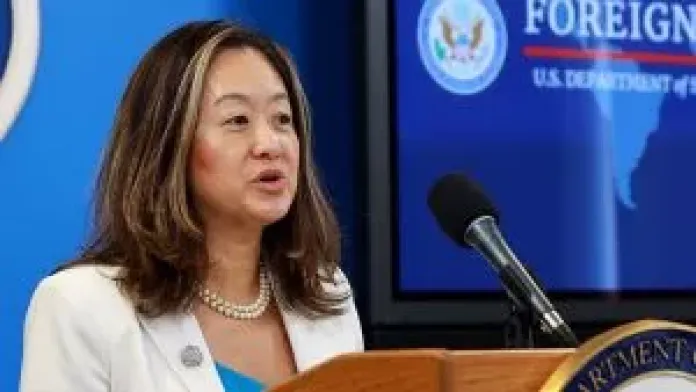
US Ambassador Julie J. Chung speaks to Daily Mirror in her first interview with the print media about the current status of bilateral ties and the way forward after the arrangement with the International Monetary Fund (IMF).
Excerpts:

Q So, Ambassador, the United States of America helped Sri Lanka to get this IMF arrangement approved. In addition to that the US helped Sri Lanka through its development arm USAID to recover from this economic crisis. So what will be the future of our bilateral relationship?
I’m proud to say this year we’re commemorating the 75-year anniversary of the Sri Lankan-US relationship, and it’s really a strong, enduring partnership. This year’s theme is people, progress and partnership. So in that light, we were very happy to support Sri Lanka during the past year, particularly during the hardships and providing over $270 million in assistance. It included everything from fertilizer to paddy farmers, school lunch programs, supporting small and medium enterprises, and SMEs owned by women as well as vocational training. We want to see Sri Lanka prosper and stabilize throughout this very difficult challenging period. So we want to show that we are standing side by side with the Sri Lankan people during this time.

The IMF was a big piece of that, of course, as Sri Lanka decided to go to the IMF. We welcomed that decision because IMF has the right tools and resources to help a country recover. And we were happy to see the countries, the major bilateral lenders give their financing assurances. There’s more work to be done, but I think as the largest shareholder in the IMF we want to continue to support Sri Lanka in its reform path.

Q The first tranche has been released to Sri Lanka. Sri Lanka has shown signs of recovery. But it’s too early for us to celebrate, there is a long way for us to go. We have to do debt restructuring and implementation of reforms. In what ways will the U.S. support Sri Lanka in the future?
IMF was the first step but not the only step of course. There are many, many ways that the US will continue to support Sri Lanka. And going beyond the IMF immediate program, Sri Lanka has gone through IMF programs in the past, this is really an opportunity for the Sri Lankan government to look at what structural reforms it can really implement for lasting economic health. What kind of issues can it improve in transparency, in anti-corruption measures? So we are continuing to help in terms of public financial management, and capacity building, as well as supporting through SMEs training, and hopefully additional financing from the Development Finance Corporation to energize the SME sectors and bring investors back into Sri Lanka.

Q How can Sri Lanka reciprocate this assistance? How do you expect Sri Lanka to reciprocate?
We are assisting because Sri Lanka is a good friend of the United States. We ask for nothing in return. We want to see a stable, democratic, prosperous Sri Lanka. I think seeing a strong partner, seeing a friend in need, we wanted to help fulfil that need. We want to continue to be strong partners together.

Sri Lanka has gone through IMF programs in the past, this is really an opportunity for the Govt to look at what structural reforms it can really implement

We welcomed that decision because IMF has the right tools and resources to help

Q As the Ambassador, what are you planning to do to promote tourism and investments in Sri Lanka?
Let me tell you, I’ve travelled around Sri Lanka in the past year here. I took my parents to Yala and saw their first safari and my first leopard. That was amazing. I hiked Sigiriya and Pidurangala. There’s of course much more to see. But as I experience the beauty of Sri Lanka, I have told my friends and guests to also come. The United States is the fifth largest country to bring tourism into Sri Lanka and we hope that continues to attract more tourists into Sri Lanka. And in other ways. Through USAID’s program, we have a vocational training program called ‘YouLead’ that helps young people in the tourism sector get the right training to strengthen tourism services.
We’re also helping the Pekoe Trail which is near the tea plantation area, working with the EU and the Sri Lankan Tourism Authority to build up that trail which will attract more tourists to come and enjoy the rich diversity of the hill country.

Q There are some positive signs we see at the moment, at the same time the Sri Lankan political situation is fluid. How important is it for Sri Lanka to have political stability to achieve these targets?
Economic stability and political stability go hand in hand. Economic reforms, political reforms and good governance are so interconnected. So, Sri Lanka continues its steps towards economic reforms, improving fiscal transparency, and addressing corruption through its new anti-corruption bill which has now been tabled. You have to keep in mind the good governance aspect as well. And you want to focus on that. For instance there are new discussions about the new ATA (Anti-Terrorism Act) which should be replacing the PTA (Prevention of Terrorism Act). That’s an outdated law, and we welcome the government’s and the president’s announcement that they are going to overhaul and repeal the old PTA. We really hope that there are robust and genuine consultations, with all the stakeholders as they revise this law. This will have so much impact. It’s such an important law.

This is a pivotal moment in Sri Lanka’s history. There’s a lot of opportunity. So we hope that the government takes time to consider all these different inputs from the different stakeholders and ensure that the new ATA meets international standards and norms and really addresses the needs of the Sri Lankan people.

Q How important is it for Sri Lanka to have Local Government elections, that have already been postponed? Your perspective?
Sri Lanka has a long history of free and fair elections, and elections are a critical component of a well-functioning democracy. So we believe that elections are really important for any democracy, such as Sri Lanka.

Q In recent times a top U.S. Defense official visited Sri Lanka. This has fueled a lot of speculation on whether the U.S. is going to put up a military base here. So the CIA Director General came here. That kind of misinformation and disinformation is going on. What happened actually?
We have several visitors coming to Sri Lanka all the time. We want to engage on a broad range of issues.
We recently also delivered the third Coast Guard cutter in recent months, which has really helped Sri Lanka combat human trafficking, and drug smuggling, in all those different ways.
In terms of the military base, I have said this repeatedly, we have no intention of building a military base.

Q So at the same time, does the US have any intention of reviving the Status of Forces Agreement (SOFA)?
We have no intention of reviving or reassessing the SOFA Agreement.

Q The U.S. has its Indo-Pacific strategy. It calls for a free and open Indo-Pacific region. China and Russia have evolved their strategy in this regard. Sri Lankan President Ranil Wickremesinghe said Sri Lanka should stay away from any conflict, between different powers. What have you got to say about this? How acceptable is the Sri Lankan position to the U.S.?
Sri Lanka is such an important country in the Indo-Pacific region. We want to see a stable, prosperous, democratic Indo-Pacific. That means countries that think about their sovereignty, think about a rules-based international order, and freedom of navigation in the open seas. These are all issues and values that are important not only to the United States and Sri Lanka but to all countries in the region.
Just recently the United States partnered with KDU (Kotalawala Defence University) on a book called the shared values of an Indo-Pacific Region and there are many ways that we can partner with Sri Lanka in this effort and really work together to foster these Indo-Pacific values.

Q On the implementation of the UNHRC (United Nations Human Rights Council) resolution. Sri Lanka is going to take another step that is going to introduce a piece of legislation to establish a truth and reconciliation commission. What is your view? What have you got to say about this?
The United States works very closely with our other core group partners in the UN Human Rights Council. We’re looking forward to seeing the proposals of the TRC that the government has talked about after this visit to South Africa. I think what’s important is to show genuine and concrete steps towards reconciliation, whether achieved through the TRC, whether it’s to solidify and strengthen the existing mechanisms and institutions like the OMP.
I think an inclusive society that addresses its past and talks about transitional justice and accountability, are all important for a country’s stability and its future. So we hope that there are concrete steps that address the rights and the concerns of the Sri Lankan people.

We know that there have been several steps recently including the release of many PTA detainees. Also, the release of land in the north, the President has implemented. And the gathering of all national parties that the president has also convened. These are good steps. Good initial steps. Again, we hope that there will be additional concrete measures that show the commitment to long-lasting reconciliation.

Q So what are those additional concrete measures?
Ambassador Chung: I think that’s something the Sri Lankan government needs to do in consultation with all the stakeholders in civil society and business and academia. But I have travelled around Sri Lanka and met with some of the mothers of the missing. And they explain their concerns about not having answers now years after the disappearance of their family members.

I think there can be more done to strengthen and find the right resources and capacities for institutions like the OMP (Office of Missing Persons). There are many other measures that the government can address as talking to the people of the various provinces, and people of all ethnic and religious backgrounds.

You have this rich diversity, but to bring everybody in and to make sure people feel included and a part of the future of Sri Lanka, is one of the ways to address the past.

* Is there anything else you wanted to add or share?

Ambassador Chung: Yeah, again, this is the 75th anniversary, so it’s a very important year for us to mark. And I’m so proud of the ways that we’re partnering with Sri Lanka in terms of the people-to-people.

We just celebrated the Fulbright 70th anniversary. It sent thousands of people in both directions for educational purposes.

I also see a lot of potential in the Diaspora in the United States. Recently I met a young woman who created a Sri Lankan museum outside of Sri Lanka in New York.

Now she’s coming back and exploring more ways to make those connections real. Also a young Sri Lankan-American man who came back and wanted to start a startup, accelerator program, to help startup businesses get the capital they need.

So there are Diaspora that have the resources, the know-how, the passion, and the interest to come and be the bridges between our two countries. So I believe there’s much potential in making sure those connections expand.

Many presidential candidates although an election is yet to be announced

A number of names are coming up as possible candidates for the next presidential election.

The election is due in October 2024, but there is talk about holding it early by obtaining a supreme court interpretation of the relevant laws.

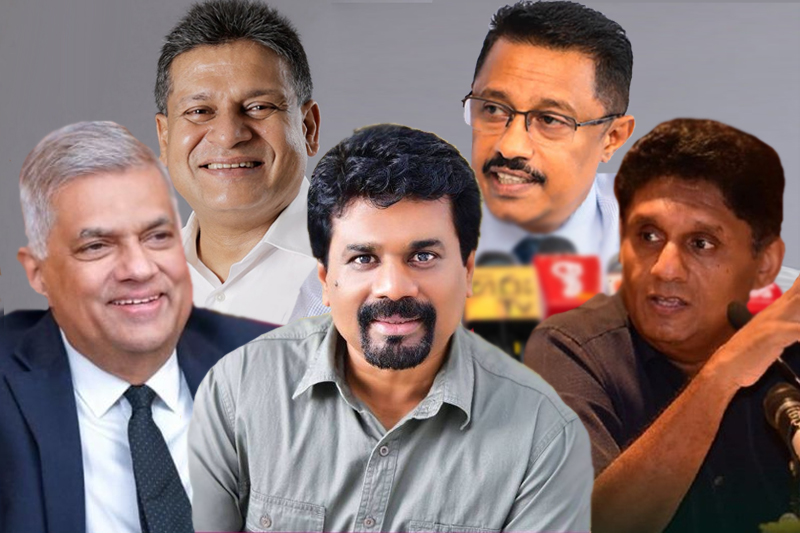
Key contenders are said to be incumbent Ranil Wickremesinghe, SJB’s Sajith Premadasa, JVP’s Anura Kumara Dissanayake, ex-president Maithripala Sirisena and entreprenuer – media mogul Dilith Jayaweera.

The SLPP is yet to decide on a candidate.

The chairman of the Public Utilities Commission of Sri Lanka Janaka Ratnayake is being considered by a group of religious leaders as a possible candidate.

Meanwhile, senior leader of the UNP Ravi Karunanayake has said that Wickremesinghe will be a non-party candidate at the presidential polls with the intention of forming a government of national consensus.

NPP’s Sunil Handunnetti said it is a joke to speak about presidential candidates at a time when local government elections are to be held.

Posted in Uncategorized

Difficult to hold LG Poll on 25th April, says State Minister

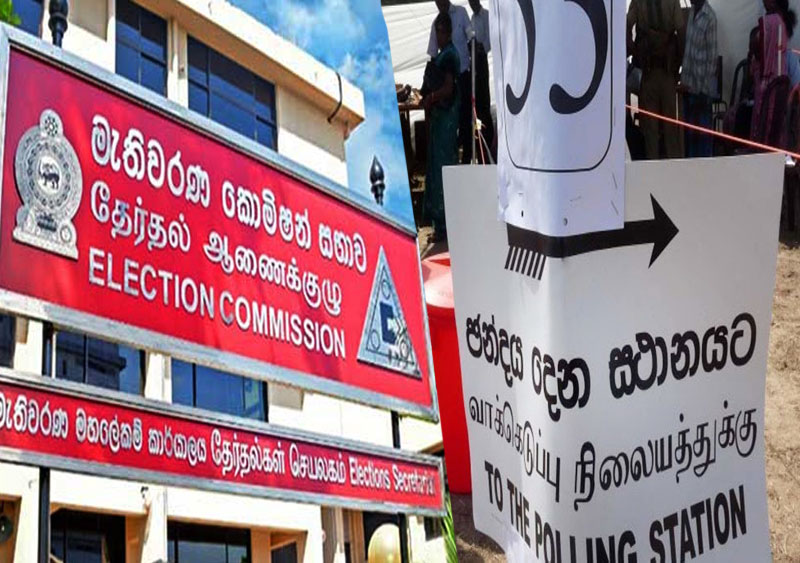
State Minister of Provincial Councils and Local Government, Janaka Wakkumbura said that it would be difficult to conduct the Local Government Election on the 25th of April.

Speaking to reporters following a meeting between the Election Commission and the Prime Minister, he said that the Election Commission will announce the date of the election before the 25th of April.

Sri Lanka’s Election Commission met with Prime Minister Dinesh Gunawardena at the Prime Minister’s Office in Colombo.

Recently, the Election Commission addressed a letter to the Prime Minister for a meeting with regard to the Local Government Election, and in response the Prime Minister had agreed to meet them on Monday (10).

The Election Commission will meet on Tuesday (11) to reach a final decision on the date of the election for the Local Government Poll.

SLPP admits picking Gotabaya as President was a mistake

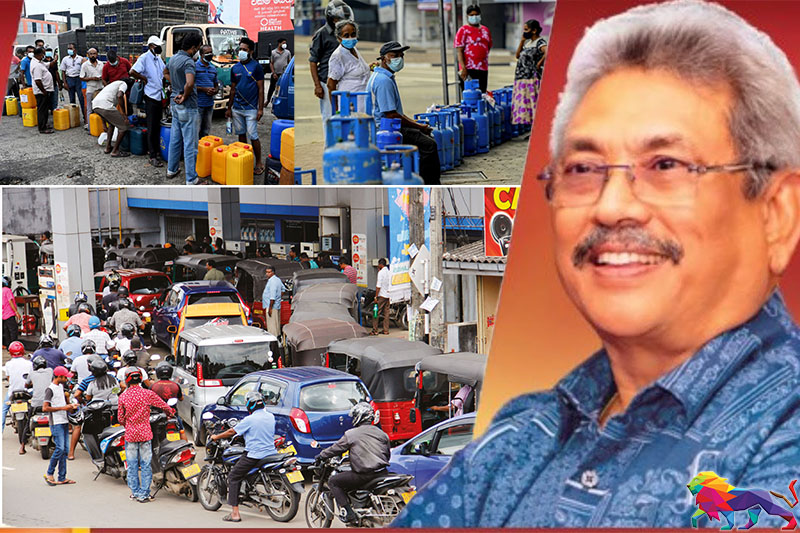
The Sri Lanka Podujana Peramuna (SLPP) has admitted it made a “mistake” by picking Gotabaya Rajapaksa as President in 2019.

Minister and SLPP MP Pavithra Wanniarachchi said that the SLPP made a mistake by picking Gotabaya Rajapaksa as its Presidential candidate.

However, she says that mistake was rectified by appointing Ranil Wickremesinghe as President.

She says appointing Ranil Wickremesinghe as President was not a mistake.

Wanniarachchi, who was the Minister of Health and later Minister of Transport under Gotabaya Rajapaksa, said that the SLPP had always taken the correct decision but made a mistake in 2019.

She said that after Wickremesinghe assumed office the gas and fuel issue was resolved.

Wanniarachchi also said that at the next election the SLPP will contest and will be victorious.

Posted in Uncategorized

Trinco Harbour Development Project will be a joint venture – Ports Minister

In an interview with Ceylon Today, Minister of Ports, Shipping and Aviation Nimal Siripala de Silva said Sri Lanka’s ports, like those in many developed countries, should be privatised.

He said because the Colombo Port is strategically located, the SLPA has created a demand for new ventures. “Port business is not just for expansion, but also to attract more vessels and businesses,” he said.

He added that the Trincomalee Harbour will be used for industrial purposes only and will be developed as a joint venture if necessary. “However, for terminal construction, we will solicit Expressions of Interest and assist investors,” he further said.

Following are excerpts:

The Government has massive development projects in all ports in the country. Can you elaborate on those?

A: There are five terminals at the Colombo Port. There are international companies managing the three terminals namely, Indian Adani Ports and Special Economic Zone Limited is constructing the West Container Terminal (WCT), John Keells handles South Asia Gateway Terminals, and the Chinese runs the Colombo International Container Terminal (CICT). We own 49% of Adani and about 15% stake in the remaining terminals. Sri Lanka Ports Authority (SLPA) owns 100% of the East Container Terminal (ECT) and the Jaya Terminal. As a result, there is income generation from all of these terminals.

Apart from that, the Colombo Port has lands inside the port which has been leased for various ventures and there is income generation from that too. Some of the lands are given on public-private partnerships. The port is running at a profit at present. But we have certain liabilities also.

What’s happening with the ECT now?

A: The ECT’s emphasis on 18 m deep berthing three mega ships is why everyone wants it. The SLPA, on the other hand, is developing the terminal with its own funds. So far, we have not taken out any loans. The SLPA is fully funding it. We have placed an order and paid USD 90 million for 12 gantry cranes, which will cost USD 270 million. That is an advance, and manufacturing will take approximately one year. Apart from that, Access Engineering PLC (AEL) has been awarded the contract to build the ECT in collaboration with its technical partner China Harbour Engineering (CHEC). They have begun the reclamation of land, stockpiling, dredging, and construction of barricades, among other things. The work is going according to schedule. By 2014-end the ECT will be completed and fully handed over to the SLPA. Even now, the ECT is operational. Once it is completed, we can take two big ships at a time.

On the Jaya Terminal, we have decided to increase the quay length. There is also some dredging going on inside the port to attract more ships to the harbour.

There is also a passenger terminal at the Jaya Terminal, but we haven’t had any passenger ships arrive in the last three or four years. However, several of them have recently arrived at the Colombo Port. As demand grows, we must also cater to passenger ships.

The elevated highway project in the Colombo Port is a massive project funded by an ADB soft loan. Furthermore, the majority of administrative offices and other departments are dispersed throughout the port. We’re building an eight-story complex with an ADB loan to house all of the offices in that building. Work on the elevated highway has begun, and the complex will also be completed.

But all these implementations are not enough. We need to attract more investment to the port and need more bunkering facilities. The refuelling brings good revenue to the country. But our price of fuel must be competitive with the regional players like Bangladesh, the Maldives, India, Singapore etc.

Did the Adani Group, in their MoU, request the SLPA not to offer the ECT to a third party?

A: We did not give that assurance. We have not given any assurance that we will not give to anyone either. At present, we have not decided anything. We are not in the process of developing the ECT.

Will that be offered to someone in the future?

A: I cannot comment on the future.

How many tanks do we have for refuelling and bunkering?

A: We presently have three fuel tanks for approximately 35,000 MT and are planning to add two large bunkering tanks. We will lease the tanks to the eight fuel bringing companies, who will earn revenue from them. Bunkering is extremely popular. Our port is strategically and geographically significant on the world map. However, this alone will not attract ships. Our port must also be reliable. The majority of the world’s ports have been privatised. Our port has only recently caught up due to government and private sector involvement and is sending mixed signals. India’s ports have been privatised.

Where do we earn good revenue in the port sector?

A: It comes from transshipment. It was not previously present. Goods arrived solely for our consumption and export and the ships returned to their original destinations. The new business is transshipment, and the maritime concept has changed.

Transshipment occurs when a large ship arrives in a port halfway unloaded and small ships transport them to their final destination. Large ships don’t go to those countries. We now handle approximately 7.5 million TEU for transshipment per month. As demand grows, this must increase. With the new terminals coming up, we want to add up another 1.5 million TEU transshipment to be handled in the Colombo Port. We need to keep expanding the port handling business, but how?

Having said that, we are still very primitive in maritime management of the port.

You mean not being digitally ready to accept port trading?

A: Yes. We’re still looking for a clearing agent. He must visit Sri Lanka Customs. He has to go to the Import Control Department on occasion, and a customer has to deal with 22 departments and offices to clear his goods, which is a lot of paperwork. There is no paperwork involved in the majority of developed ports worldwide. They can manage the entire process of clearing their goods from their office. New legislation should be enacted in this regard. If only one person goes, he must abide by the age-old Customs Ordinance.

Wasn’t paperless ports talked about three years ago? Why is there a delay?

A: That is correct, and it is not fully implemented. The ADB and the World Bank have also assisted us in developing a port management system similar to that found in the Rotterdam Port for this project. These funders met with all port stakeholders to determine our deficiencies, areas for improvement, and so on. However, in order for this to occur, we must also change our legislation. We are presently working on a legislation process to accommodate paperless work, and meanwhile, we request an EoI in two to three months to fix this port management system.

What is the function of the port management system?

A: When it comes into operation, it is basically paperless documentation. No one will have to meet anyone at the port in the quarantine section etc. Only when you meet people there is corruption and underhand operations, which will be eliminated under this system.

On the new legislation, of the Customs Ordinance, what are you going to do?

A: It is so antiquated and over 100 years old. It is only good for the Customs Officers and not for the public. For instance, they detain the goods and there are goods languishing in the port for over 20 years. This is mainly because the process is so long and tedious. Some give up and go and they are stored for many years.

Can’t Customs do something with these goods?

A: This is also a long and ancient process. I brought this to the Cabinet’s attention. The President formed a Cabinet Subcommittee to investigate this matter. I co-chair that subcommittee with four other Ministers. Based on feedback from all stakeholders, we intend to propose certain necessary amendments to the Customs Ordinance. For example, at present, if a customer is an income tax payer, the Tax Department will assess him, but if the customer is dissatisfied with the tax assessment, he will have access to a Tax Appeal Board. If he is not satisfied with the Appeal Board, he is compelled to go to another Customs Officer or the Director General of the Port. If you do not take the goods with the assessed tax payment, Customs assesses and sells them and they receive 60% as a reward. This does not allow a speedy process and facilitate fair play.

What is the new amendments you are trying to bring to the Customs Ordinance?

A: The amendments would require that if a Customs Officer detains a consignment, the investigation be completed within three months. If they do not complete the investigation within that time frame, the consignee has the right to take the goods out while providing a bank guarantee. Other thing is, Customs will have an Appeal Board like the Tax Appeal Board where you can appeal while depositing the value of the goods and take it out first. If the inquiry is held and an order is given where the customer goes to the Supreme Court and Court of Appeal etc., the money will be there, and whoever wins the case will receive the deposit. There are Court cases and goods that have been held for 20 years. In order to speed up the litigation process, these are a key to be implemented.

What are the detained items at the port for over 20 years?

A: There are plenty of good such as ethanol, liquor, vehicles, vehicle parts, areca nut, flour, several consumable items. Detained items can be solved by the Customs only after the final inquiry, which takes over two decades sometimes.

What about the KKS Harbour in the North?

A: We plan to use passenger vessels to connect India and Sri Lanka, and we have invested more than Rs 100 million in this venture. We are presently constructing a passenger terminal, which will be completed by 15 April. This passenger terminal can accommodate 300 to 400 people travelling to India. We’re looking for licensed businesses to run the ferry service. Their credentials will be scrutinised.

Did you call for an EoI?

A: We did, indeed. Five parties submitted Expressions of Interest. We stated that anyone could join us. However, they should begin soon. The SLPA will profit from the Port fees. There will also be a Customs clearance desk.

Is it true that a one-way sea journey would cost USD 50?

A: That price has been determined by the ferry companies. There will be competition if they get two parties. Prices may vary depending on the services provided by the ferry operators.

Has the Indian Government cleared it?

A: They must grant permission for this ferry service between KKS and Karaikkal in Puducherry, Tamil Nadu, to use their port. We have cleared our side, and the infrastructure is already complete. We are awaiting a response from the Indian Government on this. There are many procedures in India, including concerning their security.

Can you start the ferry services by 25 April?

A: We hope so, but it is on the cards.

What about a ferry service from Talaimannar to Dhanushkody?

A: An Indian investor has proposed bringing a vessel from Dhanushkody. That investor is prepared to build the Talaimannar Pier. The present one is in disrepair. We met the Sri Lanka Navy, the Talaimannar Pradeshiya Sabha Chairman, the Indian High Commissioner, and the Railway Department. The investor was also present. I proposed running a luxury train from Colombo to Mannar to transport passengers. They will travel by ferry from Mannar to Dhanushkody.

Has the Indian Government agreed to this?

A: They have agreed in principle, but there are some rules to follow. They also have to conform to strict security measures. However, our Customs and Immigration services are ready for action. The International Organization for Migration confirmed to me that they will provide us with Customs scanners at Immigration counters as well as e-gate systems. This also applies to the KKS Port.

Elaborate on the Trincomalee Harbour development project?

A: This harbour has been pinpointed as an industrial harbour for oil, flour, coal, etc.

Isn’t the Trincomalee Port doing well already?

A: It was running at a loss and now it’s picking up. The SLPA fully owns it.

What’s the profit you received say, annually?

A: We get about Rs 400 to 500 million annually, but that is not enough and we need to expand it.

Is there any plan of the Government to award the Trincomalee Port operations to the Japanese?

A: Not at all. They gave us the night vision facility. The Japanese provided USD 1 million worth equipment and that event took place at the Trincomalee Harbour.

But doesn’t the Government plan to give the Trincomalee Port to an international investor?

A: We can give, but somebody should come forward.

Did you call for an EoI for development of Trincomalee Harbour?

A: Yes. But there is a problem as there is the oil farm built by the British. The Indians joining the IOC have an ambitious idea to develop those oil tanks. There is also some call for Ilmenite value addition product manufacturing. That would be evaluated by the Board of Investment also. Once that is cleared, we will lease land of the harbour.

Who is the investor for Ilmenite export?

A: Not yet selected.

What about the harbour itself? When are you calling for an EoI for the Trincomalee Harbour?

A: We have not called for an EoI for the harbour. The harbour will not be given to anyone. It is strategically located. What we said was, any investor can come to give the land areas and we will facilitate. We have officially declared this.

Aren’t you calling for a joint venture to develop the Trincomalee Harbour?

A: No.

Did the US Government ask for the Trincomalee Harbour?

A: No, they did not. We won’t even give the harbour to the Indians and Chinese. But we can consider a joint venture in the future. If they want to set up a terminal like in the Colombo Port, then we are happy to join. But the navigation control will be with us out of national security concerns.

Any idea what is happening in the Port City?

A: It does not come under my purview. It comes under the Finance Ministry.

Can you tell us the annual revenue the SLPA gets from the Hambantota Port?

A: It’s a very small amount. I don’t know the exact amount.

Isn’t the Government still paying the Hambantota Port initial development project loan? How much do they owe?

The payment is not by the SLPA, but the Treasury. I don’t know whether they are paying or liquidated the loan.

(amiesulo@gmail.com)

By Sulochana Ramiah Mohan

Posted in Uncategorized

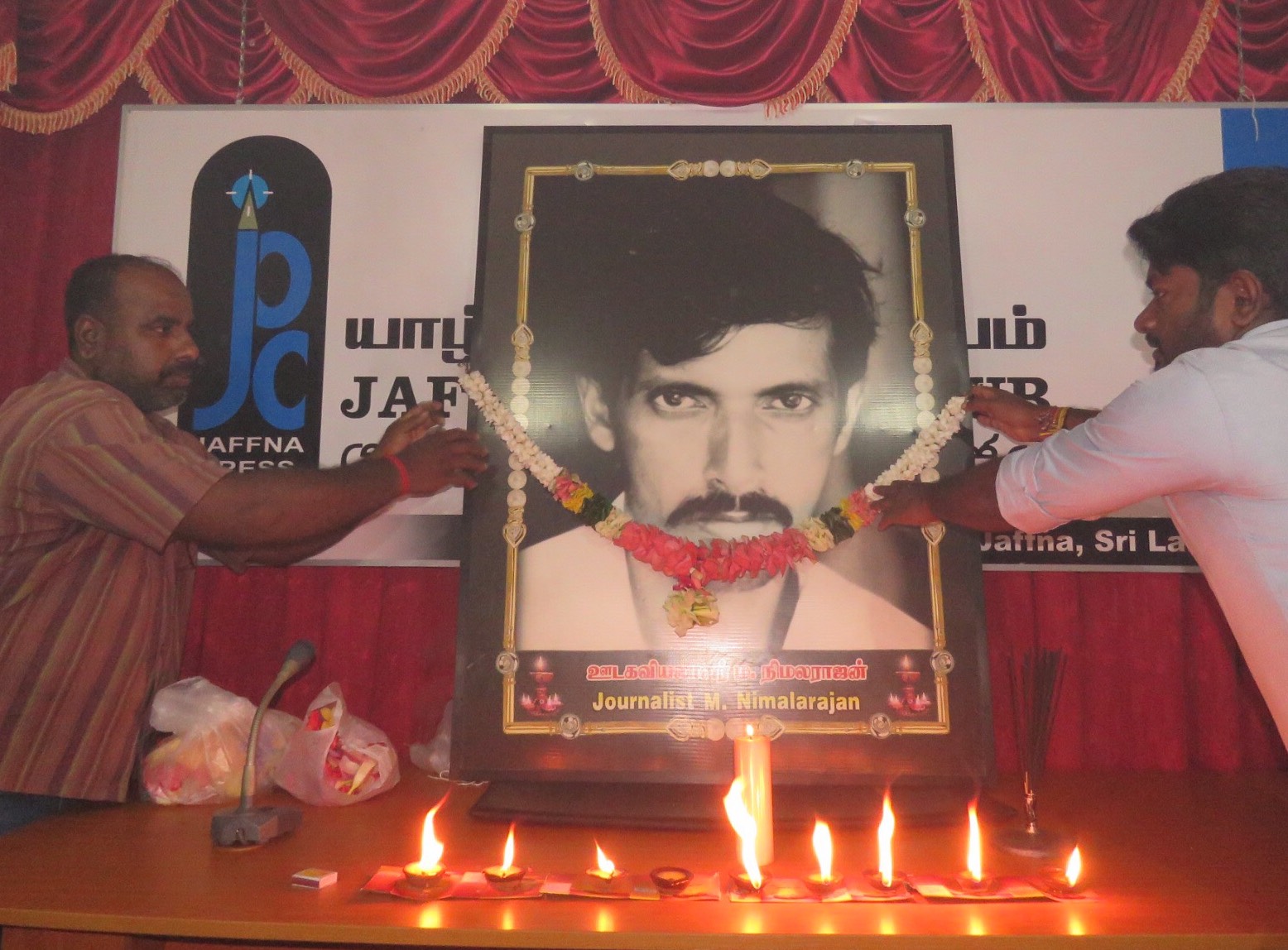
Man under probe over murder of journalist in Jaffna

A man suspected of having murdered Sri Lankan journalist Mylvaganam Nimalarajan in Jaffna over 22 years ago, is under investigation, the Northamptonshire Telegraph has reported A Metropolitan Police spokesman reportedly confirmed that a man who was arrested on February 22, 2022 remains under investigation and that police enquiries are ongoing. The man was arrested on suspicion of offences under Section 51 of the International Criminal Court Act 2001.

At the time of the arrest, the Metropolitan Police said:

“There will still be people who may have information, particularly in relation to the murder of Mr Nimalarajan, and we would urge those people to come forward and help achieve justice for Mr Nimalarajan’s family.”

Nimalarajan, a senior journalist who contributed to the BBC Tamil and Sinhala services, the Tamil daily Virakesari and Sinhala weekly Ravaya, was murdered in his Jaffna home on October 19, 2000.

Nimalarajan was shot through the window of his study where he was working on an article. The suspects then threw a grenade into the home before fleeing the premises. Following his death, the Committee to Protect Journalists (CPJ) wrote that “local journalists suspect that Nimalarajan’s reporting on vote-rigging and intimidation in Jaffna during the recent parliamentary elections may have led to his murder.”

The government aligned paramilitary group the Eelam People’s Democratic Party (EPDP) are suspected of carrying out the killing.In May 2021, the Sri Lankan Attorney General’s department ordered the release of the suspects involved in the murder case. At least two other suspects were thought to have been abroad.Over 22 years have passed since Nimalarajan’s murder but no one has been held accountable for the killing.

Posted in Uncategorized

SL’s external debt restructuring bid suffers blow

A United States District Court has denied Sri Lanka Government’s motion to dismiss the case filed by Hamilton Reserve Bank on behalf of certain holders of International Sovereign Bonds (ISBs), a move which analysts viewed as a setback to the country’s critical external debt restructuring.

Among other things Sri Lanka argued that the Cede Authorisation is defective on its face. “It is not,” the judgement issued by US District Judge Denise L, Cote on 24 March ruled. It added that the “language of the authorisation closely tracks Cede authorisations regularly accepted…As such, Sri Lanka’s arguments fail.”

Hamilton Reserve Bank is the beneficial holder of bonds issued by Sri Lankan Government which according to the judgement, is currently experiencing an economic and humanitarian crisis –defaulted on the bonds and Hamilton brought this breach of contract action to recover the principal and accrued interest owed.

Sri Lanka moved to dismiss on the grounds that plaintiff lacks contractual standing.

Hamilton owns over $ 250 million in principal amount of the ISBs. Sri Lanka in mid-April announced a moratorium on foreign debt repayments including the Bonds and since then has made no payments on the Bonds.

The Bonds matured on 25 July 2022. Hamilton alleged that as a result of Sri Lanka’s default, it is owed $ 250.19 million in principle and $ 7.349 million in accrued interest (before accounting for pre- and post-judgement interest).

Hamilton initiated this action on 21 June 2022 after which on 21 September Sri Lanka filed a motion to dismiss the complaint.

Cede and Company (Cede), nomine of the Depository Trust Company (DTC) is the registered holder of the Bonds. Hamilton conceded that it is a beneficial owner rather than the registered holder of the Bonds.

In a letter dated 23 September 2022, Cede authorised the plaintiff “to take any and all actions and exercise any and all rights and remedies that Cede & Co as the holder of record” is “entitled to take” (the Cede Authorisation”).

On 22 September the Court gave Hamilton an opportunity to amend the complaint and warned that another opportunity to amend was unlikely. On 23 September Hamilton received the Cede Authorisation. Plaintiff filed its amended complaint on 13 October, alleging one count of breach of contract based on non-0payment of the Bonds at maturity. Sri Lanka then renewed its motion to dismiss on 4 October. The motion became fully submitted on 16 December.

The Judge said a claim has facial plausibility when the plaintiff pleads factual content that allows the court to draw the reasonable inference that the defendant is liable for the misconduct alleged. In determining if a claim is sufficiently plausible to withstand dismissal, a court accepts all factual allegations as true and draws all reasonable inferences in favour of the plaintiffs. Additionally, a court may consider extrinsic material that the complaint incorporates by reference that is integral to the complaint or of which courts can take judicial notice.

The judgement said the crux of this dispute is whether the Cede Authorisation confers upon Hamilton standing to sue given the absence of a contractual provision expressly allowing such authorisation and the presence of the negating clauses. Neither the Second Circuit nor the New York Court of Appeals has directly addressed this issue. Nonetheless, the Circuit’s decision in Applestein Vs Province of Buenos Aires, and its progeny establish Hamilton’s standing to sue.

As per Finance Ministry sources, Sri Lanka’s ISBs account for a significant 66% share or $ 20.3 billion of commercial FX denominated public debt, excluding ECA-backed debt and SOEs’ payables and including arrears, as at end-2022. Outstanding amount to bonded private creditors was $ 14.5 billion.

ISBs holders have organised around two committees. ISBs international bondholders have formed an ad-hoc creditor committee and this group is said to represent more than 55% of ISBs non-domestic holdings. The group is advised by Rothschild and White and Case.

Separately a consortium of local private banks holding ISBs has formed another group which has reported holdings in around $ 1.5 billion across all series of ISBs (around 12% of outstanding ISBs). The group is advised by Baker and Mckenzie.

As per Government’s plans on external debt restructuring, next steps with private creditors included engaging on a technical basis with bondholder committees’ advisors and other private creditors to ensure further sharing of information and data, under NDAs; establish the required restructuring discussion channels with all private creditors and their advisors; reach agreements with private creditors and their advisors that are (i) compliant with the IMF DSA targets and (ii) comparable across different creditor categories and ensure the legal implementation of the agreements reached with all parties.

Posted in Uncategorized

EU donates 3,820 tonnes of urea fertilizer to SL paddy farmers

The European Union (EU) handed over a shipment of 3,820 tonnes of urea fertilizer procured by the Food and Agriculture Organization of the United Nations (FAO) to the Ministry of Agriculture today.

The stock of fertilizer is to be distributed among smallholder paddy farmers and paddy seed farmers in Sri Lanka.

This new shipment of urea fertilizer will be dispatched to over 72,200 smallholder paddy farmers who were severely impacted by the recent economic crisis in Polonnaruwa, Badulla, Ampara, Matale, Puttalam, Kurunegala and Hambantota districts.

It is integral to a 4 million Euro (approximately 1.5 billion rupees) programme launched by FAO and the EU to address the agriculture and food security crisis in Sri Lanka while supporting the introduction of integrated plant nutrient management strategy amongst identified paddy growers.

Speaking on the support, the EU has extended to revitalize Sri Lanka’s paddy cultivation sector, European Union Ambassador, Denis Chaibi said: “The distribution of urea fertilizers for vulnerable farmers is one of many actions we undertook to respond to the socio-economic crisis affecting millions of people in Sri Lanka. We hope that with this new support we can prevent immediate food shortages but also contribute towards a transition to a more sustainable and resilient agriculture sector in the future”.

Through this programme, every eligible farmer cultivating up to 0.5 hectares of land in the targeted districts will receive 50kg of urea fertilizer for the upcoming cultivating season. Additionally, the programme will also provide high-quality paddy seeds and the necessary technology/capacity building to boost the efficient use of fertilizer.

Crop failures during recent harvesting seasons due to shortages of fertilizer and vital inputs, have posed many challenges for smallholder paddy farmers to sustain their livelihoods. This programme seeks to encourage smallholder farmers through material and technical inputs to adopt scientific farming practices to enhance fertilizer use efficiency and strengthen the seed paddy production system in Sri Lanka to meet the current demand. The programme also aims to strengthen government seed farms by providing them with modern, state-of-the-art seed processing and drying machines.

Sri Lanka catholic church seeks UN-led probe on Easter attacks

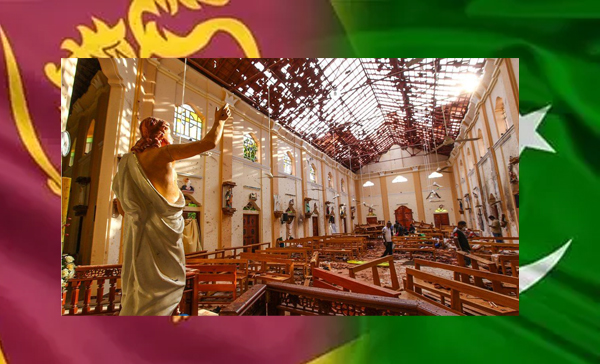
As Sri Lankan Christians mark four years since the Easter Sunday bombings which killed 261 people, the local Church continues to allege a cover-up and seek justice by calling for a UN-led international investigation, according to Fr. Julian Patrick Perera.

“We consider that finding justice and revealing the truth is a national service that we can do to our country, because we are a minority religion in Sri Lanka.”

Fr. Julian Patrick Perera, a secretary to the legal team of the Archdiocese of Colombo, offered that assessment of the local Church’s efforts to find and prosecute the perpetrators of the 2019 Easter Sunday bombings.

On 21 April 2019, terrorist bombers attacked two Catholic churches, an evangelical Christian church, and three luxury hotels, as well as a housing complex and a guest house.

The eight suicide bombers, whom the government alleged were linked to the so-called Islamic State, killed 261 people in the coordinated attacks.

Cardinal Malcolm Ranjith, the Archbishop of Colombo, has questioned the government’s narrative of attacks and has consistently called for an international investigation.

Allegations of a cover up

In an interview with Vatican News to mark the fourth anniversary of the tragedy, Fr. Perera lamented the lack of justice for the Easter Sunday bombings, saying there has been “no proper investigation completed on the whole issue”.

He noted there appears to be evidence of a cover-up, pointing to the removal of several key investigators from the case.

“There is also a kind of an eyewash lawsuit that has been brought against about 25 members of the so-called terrorist movement. But those charges are very surface level,” said Fr. Perera, adding that law experts believe that a case consisting of 23,000 charges can never be credibly brought to trial.

“How can you bring 23,000 charges into question and cross-examine so many hundreds of people?” he wondered. “So, you can see that there is a very clear cover up in the first place.” (VATICAN NEWS)