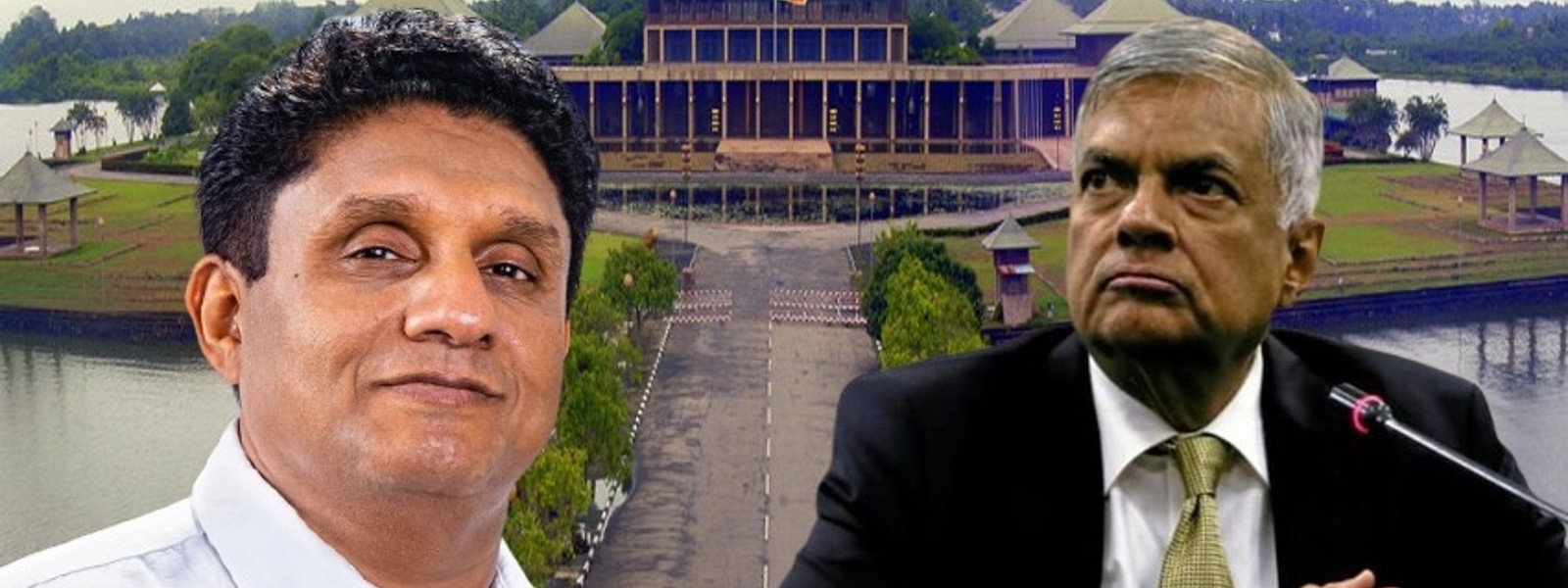
Sajith, SJB face gathering political storm By D.B.S. Jeyaraj

The leader of the Opposition Sajith Premadasa and his party, the Samagi Jana Balawegaya (SJB) are very much in the news lately. There have been many reports in the mainstream as well as social media that a large number of MPs from the SJB are planning to join the ranks of the Ranil Wickremesinghe Govt soon. Some reports speculate that the number of SJB Parliamentarians contemplating a crossover is between 20 to 40.

Predictably Sajith Premadasa has denied that his party MPs are going to defect. He has lashed out at the Govt and said such misleading reports are being planted in the media by the Govt.

He has also accused the Govt of conspiring to entice MPs from his party by offering Rs 200 Million to each MP. Premadasa has asserted that none of his party MPs will be tempted by such offers. He also claims that some Sri Lanka Podujana Peramuna (SLPP) MPs have joined the SJB. A news report in a morning newspaper stated as follows -.

“Members of the current Government create various news media and plant them in social media in an attempt to mislead the public,” said the Leader of the Opposition of Sri Lanka, Sajith Premadasa.

He noted that a new political conspiracy was currently taking place in which the Government lies that a large number of MPs of the Samagi Jana Balawegaya (SJB) are going to join the Government.

“But Chandima Weerakody and Jayarathne Herath and a large number of MPs in the Sri Lanka Podujana Peramuna (SLPP) have joined our party and there are many more in line waiting to come,” he said.

The Government, however, has weaved this lie against the country’s only solution, the country’s only answer, which is the SJB, he noted.

“We have gotten to know that the Government’s estimate for an MP is Rs.200 million, the Government thinks that when they show Rs.200 million to our MPs they will beg to join the Government,” said Mr Premadasa.

“I would like to say that the MPs of the SJB are not ready to take part in the Government’s auction of Mps,” he concluded.

Sajith Premadasa taking umbrage over the alleged attempt by the Wickremesinghe Govt to take away his MPs is quite understandable. After all, no party leader would like his MPs to split and join another party or form a new one.

The irony in this is that Premadasa himself took away the majority of MPs from the United National Party (UNP) of which he was a member and formed the SJB anew.

When that happened the UNP or its leader Wickremesinghe did not accuse him of offering financial “incentives” to woo the green elephants.

Pre-emptive measures

Notwithstanding Sajith’s denial and assertion that his MPs would not split, it does appear that the SJB Leader is aware of a potential mass defection and is engaging in pre-emptive measures to prevent it.

Premadasa’s allegation that MPs are being offered Rs 200 million can be seen as an attempt to deter potential defectors.

He is indirectly warning his party MPs that if the MPs break away, it would be insinuated that they did so for cash and that each MP’s reputation would be tarnished.

Moreover, Sajith organized a dinner for his party MPs at the Monarch Imperial Hotel in Battaramulla on April 3rd.
Earlier it had been fixed for April 5 but was suddenly advanced by two days. One of the reasons attributed for this change was the “rumour” that a number of MPs from SJB were going to shift to the Govt when Parliament met on April 4. Sajith wanted to prevent this from happening by appealing to the MPs collectively and individually. Hence the dinner was held on the 3rd. 23 MPs including the host Sajith were at the dinner.

Mistrust of SJB MPs

Premadasa’s anxiety and insecurity over the possibility of his MPs joining the Govt of President Ranil Wickremesinghe stem from his mistrust of his fellow SJB MPs.

It may be recalled that almost all the SJB Parliamentarians were UNP members in the past.

Most of them had no problems with Ranil Wickremesinghe’s leadership and were not favourably disposed towards Sajith Premadasa’s leadership ambition.

Yet, they deserted Wickremesinghe and the UNP en masse and together with Premadasa formed the SJB. This was not due to any ill will towards Ranil or any goodwill towards Sajith. They had gauged the mood of the electorate through various means including opinion polls and had assessed that Ranil’s stock was low while Sajith’s was high.

They realised their electoral prospects were dismal if they remained with Ranil and the UNP.

So, they hitched their wagon to the Sajith star and turned to SJB. Politically what they did then seemed correct when the UNP was wiped out at the 2020 Parliamentary poll. The UNP hit an all-time low by not having a single elected MP. The party got only one MP on the National List.

Now the wheel seems to have turned full cycle. Ranil’s stock seems to be rising. It appears that Ranil Wickremesinghe has the best chance of winning in the next Presidential Election.

His party the UNP or his tactical ally the SLPP doing well in Local authority, Provincial Council or Parliament elections are very, very slim.

However, this scenario is not prevalent in the Presidential hustings.

Gulliver among Lilliputians

It is Ranil who stands out among potential contenders in a future Presidential poll. He is like Gulliver among Lilliputians there.

Ranil knows it and therefore is firmly opposed to any other poll being conducted before Presidential Election.
What Ranil is aiming to do is to forge a broad alliance presumably named the United National Front (UNF) with the Elephant symbol and be its Presidential candidate.

This new pro-Ranil alliance will consist of the UNP, elements of the SJB and SLPP and parties representing the ethnic minority communities in Sri Lanka.

Since Sajith knows fully well that most of his fellow MPs lay down with him on the SJB bed only because of the desire to be in Parliament and not because of any love or admiration for him, the party leader is suspicious to the point of paranoia that they could desert him and return to their first love the UNP.

UNP-SJB rapprochement

Sajith Premadasa, therefore, is ultra-sensitive about any move to bring about UNP-SJB rapprochement or promote unity between both. Some months ago two former UNP stalwarts, one an Ex-Cabinet Minister and the other an ex- Corporation head, held an informal discussion with some SJB personalities about a tie-up between the UNP and SJB.

When Premadasa heard about this, he lost his cool and issued a harsh statement. In that, he mentioned the two ex-UNPers by the first letters of their names and accused them of a ‘Kumanthranaya’ (Conspiracy) to break up his party.

More recently TPA leader Mano Ganesan and SLMC leader Rauff Hakeem engaged in an ‘Amity Mission’ to bring about unity between Ranil Wickremesinghe and Sajith Premadasa with the Presidential Election in mind.

Ranil was amenable, subject to some conditions. He would be the Presidential candidate in 2024 backed by an alliance comprising the UNP, SJB and minority community parties. Sajith would be Prime Minister. Ranil will retire in 2029 clearing the field for Sajith to become the leader.

Apparently, this proposal was welcomed by SJB stalwarts like Thalatha Atukorale, Kabir Hashim, Eran Wickramaratne, Harsha de Silva, Rajitha Senaratne and Rohini Kaviratne.

But others like Ranjith Madduma Bandara, Tissa Attanayake, Imtiaz Bakeer Markar, Lakshman Kiriella, Sujeewa Senasinghe and Hirunika Premachandra opposed it.

Members of the Premadasa family too did not like the idea. Finally, Sajith Premadasa rejected the unity proposal.
Upon hearing this Ranil Wickremesinghe too hardened his stance. So, Hakeem and Ganesan abandoned their unity moves (I have referred to this in these columns on 25 March 2023).

It is clear therefore that despite his statements to the contrary Sajith Premadasa is acutely aware that a defection from opposition/SJB ranks to the Govt/UNP ranks is very much on the cards. He is trying hard to prevent this from happening but events seem to be overtaking his efforts. Sajith and the SJB are certainly facing a political storm.

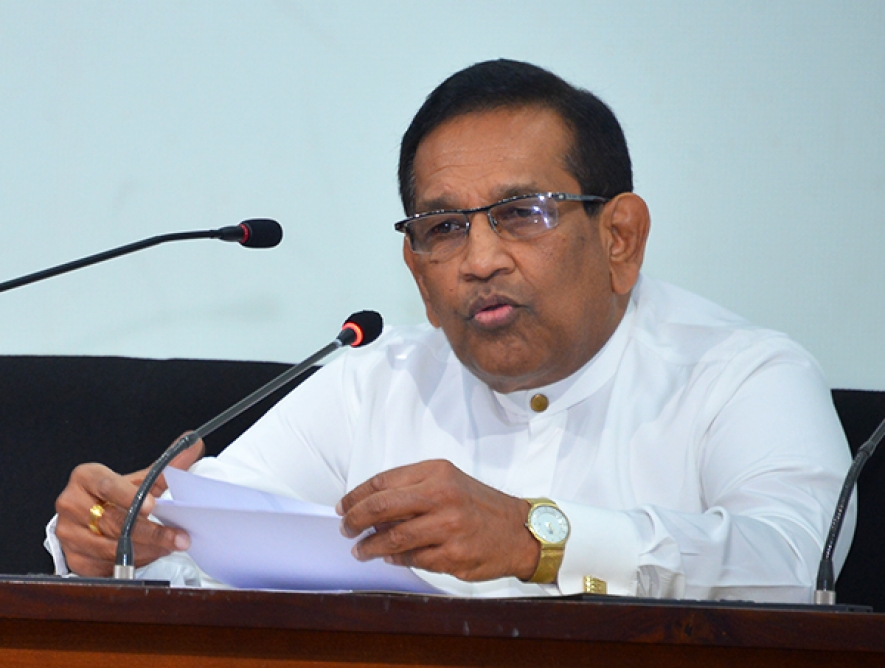
Dr Rajitha Senaratne

It is learnt that efforts are underway within the SJB to convince the hierarchy that the party should throw in its lot with President Wickremesinghe for the betterment of the country.

If the leadership remains unwilling, a group of MPs are likely to declare themselves independent and go over to the Govt.

A news report in the Daily Mirror of 6 April 2023 quoting Dr Rajitha Senaratne indicates this. Here is an excerpt –
“Several Samagi Jana Balawegaya (SJB) MPs are willing to support President Ranil Wickremesinghe and will do so as a group if the party fails to take a decision, SJB MP Rajitha Senaratne said today.

“MPs like Harsha de Silva are willing to support President Wickremesinghe no matter what anyone says. We will support the President as a group if the party fails to make a decision,” the MP said responding to a question raised by journalists at a media briefing.

“Also, he said the notion that the President has put the country to a better position is a reality”

What then has caused this change of mind among the UNP-turned-SJB Parliamentarians? Why are those who abandoned Ranil and accepted Sajith’s leadership in 2020 now prepared to do the opposite?

There are three probable reasons.

Ranil: From loser to winner

The first reason is the fundamental change of perception towards Ranil. His image has changed from a loser into that of an achiever and winner.

Though attacked viciously as an unelected President lacking legitimacy and a Rajapaksa stooge, Ranil Wickremesinghe has done well.

Ranil has entrenched himself as President despite having only a solitary MP in Parliament. He has progressed considerably towards the goal he set himself namely the repairing of the economy.

Despite all the negativity of his critics and detractors, Ranil has been able to – with the collaboration of the Central Bank and Treasury-secure the much-awaited Extended Facility Fund (EFF) finances from the International Monetary Fund (IMF). This has been a political game-changer.

Whether Wickremesinghe’s critics acknowledge it or not, the reality is that his efforts in pulling Sri Lanka out of the dire economic straits it was in, are resonating with the ‘ordinary’ people who comprise what is termed as the silent majority.

Despite his faults and lapses, posterity will judge Wickremesinghe on what he did for the economy. Likewise, all MPs in the present Parliament will also be judged on those lines. Therefore these SJB Parliamentarians would opt to change sides now.

Janatha Vimukthi Peramuna

The second reason is the perceived increase in popular support for the Janatha Vimukthi Peramuna (JVP) and the corresponding decrease in support for the SJB.

An important pointer in this regard is the Sri Lanka Opinion Tracker Survey (SLOTS) undertaken by the Institute for Health Policy (IHP). The survey gauges the level of support for political parties if Parliamentary elections are held currently.

According to the SLOTS, the JVP-led NPP and the SJB are the leading contenders. Both the SJB and NPP were running neck to neck for the months of November and December 2022 and January 2023. There was a marked change in February 2023. Support for the JVP-led NPP surged in February, giving it a clear lead with 43% of likely General Election voters, compared to 30% for the SJB.

The analysis also disclosed that in the 12 months from February 2022, the JVP-led NPP gained 30 points while the SJB gained 11 points.

So the SJB politicos are getting jittery about the rising popularity of the JVP and want to close ranks with Wickremesinghe, who they feel is the best option to counter the JVP.

Sajith’s leadership style

The third reason is growing intra-party resentment and dissatisfaction towards Sajith Premadasa and his leadership style.

It is said that Sajith ignores senior partymen and runs things autocratically relying on a clique. This Cabal consists of Premadsa family members, a handful of MPs and an ‘adviser’. This adviser, a businessman whose surname begins with a ‘F’ is supposedly influencing Sajith in many ways and has incurred the wrath of several MPs.

The disenchantment with Sajith Premadasa’s leadership is a key reason for many MPs toying with the idea of exiting the SJB. Even minority party allies are disillusioned with this state of affairs.

The Samagi Jana Balawegaya party and its leader Sajith Premadsa are facing a gathering political storm.
This storm is likely to erupt anytime after the April New Year festivity.

D.B.S.Jeyaraj can be reached at dbsjeyaraj@yahoo.com
Posted in Uncategorized

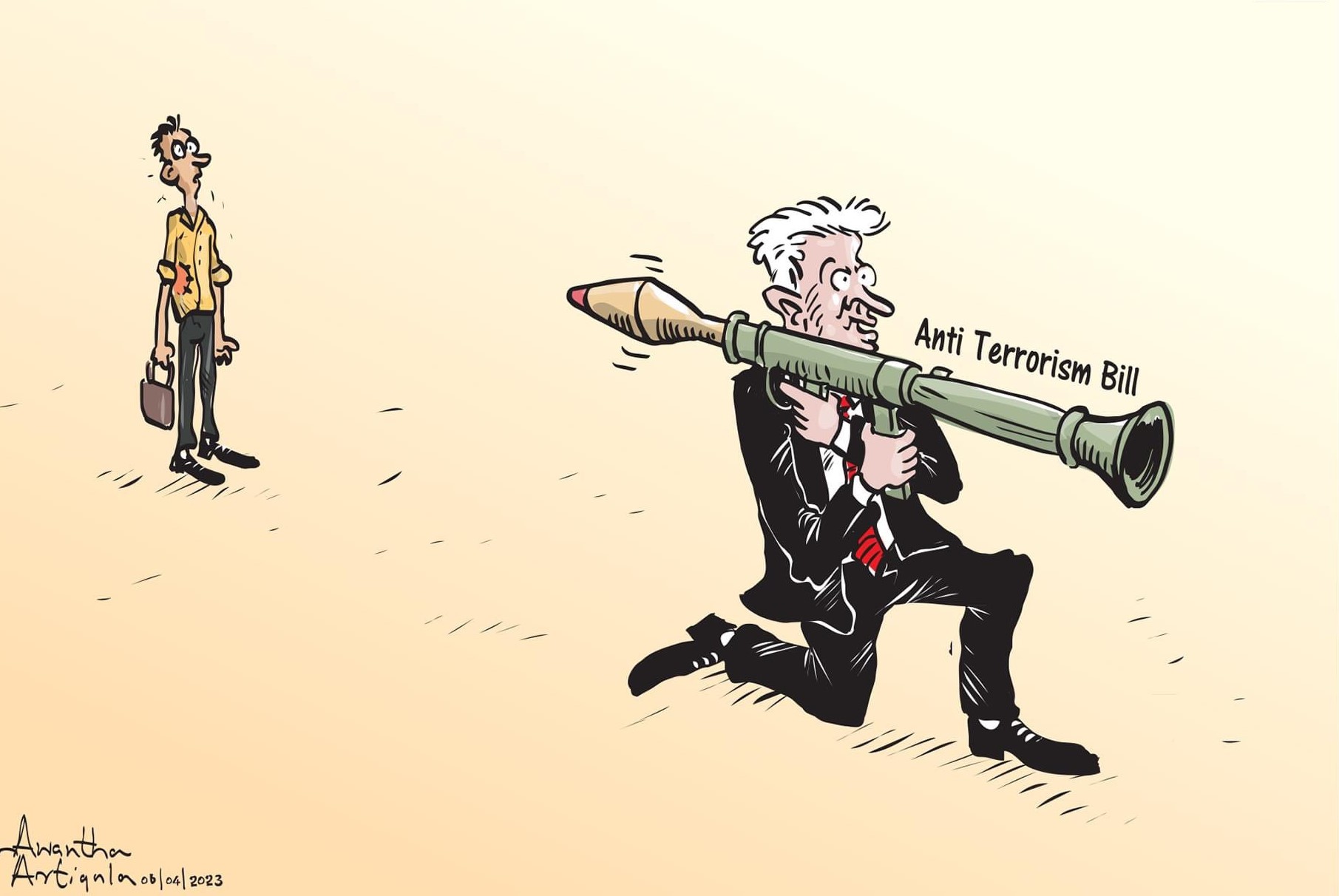
Human Rights Watch urges Sri Lankan government to withdraw proposed Anti-Terrorism Act

The Anti-Terrorism Act (ATA) proposed by the Sri Lankan government to replace its draconian Prevention of Terrorism Act (PTA) would empower the authorities to systematically violate fundamental human rights, Human Rights Watch (HRW) said today.

The Human Rights Watch said the government should withdraw the bill and ensure through consultations that any counterterrorism legislation upholds international human rights standards.

In a statement the HRW said the government pledged to adopt an improved law following domestic and international criticism of abuses under existing counterterrorism legislation. But instead of addressing the problems, the bill would expand the definition of terrorism to include crimes such as property damage, theft, or robbery, and restrict the rights to freedom of assembly and speech.

“The proposed counterterrorism law would permit the Sri Lankan government to continue to use draconian measures to silence peaceful critics and target minorities,” said Meenakshi Ganguly, South Asia director at Human Rights Watch. “The government’s crackdown on dissent and misuse of existing counterterrorism laws to arbitrarily detain protesters highlights the obvious risk of abuse.”

The Anti-Terrorism Bill, which was published on March 22, 2023, is intended to replace the notorious Prevention of Terrorism Act (PTA), which led to widespread torture and arbitrary detentions since its introduction in 1979. While the new bill contains some improvements, it includes provisions that will facilitate abuse. The bill appears designed to give the president, police, and military broad powers to detain people without evidence, to make vaguely defined forms of speech a criminal offense, and to arbitrarily ban gatherings and organizations without meaningful judicial oversight.

In response to criticism from Sri Lankan activists and lawyers, the United Nations Human Rights Council, foreign governments, and the European Union, successive Sri Lankan governments have repeatedly promised to repeal and replace the PTA with rights-respecting legislation.

The Anti-Terrorism Bill is largely based on proposals presented in 2018, when Sri Lanka’s current president, Ranil Wickremesinghe, was prime minister. The 2018 bill was criticized over human rights concerns and was not enacted. Justice Minister Wijeyadasa Rajapakshe recently expressed satisfaction with the new draft and told journalists that “we won’t make any major change to the current version.”

In 2021, the UN independent expert on human rights and counterterrorism set out five “necessary perquisites” to ensure that Sri Lanka’s counterterrorism law complies with international rights standards. They include providing an appropriate definition of terrorism, ensuring precision and legal certainty, provisions to prevent arbitrary detention, measures that adhere to the absolute prohibition on torture, and due process and fair trial guarantees including judicial oversight. The Anti-Terrorism Bill does not fully meet any of these standards, Human Rights Watch said.

Its definition of terrorism is vague and overbroad and can include peaceful protest or acts that, while criminal, do not rise to the level of any reasonable definition of terrorism. Offenses include participation in certain “unlawful” assemblies if the aim is to “intimidate” the public or “wrongfully” compel the government to act in a certain way, as well as “theft” or “robbery” of government or private property, even if these acts are not intended to cause death or serious harm. The government is currently facing strikes, including by public sector workers. In 2022, the authorities used counterterrorism powers to arbitrarily detain three student leaders after widespread protests over corruption and misgovernance forced both the president and prime minister to resign.

While under the PTA, the authorities can detain a suspect for up to a year on orders signed by the defense minister, the proposed bill gives the authority to issue detention orders to deputy inspector generals of police, increasing risk of abuse. The police could take a detainee from pretrial detention back into police custody, and the defense secretary could transfer a detainee to the custody of “any authority.” This puts suspects at greater risk of torture and other ill-treatment, as abuses under the current law demonstrate.

The proposed bill grants police and military sweeping powers to stop, question, search, and arrest anyone, or seize any document or object without a warrant, if they believe they have “reasonable grounds.” The military, which is not trained in law enforcement, would have 24 hours to transfer a detainee to police custody, placing detainees at greater risk of abuse.

It also provides the president power to issue regulations for “rehabilitation” programs if the attorney general has decided to defer or suspend prosecution. The attorney general could then “impose” “voluntary” rehabilitation on a person who has not been convicted of any crime. In 2021, the Supreme Court stayed similar regulations. The authorities have long committed human rights violations against people accused of terrorism or of drug use, who are incarcerated without trial in government “rehabilitation” programs.

The president, on the advice of the police or military, would be authorized to declare any location a “prohibited place,” with up to three years in prison for violations. This appears to be an attempt to prevent a repetition of the largely peaceful 2022 protests in the capital, Colombo. The government had declared “high security zones” under the Official Secrets Act, which were withdrawn following widespread condemnation.

The bill expands broad powers to criminalize speech that is “likely to be understood” as encouragement or inducement to commit or prepare for terrorism, with the burden of proof on the defendant to show that was not their intention. These offenses also apply to those who publish, distribute, sell, or transmit “terrorist publications,” which could have a further chilling effect. In the past, the government has used the PTA to detain people who commemorated Tamil victims of Sri Lanka’s civil war on social media on the grounds that they were “glorifying” terrorism, which is also an offense under these proposals.

The president would be authorized to ban an organization if authorities have “reasonable grounds” to believe it is acting in a manner “prejudicial to the national security of Sri Lanka, or any other country.” In the past, the government has proscribed Tamil diaspora organizations advocating for human rights and accountability as “terrorist organizations,” and human rights organizations have faced government interference in their banking and finances on the pretext of countering “terrorist financing.”

The bill provides for the death penalty for the terrorism offense of murder, although Sri Lanka has observed a moratorium on executions since 1976. Sri Lanka should abolish the death penalty, which Human Rights Watch opposes in all circumstances because of its inherent cruelty and finality.

The bill includes some new due process protections, including that confessions to the police will not be admitted as evidence, and that female suspects should be searched by women officers. There are new procedures for reporting and notifying the reason for an arrest, providing access to translations of documents in a language a detainee understands, and presenting a detained person before a magistrate every 14 days. It also clarifies the procedures that a magistrate should follow if a detainee appears to have been tortured.

However, the two ostensibly independent entities proposed under the bill, the Board of Review to hear appeals against detention orders, and the Independent Review Panel to advise on rights-respecting implementation of the law, would not be independent by law.

Until new counterterrorism legislation that upholds human rights is drafted, the government should impose a full moratorium on the use of the PTA and take steps to repeal it, Human Rights Watch said.

Successive Sri Lankan governments have offered repeated assurances to the EU that they would uphold rights commitments, including by repealing the PTA, in exchange for tariff-free trade access under the Generalized Scheme of Preferences Plus (GSP+). The trade access is conditioned to the ratification and effective implementation of key human rights treaties. In its latest monitoring report, the European Commission said that Sri Lanka “still has to deliver on a number of important reforms.”

Sri Lanka’s international partners, including the United States, EU, Japan, India, and others should press for genuine reforms to ensure this bill meets Sri Lanka’s international human rights obligations, Human Rights Watch said. The EU should make it clear that replacing the present counterterrorism law with similarly abusive legislation does not address its concerns and could affect Sri Lanka’s GSP+ status. “The Anti-Terrorism Bill needs to be seen both in light of Sri Lanka’s abusive history of counterterrorism powers and the current government’s repression of peaceful dissent,” Ganguly said. “Sri Lanka’s international partners should make it absolutely clear that they will not reward this abuse with trade preferences and other support.”

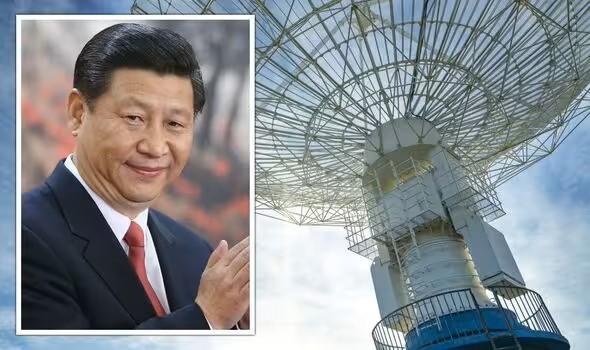
UK military bases face security risk over China’s sprawling new jungle radar base in Sri Lanka

China is planning the construction of a new radar base in Sri Lanka which will allow it to spy on UK and US military bases in the Indian Ocean.

The project, revealed by Sri Lankan intelligence sources, has been condemned by experts as proof of Beijing’s willingness to leverage the debts of its economic partners for strategic gain.

Planning for the remote satellite receiving ground station is being led by the Aerospace Information Research of the Chinese Academy of Sciences, and the base will be constructed in the dense jungles near Dondra Bay, at the island’s most southernmost tip in Ruhuna.

Its location would allow China to greatly increase its intelligence gathering operations against Western navy vessels in the Indian Ocean.

More seriously, it would allow China the potential to spy on US and British military installations in Diego Garcia, as well as India itself.

India’s spaceport in Sriharikota, its missile test range in Odisha, and several other military facilities in the peninsular region would all fall within tackling range.

Apart from signals intelligence, China’s ground stations form a key terrestrial leg of China’s overall space infrastructure, fulfilling the telemetry, tracking, and command capabilities that enable the operation of satellites and other spacecraft.

China’s orbital launch rate has risen dramatically over recent years, increasing China’s need for ground station support infrastructure.

The country conducted 19 orbital launches in 2015, but last year attempted 64 launches, sending more than 180 satellites into orbit.

This year the China Aerospace Science and Technology Corporation (CASC) plans more than 60 launches carrying over 200 spacecraft.

Sri Lanka is heavily indebted to China having become another victim of Beijing’s Belt and Road Initiative which provides infrastructure projects using Chinese labour at exorbitant rates to return.

Though the idea of constructing a new and unprofitable port in Hambantota came from Colombo the island nation, which boasts a population of only 22 million, now owes Beijing £6b – almost a tenth of its £71bn GDP, and a fifth of its total external public debt.

In view of its sharp economic crisis, China recently offered to freeze debt repayments for two years, while Sri Lanka brokered a deal with the IMF.

But Beijing’s magnanimity was not without strings, and one condition was said to be permission to build the radar base.

“Allowing China to build this base may well be part of the price for China allowing Sri Lanka to restructure its debt“ said Prof Alessio Patalano of KCL.

Sri Lanka is not the first example of Beijing leveraging debt for strategic gain, and the conditions imposed by Beijing are often so draconian that domestic governments are granted no oversight or even access into the duties actually performed by the radar bases.

The Chinese-built Espacio Lejano ground station in Neuquén, Argentina, has been shrouded in controversy since 2012, with the contract between both governments even stipulating that Buenos Aires “not interfere or interrupt” activities carried out at the station.

Espacio Lejano is run by China Satellite Launch and Tracking Control General (CLTC), a sub-entity of the PLASSF, which has heightened suspicion that the Chinese military makes ready use of the station.

CLTC manages the ground infrastructure for China’s space operations and is staffed by military personnel, further illustrating the integration of the military in space-related activities.

“China does its best to disguise the military nature of bases like these,” added Prof Patalano.

“But ultimately this is about information warfare: all shipping produces signals and intercepting these signals provides Beijing with vital intelligence.

“The worrying aspect here is not just that China knows how to leverage debt owed through BRI projects, but that national authorities who are confronted with the difficult realities of economic cooperation with China will do whatever it takes to free themselves.”

Source:express.co.uk

Govt. puts off tabling anti-terrorism bill in House

Tabling the anti-terrorism bill in parliament has been postponed, said minister of justice Wijeyadasa Rajapakshe.

The decision has been taken in view of the requests made by MPs, lawyers and civil society organizations with regard to the draft bill, he said.

Accordingly, it will likely be presented to parliament at the end of April.

There is opposition to the draft bill as being antidemocratic.

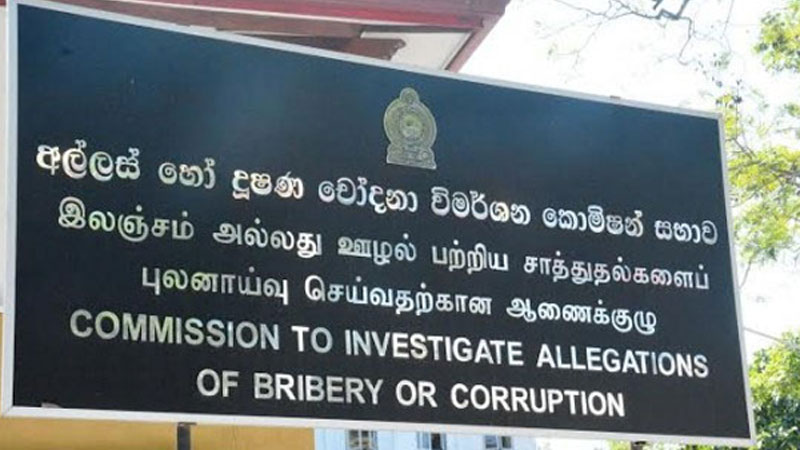
New Anti-Corruption Bill published via gazette

The Sri Lankan Government published its new Anti-Corruption Bill via a gazette.

The Bill was published by order of the Minister of Justice, Prison Affairs, and Constitutional Reforms.

The gazette states that the bill is being introduced to give effect to certain provisions of the United Nations Convention against Corruption and other Internationally recognized norms, standards, and best practices; to provide for the establishment of an Independent Commission to detect and investigate allegations of Bribery, Corruption and offences related to the declaration of assets and liabilities and associated offences, and to direct the institution of and institute prosecutions for offences of Bribery, Corruption and offences related to the declaration of assets and liabilities and other associated offences; to promote and advance the prevention of corrupt practices; to educate and raise awareness amongst the public to combat Corruption; to repeal the Bribery Act (Chapter 26), the Commission to Investigate Allegations of Bribery or Corruption Act, No. 19 of 1994 and the declaration of assets and liabilities Law, No. 1 of 1975 and for matters related to bribery and corruption.

Posted in Uncategorized

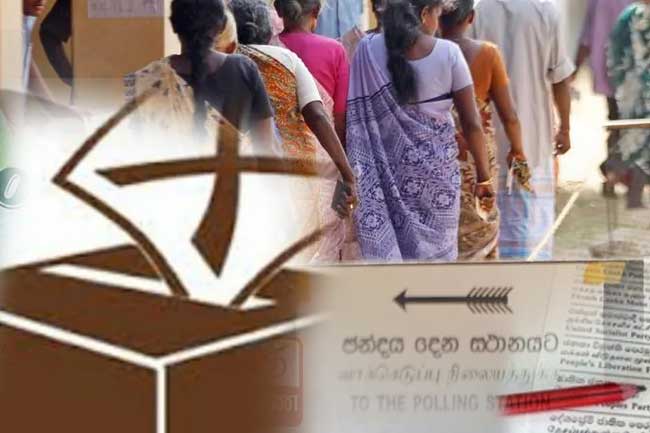
Civil Society Collective calls on diplomatic missions to ensure LG polls are held

The Civil Society Collective for Protecting the Franchise has sought the support of Diplomatic Missions with regard to their call to hold the 2023 Local Government (LG) election on time, in a bid to protect democracy.

Issuing a statement in this regard, the collective highlighted that failing to hold the LG polls in a timely manner would have serious implications for democracy and governance.

“It would mean that the constitutional right to elect representatives at the local level would be compromised. It will set a dangerous precedent and impair the democratic process”, the statement read.

They further explained that not holding the election using a lack of finances as an excuse could ‘open the door for using such flimsy pretexts for postponing Parliamentary and Presidential elections’, highlighting that this practice , if allowed, will wrongly incentivize leaders who are inclined to not hold elections till it is beneficial for them.

Further emphasszing the adverse effects the postponement of the LG polls has had not only on the country’s democracy but also on its institutions, the Civil Society Collective for Protecting the Franchise called upon Sri Lanka’s international partners to closely monitor the situation, and to ensure that the election is held in a timely manner.

They also urged these international institutions to highlight the importance of an election for the country’s stability and economic recovery.

“It is critical to remain steadfast in advocating for the elections to be held on schedule, and to ensure that the government adheres to the established legal framework. This will serve to preserve the democratic principles upon which Sri Lankan society is founded and to safeguard the right to elect our representatives”, the collective said in this regard.

Below is the relevant statement issued by the Civil Society Collective for Protecting the Franchise;

Posted in Uncategorized

Some SJB MPs, including Harsha willing to support RW – Rajitha

Several Samagi Jana Balawegaya (SJB) MPs are willing to support President Ranil Wickremesinghe and will do so as a group if the party fails to take a decision, SJB MP Rajitha Senaratne said today.

“MPs like Harsha de Silva are willing to support President Wickremesinghe no matter what anyone says. We will support the President as a group if the party fails to make a decision,” the MP said responding to a question raised by journalists at a media briefing.

“Many want to work with the President but are a bit reluctant to contest an election with him,” he added.

“There are no policy differences between President Wickremesinghe and the SJB. SJBers went separately not because there were policy differences but because they were not happy about his decision making style,” he added.

Also, he said the notion that the President has put the country to a better position is a reality.

Senaratne further said that he had discussions with the President especially on the health sector crisis. The President had promised to do whatever that should be done to correct it.

Referring to the proposed Counter Terrorism Bill, the MP said there are positive aspects about the legislation but stressed that some amendments have to be made. Citing an example he said the definition of terrorism in the Bill has to be amended.

Posted in Uncategorized

HRCSL raises concerns on proposed Anti-Terrorism Bill

The Human Rights Commission of Sri Lanka (HRCSL) has raised concerns that the proposed Anti-Terrorism Bill poses to threaten the fundamental rights of the public.

Issuing a press release in this regard, the HRCSL explained that by way of the broad definition given to the term ‘terrorism’ in the newly proposed Bill, it stands to potentially violate the fundamental rights of the people, as it makes it difficult to distinguish an actual act of terrorism from a legitimate protest.

Speaking in this regard, Ven. Omalpe Sobhitha Thero stated that there is a risk of parts of their sermons being misinterpreted as support shown towards terrorist activities.

“What if they take certain parts of our sermons, and decide that we are preaching these in an attempt to support terrorist activities? Sometimes we even criticise political structures in our sermons”, he said in this regard.

Meanwhile, Minister of Justuce Wijeyadasa Rajapaskhe stated today (06 April) that it has been decided to postpone tabling the Anti-Terrorism Bill in the parliament, considering the requests made by the members of the opposition, attorneys and civil society activists.

Details emerge about monk whose armed bodyguard threatened Muslim & Tamil protestors

More details are emerging about an incident in which an armed bodyguard of an affluent Buddhist monk has threatened Muslim and Tamil people who had been protesting against land grabbing in Pulmoddai, Trincomalee.

The Buddhist monk in question is Panamure Thilakawansa Nayaka Thera, a frontline member of the task force appointed by ex-president Gotabaya Rajapaksa to manage archeological heritage in the eastern province.

He is also chief Sangha Nayake of north, east and Thamankaduwa and chief incumbent at Asirimale Aranya Senasana.

On April 01, people were opposing a land grab attempt by monks and archaeology officials at Ponmalaikuda, where a coastal farming land used by Tamils and Muslims was to be taken over for a Buddhist construction.

The group of nearly 30 was escorted by Army, police and civilian bodyguards, just two days after a similar attempt failed.

Community leader Mohamed Saibuddeen told a soldier who was digging the earth that the land was taken over by monks secretly on a 99-year lease, without any agreement by area residents.

He also said that as per a gazette notification issued by the commissioner general of lands, they had raised objections within six weeks.

As was caught on video, the soldier admitted he was unaware of the owners of the land, and that he had brought a team to obey an order only, without saying from whom the order had come.

Saibuddeen replied by issuing a challenge to the ‘Mahanuwara Maha Nikaya’ to visit the location and tell the media that what the monks was doing is correct, and said if that was done, they would not claim not an inch of the land.

Tamil and Muslim farmers of Thethavaditivu, Ponmalaikuda, Arisimalai and Shaba Nagar say they have been farming in the land for several years, while area fishermen too, use it to take a rest from their livelihood.

A fence surrounding a plot was damaged when Panamure Thilakawansa Nayaka Thera’s brother, identified as Sampath, drove a vehicle into the land.

When people raised objections, a PSD bodyguard of the monk threatened them at gunpoint.

He backed down when challenged to fire at them.

Posted in Uncategorized

Anti Terrorism Bill published without adequate consultation with relevant stakeholders – BASL

Issuing a statement regarding the recently gazetted ‘Anti Terrorism Bill’, the Bar Association of Sri Lanka (BASL) today announced that it would not hesitate to challenge any bill that would deem to undermine the Rule of Law and the Liberty of the Citizen in the country.

The Bar Association of Sri Lanka (BASL) observed that the Government published an ‘Anti Terrorism Bill’, on the 22nd of March 2023.

This Bill seeks to abolish the Prevention of Terrorism Act (PTA) and introduce an Anti-Terrorism Act. The BASL is of the view that no legislation should be introduced to curtail and suppress, directly or indirectly the fundamental rights of citizens, enshrined in the Constitution and that this Bill if passed into law will have far reaching effects.

The BASL stated that the Bill has been published in the Gazette without adequate consultations with the relevant stakeholders including the BASL.

Therefore, the BASL urges the Government to consider to defer the Bill until there is a wider stakeholder consultation and the concerns of stakeholders including the BASL are taken into account. This statement had been issued by BASL President Kaushalya Nawaratne and its Secretary Isuru Balapatabendi.