Can Postal voting for LG election be held on Time?

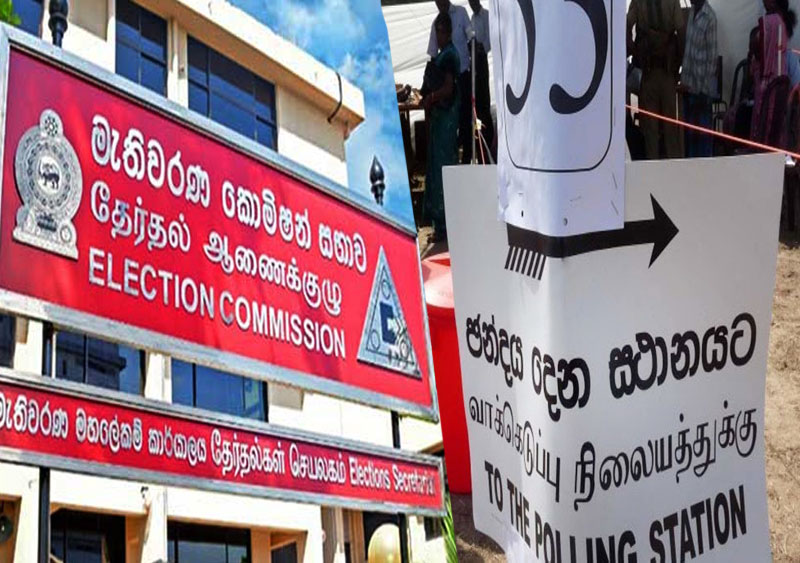
Postal voting for the local government election can be held before April 25 , if the required funds are released before April 10, the National Election Commission said.

“Postal ballot papers must be obtained from the government printer by April 10 for postal voting to take place,” Chairman of the Election Commission Attorney Nimal Punchihewa said.

“No decision was made to cancel the election on April 25,” Punchihewa said, “A decision will only be made after April 10, considering the situation”.

In the meantime, the Chairman of the Election Commission has also requested for a meeting with Prime Minister Dinesh Gunawaradena, the Minister of Public Administration, Home Affairs, Provincial Councils and Local Government.

Posted in Uncategorized

UN body decries violations of civil and political rights in Sri Lanka

The UN Human Rights Committee (CCPR) has noted serious violations of civil and political rights in Sri Lanka and made over 60 recommendations.

The International Federation for Human Rights (FIDH) and the Center for Human Rights and Development (CHRD) welcomed the findings and urged the Government to take immediate steps to address the numerous violations identified by the UN body and implement its recommendations without delay.

The UN Human Rights Committee issued its concluding observations, following the review of the country’s sixth periodic report under the International Covenant on Civil and Political Rights (ICCPR).

The review was held on 8 and 9 March 2023 in Geneva, Switzerland. The CCPR monitors state parties’ compliance with their legal obligations under the ICCPR. Sri Lanka is a state party to this treaty. The CCPR’s findings mirror those included by FIDH and CHRD in their two joint shadow reports submitted to the CCPR in May 2022 and January 2023.

The CCPR identified three priority issues for the government to address: 1) the Human Rights Commission of Sri Lanka (HRCSL); 2) counter-terrorism measures; and 3) liberty and security of persons.

With regard to the HRCSL, the CCPR called on the government to ensure that the body fully complies with the Paris Principles, ensure transparency in the appointment process of its members, and provide sufficient resources to carry out its mandate effectively and independently in all parts of the country.

With regard to counter-terrorism measures, the CCPR was concerned that the Prevention of Terrorism Act (PTA) continued to allow for prolonged pretrial detention without charge of up to 12 months, contained a broad definition of terrorism, and was used to legitimize the targeting of minorities, particularly Muslims and Tamils, government critics, and lesbian, gay, bisexual and transgender individuals, and to extract confessions through torture. The CCPR called on the government to: 1) repeal the PTA and replace it with legislation that contains a narrow definition of terrorism and is compliant with the ICCPR; 2) ensure that the legislative process for enacting a new anti-terrorism or national security law is inclusive and transparent and facilitates participation of a wide range of stakeholders; 3) ensure that those suspected or charged with terrorist acts or related crimes are provided with legal safeguards in line with Article 9 of the ICCPR; and 4) facilitate independent monitoring of all places of detention to inspect the situation of those detained under the PTA.

With regards to liberty and security of persons, the CCPR expressed concern over the arbitrary arrests and detention of anti-government protesters, trade unionists, Tamils, and Muslims. The extensive use of prolonged pretrial detention, inconsistent bail provisions, and ineffective access to non-custodial alternatives, were also of concern to the CCPR.

The rights to freedom of peaceful assembly, freedom of expression, and participation in public affairs were among some of the other issues of concern identified by the CCPR.

With regard to freedom of peaceful assembly, the CCPR noted with concern the use of excessive force in dispersing peaceful assemblies, the application of counter-terrorism legislation against protesters, and the lack of effective investigations and prosecutions in cases of abuses committed by law enforcement personnel. These concerns reflected the findings contained in “Anatomy of a crackdown – The repression of Sri Lanka’s aragalaya protest movement,” a report published by FIDH and CHRD in January 2023.

With regard to freedom of expression, the CCPR highlighted numerous violations, including: harassment, intimidation, surveillance, disappearances and killings of journalists and human rights activists with impunity; the misuse of the International Covenant on Civil and Political Rights Act No. 56 of 2007 to stifle freedom of expression; and the blocking of public access to social media platforms ahead of 2022 nationwide protests.

With regard to participation in public affairs, the CCPR raised concerns over the repeated postponement of local government elections on grounds of lack of funding. It recommended that the government ensure the independence of the Election Commission and that the scheduled local government elections do take place. Regrettably, local elections have now been postponed indefinitely.

Overall, the CCPR made over 60 recommendations to the government and requested it provide information on steps taken towards the implementation of the Committee’s recommendations on the three above-referenced priority issues by March 2026.

Posted in Uncategorized

South Africa govt. condemned for inviting ‘war crimes linked’ Sri Lankan ministers

Top human rights groups in South Africa have strongly criticized their government for inviting two Sri Lankan ministers accused of links with alleged war criminals for a study tour to Pretoria.

The island nation’s foreign minister Ali Sabry and minister for Prison Affairs and Constitutional Reforms Dr Wijeyadasa Rajapakshe were invited by the South African minister for International Relations and Cooperation Dr. Naledi Pandor.

The purpose of the visit according to Sri Lanka’s foreign ministry was to ‘learn from the South African experience in regard to the establishment of, and work of the Truth and Reconciliation Commission (TRC) to promote reconciliation in Sri Lanka’.

Both these ministers serving under president Ranil Wickremesinghe are closely associated with the Rajapaksa’s and have served under ousted president Gotabaya Rajapaksa who is internationally accused of serious human rights violations and war crimes. He was the ‘all powerful’ defence secretary while his elder brother Mahinda Rajapaksa was the president during whose regime the brutal civil war came to a bloody end with thousands of Tamils being killed, maimed, and seriously wounded. That pain and suffering are still endured by them.

While the war-affected Tamils and the international community including the UN have demanded a credible international mechanism to inquire into the allegations of war crimes and crimes against humanity, the Government of Sri Lanka has gone back on the promise given to the UN Human Rights Council to co-opt with the international community.

The earlier government of president Maithripala Sirisena committed at the UNHRC about cooperating with international bodies. However, the successive government under Gotabaya Rajapaksa negated the commitment given to the UN body.

“While the stated intent is lofty, the invitation to the Sri Lankan officials by the government of South Africa is concerning, in view of allegations of ongoing human rights violations, the suppression of civil society in Sri Lanka and a failure by the Sri Lankan government to ensure criminal accountability for gross human rights violations perpetrated during the 1983 – 2009 civil war” Human Rights groups led by the Foundation for Human Rights (FHR) has said in a statement.

“During the visit, the two Ministers paid a courtesy call on the South African president Cyril Ramaphosa and held bilateral meetings with the minister of International Relations and Cooperation of South Africa Naledi Pandoor and the minister of Justice and Constitutional and Constitutional Development Ronald Lamola.

They also met with former South African president Thabo Mbeki as well as Roelf Meyer, former minister of Constitutional Development and one of the chief negotiators, along with president Ramaphosa, for the end of apartheid in South Africa and paving the way to the first democratic elections in the country,” said a Sri Lanka foreign ministry statement.

“Meetings were also held with officials from the Public Prosecutions Office of South Africa, the Pan African Bar Association of South Africa, “Freedom park”, “In Transformation Initiative” and the “Institute for Justice and Reconciliation” it added.

The United Nations has continuously said that some of these violations may amount to serious crimes such as crimes against humanity and war crimes.

At least 40,000 to 70,000 people died in the final phase of the war between Jan-May 2009 according to the UN. During that final phase internally displaced Tamils were boxed in a small strip of land in the Mullaitivu district which came under heavy artillery shelling and air attack.

FHR led human rights bodies have also pointed out a case brought against ousted president Gotabaya Rajapaksa on the basis of the principle of universal jurisdiction in Singapore for his alleged role in the gross human rights violations and serious international crimes committed in Sri Lanka during the last stages of the civil war.

A separate case was also brought against Gotabaya Rajapaksa in the US in 2019. During his time as the country’s Executive President, he is accused of appointing his close allies to powerful positions- in many cases against established law and convention.

Some of such appointees-mostly his former military colleagues-have been sanctioned by countries including the United States and Canada for their alleged involvement in the commission of gross human rights violations.

South African Human Rights bodies have questioned the credibility of both the ministers who were on a ‘study tour on reconciliation and transitional justice’ given their alleged background.

“Minister of Foreign Affairs, Ali Sabry was the personal lawyer of Gotabaya Rajapaksa and acted on his behalf in multiple corruption cases. Before becoming a Minister of Foreign Affairs, Sabry was the Minister of Justice, which raised serious concerns of a conflict of interest given that Gotabaya Rajapaksa was the President at that time. Dr Wijeyadasa Rajapakshe admitted that he had intervened with the Attorney General to prevent the arrest of Gotabaya Rajapaksa in the Avant Garde floating armoury case”.

The ‘Yahapalana Government’ of Maithripala Sirisena and Ranil Wickremesinghe in October 2015 co-sponsored a United Nations Human Rights Council Resolution, resolution 30/1, in which the government promised to implement measures including four transitional justice processes i.e. a mechanism to search for the disappeared, an office for reparations, a truth commission and a judicial mechanism.

To date, only one of these measures, the Office of the Missing Persons (OMP), has been established, which too has been rejected by the families of the missing persons, who have called it a sham. Although the said OMP has been established, it has not even found one missing person so far and many of its offices in the North and East have been closed. People from the far east in Mullaitivu have to travel to Jaffna in the North to register their complaints or hand over reference material or seek answers from them.

The UNHRC in its concluding observations on the sixth periodic report of Sri Lanka on the 24th of March this year called on the Sri Lanka government to “intensify its efforts to ensure accountability for all past human rights violations” and to “refrain from appointing or promoting alleged perpetrators of human rights violations to high positions in the government”.

“The manner in which the government of Sri Lanka failed to implement its undertaking to establish credible transitional justice mechanisms, in line with the co-sponsored UN resolutions, calls into question its bonafide,” the joint statement issued by the Human Rights bodies of South Africa says.

The collective Human Rights bodies of South Africa have called upon their government to engage with Sri Lanka to ensure that the government ends the prevalent impunity for gross human rights violations and continuing suppression of dissent and repression of civil society organisations, and creates an environment conducive to a meaningful transitional justice process in line with the recommendations by various UN entities.

“Civil Society Organisations are critical role players in the design, setting up and operationalisation of any transitional justice mechanism. And, as such in its interactions with Sri Lanka, the South African government should insist that perception of fairness, transparency, inclusivity and legitimacy of the transitional justice process is critical for its success”.

FHR-led bodies have expressed their disappointment over the invitation to the two Sri Lankan ministers who are accused of having close links with alleged war criminals including the Rajapaksas and a plethora of past and present serving Tri services.

“By extending the invitation to two individuals who are seen as lacking credibility and legitimacy given their close ties with Gotabaya Rajapaksa, the South African government is legitimising a process that is deeply flawed”.

The ministers have now returned back to the country.

“The interactions with the South African Minister of Justice and other experts provided valuable insights with regard to the South African experience in the establishment of their Truth and Reconciliation Commission,” said the statement by the Sri Lankan Ministry of Foreign Affairs.


Google’s early April Fool’s Day joke on Sri Lanka

Google users were stunned to see the already volatile Sri Lankan rupee fall to 236.81 to the US dollar this afternoon. This rate remained for some time and caused much excitement and fear among those who saw it.

It isn’t yet clear what happened, but the rate was later changed by Google to the correct level of 329.00.

Google has not yet explained how the wrong rate was uploaded.

Posted in Uncategorized

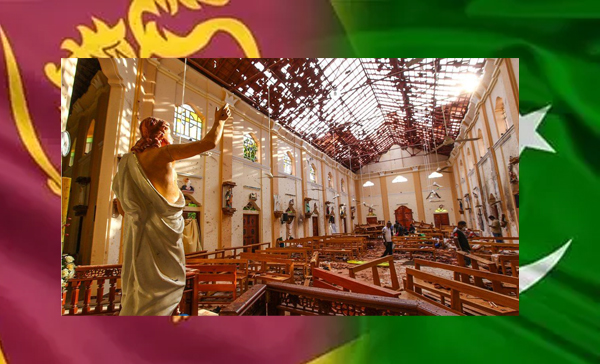
Charges read before 25 Easter attack defendants including Naufer Mawlwai

The reading of the charges filed against Naufer Mawlawi and 24 others over the 2019 Easter Sunday terror attacks commenced at the Colombo High Court this morning (31 March).

The charges were read out before a three-judge bench of the Colombo High Court, comprising of Justices Damith Thotawatte, Amal Ranaraja and Navaratne Marasinghe, in the presence of the 25 defendants.

The Attorney General filed a case against 25 defendants including Naufer Mawlawi, Sajid Mawlawi, Mohammed Milhan, Sadiq Abdullah, Aadam Lebbe, Mohammed Sanasdeen and Mohammed Rizwan, on 23,270 charges pertaining to the aiding, abetting and conspiring of the 2019 terror attack.

The charges filed under the Prevention of Terrorism Act (PTA) include conspiring to murder, aiding and abetting, collecting arms and ammunition and attempted murder.

Posted in Uncategorized

Proposed “anti-terror” bill set to introduce death penalty and break existing human rights violations record

The ICJ is concerned that the newly proposed anti-terrorism legislation, if adopted as currently formulated, will give rise to a panoply of human rights violations and, much as the existing “Prevention of Terrorism Act”, is open to misuse.

On 22 March 2023, the government of Sri Lanka published the proposed 97-page “Anti- Terrorism Bill” (Gazette notification dated 17 March 2023), which, if adopted, would replace the Prevention of Terrorism (Temporary Provisions) Act No. 48 of 1979 (PTA). The Bill purports to do away with the provisions of the PTA that were considered in violation of international human rights law.

However, the International Commission of Jurists (ICJ) is extremely concerned, in particular, by clause 4(1)(a) of the Bill, which, if adopted in its current formulation, would introduce the death penalty for “the terrorism offence of murder”. Sri Lanka has been a de facto abolitionist country for decades, given that a moratorium on executions has been in place in Sri Lanka since 1976. The ICJ is opposed to the death penalty in all circumstances, as a violation of the right to life, and as the ultimate cruel, inhuman and degrading punishment.

“Purported threats to national security, whether or not arising in connection with acts of ‘terrorism’, should not be used as a justification for the death penalty”, said Livio Zilli, ICJ’s Senior Legal Adviser.
The Bill does feature certain improvements on the PTA, such as:

— the removal of a provision pursuant to which a detainee’s confession to a police officer without the presence of the detained person’s lawyer is admissible;

— the requirement for the arresting officer to issue a document notifying the arrest to the next of kin of the accused immediately or at least within 24 hours;

— employing women police officers to arrest/question and search women;

— guaranteed access to translation in a language of the accused’s choice of information relating to the arrest; and

— an obligation to bring the detainee before a magistrate every 14 days when the person is detained without a Detention Order (DO).

However, the ICJ considers that the Bill’s other problematic aspects clearly outweigh the positives. In addition to the above-mentioned concern about the introduction of the death penalty, of particular concern is the overbroad and vague definition in clause 3 of “acts of terrorism” that can be interpreted in a manner that stifles dissent and to crush peaceful protests. Clause 16 further identifies disobeying any direction issued under the Act as a “terrorist offence”. This creates a fresh category of offences likely to be misused by the present government and future administrations against any kind of opposition.

“If enacted as currently formulated, these vague and overbroad offences, similar to and building up on those contained in the PTA, are open to abuse and, as such, they violate Sri Lanka’s international legal obligations and the country’s own constitutional guarantees under Article 13,” said Livio Zilli.
A key precondition to a fair trial under international law is that criminal offences must be prescribed by law and conform to the principle of legality. The principle of legality requires that crimes be classified and described in precise and unambiguous language that narrowly defines the punishable offence with a clear definition of the criminalized conduct, establishing its elements and the factors that distinguish it from conduct that is not criminally proscribed. Criminal law must not proscribe any act or omission in terms that are vague, imprecise, arbitrary or overly broad. Vague laws undermine the rule of law because they leave the door open to selective and arbitrary interpretation, law enforcement and prosecution.

Moreover, if enacted in its current form, the bill would provide limited judicial oversight while granting law enforcement officials additional powers than those they currently enjoy under the PTA. For example, under clause 28 (2)(a) the Magistrate may not review a detention order made by any Deputy inspector general of police (DIG) in the country. Pursuant to clause 28 (b) (iii) as currently formulated, when a detention order has not been issued or placed before the Magistrate, a Magistrate could discharge an accused only if the Officer-in-Charge of the police station requested it and the Magistrate agreed to it. Such provision infringes the separation of powers by arrogating to the police a power that is properly that of the judiciary — in this instance by making the decision of the Magistrate to discharge the accused dependent upon the Officer-in-Charge requesting the accused’s discharge in the first place.

The maximum period of detention under a detention order is 12 months (clause 37) with the police having to file a confidential report that includes the allegation against the accused, the investigation’s findings and the reasons for further detention, with a Magistrate after the first three months (clause 36). The Magistrates cannot review a detention order ordered by a DIG. In the absence of a detention order, the accused is to be brought before a Magistrate every 14 days (clause 38).

While the Bill allows for Magistrates to visit places of detention and for the accused to have access to lawyers, Sri Lanka’s experience under the PTA in the last 44 years has shown that such safeguards do not offer much protection since Magistrates often do not have the time to visit places of detention, such as prisons, due to their workload. Similarly, even if detainees are granted access to lawyers, it has rarely ever been in private.

If adopted as currently formulated, the Bill would establish two bodies, namely the Board of Review chaired by the Secretary of the Ministry of Defence, and an Independent Review Panel to be appointed by the President, purportedly to ensure oversight. However, such bodies would lack the required independence necessary to carry out any effective oversight of the enforcement of the law. Rather, it would seem that, instead of acting as necessary checks on police abuses, both bodies would likely be helpful in concealing any irregularities that may characterize the legislation’s enforcement.

The Bill also empowers the President to proscribe organizations on the recommendation of the Inspector General of Police (IGP) or of the government if there are ”reasonable grounds to believe” that the concerned organization has engaged in an act amounting to an offence under the proposed law or in “an unlawful manner prejudicial to the national security of Sri Lanka” (clause 82).

The President may also declare any place: a ”prohibited place,” if so requested by the IGP or the commanders of the armed forces or the Director General of the Coast Guard (clause 85). There is no time limit set for the period of prohibition and any place can potentially be declared a “prohibited place”. This easily allows for repression of any dissent since the police need not have to go before the Magistrate to obtain time limited restraining orders against protests as is the current practice, but instead, immediately get the site of protest declared a prohibited place. Such acts violate the right to be free from arbitrary arrest as per Article 13 of the Constitution, as well as the freedoms of speech and expression, of peaceful assembly and of association all protected under Article 14 of the Sri Lankan Constitution.

Further, the President may also issue regulations to implement “rehabilitation programmes” for persons for whom the Attorney-General has recommended a deferment or suspension of criminal action (clause 100). This is especially concerning since, in the past, accused persons have been coerced into accepting “rehabilitation”, particularly in cases where the State has had little or no evidence to put them on trial.

The ICJ has consistently called for the repeal of the Prevention of Terrorism Act, which has been used to arbitrarily detain suspects for months and often years without charge or trial, facilitating torture and other abuse. United Nations human rights bodies, including most recently the Human Rights Committee, have consistently called on Sri Lanka to enforce a moratorium on the use of the Prevention of Terrorism Act pending repeal and to repeal the Act. In this connection, the ICJ renews its call on Sri Lanka to repeal the PTA and immediately halt attempts to replace it with an even worse piece of legislation, as it is the case with respect to the current draft of “the Anti-Terrorism Bill”.

India, Japan announces joint interest in co-operation with Sri Lanka for free, open Indo-Pacific

The envoys of India and Japan envisaged joint cooperation with Sri Lanka for enhancing regional connectivity.

Japanese ambassador Mizukoshi Hideaki and Indian High Commissioner Gopal Baglay made remarks in this regard at the function to mark the launch of the report compiled by the Pathfinder Foundation themed “A Medium and Long-term Strategy for Indo-Japanese Collaboration to Support the Economic Transformation of Sri Lanka” with inputs from a group of experts.

The Indian High Commissioner said India and Japan share wide-ranging interests in a peaceful, progressive and prosperous Indo-Pacific, and the Japanese Prime Minister recently visited India and outlined his vision for a free and open Indo-Pacific.

Asserting that Sri Lanka is an important member of the Indian Ocean Rim Association (IROA) countries, he said there is a great deal of opportunity for India, Japan and Sri Lanka to work together for the prosperity of people here and the benefit of all sides.

“This should be in accordance with the priorities of Sri Lanka,” he said.

“Sri Lanka is at the happy confluence of three important pillars of India’s foreign policy,” he said.

The Japanese ambassador said over the years, Japan and India have had a positive impact on the region.

“I believe that connectivity is the best area to showcase how two countries can bring tangible benefits to the entire region including Sri Lanka. To this end, perspectives and insights from countries in the region are critical, and this report precisely addresses that,” he said.

He said, during Japanese Fumio Prime Minister Kishida’s recent visit to India, the two leaders exchanged views on cooperation with Sri Lanka and agreed to work closely together, including on Sri Lanka’s debt issue.

“As for the debt issue, on March 20, the IMF Executive Board greenlighted the Extend Fund Facility to Sri Lanka. Japan highly values this as a significant step forward for the revitalization of the Sri Lankan economy. Japan also appreciates India’s letter of financial assurance in January. I am confident that Japan and India will continue to contribute to Sri Lanka’s economic development, utilizing our expertise and complementarity,” he said.

Outlining the Japanese prime minister’s vision on a free and open Indo-Pacific, he said Mr. Kishida stressed the importance of “multi-layered connectivity” as a core element of cooperation, to increase each country’s options to pursue economic growth in a way that benefits everyone. In this regard, he mentioned South Asia as one of the important regions for our cooperation.

“I sincerely hope that this year will be the beginning of an economic revival and a springboard for further development for Sri Lanka. I believe that Sri Lanka could greatly benefit from India, a regional economic power with a large market, and Japan, a long-standing partner in Sri Lanka’s socio-economic development, for its medium-to-long-term economic development,” he said.

Posted in Uncategorized

Belarus’ Industry Ministry seeks to build cooperation with Sri Lanka

The Industry Ministry of Belarus would like to build cooperation with Sri Lanka across a wide range of areas, Belarus’ Deputy Industry Minister Aleksandr Yefimov said as he met with Minister of Transport and Highways and Minister of Mass Media of Sri Lanka Bandula Gunawardena, BelTA reported according to an Industry Ministry press report.

The talks were attended by Ambassador Extraordinary and Plenipotentiary of Sri Lanka to Russia with concurrent accreditation to Belarus Janitha Abeywickrama Liyanage, Honorary Consul of Sri Lanka to Belarus Dmitry Ruzanov and top managers of Belarusian industry giants.

Yefimov noted that it is very important for the Industry Ministry to promote trade and economic cooperation with Sri Lanka. “We have tremendous practical experience, skills, and competencies in mechanical engineering and are ready to share them with Sri Lankan partners. I am sure that a wide range of Belarusian engineering products will be in demand in Sri Lanka,” said the deputy industry minister.

According to Aleksandr Yefimov, cooperation in tractor making holds a lot of promise. Belarus is ready to offer the entire lineup of tractors, including tractors for agriculture and public utilities. In addition, a number of enterprises affiliated with the Industry Ministry produce all kinds of agricultural machinery.

“Thus, we can offer a turnkey solution, from the supply of equipment to its maintenance and warranty service. This can become a locomotive of bilateral cooperation,” the deputy minister informed.

For his part, Bandula Gunawardena showed a great interest in buying Belarusian electric buses and tractors. “We are ready to consider various cooperation options and assist in the implementation of joint projects,” he noted.

As a result of the talks, a decision was taken to form a package of proposals on potential areas of cooperation.

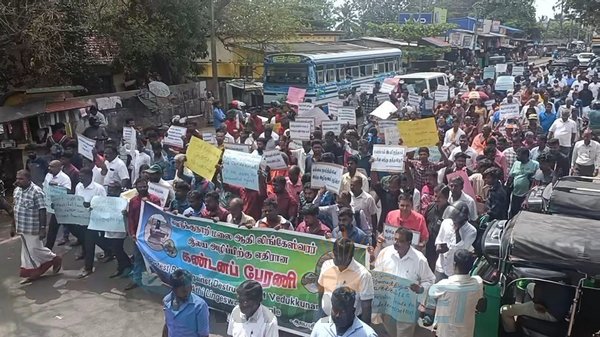
Tamils mobilise against destruction of ancient temple, call for mass protests

Further details have surfaced following the destruction and vandalism of the Athi Lingam and theft of various consecrated items from the temple. The Athi Sivan Kovil atop the Vedukkunaari mountain in Vavuniya, which has been a place of worship for Tamil people for many generations has been renamed as Waddamana Parwatha Viharaya on Google Maps. Additionally, the Archaeological Department of Sri Lanka has declared it to be an ancient Buddhist site.

In the past few months, the Archaeological Department had obstructed the temple administrators and worshippers by banning them from entering into the temple premises. This follows a case filed against the temple administrators by the Archaeological department at the Vavuniya Magistrate course in 2021.

The destruction of a heritage site of Tamil people has not only caused great distress among the public, but also has elicited strong condemnation of the destruction and vandalism. In the morning of 27th March, the Temple administrators lodged a complaint against the destruction and vandalism at the Nedunkerny Police station and students protested against the incident in front of the Jaffna University. They raised slogans such as “The Buddha who detached himself from the mind, is attached to our land”; “Is there no end to the hubris of Saffron robed monks?”; “Army, Navy, get out of our land,” “Archaeological Department, get out.”

One of the slogans “Vedukkunaari, Katchatheevu, Delft are our heritage” highlighted the ongoing rapid Sinhalisation of the Tamil homeland.

The temple administrators also made a complaint at the Human Rights Commission in Vavuniya against the Archaeological department, whom they suspect to be behind the destruction of the temple. Following their complaint, the temple administrators spoke to the media. They said,

“Following the ban issued by the Archaeological department from us entering the temple, it was the department’s vehicles that continued to go in and out of the temple premises. This is why we suspect the Archaeological department’s involvement in this act of vandalism. Everyone can see the ongoing Sinhala colonisation. This has caused great distress and we strongly condemn these acts.”

A protest involving multiple faith leaders took place in Nallur. Following these incidents many public figures in the North have come forward to express their concerns over these developments. Particularly, Fr Sakthivel, a long-standing advocate for Tamil rights said,

“The destruction of the Vedukkunaari mountain temple is a well-coordinated political move that is rooted in racism to provoke Saiva people into committing violence. Not only do we have to condemn these acts, but if we don’t call out the politics of it, the religious leaders, those in power, including Tamil politicians, we will experience a Mullivaikkal of politics.”

The temple administrators have also issued a public call to a mass protest against these incidents. The protest will be held on Thursday, 30th March, at 9:30am from Kandasamy Temple. The protest intends to march up to the Vavuniya District Secretariat. The administrators have called upon organizations, political parties, religious leaders, the public, and activists to join the mass protest to condemn the ongoing Sinhala colonisation.

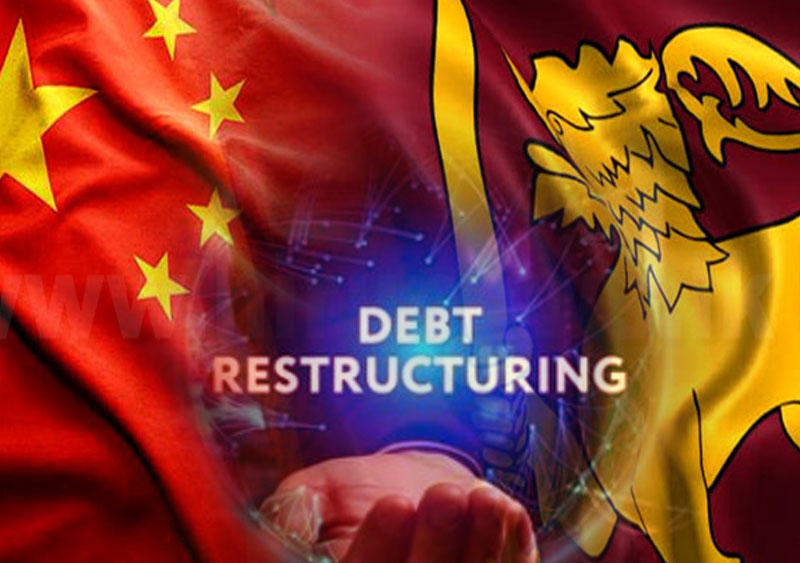
China’s Efforts to Pressure Sri Lanka into Signing FTA through Debt Restructurin by T B Randevg

Sri Lanka’s ongoing debt crisis has caught the attention of major global players, including China, which has been keenly interested in helping the island nation restructure its debt. Since the end of the Sri Lankan civil war in 2009, China has extended numerous loans to the country for various infrastructure projects, including a port, an airport, highways, and other significant projects.

However, concerns have been raised about the nature of China’s financial assistance and the motivations behind its debt restructuring efforts. Critics argue that China’s financial assistance is part of a broader strategy to extend its economic and political influence in the region, with Sri Lanka serving as a key location for China’s ambitious Belt and Road Initiative (BRI).

In recent years, China has been pressuring Sri Lanka to sign a Free Trade Agreement (FTA) as part of its debt restructuring efforts. The FTA would open up new markets for Chinese businesses while providing Sri Lankan businesses with access to China’s vast consumer market. However, critics argue that the deal would be heavily skewed in favour of China, leading to a flood of cheap Chinese goods into Sri Lanka and undermining the country’s domestic industries.

Moreover, some experts suggest that China’s efforts to push for the FTA may be part of a broader strategy to gain greater influence over Sri Lanka. Sri Lanka occupies a strategic location in the Indian Ocean, making it an essential part of China’s ambitious Belt and Road Initiative, which seeks to expand China’s economic and political influence in the region.

The Chinese push for the FTA has been met with opposition from some quarters in Sri Lanka, with critics suggesting that the deal would not be in the country’s best interests. Furthermore, Sri Lanka has been facing growing concerns about its growing economic dependence on China, with some experts suggesting that the country risks falling into a debt trap that could threaten its economic sovereignty.

To address these concerns, Sri Lanka has been seeking to diversify its economic ties, exploring new opportunities for economic partnerships with other countries in the region. The Sri Lankan government has also been seeking to renegotiate its debt agreements with China, with some suggesting that the country may be seeking to reduce its dependence on Chinese loans.

One of the potential Disadvantage of signing the FTA with china is the risk of job losses. Sri Lanka’s labour-intensive industries, such as textiles and apparel, could face increased competition from cheaper Chinese imports, leading to potential job losses in these sectors. This could be especially problematic for Sri Lanka, which is already grappling with high unemployment rates and a struggling economy.

Another potential disadvantage of signing an FTA with China is the risk lowered regulatory standards. As part of the FTA negotiations, Sri Lanka could be required to harmonize its regulatory regime with China, potentially leading to a “race to the bottom” in terms of labour standards, environmental protection, and intellectual property rights. This could be particularly problematic for Sri Lanka, which has faced criticism in the past for lax environmental and labour regulations.

Finally, signing an FTA with China could lead to a loss of policy autonomy for Sri Lanka. Sri Lanka could be required to abide by certain rules and regulations set forth in the FTA, potentially limiting its ability to pursue certain policies in areas such as trade, labor standards, and the environment. This could be particularly problematic if Sri Lanka’s priorities or values differ from China in these areas.

However, China’s efforts to push for the FTA continue, with some experts suggesting that the country may be using its financial leverage to coerce Sri Lanka into signing the deal. The situation in Sri Lanka highlights the risks associated with excessive reliance on foreign loans and the importance of balancing economic development with strategic interests.

In conclusion, China’s debt restructuring efforts in Sri Lanka and its push for the FTA have raised concerns about the country’s growing economic and political influence in the region. While Sri Lanka has been seeking to reduce its dependence on China and diversify its economic ties, it remains to be seen whether the country will be successful in achieving these goals. The situation in Sri Lanka underscores the importance of balancing economic development with strategic interests and the risks associated with excessive dependence on foreign loans.