EC seeks meeting with PM to tell him to fix polls date

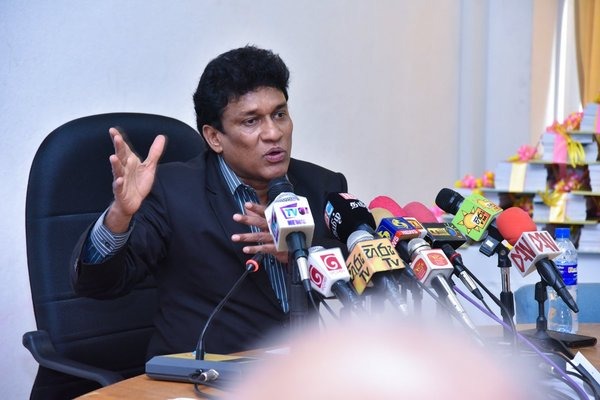
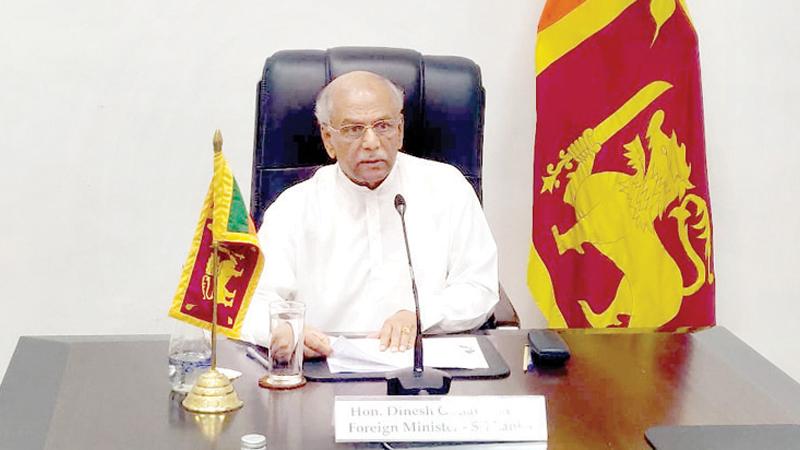
The Election Commission (EC) has sought a meeting with Prime Minister Dinesh Gunawardena to discuss the local council election date acceptable to the Government, as the tussle over financing the overdue polls enters another week.

The Prime Minister’s office confirmed that a request had been received and that an appointment would be speedily given.

This week, the EC held talks with political parties and other stakeholders in a bid to reschedule the twice-postponed local council elections. It was later decided that the EC, which till now had decided the election dates, will invite the Prime Minister to do so.

At least one organisation, the People’s Alliance for Free and Fair Elections (PAFFREL), now plans to petition the Supreme Court against Ranil Wickremesinghe in his capacity as Finance Minister for not releasing the funds for the polls.

Funds have still not been received to conduct the polls, the EC confirmed, notwithstanding a March 3 interim order from the Supreme Court preventing the authorities from withholding funds for the election.

Tamil National Alliance Parliamentarian M.A. Sumanthiran pointed out at this week’s meeting that while Mr. Wickremesinghe, as President, had immunity from prosecution, this did not apply to “any proceedings in any court in relation to the exercise of any subject or function assigned to the President or remaining in his charge”–that is, actions taken through any of his other ministries.

Separately, the Cabinet via decisions taken last month withdrew Treasury authority to release funds for which budgetary approval had previously been provided–including the local council elections–by stating that revenue was below expectation.

Instead, the Cabinet decreed that the Treasury, headed by Finance Secretary Mahinda Siriwardana, could only disburse funds for a defined list of essential expenditure with any other spending needing the Finance Minister’s approval. Despite having been budgeted for in the 2023 Appropriations Bill, elections were not on the list.

The Sunday Times obtained the Cabinet papers and decisions through an application under the Right to Information Act.

Under the heading “Maintaining Essential Public services in the Most Difficult Financial Circumstances”, a memorandum presented on February 6 by Mr. Wickremesinghe (in his capacity as Finance Minister) states that “it is expected to order the Treasury to take necessary steps as it is required to provide imprest only for the essential public expenditure indicated below, with a view to maintain the public service until the condition of Government revenue improves”.

The essential recurrent expenditures are listed as payment of salaries and wages, debt servicing, pensions, medical supplies of hospitals, monthly Samurdhi subsidies, financial assistance to elders, differently-abled low-income receivers, kidney patients and those affected by economic difficulties, Grade 5 scholarship allowances, Mahapola and bursaries, Thriposha programme and farmers’ pension.

Permitted are disbursements for the school and preschool nutrition programme, payment for war heroes/disabled soldiers, ‘Ranaviru Mapiya Rekawarana Allowance’, “unpostponable” [sic] electricity, water, fuel and essential telecommunication services, and food supplies to hospitals, prisons and security divisions.

Also included were payments made as building rents, for maintenance, cleaning and security services, statutory payments such as Employees’ Provident Fund and the fertiliser subsidy.

“After considering the liquidity on the official bank account of Deputy Secretary to the Treasury, it is expected to release imprest only for the essential recurrent expenditure mentioned under paragraph 2.1 above, expenditure related to capital development projects financed through local funds, the long overdue payments and essential services such as emergency maintenance and repairs,” the Cabinet paper states.

Funds will only be released “for other requirements” if there was any balance provision after allocations are made for the “unpostponable [sic] activities”, as specified. Approval was granted.

A subsequent Cabinet paper–submitted after a “marginal” surplus was recorded in the Government’s revenue–expanded the list to include paddy purchases from farmers, expenditure related to minimising malnutrition among children and pregnant mothers, gratuity payments, settlement of outstanding bills pertaining to the decentralised budget programme, “and other essential expenditure, as found necessary and approved by the Minister of Finance, Economic Stabilisation and National Policies”.

This week, the opposition Samagi Jana Balawegaya (SJB) and the National People’s Power (NPP) filed separate petitions before the Supreme Court accusing Treasury Secretary Mahinda Siriwardana of acting in contempt of court.

They alleged he had failed to act in accordance with the Court’s interim order preventing him from withholding funds necessary to conduct the local council polls.

Ferry service between India and Sri Lanka to commence end of April

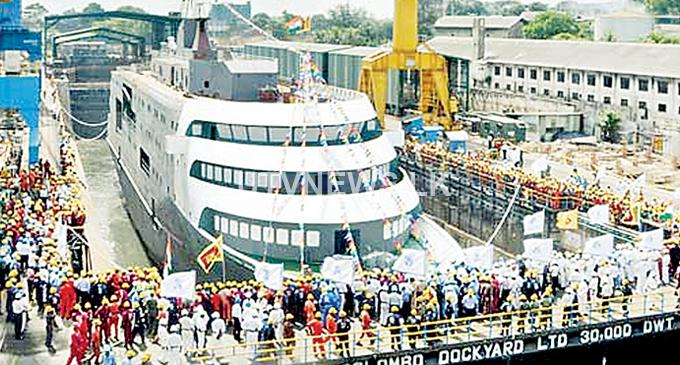
Sri Lanka will commence the operations of the passenger ferry service between Kankesanthurai and Pondicherry on the 29th of April, says the Ministry of Ports, Shipping and Aviation.

A discussion on the proposed ferry service between Pondicherry in India and Kankesanthurai in Sri Lanka was held on Friday (March 24) under the patronage of Minister of Ports, Shipping and Aviation Nimal Siripala de Silva.

The meeting had also been joined by the Sri Lanka Ports Authority, officials of the Ministry of Ports, Shipping and Aviation, Sri Lanka Navy and the owners of ferries and companies that have expressed interest to operate ferry services.

During the discussion with Minister Nimal Siripala De Silva, ferry owners have mentioned that they will be charging 50 US Dollars per passenger for a one-way trip, while allowing a passenger to carry baggage weighing 100kg. Only daytime operations will be in effect during the first stage.

A ferry is expected to carry 150 passengers at a time and will take around 4 hours to travel from Karaikal Port in Pondicherry to Kankesanthurai.

Ferry service owners emphasized that only daytime operations will be in effect during the first stage of operations.

According to the Ministry of Ports, Shipping and Aviation, a passenger terminal is currently being constructed at the Kankesanthurai Port to facilitate the ferry service.

Sri Lanka Ports Authority has provided a financial facility of Rs. 144 million for the total constructions that are carried out by the Sri Lanka Navy.

The terminal upon completion of its construction is expected to be handed over to the SLPA by the 02nd week of April.

The Minister has also stated that the expansion activities of the Port of Kankesanthurai will be expedited and the Sri Lankan government has already requested 16 million US Dollars from the Indian Exim Bank due to the credit grant facility granted by India for construction becoming insufficient at present.

With IMF boost, Ranil will target 2024 Presidential poll By D.B.S. Jeyaraj

Friday, March 24 was the 74th birthday of Ranil Sriyan Wickremesinghe. The Sri Lankan President was born in Colombo on 24 March 1949.

This Birthday would have been a delightful one for Ranil for two reasons. This is the first birthday he celebrated as the Executive President of Sri Lanka. The other is the ‘gift’ received by Sri Lanka from the International Monetary Fund (IMF) a few days earlier.

As is well-known, the IMF program was made possible largely due to the untiring efforts of the President.
Opposition parties, Trade Unions, NGOs, Civil Society organizations, Professional Associations, Academics, sections of the intelligentsia and the media have all been critical of Ranil Wickremesinghe from the time he was appointed Prime Minister on 12 May 2022 by former President Gotabaya Rajapaksa.

Subsequently, he became Acting President on 9 July. Ranil’s house and belongings including valuable books and antiques were burnt down by ‘Aragalaya’ elements in a bid to make him quit.

The criticism intensified after Wickremesinghe was elected by 134 out of 225 Parliamentarians on 20 July 2022. He was sworn in as the eighth Executive President of Sri Lanka on July 21st.

This criticism of Wickremesinghe was not entirely without merit but in many instances, it was grossly unfair.
Nevertheless, the much-maligned Wickremesinghe did not wilt or quit. With single-minded determination, Ranil persisted with his mission of repairing and reviving the economy.

Though Wickremesinghe was under severe attack by his opponents and critics, there is grudging admiration and even respect and support from the ordinary people for his attempt to salvage the economy.

As a three-wheeler driver told a journalist Monawa kivvath, Ranil Mahathaya try ekak denawa ne (Whatever said Mr Ranil is trying to do something, no?)

Challenges he Faced

After the IMF agreement was tabled in Parliament, President Wickremesinghe made a special statement in the House. A justifiably elated Wickremesinghe was visibly pleased with himself for his accomplishments under very adverse circumstances. Ranil referred to the dire straits the economy was in when he assumed office and the challenges he faced. The President emphasised that his only strength in surmounting these obstacles was his inner conviction that he was capable of rebuilding his country. This is what he said –

“On the 9th of July last year, I took over a country that was on fire. A country that was in chaos. A country that seemed to be without an iota of hope for the future. A country that had officially declared itself bankrupt. A country where inflation had risen to 73.7%. A country where people suffered for days in queues for fuel and gas. A country with schools closed. A country, where ten or twelve-hour power cuts were imposed. A country without fertilizer hampering cultivation by farmers. A country where anarchy prevailed in place of law and order. A country where outsiders had forcefully entered public buildings and were in occupation. A country where mob attacks were widespread. A country where the homes of opponents were set ablaze. A country where people were assassinated on roads in broad daylight.”

“No one was willing to accept responsibilities in such an environment. Some were reluctant. Some asked for time to check their horoscopes. Some sneaked away. Some panicked. I was requested to take over the country at a time when nobody came forward to shoulder that responsibility.”

“I unconditionally accepted the challenge. I had no power in Parliament. I had no Members of Parliament from my Party to call my own. Even though I had none of these, I had just one strength. This was only my own conviction that I am capable of rebuilding my country. I had numerous experiences to support this conviction of mine.”
“I only had the confidence gained from previous experiences when I accepted this serious challenge. I accepted the challenge with the conviction that even if I failed, the country would not.”

Social Security System

President Wickremesinghe also outlined the salient points in the economic blueprint being followed by his Government. He specified the immediate goals to be achieved in the context of a post-IMF arrangement. Ranil was mindful of the marginalized, underprivileged sections of society and pledged to prioritize the setting up of an effective social security system. Expressing confidence that the four-year IMF program could be implemented in three to three and a half years, Wickremesinghe warned that failure may result in the country being affected drastically. This is what he said:-

“If we implement the economic reforms with proper financial discipline throughout the next four years in accordance with this Agreement, a strong economic foundation will emerge for the future of the country. If we deviate from this path, the entire country will find itself in a worse situation in April, than it was in, sometime back.”
“We need to emphasize a few points here. First, we must prioritize the establishment of a robust social security system for the most vulnerable individuals in our society. Second, we are currently executing plans and strategies to enhance the value of the rupee. Strategies and a formal plan to strengthen the rupee are being implemented. Third, anti-corruption legislation must be passed and implemented immediately. Fourth, we should focus on implementing necessary structural reforms in our society. These reforms should be identified and carried out accordingly.”

“The IMF-approved plan should be implemented and completed in four years. However, depending on our strength and determination, we should be able to finish it in three to three and a half years. Let’s give it a try. Let us put in the effort.”

Early Presidential Election

With the boost received through the IMF bailout, President Wickremesinghe is very likely to set his sights on an early Presidential Election.

The irresponsible conduct of most MPs in Parliament as well as potential aspirants for Presidential power does not inspire much confidence.

It appears that only Ranil Wickremesinghe has a clear idea of what must be done to salvage the economy in the short run and how to lay the economic foundation for future prosperity in the long run.

The IMF package is only a lifeline that gives Lanka breathing space to resuscitate the economy. To achieve this, Wickremesinghe is firmly convinced that he needs to be in power for a few more years.

Furthermore, with more than 45 years of experience as a Parliamentarian, Ranil Wickremesinghe knows that the lack of a proper mandate is his Achilles’ Heel.

His United National Party (UNP) was wiped out at the 2020 polls. Ranil himself entered Parliament as a national list MP. He was elected as President by an assortment of MPs from the Government and Opposition. The bulk of MPs supporting him were from the ruling Sri Lanka Podujana Peramuna (SLPP).

Independent opinion polls and analytical surveys show that the UNP and SLPP have negligible support in the country if an election is held now. The Samagi Jana Balawegaya (SJB) led by Sajith Premadasa and Janatha Vimukthi Peramuna (JVP) led by Anura Kumara Dissanayake are the leading contenders for the electoral crown currently.

Hence Ranil Wickremesinghe is portrayed by his detractors as an ‘legally’ elected President lacking ‘legitimacy’.
This perception is invigorating the political opposition against Wickremesinghe and is somewhat undermining his credibility as President.

Moreover, Ranil Wickremesinghe is essentially a Liberal Democrat at heart. He knows that his lack of an effective mandate is a Damoclean Sword hanging above him.

More importantly, Wickremesinghe knows that the far-reaching economic reforms he seeks to bring about could be seriously hampered by his lacking a proper mandate.

Also, Ranil realises that his securing a fresh firm mandate through elections will strengthen him politically and reinforce his economic reform task. Lending institutions and donor nations too would prefer to do business with a Govt possessing a solid mandate. As such he needs and wants a mandate sanctioning poll.

Four Possible Polls

There are four possible polls. Local Govt (LG) Elections, Provincial Council (PC) Elections, Parliamentary Elections and a Presidential Election.

The chances of the UNP or a UNP-led coalition securing a sweeping victory at the LG or PC polls seem extremely remote. The Opposition parties, who are most likely to do well at these polls would use that victory to intensify demands for a Parliamentary election.Also, a crushing defeat would undermine the President and his Govt and draw glaring attention to the question of a lack of a legitimate mandate.

The same applies to Parliamentary Elections also. If elections are held soon, there is every chance that the SLPP will lose the slender majority it enjoys now. Since Opposition parties are unwilling to cooperate with President Wickremesinghe, he has been compelled to depend upon the SLPP to push bills through.

So, if elections result in the SLPP and allies losing badly, the President will not have a supportive majority in the House. The victorious SJB and JVP may exert the maximum possible pressure on the President. Besides, Ranil has already assured the SLPP MPs that he would not dissolve Parliament early.

Thus LG, PC and Parliament elections are ruled out from the President’s perspective. This leaves only the Presidential Election.

Wickremesinghe regards Presidential hustings as the best bet to gain a mandate. It is only as Executive President that he could authoritatively plan, coordinate, direct and execute his economic revival program best.
A mandate obtained as President would strengthen and empower him politically.

Unique Selling Proposition

Ranil perceives himself as a unique selling proposition in a Presidential election campaign. Given the stature and ability of his potential rivals, Wickremesinghe certainly towers above them. But then as Ranil knows very well, electoral success does not always favour the best and the brightest candidate. Finally, there is the personal angle. The Presidency has for long eluded Ranil who has been branded a serial loser. As such he would very much like to be a President elected by the people before retiring from Politics.

All signs, therefore, point to a Presidential election. Given the current political situation, there is every likelihood that the SLPP would not field a Presidential candidate in 2024. As of now, the SLPP is aiming for the 2029 Presidential poll with Namal Rajapaksa as a candidate. The SLPP would prefer Ranil to be President until 2029 as opposed to another.

Therefore sections of the SLPP may overtly or covertly support Ranil. Ranil Wickremesinghe is a lesser evil to the SLPP compared to others like Premadasa, Dissanayake or Sarath Fonseka.

If this scenario unfolds as stated, Wickremesinghe would contest with the backing of the UNP, Minority parties and elements of the present SJB and SLPP.

Constitutional Amendment

Some UNP stalwarts and SLPP members have stated that an early Presidential Election is on the cards. The Constitution enables the incumbent President to call for an early Presidential election after completing four years in office if he intends to seek re-election for a second term.

Gotabaya Rajapaksa was elected in November 2019. Though he has resigned, the presidential term of office would have completed four years in November 2023.

Wickremesinghe succeeded Rajapaksa for “the unexpired period of the term of office of the President vacating office.” Hence Wickremesinghe should be able to call for an early election any time after November 2023. But then the Constitution also states that this provision applies only to Presidents elected by the people at an election. It does not apply to Presidents unelected by the people. So Ranil cannot have an early presidential poll.

UNP sources however say that this could be altered by a Constitutional Amendment enabling the President to call for an early election. If the Opposition parties are really genuine about early elections, they should support the bill to garner a two-thirds majority.

If they refuse, then the opposition parties will be exposed as insincere about polls, point out UNP circles. If there is no amendment, President Wickremesinghe will continue as usual. Instead of early next year, the Presidential poll will be in the last quarter of 2024.

UNP-SJB Unity

This then is the position as far as the Presidential election is concerned. Meanwhile, TPA leader Mano Ganesan and SLMC leader Rauff Hakeem are engaged in an ‘Amity’ Mission to bring about unity between Ranil Wickremesinghe and Sajith Premadasa with the Presidential elections in mind.

It is learnt reliably that Wickremesinghe was amenable, subject to some conditions. Ranil would be the Presidential candidate in 2024 backed by an alliance comprising the UNP, SJB and minority community parties.

Sajith Premadasa would be Prime Minister. Ranil will retire in 2029 clearing the field for Sajith to become the leader.

Apparently, this proposal was welcomed by most SJB stalwarts like Thalatha Atukorale, Kabir Hashim, Eran Wickramaratne, Harsha de Silva, Rajitha Senaratne and Rohini Wijerathne.

But others like Ranjith Madduma Bandara, Tissa Attanayake, Imtiaz Bakeer Markar, Lakshman Kiriella, Sujeewa Senasinghe and Hirunika Premachandra opposed it.

Members of the Premadasa family too did not like the idea. Finally, Sajith Premadasa reportedly rejected the unity proposal. Upon hearing this Ranil Wickremesinghe too hardened his stance. So, Hakeem and Ganesan have abandoned their unity moves for now.

D.B.S.Jeyaraj can be reached at dbsjeyaraj@yahoo.com

Posted in Uncategorized

UN Human Rights Committee releases latest findings on Sri Lanka; calls for remedial measures

The UN Human Rights Committee yesterday issued its findings on Sri Lanka after a thorough examination in its latest session.

Apart from Sri Lanka, UHRC also released its findings on five other countries Egypt, Panama, Peru, Turkmenistan and Zambia

The 12-page findings report (available at file:///C:/Users/news/Downloads/CCPR_C_LKA_CO_6_52074_E.pdf) contain the Committee’s main concerns and recommendations on the implementation of the International Covenant on Civil and Political Rights, as well as positive aspects.

The observations, findings and recommendations cover a host of issues. They include the state of emergency, fight against impunity and past human rights violations, right of peaceful assembly and association, liberty and security of person, freedom of conscience and religious belief, administration of justice, independence of the judiciary, prohibition of torture and other cruel, inhuman or degrading treatment, death penalty, violence against women, including domestic violence, gender equality, discrimination on the basis of sexual orientation and gender identity, and counter-terrorism measures.

The Committee was concerned about reports of arbitrary arrests and detention of anti-Government protestors, trade unionists, Tamils and Muslims, including Muslim women for wearing a niqab, without fundamental legal safeguards. It was also concerned by the extensive use of prolonged pre-trial detention, inconsistent bail provisions and ineffective access to non-custodial alternatives. The Committee called for prompt and effective investigations of allegations of arbitrary arrests and detention, as well as the respect of fundamental legal safeguards for detainees.

The Committee expressed concern about the Prevention of Terrorism Act, which allows for extended pre-trial detention for up to 12 months, contains a broad definition of terrorism, and is used to target minorities, particularly Muslims and Tamils, Government critics, and LGBT people, and to extract confessions through torture. It recommended that Sri Lanka repeal the Act and adopt new legislation compatible with the Covenant, as well as the principles of legal certainty, predictability and proportionality, while ensuring that the legislative process of the new law is inclusive and transparent.

It said Sri Lanka should widely disseminate the Covenant, its optional protocol, its sixth periodic report and the present concluding observations with a view to raising awareness of the rights enshrined in the Covenant among the judicial, legislative and administrative authorities, civil society and non-governmental organisations operating in the country, and the general public. Sri Lanka should ensure that the periodic report and the present concluding observations.

Sri Lanka has been requested to provide, by 24 March 2026, information on the implementation of the recommendations.

The Committee also requests Sri Lanka to submit its next periodic report by 26 March 2029 and to include in that report specific up-to-date information on the implementation of the recommendations made in the present concluding observations and of the Covenant as a whole. The Committee also requests in preparing the report, to broadly consult civil society and non-governmental organisations operating in the country.

Sri Lanka in talks for billion dollar equivalent Indian rupee swap

Sri Lanka is in talks with India for a billion US dollar equivalent Indian rupee central bank swap, to facilitate trade, Indrajit Coomaraswamy, ad advisor to the government said.

“The amount is still uncertain it could be up to the equivalent of a billion US dollars,” Coomaraswamy told an online forum hosted by Sri Lanka’s central bank.

The money will be used to facilate India Sri Lanka trade, he said.

India has been trying to popularize the use of Indian rupees for external trade and also encouraged Sri Lanka banks to set up Indian rupee VOSTRO accounts.

However the first step in popularizing a currency for external trade is to get domestic agents, especially exporters, to accept their own currency for trade, like in the case of the US or EU, analysts say.

India’s billion US dollar credit to Sri Lanka given during the 2022 crisis is settled in Indian rupees (transaction need).

However the Indian government itself has chosen to denominate it in US currency for debt purposes (future value).

In most South Asian nations, receivers of remittances are willing to accept domestic currencies, leading to active VOSTRO account transactions.

Sri Lanka is expected to repay a 400 million US dollar swap with the Reserve Bank of India next year under an International Monetary Fund backed program for external stability and debt re-structuring.

Central bank swap proceeds sold to banks, which are then sterilized with inflationary open market operations, can trigger forex shortages and currency crises, analysts warn.

Sri Lanka went to the International Monetary Fund after two years of inflationary monetary operations by the central bank’s issue department (money printed to suppress interest rates) triggered the biggest currency crisis in its history and external sovereign default.

Sri Lanka had gone to the IMF 16 times with similar external troubles except for the April 2003 extended fund facility under Central Bank Governor A S Jayewardene which was a purely reform-oriented program with the World Bank (PRGF/PRSP) program at a time when he was collecting reserves with deflationary monetary policy and perhaps the lowest inflation since the Bretton Woods collapsed.

Posted in Uncategorized

Mano says LG and PC elections equally important

Tamil Progressive Alliance (TPA) leader Mano Ganesan, MP, has thanked the Colombo-based diplomatic community for their respective roles as friends and development partners of Sri Lanka during this crisis period in obtaining IMF assistance. Lawmaker Ganesan was among the Opposition delegation that met diplomats at the meeting arranged by the office of Leader of Opposition Sajith Premadasa.

Sajith led the opposition MPs group that included Mano Ganesan, Rauf Hakeem, M.A. Sumanthiran, G.L. Pieris, Harsha de Silva, Eran Wickremaratne, Kabir Hasheem and Lakshman Kiriella. The US, India, UK, Japan, EU, Canada, France, News Zealand and Italy were represented.

Ganesan said, on the subject of restoration of democracy, his party while stressing on LG elections, considers PC elections that are shelved, as equally important. He also said that the government agreed to conduct PC elections under proportional system at the select committee on electoral reform.

TPA leader insisted that all conditional grant-assistance of development partners meant for welfare beneficiaries shall reach the most vulnerable poverty stricken food insecure plantation sector under affirmative principles to serve the very purpose. Current listing process of beneficiaries is politically flawed, Ganesan noted to the DPL community.

Posted in Uncategorized

Will summon EC for a meeting over uncertainty of LG polls: Dinesh

The Elections Commission will be summoned for a meeting to discuss the matters with regard to the uncertainty of the commission about holding the Local Government election, Minister of Provincial Councils and Local Government and Prime Minister Dinesh Gunawardena said today.

He told Parliament that the Elections Commission had not been able to come to a conclusion on holding the LG polls where the discussion had ended with looming uncertainty.

“I hope to call the Elections Commission for a meeting soon about the uncertainty of the Commission regarding the LG polls,” he said responding to questions of the opposition.

The Prime Minister said the opposition and the Elections Commission had filed several cases in the Supreme Court regarding the LG polls and added that the government would respect the court decisions and act accordingly.

When asked about allocating funds to the LG polls, he said the government has several priorities to meet in the coming days where two salaries of government workers and pensions have to be paid before the New Year.

Posted in Uncategorized

Dollar rate goes up against Sri Lankan Rupee

The Central Bank of Sri Lanka (CBSL) announced the official exchange rates today (24).

Accordingly, the buying rate was declared as Rs. 314.74, while the selling rate was recorded as Rs. 331.37.

Other currencies, including the Australian Dollar, the Great British Pound, the Japanese Yen and the Euro, too, went up against the Sri Lankan Rupee.

Meanwhile, the Middle Rate of the USD/LKR SPOT exchange rate stood at Rs. 318.63 today.

Posted in Uncategorized

Sri Lanka repays part of Indian credit with first IMF loan tranche

Sri Lanka has used 121 million US dollars from the proceeds of an International Monetary Fund loan to repay an Indian credit line, State Minister for Finance Ranjith Siyambalapitiya said.

Sri Lanka got 331 million dollars from the IMF in the first tranche.

Unlike in the past where the IMF funds went to the central bank, this time the money came to a Treasury account, Siyambalapitiya said.

Sri Lanka has been given permission to use IMF funds for budgetary purposes.

India gave some credit lines to Sri Lanka after the country defaulted on its debt in April 2022 and the money is outside the debt re-structuring parameter.

Sri Lanka is negotiating with India to repay the funds separately.

Sajith appeals to include Sithadthan in Constitutional Council

Opposition Leader Sajith Premadasa appealed to Speaker Mahinda Yapa Abeywardena to include Tamil National Alliance (TNA) nominee Dharmalingam Sithadthan in the Constitutional Council.

He told Parliament today that the TNA has nominated MP Dharmalingam Sithadthan to be included in the Constitutional Council.

Premadasa said that the Constitutional Council has only 9 members now and needs to have 10.

As a result, he requested the Speaker to confirm Dharmalingam Sithadthan as the 10th member.

He said that the refusal to include Sithadthan in the Constitutional Council will send the wrong signal.