Sri Lankan envoy discusses collaboration in transport sector with Indian Minister

High Commissioner of Sri Lanka to India Milinda Moragoda met with Indian Minister of Road Transport and Highways, Shri Nitin Gadkari, in order to discuss opportunities for bilateral cooperation in the transport sector.

The meeting took place in New Delhi, and centered on a range of matters pertaining to the collaboration and partnership between the two countries in the transport sector.

High Commissioner Moragoda requested the assistance of Minister Gadkari in sharing India’s experience in public-private partnerships in the highways sector with Sri Lanka, and proposed to set up a platform through which this experience could be shared with the relevant stakeholders in Sri Lanka.

Moragoda also suggested that Indian investors be encouraged to look at investment opportunities in Sri Lanka’s infrastructure sector.

Minister Gadkari expressed his support to these proposals, explaining that as India aims to become a developed economy by 2047, its government has focused on boosting infrastructure, including highways and road networks.

India’s spending on infrastructure has increased significantly over the last decade, and is expected to hit a record Rs. 10 trillion for the next financial year.

Meanwhile, cooperation in the electric mobility sector was also discussed, exploring the possibility of India sharing its experience, expertise and best practices of the electrical vehicle industry with Sri Lanka.

High Commissioner Moragoda also sought the assistance of Minister Gadkari in encouraging Indian private companies from the electric mobility sector to invest in Sri Lanka.

Briefing the Indian Minister on Sri Lanka’s road to economic recovery, Moragoda highlighted India’s pivotal role therein, and presented a copy of his policy roadmap the “ Integrated Country Strategy for Sri Lanka Diplomatic Missions in India 2021/2023” to Minister Gadkari.

The Minister, in turn, presented a copy of his latest book ‘Unmasking India’ is a compilation of thought articulated by him during the Coronavirus pandemic on the Armanirbhan Bharath through a series of webinars.

Hailing from the State of Maharashtra, Shri Nitin Gadkari is the longest serving Minister for Road Transport and Highways of India currently running his tenure for over eight years since 2014.

While having authored several books, he also served as the President of the Bhartiya Janata Party (BJP) from 2009 to 2013, and has held the ministerial portfolios of Micro, Small & Medium Enterprises; Shipping; Water Resources, River Development & Ganga Rejuvenation; and Rural Development & Panchayati Raj.

Sri Lanka first country to light firecrackers for receiving IMF loan

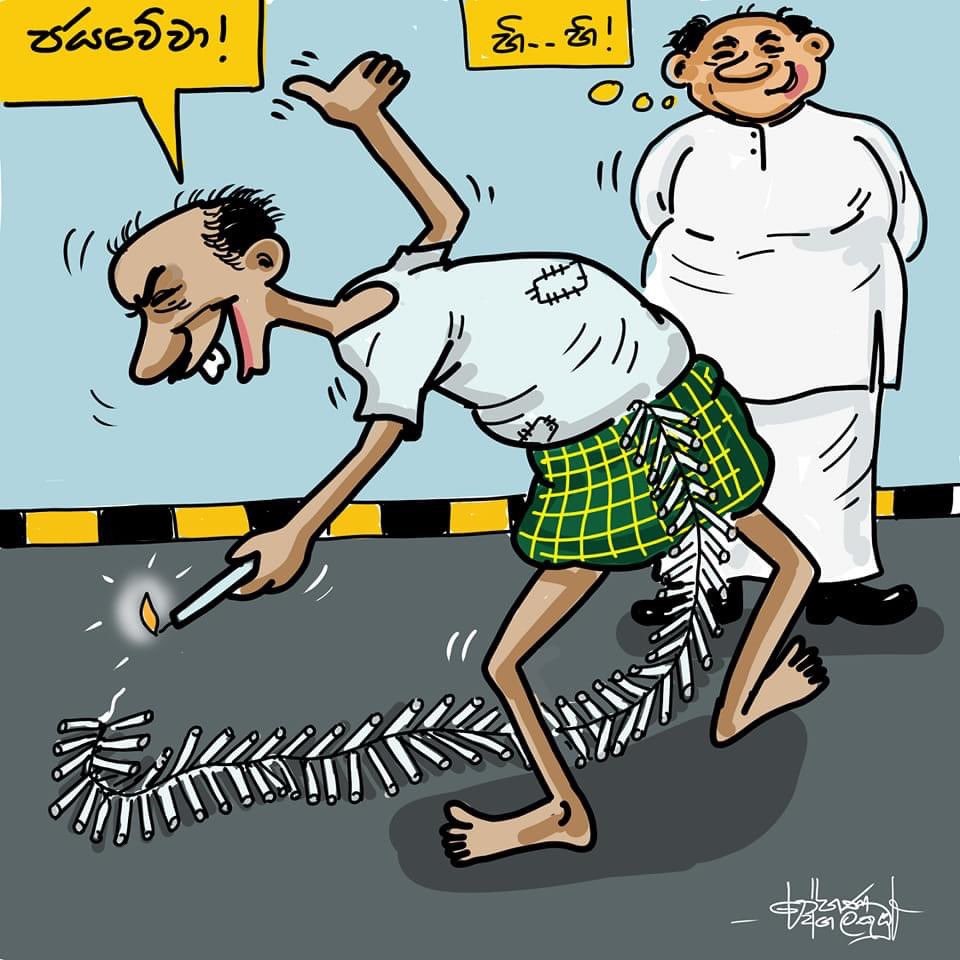
Sri Lanka is probably the first country to light firecrackers for receiving a loan from the International Monetary Fund (IMF), former Minister Wimal Weerawansa told Parliament today.

He noted that banners were also erected in some places congratulating the President for securing the loan.

Weerawansa said that the IMF must be laughing at the drama taking place in Sri Lanka.

The IMF Executive Board had this week approved a 48-month extended arrangement under the Extended Fund Facility (EFF) of SDR 2.286 billion (about US$3 billion) to support Sri Lanka’s economic policies and reforms.

“Sri Lanka has been facing a severe economic crisis as a result of past policy missteps and economic shocks. We have been deeply concerned about the impact of the crisis on the Sri Lankan people, particularly the poor and vulnerable groups, and about the economic costs of the delay in the country’s access to external financing,” the IMF said.

The Board approval marks an important step towards the resolution of the crisis.

Sri Lanka has now receives an initial disbursement of about US$330 million from the EFF arrangement, which is expected to catalyze new external financing including from the Asian Development Bank and the World Bank.

Posted in Uncategorized

Presidential and LG polls should be held on the same day: Navin

The Parliamentary, Presidential and Local Government Elections should be held together on the same day, former Minister Navin Dissanayake said today.

He said that all three elections should be held together to save money.

During his remarks, he emphasized that local government reforms would be enacted soon.

“The country cannot afford to look after 8,000 Local Government members at the moment and these reforms will be introduced soon,” he said.

“The policy of President Ranil Wickremesinghe is to take on political and economic reforms together,” he added.

Also he charged that some members of SJB tried to sabotage IMF assistance.

“They wanted to use the Local Government Election results for this and show the world that the present Government did not have a mandate,” he said.

Posted in Uncategorized

Will the renewed Sri Lankan bid to set up a Truth Commission bear fruit? By P.K.Balachandran

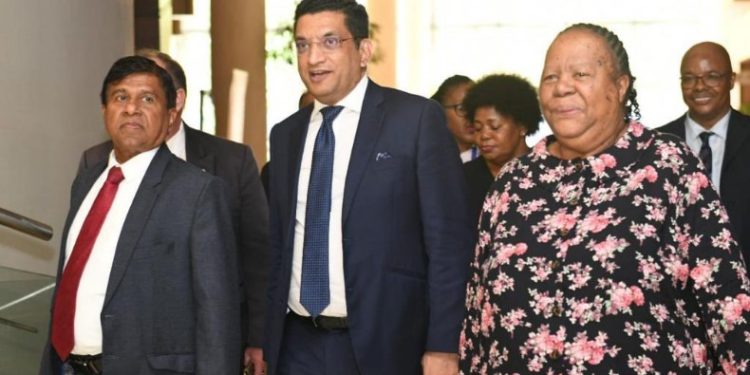
At a meeting in Pretoria on Wednesday, the Sri Lankan Minister of Justice Wijedasa Rajapakshe and the Minister of Foreign Affairs Ali Sabry discussed with Rolf Meyer and Ivor Jenkins, the contours of the proposed Truth and Reconciliation Commission (TRC) in Sri Lanka inspired by the South African TRC that functioned between 1995 and 2003.

Sabry tweeted to say that he got “some very insightful inputs,” and added that “a credible and transparent domestic TRC could be the solution to deal with intrusive and agenda-driven attempts.” He was decrying the UNHRC’s attempts to impose on Sri Lanka mechanisms for achieving ethnic reconciliation based on retributive justice dispensed by a judicial process with foreign participation.

This is not the first time that Sri Lanka is trying to set up a TRC. It has been attempted before, but only to be abandoned because Sri Lankan society is too divided to make it work. A TRC would be mooted when there is a temporary need to mollify the international human rights lobby and abandoned after the threat recedes. It was mooted in 2015 and 2022 because of pressure from the UNHRC, but it was not followed up. It is mooted now primarily to please the IMF, but with no intention to actually set it up.

However, on October 16, 2018, a conceptual framework was submitted to the Lankan cabinet. It decided to refer it to the Ministry of Defense. But it went no further. In March 2020, the UNHRC reported that the TRC proposal had not made any progress.

The concept paper had said that the TRC of Sri Lanka (TRCSL) will be established by an Act of Parliament. Justifying this, the concept paper said: “Despite the appointment of numerous ad hoc commissions of inquiry during the past (like the Paranagama Commission, the Lessons Learnt and Reconciliation Commission, the Udalagama Commission, Mahanama Tillekeratne Commission) due to failure to implement recommendations made by those Commissions, it has not been possible to successfully prevent recurrence of conflict, or build confidence amongst all the people of Sri Lanka in the efficacy of measures to ensure non-recurrence, advance national unity and reconciliation or identify and undertake administrative reform interventions that may be necessary.”

The concept paper further said that the proposed Act of Parliament would, inter alia, incorporate statutory provisions to appoint a Monitoring Committee which will “enable all Sri Lankan citizens, irrespective of race or religion, including families of police and security forces personnel, civilians in villages that came under attack by terrorists, security forces personnel and police personnel, and all affected persons in all parts of the country, to submit their grievances suffered during any phase of civil disturbances, political unrest or armed conflict that has occurred in the past, to the proposed TRCSL.”

“The proposed TRCSL should have sufficient administrative and investigative powers, including those granted to Commissions of Inquiry. This includes powers to compel the cooperation of persons, State institutions, and public officers in the course of its work. While the TRCSL will not engage in prosecutions, it should be vested with sufficient investigative powers. But the TRCSL’s recommendations shall not be deemed to be a determination of civil or criminal liability of any person.”

However, nothing was done till March 2023, when, at the invitation of the South African High Commissioner in Sri Lanka, Ministers Wijedasa Rajapakshe and Ali Sabry flew to South Africa to study its TRC.

Impediments

Would the ministerial mission bear fruit? The political and ethnic conditions in Sri Lanka do not appear to be conducive for the setting up of a TRC or for getting a favorable result from it. Lankan society is sharply divided ethnically on what was right and wrong during the 30-year armed conflict. Unlike the majority Sinhala-Buddhists, the minorities, especially the Tamils, are hell-bent on retributive justice, not restorative justice which the TRC in South Africa attempted and the Lankan variant would follow.

One of the major disadvantages in Sri Lanka in comparison with South Africa is the absence of an over-arching and towering national leader to move the masses in any particular direction. From 1995 to 2003, when the TRC was functioning in South Africa, it was overseen by icons like President Nelson Mandela and TRC chairman Bishop Desmond Tutu.

However, even under favorable conditions, the South African TRC (TRCSA) was only a partial success, says Samara Auger, author of Healing the Wounds of a Nation: The Truth and Reconciliation Commission of South Africa.

Key takeaways from Auger’s paper:

The TRCSA collected over 21,298 victim statements. Over 7000 offenders applied for amnesty. Of these 7000, 1167 were granted full amnesty and 145 partial amnesty. The TRCSA released an interim report in 1998 and a final report on March 21, 2003.

The fundamental principle informing the TRCSA’s efforts was encapsulated in the indigenous African concept of Ubuntu. As per Ubuntu, jurisprudence is restorative rather than retributive. Ubuntu says: “I am human only because you are human. If I undermine your humanity, I dehumanize myself. You must do what you can to maintain this great harmony, which is perpetually undermined by resentment, anger, and desire for vengeance.”

In the final report of the TRCSA, Ubuntu is reflected. Justice is defined not as punishment, but as “reparations to victims and rehabilitation to perpetrators.”

The Ubuntu approach rests on the acceptance of the concept that the sufferings undergone were “collective”, that everyone suffered equally, regardless of class, race or religion and that people should seek collective redemption, forsaking revenge in exchange for peaceful alternatives. In the “collective approach” society or the nation is placed above the “individual”. The individual victim is expected to subordinate his victimhood to the larger interest of the society or country in securing peace and reconciliation. This is based on the theory that the needs of society are greater than those of individuals because once society is healed, individuals will be healed too.

However, the Ubuntu was met with resistance from the Blacks who thought that equating them with the Whites was grossly unfair. Another drawback in the collectivistic approach was that society (typically represented by the government) sought closure before the concerned individuals were ready.

Despite its outstanding leaders, South African society was ethnically divided. A survey of 3700 South Africans conducted in 2000 and 2001 found that 68% of all races found it hard to understand one another and 56% found the other race untrustworthy. Less than one-fifth wanted to be friends with members of another race.

But, among the races, more Blacks than Whites accepted that the TRCSA promoted reconciliation. A public opinion poll that asked the question: “Did the TRC promote reconciliation?” found 70% of Blacks, 59% of Asians, and 26% of Whites answering ‘Yes’. Similarly, a 2002 survey done by Jeremy Sarkin-Hughes found 70% Blacks, 61% Asians, and 37% Whites providing moderate to strong approval of the TRC’s work. However, the White-Black gap was cause for concern,

In Sri Lanka, ethnic differences are wide and entrenched. There are sharp differences between what is right and wrong. A TRC under these conditions will only help sustain differences. Additionally, there is no leader to bridge the gulf, even partially.

Alternatives

The more practical alternative would be to take the following non- abrasive steps which had been suggested but not implemented: (1) release those Tamils incarcerated for years without cases being filed against them; (2) punish perpetrators of atrocities who are facing credible charges; (3) release public lands acquired by the Security Forces and prevent encroachments on lands by government departments on specious grounds (4) boost the economies of the war-effected areas North and East and motivate the minority youth to stay in the country and develop it and not flee the country.


Posted in Uncategorized

Indian military delegation at IPKF memorial

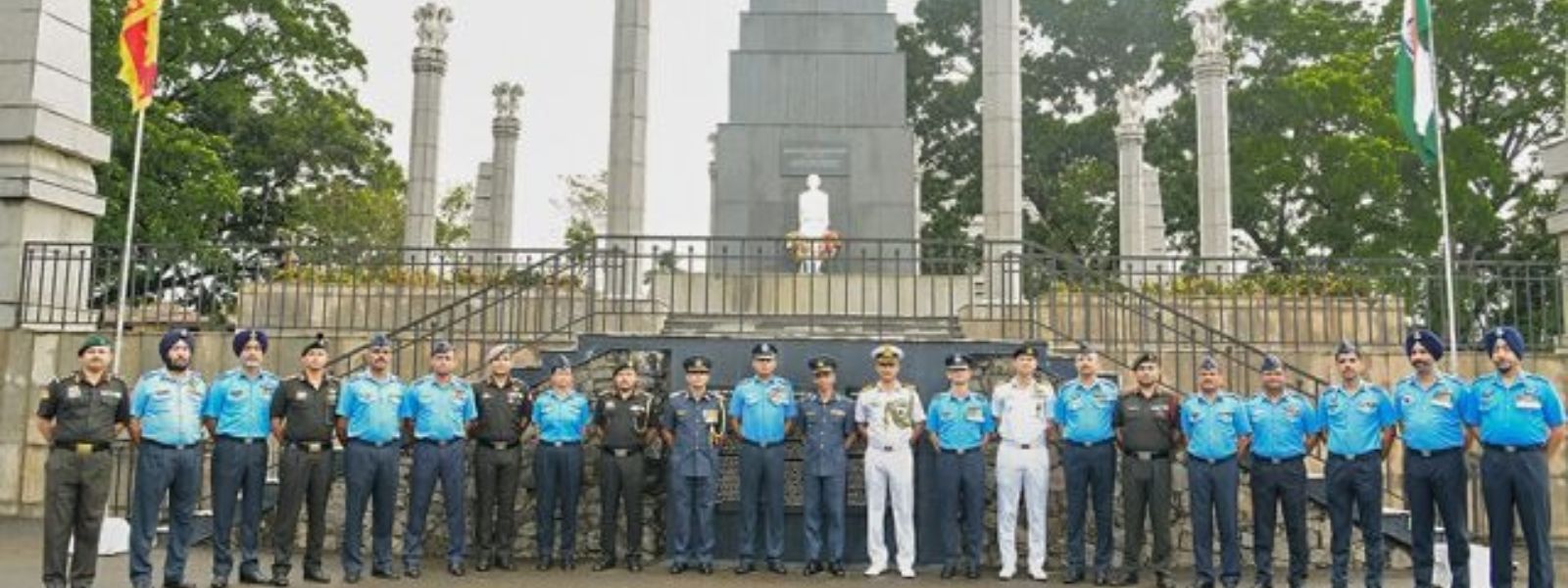
A delegation of 19 Indian Armed Forces officers led by Group Captain Yunus Syed Muzaffar from the 46th Indian Higher Air Command Course conducted at College of Air Warfare, Secunderabad arrived in Sri Lanka as part of Strategic Study Tour from 20-24 March 2023.

The visit is focused on interactions with senior defence hierarchy as well as visits to military establishments and industrial organizations to broaden the vision of the trainees.

The delegation started their visit by paying homage to the martyrs of Indian Peace Keeping Force at the memorial in Battaramulla followed by interactions with High Commissioner of India,Gopal Baglay, Chief of Defence Staff, General Shavendra Silva, and Air Marshal S.K Pathirana, Commander of Sri Lanka Air Force.

The delegation is also scheduled to visit Galle, Hambantota, Diyatalawa, Kandy and Katunayake and interact with various agencies to get deeper insights about Sri Lanka.

India’s ‘Neighbourhood First’ Policy seeks to promote institutional linkages between the Armed Forces of India and Sri Lanka. Such Study Tours help strengthen the existing bonds of camaraderie and enhance people to people connect to achieve regional peace, security and stability.

A few members of the delegation, including the head of the delegation, called on the Commander of the Sri Lanka Air Force, Air Marshal Sudarshana Pathirana and symbolic mementos were exchanged to mark the event. Group Captain Nipuna Thanippuliarachchi, conducted a presentation for the course participants at the AFHQ Auditorium.

Posted in Uncategorized

Military deployed again to maintain law and order

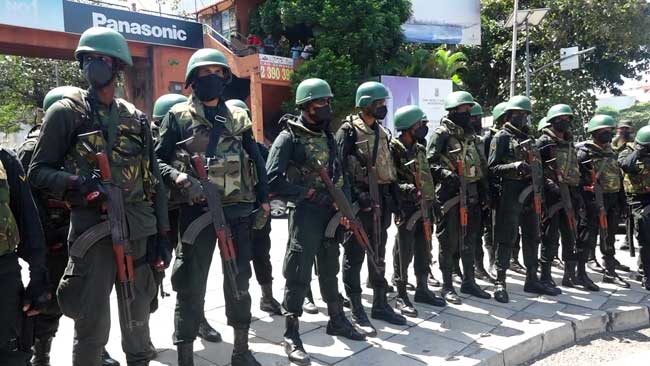
President Ranil Wickremesinghe has deployed the military again, through a Gazette Extraordinary, to maintain law and order in the country.

The Gazette Extraordinary has been issued with effect from March 22, 2023.

“By virtue of the powers vested in me by Section 12 of the Public Security Ordinance (Chapter 40), I, Ranil Wickremesinghe, President, do by this order call out with effect from March 22, 2023 all the members of the Armed Forces specified in the First Schedule hereto, for the maintenance of public order in the areas specified in the Second Schedule hereto,” the Gazette Extraordinary said.

The First Schedule in the gazette names the Sri Lanka Army, Navy and Air Force.

The Second Schedule mentions all the areas in the country where the military has been placed on standby. This includes all the districts in Sri Lanka.

The military had been deployed to maintain law and order following the Easter Sunday attacks.

Posted in Uncategorized

EC convenes special discussion to decide on holding LG polls

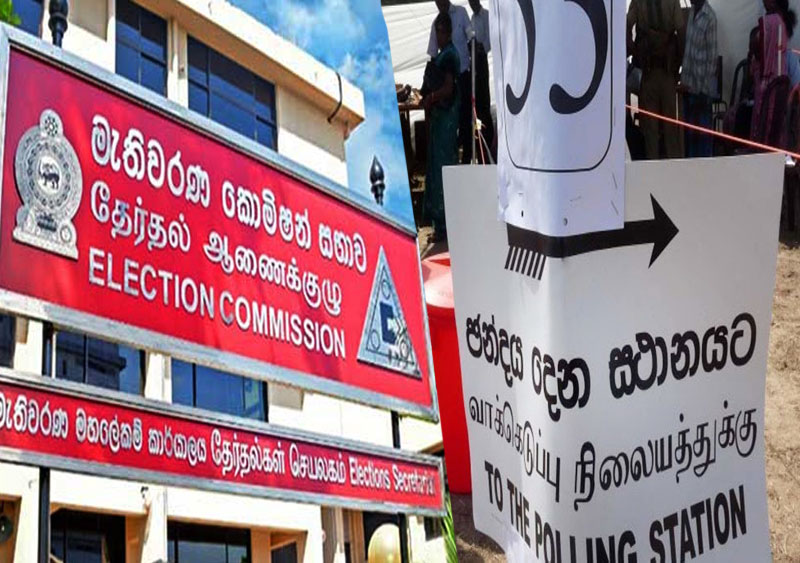
A special discussion on the 2023 Local Government (LG) election will take place between the political party secretaries and the Election Commission today (March 23).

During the discussion, a final agreement will reportedly be arrived at whether the LG polls will be held on April 25 or not.

Meanwhile, the Government Printer has recently informed the Election Commission that it cannot proceed with printing of ballot papers due to lack of funds and that therefore it is not possible to deliver postal voting ballots on the scheduled date.

Owing to the current circumstances, a situation has arisen where it is not possible to commence the postal voting from March 28 as scheduled.

The Election Commission claims that accordingly, it will not be able to hold the LG polls on April 25.

Following today’s discussion with the secretaries of the political parties, the Election Commission will decide whether to declare another date to hold the election or to take more time to announce a new poll date.

Posted in Uncategorized

EC proposes to hold postal vote for 17 districts

Noting that there is a problem as to how far it is ethical for the Government Printing Department to withhold the ballot papers related to 17 districts which have already been printed, the Election Commission (EC) stated that if those ballot papers are provided, the postal voting pertaining to the Local Government (LG) election can be held in the relevant districts.

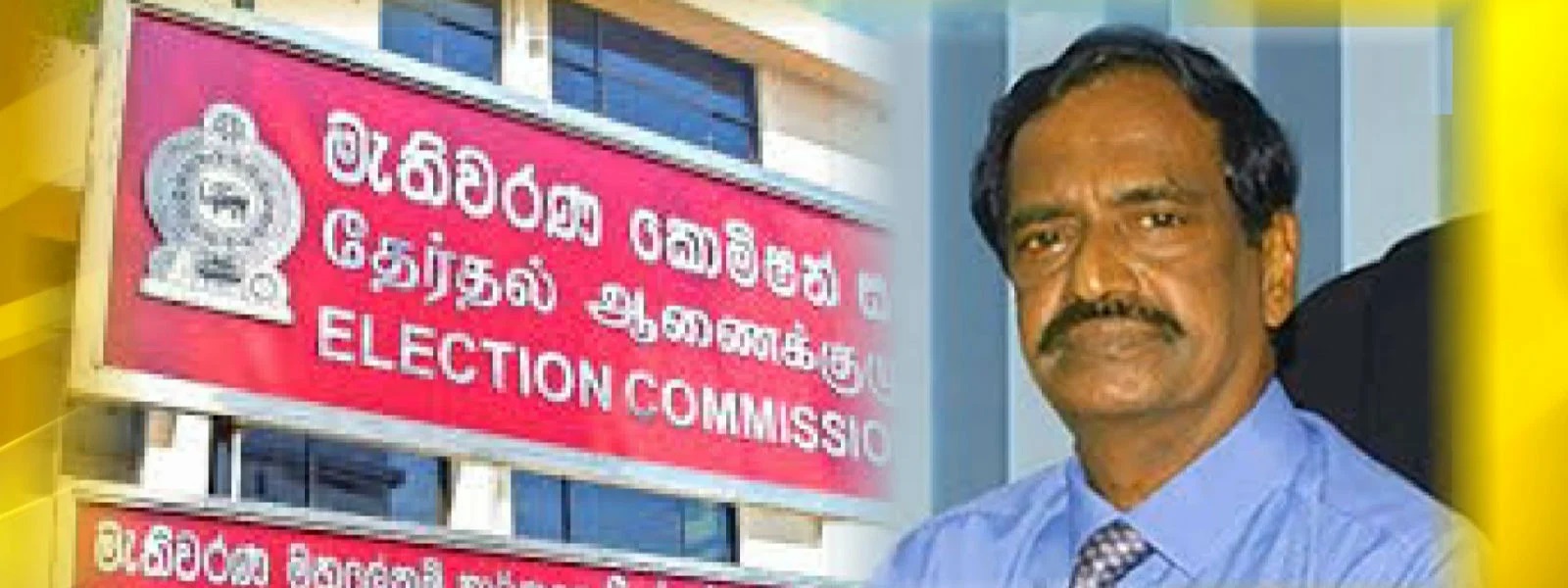
Speaking to The Daily Morning yesterday (22), EC Chairman, Attorney Nimal G. Punchihewa said: “The Department has printed ballot papers related to 17 districts. It was more than a month ago that we requested from the Government Printer Gangani Liyanage that those ballot papers be given to us. However, we are yet to receive them and I do not know how far it is ethical for them to withhold them. If those ballot papers are released, postal voting can be held at least in those 17 districts.”

When queried as to whether the existing legal provisions allow for the postal voting to be held in only 17 districts, he said that there is no legal barrier to doing so. “Postal voting can be held in a few districts, and then in the rest.”

He also commented on the EC not having received the ballot papers for the postal voting on Tuesday (21), the date on which they expected to receive them. “We were expecting to receive them by Tuesday, but it did not happen. If we receive them even within the course of these two days (today [22] and tomorrow [23]), we can hold the LG elections as scheduled. If it does not happen, we will have to discuss and decide on the next course of action that we will have to take.”

In response to a query by The Daily Morning as to whether the EC would seek a meeting with Finance, Economic Stabilisation and National Policies Minister and President Ranil Wickremesinghe to discuss the current situation with regard to the release of funds for the LG Elections, Punchihewa said that the requests made by the EC to the Secretary to the Finance, Economic Stabilisation and National Policies Ministry and Treasury Mahinda Siriwardana have already been forwarded to Wickremesinghe.

“Our requests have already reached Wickremesinghe. If the Ministry and the general Treasury can declare a time by which they can release the funds for the LG elections, we can make the necessary decisions accordingly, but it is not happening. All that the Ministry and Siriwardana say is that our requests have been forwarded to the Minister. What I can say is that we, as the EC, are committed to holding the elections as soon as the funds are released. If it does not happen, it is up to the political parties and civil organisations to carry this struggle forward,” he added.

Speaking to The Daily Morning last week, Liyanage said that the EC has been requesting her to release the postal ballot papers for 17 districts which have already been printed, but that she could not release them just because the printing work is done.

“They should be checked and the relevant payments should be made to us by the Ministry and the Treasury. What if we would not receive the payments in case I release the ballot papers to the EC?,” she queried, adding that it is questionable as to whether the release of ballot papers only for 17 districts would be of use to the EC as it is not possible to hold the postal voting in only 17 districts.

Sajith says opp. met diplomatic corps over delay in LG polls

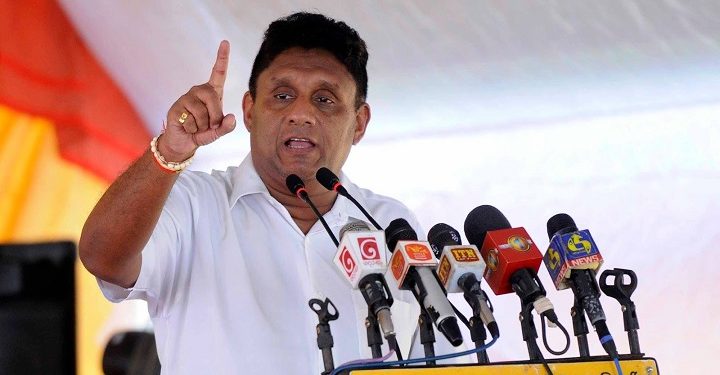
The joint opposition including the Samagi Jana Balawegaya (SJB) met the diplomatic corps including the Ambassadors over the delay in holding the Local Government election, Opposition Leader Sajith Premadasa said today.

Responding to an allegation made by Chief Government Whip Prasanna Ranatunga that he learnt that the opposition political parties met the deplomatic corps and requested them to delay the IMF funds to Sri Lanka and enforce strict conditions, the oposition leader said they only discussed the delay in LG polls and that they never engage in political slander.

Premadasa said they had never related internal matters to the loans, benefits and donations that the country was to receive during discussions with the international community. “We informed the diplomatic corps that delaying elections could be a huge blow to democracy.

We have a right to meet diplomats and expedite the elections. We informed them that we have been signatories to some 20 international conventions including the ICCPR Act which promotes the right to election,” he said.

Chief Opposition Whip Lakshman Kiriella, who confirmed the meeting with diplomatic corps said they discussed the delay LG polls.

SJB MP Harsha de Silva said they never requested the deplomatic corps to tighten IMF conditions, instead expressed gratitude for the support they extended.

“Almost all the diplomats representing countries of bi-lateral creditors joined the said meeting. We thanked them for extending their support to Sri Lanka.

Basil recommended bringing in Ranil – SLPP

State Minister Indika Anuruddha commended the efforts made by President Ranil Wickremesinghe during a media briefing convened by the Sri Lanka Podujana Peramuna.

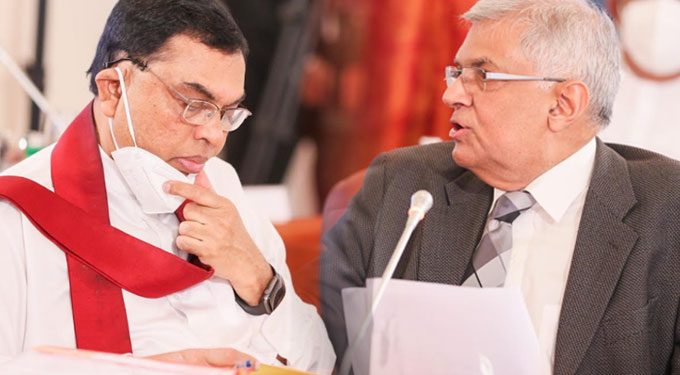
He told reporters that it was Basil Rajapaksa who recommended that Wickremesinghe be handed over the task of taking the IMF program forward.

“The initial step was taken during the Gotabaya Rajapaksa administration. We had a few people in the Viyath Maga who were dragging the president’s feet. It was Basil Rajapaksa who in fact made the recommendation that Ranil Wickremesinghe is the only person who can take the program forward,” he said.

Posted in Uncategorized