Tamils Come Second In IMF Considerations: Navy & Royalist Mafia Party On Tamil Property By S. Ratnajeevan H. Hoole

Our government is totally without support from the people and is sustained in power by the military and police bashing up legitimate protest gatherings. Yet, we are said to be on the threshold of receiving the US$ 2.9 Billion IMF Loan in the next two weeks, reports CNN. God forbid! The IMF gives the loan. It will be spent by those who do not represent us, the people. And we the people would need to pay back when repayment id due. There is no free market in this as preached by the IMF.

The Local Government Elections are up in the air. Even if they are held, they will only indicate the popularity of government while the corrupt MPs who elected the President will continue in office.

It is totally irresponsible for the IMF governors to sit in America and authorize loans that we who need to pay back do not consent to. Yes, the loans will help ease our difficulties but bring no long-term solution. In the meantime, the populist instincts of the government, the cause of most of our problems, remain intact as evidenced in the government loosening all restrictions on foreign transactions using our credit cards while hospitals go without medicine. The elite are looked after. Those of us who have large credit card limits, can buy anything we want and continue to do so by paying the balance on the card in rupees every month to buy again the next month. The government feeds on the Sri Lankan instinct for wanting everything free, and for wanting more.

Lack of Tamil Democracy

The lack of democracy in Sri Lanka must be addressed first and the legitimacy of the government established, before any IMF loan is authorized. That lack of democracy is a national crisis and a particular badly infected sore in the Tamil psyche. Despite all that President Ranil Wickremesinghe promises, nothing is done to resolve our problems. He seems to be a prisoner of the Sinhalese right or in secret league with the Sinhalese right.

I returned this evening (16th) after going to Olumadu and Oonjal-katti on a project to feed the poor. It is a project that started last year March with funding from my children and former students and colleagues.

Olumadu is 10 km from Manal Aaru (taken-over from Tamils and made into the Sinhalese Weli Oya). The take-over of Tamil lands is obvious as one goes from Olumadu to Manal Aaru. In-between, Tamil schools like in Kovil-pulyan-kulam, and Vedi-vaitha-kallu have had their Tamil populations driven out through selective killings. Schools are closed. The populations have run away to Vavuniya and are presently absentee landlords cultivating their paddy fields – once called Ithaya Poomi by the LTTE because of the large harvest. Soon they will not be able to sustain their paddy cultivation and the Weli Oya People will move in is what locals expect.

We Tamils desperately need that 13th Amendment to safeguard our way of life. An example is the Aathi Lingeswarar Temple in Olumadu. Prof. Pushparatnam of Jaffna University has certified it as a long-standing Saivite site as obvious from the term Lingam. Recently Wimal Weerawansa had gone with his thugs claiming it to be “our Buddhist site” and forbidden any Hindu worship or building steps leading up to the Lingam. Mr. Poopalasingham, one of the early settlers from 1976, got Prabha Ganeshan (allied with the Rajapaksas) to build some steps so when Weerawnsa ordered Poopalasingham to remove the steps, Poopalasingham referred Weerawansa to Prabaha Ganeshan and has persuaded Saivites to continue their worship. That tension persists and is a time-bomb waiting to go off.

If ours is a legitimate government, how can these things happen? Ours is an illegitimate government in whose hands the IMF plans to place the billions of dollars which we would be answerable to.

For our safety and well-being, we Tamils desperately need the Thirteenth Amendment and attendant with it the release of private lands acquired by the Archaeological and Forestry Departments. With the amendment come badly needed police powers. Mr. Poopalasingham’s elder son Uthayakumar was killed in 2000 fighting for the LTTE while their youngest, Vijeyakumaran who was a science teacher, was disappeared in 2009 before witnesses. After ignoring all his appeals and entreaties for 12 years, recently a CID Team visited Poopalasingham who responded, “Why did you come? To tell UNHRC because of the ongoing review to show that you are doing something? Or is it to pull the wool over IMF eyes to beg shamelessly for money?”

That encapsulates the respect we Tamils have for our police. The only way to restore the police to legitimacy is to give their management to the Provincial Councils as already enacted.

National Security and Royal College Mafia

An important anecdote shows who runs the country. It is the military and not civilian authorities. The President has promised to dismantle large sections of the military but there are no signs of anything happening, He has also promised to release lands taken over by the military. Any release has been token.

My brother-in-law Dr. Indran Asirwatham acquired a few acres of land in Keerimalai. His land was acquired in Mahinda Rajapaksa’s time on grounds of national security but in reality to feed his ego and take a swipe at Tamils. A Presidential Palace with a swimming pool was erected. The Hindu buildings in the area were almost completely destroyed to build the Palace. Now that Rajapaksa is gone, the navy has taken it over as the residence of the Northern Province Naval Commander (believed to be Admiral Aruna Tennakoon). A very large ground-staff of Sinhalese navy men are employed at the palace – a part of the Sinhalese disease that made Sri Lanka broke by giving jobs to everyone when there is no work.

Indran, despite coming to Jaffna and making several requests and sending several letters to see his own land, even with the support of the District Secretary, could not enter the area. National security, he was told!

Now he finds that for some time Royal College students having no military or government positions have access to the Palace to come on their vacations with their families and use the swimming pool. He is advised that it is unlikely he will get his land back as they have invested much. However, it is common sense that one cannot develop another person’s property and claim ownership, especially when its use is for the Royal College Mafia. The President, another Royalist Mafioso, also stays there often when he visits Jaffna. It is all part of the Sinhalese penchant for having everything free especially at Tamil expense with no sense of shame.

That is our national security, to give luxury accommodation and throw swimming parties to cronies.

One Sri Lanka

If the Sinhalese are sold on one Sri Lanka, they should stop oppressing minorities and provide for a devolved government where all communities can have room for cultural and religious self-expression and development. The Sinhalese must develop a sense of shame that would stop them from taking over things that belong to minorities. The IMF discipline will hopefully give pause to those Sinhalese who want everything free – like free state services without paying taxes.

The rule of law minimally requires implementing the laws that are in the books like the 13th amendment. It also means curbing the acquisitive and even violent proclivities of the Maha Sangha and people like Gnanasara Thero and Wimal Weerawansa.

The President should stop saying one thing to the Sinhalese and another to the Tamils. If there is no forked tongue when he preaches economic reform, he should ensure that Tamil people’s right to private property is not abrogated so as to entertain the Royalist Mafiosi on Tamil Property at Tamil expense. Minimally I expect the President to have a sense of shame when he stays on property bought with hard earned Tamil cash. It looks like he too believes in having everything free. That attitude must go if he wants to solve our problems. He should never stay in that illegitimate Palace and must learn to go to a Jaffna hotel and pay for his room with government cash to the Tamil owners.

Importantly, the IMF should not give funds to a corrupt government unless that government can prove its legitimacy through the endorsement of its people through elections.
Posted in Uncategorized

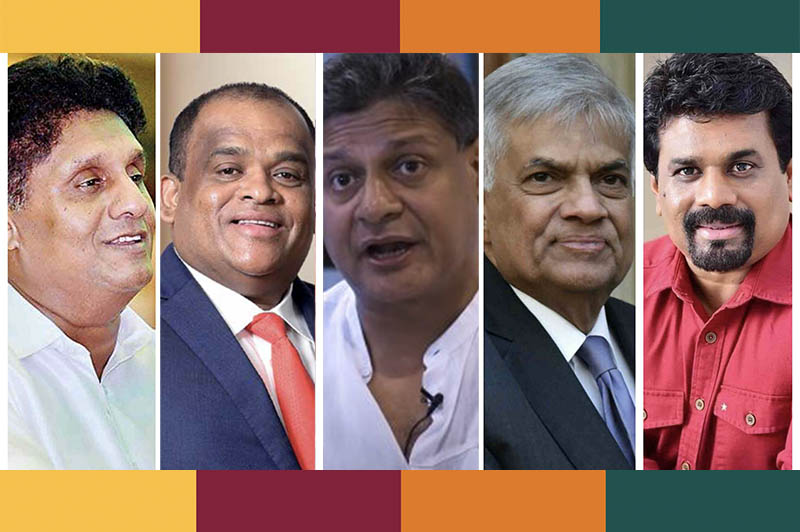
A presidential election in early 2024!

The government has decided against holding any election until a presidential poll early next year, government sources said.

President Ranil Wickremesinghe has instructed the government hierarchy to prepare for a presidential election in one year’s time.

He has repeated this call at meetings of the government parliamentary group and of the UNP, according to the sources.

However, he has made no mention of not holding the local government polls, while speaking about difficulties in running LG bodies with 8,000 members.

Meanwhile, SLPP national organizer Basil Rajapaksa has rejected calls by some to appoint incumbent chairmen as commissioners of LG bodies, if the membership is to be reduced.

(Source: mawbima.lk)

Hope Sri Lanka Parliament will ‘reconsider’ appropriateness of questioning Supreme Court judges – Bar Council of England and Wales

The Bar Council of England and Wales in a press release stated that it hopes “parliamentary authorities in Sri Lanka will reconsider most carefully the appropriateness of questioning Supreme Court Judges before a parliamentary committee, and we similarly hope that the Sri Lankan government will consider most carefully whether it can be ever be right to encourage disobedience to court orders.”

The release refers recent statements made by State Minister of Finance Shehan Semasinghe and Premnath Dolawatte MP, referring to an ongoing case in the Supreme Court pertaining to the Local Authorities elections.

The release, quoting the Chair of the Bar Council of England and Wales, Nick Vineall KC, said: “An independent judiciary is an essential and integral part of the rule of law. So too is the principle that governments comply with court orders.”

The UN Basic Principles on the Independence of the Judiciary state that “it is the duty of all governmental and other institutions to respect and observe the independence of the judiciary” and “there shall not be any inappropriate or unwarranted interference with the judicial process, nor shall judicial decisions by the courts be subject to revision”, the release added.

FULL STATEMENT: https://www.barcouncil.org.uk/resource/bar-council-statement-on-judicial-independence-in-sri-lanka.html

Printing Dept refuses to hand over postal voting ballots without receiving payments

The Government Printer insists that the already-printed ballot papers of the postal voting in 2023 Local Government Election cannot be handed over to the Election Commission until the required payments are made.

According to Government Printer Gangani Kalpana Liyanage, the Printing Department has spent more than Rs. 200 million thus far to print ballot papers, despite receiving an initial payment of just Rs. 40 million.

Printing of ballot papers for 17 electoral districts is completed and they need to be proofread under the police security, Liyanage explained, noting that the Printing Department is yet to receive the remaining payments for the election-related work it has done so far.

In light of this matter, Liyanage said the Printing Department would not be able to hand over the postal voting ballot papers to the Election Commission on Monday (March 20) as planned.

Meanwhile, election chief Attorney-at-Law Nimal G. Punchihewa said the Local Government Election can be held on the scheduled date if the election body receives the ballot papers over the next few days.

The 2023 Local Government Election, which was initially planned to be held on March 09, was later rescheduled for April 25.

Meanwhile, as the term of office of 340 local government bodies expires at midnight tomorrow (March 19), the mayors and the Pradeshiya Sabha chairs of these institutions have been asked to return the official vehicles given to them without delay.

The allowances given to the members of these local government bodies would be paid only until March 19, the Ministry of Public Administration, Home Affairs & Provincial Councils & Local Government mentioned.

SJB to take legal action against Finance Secretary

The General Secretary of the Samagi Jana Balawegaya (SJB) Ranjith Madduma Bandara has vowed to take legal action against the Secretary to the Ministry of Finance for acting against the court’s orders.

Accordingly, Bandara accused the Finance Secretary of disrespecting the orders of the court by failing to abide by the court order issued pertaining to the release of funds for the upcoming Local Government (LG election).

On 03 March, the Supreme Court issued an order preventing the Secretary to the Finance Ministry from withholding the funds allocated for election purposes through the 2023 Budget.

Thus, he stated that the Secretary to the Ministry of Finance ought to be punished under Article 105 of the Constitution, for not abiding by this court order.

The Finance Secretary was informed of the legal action due to be taken against him in this regard by way of a letter sent to him through a lawyer, the SJB General Secretary said.

Posted in Uncategorized

India continues to support debt-ridden Sri Lanka

India says under its ‘Neighbourhood First’ policy it has always come forward to help debt-ridden Sri Lanka, and in the latest instance New Delhi has distributed rations in Kalmunai.

Taking to Twitter, the High Commission of India in Colombo said, “Support by @IndiainSL to needy sections continues!! Glimpses of ration distribution in Kalmunai.”

The cash-strapped country in April declared its first-ever debt default in its history as the economic crisis since independence from Britain in 1948 triggered by forex shortages sparked public protests. The island-nation plunged into a financial crisis after the Covid-19 pandemic affected tourism, which is considered the country’s economic backbone, and remittances from citizens working abroad fell.

The war in Ukraine escalated the crisis as prices for imports, particularly fuel, rose sharply due to soaring inflation. And in such a situation, India offered its help to the debt-ridden country. The Executive Board of the IMF is scheduled to meet on March 20 to consider Sri Lanka’s request for a bailout, and if approved, the first tranche of the facility would be released shortly.

Meanwhile, Sri Lankan President Ranil Wickremesinghe has assured the country’s official bilateral creditors of transparency, equal treatment of all creditors, and equitable burden-sharing of all restructured debt in resolving the country’s economic crisis.

The new legislation will prioritise controlling inflation and introduce an inflation target, Weerasinghe said, adding that the finance minister and the central bank would together agree on what that target should be.

Sri Lanka will also eventually set up a separate entity to raise funds to settle its sovereign debt, removing that responsibility from the central bank, once the new legislation is passed, Weerasinghe said.

Posted in Uncategorized

ECSL issues warning to political parties

The Election Commission of Sri Lanka (ECSL) has called on all political parties that have not submitted their audited accounts for 2021 to do so before 29 March or risk being removed from the list of registered political parties. The ECSL said all parties that have not submitted the accounts have been issued reminders on several occasions and therefore they will be removed from the list of registered political parties if they do not heed this final warning.

Meanwhile, the ECSL has also decided to call for a key meeting with the secretaries of accepted political parties at 10 a.m. on 23 March. The ECSL said the decision to hold a discussion with all political parties was taken at yesterday’s Commission meeting. While it was expected that the ECSL would make an announcement on postal voting and the Local Government election due to the prevailing uncertainty, no such announcement was made following the meeting.

Posted in Uncategorized

Elections unlikely to be held on 25 April – PAFFREL

The People’s Action for Free and Fair Elections (PAFFREL) claims that the 2023 Local Government (LG) polls are unlikely to be held on 25 April, in light of the current situation.

Speaking in this regard, the Executive Director of PAFFREL, Rohana Hettiarachchi, accused the government of acting in a manner that was inconsiderate of the court’s orders.

Hettiarachchi further stated that the question of concern as of now is whether the government accepts that holding elections at ‘the right time’ is a democratic right of the people.

“If the government does not give people the opportunity to express their opinion, then they (the government) must also accept responsibility for the adverse consequences that arise when people exercise their rights outside of the democratic framework”, he said in this regard.

Sinhala-Buddhism & The Nation State Of Sri Lanka By Lucian Arulpragasam

Our Genetic Commonalities

It has been proved by DNA studies conducted by Professor Kamani Thennekoon and others (cited in her article dated Feb. 2019 in The Island) that: “Most DNA studies comparing both the Sinhalese and Sri Lankan Tamils show no large genetic difference, suggesting that both populations have a common ancestry native to the island”. Further, “The study of genetic admixture revealed that the Sinhalese of Sri Lanka have a higher contribution from the Tamils of Southern India (69.86%) compared with the Bengalis of northeast India (25.41%), whereas the Tamils of Sri Lanka have received a higher contribution from the Sinhalese of Sri Lanka (55.20%) compared with the Tamils of India (16.63%)”. Three conclusions flow from this. First, the Sinhalese also came from South India and are, for the most part, of Dravidian origin (69.8%). Second, the Sri Lankan Tamils have been in Lanka for a very long time – because the study finds that: “Sri Lankan Tamils showed a closer genetic affiliation to Sinhalese than to Indian Tamils”. Third, the Sri Lankan Tamils are genetically as much Sri Lankan as the Sinhalese. No politically motivated tying of the Sri Lankan Tamils to the Tamils of South India can alter this fact.

The conclusions of the above genetic studies are also borne out by (Sri Lanka born) anthropologists. Professor Gananath Obeyesekere, Professor Emeritus of Anthropology at Princeton University (USA) who states: “Except perhaps for the oldest stratum of settlers prior to 500 BC, almost all subsequent settlers in Sri Lanka came from South India, mostly from Tamil Nadu, Orissa, and Kerala and quickly became Sinhalised. In fact, some of the most vociferously anti-Tamil castes among the Sinhalese were post-fifteenth century migrants from South India. By contrast, the Tamils of Jaffna and the East Coast have been in Sri Lanka from at least the tenth to the fourteenth centuries AD, if not earlier”. This same view is echoed by Professor H.L. Seneviratne, Professor Emeritus of Anthropology at the University of Virginia (USA), who goes even further, stating: “In the broad perspective, one look at the ethno-demographic spread of peoples in the subcontinent makes it quite obvious that the Sinhalese are a variety of Tamils, as are other ethnic and linguistic groups of South India. ………. In particular, it is striking that the Sinhala Buddhists have forgotten the fact that it is in South India that Buddhism survived centuries after its disappearance from the north.” (The Island,Jan 2014). It is also significant that many Tamils in Lanka were Buddhist at least up to 500 CE.

In light of the above studies, it is strange that the writer knows from three different Sri Lankan Tamils, who were actually asked to go back to ‘their country’ by separate Sinhala Buddhists. The Sinhalese have distinguished themselves by embracing the noble religion/philosophy of Buddhism. However, if we are talking only about race, the Sinhalese should be asked to return to ‘their country’ too. Their racial and religious claim to the island rests only on the doubtful text of the Mahavamsa, which is disputed by many.

The rest of this article seeks to show how the majority community is trying to hijack this country as being solely its own, thus denying the minorities of their Lankan inheritance. The Sri Lankan Tamils have been in the island for over 2000 years. They seem to be part of the same migration from South India that brought the people who later got Sinhalised in the island.

We are not talking about who came first to the island. We are dealing with two communities/ nations already in the island – and what should be the relationship between them. It is the British that placed the Tamils together with the Sinhalese in a unitary state, and granted all political power into the hands of one community (only), that has actually torn us apart. Acting in the belief that Ceylon was one nation, the British set up boundaries of a unitary state together with a parliamentary system, providing an easy way for the Sinhala-Buddhist majority to take over the state. Tisaranee Gunasekara in her ground-breaking article has painted the picture correctly (Groundviews, February 7, 2023) entitled: “The country we have lost to Sinhala-Buddhism”. She is writing from an all-country perspective, which is badly needed: I am writing from a minority perspective. The British have put the minorities in the same colonial cage (the unitary state) as the Sinhalese, thus empowering them to throw away the key!

Independence and the Rise of Sinhala-Buddhism as a Political Ideology

In the states of Europe, the racial and religious rivalries were settled over 300 years of wars and bloodshed before they became nation states. It took 300 years after that for democracy to emerge. In the case of Ceylon, existing racial and religious differences were swept under the rug, so that a ‘nation state’ could be proclaimed, to be crowned by democracy. Independence was granted to Ceylon on Mr. DS Senanayake’s undertaking that Ceylon would be a secular state, governed by the rule of law and protecting minority rights. Sinhala-Buddhism as a political ideology has reneged on that undertaking. This amounts to a constitutional coup d’etat by the Sinhala-Buddhist majority, reneging on its promise of a secular state, and hijacking the state that the Tamils and Muslims too call their own. In effect, the British put the Tamils into the same colonial cage (of a unitary state) with the Sinhalese – and gave them the power to throw away the key! The Sinhala people’s complete control of the electorate will ensure that the colonial cage of the unitary state will never be unlocked. The point is that we always start with the assumption of the unitary state that the British left us – although our own history should teach us otherwise.

Ads by FatChilli
Colonial Boundaries Determine Election Results

The British left us with our current boundaries – which we all take for granted. However at one time, Ceylon was part of the Madras Presidency of India (Tamil Nadu today). If the British had left us like that, our official language would be Tamil, while Hindi would be our national language! Would any Sinhalese have accepted that? We start with what the British left us– a unitary state. However, given the rise of Sinhala-Buddhism supremacy, the minorities would definitely have been better off if our boundaries had been left as they were when the first colonizers (the Portuguese) came to the island. Why always start from the boundaries of the unitary state that the British left us – and no other?

Creation of Conditions for Sinhala-Buddhist Domination

In their hurry to leave after World War II, the British wished to believe that they were leaving behind a nation state in Ceylon. They willfully mistook their own history in order to do so.

Second, the British (and also the French) left behind a unitary state, which they preferred for centralized control and administrative convenience. On the other hand, if we had been under American influence, we would have inherited a more devolved constitution – or even a federal one, as did some countries in Latin America.

Third, the British and French left behind parliamentary constitutions modeled on their own. In Sri Lanka, It took little time for the majority Sinhala-Buddhists to capture Parliament and to divide the country by the Sinhala Only Act (1956). The 1972 Constitution followed, which ordained that sovereignty resided in Parliament, where the Sinhalese had a permanent and monopolistic majority.

Fourth, the British Constitution has no Bill of Rights. In any case, safeguards for the minorities under our constitution/s could be abrogated by a 2/3rd majority of Parliament, which can always be conjured up by raising the Sinhala-Buddhist cry. Moreover, what is the use of constitutional safeguards when organized violence can achieve even more?

Finally, the British created the boundaries of a unitary state.

The above vulnerabilities in our constitution have been seized upon by the electoral majority to change the nature of the state to conform to its own image (only). This has had the effect of dividing the Sri Lankan nation along racial and religious lines.

‘Electoral Democracy’

All our constitutions implicitly assumed that the democratic process would be able to solve any communal differences that would arise. On the contrary, each General Election has only exacerbated our communal differences. Unfortunately, we have achieved only electoral democracy – and not the rest of democracy. .

The futility of the minority vote was confirmed by the recent Presidential election, where President Gotabaya was elected, despite all the minorities voting against him. Thus, the minorities are damned if they vote – and doomed if they don’t! It is not a coincidence that the voting results in the last Presidential election showed conclusively the separation between the two nations inhabiting our island. In fact, the actual vote in the past Presidential Election was stratified in exactly the same way in which Prabhakaran intended dividing the country, with the north and east voting resolutely against President Gotabaya. It also shows that the members of the Tamil and Muslim minorities do not want to live under Sinhala rule, despite having lived together with the Sinhalese in a unitary state for over 75 years.

To be fair, we can argue the opposite of all the above. If by some chance, the Tamils held the majority in Parliament, they would probably have done the same thing as the Sinhalese: accumulate all power to themselves and make the state look like them too. Hence, this is not only a communal problem, but also a constitutional one.

Different Nations in Our ‘Nation State’

The Sinhalese were the first to claim that they were a different nation, a race with an ancient Buddhist heritage, with a different race, religion, language and culture from the minorities. The political dominance of Sinhala-Buddhist nationalism has advanced in three stages. The first is for Sinhala-Buddhist nationalism to be equated with Sri Lankan nationalism. The second stage is for Sinhala-Buddhist nationalism to be equated with the Sri Lankan state. The third stage is for Sinhala-Buddhism, acting in the name of the state to take over the Tamil-speaking north and east. This has resulted in an Army of occupation that prides itself on belonging to a different race, does not speak the language of the governed, nor practise its religion, and rules against the will of the governed. It is true that there are individual Sinhalese who have given up so much to make a positive difference in the lives of the Tamils in the north and east.

The problem is that there is not only a Sinhala-Buddhist nation in Sri Lanka, but also a Sri Lankan Tamil nation, with differences of race, religion, language and culture from the Sinhalese. This Sri Lankan Tamil nationalism has been accentuated by the war that lasted over 25 years. The Tamils do not wish to be ruled by a constitutional system that allows the Sinhala Parliamentarians by a vote among themselves (the Tamil MPs will always be out-voted) to decide the fate of the Tamils in the North and East. There is also the Muslim community, with a distinct religion and culture, with a heavy presence in the Eastern Province. This community, after being shamefully victimized by the Tigers, is now feeling the brunt of Sinhala-Buddhist nationalism. Sri Lanka’s tragedy is to deny the reality of our plural society – and to think that these differences can be resolved by military force or by mob violence. The aragalaya is over now; and it is time to step back into our separate communal identities, as Sinhalese, Tamil or Muslim!

The Policies and Politics of Sinhala-Buddhist Supremacy

The chief priests of the Asgiriya and Malwatte chapters have vetoed any attempt at devolution. Is this only race; or is this politics or religion talking? Thus the political ideology of Sinhala-Buddhism seems to work politically, racially and ‘religiously’. This combination of populism, authoritarianism, racism and overt militarism, backed by the clergy, marked the rise of fascism in Spain, Italy and Germany.

Sinhala politicians have convinced the Sinhala majority to reject federalism or even devolution. However, our unitary constitution has served only to divide the country. Although the territory was ‘unified’ by the war in a unitary state, never have the people been more divided. And this is after 75 years of our unitary constitution!

Devolution or federalism might be the only means of keeping the country together under democracy. It can be held together by the military – but for how long? The whole argument of this article is that the Sinhalese people do not have a God-given right to determine the rights and future of the Sri Lankan Tamil people. They have this power only by virtue of the power left to them by the British, the betrayal of the promise made at independence, and by victory in the recent civil war – albeit by using the internal and external resources of the state.

There only three possibilities left:

1. An independent state for the Sri Lankan Tamils and Muslims.

2. A devolved or federal state: this option may be our last chance to survive as a democracy.

3. A colony in the north and east, held down by a Sinhala Army, ruling a people against its will. We know that this is not the intention of the Sinhala people; but it is the reality on the ground.

If the first two alternatives are rejected, there is only the last alternative left. It would be a‘colony’ ruled by an army, that prides itself on being of a different race, that does not speak the language of the people, nor practise its religion, ruling against the people’s will – in fact, the definition of a ‘colony’. The majority in the electorate does not seem to care that its desire for a Sinhala-Buddhist state has resulted in a state that is racial, sectarian, authoritarian, militaristic, permanent and corrupt – the aragalaya notwithstanding. The Sri Lankan Tamils, who voted against this outcome, remain trapped in the same colonial cage with the Sinhalese, in a state that is spinning out of control.

Posted in Uncategorized

Election Commission to meet on Thursday (16) as authorities are yet to release funds

The Election Commission will meet on Thursday (16) for talks on the upcoming Local Government Election.

Chairman of the Election Commission Attorney Nimal Punchihewa said the meeting is scheduled for 10:30 AM at the Election Secretariat.

It is reported that the meeting will focus on the delay in releasing funds for the Local Government Election on the part of the Ministry of Finance, and the relevant measures that need to be taken on the matter.

The Government Printer said that a second letter was sent to the Treasury seeking funds for the printing process related to the Local Government Election.

In the meantime, the Collective of Election Monitoring Organizations has decided to inform international agencies including the International Monetary Fund over the delay in securing funds for the Local Government Election, and the obstacles put forth by the government in delaying the election.

Executive Director of PAFFREL Rohana Hettiarachchi said that all international missions in the country would also be informed of the same in the coming days.