Sri Lanka looks to work closer with ASEAN

Sri Lanka has expressed interest in having a closer collaboration with ASEAN.

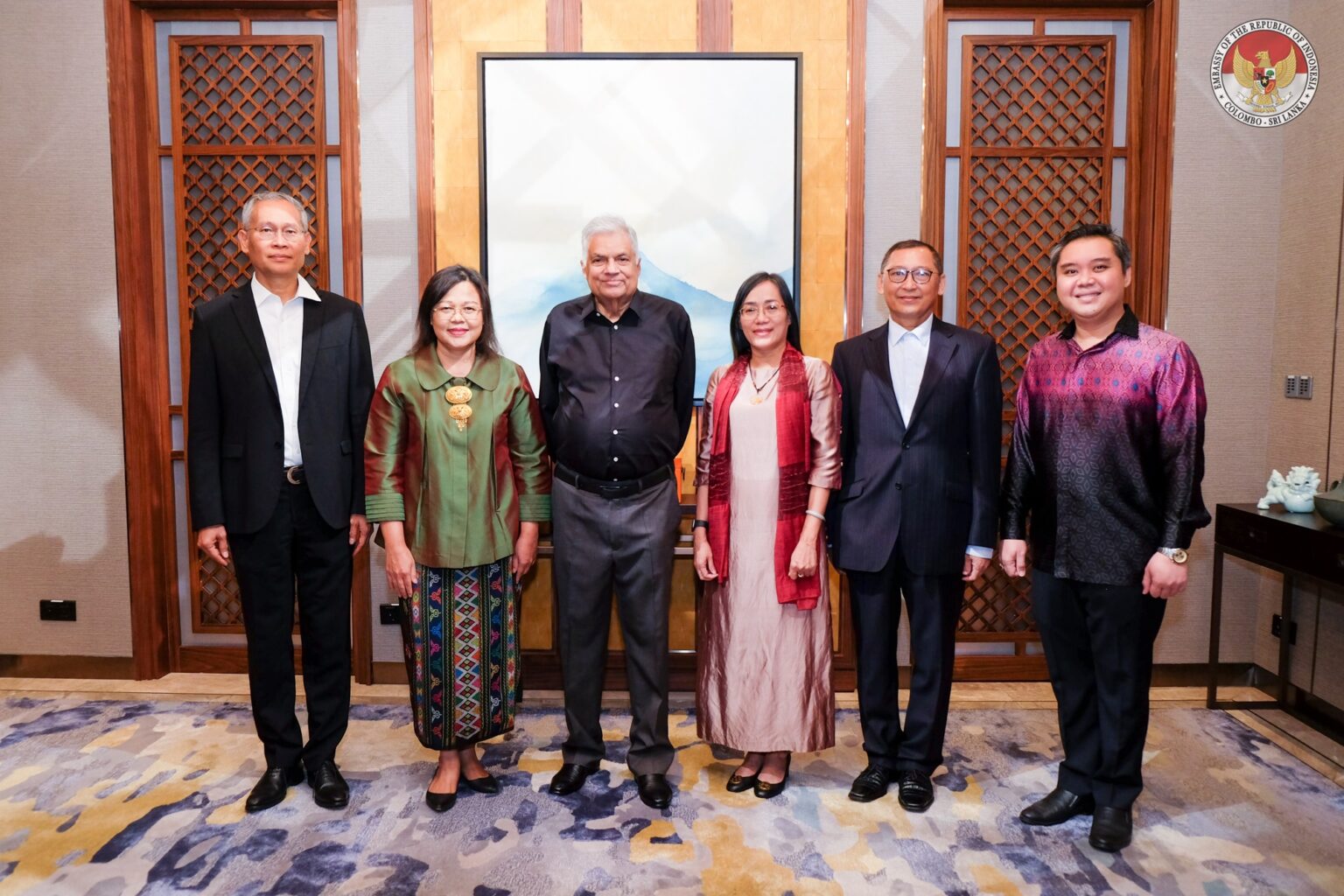
The Heads of ASEAN Missions in Sri Lanka hosted a dinner in honor of President Ranil Wickremesinghe in Colombo last evening (Wednesday).

They discussed, among others, the advancement of ASEAN and Sri Lanka cooperation, including in trade, investment, and tourism.

The dinner was attended by the ASEAN Heads of Missions, led by Dewi Gustina Tobing, the Ambassador of Indonesia as the current country’s Chair of ASEAN, and Han Thu, the Ambassador of Myanmar, Ho Thi Thanh Truc, the Ambassador of Viet Nam, Poj Harnpol, the Ambassador of Thailand, and Aneurin Ignatius, the CDA of the High Commission of Malaysia.

State Minister of Foreign Affairs, Tharaka Balasuriya, the President’s Chief of Staff, Sagala Ratnayaka, Foreign Secretary, Mrs. Aruni Wijewardane and the Chairman of the Board of Investment, Dinesh Weerakkody were also present.

Ambassador Dewi Tobing, representing ASEAN, briefed President Ranil Wickremesinghe on the priority of ASEAN under the Chairmanship of Indonesia, which aimed to make ASEAN the motor of peace and stability in the region and to make Southeast Asia the center of economic growth. With the theme “ASEAN Matters: Epicentrum of Growth,” ASEAN countries will ensure that ASEAN remains and is increasingly relevant to the ASEAN Community and the world.

President Wickremesinghe appraised the development and the central role of ASEAN and keened to have a closer collaboration with ASEAN. The President hoped there would be an increase in investment and tourists from ASEAN countries, given that flows from the region only account for a small proportion of investment and tourism.

The ASEAN Heads of Missions of Indonesia, Malaysia, Myanmar, Thailand, and Viet Nam generally responded positively to President Ranil’s hopes for increasing the flow of investment and tourists from ASEAN countries, especially in supporting Sri Lanka in economic recovery efforts. The ASEAN Heads of Missions are also expected to increase the two-way trade relations with Sri Lanka and advance more market access between Sri Lanka and respective ASEAN countries.

The ASEAN Heads of Missions further expressed their willingness to advance cooperation in various fields that benefit Sri Lanka’s economic development, both individually in bilateral relations and within the ASEAN framework.

It was noted that Sri Lanka’s major exports to the region consisted of apparel, electrical machinery, natural pearls, and tea. In contrast, mineral fuels, oils, rubber, and machinery were Sri Lanka’s main imports. The meeting further noted that Sri Lanka joined the ASEAN Regional Forum (ARF) and is a signatory country to the ASEAN’s Treaty of Amity and Cooperation.
Chinese Embassy donates uniform material for Sri Lanka Police

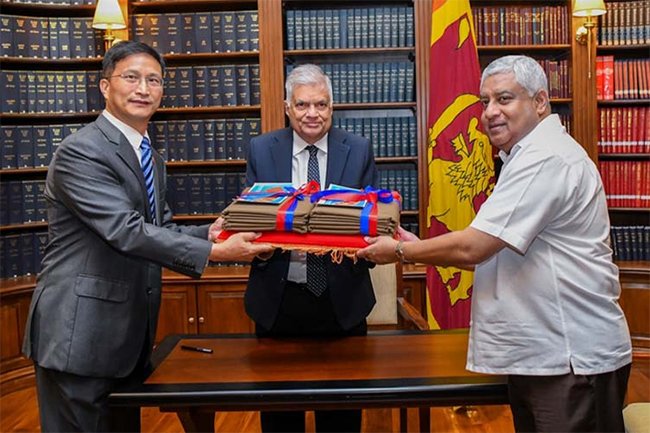
The Chinese Embassy, today (March 15) handed over a donation of material to the Government of Sri Lanka as a donation for the production of police uniforms, the President’s Media Division (PMD) says.

The donation was made by the Ambassador of China to Sri Lanka, Qi Zhenhong, to the Minister of Public Security, Tiran Alles.

This donation was made at the Presidential Secretariat in the presence of President Ranil Wickremesinghe.

Chief of Staff and Senior Advisor to the President on National Security Sagala Ratnayake and Secretary to the President Saman Ekanayake were also present at the event.

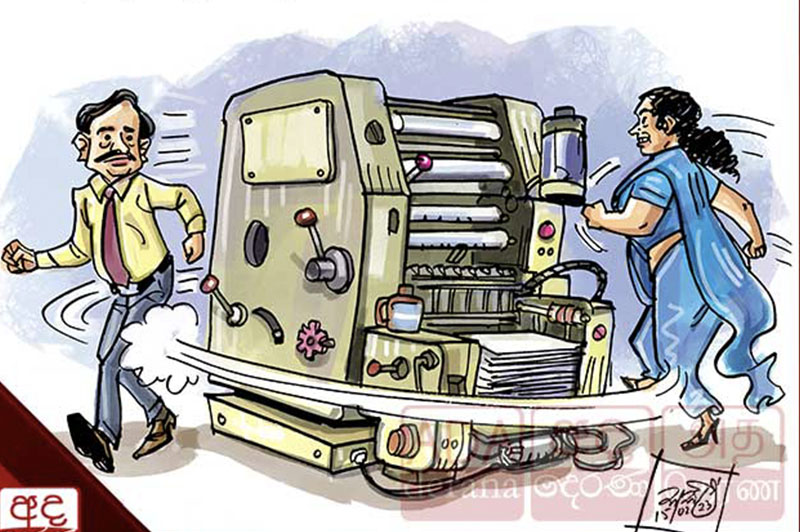
LG polls: Govt Printer says postal voting ballots printing stalled without funds

Printing of ballot papers for the postal voting of the upcoming Local Government election is held off as required funds are yet to be received, the Department of Government Printing says.

Government Printer Gangani Kalpana Liyanage said the department intends to inform this in writing to the election body today (March 16).

The postal voting ballot papers can be printed within six days after receiving the funds, and the remaining printing work pertaining to the election can be completed within a month, the Government Printer said further, adding that this too would be officially informed to the election body today.

Previously, the Printing Department had requested the Treasury to release the funds required to print ballot papers for the Local Government election. However, the department has not received a response from the Treasury yet, the Government Printer said.

The election body, too, made a written request from the Treasury, calling for the release of funds allocated for the elections. In reference to this, the Printing Department, on Tuesday, reiterated its request to Treasury seeking funds to print ballot papers for the Local Government election.

The Printing Department says a minimum of Rs. 200 million is needed to commence the printing work of the Local Government election.

The Local Government Election, initially scheduled to be held on March 09, has been rescheduled for April 25, due to “unexpected and unavoidable reasons”. This was announced in special gazette notifications issued by the Returning Officers last week.

Meanwhile, the postal voting of the election is expected to be held from March 28-31.

Posted in Uncategorized

Economy suffers worst contraction in 2022

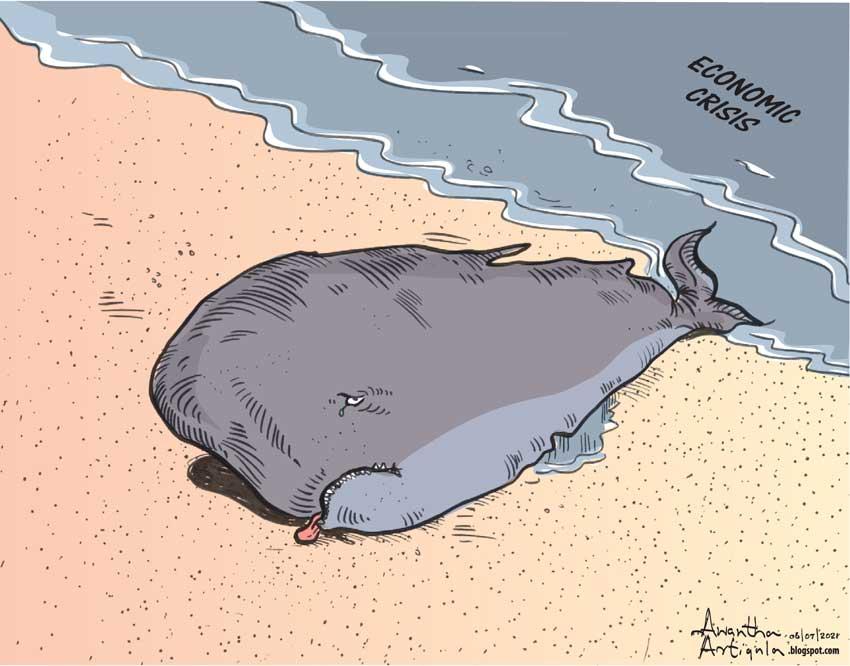
Sri Lanka’s economy suffered its worst fall in 2022, with the GDP contracting 7.8 percent as the further quarter economic growth clocked in at negative 12.4 percent.

This was against a 3.5 percent economic growth recoded in 2021.

2022 also marked the third annual contraction in recent times after 2019 and 2020.

According to the Department of Census and Statistics, all three major economic activities of agriculture, industrial and services suffered contractions.

Industry sector suffered the worst contraction of 16 percent followed by agriculture 4.6 percent and services 2 percent. In 2021, agriculture grew by 0.9 percent, industries by 5.7 percent and services by 3.5 percent.

Lohan Ratwatte prisons’ incidents: Prisons Ministry seeks AG’s instructions on RTI order

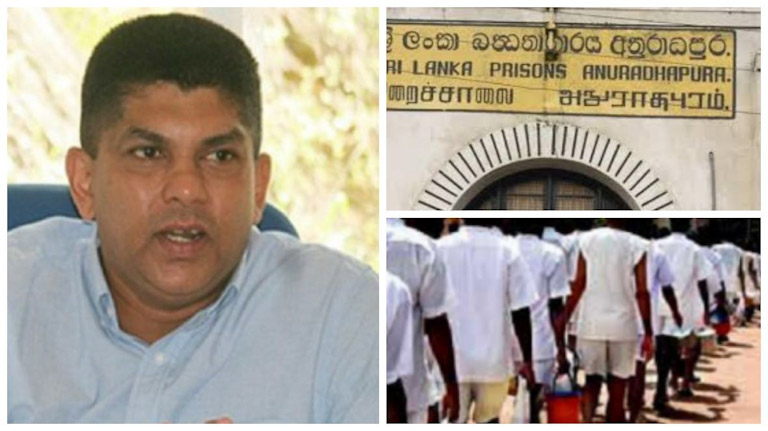
The Justice and Prisons Affairs Ministry has sought the Attorney General’s (AG) instructions regarding an order issued by the Right to Information (RTI) Commission concerning a request for information regarding former State Minister of Prisons Management and Prisoners Rehabilitation, Lohan Ratwatte’s alleged abuse of prisoners.

Earlier, the Centre for Society and Religion (CSR) has requested the RTI Commission to initiate legal action against the Justice, Prisons Affairs and Constitutional Reforms Ministry’s non-compliance with the order issued by the Commission to release a committee report on the incidents of Ratwatte having allegedly forcibly entered two prisons and having intimidated several inmates in 2021.

The CSR has since requested the RTI Commission to initiate legal action against the Ministry for non-compliance with the order issued by the Commission to release a committee report on the said incidents.

When contacted by The Daily Morning, Journalist Tharindu Iranga Jayawardhana, representing the Research Team of the CSR which had filed the appeal with the RTI Commission based on which the relevant order was issued, said that the Ministry had not released the report despite the Commission’s order to release it before 23 February 2023. Accordingly, he said that the CSR had requested the Commission in writing to initiate an inquiry into the Ministry’s non-compliance with the relevant order, and to file cases in the relevant Magistrate’s Courts against the relevant Information Officer of the Ministry, the officials who prevented the report from being released, and the Ministry, under the RTI Act, No. 12 of 2016.

Meanwhile, when contacted by The Daily Morning to query about the matter, Ministry Secretary, Wasantha Perera said: “The Ministry has sought the AG’s (President’s Counsel Sanjay Rajaratnam) instructions regarding the order. The necessary actions will be taken when the instructions are received.”

The RTI Commission on 2 February ordered the Ministry to release the report of the one-member committee comprising retired High Court Judge Kusala Sarojini Weerawardena, which was appointed to investigate the incident in question, thus concluding the hearing of an appeal filed by the Research Team of the CSR.

On 12 September 2021, it was alleged that an inebriated and pistol brandishing Ratwatte had flown in a helicopter to the Anuradhapura Prison, where he had summoned a group of Tamil political prisoners detained under the Prevention of Terrorism (Temporary Provisions) Act (reports state between eight-16 such prisoners), ordered them to kneel, and proceeded to threaten two of them at point blank range, telling them to accept their offence/s and to submit to authority. It was also alleged that prior to this incident, on 6 September, Ratwatte had, together with a group of friends, under the influence of liquor, forcibly entered the Welikada Prison premises after 6 p.m. and proceeded to view the gallows.

Posted in Uncategorized

LG bodies to come under special commissioners

Local government bodies numbering 341 will be brought under special commissioners following the end of their official term at midnight on March 19, said ‘Mawbima’ newspaper.

Subject minister and premier Dinesh Gunawardena summoned all provincial governors yesterday (14) and advised them to administer the LG bodies under urban commissioners and LG secretaries thereafter.

He instructed them to make regular post-reviews of the services provided by the LG bodies.

Further postponement of LG polls

Meanwhile, chairman of the Election Commission Nimal Punchihewa said they would meet and take a decision on postal voting, after the Government Printer declared her inability to print ballot papers without funds.

In this scenario, postal voting due to take place on 28, 29, 30 and 31 of March followed by the LG polls on April 25 are likely to be postponed further.

Posted in Uncategorized

UK launches new trade preferences scheme in Sri Lanka

The UK Government has launched its new trade preferences scheme in Sri Lanka.

A series of events were held in Colombo for the new trade preferences scheme – the Developing Country Trading Scheme (DCTS), which will come into force this year.

“The UK’s new Developing Countries Trading Scheme provides Sri Lankan and UK businesses with a fresh opportunity to diversify and deepen supply chains and reduce the cost of exporting to the UK. We hope businesses will take advantage of the great opportunities we have highlighted through our events this week,” British High Commissioner Sarah Hulton OBE said.

The main event was attended by State Minister of Finance Shehan Semasinghe, Central Bank Governor Dr. Nandalal Weerasinghe, and senior officials from the Department of Commerce, Export Development Board for Sri Lanka (EDB), and the Board of Investment of Sri Lanka (BOI). The event was delivered in partnership with the Council for Business with Britain – the UK-Sri Lanka bilateral trade association.

UK officials showcased high potential value chains and products that can benefit from the new scheme. This was based on research into UK retailers’ and consumers’ buying considerations, as well as insights from Sri Lankan producers, trade programmes and policymakers.

While Sri Lanka exports numerous high value products to the UK including textiles, tea and rubber, there has been a steady decline in trade volumes between Sri Lanka and the UK since 2018. Under UK trade preferences, Sri Lankan exports will benefit from generous tariff cuts and new products will be brought into scope, facilitating access to the UK market for Sri Lankan businesses across a wide range of industries.

“The Developing Countries Trading Scheme will support businesses by giving them the tools to export duty-free to the UK, opening up markets and boosting consumer choice. We want to go bigger and further with our global trade links and the DCTS enables the UK to achieve this with developing countries,” UK Minister of State at the Department for Business and Trade, Nigel Huddleston said.

The new scheme has been designed to grow free and fair trade with 65 countries, including Sri Lanka, thereby creating jobs and boosting their economies. The DCTS offers one of the most generous sets of trading preferences in the world and demonstrates the UK’s commitment to building long term, mutually beneficial relationships with countries like Sri Lanka.

During the visit to Colombo, DCTS officials also met the Minister of Trade, Commerce, and Food Security, Nalin Fernando. They additionally delivered further information sessions and engagements in partnership with the Ceylon Chamber of Commerce, Department of Commerce, EDB, and BOI, Joint Apparel Association Federation, European Chamber of Commerce Sri Lanka, AmCham Sri Lanka, and Rotary International. The sessions focused on sharing insights including current trends, UK market purchasing criteria, barriers to trade and what can be done to unlock Sri Lanka’s trade and investment potential. Attendees also learnt about other key trade-related information including quality certification and customs requirements.

The Developing Countries Trading Scheme (DCTS) will replace the UK Generalised Scheme of Preferences and will come into force in 2023. Under the scheme, Sri Lanka is eligible for zero tariffs on 92% of products. Over 150 additional products will be brought into scope of the new scheme, including milled grains, pet food products and dairy products.

Key figures:
• £1.4bn of total trade (goods and services) between the UK and Sri Lanka each year.
• Over 99% of goods exported from Sri Lanka eligible for duty-free access to the UK.
• £69m of tariffs saved on exports to the UK from Sri Lanka under UK trade preferences.

Further information on the scheme can be found at this link: https://www.gov.uk/government/publications/developing-countries-trading-scheme-dcts-new-policy-report/developing-countries-trading-scheme-government-policy-response

A series of digital user guides for businesses will be published when the scheme comes into force.

Posted in Uncategorized

Services affected as multiple sectors go on 24-hour token strike

A countrywide 24-hour token strike launched by the Professionals’ Trade Union Alliance (PTUA) today has affected a multitude of services today (March 15).

The trade union action was launched in protest of the recent tax revision, electricity tariff hike, and several other unpopular decisions made by the incumbent government.

Accordingly, a number of trade unions affiliated with health, ports, electricity, railway, postal, banking, and education have joined the one-day strike.

Health:

Health professionals including the Government Medical Officers’ Association (GMOA) and the All-Ceylon Nurses’ Union have launched the strike at all hospitals across the country.

The GMOA kicked off its trade union action on Monday, bringing the functions at hospitals in four provinces – Western, Southern, Eastern, and Central – to a standstill, and expanded it the following day to the remaining five provinces; North-western, Northern, North-central, Sabaragamuwa, and Uva.

Meanwhile, the employees of laboratory services as well as the junior staff members of hospitals have also joined the strike.

Education:

It is reported that a low student turnout was observed in many schools today, as the trade unions of teachers and principals including the Ceylon Teachers’ Union (CTU) and the Principal Grade Officers’ Association, too, pledged support for the token strike.

As a result, Provincial Educational Directors were directed on Tuesday to postpone the end-of-term tests at schools, which were scheduled for today.

In addition, the Federation of University Teachers’ Association (FUTA) and the Association of Educational Professionals, too, have joined today’s token strike.

Transport:

The Locomotive Engine Operators’ Union and several other railway trade unions have joined the 24-hour token strike, in support of the multisectoral trade union action. However, some other trade unions in the sector including the Railway Guards’ Union, Station Masters’ Union, and Railway Controllers Association decided otherwise.

Meanwhile, leave of all categories of staff in Sri Lanka Railways was cancelled with effect from Tuesday, until further notice.

The General Manager of Railways, W.A.D.S. Gunasinghe said 20 trains in total were in operation this morning amid the token strike. He attributed this to the committed service of railway employees.

Ada Derana correspondents said police and army personnel had been dispatched to railway stations to ensure the smooth operation of trains.

However, privately-owned passenger buses are up and running today, as the Private Bus Owners’ Association decided not to support the token strike.

Electricity and water supply:

Multiple trade unions in the electricity sector including the Ceylon Electricity Board Engineers’ Union (CEBEU) and the CEB Employees’ Union have decided to be on sick leave today to support the token strike of the PTUA.

In the meantime, the employees of the National Water Supply & Drainage Board (NWSDB) have decided to withdraw from maintenance work today.

Postal:

The Postal and Telecommunication Services Union and the United Postal Services Trade Union Front have bolstered their trade union action by launching a 24-hour token today at all post offices, sub-post offices, head offices, main control offices, and the Central Mail Exchange.

Banking:

Ceylon Bank Employee Union (CBEU) and the Central Bank’s Trade Union Alliance, too, joined the multisectoral token strike today. They also staged strikes on Tuesday against the conduct of the government.

Ports:

Freedom Workers’ Union of the Sri Lanka Ports Authority (SLPA) and several other trade unions affiliated with the sector have also supported the token strike. Over the past few days, the port employees were on a work-to-rule campaign, which they said incurred a loss of nearly 75% from the revenue earned through the ports and the Customs.

Posted in Uncategorized

SL Rupee continues to depreciate against USD

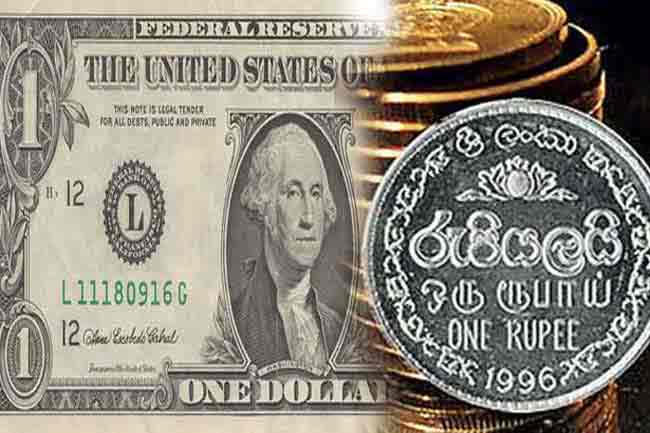
The Sri Lankan Rupee (LKR) has depreciated against the US Dollar (USD) today for the third consecutive day, according to the Central Bank.

Accordingly, today’s buying rate of USD is Rs. 327.59 while the selling rate is Rs. 344.66.

The Rupee has been appreciating against the USD and other major currencies since earlier this month, but the Rupee continue to depreciate against the USD since last Friday.

Yesterday’s buying rate of USD was Rs. 319.84 while the selling rate was Rs. 335.68.

Conducting local government elections is the governments responsibility – Chief Prelates write to President

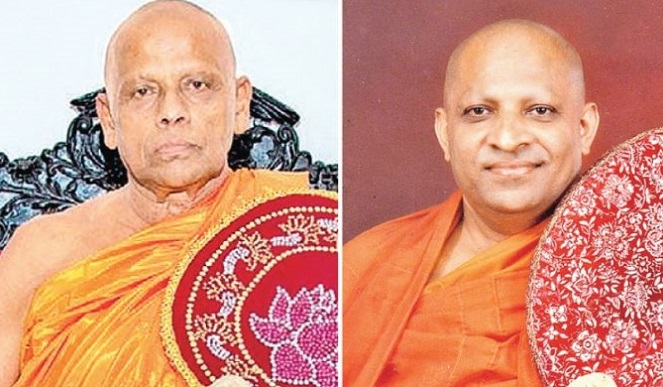
The Chief Prelate of the Malwathu and Asgiri Chapters have asked President Ranil Wickremesinghe to prepare a proper policy mechanism to reduce the rising cost of living to alleviate public burden and calm the social unrest.

Chief Prelate of the Malwathu Chapter Most Venerable Thibbatuwawe Sri Siddhartha Sumangala Thera and the Chief Prelate of the Asgiri Chapter Most Venerable Warakagoda Sri Gnanaratana Thera in a letter addressed to the President commended the steps taken by the President to bring back some normalcy to the country after a turbulent period where major economic, political and social instability existed last year.

The Chief Prelates noted in the letter that the postponement of the local government election has caused some unrest among the public and that preserving democracy means confirming people’s sovereignty through free and fair elections.

They have pointed out to the president, who is recognized as a democratic state leader, that it is the government’s responsibility to conduct the local government elections properly.

The Prelates also highlighted the duties of responsibilities of all stakeholders to ensure economic stability in the country..

“The government should take immediate measures to successfully face the emerging economic challenges and implement populist policies to minimize the rising cost of living and secure people’s lives. Also, all parties have their duties and responsibilities to stabilize the country economically at this critical time,” they said.

The prelates said throughout the past period, they have pointed out the need to establish a practical sustainable policy framework.

“We have reiterated the need to put aside party political theories and implement long-term plans based on national principles for the sake of public welfare.”

“Instead of placing the entire burden of the economic crisis on the public, we have emphasized that the government should work to reduce public suffering through practical solutions such as proper management of public money, prevention of corruption and misuse of public resources, and removal of unlimited privileges enjoyed by public representatives,” the Chief Prelates stressed.

They said the public protests about existing problems should not be implemented with the aim of creating political, economic and social instability in the country. Also, the public should have the right to express their opinions freely in accordance with the legal limits of the country.

Therefore, the Chief Prelates said they expect the government to control the cost of living and gradually restore the lives of the people by securing the supremacy of the law and wished the President that he will get strength and courage from the blessings of Ratnatra for the task.