HALF OF FAMILIES REDUCING CHILDREN’S FOOD INTAKE AS THE COUNTRY SLIPS FURTHER INTO HUNGER CRISIS – SAVE THE CHILDREN

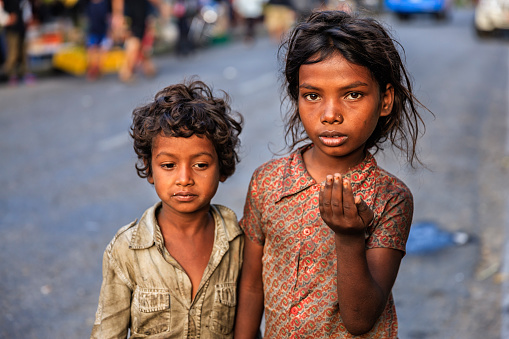
Half of families in Sri Lanka are forced to reduce the amount they feed their children, according to a survey by Save the Children, as the country’s economic downturn spirals further into a full-blown hunger crisis nearly a year after the government defaulted on its debt.

The government and international community must act now to prevent the country’s children from becoming a lost generation, the child rights organisation said.

Since the Sri Lankan government defaulted on its debt nearly a year ago, soaring inflation and food, medicine and fuel shortages as well as a lack of stable employment have left families unable to cope. The country has the seventh highest nominal food inflation rate in the world, according to the World Bank[i] , with year-on-year inflation in the country more than 50%.

Save the Children’s latest survey of 2,308 households across nine districts in Sri Lanka found that due to this inflation, average household expenditure increased by 18% between June and December last year. During this time there was a 23% increase in households unable to meet most or all of their general basic needs, Save the Children said[ii].

Because of this, over the past six months, more families have had to resort to desperate measures to survive, with a 24% increase in households saying they had resorted to borrowing money in order to cover household expenses[iii] ; a 24% increase in households saying they had to purchase food on credit[iv]; and a 28% increase in households selling household items for cash[v].

Female-headed households are particularly vulnerable, Save the Children said, as women are increasingly at risk of trafficking or exploitation, working overtime and in some cases migrating for work. This in turn puts children at risk as they are left alone, according to the child rights organisation.

While half of households said they are cutting their children’s food intake, 27% reported adults skipping meals to feed their children. Nine out of ten households said they cannot guarantee nutritious food for their children.

Suren* and Preethika*, from Colombo, struggle to provide a well-balanced meal for all three of their children. Even simple nutritional foods, such as eggs and yoghurt, have become too expensive for the family to afford, limiting the items they are able to feed their children. On most days, they are forced to prioritize their toddler’s nutrition.

Their 11-year-old daughter Thisuri* said that she and her 8-year-old sister Ayama* now often go without things like yoghurt because their parents can only afford to provide it for their one-year-old sister, Hiruni*.

Thisuri* said: “We really like to eat yoghurt too, but most of the time my parents can only afford to buy yoghurt for my youngest sister. Whenever they have extra and can afford it, they buy the two of us yoghurt too.”

“Things are so expensive in shops now. It was never like this before.”

The survey also found that 70% of households lost all or most of their sources of income between June and December last year. Among these, more than half of households (54%) now source their main household income from jobs that are seasonal and irregular. This instability is putting children in the precarious position of not knowing where their next meal is coming from, Save the Children said.

Julian Chellappah, Save the Children’s Sri Lanka Country Director said: “These figures show how the crisis in Sri Lanka continues to spiral out of control and how, as with any crisis, children are bearing the brunt with their physical and mental health, nutrition and education all at risk. These children were born into hope as the country’s post-war generation – but we are in grave danger of failing them once again.”

“Parents should never have to choose who in their family gets to eat a meal. Everything we are seeing here points to a very real danger of a full-blown hunger crisis. The Sri Lankan government is giving much-needed support to some families through welfare schemes, but we need a rapid build-up of social protection systems with support from the international community. This is an emergency situation that requires an emergency response.”

All humanitarian interventions must factor in patriarchal gender dynamics of communities in order to best meet needs, Save the Children said.

Posted in Uncategorized

Govt MPs tell Speaker to act in accordance with the Constitution & Standing Orders

Leaders of the political parties affiliated with the government have requested the Speaker of House to discharge his duties in accordance with the Constitution and Standing Orders of Parliament, following a request made by a group of opposition to release the funds allocated through the 2023 Budget to conduct the Local Authorities Election.

A meeting was held between the Speaker of the House, Prime Minister Dinesh Gunawardena, several Ministers and Members of Parliament affiliated to the government.

During the meeting, Prime Minister Gunawardena has informed the Speaker to act in accordance with the Constitution and Standing Orders of Parliament.

The development comes after a group of opposition MPs met with the Speaker on Tuesday to discuss the postponement of the Local Authorities Election.

The opposition MPs had requested that a proposal be tabled before Parliament to ensure the finances allocated for the Election Commission be released, and that the Secretary to the Ministry of Finance be summoned to Parliament.

A statement issued by the Office of the Chief Government Whip of Parliament meanwhile states, the Speaker had indicated to the opposition that he does not have the authority to summon the Secretary to the Treasury and that decision on presenting proposals to allocate funds should be taken following discussion with party leaders.

According to the statement, the Speaker has also stressed that the Executive, Legislature and the Judiciary are three institutions that are not subordinate to each other and the respective powers cannot be undermined.

China to play positive role to help Sri Lanka navigate the current situation – Spokesperson

China says it will work with relevant countries and international financial institutions to jointly play a positive role in helping Sri Lanka navigate its current situation, ease its debt burden and achieve sustainable development.

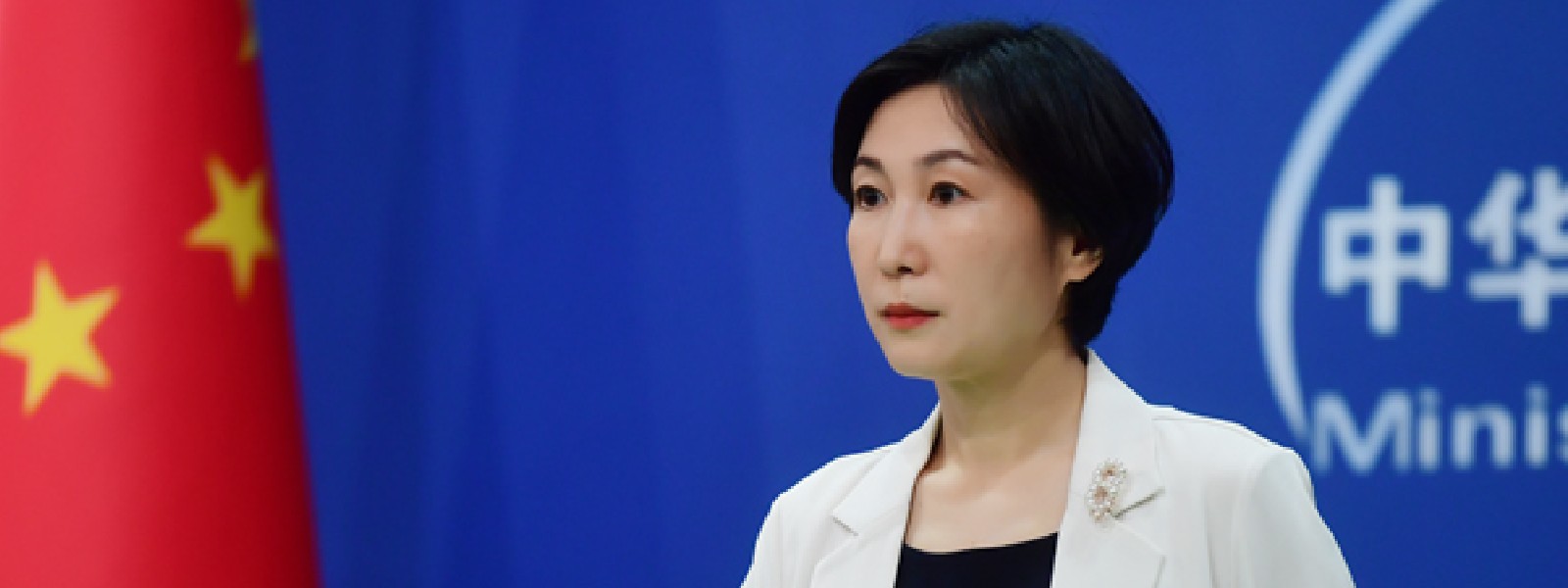
Chinese Foreign Ministry Spokesperson Mao Ning on Tuesday (28) said the Export-Import Bank of China provided a financing support document to the Ministry of Finance, Economic Stabilization and National Policies of Sri Lanka, saying the Bank is going to provide an extension on the debt service due in 2022 and 2023 to help relieve Sri Lanka’s short-term debt repayment pressure.

“The Bank also noted that it will support Sri Lanka in its loan application to the IMF and continuously call on commercial creditors (including the International Sovereign Bondholders) to provide debt treatment in an equally comparable manner, and encourage multilateral creditors to do their utmost to make corresponding contributions,” she added.

“What China did is first based on China’s existing policy and position on debt issue. At the same time, as a special arrangement, it also reflects the traditional friendship between China and Sri Lanka. China’s action fully demonstrates its sincerity and efforts to support Sri Lanka in achieving debt sustainability,” she noted.

“We will work with relevant countries and international financial institutions to jointly play a positive role in helping Sri Lanka navigate the situation, ease its debt burden and achieve sustainable development,” said the spokesperson.

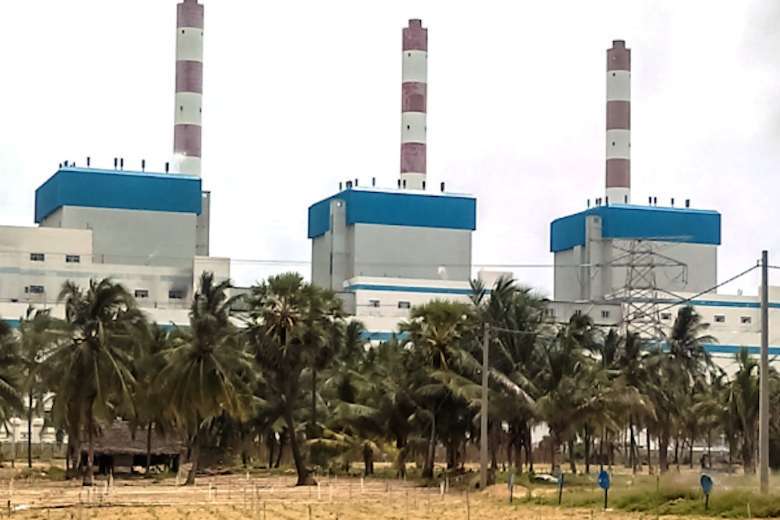
In the Chinese-built coal power plant of Norchcholai, there are more questions than answers.

Waste management causes issues

Hydropower was Sri Lanka’s primary energy source when it gained independence from the British.

The first ever hydropower project, Laxapana, was commissioned in 1950 and is described as an innovative design by Engineer D.J. Wimalasurendra.

Since then, there have been several hydropower projects initiated in Sri Lanka. Under the Mahaweli multipurpose hydro scheme, there are four main hydropower projects. They are Victoria, Kotmale Upper, Kotmale, and Randenigala.Nevertheless, with time and population growth, Sri Lanka could not cope with the available power volume and had to depend on thermal power generated from fossil fuels.

As per CEB’s 2016 generation report released in mid-2017, the country has a total combined installed generation capacity of 4,017 megawatts (MW), of which 2,115 MW (52.6%) was from thermal (900 MW (22.4%) from coal and 1,215 MW (30.2%) from fuel oil), 1,726 MW (42.97%) from hydroelectricity, and the remaining 176 MW (4.38%) from other renewable sources such as wind, biomass, and solar. These generation sources produced a total of 14,149 GWh of electricity during that year, of which 9,508 GWh (67.20%), 4,220 GWh (29.83%), and 421 GWh (2.98%) were from thermal, hydro, and other renewables, respectively.

By the end of 2016, the demand for electricity had increased many times, requiring the government to invest in other energy sources.

Sri Lanka could not opt for more hydro-power projects, mainly due to geographical reasons since most of the waterfalls in the highlands have been exploited for this purpose. As a result, Sri Lanka had to turn to alternative energy sources.

At times, the government was compelled to set up thermal power plants in collaboration with the private sector. In addition, several other thermal power plants have been built solely by private sector firms. In these cases, the government had to enter into power purchase agreements with the private sector in order to provide electricity.

With increasing energy costs, the government looked for cheaper sources of energy and chose coal power.

There are many coal power plants in the world, but most of them are facing closure due to environmental concerns. However, Sri Lanka opted for coal power to provide people with cheap power.

At the time, policymakers ended up choosing coal as a substitute without taking the risks to the environment or society into account. This is because they were only concerned with profit. When they started the project in 2006, it resulted in significant public protests in the Norochcholai area. Due to the area’s cultural and environmental sensitivity, civil society and environmental organizations fiercely opposed the idea of building a coal power plant in Norochcholai.

There was no avail, and the state pushed ahead despite protests by various organizations. These included environmental organizations, the Chilaw Bishop, and the Catholic Church of the Chilaw diocese. The Church pointed out that the damage could be enormous to the environment and could also be harmful to the well-being and health of the people. Despite all that, the government made a decision to move ahead with the project under a Chinese loan facility provided by the Exim Bank. This loan facility was provided to the government of then-President Mahinda Rajapaksa.

The government completed the construction of the power plant in 2011, but experts in the field pointed out that the technology used was fairly outdated and not suitable. The technology used in the power plant was not designed to generate the maximum output of electricity efficiently. Therefore, it was not able to produce the amount of energy that the government expected. Additionally, the technology was becoming obsolete, so it was not cost-effective for the government to maintain the power plant. This is like trying to drive a car that uses outdated gas: it’s not designed to take you very far, and it’s not designed to be very cost-effective. After power generation began, there were so many breakdowns, and the breakdowns sometimes added to the additional power outages.

People in the area were of the opinion that technical errors could of course be repaired, but if power generation affects the health of residents, that is less forgivable.

A few months following the commissioning of the plant, an unidentified skin disease spread among children living near the power plant. In addition, residents have complained about respiratory ailments, kidney disorders, and other health issues occurring near the power plant. In addition, residents have complained about respiratory ailments, kidney disorders, and other health issues. Health issues prevented people from returning to their usual habitats and sometimes affected their occupations.

If a power plant violates standards during construction, it poses a threat to nearby human settlements. All over the world, coal power plants have been identified as sources of environmental and health hazards, no matter where they are located. The Chinese construction of Norochcholai using inferior technology caused irreparable damage to the people in the area and the country as a whole. This prompted the government of President Maithripala Sirisena to give an undertaking that the government would terminate its plans to construct a second coal power plant in Sampur.

Ground Views, a citizens’ journalism website, published an article that listed the environmental and other hazards caused by the Chinese-built coal power plant.

The ground view article is under the caption.

types of pollution as a result of coal power generation, states

Typically, a coal power plant releases tons of ash every day as sludge. There were serious allegations that there were no mechanisms allowing for safe storage and disposal in Norochcholai in particular. If wind-borne, the particles from this sludge can lead to respiratory diseases among nearby residents. It appears that this phenomenon is emerging in Norochcholai. Harmful chemicals such as arsenic, chromium, mercury, and cadmium may be present in the sludge, leading to the spread of diseases. At worst, overexposure could affect nearby residents’ nervous systems, paving the way for memory-related neurological disorders.

Cooling water discharge

Billions of gallons of water are used in the cooling systems of power plants. This water is generally four to five degrees Celsius hotter than normal. Whenever this water is released into any water source, marine life in that area will be threatened. The hotter temperatures affect the environment’s temperature, leading to an increase in algae growth. This can deplete the oxygen in the water and cause fish and other marine life to die. The warmer water can also cause a decrease in the quality of the habitat, making it difficult for marine life to survive. Essentially, heated water affects the heart rate of fish, putting their lives at risk as a result. In February 2017, the National Aquatic Resources Research and Development Agency (NARA) raised serious concerns about whether the Norochcholai power plant was disposing of polluted water into the sea.

Heat waste

A considerable percentage of the heat produced by thermal power plants is wasted. Above all, gas emissions of sulfur dioxide and carbon dioxide can lead to global warming and acid rain. In Sri Lanka, we have not experienced acid rain yet. But, in the future, we may also have to deal with it.

Meanwhile, the North Western Provincial Environmental Authority has noted that the Norochcholai power plant has not applied for an environmental license for 2017. This is necessary to continue their operations.

Currently, Norochcholai generates a significant amount of power that is supplied to the national grid. Hence, it would be rather difficult to shut it down abruptly.

However, the lesson from Norochcholai should be that there should be no more commissioning of coal power plants in Sri Lanka in the future. The Environmental Foundation Limited (EFL), along with other environmental experts, filed a Fundamental Rights (FR) Application against proposed coal power plants in Sampur and Trincomalee based on the adverse effects caused by the Norochcholai coal power plant. It was seen that the state took notice of health hazards that could adversely affect the community.

At the latter stage, the state, acting responsibly, gave an undertaking to the Supreme Court that it would not go ahead with any such project.

The Daily Mirror in 2018 quoting Ecologist Dr Ranil Senanayake said:

The toxic acids that evaporated from the Norochcholai Coal Power Plant could pose a threat to Jaya Sri Maha Bodhi. “This is the oldest living tree in the world with a written history,” ecologist Dr. Ranil Senanayake said.

He said there is a possibility of clouds with toxic acid deposits traveling towards Anuradhapura, where the sacred Bo tree (fig tree) is standing, with southwest monsoon conditions developing.

Sulfur (S), sulfur dioxide (SO2), and nitrogen oxide (NO) are released when coal is burned, as well as heavy metal particles. These elements form acids such as sulfuric acid (H2SO4) and nitric acid (HNO3), which would reach the clouds through condensation.

He said that it can be observed that the leaves of tall trees have turned yellow due to the emissions of these gases.

The Ground View website further said Power and energy are vital for a country to function. Sri Lanka has rich potential in terms of sustainable power. How well have we capitalized on this potential? The Hambantota wind power plant only produces 3 MW of electricity, while the only operational commercial-scale solar-powered facility is the Buruthakanda Solar Park, with 1.2 MW, operated by the Sri Lanka Sustainable Energy Authority (SLSEA). There have been many projects to promote the utilization of renewable energy in this country, but many of them have not been implemented yet. The time has come to end the era of thermal and coal power and transition to an era of renewable energy. The government’s decision to establish a wind power plant is an excellent step and should be appreciated. According to an Environmental Effects Report (EER) that was released recently, there are also environmental issues related to this project. Constructive criticism is needed. However, all stakeholders should support projects such as these, which are relatively eco-friendly, instead of playing devil’s advocate.

Source:ColomboGazette

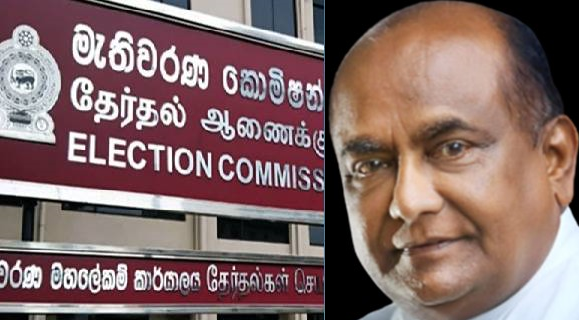
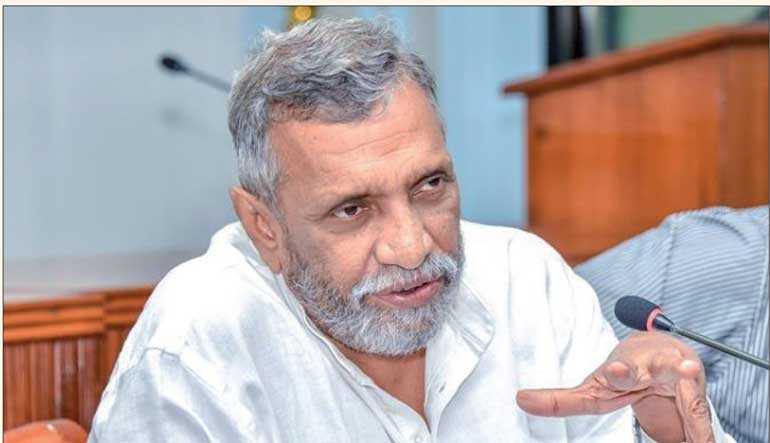
Deshapriya reapplies for Chairmanship of Election Commission

Former Chairman of the Election Commission of Sri Lanka Mahinda Deshapriya has reapplied for the position.

This announcement comes at a time where applications are being called from members of the public who possess the requisite qualifications to be appointed as members of several independent commissions, including the Public Utilities Commission of Sri Lanka (PUCSL), the Human Rights Commission of Sri Lanka (HRCSL) and the Election Commision.

Deshapriya served as the Chairman of the Commission from the inauguration of the Commission in 2015 until 2020.

Meanwhile, Speaker of the Parliament Mhainda Yapa Abeywardena stated that the calling of applications for these commissions has ended, and that the relevant new appointments will be made soon.

Furthermore, the National Delimitation Committee, which was appointed with effect from 01 November 2022 until 28 February 2023, with Deshapriya as its Chairman, has requested for an extension of one month.

The request was made by the Committee from Prime Minister Dinesh Gunwardena, in his capacity as the Minister of Public Administration, Home Affairs, Provincial Councils and Local Government, and the President.

Posted in Uncategorized

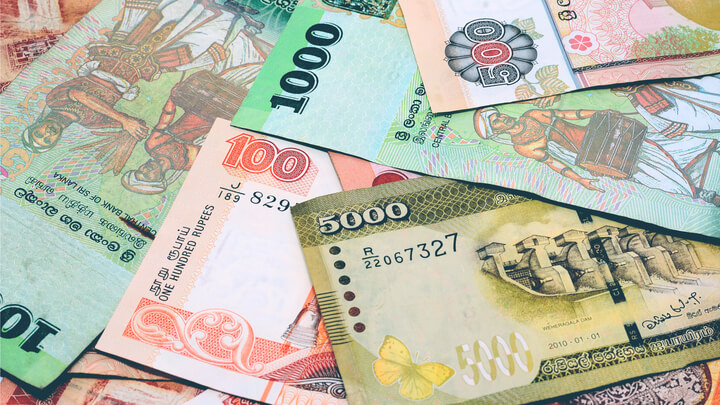
Rupee appreciates further as CB tweaks guidance peg

The Sri Lankan rupee further appreciated yesterday, hitting the lowest value against the US dollar since May, last year, amid the Central Bank tweaking the guidance peg.

As per the Central Bank data, the buying rate of US dollars yesterday was Rs.351.72, down from Rs.358.36 on Wednesday. The selling rate was Rs.362.95, down from Wednesday’s Rs.367.93.

The currency dealers cited the increase of daily trading band pertaining to the guidance peg from Rs.2.60 to Rs.5.00 by the Central Bank as the immediate reason that helped the rupee to appreciate against the dollar.
Following the botched free floating of the rupee in March 2022, which resulted in the collapse of the rupee from Rs.200 to Rs.360, the Central Bank repegged the rupee at 360 to the US dollar and introduced a guidance rate based on the interbank rate.

The Central Bank via a communiqué instructed all licensed bank CEOs yesterday to use Rs.358.46 as the middle spot exchange rate of the USD/LKR interbank transactions and variation margin of Rs.5.00 on either side—plus or minus—of the middle spot exchange on March 1, 2023.

It further said the rates applicable to other currency transactions against the Sri Lankan rupee should also be derived based on the new middle spot exchange rate and the variation margin.

Despite the banks being flushed with dollars, lower demand in the domestic forex market may have prompted this move by the Central Bank.

According to the banking sector sources, the average daily volume in the interbank forex market is now about US $ 42 million, compared to US $ 8-10 million in May/June 2022. In February 2018, this used to be around US $ 50 million.

Sri Lanka’s economy is in a deep contraction as a result of the tough measures introduced by the Central Bank and authorities to crush the aggregate demand in the economy by jacking up interest rates significantly to tame inflation, which had gone out of control.

As a result, there is an evident drop in importer dollar demand.

Prospects of Sri Lanka securing the envisaged International Monetary Fund bailout, recent International Finance Corporation announcement of providing US $ 400 million financing to three local banks, reduction in surrender requirement for export proceeds and higher foreign inflows to the country’s equity and bond markets may also have contributed to the recent appreciation of the rupee against the US dollar.

In addition, according to NDB Securities, forex conversions by exporters in anticipation of a further appreciation of the rupee may also have contributed for the rupee to gain.

Posted in Uncategorized

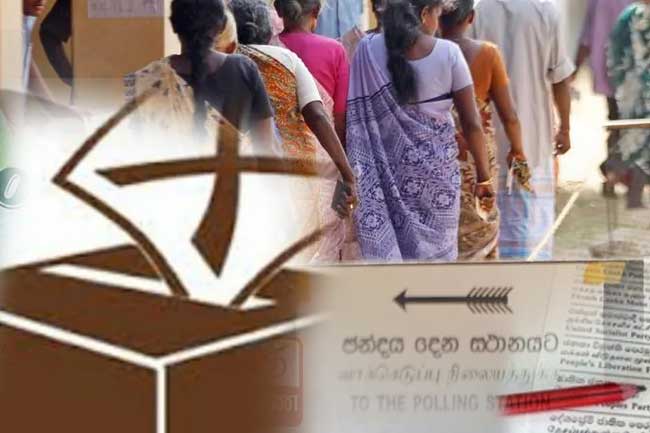
Postponement of 2023 LG polls to be debated in Parliament

An Adjournment Debate on the postponement of the 2023 Local Government (LG) election is scheduled to be held on 09 and 10 March.

Accordingly, the two-day debate was decided upon by the Committee on Parliamentary Business (COPB) today (01 March).

The Committee met today under the patronage of Speaker Mahinda Yapa Abeywardena , during which it was decided that Parliament will convene from 07 to 10 March.

Posted in Uncategorized

Mano asks UK backing for upcountry Tamil community to achieve their rightful place here

Tamil Progressive Alliance (TPA) leader Mano Ganesan, MP, has urged Maya Sivagnanam, Deputy Director of the South Asia Region Department of Foreign Commonwealth Development Office (FCDO) and High Commissioner Sarah Hulton to facilitate their full integration into what he called the Sri Lankan national mainstream polity as ‘full citizens’. The former National Integration Minister said that Britain should use its good offices with the government here to help us to achieve this Sri Lankan goal”.

“The element of British responsibility begins from the fact that the British crown government started bringing us into this country from South India 200 years ago. Since then our people had put in unprecedented hard work and developed the most profitable plantation export industry in then Ceylon and now Sri Lanka.”

TPA leader Ganesan told, Maya Sivagnanam, the FCDO’s Deputy Director of the South Asia Region Department and High Commissioner Sarah Hulton when he and Ceylon Workers Congress (CWC) general secretary minister Jeevan Thondaman met British Diplomats at Westminster house, Colombo.

Mano Ganesan also said:

“But in return, our citizenship and franchise rights to vote were taken away in 1948. Our people were forcibly sent to India from 1964 by Sirima- Shasthri Pact.”

“Hence, His Majesty’s government of Britain today has a moral responsibility towards the wellbeing of our community”

“Please don’t leave it to GoSL and Gov of India only. Indians too have their obligation and responsibility towards us. India is using its good offices, alright, but that’s not enough. We suffer being sidelined from the national mainstream. We require British support too. We strive to achieve just sociopolitical lost grounds within an undivided Sri Lanka.”

“Not less than one third of our community lives in the plantations. They are the most under privileged vulnerable segment of Sri Lanka. The surveys done by UN organizations, WB, ICRC and UNHRC special Rapporteur confirm this sad reality. We request the Government of UK to support our vulnerable segment on Affirmative Action principles.”

“All what we want is for you to help us to become more into Sri Lankan national polity. We wanted to become full citizens. Please use your good offices with GoSL on our behalf.”

The former minister said that British policy should recognize the underlying fact that Sri Lanka is Incomplete without our community.

100 unions to strike today over tax hikes

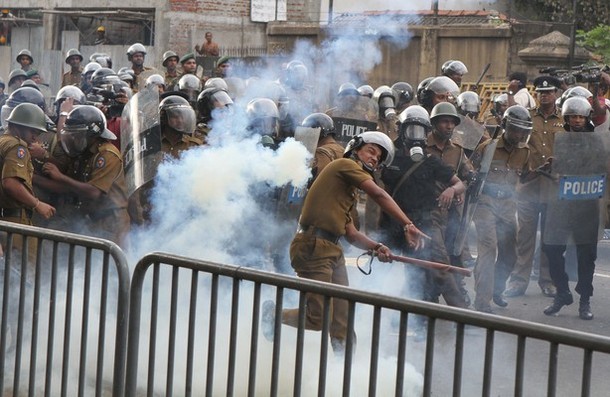
Nearly 100 trade unions (TUs) representing several sectors including petroleum, ports, electricity, health, water supply, education, banking, and postal service are to launch a number of trade union actions including a one day token strike today (1), demanding the withdrawal of the tax policies recently introduced by the Government.

Representatives of several trade unions which represent governmental and semi-government institutions such as the Ceylon Petroleum Corporation (CPC), the Ceylon Electricity Board (CEB), the National Water Supply and Drainage Board (NWSDB), the Central Bank of Sri Lanka (CBSL), the Government Medical Officers’ Association (GMOA), the Federation of University Teachers` Associations (FUTA), the Ceylon Bank Employees’ Union (CBEU), the Ceylon Teachers’ Union (CTU) and the Ceylon Teachers’ Service Union (CTSU), which are supporting the trade union actions including the one day token strike today, commented on their plans to the media.

The Sri Lanka Freedom Employees’ Union – Petroleum Co-Chairman Jagath Wijegunaratne said that the trade unions within the CPC would fully support the trade union actions, including the one day token strike. He added that the activities pertaining to the supply of fuel could be disrupted due to the trade union action, noting that therefore, the Government led by President and Minister of Finance, Economic Stabilisation and National Policies Ranil Wickremesinghe should be held responsible for all inconveniences which may be caused to the public.

Ranjan Jayalal, who was representing the trade unions within the CEB, said: “We, the trade unions of the CEB, have expressed our full support for this struggle against the Government’s unfair tax policies and other issues which have arisen in the country at present. A crisis situation may arise regarding the maintenance of the power supply to consumers due to this trade union action. The Government should accept full responsibility for such a situation.”

The NWSDB Employees’ Union General Secretary H.D. Leelaratne told the media that they too would support the trade union action including the one day token strike today. He said that almost all trade unions of the NWSDB would launch trade union actions at every regional office of the NWSDB.

The Joint Ports’ Trade Unions’ Alliance Co-Convenor Niroshan Gorakanage said: “As we announced before, we will be launching a strike from 7 a.m. tomorrow (1 March) to 7 a.m. the day after tomorrow (2). During the strike, all operations such as the loading and unloading of goods and the movement of ships will be halted. It will definitely happen. It is not what we wanted, but what the Government needed. So, we had to make that decision.”

CBEU President Channa Dissanayake said that a total of 18 State and private banks would launch a one day token strike from this morning (1). He said that all 12 private banks which are members of the CBEU would join the strike, so that the operations of the entire banking sector would be halted today. The CBSL Employee’s Union President Sarath Ratnayake said that all trade unions within the CBSL would be collectively participating in the strike in line with the Trade Union Collective’s decision. He assured that almost 100% of CBSL employees would be participating in the strike against the Government’s tax policies.

FUTA Media Spokesman Dr. Charudaththa Illangasinghe also said that the university teachers of all State universities would join the strike today. He said that they have decided to support the trade union action as the Wickremesinghe-led Government is continuously ignoring their demands, claiming that such reforms (the tax policies in question) should be introduced in order to obtain assistance from the International Monetary Fund.

When contacted by The Daily Morning, the GMOA’s Media Committee Member, Dr. Hansamal Weerasuriya said that the GMOA, at its Central Committee meeting held yesterday (28 February) afternoon, had decided to fully support the trade union actions, but that they would not launch a strike, having realised the difficulties which would have to be undergone by the patients. “We are fully supporting the struggle against the Government’s tax policies, but we have to think of the people too. They are not responsible for what is done by the Government. Therefore, we will take action which will cause minimum inconvenience to the public. However, if the Government continues to ignore our demands, we will be taking stricter actions by next week,” he said.

Leading teachers’ trade unions including the CTU led by Joseph Stalin and the CTSU led by Mahinda Jayasinghe have also decided to support the trade union actions. They however will not engage in a strike. “We, the teachers and principals, have decided to fully support the trade unions’ struggle against the Government’s programme. If it does not heed our demands even after this, we will be left with no other option but to launch continuous trade union action,” said Jayasinghe, who was speaking at a media briefing. Meanwhile, the CTU President, Priyantha Fernando said that the teachers and principals would support the trade union actions today by wearing black attire. He said that their main demands include the complete resolution of the teacher-principal salary anomalies, the provision of a travelling allowance to teachers, the reduction of the cost of living, and the provision of the necessary financial provisions for schools without delay.

The President of the Sri Lanka Postal Workers’ Union, Chinthaka Bandara said that they too would support the trade union actions by reporting to work in black attire today. However, they would not engage in a strike action today, and have instead decided to launch a strike on 8 March.

Meanwhile, President Wickremesinghe had, on 27 February, signed a Gazette notification, declaring several services related to the ports, airports and passenger transport services as essential services, with immediate effect. According to the President’s Media Division, the special Gazette had declared public transport services for passengers or goods, the discharge, carriage, landing, storage, delivery and removal of articles of food or drink, or coal, oil and fuel from vessels within any port as defined for the purposes of the Customs Ordinance (Chapter 235), and the provision and maintenance of facilities for transport services by road, rail or air, including roads, bridges, culverts, airports, ports and railway lines, as essential services.

Holding a protest in front of the Colombo Fort Railway Station on 22 February, the aforesaid trade unions vowed to make the Government led by Wickremesinghe roll back the tax policies that it recently introduced. They had also declared a “black week” of protests from that day, demanding that the tax revisions in question be revoked, and be replaced with fair revisions. In view of the black week, employees of public institutions reported for duty in black attire, wearing black armbands, while black flags and banners had been hoisted at several State institution premises.

Posted in Uncategorized

Vistara airlines to resume operations to Sri Lanka

Starting from Wednesday, March 1, 2023, Vistara Airlines will recommence its flight operations to Sri Lanka, as announced by the Bandaranaike International Airport (BIA) in Katunayake. Vistara is a joint venture between Tata Sons Pvt. Ltd and Singapore Airlines and is commonly known as Tata SIA Airlines Limited.

According to the statement issued by the BIA, Vistara will resume its operations from Katunayake airport, specifically between Colombo and Mumbai, India, starting from today. This is great news for travelers who are looking for a comfortable and reliable flight service to and from Sri Lanka.