Why Should We Beg IMF? – When More Than $36 Billion To Be Recovered By W. Vishnu Gupta

A recent visit to Sri Lanka, confirmed that it was very easy to convert Rupees into US dollars at any banking counter in the departure lounge of BIA, and it is strange in a country where people are told there is no foreign exchange to import medicine, and other essential food items until IMF gives a loan. Furthermore, it appears that there is no truth to the claims made by the government about the lack of foreign exchange because every imported luxury item that the rich has got used to during last 75 years is readily available in the market. When a Sri Lankan rich man or woman is afflicted with any life-threatening sickness or even a minor skin irritation, they freely seek treatments in Singapore, Dubai, Bangkok, or India, and they appear not to bother about the foreign exchange mantra chanted daily by the politicians including the president in the parliament and in other external forums. Obviously, a few filthy rich fellows have stashed away, specifically US dollars in offshore accounts under various pretexts. Under this background, the recent wishy-washy statement made by parliamentarian Wimal Weerawansa about the loopholes in the foreign exchange management laws and the revelations of young women lawyers’ association in Colombo about the foreign currency stashed away in the offshore bank accounts by the exporters warrants further investigations. It appears every politician who entered the den of thieves and criminals, officially known as the parliament since 1952, elected and unelected presidents, and the CBSL are privy to this grand scheme of hoarding national wealth in foreign countries. The stories about alleged money laundering activities of Gamini Dissanayake’s family in Australia, Bandaranaikes in the UK, Aluthgamage in the UK, Rajapaksas in Uganda, Dubai, Seychelles and China, likewise other politicians in Singapore and the link between Ranil and Mahedran and Paskaralingam may be just the tip of the iceberg. All Central bank chiefs, particularly the political appointees of Prime Ministers and Presidents seem to have knowingly participated in the dubious act of letting the individuals and exporting companies siphon or stashed the foreign exchange that should be brought into the state coffers otherwise, for instance Panama Papers must be a hoax. According to Sunday Times of July 2022.

“An investigation carried out by the Global Finance Integrity (GFI); a think tank based in Washington, USA operating with government support. Its task is to keep an eye on the export trade of countries of the world. GFI observes whether money is properly exchanged between two countries during a trade. According to its observations, between 2009-2017, the Government of Sri Lanka (GoSL) has not received more than US$ 36 billion due from exports. The money is held offshore.”

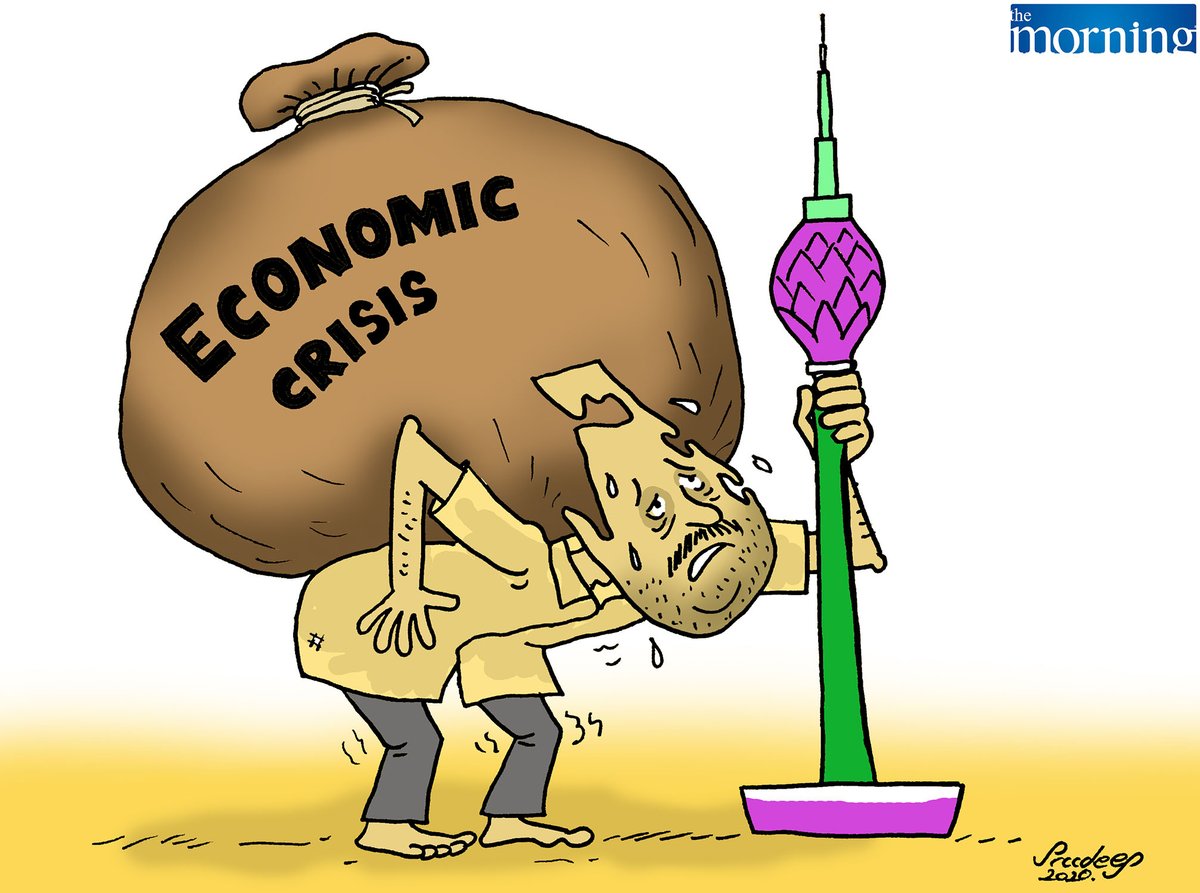
What a catastrophe, Sri Lanka is an $81 Billion economy and more than one-third or $36 Billion is hidden in foreign countries by a selected vile bunch of businessmen supported by correspondingly vulgar political leaders with willfully designed porous legislations approved by equally disgraceful parliament of the country. No government so far has taken concrete actions to bring this mind-boggling amount of money back to Sri Lanka, but they have forced the citizen to go through untold misery by cunningly and abruptly disrupting the supply chain of medicines, medical equipment, essential foods, energy products, and other critical raw material including fertilizer. Many have died and thousands of patients are in their death throes while temporarily elected government and the president appointed by 134 MPs are threatening the state with gloom and doom scenarios and instilling fear in the psyche of citizens with the possibility of energy crisis, food crisis and health crisis. The GFI report clearly says that they publish their conclusions after researching extensively and analyzing the data of Sri Lankan customs, export registers, and import registers of countries. Hence no one should claim that the findings are false or inaccurate. For obvious reasons, Ranil and Rajapaksas have never uttered about the excesses committed by their families and business buddies responsible for hording of alleged $36 Billion in foreign countries, but it should baffle the economists and the intelligentsia, why IMF has not raised this matter reported by GFI in Washington with the present government.

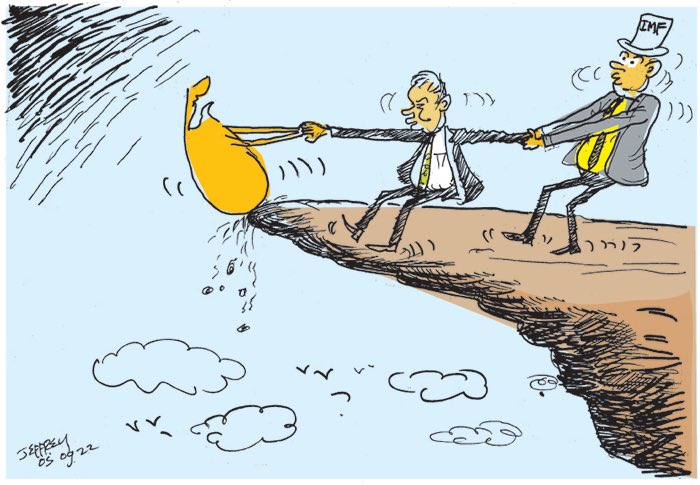
Sri Lanka officially records about $1.1 -1.2 Billion export earnings per month and similarly tourism earnings should average around $400-500 million per month excluding the millions of foreign exchanges earned by somewhat slippery and controversial entities such as SLC, Avant-Garde and hundreds of currency exchange shops in Colombo and Negombo. The citizens ought to know what happens to these enormous amount of foreign exchange earnings that comes under the jurisdiction of the state. Clearly, the central bank is inept, yet should we allow a bunch of unscrupulous businessmen, politicians, and sleazy organizations to live lavishly and enjoy tamashas while rest of the country is told IMF is the only solution. Unfortunately, neither Sajith, nor AKD, the front runners of the ongoing outlandish political campaign have ever spoken about this hidden wealth. What is the rationale behind begging for $2.8 billion loan from IMF while not taking any actions to retrieve $36 billion stashed away in foreign countries by a handful of embezzlers.

As per the Foreign Exchange Control Act of 2017, the money related to export trade should be sent back to Sri Lanka without delay within a period of six months. It is a conventional law adopted by every legally established state in the world and the central bank, reserve bank or the monetary authority of the state is held responsible for managing this inflow of foreign currency according to the laws of the state. Central Bank’s primary objective is to stabilize the currency and economy while limiting inflation. Sri Lankan CB seems to have neglected its responsibilities mainly due to political interferences of Ranil and Rajapaksas. The present chairman Nandalal and all those before him, Coomaraswamy, Cabraal, Lakshman and Mahendran have done nothing innovative so far to manage affairs of CBSL, which possess privileged control over production and distribution of money and credit for the nation. As expected Nandalal a political lackey has trivialized and questioned the findings of GFI, at the Parliamentary Committee on Public Finance meeting on January 23rd.

“Central Bank of Sri Lanka (CBSL) Governor Dr. Nandalal Weerasinghe has disregarded and trivialised the extent of illicit financial flows through trade mis-invoicing in instigating Sri Lanka’s ongoing foreign exchange and fiscal crisis.”

The credibility of CBSL is tainted and highly questionable, CBSL chiefs have failed to ensure fiscal stability in Sri Lanka, bond scams and unsavory political links at the highest level do not add any credence to the policies and assurances made by politically contaminated highest monetary authority in Sri Lanka, hence one should not question the accuracy and integrity of GFI report on Sri Lanka.

Nevertheless, the state of Sri Lanka must hold these political minions responsible for not ensuring uninterrupted inflow of foreign currency (US dollars) earned through exports and other related business transactions in recent years. It is a forgone conclusion, that Nandalal, his predecessors and their political masters’ arrogant conduct and nonchalant answers to the economic and financial crisis has exacerbated the dire economic situation encountered by majority in Sri Lanka since 2019. Compared to politically independent CB chiefs in other Asian developed countries, the government cronies implanted to manage our central bank seem to carry the hallmark of economic bookworms sans practical knowledge but well versed in political trickery.
Posted in Uncategorized

It was a cheap trick, Mr President By N Sathiya Moorthy

President Ranil Wickremesinghe’s so-called disclosure that the Election Commission (EC) had not declared the local government election (LGE) legally, smacks of political skull-drudgery of a kind that his name h as evinced through much of his long political career. As the Head of State and Government, and also the senior-most parliamentarian along with TNA’s Sampanthan but with vast and varied politico-administrative experience, it was his duty to have corrected the EC when it fixed the LGE for 9 March without quorum. It is this quality of his that friends and foes alike fear at one-level, suspect him at another level and hate him for what he may not deserve otherwise.

According to Ranil, only two of the three independent EC members attended the meeting that decided the LGE date. Media reports too had indicated as much but no one took it seriously, as a third member, making up the quorum, had approved of the decision, post facto and on-line. A fourth member, Mrs P M S Charles, quitting office in between would not matter to the conduct of LGE, it was said. But absence of quorum was a different matter altogether.

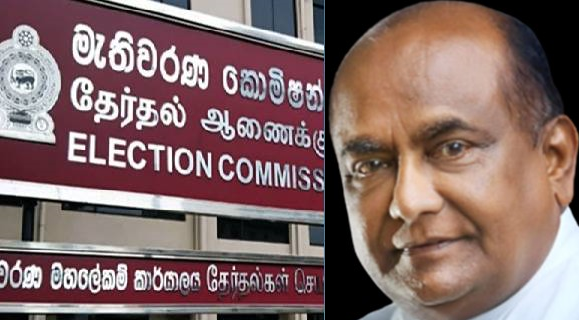
In this, the question also arises if commission Nimal Pumchihewa erred, and deliberately so. If so, it also raises questions about his motive and also the propriety of his continuance in the high office. Anyway, in the absence of a new panel appointed by the Constitution Council, revived by the 22nd Amendment the incumbent was rendered lame-duck to say the least. The question thus arises if they should have at all initiated a move, which has become legally untenable and indefensible. If nothing else, the EC has not refuted the President’s claim or charge, as the case may be.

Yet, none of it could absolve the government, especially the President, of leading the nation up the ‘garden path’ (?) on the LGE. It was a cheap trick, after all. And if the Opposition calls him a ‘liar’ or has ‘gone insane’, they may be rude, yes. But as one of them said, Ranil’s declaration that the LGE was not legally declared was the ‘height of absurdity’, yes. Yet, the President may not be wide off the mark. It makes his silence when he remained silent on the LGE date issue not behove either of the high office, or the person holding it. Full-stop.

The EC has now said that they would announce a new date for LGE on 3 March. Well said, and also maybe well-intentioned, too. However, political parties are not sure that the government would want the local government elections any time soon. They should know. When in power, all those parties, barring the JVP, had conspired with the very same President, when the latter was Prime Minister, to divine reasons and reasons, to delay the provincial council polls, as if they wanted to deny the democratic opportunity to their people.

Stop knocking…

Hence for the Opposition to cry foul and appeal to the international community to pressure the government to hold LGE here and now may be as politically immoral or amoral as Ranil’s late-discovery about the illegality of the polling date. More importantly, from a larger national perspective, they should stop knocking the doors of the international community for what essentially are domestic issues.

They need to look at the mirror first, and also news sources, to find out if in any other country, the political Opposition has been in the practice of inviting trouble by indulging the international community (read: West) with its angularities and preferences. Of course, this government team cannot blame them for it, as former President Mahinda Rajapaksa, who while in the SLFP Opposition parent, had camped in Geneva, to complain against the UNP government for rights violations. It was very long back that he might have even forgotten it. Rather, he would love the nation to forget it.

Of course, the government’s fears about facing the people has been brought out by a recent opinion poll that puts the leadership’s popularity at a woefully low 10 per cent, down from 18 per cent, the last time round. However, the President’s standing has marginally improved. The contest for the leadership is said to be between JVP’s Anura Kumara Dissanayake (AKD) and SJB’s Sajith Premadasa, 32-31 per cent. In another poll weeks earlier AKD’s standing for presidency stood at a substantially high 48 per cent.

Hurting more

It is in this background, calls for Mahinda to return as Prime Minister need to be understood. It is a now-or-never battle for Mahinda personally, though he still can hope that the Rajapaksa clan can weather the current politico-electoral storm with a lot of unsolicited help from their adversaries. But there are also aides of his erstwhile President-brother, Gotabaya Rajapaksa who want Mahinda to retire from active politics and settle down peacefully.

More than such suggestions, it is reported that China wants Mahinda back is what could hurt the Rajapaksas’ chances mightily just now. After the China-funded ‘white elephant’ debts and the unspeakable disaster of their ‘organic fertilizer’ policy and supply, no Sri Lankan, however loyal to Mahinda otherwise would want to touch him with a barge pole.

There may still be a silver-lining for the Rajapaksas, however, if Gota, who went over to China could claim on return that he had convinced Beijing on debt-restructuring for the nation to be able to avail of IMF funding facility, followed by the rest. Alternatively, China should independently rush to the nation’s rescue as it has done recently in the case of Pakistan. If it happened it would have geo-political implications. At the same time, if Gota returned empty-handed, which he most likely is to be, he would have to explain to the nation, as to what his China trip was all about. That could hurt the Rajapakas more than already.

(The writer is a policy analyst & political commentator, based in Chennai, India. Email: sathiyam54@nsathiyamoorthy.com)

Posted in Uncategorized

US Senate Committee urges SL Govt. to hold elections without further delay

The U.S. Senate Committee on Foreign Relations has urged the Government of Sri Lanka to hold a “free and fair” local authorities election without further delaying the matter.

In a tweet, the chairman of the committee Senator Bob Menendez denounced any effort to take away the voice of the people of Sri Lanka as “undeniably undemocratic” and “a direct violation of Sri Lankans’ rights”.

The U.S. Senate Committee on Foreign Relations is a panel that oversees executive agreements with foreign countries and provides advice and consent on diplomatic nominations and treaties. The chairperson of the committee consults with foreign dignitaries and counsels presidents while playing a significant role in the conduct of U.S. diplomacy.

On February 24, the Election Commission of Sri Lanka announced that the 2023 Local Government polls would not be held on March 09 as scheduled, due to matters beyond its control. The new dates for the polls are expected to be announced this Friday (March 03).

The postponement of the local authorities election sparked multiple protests in parts of the island, largely in Colombo as it was met with the objection of the political parties in the opposition.

Citing the ongoing economic crisis, the government of President Ranil Wickremesinghe has insisted that the elections cannot be funded.

Funds for Election: Opposition wants to summon Finance Secretary

The opposition leader, and a group of opposition MPs met the Speaker on Tuesday (28) to discuss on the future steps that would be taken with regard to the letter sent by the Election Commission seeking intervention for funds.

The meeting took place at the Parliament Complex.

The opposition leader, and a group of opposition MPs had informed the Speaker that the Finance Secretary should be summoned to the Parliament for an inquiry over the letter sent by the Election Commission.

They requested the speaker to summon parliament immediately to discuss this matter.

SJB MPs and MPs representing the People’s Freedom Alliance called on the speaker today for this meeting.

Posted in Uncategorized

US report says LTTE’s international network still active

A US report on terrorism says the LTTE’s international network is still active, despite its military defeat in 2009.

The US report said that the LTTE has employed charities as fronts to collect and divert funds for its activities.

The 2021 Country Reports on Terrorism (CRT) released by the US State Department yesterday (Monday), said that despite its military defeat at the hands of the Sri Lankan government in 2009, the LTTE’s international network of sympathizers and financial support has persisted.

“Although largely inactive since 2009, the LTTE was responsible for an integrated insurgent strategy that targeted key installations and senior Sri Lankan leaders.  In early 2009, Sri Lankan forces recaptured the LTTE’s key strongholds, including its capital of Kilinochchi.  In 2009, government forces defeated the last LTTE fighting forces, killed members of its leadership including leader Velupillai Prabhakaran, and declared military victory,” the report said.

The report said that there have been no known attacks in Sri Lanka attributed to the LTTE since 2009, but 13 LTTE supporters, several of whom had allegedly planned attacks against U.S. and Israeli diplomatic facilities in India, were arrested in Malaysia in 2014. Additional members were arrested in Malaysia and India in 2015, one of whom was accused of exhorting other Sri Lankans to fund and revive the LTTE.

Posted in Uncategorized

Parliament should allocate funds for LG polls through a special resolution

A group of Opposition members including Leader of Opposition Sajith Premadasa, Dullas Alahapperuma, Professor G. L. Peiris and Dilan Perera who had met the Speaker today had proposed that Parliament should immediately allocate funds for the local government elections through a special resolution.

A statement from the Opposition Leader’s office said the MPs requested the Speaker to take this step in relation to the request made by Election Commission Chairman Nimal Punchihewa from the Speaker to intervene in ensuring that the local government election is held.

A request to this effect was made in writing by the polls chief recently.

The MPs have also requested that the House should be convened before March 8 on which it was to meet initially.

“The MPs requested that the legislature should make sure that people’s sovereignity is safeguarded. They have also informed him that all local bodies will soon be administered by representatives of the President and that apparently they will come under the President.

Speaker Abeywardena had said there should be a consensus between the ruling party and the opposition MPs for whatever steps which the House is to take with regard to the local polls.

At least 500,000 Sri Lankans lost their jobs in 2022

At least half a million people in Sri Lanka lost their jobs in 2022, majority of them being employed women and those in the industry and services sectors, the World Bank says.

According to the Vice President for the South Asia Region of the World Bank Group, those already classified as poor in Sri Lanka have seen a 65% increase in their cost of living, while the increase was 57% for the non-poor, highlighting the significant loss of welfare for all Sri Lankans.

In a piece of writing on the island’s crisis situation, Raiser attributed Sri Lanka’s economic adversity to years of economic mismanagement, weak governance, poor policy choices and the impacts of external shocks such as the Covid-19 pandemic and Russia’s invasion of Ukraine.

Raiser noted that the depth of the crisis has made it clear that Sri Lanka needs a new development model. However, the road to recovery is challenging and the necessary fiscal adjustment measures can be painful, he added.

Debt relief from Sri Lanka’s creditors and fresh financing from international financial institutions are thus urgent to ensure people don’t lose patience with reforms and the opportunity for a change is not lost.

Posted in Uncategorized

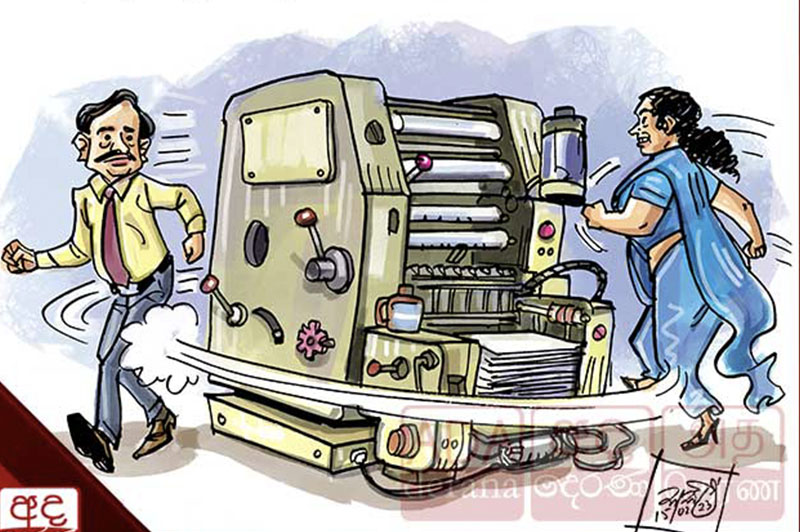
Ballot paper printing delayed due to lack of facilities, funding

Ballot paper printing has been delayed indefinitely.

The Government Printer said that issues surrounding the date of the Local Government Election, and the lack of facilities to continue printing ballot papers, prompted the decision to delay the printing of ballot papers indefinitely.

The Government Printer also said that the ballot papers that have been printed already have been placed in a secure location.

The printing of ballot papers faced continuous interruptions due to the lack of proper police protection, lack of funding and related issues.

The Government Printer said that if the necessary facilities are provided, the printing of ballot papers can be completed between 25 and 30 days.

Can’t intervene in releasing funds for election: Speaker

Although the Speaker of Parliament Mahinda Yapa Abeywardana yesterday (27) pointed out that there are no legal provisions for him to intervene in releasing funds for the Local Government (LG) poll as requested by the Election Commission (EC) in writing last week, he however, stated that the matter should be decided by the party leaders.

When queried by The Daily Morning as to what steps he would take to release the funds to hold the LG poll as requested by the EC, Abeywardana said: “That has to be decided by the party leaders. There are no legal provisions for me to get involved, and give legal instructions on how they should disperse their money. The duty of Parliament has been done, and after that, the dispersing of the money is part of the Treasury’s job. They must do it, depending on the income that has been collected by them at that time. That is the position, and beyond that if anything has to happen, it has to be in accordance with the Parliamentarians. The authority is with the Parliament, not one or two MPs. Not even the Speaker has anything to do with that. The MPs have to decide.”

When queried as to when he would hold a party leaders meeting, he noted: “That depends on how the party leaders are available, so we will talk to them and see.”

Meanwhile, when queried by The Daily Morning from the Finance Ministry and Treasury Secretary Mahinda Siriwardana yesterday as to whether he had received any request from Parliament or the Speaker to release funds for the LG poll, he said: “No. I have not got any such request from anyone.” When questioned as to whether there would be any funds released for the LG poll expenses, he said: “You have to ask that from the Minister of Finance (President Ranil Wickremesinghe is also the Minister of Finance, Economic Stabilisation and National Policies).”

Last week, the Chairman of the EC, Attorney Nimal G. Punchihewa wrote to the Speaker, requesting him to intervene to urge the Treasury to release the funds required to hold the LG election. The EC decided at a meeting held last week not to hold the LG poll on 9 March as scheduled due to the reasons that have arisen and which are beyond the control of the Commission. The EC further stated that a new date for the LG poll would be declared on 3 March.

Meanwhile, Abeywardana stated that around 1,500 applications have been received by the Constitutional Council to appoint members to the independent commissions.

Sri Lanka’s crisis offers an opportunity to reset its development model

Sri Lanka is at a critical moment in its history. Years of economic mismanagement, weak governance, poor policy choices, and the impacts of external shocks such as the COVID-19 pandemic and the Russian invasion of Ukraine, plunged the country into its worst-ever crisis in 2022.

Economic collapse and political instability have devastated lives and livelihoods across the board, dealing the heaviest blow to the poorest and most vulnerable. Regular climate-induced disasters add to Sri Lanka’s fragility. The depth of the crisis has made it clear that Sri Lanka needs a new development model. But the road to recovery is challenging and the necessary fiscal adjustment measures can be painful. Debt relief from Sri Lanka’s creditors and fresh financing from international financial institutions are thus urgent to ensure people don’t lose patience with reforms and the opportunity for a change isn’t lost.

The economic crisis has left deep scars. Poverty nearly doubled in Sri Lanka between 2021 and 2022, climbing from 13 to a staggering 25% (using a poverty line of $ 3.65 per person per day), and is projected to increase by more than 2 percentage points in 2023. In the same timeframe, urban poverty tripled from 5 to 15%. Sri Lanka’s people have been forced to quickly adapt to a new reality where prospects for a good job are limited, incomes are lowered and eroded by inflation, and opportunities for a better future are becoming increasingly rare.

Debt relief from Sri Lanka’s creditors and fresh financing from international financial institutions are urgent to ensure people don’t lose patience with reforms and the opportunity for a change isn’t lost.
In 2022, at least half a million people lost their jobs, most of which were in the industry and services sectors and employed women. Those already classified as poor saw a 65% increase in their cost of living, while the increase was 57% for the non-poor, highlighting the significant loss of welfare for all Sri Lankans.

In times of crisis, people often cope by adopting detrimental survival strategies. For instance, they limit their intake of nutritious foods, forego education and preventive health investments, or take up informal and subsistence work. These negative coping mechanisms can erode decades of progress in human capital with impacts that could last generations. Worsening food insecurity is already translating into an increase in child malnutrition and stunting, which increased from 7.4 to 9.2% between 2021 and 2022.

The international community must help Sri Lanka strike the right balance between pursuing critical reforms to get the economy back on track and ensuring that people have access to safety nets, better jobs, and economic opportunities.

Complementing the Government’s initiatives to stabilise the economy, the World Bank is helping transform economic governance and increase public sector transparency. This will prevent repeating past mistakes through strengthened fiscal oversight and debt management, and by tackling the sources of the heightened financial sector vulnerabilities. And we are helping Sri Lanka transition towards a more private sector-driven and outward-looking economy by supporting SOE reforms, reducing the cost of trade, and making it easier for the private sector to invest.

Although they are necessary, these reforms can negatively impact people if their immediate effects are not mitigated. To prevent further welfare losses, a more effective social protection system is a priority. Our support focuses on redesigning existing cash transfer programs and improving the social registry to provide targeted cash assistance to those most in need. In addition to cash transfers, the World Bank has been supporting the lives and livelihoods of the people by supplying essential goods such as medicines and school meals.

As Sri Lanka recovers, it is essential not only to help people escape poverty and vulnerability, but also to strengthen their resilience to future shocks in an increasingly volatile world.
Strengthening human capital requires building a more inclusive society. The Government is drafting legislation that will strengthen the institutional framework for gender equality and women’s empowerment. These positive developments should help level the playing field for women to participate in the workforce and protect women and girls from gender-based discrimination.

As Sri Lanka recovers, it is essential not only to help people escape poverty and vulnerability, but also to strengthen their resilience to future shocks in an increasingly volatile world. Linking cash transfer beneficiaries to economic opportunities and complementary measures—such as skills training, job coaching, and access to finance—can make Sri Lankans more employable, enabling them to rebuild their assets and improve their economic well-being. These interventions can be catalysed by measures that promote job creation through an improved business environment and access to finance, especially to support small and medium firms that are prevalent across Sri Lanka.

With every crisis comes an opportunity. For Sri Lanka, this pivotal moment is a chance to reset its development model towards green, resilient, and inclusive growth. Sri Lanka has begun its journey towards this goal. What is important now is sustaining the reform momentum, rebuilding trust in public institutions through greater transparency and accountability, and protecting the livelihoods of those most affected by the crisis. Such efforts deserve support from Sri Lanka’s international partners.

This piece was originally published in Daily FT on February 27, 2023