New debt process needed for countries like Sri Lanka – IMF Chief

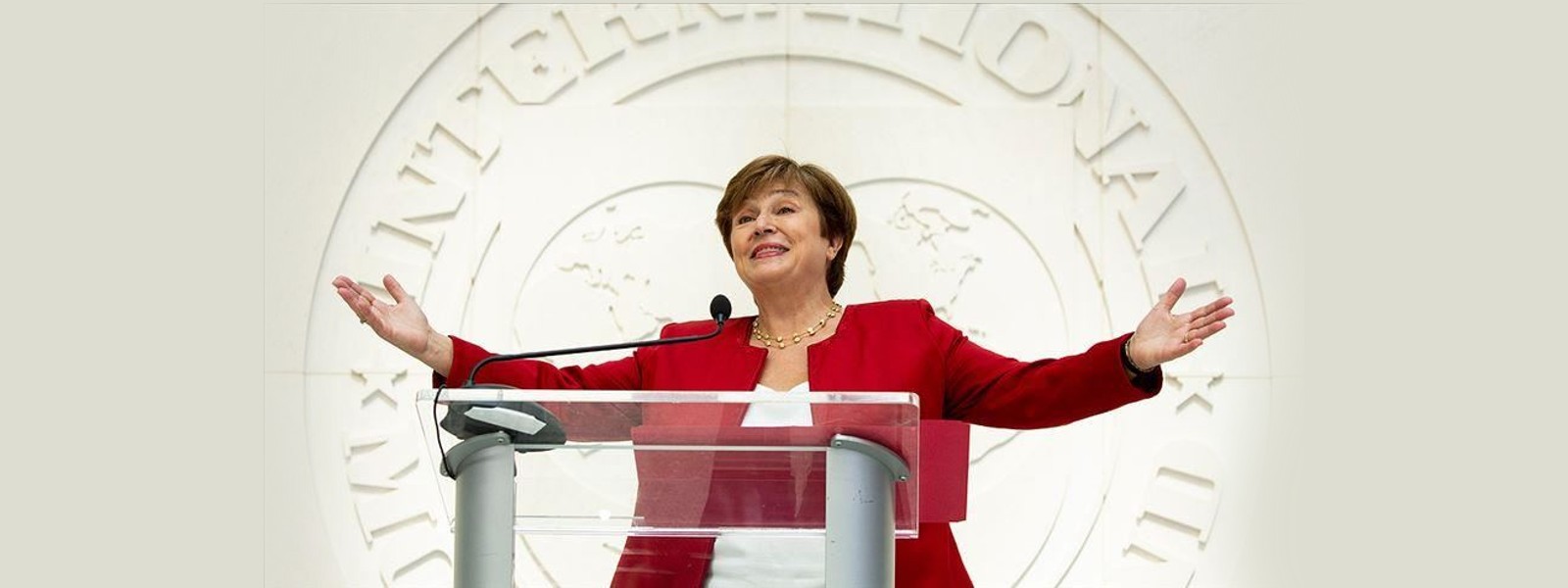
Managing Director of the International Monetary Fund Kristalina Georgieva says a more predictable, timely, and orderly processes are needed for Sri Lanka.

Speaking at the first meeting of the G20 Finance Ministers and Central Bank Governors in Bengaluru, India, Managing Director of the International Monetary Fund Kristalina Georgieva said that it is imperative for the G20 to strengthen the debt architecture.

She said, “In light of rising debt vulnerabilities in many countries, I strongly endorse efforts to strengthen the debt architecture and improve the speed and effectiveness of debt resolution.”

She said that sovereign debt vulnerabilities is particularly the case for “developing and low-income countries with very limited policy space and huge development needs.”

Georgieva stressed that a more predictable, timely, and orderly processes are needed both for countries under the Common Framework (CF) and for those not covered by it, including Sri Lanka and Suriname.

She added, “This means that we must enhance dialogue and collaboration on debt issues.”

Posted in Uncategorized

No truth to claims behind PM’s resignation – PM’s Office

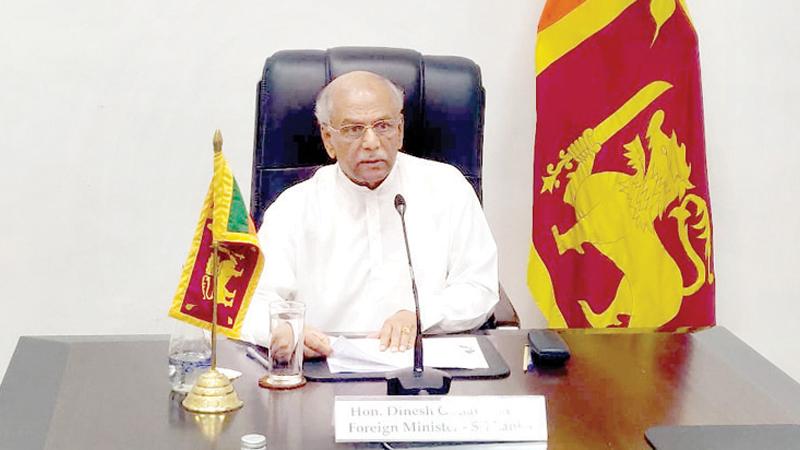
The Prime Minister’s Office has categorically rejected recent claims that Premier Dinesh Gunawardena is preparing to resign from his post owing to pressures from certain political parties.

Issuing a statement on the matter, the PM’s office stated: “There is no truth behind the rumors that are being spread claiming that Prime Minister Dinesh Gunawardena is going to resign”.

The PM’s Office further assured that no such requests have been made by any political party thus far.

The statement further noted that the spreading of such false claims are all part of an elaborate conspiracy to disrupt the efforts of the current administration.

Posted in Uncategorized

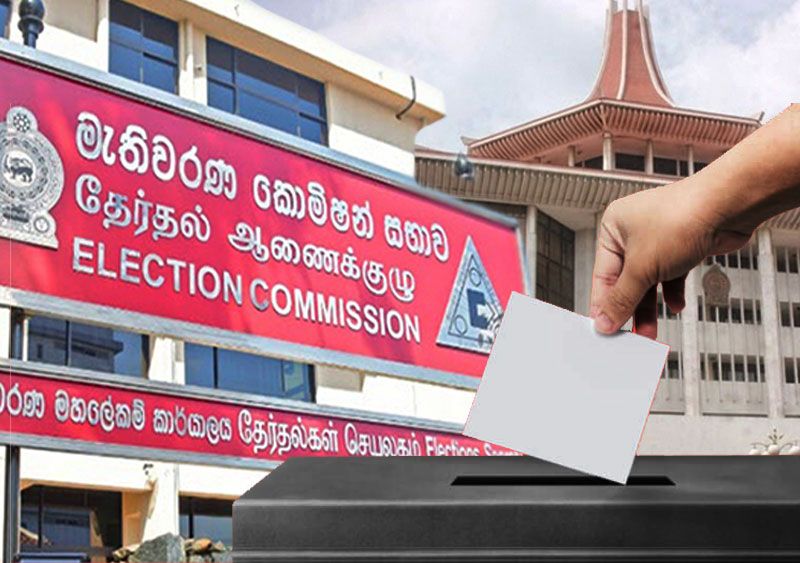
Postponing an election cannot be justified under any circumstances: Mahinda Deshapriya

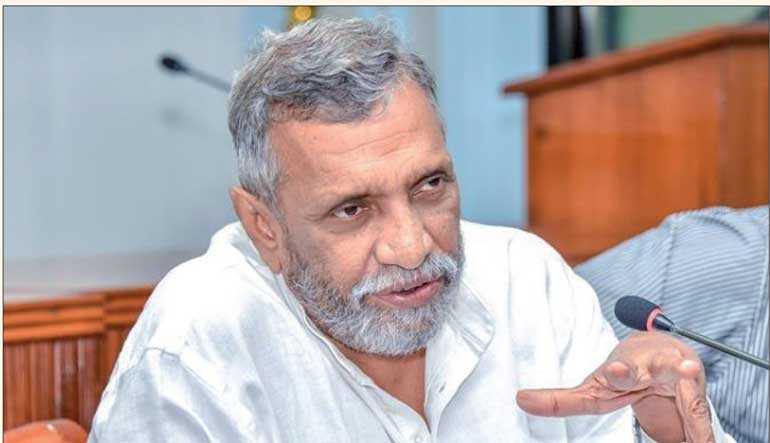
The former Chairman of the Election Commission and current Chairman of the Delimitation Committee Mahinda Deshapriya in an interview with The Sunday Morning asserted that he was against the postponement of elections and that he believed the Election Commission was in the right in the current controversy.

“My personal opinion is that I’m not for the postponement of elections according to the schedule. Already this election has been delayed more than a year,” he said.

He also revealed that the interim report of the Delimitation Committee would be submitted next week. “We are going to hand over the interim report first because we have to ask for another one month extension,” Deshapriya noted.

Following are excerpts of the interview:

What is the status of the delimitation report?

We are going to hand over the interim report first because we have to ask for another one month extension as we faced some problems with regard to district committees. One problem is that three Government Agents were promoted and two retired.

The ex-officios of the committees are the District Deputy Secretary or Assistant Election Commissioner, Senior Superintendent of Surveyors, District Statistician, Area Commissioner of Local Government or Assistant Commissioner of Local Government, and another member nominated by the Government officer nominated by the Local Government Minister. Of these ex-officio committee members, 17 statisticians have been transferred from 2 January, so 17 out of 25 districts had problems. They had worked only for two months when they were transferred.

Additionally, more than 10 senior survey superintendents were transferred, retired, or promoted. Due to the busy workload of the Assistant and Deputy Election Commissioner we couldn’t get their full support.

Normally these delimitation committees are supported by the Survey Department and the Election Commission, but this time, due to the election schedule, the Election Commission was not available to support fully. Another issue is that in Sri Lanka we don’t have enough Sinhala-Tamil and Sinhala-English translators.

Has the number of councillors been reduced by about half as requested?

The Government has asked us to reduce the 8,400 members to about 4,000. We have told the Prime Minister who is the subject Minister for Local Governments and the President that if we are going to reduce the number to 4,000, it would mean the elected members would come to 2,400 and the return members to 1,600. Right now we have 5,092 elected members so if we are going to reduce the total number of councillors to 4,000-odd, we will have to reduce these 5,092 elected members by more than 50%. This is very difficult.

Another matter we discussed was to secure, as much as possible, the representation of numerical minorities. We also discussed securing a minimum of 25% compulsory female quota. It is very difficult to do all these things if we are going to reduce the total number of councillors to 4,000. The ideal number is the number proposed by the 2012 delimitation report which was 6,000 members. However, the Government wants to keep it at around 4,000 which means less than 5,000.

Therefore, we reduced the wards to between 2,850 to 2,900 – the total members will then be 4,800 to 4,850. We have completed five districts. Of the remaining 20, we have finalised the numbers, boundaries, and other things in another 19 districts. In the final district, Kalutara, we have finished more than 60% of the work. We only have to finalise around six to seven councils. We also have to prepare ward maps afresh.

When will the report be concluded?

The difficult part is preparing the gazette notification. We have to prepare it in all three languages. That means around 3,000 wards including the parts of the ward, number of wards, names of the wards, and the boundaries of that ward must be included. This process would take around six months but we are working very fast so we think we can finish the gazette notification.

The issue is the translation to Tamil and English. We also have to write the report. Now we are preparing the interim report and will hand it over next week, on 27 or 28 February, to the Prime Minister and the President. It will also be available to the recognised political parties.

Our final report will be handed over to the President in April. Then the minister can appoint the review committee. The review committee can only change the names, the numbers of the wards, and the boundaries of the wards. They can’t change the number of councillors. This will take another three months.

For Colombo, there are 66 elected members and 44 return members and eight members as overhang – a total of 110. We have reduced this to a total 61 members of whom 37 are elected and 24 are return members. Overhang members will only be known after the election has been held. My point is that we have to eliminate this overhang.

How will the delimitation report affect the current Local Government Elections?

This report does not need the approval of the Parliament. My personal opinion is that I’m not for the postponement of elections according to the schedule. Already this election has been delayed more than a year. The minister has the power to give an extension to all the councils, this is very wrong. The Government must change this rule. It is not democratic. So if they don’t hold the elections before 31 August and the Government wants to go for this report, I have nothing special to say.

I’m against postponing the election. The Government has to pass a bill to annul the current nomination papers and that is the only way this delimitation report can have an impact on the current Local Government Polls. On three previous occasions, our Parliament has done that.

Considering the financial restrictions of the country, should the Election Commission have proposed a later date for the Local Government Elections or were their hands tied?

They could not have given a date later than 9 March because the elections were already delayed. Their hands were tied. Now the election is almost dead; there is no chance of having it by 9 March. So the Election Commission must issue the gazette notification under Section 38(3) to postpone the election and announce a new date. However, before that, it must consult with the Treasury and find out when it can release the money.

The most recent reason given by the Government Printer for failing to print the ballot papers for the postal vote was because Police protection was not provided. Do you think her explanation is acceptable?

Normally they need Police security to transport the ballot papers under Police protection. But that issue could have been resolved through discussion between the Election Commission, the IGP, and the Government Printer. This is not the duty of the Election Commission alone. All Government offices and the State must work together to conduct elections as soon as possible.

Do you feel the Government should have done more to provide the funds given that Rs. 10 billion was allocated via the Budget?

The commission doesn’t ask for Rs. 10 billion in one go for the Treasury to oblige. Also, the entire Rs. 10 billion will not be needed. I think they could have managed with Rs. 8 billion. They need at least 50% of the money to conduct the election. If the Treasury doesn’t give the funds, then the commission cannot conduct the election.

You were the Chairman of the Election Commission for a decade, have been a part of the Election Office for more than three decades, and have overseen historical elections such as the 2015 Presidential Election. Do you accept the postponement of the Local Government Polls for the current reasons that are depriving the masses of the right to franchise?

All elections are a part of sovereignty. The Supreme Court has given a judgement that every election is a right of expression. Therefore, postponing this election cannot be justified under any circumstances. We have to conduct the election.

Do you think the behaviour of the Government regarding funding and timing of the Local Government Polls sets a bad precedence?

If it continues like this there will be serious problems. However, I hope that even in this election the problem will soon be resolved. The commission can discuss the matter with authorities and conduct the election. I’m always thinking with a positive mind.

A gazette notification was published by the Election Commission announcing the election. So is it correct to say that elections have been officially called?

Yes.

Today (23) in Parliament the President said that the Elections are not legal. Is that correct?

I don’t know. I listened to the President’s speech and that must be clarified by the Election Commission. The Election Commission must definitely address the doubt of the people because we are in the dark.

As the former Chairman, if you were in this position, what would your opinion be?

Why should I put my bat forward to these types of balls? This question is an out-swinging ball so I’m not going to bat and answer the question. Let the commission answer.

The Commissioner General of Election has informed us that they cannot respond to what the President said in Parliament because it is privileged but with regard to the election being called it is fully legal and pointed out that even the United National Party (UNP) had submitted nominations. So what is your view as the former chairman?

If the President said these things, who can say who is correct? The commission must prove through the documents. They must show the minutes of their meetings and disprove the claims and show how they decided the election dates, etc. They have four members available from the commission so at least three of them must come together and have a press conference because everyone is in the dark. I personally believe that the Election Commission is correct. However, the President made some claims that must be clarified.

What lessons can the Election Commission learn and what changes can be done to ensure such behaviour is not repeated in the future?

Not only the commission but all the citizens of the country from top to bottom must be responsible. There is a saying: ‘All citizens are politicians.’ They have a duty. They think that ‘we need,’ then how can they stop postponing the election? Everyone must work together from all sides.


2023 LG poll: Monitors to seek legal action over postponement

Election monitors have decided to educate the international community of the postponement of the Local Government Election that was due to be worked off on the 9th of March.

Executive Director of the Institute for Democratic Reforms and Electoral Studies Manjula Gajanayake said the prevention of the postponement of the election cannot be done locally.

Gajanayake said 80,000 candidates who submitted nominations for the Local Government Election are faced with a grave injustice owing to the postponement.

Meanwhile, the People’s Action for Free and Fair Elections has vowed to seek legal action against the postponement of the Local Government Election.

PAFFREL Executive Director Rohana Hettiarachchi said all steps will be taken to protect the electoral rights of the public.

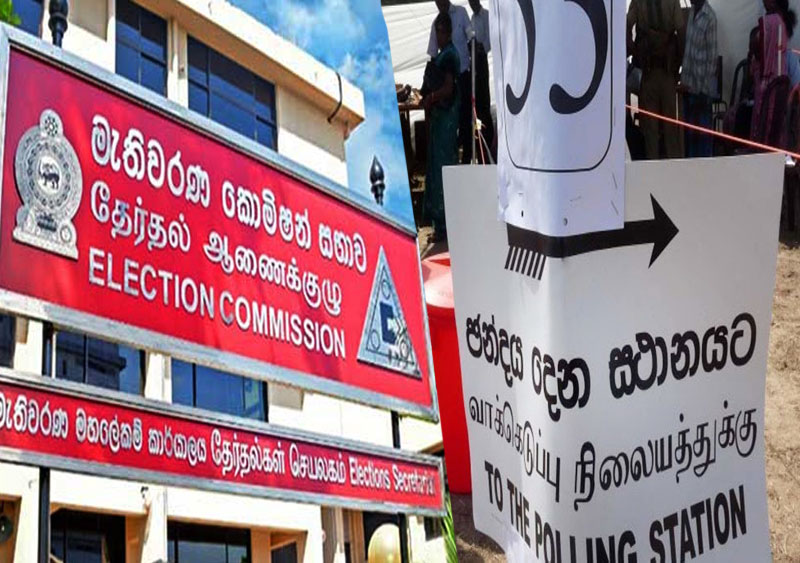
The Election Commission yesterday informed that the Local Government Election will not be held on the 9th of March 2023 as previously announced.
The Commission stated that the new date to hold the election will be announced on the 3rd of March.

The Commission stated that the election is being postponed due to reasons beyond the control of the Election Commission.

The decision was reached when members of the Election Commission convened yesterday (24) to discuss the matter.

Posted in Uncategorized

Belarus & Sri Lanka discuss ways to promote business contacts

Belarus and Sri Lanka have explored the possibilities of developing business contacts, BelTA learned from the National Center for Marketing of Belarus.

Representatives of the National Center for Marketing held an introductory meeting with the Ceylon Chamber of Commerce (Sri Lanka).

The parties agreed on steps to raise awareness of companies of Belarus and Sri Lanka of cooperation opportunities.

“Despite the focus on export promotion, the interaction of such structures is mutually beneficial. It helps invigorate business contacts, which will eventually materialize into contracts,” the National Center for Marketing informed.

The center plans to hold a webinar for Sri Lankan companies to tell them about promising avenues of cooperation with Belarus.

The center will also tell the Belarusian business community how they can benefit from cooperation with Sri Lanka and provide an online platform for direct negotiations.

Posted in Uncategorized

EC writes to Speaker over releasing funds for LG polls

The Elections Commission has requested Speaker Mahinda Yapa Abeywardene to mediate to release required funds for the Local Government elections.

Elections Commission Chairman Nimal Punchihewa in a letter to the Speaker has requested him to intervene to release funds as the Parliament has the Power over Public Finance and funds have already been allocated for the election by Parliament through the budget.

He said the Commission will meet in Friday and decide a new date to hold the LG polls.

Should The Country Be Governed By As Sangha Says?: A Rejoinder By P. Soma Palan

I refer to the above titled article by Mr. Upali Gajanayake published in the Colombo Telegraph Website. I wish to add a rejoinder to complement his article in support of his view. It is, indeed, a refreshing development that there are right thinking people amongst the Sinhala Buddhists, even though rare, who has the audacity to express the truth by raising the question, in the first instance, ”should the country be Governed as the Sangha says?”. The writer should be praised for this bold step.

I would like to add more insights to his pertinent question. My forthright answer to his question is an emphatic No. I enumerate my views as follows:

1. Firstly, Sri Lanka is a country governed by a Democracy as declared in the preamble of its Constitution. What is a democratic form of government? It means that the Sovereignty of the Country resides with the people. The people elect their Representatives to National Assembly, called the Parliament, word of western import derived from the Latin word ‘Parle”, meaning discussion and deliberation of the issues of the country and framing laws for the governance of the country. The Buddhist Sangha is a religious Institution formed by those who have renounced the mundane world to devote their lives for religious and spiritual ends, and that of the people of the country in general, and the Buddhists in particular. The Buddhist monks of the Sangha do not participate in electing representatives to the Parliament. It is the people who elect their representatives to the Parliament to govern the country. Therefore, it is the Government that decides, on behalf of the people, how the country should be governed. Engaging in elections, electioneering and participation in politics and governance, is alien to the tenets of Buddhism. As the writer of the said article affirms that Sri Lanka is a multi-religious, multi-ethnic and a multi-lingual country. Therefore, the Government should reflect the plural composite character of the population of the country. The country should be rightly governed by what the people say as expressed by the voice of the Parliament, and not according to what the Sangha says. The Members of Parliament and the Ministers of Government are knowledgeable of the complex worldly matters, not only of national but international dimension and have a multi-linear thinking and knows what is good for the country as a whole, unlike the Sangha, who are conditioned by one-sided thinking, and whose perspectives are narrow, sectarian and obscurantist. The country cannot be governed according to the whims and fancies of the Buddhist Sangha. Sri Lanka is not a theocratic country like the Islamic countries Iran, Syria, Arabia which are controlled and ruled effectively by the Islamic Ayatollahs and Mullas.

2. It is an irony that the Buddha who was the Prince of a kingdom and gave up his Royal right to rule the Kingdom and followed the spiritual path of Sannyasa and renunciation that led to the founding of the Buddhist Sangha, whereas ,the Sri Lankan Sangha of Buddhists are doing diametrically the opposite, in their lust for camouflaged State power to govern the country by remote control. In reality, the more pertinent question to ask is, are our Buddhist Monks scrupulously following the Pancha Sheela of Buddhism? A majority of them do not follow the fundamental tenets of Buddhism as enunciated by its founder, the Gautama Buddha. In my life, I am yet to see a saintly or holy looking Buddhist monk who is serene and noble. One can see how Monks behave engaging in public protests/demonstrations with their robes tucked-up, gesticulating with their limbs in anger and animosity. Our Buddhist Monks look more like men of the world than beacons of light. In actual fact, majority of the lay Buddhists evince qualities of devotion, religiosity and kindness more than Buddhist monks, as one could see on Poya days.

3. Buddhist Monks claim to be advisors to ancient kings and protectors of the realm. This they consider as their ordained Right. This is an exaggerated and egoistic notion of their role. They consider it is their hereditary right, and by extension, to intrude and interfere in the affairs of the country in the modern age. They fail to realize the difference of ruling a kingdom during the feudal times and in the modern times of science and technology, which demands a deep knowledge, skills and expertise. The Buddhist Monks do not have the specialized expertise, in fact should not have, having renounced and detached from the world of materialism. The king was the ruler in his own right and his legitimacy was not dependent on the Sangha. The notion that the Sangha was a key factor in the affairs of the realm is a bloated idea, of their self-importance.

4. In the present context of democratic Government, the Rulers (politicians) and the Sangha, mutually reinforce each other. The dependence of the Politicians and the Sangha on each other to secure and sustain power is an affliction that began in 1956.The architect of this development was none other than SWRD Bandaranaike, every inch a man of western education, culture and an Anglican Christian by faith. As Sri Lanka was 80% Sinhala Buddhist, he exploited the situation to come to power by catering to the, hitherto dormant Sinhala communalism, in the guise of Nationalism. He discarded his western Anglican Christian religion and the western dress and donned a borrowed national dress and adopted Buddhism, to appease the Sangha and the Buddhist majority, to gain political power to rule the country. He exploited the baser instinct of the Sinhala Buddhist people by the slogan “Sinhala Only in 24 hours”. What he aroused in the people had today grown and ossified into as the national trait of the people. So, one cannot blame the Sangha only, the rulers too are to be blamed for inviting the Sangha into politics and governance of the country, so much so that the Sangha ,comprising the Mahanayakas of the main Nikkayas exercise hidden power and rule the country as they say. The demonstration of the power of the Sangha can be seen in Ministers and high Government officials, when appointed compulsively running to the Mahanayakas and genuflect into two to receive their blessing, a euphemism for asking their favors and influence to climb the ladder in their careers.

5. The Sangha obstructs and stultify every progressive action the Government wish to take to solve the National question as it is called, but specifically the right of the Tamils who are a minority relative to the whole country, but a majority in their traditional region of habitation for thousands of years. The repeated persecution and violent riots against the Tamil community ignited a civil war between the LTTE and the Sinhala Government lasting 30 years culminating in the brokered peace Accord by India and the setting up of the Provincial Councils. But the operation of Provincial Councils, particularly that of the North-East, has been intentionally vitiated by depriving Police and land Powers. The incumbent Government is seeking to grant the deprived powers to the Provinces and the Sangha is vehemently protesting against this move and trying to rule the country as it says. A permanent and durable solution to the Tamils aspirations is not just giving additional powers but a Con-federal State within a united and undivided, country. Ancient Lanka consisted of independent kingdoms. Even at the time of the Portuguese invasion in 1505-the country had four kingdoms, namely the Rajarata, Jaffna, Kandyan and Kotte kingdoms, yet the country was geographically one. The last colonial Power the British only unified and consolidated the country into a centralized Unitary State for administrative purpose. With the birth of Independence, it is nothing but logical to revert to the historical status quo ante, and have Federal States corresponding to the ancient kingdoms. What is wrong in this? Powers can be shared between the Federal States and the Central Government, which is the National Government. The Sangha wants to rule the country and not allow the Government to rule the country. The notion that it will lead to separation of the North East from the country is a figment of their imagination. No Federal country under Democracy has separated and formed independent countries, in the world. Not even our neighbor, India, despite its race and linguistic based character of over 20 Federal States. The simple and obvious reason of the Sangha to oppose a Federal country is its racism and chauvinism for hegemony over the Tamil community, and lack of confidence in their own race and religion.

Posted in Uncategorized

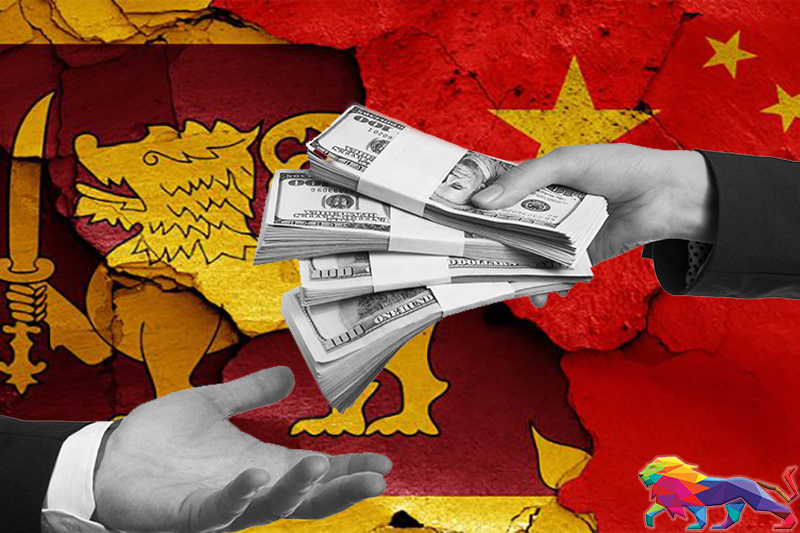
US fears China may use loans to Sri Lanka for coercive leverage

The United States fears China may use loans to Sri Lanka and Pakistan as leverage for coercion.

US Assistant Secretary for South and Central Asian Affairs Donald Lu said that the US is extremely worried about the possibility that Chinese loans to nations in India’s near neighbourhood will be used as leverage for coercion.

“Concerning Chinese loans to countries in India’s immediate neighborhood, we are deeply concerned that loans may be used for coercive leverage. And we are talking to India, talking to countries of the region about how we help countries to make their own decisions and not decisions that might be compelled by any outside partner, including China,” Donald Lu said in response to a question on Chinese loans to Sri Lanka and Pakistan.

President Ranil Wickremesinghe had this week revealed China’s refusal to agree to the same conditions placed by India and the Paris Club when restructuring Sri Lanka’s debt.

He said that the International Monetary Fund (INF) had proposed that all of Sri Lanka’s main creditors reach a consensus on restructuring Sri Lanka’s debt.

Wickremesinghe said that while the Paris Club agreed to India’s conditions, China refused to do so. Instead China wanted to place its own conditions.

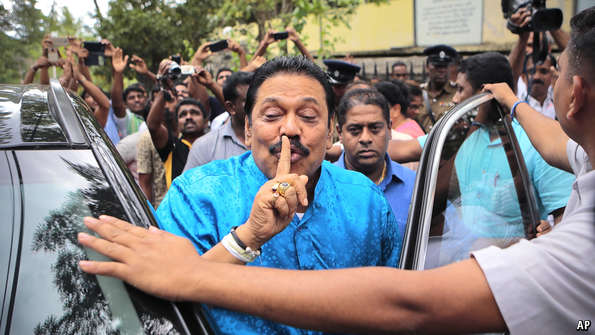
Attempts afoot to reappoint Mahinda Rajapaksa as PM – Channa Jayasumana

Nidahasa Janatha Sandhanaya’ Parliamentarian Prof. Channa Jayasumana says that there are attempts to reappoint former President Mahinda Rajapaksa as the Prime Minister by stripping Dinesh Gunawardena of the post.

The MP claims that his friends representing the ruling party have requested assistance for the move.

The government should resign, he said adding that “solutions for the country’s issues cannot be found by changing the prime minister.”

“We don’t support this effort. Mahinda Rajapaksa should now retire from politics and get some good rest at home.”

By doing so, Mahinda Rajapaksa can retain his reputation for whatever he has done for the country, MP Jayasumana expressed further.

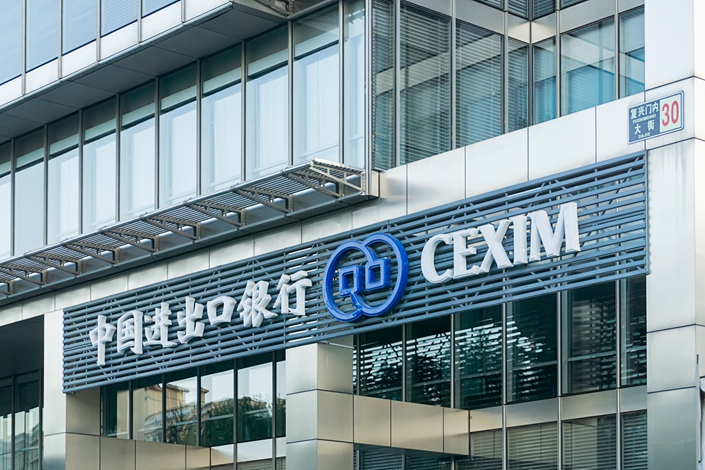
Chinese EXIM Bank offers short, mid, long term measures

EXIM Bank of China (Export-Import Bank) submitted a comprehensive program in its financial support document on January 19 to ‘strongly support’ Sri Lanka’s debt restructuring process with the International Monetary Fund (IMF) and it includes short, mid and long-term measures for debt treatment, a diplomatic source from the Chinese embassy said.

Sri Lanka is seeking the support of all the creditors to unlock the US $ 2.9 billion program with the IMF in four years.

According to the source, it is not just a two -year moratorium on debt repayments. “The two-year moratorium on borrowings is only part of the support to help relieve Sri Lanka’s immediate debt repayment pressure,” the source said.

“The Bank would like to have friendly consultation with Sri Lanka regarding medium and long term debt treatment in this window period; and the Bank will make best efforts to contribute to the debt sustainability and the future development of Sri Lanka. Only the short term measure is talked about in the media. It is incomplete and inaccurate,” the source said.

China calls on commercial creditors including the ISB holders to provide debt treatment in an equally comparable manner, and encourage multilateral creditors to do their utmost to make corresponding contributions.

“We also call on the IMF to take into full consideration the urgency of the situation in Sri Lanka and provide loan support as soon as possible to relieve the country’s liquidity strain,” the source said.

EXIM Bank works as the official bilateral creditor representative of China in dealing with the IMF.

Sri Lanka owes US $ 7.4 billion to EXIM Bank and China Development Bank according to the Ministry of Finance.