Postal voting for LG polls postponed indefinitely

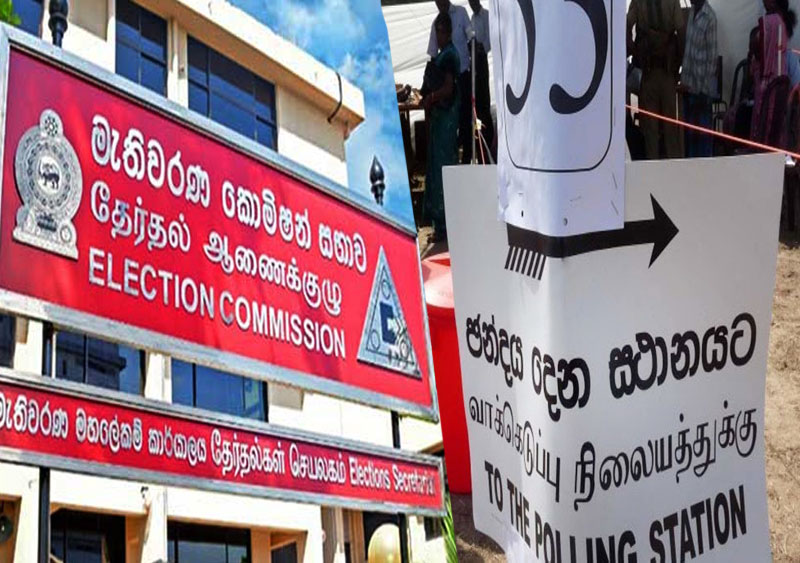
The postal voting for the 2023 local government election was postponed until further notice, Election Commissioner General Saman Sri Rathnayake announced today.

He said the postal voting was scheduled for February 22, 23, 24 and 28.

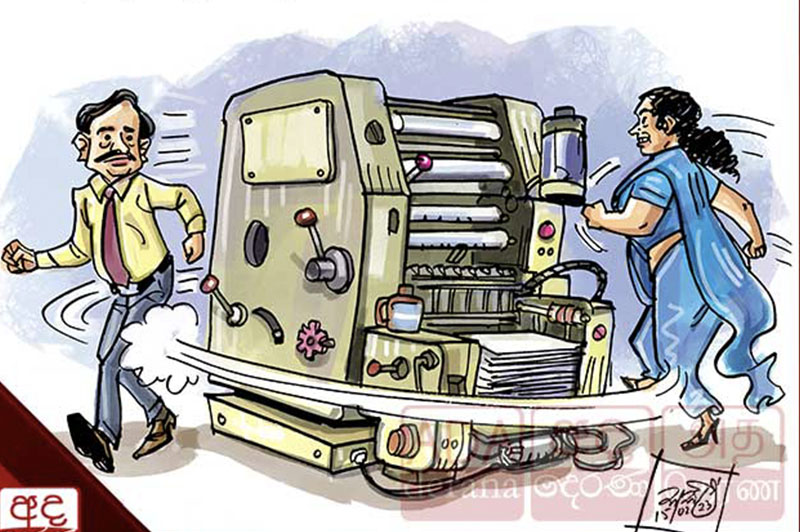
The Commissioner General said the postal voting was postponed as the Government Printer has not supplied the postal ballot papers on time as agreed.

He said new dates for postal voting will be announced in due course.

Posted in Uncategorized

Crucial discussion between Election Chief and Treasury Secretary

Chairman of the National Election Commission Nimal Punchihewa is scheduled to hold talks with the Secretary to the Treasury today pertaining to the Local Authorities Election.

Chairman of the Commission Nimal Punchihewa said he is hoping to summon the Treasury Secretary over the failure to release the funds requested by the Election Commission for the Local Authorities Election.

Several seniors Finance Ministry officials are also expected to attend the meeting.

Meanwhile, the Elections Chief said he is hoping to resolve the matter following talks. Nimal Punchihewa has also held discussions with the Government Printer pertaining to the Local Authorities Election.

The Commission has pointed out the importance of the Department of Government Printing releasing the printed ballot papers, other documents and materials needed to conduct the election promptly.

On Tuesday, it was announced that the issuance of postal ballot papers for the Local Authorities Election will not take place as planned due to the delay in the Department of Government Printing releasing required documents and materials.

Posted in Uncategorized

Independent MPs was to summon P’ment immediately

The Freedom People’s Congress in a letter to the Prime Minister have requested for Parliament to be summoned immediately, under Standing Order 16.

The letter bearing the signature of the General Secretary of the Freedom Peoples’ Congress notes that the decision to indefinitely delay the issuing of ballot papers for the Local Government Election is a threat to Sri Lanka’s democracy.

The letter further notes that the National Election Commission had observed that the reason for the decision to indefinitely delay the issuing of ballot papers for the Local Government Election was that the Treasury had failed to deliver funds for printing, and based on that the Government Printer had refused to go ahead with the printing process.

It notes that Parliament should convene immediately as Public Representatives, as the legislators, are bound to control the undemocratic situation, and managed the situation as well.

14 MPs had signed the letter that was addressed to the Prime Minister.

China’s loans to Sri Lanka have been “quasi-predatory”, says Lankan economist -By P.K.Balachandran

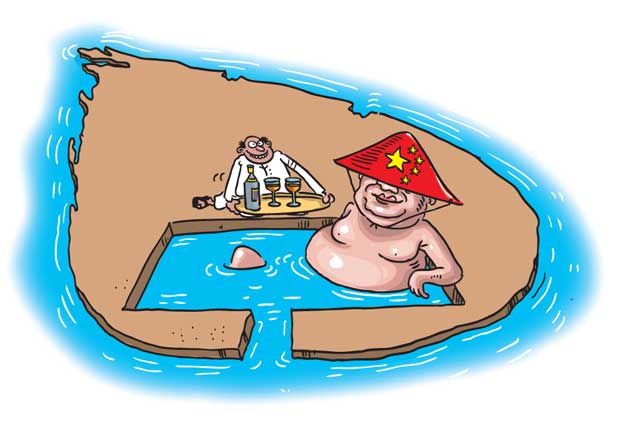
Dr. Muttukrishna Sarvananthan of Point Institute of Development in Jaffna, says that Chinese lending to Sri Lanka between 2007 and 2022 was marked by an absence of due diligence, hidden conditions and aggressive lobbying with Sri Lankan politicians and bureaucrats. These are “predatory”. But considering the lower rates of interest charged, the lending could be termed “quasi-predatory”, he says.

Sarvananthan’s contentions are found in his critique of “Evolution of Chinese Lending to Sri Lanka since the mid-2000s – Separating Myth from Reality” written by Umesh Moramudali and Thilina Panduwawala and published by the China-Africa Research Initiative of the School of Advanced International Studies (SAIS) at the Johns Hopkins University.

In the critique entitled Chinese Lending to Sri Lanka: A Factual cum Reality Check: A Rejoinder to Umesh Moramusali and Thilina Paduwawala, Sarvananthan agrees that the leasing of the Hambantota International Port (HIP) to a Chinese company in 2017 was neither an “asset seizure” nor a “debt-to-equity swap.” It was not an “asset seizure” because the port was never made collateral for the loans from the China Exim Bank. It was not a “debt-to-equity swap” either, because the money received for granting 85% of the equity stake to the China Harbor Group was not utilized to repay the loans borrowed for the purpose of building and expanding the port.

As Moramudali and Panduwawala point out, the funds obtained from the Chinese company for leasing the port for 99 years, were used to pay off Sri Lanka’s International Sovereign Bonds (ISB).

But this was malpractice, Savananthan contends. “The utilization of the proceeds of the leasing of the HIP to augment the balance-of-payments or for the repayment of a maturing ISB/s is a dubious accounting practice of the Government of Sri Lanka and a gross violation of the International Public Sector Accounting Standards of an accountable democratic state,” he says.

The Chinese lender (EXIM Bank of China) had also erred, he adds. “If it is indeed a responsible and accountable state-owned lender of the world’s second-largest economy, the EXIM Bank of China should have insisted that the money paid by the China Harbor Group (CHG) to the Government of Sri Lanka (GOSL) for the acquisition of 85% equity stake in the HIP should be channelled to repay the loans obtained from the EXIM Bank of China to build and subsequently expand the HIP.”

“If the lender for the HIP was a state-owned bank from a Development Assistance Committee (DAC) member bilateral donor, the foregoing dubious transaction by the GoSL would not have been allowed.”.

Hidden Debt

Moramudali and Panduwawala found that the loans obtained from China for Hambantota port (HIP) were being serviced by the Treasury of Sri Lanka. In 2017, the Treasury had taken over these loans from the balance sheet of the Sri Lanka Ports Authority (SLPA). Between 2013-2017, these HIP loans were included in the balance sheet of the SLPA as a “non-guaranteed” foreign loan to the SLPA.

This is a “classic example of a hidden debt,” Sarvananthan says. Neither the GoSL nor the Chinese lender was transparent as per international practice, he notes.

According to Moramudali and Panduwawala, the “Auditor General noted that the outstanding balance of four China EXIM loans for Hambantota port construction were not recorded in the government’s outstanding debt stock. While debt repayments were made on time by the Treasury and tracked by the ERD (External Resources Department of the Central Bank) outstanding loan amounts were not recorded by the SLPA or the Treasury in annual balance sheets.”

Moramudali and Panduwawala further pointed out that the signing of all five loan agreements between SLPA and a Chinese supplier or contractors responsible for constructing the port, had taken place months before the signing of the loan agreement between the GoSL and ChEXIM. To Sarvananthan, this is another example of the “predatory nature” of the Chinese loans for the Hambantota port. He asks: “How could the SLPA sign contracts with Chinese suppliers and contractors even before the loan agreement was signed?”

Sarvananthan points out that the 6.3% interest charged on the first agreement dated October 30, 2007, for a loan of US$ 307 million, and 6.5% interest charged on the second agreement dated August 06, 2009, for a loan of US$ 65 million for the Hambantota port by the Exim Bank of China were “exorbitant” given the fact that the effective LIBOR (London Inter-Bank Offered Rate) was just 2% in 2009.

Predatory Lending

Sarvananthan defines predatory lending as “severe conditions” that can be aggressive sales/lobbying tactics, very high-interest rates (usually 3-digit interest rates), overcharging for administrative costs, non-disclosure of risk factors by the lender, failure to carry out due diligence with regard to the technical feasibility and/or financial viability of a particular project, or very high collateral requirement, a very stringent penalty in the event of default, or a combination of the foregoing.”

Failing to carry out due diligence with regard to the financial viability/commercial potential of most of the projects funded by China in Sri Lanka would also fall in that category. Due diligence was lacking in the case of the Hambantota port, the Mattala airport, the Colombo Lotus Tower and Sri Lanka’s capacity to repay was also not factored in, Sarbananthan points out.

Sarvananthan considers lobbying for projects aggressively by submitting unsolicited project proposals with suggestions for Chinese funding mechanisms as predatory. “Chinese state-owned companies could also be potentially involved in bribing politicians and/or bureaucrats in their host countries, which is termed corrosive capital,” Dr.Sarvananthan alleges.

Dubious Cancellations

The Jaffna-based economist considers the abrupt and arbitrary cancellation of the Japan International Cooperation Agency (JICA) funded US$ 1.6 billion Light Rail (LRT) project in Colombo in 2020 dubious. He points out that immediately after the cancellation of the LRT project in January 2020, the China Harbor Engineering Corporation (CHEC) was given the contract to build an elevated highway connecting the Colombo Port City and Thalawathugoda (replacing the proposed LRT system) without calling for open tender.

“This is a classic case of project grabbing by Chinese state-owned companies and predatory lending by Chinese state-owned financial institutions,” Sarvananthan asserts.

Similarly, the East Container Terminal (ECT) of the Colombo port was to be developed jointly by India, Japan, and a local private company (John Keels Holdings) in terms of a trilateral agreement signed in 2017. But this was abruptly abrogated by the government in 2021 with the purported view to developing it entirely by the Sri Lanka Ports Authority (SLPA). However, in January 2022, it was reported that the ECT is to be jointly developed by China Harbor Engineering Corporation (CHEC) in partnership with a local company, Access Engineering, Sarvananthan says.

Citing another example, the Lankan economist says Sri Lanka bought Sinovac COVID-19 vaccines in June 2021 from China due to the delay in receiving the second dose of AstraZeneca COVID-19 vaccines from India. There were allegations in the media that the Ministry of Health was paying a higher price to purchase Sinovac from China than the price paid to AstraZeneca from India.

“When a journalist requested the Ministry of Health to disclose the purchase price of Sinovac, it refused to disclose the price because of a gagging agreement between the Chinese Embassy in Colombo and the local company involved in the purchase on behalf of the Ministry of Health. It was reported that the Chinese Embassy in Colombo had informed the Ministry of Health that if the purchase price was made public the order will be cancelled, ostensibly because of a ‘special price’ offered to Sri Lanka,” Sarvananthan says.

“It is this kind of non-transparency in the official business dealings between China and Sri Lanka that leads to accusations of predatory practices,” he observes.

However, Sarvananthan prefers to consider Chinese loans to be “quasi-predatory” rather than “predatory”, taking into account the comparatively low-interest rates they carry.


Posted in Uncategorized

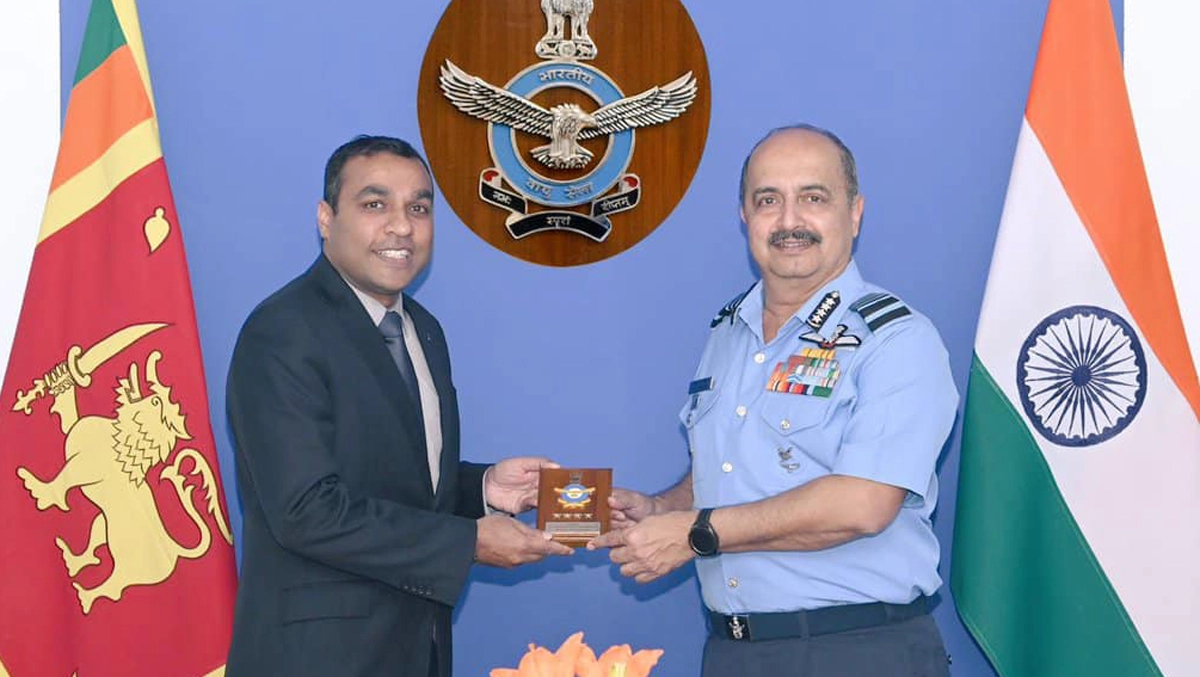
Defence co-operation with Sri Lanka explored at Aero India

Sri Lanka’s State Minister for Defence Premitha Bandara Tennakoon at an aviation confab has brought out the potential for greater defence co-operation between the two countries, India’s embassy in Colombo said.

Forums like Aero India can be used for defence cooperation through joint ventures, co-development and production whilst investing in research and development, the High Commission quoted Minister Tennakoon as saying.

Minister Tennakoon had been accompanied by a business delegation from Sri Lanka to identify avenues for greater cooperation.

Minister Tennakoon had participated in Aero India 2023 and SPEED- Defence Ministers’ Conclave.

He had also highlighted the importance of a collective response through multilateral efforts like the Colombo Security Conclave to tackle the common security challenges in the Indian Ocean Region.

The minister had met the Chief of Defence Staff and all three service chiefs in addition to Defence Minister Rajnath Singh.

Sri Lanka Armed forces already operating Indian defence equipment like Indra radar, offshore patrol vessels and Army training simulators, the statement said.

India has committed supply a floating dock, Dornier aircraft to build up capacity.

Posted in Uncategorized

Delayed election is delayed democracy -The Morning Editorial

Despite the Government’s claims that it has no fear of elections and that the public still has faith in its capabilities, the indefinite postponement of the postal voting ballot paper distribution of the upcoming Local Government (LG) election, caused by the delay in providing funds for election preparations, could reasonably be interpreted as a sign that the Government is actively attempting to derail the election process.

This development comes against the backdrop of much of the Opposition highlighting the Government’s trepidation and alleging for months that the Government would make underhand attempts until the last possible moment, to delay the election for as long as possible.

In fact, the current administration led by President Ranil Wickremesinghe, which consists mostly of members of the former Government led by then-President Gotabaya Rajapaksa and then-Prime Minister and incumbent Government MP Mahinda Rajapaksa, is inarguably one of the most unpopular governments since Independence. While Wickremesinghe has gradually lost popularity over many years, members of the former Rajapaksa Government have earned the wrath of the people due to their roles in the creation of the economic crisis that erupted in 2022. Facing even an LG election under such circumstances is disadvantageous to the Government, a reality the Government cannot hide from.

However, the myriad reasons for the Government to fear elections do not justify any attempts to postpone elections, as they are meant to provide the people with the opportunity to exercise their voting right and choose who represents them. Therefore, regardless of the prevailing circumstances, the Government is duty-bound to prioritise the people’s interests over its own and ensure that the conduct of the LG election is properly facilitated.

According to the Government, the main challenge that the LG election is facing is the lack of funds. Even though the Government has not directly stated that it is unable to fund the election, it has put forth funding as a monumental challenge on numerous occasions. However, if this is actually the reason for the potential postponement of postal voting, the Government should look into measures that could be taken to overcome this challenge. For example, if the Government is not in a position to provide funds for the election, it could look into providing as many non-financial resources as possible. As a temporary measure, it could also utilise funds that have been allocated for other, non-urgent initiatives. What’s more, as some political commentators have said, obtaining international assistance to conduct the LG election could also be possible because conducting elections on time is part of strengthening democracy, which the Western world has encouraged in countries such as Sri Lanka over the years.

However, the voting public has not witnessed any significant action being taken by the Government apart from lamenting the challenge in funding the LG election. This raises doubts regarding whether the unavailability of funds is a genuine reason or an exaggerated claim to conceal the Government’s unwillingness to face the LG election. If it is an exaggerated claim, it is a serious violation of the people’s right to participate in the democratic process, and this failure or unwillingness to facilitate the LG election will be yet another black mark on the Government. Worse yet, it could push an agitated public on to the streets as their franchise has been denied and their opportunity to vent their frustration at the ballot box has been taken away, resulting in chaotic scenes reminiscent of mid-2022.

Therefore, President Ranil Wickremesinghe and the Government must understand that holding on to power by delaying elections undemocratically would only serve to lower its approval rating, which is not too different from losing elections.

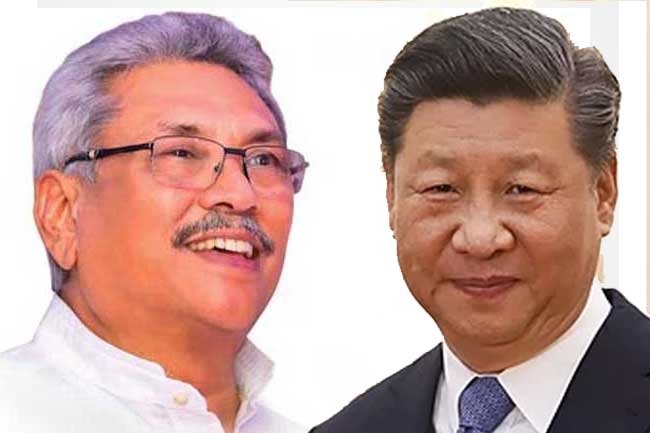
Former President Gotabaya Rajapaksa leaves for China

Former President Gotabaya Rajapaksa and his wife Ayoma Rajapaksa have left Bandaranaike International Airport at Katunayake for Kuala Lumpur, Malaysia early this morning (16th) with the expectation of leaving for China, according to airport sources.

They have left at 12.25 this morning on Malaysia Airlines flight MH-178 for Kuala Lumpur, Malaysia.

Airport sources said the former President and his wife have used the airport air cargo terminal to leave Katunayake airport, although he could have used the VIP lounge or the Silk Route or Gold Route facilities that can be obtained by paying money or through the normal air passenger terminal.

Posted in Uncategorized

Half the postal ballot papers already printed, TU claims

Half of the postal ballot papers required for the local government polls had already been printed by the time work had been suspended, claimed a trade union in the Government Press.

Deputy chief of the Samagi Sevaka Sangamaya Nuwan Buddhika also said that unlike on previous occasions, no police protection had been given for the printing process.

Opposition to take legal action

Meanwhile, SJB national organizer Tissa Attanayake said legal action would be taken against state officials who aided the government to postpone the LG polls.

He warned the people would resort to alternative means if the election was put off.

The postponement of the postal voting will affect the LG polls due on March 09, said Attanayake.

JJB leader Anura Kumara Dissanayake said a government by his party would prosecute the officials who were trying to postpone the election.

Addressing a public rally in Moneragala, he said the secretary to the president, treasury secretary and the government printer would definitely have to face court action under a JJB regime for trying to put off the election.

If it comes to the worst, hundreds of thousands of people would be brought to the streets if the election is not given, he also warned.

Indian visas halted at IVS due to ‘security incident’

The outsourced Indian visa application center, IVS Pvt. Ltd in Colombo will remain closed until further notice, the Indian High Commission in Colombo says.

The decision was taken due to a security concern that popped up last night, according to a notice published by the high commission.

As a result, all applicants are requested to reschedule their appointments with IVS Pvt. Ltd accordingly.

The Indian High Commission’s office in Colombo can be contacted for any urgent consular or visa matter.

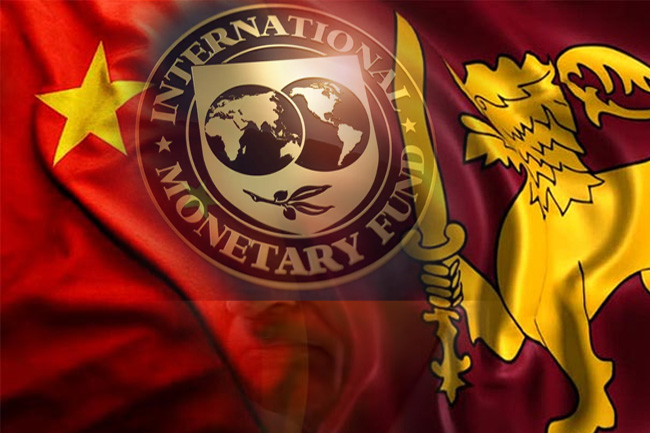
China dithers over IMF’s Sri Lanka debt plan, leaves Colombo in limbo

With China yet to support Sri Lanka debt restructuring based on the debt sustainability analysis (DSA) of the IMF and Paris Club, time is running out on Colombo to secure a much-needed loan to revive the nation from the present economic crisis. Sri Lanka is seeking a USD 2.9 billion-dollar loan from the IMF over four years in eight installments.

While India has agreed to support the Island nation on the basis of DSA, China still has differences over period of loan moratorium and debt restructuring with the IMF’s Executive Board scheduled to meet next month.

Under the circumstances, the IMF can either give loan on arrears and then wait for China to come on board by IMF spring meeting or later this year. Sri Lanka owes nearly USD 7.8 billion dollars to China which includes both bilateral lending from EXIM bank and commercial lending from Chinese development Bank.

Over the years, the Rajapaksas with present President Ranil Wickremesinghe in cahoots, used these loans for sponsoring white elephant projects like Hambantota port, Mattala airport, Norocholai power plant and Colombo port city as a result of which Beijing was given long term tax concessions and a free run of the Island nation.

While China was the favourite destination of the Sri Lankan political leadership since the present millennium, Colombo chose to stay away from India under pressure from Beijing and has still not said yes to the Indian proposal to develop the Trincomalee port. It is another matter that India provided some four billion dollars’ worth of aid including food, petrol and medicine, to Sri Lanka last year to tide over its raging economic crisis.

With Chinese EXIM bank only willing to extend a two year debt moratorium to Colombo as of now, the Sri Lankan economy will hit the rock bottom soon or else IMF will have to give loan on arrears with further stringent conditions. This not only means further political instability in the Island nation and the obvious beneficiary of this ferment will be the Communist parties of Sri Lanka like the JVP.

The political climate of Sri Lanka will remain uncertain but the first indicator of the extent of ferment will be the local elections next month.

Unless the mainstream parties are able to recover from the hit, President Wickremesinghe, who is the lone MP from his party, may not be eager to announce the general elections.

With USD at an all-time high against Sri Lankan rupee and food inflation into double digits, things will get much worse for Sri Lanka before they turn for the better. And this could take at least a decade.

Source – Hindustan Times