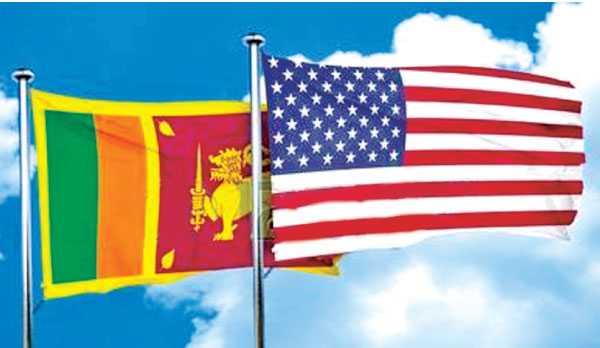
High-level US delegation lands in Sri Lanka for top level defence talks

A 20-member US delegation team comprising high-level defence officials arrived in the country in two special aircraft of the United States Air Force last night at the Bandaranaike International Airport (BIA), the Daily Mirror learns.

The delegation includes US Principle Deputy Assistant Secretary of Defence for Indo-Pacific Security Affairs Jedidiah Royal.

It was reported that the security in and out of the Bandaranaike International Airport and its surrounding areas had been tightened during the last few days due to the arrival of the US delegation team.

The delegation arrived at the BIA aboard Boeing C-17 Globemaster III special aircraft.

An official of the Airport said that this visit was a top level defence discussion.

The delegation was escorted to Colombo from the BIA amid tight security and the lane towards Colombo at the Colombo – Katunayake Expressway had been closed for traffic during their arrival.

It was reported the delegation is scheduled to meet top Sri Lanka security officials during the visit.

Posted in Uncategorized

Postal Vote to go ahead as planned; Election Monitors to take action against Govt. Printer

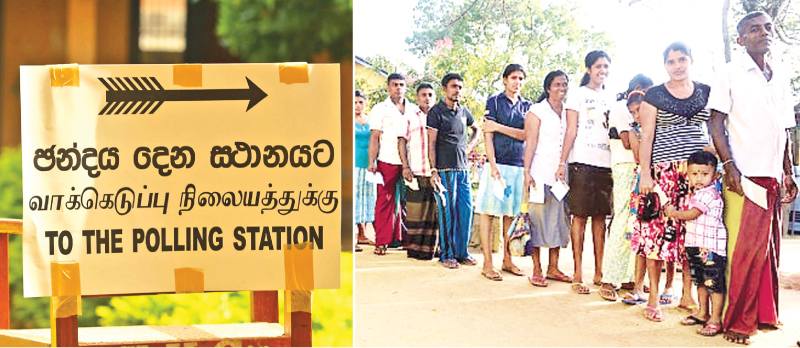
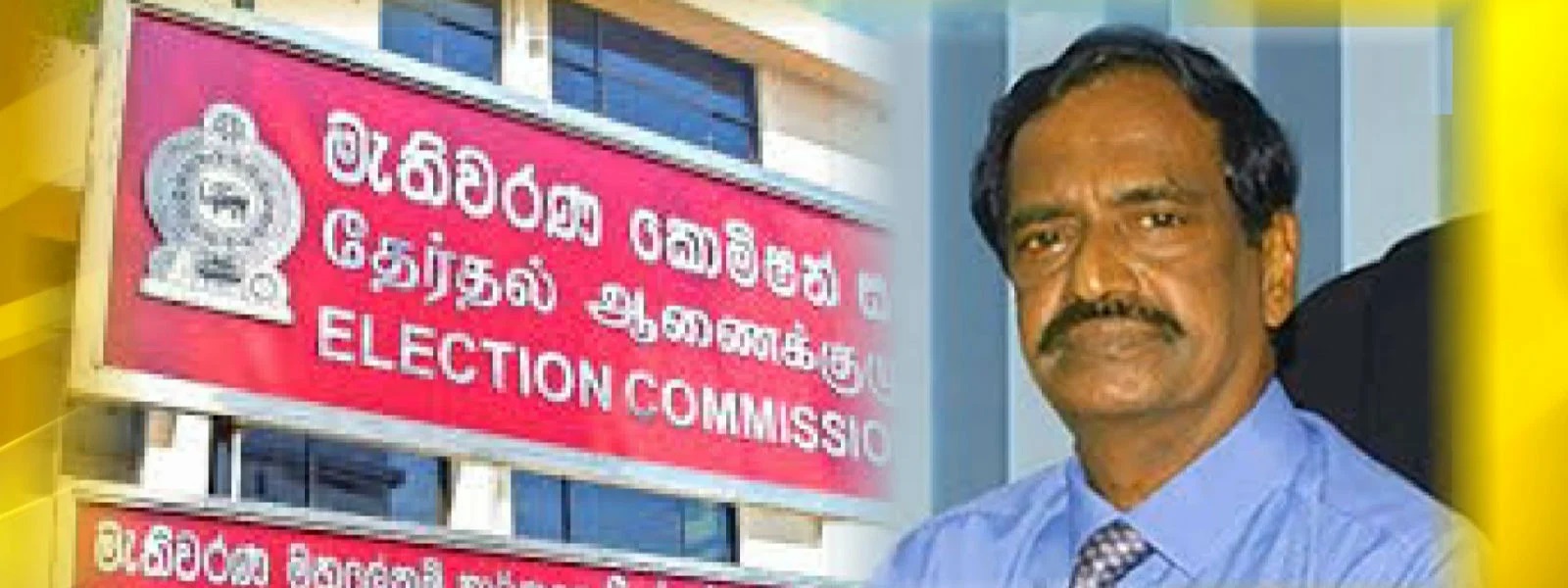
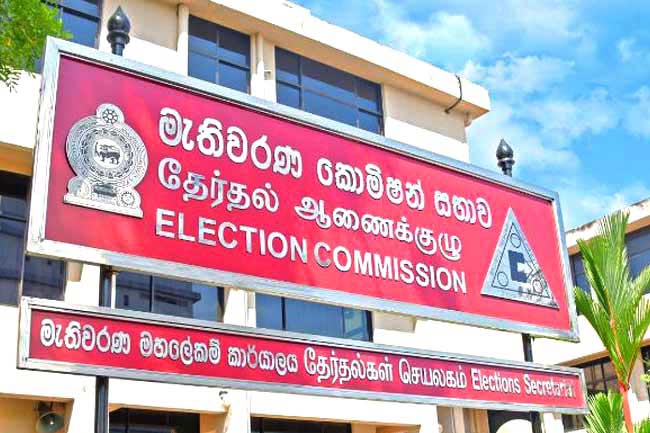
Postal Voting for the upcoming Local Government Election will go ahead as planned on the 22nd, 23rd, and 24th of February 2023, confirmed the Chairman of the National Election Commission Attorney Nimal Punchihewa on Wednesday (15).

He said that the distribution of the ballot papers for Postal Voting was delayed, though the distribution process was scheduled to commence on Tuesday (14).

However, the Government Printer said that an issue arose regarding the provision of the ballot papers for the Postal Vote due to funding issues.

In the meantime, the National Election Commission and the Government Printer had engaged in a series of talks and based on those discussions the Government Printers is expected to deliver the ballot papers for postal voting in the coming days.

Moreover, Election Monitors have decided to take legal action against the conduct of the Government Printer for failing to deliver the ballot papers.

Election Monitors said that the Government Printer has taken an unconstitutional decision to not deliver the ballot papers.

Rohana Hettiarachchi, the Executive Director of the People’s Action for Free & Fair Elections (PAFFREL) said the National Election Commission must also take legal action against the Government Printer.

Secure packages containing the ballot papers for postal voting were to be handed over to Sri Lanka Post on Wednesday (15), however as the ballot papers were not delivered, the process was suspended indefinitely as per a decision reached by the National Election Commission on Tuesday (14).

Posted in Uncategorized

Sri Lanka poll monitor deeply concerned over postal vote halt

A Sri Lanka polls monitoring group has expressed “deep concern” over the postponement of postal voting after the state printing unit said it did not have money to print ballot paper.

Sri Lanka’s Centre for Elections Monitoring Election Violence (CMEV) said it was a direct violation of voter rights.

“CMEV expresses its deep concern about the indefinite postponement of the postal voting for the Local Government Election 2023,” the group said in a statement.

“CMEV believes that the disruption of the postal voting could impact holding the Local Government Election 2023 as scheduled on March 9, 2023.

“The Government’s actions have created immense uncertainty for voters regarding the Local Government Election, and this is a direct violation of the right to vote that is guaranteed for all citizens under the Constitution of Sri Lanka.

“CMEV highlights it is the responsibility of the Executive to create an enabling environment for conducting the Local Government Elections, as per the Constitution.”

Sri Lanka President Ranil Wickremesinghe has reported to have asked spending agencies not to carry out work on credit, the CMEV said.

“The conduct of the Government Printer is specifically a violation of Article 104B(2) of the Constitution which states that it is the duty of all authorities of the State to co-operate with the Election Commission to enforce all laws relating to holding elections,” the CMEV said.

“Refusal or failure to carry out this duty is a criminal offence under Article 104GG of the Constitution.

“CMEV specifically urges the Election Commission to exercise its powers under this Article to take action against the Government Printer and any other public authority disrupting the election process.”

The full statement is reproduced below:

Statement on Disruptions to the Local Government Elections 2023

CMEV expresses its deep concern about the indefinite postponement of the postal voting for the Local Government Election 2023. It has been reported that this is due to the Government Printer’s refusal to submit the printed postal voting ballot papers on time to the Election Commission.

CMEV learnt that the Government Printer sent a letter to the Election Commission yesterday, February 13, 2023, informing it that it is unable to process the printing of ballot papers until the full cost for the printing is made by the Commission. This was in line with the President’s recent direction on January 31, 2023, to heads of government authorities to not purchase services on a credit basis.

CMEV believes that the disruption of the postal voting could impact holding the Local Government Election 2023 as scheduled on March 9, 2023. The Government’s actions have created immense uncertainty for voters regarding the Local Government Election, and this is a direct violation of the right to vote that is guaranteed for all citizens under the Constitution of Sri Lanka. CMEV highlights it is the responsibility of the Executive to create an enabling environment for conducting the Local Government Elections, as per the Constitution.

The conduct of the Government Printer is specifically a violation of Article 104B(2) of the Constitution which states that it is the duty of all authorities of the State to co-operate with the Election Commission to enforce all laws relating to holding elections.

Refusal or failure to carry out this duty is a criminal offence under Article 104GG of the Constitution. CMEV specifically urges the Election Commission to exercise its powers under this Article to take action against the Government Printer and any other public authority disrupting the election process.

Should A Country Be Governed By As Sangha Says? By Upali Gajanayake

Prelude

A group of countries governed by religious principles can be seen on the world map even in this 21st century. Ignoring human rights is common in such states dominated by religious leaders. The Taliban regime in Afghanistan is an example of suppression of human rights by religious fundamentalism. Not just under the Afghan mullahs or Iran’s Ayatollahs, there is information released every day in our world about the suppression of civil liberties in all states controlled by religious fundamentalism. Such governments are especially dangerous for ethnic and religious minorities.

Some historians provide evidence that Buddhism has had a massive influence on the state in Sri Lanka since ancient times. They present ancient works including the Mahavamsa as evidence of the decisive influence of Buddhist monks on governance the country. Ven Dr. Walpola Rahula Thero has compiled the book entitled “Bhikshuwage Urumaya” based on those historical evidence. Ven Dr. Rahula argued that even today the Buddhist monks own that historical heritage.

Vidyalankara Manifesto

Ven Rahula not only prepared the theoretical background for the monks to engage in politics, but also, he was an active political monk. Once he was physically attacked by his political opponents for addressing election campaign meetings against UNP. Even some of UNP supporters had said that behind that attack on the group including Ven Dr. Rahula, were the henchmen of the DS Senanayake and JR Jayewardene who represented Kelaniya constituency at that time. The famous Vidyalankara Manifesto was published with the intervention of Dr. Rahula Thero and it was a modern publication that justified the politics of monks.

With the opening of the door by Ven Rahula, a huge number of Buddhist monks were politically baptized during the general elections of 1956. The general election of 1956 was held in an environment with a great enthusiasm among the Buddhist community of the country because of the Buddha Jayanti (2500th anniversary of the Gauthama Buddah’s parinibbāna). In the general election, it was not difficult for the monks with a history of acting as guides of the Buddhist people in terms of taking the voters to the place they wanted. After the collapse of the Sinhalese monarchy, the marginalized Buddhist monks once again took the political license to control the state. It is an open secret that Mapitigama Buddharakkitha had an influence on the Prime Minister even in the case of appointment of the cabinet ministers. The United Monks Front (Eksath Bhikshu Peremuna) which supported the Mahajana Eksath Peramuna (MEP) in the 1956 general election, was operated under the leadership of Buddharakkhita.

The fate of Bandaranaike–Chelvanayakam agreement

The political support of the Buddhist monks came as a boomerang to Prime Minister Bandaranaike when he had to tear up the Bandaranaike–Chelvanayakam agreement when a group of monks surrounded his Rosemead residence. A group of Buddhist monks who pioneered his rise to power were forced to tear up the agreement. The Bandaranaike–Chelvanayakam agreement advocated to create regional councils(Rata Sabha) in Ceylon for giving a certain level of powers to the Tamil people, and was intended to solve the communal disagreements that were occurring in the country at the time. The monks who forced the Prime Minister to tear up the Bandaranaike–Chelvanayakam agreement, also took a hostile approach to the Tamil Language Special Provisions Bill, 1958.

The story of this religious influence in 1950s was ended when the Prime Minister was killed by a monk whom by the Prime Minister called a ‘Cheewaradhariya’ or a robe wearer.

A Monk shot to dead

The behaviour of most of the Buddhist monks shows their reluctance to accept that Sri Lanka is a multinational, multicultural society. The main ambitions of such monks who never understand the gap between religion and the state, is to keep Sinhala language and Buddhism at the forefront of the state. But they are unable to understand the damage done not only to the state but also to their own religious teachings. Meanwhile, their narrow vision is cunningly used to their advantage by many politicians who are greedy for power in Sri Lanka.

1958 was not the only time when Buddhist monks protested efforts to transfer the right to use their language to the Tamil people. It is an objection that has been reported continuously in recent history. The same objection was raised to the Tamil Language Special Provisions Bill, 1966. On 8th of January 1966, in an anti-Tamil demonstration, one Buddhist monk was shot dead by the police. An indelible stain in Sri Lanka’s left-wing political history is the joining of the main left-wing parties in mentioned anti-Tamil campaign on the day 08 January 1966.

Since the Indo-Lanka Agreement of 1987 and the establishment of provincial councils, these monks are taking to the streets against any rights of the Tamil people. Even the false voice of devolving police and land powers to the provincial councils has again provoked them. Other ethnic groups are also vulnerable to the opposition of the above-mentioned groups of monks. For example, recently such protest campaigns were launched targeting the Sri Lankan Muslim community. This is a behaviour that completely betrays the basic teachings of the Buddha. In the Vasetta Sutta, the Buddha preached that although there are differences between different animal groups such as reptiles and birds, all humans are within the same group. The broad picture of common human rights is being distorted by some monks who are driven by communal and religious fanaticism.

The above-mentioned behaviour of many monk groups is not limited to the cultural aspects. Some intervene in subjects they do not know, including economics and agriculture sectors without any quantitative knowledge of those specialist areas. A good example of this is the intervention of Athuraliye Rathana Thero MP in the agriculture sector. Rathana Thero is a person who has not studied the relevant subject has intervened to ban the use of fertilizers and chemicals without any scientific research. His intervention ended with the country suffering a severe food crisis.

Buddhism is a teaching that embodies a philosophy that provides a solid start to an important disciplined existence. Buddha’s Bhikshu community is also an organization established on such a disciplined basis. But today many monks in Sri Lanka work without taking that religious discipline into consideration. Some monks who put pressure on political institutions are now inclined to influence even the judiciary. Former President Maithripala Sirisena has said that it was Athuraliye Ratana Thero who asked him to release a prisoner convicted of murder. And Galagoda Atte Gnanasara Thero was convicted of contempt of court and imprisoned.

A pressure group

Buddhist monks are clearly an influential group in Sri Lankan politics who has their own distinct social and religious aspirations. But today, in a country with multinational and multicultural potential, if the desire of one such group is understood as the general desire of the state, it will cause a great prejudice to the entire society. On the other hand, their slogans are based on a limitation that does not understand the matter at all. They once led people against the federal system, today they are even engaged in an attempt to besiege the parliament even with the false statement of transferring police and land powers to the provincial councils, without proper understanding.

Educated only in greedy so-called political schools where racism is political opportunism, these monks have little understanding of world trends. The Tripitaka and even Buddhist literature make many references to caste, race and the nature of political power. But today’s popular Buddhism has suppressed that valuable Buddhist teachings. Who do they get political advice from? From which political forces? To find an answer for that question, I invite you to look at the main trends of monks’ politics in the last two decades.

(1) Soma force; There is no doubt that Sri Lankan Sinhala–Buddhist society still remembers the late Ven Soma Thero. He gained popularity in the Sinhala society through his sermons. That popularity was more rooted in Sinhala society with his controversial statements made about a Muslim expansion eastern province the country. The Soma-Ashraf TV debate, which was given more publicity by the media, attracted the attention of many people. With the false idea that Soma’s sudden death that happened in Russia was a Christian-influenced murder, the political result was taken advantage of by the Jathika Hela Urumaya lead by Patali Champika Ranawaka. A group of Bhikkhus, including Athuraliye Rathana, entered the Parliament with a racist political agenda, with the slogan of Soma’s death certificate. Patali Champika Ranawaka played a major role in forming the ‘Jathika Sangha Sabhawa’ and providing the necessary theory for it. The late Ven Maduluwawe Sobitha was its founding chairman. The entire monk organization led by Sobhitha directly opposed the decentralization of power.

(2) ‘Kudapola Force’; I will also recall a fact from the 20th century that cannot be forgotten. That is, during the 1985-87 the way the Janata Vimukthi Peramuna used monks to protest the Provincial Council. During 1987-89, JVP had formed an organization called ‘Kudapola Force’ including a number of young Buddhist monks to target monks who supported to the Indo-Lanka accord and provincial councils. The ‘Kudapola Force’ came under suspicion for several murders of monks in 1987-89. (The organization was named as a respect to Ven Kudapola Rahula, an anti-imperialist Buddhist monk who was killed during the British colonial period)

(3) Wirathu warship; Most of the Buddhist monks involved in politics in Sri Lanka today have been ideologically trained by such political organizations. They are internationally similar to groups such as Wirathu Bhikshu, a prominent Muslim dissident in Burma. Ven Galagoda Atte Gnanasara who fostered the anti-Muslim public opinion in Sri Lanka, invited to Bhikkhu Wirathu, to Sri Lanka and organized a warm welcome.

Who is today’s main theorist of anti-decentralization monks? He is Wimal Weerawansa MP, the leader of the National Freedom Front, who publicly challenges decentralization of the power. The analysis of Weerawansa on federal system has become the handbook of anti-provincial council’s monks. Who can challenge Wimal Weerawansa’s so-called comparative studies regarding the various federal systems in the world?

conclusion

Even today we see such narrow-minded monks’ political interference on roads and in public places. Political participation is a right of all citizens in a democratic society. We don’t challenge it, but should the entire state obey the will of any influence group that has only put forward its ethnic or religious ambition without a national vision? Indeed, the serious issue in the country is that one religion has taken over the state. In many countries, this kind of influence has been removed by separating religion from the state.


Posted in Uncategorized

Ranil’s Latest Decoy: 13A By Vishwamithra

“If the ruler wants to play the game by himself and follow secret policies, he must present a decoy to the masses. He cannot escape the mass; but he can draw between himself and that mass an invisible curtain, a screen, on which the mass will see projected the mirage of some politics, while the real politics are being made behind it.” ~Jacques Ellul

The stirring of the leaves in the woods and their dancing to the melodious breeze would vanish in a little while. A rainstorm is imminent. What it takes away with the branches and trees could be anyone’s guess. Yet the fragrance of fresh raindrops on earth would continue to linger on for discerning men and women to relish. The aftermath of heavy and mighty rainfall has its own intrinsic merits; it’s a harbinger of even better things to come; with the dawn of the sun next morning, the dew that shields the plain green grass will evaporate in a flash. Yet another day begins. That is precisely how the cycle of human endurance spins.

In that ceaseless spinning cycle, Sri Lanka is wedged right in the middle, willy nilly consuming itself like a greedy python trying swallowing an oversized chicken as its day’s supper. Demand for restructuring of our debts is the focus of discussion. International Monetary Fund (IMF) has its own demands and the pressure buildup is seemingly intense. Belt-tightening is becoming functional without finding its articulation by the government’s politicians. Daily shopper carries many a testament to painstaking and frugal living. Politics as usual has adopted its own lewd stance; it has occupied its own exclusive space and those who do not wish to be disturbed by the vagaries of this unkind enterprise are involuntarily heaved into its deepest bottom.

Sri Lanka today has become the most visible and shameless panhandler of Asia. With a promising future in the early nineteen fifties, Ceylon’s economy ranked second only to that of Japan. Now, even Bangladesh and Nepal are ahead of us. Her rich and flashy coastlines have become the roaming grounds for day-to-day tourists who are in the lowest layer of these wandering men and women from the West. They are looking for the cheapest hotels, cheapest food and cheapest entertainment.

Marauding thugs who also happened to be politicians embarrass the country as well as themselves when they come across beautiful white-complexioned women on the roadside and an incident which saw one of our southern politicians ran after such a pretty visitor with a handgun is still in our memories. The cultural decay was manifestly tearing apart the drapery of our society; socially what was considered first-class and affluent have been exposed beyond recognition and alleged killings of mega players in the business world has shocked an otherwise dispirited wealthy class. At various MacDonald’s restaurants, one can see the gulf glaring in your face. While in a designated area reserved by a wealthy parent the kids of those wealthy parents dance to the tunes of modern day Rap music; outside, hanging on to the window, children of a hapless parent look on, every inch of their being burning with envy and hatred with an unanswered question: why can’t we have the same fun?

Then the economic collapse arrived. Like an old wound oozing its corrupt mixture of puss and blood, the economy first began the bleeding until it reached the unenviable stage of bankruptcy. A national tragedy of massive proportion occurred and yet the politicians would not care a damn. They were still wandering in the wilderness of ill-gotten wealth and comforts.

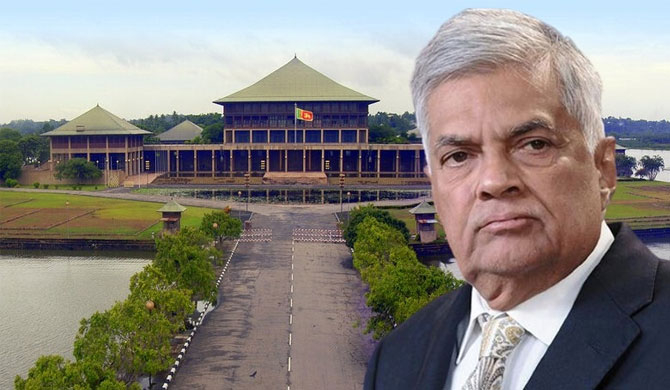
Ranil Wickremesinghe understood the underlying dynamics of this crisis. He became the president of the country, virtually has no one to account to. He was not elected as a result he is not answerable to the electorate. He has two more years to govern by virtue of the powers of a parliamentary selection. However, he can only go on exercising those powers as long as the Pohottuwa group of parliamentarians wishes.

Into this mixture of political chaos only fell the local government election. Ranil saw a way out of this mix and emerge as a winner. In the 1956 General Elections, the United National Party (UNP) was led by Sir John Kotelawala. He was second only to Ranil Wickremesinghe as the leader of the UNP. SWRD Bandaranaike floated his election campaign purely on cultural grounds. A ‘place in the sun’ for the ‘Common Man’, Sinhala to be made the official language in 24 hours and great emphasis on Buddha Jayanthi Celebrations were the leading banners during the campaign. Buddhist Monks led the campaign and SWRD was victorious. The polarization along ethno-language lines so created by SWRD and his Buddhist Monk was so deep and inerasable, it exists even today, especially after the 30 year old war and irrevocable division between Northern Tamils and Sinhalese living south of Vavuniya. No economic issue was even highlighted during the campaign.

Today it’s the total opposite. What’s utmost in the minds of the Lankan voter is the economy. It is warfare for the parents to feed the children; it’s a battle for the car owners to pump petrol or diesel for their vehicles; it’s a struggle for the small boutique owners to sustain their businesses at the exorbitant costs of their supplies.

Coming back to the local government elections scheduled for March 9, the most obvious difference between the ‘56 elections and this LG election is, while the ’56 election was exclusively on a sociocultural platform, this one is basically on an econopolitical one. More than six months have elapsed since Ranil assumed Presidency. To date these six months have hardly produced any tangible advantages to the majority of the population- middleclass and the lower middleclass and poor class.

Ranil being a shrewd and cunning politician, being the nephew of old JRJ, has decided to resort to whatever means available for him to distract the voting majority from the economic crisis. He wanted any other polarizing subject to dominate the national conversation. What other subject is there other than the Sinhala-Tamil division.

By declaring interest in the full implementation of the 13th Amendment, Ranil introduced another pivotal subject into the voter’s mindset. Away from the current economic hardships, a socioculturally volatile and politically susceptible people would always seek refuge in a fake patriotism. It is not only leaders, followers too tend to go along this treacherously devious path in order to satisfy themselves that they committed no wrong at the eleventh hour if their patriotism is called into question.

Ranil very cleverly found that secret weapon; his aim is not to serve the people; he simply has no concept of service of man, on the contrary, what he has is service of self. Blinded by and utterly delusional in self-serving visions, our current President is one master in deception, depravity and decadence.

13th Amendment to our Constitution is quite a controversial matter. Discussion of its contents would bore the average non-Tamil/Muslim politician But its contents and non-implementation to the fullest extent possible by the Executive branch of our Government is much a provocative subject for out Tamil leaders. Devolving Land and Police powers to the provinces other than the North and the East would not be a bone of contention for our Sinhalese political leaders. But they seem to be dreading when these same powers are devolved to the North and the East. These are the after-effects of the ’56 revolution. SWRD’s destruction process of our body-politic is still continuing at alarming pace.

Nevertheless, during the recent Aragalaya period, that Sinhalese nationalism seemed to have gone into a coma. Ranil’s attempt to implement the 13A to the fullest is to reawaken a sleeping giant. That sleeping giant is Sinhalese nationalism. Unleashed to the most ruthless limit during the various racial breakouts in the fifties, sixties and seventies, Sinhalese nationalism bared open the oozing wounds in the Sinhala psyche. It had to reach a climax with a 30-year war, and being victorious seemed to be the answer. But we do not seem to have any empathy for our Tamil brethren. Racial détente along solid principles and a stable architecture seems far away from our Sinhala mindset.

However, Ranil Wickremesinghe playing the 13A card on the eve of a crucial local government election is another crudity of our kind of politics, exclusively to Sri Lanka. Only the National People’s Power (NPP) seems to be in favor of or neutral on the 13A. Samagi Jana Balavegaya (SJB), Maithripala Sirisena-led factions and Pohottuwa groups are totally against the full implementation of the 13A. Blasting rhetorical nonsense such as sovereignty of the nation, national security and territorial integrity would not resolve this issue. Nor would Ranil Wickremasinghe’s underhand political gimmicks offer any solution. We have come back to where we started.

*The writer can be contacted at vishwamithra1984@gmail.com

Posted in Uncategorized

Central Bank rejects money printing claims

The Central Bank rebuffed the claims of money printing in recent times to settle government bills or even for the payment of interest payments of previous borrowings and pointed at the mostly successful bill auctions in which it managed to raise the full amount offered from the market itself.

Responding to a question on the subject, Central Bank Governor Dr. Nandalal Weerasinghe said he doesn’t see any signs of increase in reserve money expansion, the term used in economics for money printing.

Meanwhile, he also shrugged off concerns raised by certain sections for providing liquidity to the interbank market via term repos, which are aimed only at addressing short-term liquidity requirements of banks and thereby preventing upward pressure on the rates.

“In terms of the amount of reserve money expansion – which is the proper term for money printing – it in fact has shown a deceleration,” he told the media at the post monetary policy meeting press conference a fortnight ago.

He also said as the direct contributions to bill auctions became needless in the first few weeks of the year due to the auctions getting fully subscribed, reserve money expansion had also been curtailed.

During last two weeks the bill auctions went under-subscribed.

The reserve money increased by Rs.59, 020.14 million in the week ended on February 2, 2023 mainly due to the increase in deposits held by commercial banks with the Central Bank.

Certain sections interpret the increase in Central Bank’s total bill holdings as similar to printed money, but the Central Bank says there remains a difference between the two as increase in all such holdings doesn’t result in actual cash which comes into circulation.

China leaves crisis-ridden Sri Lanka in the lurch to fend for itself

The economic and financial condition of Sri Lanka is very precarious at the moment. It has been facing the worst economic crisis since its independence in 1948. The Sri Lankan economy is going through a high rate of inflation, a shortage of essential commodities including fuel and medicines, and a depleted foreign exchange reserve insufficient for import cover of even a few weeks.

In FY 2022, its economy shrank and registered an economic growth of -11 per cent, i.e. the economy declined by 11 per cent. In this fiscal year, the economy is expected to further shrink by 3.5 to 4 percentage points, registering around -3.5 per cent to -4 per cent economic growth.

A number of factors are responsible for creating such a mess including poor policy decisions (such as tax cuts and banning the usage of chemical fertilizers), COVID-19 impact affecting the tourist footfalls and thus the forex reserves, a global slowdown adversely affecting Sri Lanka’s exports, amongst others. Compounded by the political mismanagement, cronyism and nepotism of the previous Rajapaksa rule, the crisis further worsened.

Currently, Sri Lanka is trying to reach a preliminary deal with the International Monetary Fund (IMF) for a sum of USD 2.9 billion to tide over the deteriorating economic condition. However, to avail of IMF facility assurances from its major creditors, namely China, Japan and India, is the precondition if Sri Lanka wants to obtain bridging finance from the market and other financial institutions like the Asian Development Bank and the World Bank.

In this regard, the International Monetary Fund (IMF) and the Paris Club have recommended that Sri Lanka’s debt restructuring should be carried over 15 years.

Following this recommendation in earnest, India decided to fully support the IMF’s debt sustainability analysis of Sri Lanka. India has extended a 10-year debt moratorium to Sri\ Lanka, with a debt restructuring period of 15 years.

While hailing India’s support, Sri Lanka was expecting a similar measure from one of its largest lenders which is China. However, what it has received is a mere damp squib as China has left Sri Lanka to fend for itself in this crisis period. This attitude of a country which claims to be a friendly nation to Sri Lanka is not only unbecoming of its economic prowess but is also reflective of its wily nature as China is highly complicit in bringing Sri Lanka to such a situation.

Contrary to IMF’s recommendation and regardless of India’s measures pertaining to Sri Lanka’s debt restructuring, China’s EXIM bank has offered Sri Lanka a mere 2-year debt moratorium instead of 10-year moratorium. This puts the IMF package of USD 2.9 billion to Sri Lanka in jeopardy due to Chinese debt moratorium conditions.

Between 2005 and 2015, China emerged as Sri Lanka’s leading source of FDI and development assistance. China saw the opportunity in investing in multiple mega infrastructure projects in Sri Lanka in order to gain a strategic advantage in the Indian Ocean region and to counter India’s heft in the South Asia region. On the other hand, Sri Lanka readily sought Chinese assistance given the quick disbursement of loans as well as indifference to Sri Lanka’s human rights record and domestic issues.

Sri Lanka owes more than USD 7 billion debt to China which includes loans from the Chinese Development Bank. If the private debt is included in this figure, the total debt will skyrocket even further. Moreover, these debts were given at unsustainably high-interest rates, owing to misgovernance and malfeasance by the Rajapaksa government.

Although several experts cautioned Sri Lanka against China’s salami-slicing strategy to entrap countries in a debt trap and gain territorial rights (for example, Sri Lanka had to lease its Hambantota port to China for 99 years after it became unable to service the USD 1.4 billion debt from Beijing it used to build it), however, Sri Lanka went ahead and led China to invest in several unsustainable projects. China preyed on Sri Lanka’s economic vulnerabilities, loopholes, and corrupt practices for its political and economic calculations.

When the debts became unserviceable on Sri Lanka’s part with its economic downfall, China shifted the blame to Sri Lanka for the depletion of its foreign exchange reserves and long-term economic mismanagement vis-à-vis unsustainable project proposals and borrowings.

Such a stance by China is not only unhelpful but smacks of its opportunistic behaviour. It is going to give further economic pain to the island nation which is already reeling under distress. Effectively, after using Sri Lanka for its own strategic gains, China has left Sri Lanka to fend for itself. This is a lesson to countries like Nepal, Bangladesh, Maldives and Myanmar to be wary of the repercussions before landing at China’s doorsteps for infrastructure and development funding.

Source: Colombo Gazette

Posted in Uncategorized

German MP Dr. Peter Ramsauer visits Sri Lanka

German Member of Parliament Dr. Peter Ramsauer is scheduled to pay an official visit to Sri Lanka from 14 to 18 February.

The visit is of particular importance to the German-Sri Lankan bilateral relations since Dr. Ramsauer is Rapporteur for Sri Lanka and the Maldives in the Foreign Affairs Committee of the German Bundestag (Parliament).

Furthermore, this special visit falls in line with the 70th anniversary of diplomatic relations between Sri Lanka and Germany established in 1953.

Dr. Peter Ramsauer together with German Ambassador Holger Seubert will hold several high-level meetings in Colombo with senior members from the Government as well as with opposition representatives, civil society representatives, members of the press and other stakeholders.

To reflect on the long-standing partnership with Sri Lanka, Dr. Ramsauer will visit one of the most successful projects of German cooperation, the Ceylon German Technical Training Institute in Moratuwa. More commonly known as ‘German Tech’, the renowned institute was established back in 1959.

During the visit, Dr. Ramsauer is also set to travel to Galle to visit development projects funded by the German Government. He will be accompanied by his wife, the German Ambassador Holger Seubert and Deputy Head of Mission Olaf Malchow.

Intimidation alleged in election-related printing work

Tactics of intimidation are allegedly being employed to delay election-related printing in order to postpone the local government polls, according to sources at the Government Printing Department.

Ballot papers are yet to be printed although they were to be dispatched to the districts today (14) in time for three-days of posting voting from February 22.

According to certain media, the government printer is coming under pressure to delay the printing, while a strike is being planned to disrupt the activity.

Unlike previous occasions, no police protection has so far been given for the printing process either.

However, senior official of the Department denied attempts were being made to delay the printing work.

Govt. blocks funding – Patali

Meanwhile, MP Patali Champika Ranawaka charged the government is now plotting to block funding for the election after failing in all its attempts to put it off for the 21st time.

Addressing a rally in Panadura, he said that unable to postpone the LG polls through parliament or the judiciary, the cabinet has now decided to halt funding to the Election Commission.

There are rumours that the commission was not getting the money to hold the election, he said.

No printing on credit, EC told

Meanwhile, the government printer informed the Election Commission yesterday afternoon that printing work cannot be done on credit.

The EC has estimated a Rs. 461 million cost for the printing purposes of the LG polls.

Its chairman Nimal Punchihewa said the matter would be raised at a meeting with party secretaries today.