Local Government polls to be postponed?

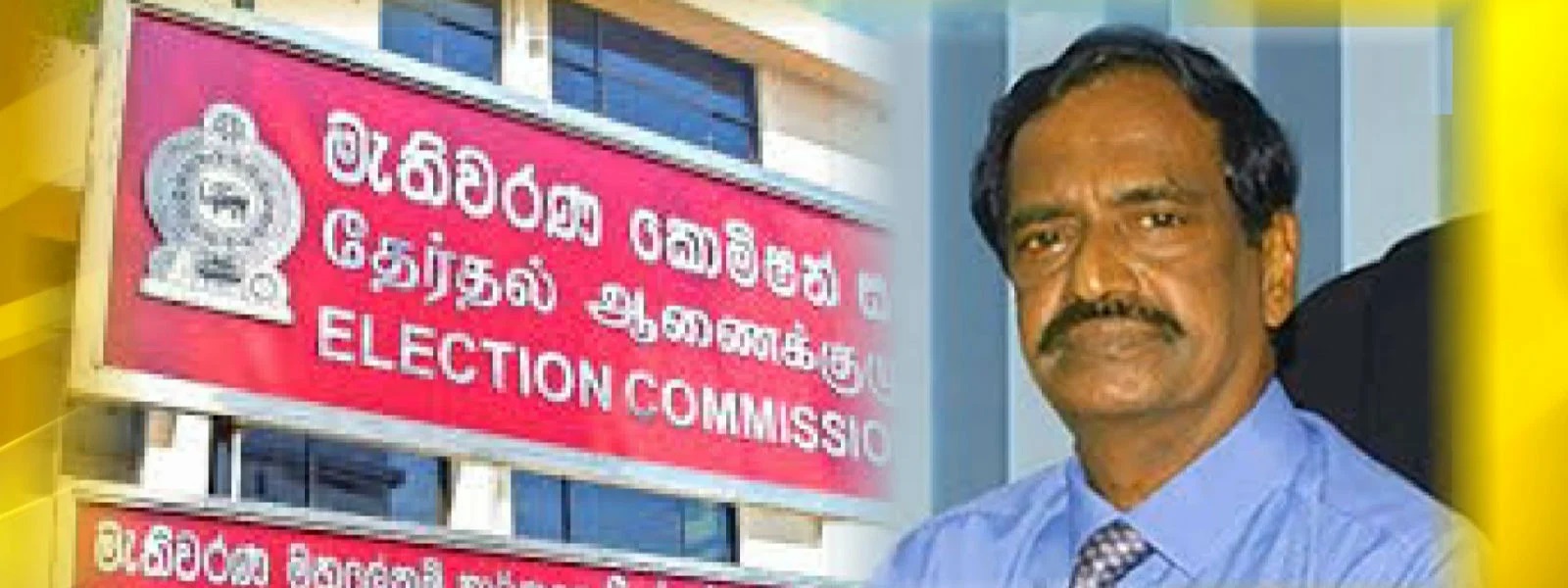
In what seems to be an indication that the local government election may be postponed, the Election Commission Chairman Nimal Punchihewa has informed Party General Secretaries that it will not be possible to distribute postal vote ballot papers from tomorrow (February 15).

Samagi Jana Balawegaya (SJB) General Secretary Ranjit Madduma Bandara told Daily Mirror that the Polls Chief confirmed that the distribution of postal vote ballot papers scheduled to be distributed tomorrow had been halted.

“We told him not to go back on his word given to the Supreme Court. He assured the Supreme Court that the local government election will be held as planned and we told him to keep his word,” Madduma Bandara said.

“The polls chief also told us that he is not getting sufficient support from the Attorney General and indicated that he would refer the matter to the Supreme Court once again,” Madduma Bandara added.

UNP General Secretary Palitha Range Bandara said the polls chief has indicated that the election will not be held as scheduled.

“The Polls Chief confirmed that the government printers have informed him that ballot papers will not be printed until due payments are made,” he said.

Posted in Uncategorized

NO funds for ballot papers? Political groups say ‘Unacceptable’

Political Parties have said that it is unacceptable for authorities to claim they have no funds to print the ballot papers required for the upcoming Local Government Election.

The National Election Commission said on Monday (13) that the Government Printer has stated that if funds are not provided ballot papers will not be printed, posing a fresh hurdle to the upcoming Local Government Elections scheduled to be held on the 9th of March.

Opposition Leader Sajith Premadasa on Monday (13) tweeted that the government’s attempts to delay elections & subvert democracy are a blatant attack on all Sri Lankans’ rights & our nation’s integrity.

He said that democracy is not a privilege; it is a fundamental right.

“We will not stand idly by while the government undermines the people’s will and threatens our country’s future. We demand immediate action to ensure free and fair elections and the protection of our democracy,” he added.

General Secretary of the United People’s Freedom Alliance Thilanga Sumathipala said that failure to provide funds for an election that has already been announced is a violation of the country’s constitution.

He said that legal action can be instituted against state officials over the matter.

General Secretary of the Sri Lanka Freedom Party Dayasiri Jayasekera told News 1st that immediate legal action must be taken over such attempts.

S&P downgrades SriLankan Airlines bond to ‘D’

S&P Global Ratings has downgraded the SriLankan Airlines government guaranteed bond to ‘D’ from ‘CC’ after it failed to pay a coupon.

“The government of Sri Lanka, as guarantor, has also failed to make the coupon payment, upon the expiry of the 30-day grace period beginning Dec. 25, 2022,” S&P said.

“We lowered the issue ratings on the SLA 2024 bond to ‘D’ from ‘CC’ because both the issuer and government of Sri Lanka, as guarantor, missed a coupon payment of about US$6.1 million,” S&P said.

“This payment was originally due December 2022, and the grace period expired in January 2023.

“The bond, along with other international sovereign bonds (ISBs) that the government issued, will remain at ‘D’, pending the conclusion of current debt negotiations.

“Negotiations for the SLA bond may be separate from those on the government’s other ISBs. Our rating on all of these is ‘D’.”

Government asserts no money to hold election

The Government today asserted that it has no money to hold the Local Government (LG) election.

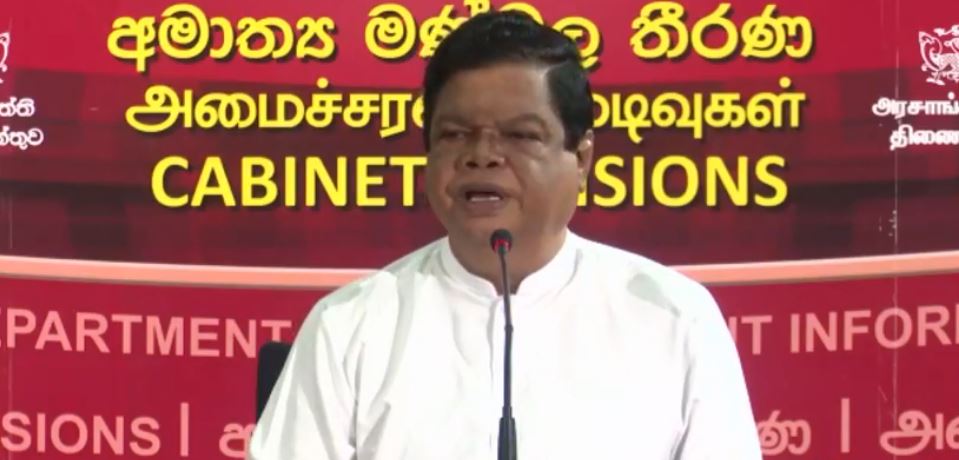
Cabinet Spokesman Bandula Gunawardena told reporters today that he had consulted the State Minister of Finance Ranjith Siyambalapitiya on the availability of funds to hold the elections.

Gunawardena said that Siyambalapitiya had informed him that the Government did not have sufficient funds at this moment to hold an election.

He said that the Supreme Court has also been informed about the situation.

The Election Commission had said yesterday that the Government Printer has not been paid the required funds to print ballot papers for the election.

The Government Printer has informed the Election Commission that it will not be able to print the ballot papers without receiving the funds.

The Local Government elections are scheduled to take place on 9th March.

Sri Lanka health sector to receive $38 Mn grant from Japan

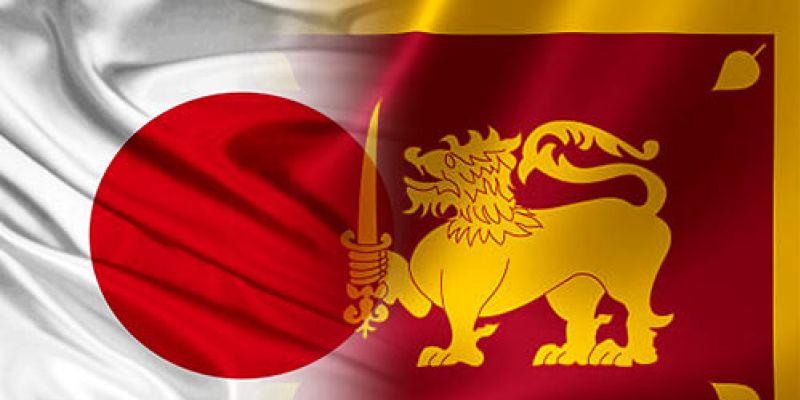
The Japanese government has agreed to provide USD 38 million to Sri Lanka to purchase fuel, mainly diesel, to carry out uninterrupted essential and emergency health services, says the Cabinet Spokesman, Minister Bandula Gunawardene.

Joining the Cabinet press conference held this morning (Feb. 14), the minister pointed out that Japan has agreed to grant five billion Japanese Yen, which amounts to approximately USD 38 million, under the Japan Economic and Social Development Program in order to improve the healthcare delivery system in Sri Lanka by ensuring essential services and transportation facilities.

Accordingly, the Cabinet of Ministers has granted the approval to the proposal presented by the President in his capacity as the Minister of Finance, Economic Stabilization & National Policies, to ink necessary agreements with the Japanese government in order to obtain the said grant.

Posted in Uncategorized

Govt Printer says cannot print LG election ballot papers without funds

The Election Commission says that the Government Printer has informed the commission in writing that printing work pertaining to the upcoming Local Government (LG) elections cannot be carried out without the due payments.

The commission mentioned that the estimated amount required for this is around Rs. 461 million.

When inquired by Ada Derana, Chairman of the Election Commission Nimal G. Punchihewa stated that attention will be directed towards this during the meeting of political party secretaries which will be held tomorrow (Feb. 14).

Posted in Uncategorized

LG Poll: 30,000 Postal Voting applications rejected

The National Election Commission said that around 30,000 applications for postal voting for the upcoming Local Government Election were rejected.

The NEC said a majority of the applicants had submitted incomplete applications.

It added that approximately 675,000 applications were submitted for postal voting for the 2023 Local Government Election.

The secure packages containing the postal vote ballot papers will be handed over to the Department of Posts on the 15th of February, and the official ballot papers for the election will be handed over on the 19th of February.

Approximately 200,000 state employees will be assigned to election duty.

Postal voting for the 2023 Local Government Election will take place on the 22nd, 23rd, and 24th of February.

Posted in Uncategorized

Tamil Nadu BJP leader hails Modi’s intervention in Sri Lanka

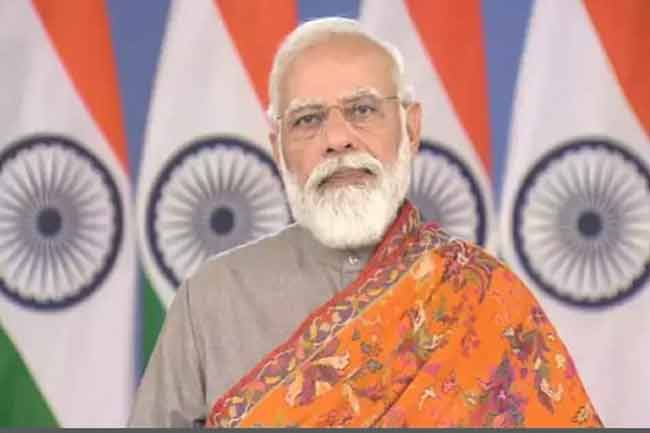
Tamil Nadu BJP leader K. Annamalai has hailed Indian Prime Minister Narendra Modi’s intervention in Sri Lanka.

Annamalai, who was in Sri Lanka on a visit, said that Modi has gone the distance in Sri Lanka where no other leader across the world had gone previously.

He said that Prime Minister Modi’s two visits to Sri Lanka in 2015 and 2017 are both historic.

“The wounds of Sri Lanka Tamils are slowly healing. The development projects on a massive scale in the Northern and Central province are completed or are on the verge of completion,” Annamalai said in a post on social media.

He said that the 2015 visit to Sri Lanka by Modi put aside the inefficiencies of the previous UPA Government and reassured India’s intent to deliver on its promises of development.

“There was no looking back ever since then,” Annamalai said.

Annamalai also listed out some of the projects undertaken by India in Sri Lanka since 2015.

He also said that a ferry service will be launched between the Kankesanthurai Harbour in the Northern province and Karaikal and the bidding process for shipping services has commenced.

Annamalai said that Modi considers the health wellbeing of Tamils in Sri Lanka, a shared responsibility.

He also noted that Indian External Affairs Minister Dr S. Jaishankar has constantly nudged the President of Sri Lanka on the implementation of the 13th Amendment to the Constitution in letter and in spirit.

“News on this matter is expected soon and will benefit the people of the Northern province, by large,” he said.

Annamalai said that the subdued Chinese effect in the region is only an outcome of the steps taken by Modi.

How S.W.R.D surrendered to the power of the ‘saffron robes’ BY K.K.S Perera

Mihintale Raja Maha Viharaya Chief Incumbent, the outspoken Ven.Walaha henguna wewa Dhammarathana Thera, a few weeks ago said, young monks in universities behave like Taliban terrorists. He further said they can engage in politics, but not in a way that harms others. He who continued saying, ‘the actions of a few monks create a bad impression in the public minds and reflect severely on the entire Sanghasasana’, was seen leading a fierce Bikkhu demonstration,[that included V-8 class academics] obstructing traffic and, harming road users and confronting senior police officers on duty.

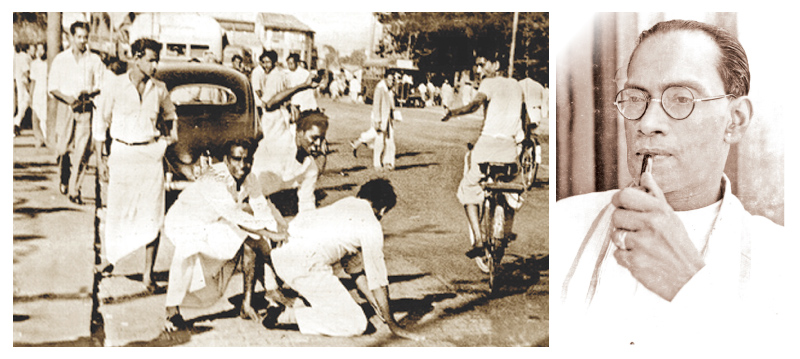
On 9th April 1958, a group of about 200 members of ‘Mahasangha’, led by BaddegamaWimalawanse Anunayake Thera, the chief of Vidyodaya Pirivena, Maligakanda, staged a peaceful protest on the lawn of ‘Tintagel’ the Prime Minister Bandaranaike’s Rosemead Place residence. They demanded that the Prime Minister abrogate the agreement he signed with Northern Tamil leader SJV Chelvanayakam MP-QC. This was the earliest instance where well-meaning endeavours to resolve power-sharing problems, which started off with a positive note, but ended tragically with a moan. A sad but significant instance of past disappointment is the destiny of the highly applauded pact signed by Bandaranaike and the leader of the SJV Chelvanayakam. Regrettably, it was confined to the dustbin of history. Speaking on it Bandaranaike, who blundered by creating communal disharmony through his election slogan, “Sinhala only in 24 hours” said, “In the discussion which the leaders of the Federal Party had with me, an honourable solution was reached. In thinking over this problem I had in mind the fact that I am not merely a Prime Minister but a Buddhist Prime Minister.”

Strangely 100 years ago, the attitudes towards federalism were different. Some Sinhalese supported federalism, while some Tamils were against it. The Sinhalese campaigned for federalism before independence while Tamils claimed federalism after independence, changed in response to the ‘Sinhala governments’ ethno religious policies

Federalism is defined as a political system where power is shared between central and state governments. Sinhalese view federalism as a forerunner to separatism. Most Tamils view it as a means of achieving autonomy. Strangely 100 years ago, the attitudes towards federalism were different. Some Sinhalese supported federalism, while some Tamils were against it. The Sinhalese campaigned for federalism before independence while Tamils claimed federalism after independence, changed in response to the ‘Sinhala governments’ ethno religious policies.
Two advocates of federalism emerged in the 1920s. The Kandyans appearing before Donoughmore demanded it should be divided into three self-governing states, under a central federal government. Second, in 1926; Bandaranaike backed the idea of federalism publishing six articles in the Ceylon Morning Leader. However, both the Donoughmore and Soulberry Commissions recommended a unitary constitution for the country.

The FP and the ACTC jointly formed the TULF and in 1976, the party assumed the ‘Vaddukoddai Resolution’, calling for the creation of Tamil Eelam’. In 1983, all TULF MPs sacrificed their parliament seats having declined to abandon the call for a separate state as forced through the Sixth Amendment by JRJ. LTTE arose as a strong and brutal group resorting to terrorist tactics in fighting for Eelam till their defeat in 2009.

The first meeting between a Tamil delegation comprising Chelvanayakam, Dr E. M. V.Naganathan, and V. Navaratnam, met a government delegation led by Prime Minister, Stanley de Zoysa and two others took place at PM’s ancestral mansion at Horagolla, followed by a second at his residence in Rosemead Place, and a final third was held at the Senate building in July 1957.The B-C Pact was an agreement signed between Bandaranaike and the leader of the main Tamil political party Chelvanayakam on 26th July 1957. It promoted the creation of regional councils as a means to granting a certain level of autonomy to the Tamils and was envisioned to solve the disparities that were occurring at the time. The United National Party strongly opposed the B- C pact saying it will destroy the Sinhala-Buddhist nation, in fact, JR Jayewardene led a march against the pact from Colombo to Kandy on October 3, 1957.

‘Bandaranaike continued his labors to persuade the people that it was the finest solution to the communal issues by equating the pact to the Buddhist doctrine of the middle path. The pact was strongly opposed by sections of the “Sinhala-Buddhist” and was ultimately abrogated by a spineless Prime Minister in April 1958. The tearing up of a copy of the pact in a token gesture in front of the “Maha Sangha” (Buddhist clergy) led to tensions between the two communities, causing a sequence of outbreaks of bloody ethnic violence which eventually paved the way to the 30-year Civil War that accounted for 80,000 human lives. The ‘Maha Sangha’ was not pleased and they insisted that he give them a written assurance that the pact would be abrogated. Sinhala was made the sole official language of the country on June 15, 1956, by a parliament vote of 56 to 29 with the main opposition UNP voting with the government and only the Marxist LSSP, CP, and Tamil parties against the injustice caused to a section of population.

Anti-Tamil violence erupted in several parts of the country. Growing communal violence was heading for a bloodbath. S.W.R.D comprehended that the situation had to be controlled and checked. He agreed that the Tamils had genuine grievances that need to be rectified. The B-C pact was an excellent chance to resolve the problem at its initial stages.

‘Senanayake––Chelvanayakam Pact of 1965’

Dudley, back in politics, won parliamentary elections in 1965. He in search of a lasting solution to Ethnic and Minority issues signed the ‘Dudley––Chelvanayakam Pact’ on March 24, 1965. Political analysts agreed this as a major progressive step towards a unitary and stable Sri Lanka.

Excerpts from the Text of the Pact….

Tamil Language Special Provisions Act to make provision of the Tamil Language of Administration and of Record in the Northern and Eastern Provinces. To amend the Languages of Courts Act to provide for legal proceedings in the Northern and Eastern Provinces to be conducted and recorded in Tamil. To establish District Councils in Ceylon vested with powers over subjects to be mutually agreed upon between two leaders. The government should have power under the law to give directions to such councils under the national interest. The Land Development Ordinance will be amended to provide that citizens of Ceylon be entitled to the allotment of land under the Ordinance.

The main opposition SLFP under Sirimavo, and strangely, the Marxists LSSP and CP joined hands in a massive protest on Jan 8, 1966 [police opened fire killing a monk] against the pact with the blessings of the ‘Maha Sangha’ leading to abrogation of the pact yet it never saw the light of the day plunging the whole country into absolute darkness.

The third attempt by GL Pieris-Thuiruchelvam in 1999 under Chandrika faced the same fate when the Ranil-led UNP Opposition not only tore it, but set fire to it inside the chamber. Both Mahinda Rajapaksa and Maithripala Sirisena promised to fully implement the 13A. After a lapse of 23 years, Ranil himself is trying to implement all the clauses in the 1987-13th amendment supported vaguely by SLPP, SJB, and NPP [pleading for vote], and being opposed only by the Mahasangha and a few Pseudo-patriots parliamentarians, [35 former acolytes of the Rajapaksas]. Provisions, relating to Law and Order, as stated in Appendix1 of List 1 of the 13th Amendment, were introduced in 1987.

While a good portion of the 13th Amendment to the Constitution has been applied, with regard to two matters – the devolution of police and land powers remains pending for 36 years. Provincial Councils List Appendix I in the Ninth Schedule of the Constitution offers the devolution of police. Section 6 of Appendix 1, says, the Inspector General shall assign a DIG for each of the nine Provinces with the consensus of the CM of the Province. Section 11 stipulates that Officers, serving in any Province, shall work under the direction of the provincial DIG who will ‘be responsible to the CM in respect of the exercise of police powers.

Prime Minister Bandaranaike, who once said, that “knotty problems of State had been successfully tackled by invoking the principles and tenets of Buddhism. ‘The Middle Path’, has been my magic wand and I shall always stick by this principle.” However, at 4.15 pm on April 9, 1958, Bandaranaike succumbed to pressures by ‘Mahasangha’, and the Pact was torn into shreds claiming that its implementation had been rendered impossible.

“That foolish man wearing robes shot me”- SWRD Bandaranaike

On 25th September 1959, Somarama was seated on the verandah at Tintagel. The PM first spoke with another monk and moved toward Somarama when gunshots were heard.

Somarama, on April 6, 1961, made a statement to the Chief Magistrate of Colombo, “… Buddharakkitha reassured… that I had nothing to fear. I acceded to their request; I was consenting to kill him … only for the sake of my country, my religion, and my race. That morning, I drank a mixture that I had prepared myself and went to ‘Tintagel’.

“That foolish man wearing robes shot me”-SWRD Bandaranaike’s deathbed address to the nation.
President Wickremesinghe opening the parliament on Wednesday said he will fully implement 13A which was certified on November 14, 1987, giving more autonomy to provinces in an effort to solve the ethnic conflict. Will Wickremasinghe stick by his principle?


Posted in Uncategorized

EC urges not to sabotage LG polls

The Election Commission (EC) is in a struggle to carry out its essential and urgent election duties as the Treasury has given only Rs. 100 million to the EC in spite of demanding Rs. 770 million for its day today tasks, Chairman of the Commission, Nimal Punchihewa charged yesterday.

If the Treasury continues to delay the funding of the EC, the Commission has no option other than reporting to the Supreme Court, Punchihewa added.

“The budget 2023 has allocated Rs. 10 billion for the EC in a special vote in Parliament as the EC is an independent Commission. We are hopeful that the EC could successfully conclude the Local Government (LG) polls with a budget of Rs. 3 or 4 billion by March 9. The Commission last week requested only Rs. 770 million out of Rs. 10 billion for the month of February to carry out immediate tasks related to the March 9 LG polls. The underfunding has put the EC in a severe financial constraint,” lamented Punchihewa.

“The Supreme Court has given the green light to the EC to go ahead with the LG election. Therefore, the EC does not expect any act of sabotage from any outside source or authority. As such, the Treasury and the Finance Ministry have a constitutional and official obligation to transfer sufficient funds to the EC in time to ensure a free and fair election,” Mr. Punchihewa told Daily Mirror.

The EC will have to extend another request to the Treasury for election expenses for the month of March after calculating the cost to complete the election on March 9. The EC requires a minimum of Rs. 3 billion to conclude the LG polls on March 9 as most of the expenses borne by other state establishments like the Police Department, Government Printer and payments to public officials for election duties are made after the conclusion of the election.

Asked by the Daily Mirror whether there would be any change to the status quo of the commission after March 9th, Punchihewa stressed that the EC has a responsibility even after the polls until the issuance of the gazette notification with the names of members elected, political parties and independent groups and wards of each 339 local council bodies.