G.L. warns Govt. will be forced to hold Parliamentary polls after 9 March

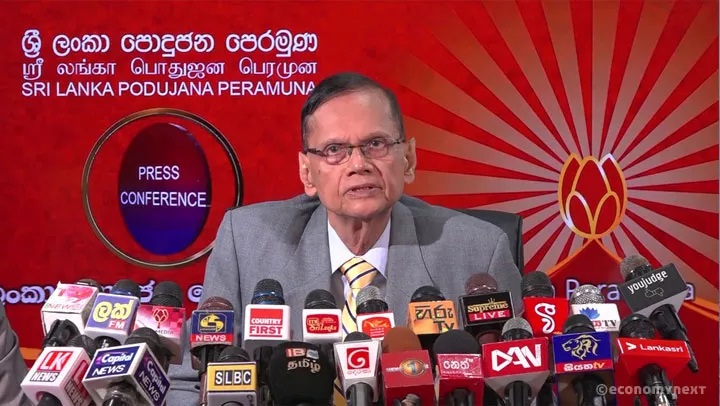
Parliamentarian Prof. G.L. Peiris on Saturday said the Local Government elections will be held on 9 March as scheduled and the Government will be forced to call for Parliamentary poll soon after.

The MP representing the Freedom People’s Alliance during a press conference held over the weekend said there was a concerted effort to create a sense of uncertainty among the people about the holding of polls.

“This is not a mere Local Government election. It is an election of national importance that will be held on 9 March,” Prof Peiris noted. He also commended the Election Commission for its brave and clear undertaking to hold elections as scheduled before the Supreme Court of Sri Lanka.

According to the MP, this is a great opportunity for the country’s people to express their opinion on the current Government and its activities. “After 9 March there will be a great ripple effect and Parliament will have to be dissolved by mid this year,” he opined. The MP said the Government will be forced to hold Parliamentary elections even with great reluctance.

“It is impossible to find sustainable solutions to any issues faced by the country without a people’s mandate. The Government has no right to stay in power,” he added.

Prof. Peiris said while Governments more often than not support the Election Commission to hold elections, this time around the Government has attempted all tactics possible to obstruct the holding of elections as never before in the country’s history.

He said 23 Opposition parties managed to come together to take action against the Government’s attempts to hamper polls and emerge victorious by defeating these devious plans.

From B-C Pact To Ranil’s New Somersault By Rajan Philips

President Ranil Wickremesinghe’s national reconciliation initiative seems to be spectacularly backfiring on all cylinders. This is terribly unfortunate, not so much for Mr. Wickremesinghe’s presidential future, but for what it might entail for the immediate future of inter-community relationships. On Wednesday, before the President’s “Throne Speech”, a group of Buddhist Monks staged a protest near parliament and even set fire to a copy of the 13th Amendment in front of the media and police barricades. According to TNA MP M.A. Sumanthiran, the English version of the President’s address to parliament was titled, Throne Speech, while the ‘more official Sinhala and Tamil versions had it as Policy Statement. What’s in a name or, for that matter, what’s in an official language? That which is written in one can always be translated into another, and there can be two or more of them.

Just as his reconciliation initiative is backfiring, the President is also backpedaling the scope of his initiative. Already in his Independence Day speech and statement, the President had avoided mentioning 13A, and he continued to censor the term in his ‘Throne Speech’ on February 8. The latest Wickremesinghe speech was limited to a touch of nostalgia – that the President and the TNA leader R. Sampanthan entered parliament together as first time MPs in 1977. That now looks ages ago, and their ages do tell: the President is now 74 and the TNA leader is 90, both past the old biblical prime of threescore and ten. Beyond nostalgia, the President stuck to specifics – specific issues affecting the Tamils in the north and east.

But the TNA was in no nostalgic mood, and its leading spokesman Sumanthiran accused the President of somersaulting. A term that was last used in a Sri Lankan legislature with some frequency in the 1950s by the maverick Tamil MP C. Suntharalingam to taunt his Oxford contemporary, then Prime Minister SWRD Bandaranaike. President Ranil Wickremesinghe often speaks of the circumstances that Sri Lanka was in at the time of independence. He hardly mentions the state of the country a decade after independence. 1958 was different from 1948, and 2023 is different from both. What is unique to 2023 is that the national economy has never been so broken as it is today. And there is no happy ending in sight. As for the country’s other problem, and the President’s laudable but mistimed preoccupation, namely, national reconciliation, there could be little nostalgia now about mid-1950s, only forebodings.

The B-C Pact and the Paddy Lands Act

That was when Prime Minister SWRD Bandaranaike launched his reconciliation initiative, bold and statesmanlike, and reached a historic agreement with the leader of the Tamil Federal Party, SJV Chelvanayakam, who also happened to be the Prime Minister’s classmate St. Thomas’s College. That agreement, though abrogated within a year of its signing, has stood the test time as the celebrated B-C Pact and the lodestar for future reconciliation efforts and agreements.

1957: B-C Pact Signed

Its relevance for today’s circumstances is in the comparability, or otherwise, of the difficulties and roadblocks that President Wickremesinghe is facing today to those faced by Prime Minister Bandaranaike 65 years ago. At that time, there were two government initiatives, both unexceptionably positive but politically controversial. One was the PM’s B-C Pact initiative, and the other was the Minister of Agriculture and Food Philip Gunawardena’s Paddy Lands Act. Inadvertently, and unfortunately as it turned out, the two initiatives coincided in their timing and helped in the mutual reinforcement of the political forces opposing the two initiatives.

James Manor recounts those developments in some detail in his biography of SWRD: The Expedient Utopian: Bandaranaike and Ceylon. As it happened, the B-C Pact was accredited on 26 July 1957 and within a year, in May 1958, it was abrogated amidst the first outbreak of communal violence targeting Tamils. The Paddy Lands Act was enacted in 1958, but its sole architect, Philip Gunawardena, left the cabinet and the government the very next year, in May 1959. Four months later, on 26 September, Prime Minister Bandaranaike was assassinated. The island’s sociopolitical innocence was over.

The alignment of political forces for and against the two initiatives was remarkable. Although temperamentally poles apart, Bandaranaike and Gunawardena were each other’s best ally in their coalition government and cabinet. The majority of the cabinet ministers were dead set against Philip Gunawardena and his Paddy Lands Act (PLA). They even staged a cabinet strike, refusing to attend cabinet meetings with Philip Gunawardena. But they could not prevent the passage of the PLA because of its popularity among the Sinhalese.

The B-C Pact, on the other hand, was controversial and opposition to it was orchestrated by JR Jayewardene and the UNP in the south, and GG Ponnambalam and the Tamil Congress in the north. Compounding this was the cabinet split over the PLA, which weakened the Prime Minister’s hand and forced him to give in to the opposition against the B-C Pact. The final act of forcing was the storming of the front lawn of the Prime Minister’s Rosemead Place residence by 100 Buddhist monks.

There was another aspect to political alignments over the PLA and the B-C Pact. Besides the Prime Minister, Philip Gunawardena was the only prominent Minister to support both initiatives. The Left Opposition (the LSSP and the CP) were also in support of both the PLA and the B-C Pact. On the other hand, the Federal Party leader who signed the B-C Pact, was steadfastly opposed to the Paddy Lands Act. Chelvanayakam famously declared in parliament: “I see seeds of communism in this.”

In opposing the PLA, Mr. Chelvanayakam found common ground with GG Ponnambalam, who was stirring the pot against the B-C Pact and ridiculing – ‘Vedhakaran’ (Christian) Chelvanayakam for selling out the Tamils for a pair of guavas and a cup of tea, at Bandaranaike’s Horagolla Walauwa, on a ritually inauspicious moonless day in July. Mr. Ponnambalam was on a long leave of absence from parliament during the enactment of the PLA, but weighed in from outside with an op-ed page article in the Daily News rhetorically bemoaning the destruction of Sri Lanka’s robust peasantry as result of the new legislation. The ideological lines were clearly drawn.

Even though he abrogated the B-C Pact in April 1958, within four months, in August 1958, Prime Minister Bandaranaike introduced and secured the passage of the Tamil Language (Special Provisions) Act, which provided for the use of Tamil for administrative purposes and as a medium of instruction in schools and university. The very same provisions were part of the original Official Language Bill that Mr. Bandaranaike wanted to introduce in 1956, but was forced to jettison it and replace it with the infamous one-sentence Sinhala Only Bill. Let me fast forward to today.

Ranil’s Trap or Somersault?

Whatever may have been the President’s intentions and the method of execution in fast tracking national reconciliation, nothing seems to have worked. The initiative seems to have stirred sleeping dogs into loud barking and the questioning of his motives by practically everyone in parliament. While Sumanthiran has chided him of somersaulting, others from Maithripala Sirisena to Anura Kumara Dissanayake are now questioning the President’s motive behind his sudden focus on 13A. The SJB is on silent mode, except for indicating support for devolution without mentioning 13A.

Sirisena has compared Wickremesinghe’s initiative to carrying a torch that is burning at both ends. He has suggested that every President from JRJ to himself has not tried to fully implement 13A, because it is not easy task when a “majority of Sinhalese Buddhists are against it.” The Mahanayaka Theros said the same thing, but they attributed inaction by former Presidents to their alleged realization that 13A was bad for the country and worse for the Sinhalese. Sirisena is also questioning the President’s timing on 13A given the unprecedentedly “serious issues” the country is facing now.

To JVP/NPP leader Anura Kumara Dissanayake, the current hullabaloo is all the result of President Wickremesinghe setting a trap for the country to “create a disturbance in society” as a diversion from the real problems the people are facing. He avoided answering media questions about the protesting monks, nor did he provide a detailed response regarding the JVP’s position on 13A. It is time Mr. Dissanayake gave a serious speech on the JVP’s position vis-à-vis the non-Sinhala members of the Sri Lankan society, which should also address devolution and the 13th Amendment.

So far this year, Dissanayake has given two significant and substantial political speeches. Early in the new year, he gave a rousing homecoming speech in Tambuttegama, a touching talk by a local boy coming home as a national leader. The English media ignored it. More recently in Colombo, he targeted the business community to win bourgeois credibility for a non-elitist party. The Colombo media lapped it up. AKD owes Sri Lankan politics a third speech – this one on the national question. His first speech addressing the minorities. Without it, his political project will not be a complete project, and Sri Lankan politics at this juncture will also be poorer without it.

That said, AKD and the JVP might be on to something when they insist that President Wickremesinghe is not going to “fully implement the 13th amendment to the constitution as repeatedly assured by him.” AKD goes further, “He won’t bring it. He plays this game every time. He wants to set fire to this country and protect his power.” Mr. Dissanayake might be speaking from his yahapalana experience with Ranil Wickremesinghe when he says that “he (RW) plays this game every time.” But AKD is stretching it when he claims that “he (RW) wants to set fire to this country and protect his power.”

On the other hand, if the country were to end up in flames once again as a result of the simmering controversies over 13A, then the President’s intentions would be irrelevant. The JVP leader is also abdicating his own responsibility when he appeals to “the people of this country not to get caught in this trap.” Anura Kumara Dissanayake owes it to the people to explain his position on devolution and on 13A even if he does not agree with the President’s timing and approach to implementing 13A. As for the President himself, he faces an uphill task in either salvaging his badly damaged initiative, or preventing the current controversy escalating into something worse.


Posted in Uncategorized

Sri Lanka to buy Russian coal; LCC will no longer pursue Indonesian order

Sri Lanka is to buy 720,000 metric tonnes of Russian coal from two companies–China’s Combasst Industries Development Ltd and Dubai’s Coral Energy DMCC–after an earlier agreement with an Indonesian supplier fell through.

Lanka Coal Company (LCC) will no longer pursue the order from Indonesia’s PT Arista Mitra Jaya. On Monday, the Power and Energy Ministry secured Cabinet permission to buy the stocks from the other two companies shortlisted along with Arista Mitra and Hans Australia Pty Ltd. Hans Australia was later ruled out on the basis of certain terms they required fulfilled.

LCC first placed its order with the lowest supplier Arista Mitra for US$ 240 per ton with 180-day credit. However, the Mandira Bank of Indonesia rejected the usance Letter of Credit (LC) opened by Lanka Coal Company without providing a reason, a Cabinet paper submitted on Monday by State Minister D. V. Chanaka, said.

Arista Mitra then sought to transfer the LC to a third party “where such a transfer is not possible within the context of the contract,” the Cabinet paper said. LCC would, on the Attorney General’s advice, terminate this contract.

The purchasing matter subsequently went to a ministerial sub-committee and the standing Cabinet-appointed procurement committee (SCAPC), after which Combasst Industries and Coral Energy were selected.

Combasst would sell the coal at US$ 230 per MT with 200-day credit, LCC Chairman Shehan Sumanasekara said.

Twenty percent of cargo value would be deposited by LCC in a non-resident rupee account and the balance to the same account, in equal portions. After the credit period, the rupees would be changed into dollars and remitted to the supplier. Combasst’s price was indexed to the Russian Coal Index (RCI).

Coral Energy was selling at a fixed price of US$ 240 per MT, Mr. Sumanasekara said. Under this agreement, there would be no payment until the cargo was discharged at Lakvijaya in Norochcholai, and disbursement would be according to usage (that is, “storage model”).

“This means that, today if the plant requires 5,000 MT despite having one to eight shipments unloaded, we will pay only for the desired quantity,” the Chairman said.

It was anticipated that the coal from Coral Energy would be used for the first time in early June this year.

“Even then, out of the total payment, 80 percent will be disbursed per usage on the same day and there will be a further 120 days of credit for the usage of the balance 20 percent. Both parties have provided the needed credit terms with two different mechanisms,” he said.

LCC had struggled to purchase fuel since its last competitive tender fell apart late last year. The latest companies were selected on the basis of unsolicited proposals after the Cabinet granted approval to this procurement method, alongside permission to make purchases through government-to-government agreements “considering urgent and exceptional circumstances.”

source – sundaytimes

Posted in Uncategorized

Police get only Rs. 50 million out of Rs. 2.8 billion sought for LG polls

Police have so far received Rs. 50 million out of a total of Rs. 2.8 billion it has sought to provide protection for the upcoming local government polls.

Finding this advance payment inadequate, police headquarters has decided to ask the Election Commission for more funding.

Police said it needed Rs. 745 million to acquire vehicles, another Rs. 675 million for fuel and Rs. 500 million for the payment of allowances to its personnel on election duty.

Posted in Uncategorized

Northern Province to produce food to feed the country

The Northern Province is to be transformed into a province that is capable of producing enough food to feed the country, President Ranil Wickremesinghe said.

He also said that steps will be taken to commence the production of animal feed in the North.

“We believe that there will be a surplus of paddy harvest in the ‘Maha Season’. Accordingly, arrangements are being made for the government to purchase a kilo of paddy at a guaranteed price of Rs. 100, the President added.

The President made the remarks while attending the Northern Province harvest ceremony at Paranthan, Jaffna today.

“Many people are currently experiencing financial difficulties. Even if yields increase, there is a segment of the population that lacks the financial means to purchase rice. Therefore, we are implementing a program to provide 10 kilos of rice free of charge to 2 million families during March and April. Then by the Sinhala New Year season, they would have received 20 kilos of rice,” he said.

The President also said that more methods of purchasing and storing paddy will be developed in the future.

Minister of Fisheries Douglas Devananda, President’s Senior Adviser on National Security and Chief of Staff Sagala Ratnayake, President’s Secretary Saman Ekanayake, former Member of Parliament Vijayakala Maheswaran, Chief of Defence Staff General Shavendra Silva, Inspector General of Police C D Wickramaratne and Northern Province Government officials participated at the event.

Posted in Uncategorized

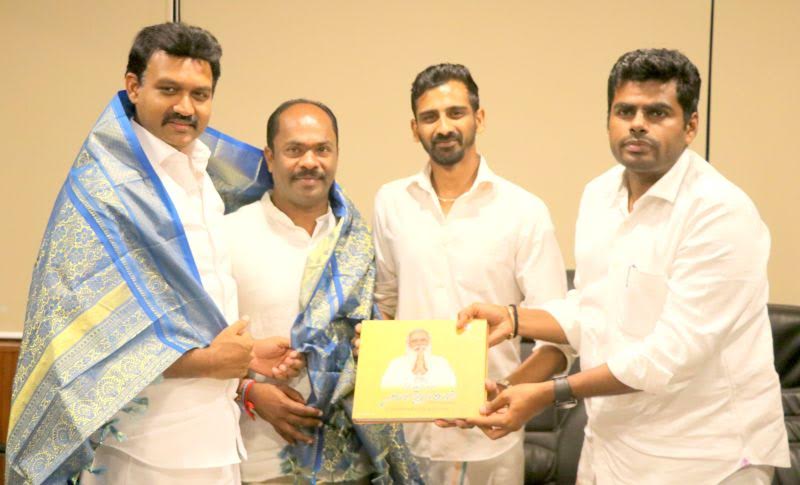
Tamil Nadu BJP president meets CWC leadership for talks

A meeting between the Tamil Nadu president of the Bharatiya Janata Party (BJP) K. Annamalai, who is on a visit to Sri Lanka, and the executive committee of the Ceylon Workers’ Congress (CWC) was held at the headquarters of CWC in Soumya Bhawan.

The Secretary General of CWC and Minister Jeevan Thondaman, President of CWC Senthil Thondaman, Vice President Maruthapandi Rameswaran MP, Vice Presidents Ganapathi Kanagaraj, Anushiya Sivaraja, National Organizer AP Sakthivel, Vice Presidents, Divisional Council Presidents of CWC, and Party dignitaries participated in this meeting, yesterday (11).

Also, a special meeting between the members of the Sri Lankan Indian Community Council and K. Annamalai was held at the Ministry of Water Supply and Estate Infrastructure Development under the leadership of Minister Jeevan Thondaman.

In this meeting, Tamil Nadu State President of the BJP, Annamalai had assured Minister Jeevan Thondaman that he would act as a bridge between the people of the central province and the Central Government of India to provide financial assistance in all possible ways and to speed up the measures to implement the 10,000 houses project in the Central Province.

Posted in Uncategorized

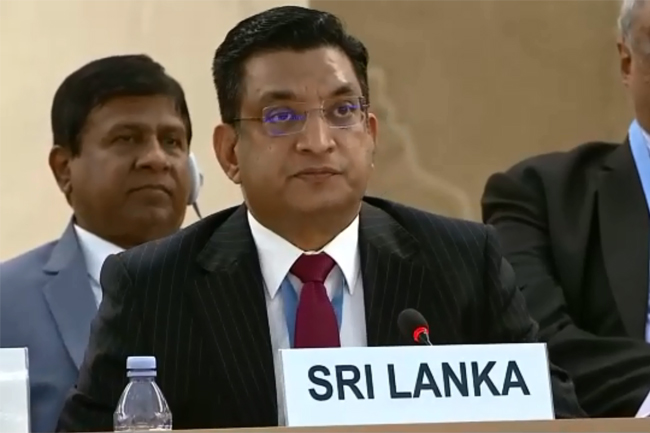
‘China is our friend and will work with them, Indian interest won’t be undermined’ – Ali Sabry

Sri Lankan Minister of Foreign Affairs Ali Sabry on Saturday said that China is a friend of his nation and the two countries will continue to work arm in arm. However, there is no need for India to be concerned as at no point will the island nation let the Indian interests be undermined, Ali Sabry said. Sri Lanka‘s strong relationship is part of its civilization and will not permit any activity that poses a threat to India’s internal security to happen on its soil, he added.

MFA Ali Sabry was speaking to the media in Kerala’s Kochi after attending a private function. His comments come at a time when the Sino-Indian relationship remains tense over conflicts in the Himalayan region.

“India need not worry… The Srilankan relationship with India is very strong, it is a part of civilization. We will not allow anything that will harm India’s internal security in our region. China is also our friend, we need to deal with them and work with them. However, Indian interests will not be undermined. We have made it very clear to the Indian government,” he said.

Ali Sabry further said that the two countries are like a family and when issues arise, they will be sorted out like in a family. “You will always have issues like in a family. We will talk to each other and resolve them. Your honourable fisheries minister is in Colombo right now. Our minister would have met him for dinner yesterday. We will look into it and try to come to a permanent solution. You shouldn’t worry about it,” he said.

The statement can also be read in the context of the Sri Lankan Navy being often accused of assaulting and even arresting Indian fishermen, especially from Tamil Nadu.

Ali Sabry further said that Sri Lanka is happy with the fast-paced development that India is achieving. “It is the entire region that develops along with India. So as neighbours, we are watching India’s progress with great pride and a sense of honour. Sri Lanka is looking forward to India’s growth and will try to be a part of that growth,” the island nation’s MFA added.

Source – Times Now

Posted in Uncategorized

The 13th Amendment: The Ball Is In The Sinhala Court By A. Jathindra

The 13th Amendment, created 35 years ago, has once again become a flashpoint after President Ranil Wickremesinghe declared its implementation. Anti-devolution forces have begun gnashing their teeth; those who went into hiding because of mass protests and violence over the economic crisis are using it to resurrect and project themselves as the phoenix rising from the ashes to save the Sinhalese again.

The same propaganda game is being played with the old spin that the country is about to be divided. Nothing could be further from the truth: the LTTE, which fought for a separate Tamil state, threw out the amendment and waged a bloody war against the Indian Peace Keeping Forces with the backing of President Ranasinghe Premadasa. How then can the 13th Amendment, much maligned and objected to by the LTTE, lead to the breaking-up of the country? If this point of contention were to be deliberated by the Sinhala South, unnecessary fears can be avoided.

In the south, many need to try to realize the truth. The LTTE chief Prabhakaran was the only one who was adamant on the objective of independent Tamil state (Thamil Eelam). If Prabhakaran had accepted the 13th Amendment and gone along with India, the island’s history would have been on a different trajectory. If Prabhakaran had accepted a federal solution at the Oslo talks and gone along with the peace process, he need not have met his Waterloo in Mullivaikkal.

Given this background, there is no point in debating how the 13th Amendment was introduced in Sri Lanka. The hard truth is that the 13th Amendment remains in the constitution 35 years on, despite efforts to usher in a ‘civilizational constitution’ in the recent past. It is unconstitutional to state that the provisions of the constitution are unenforceable. If this were to be true, one could surmise that the country has governed unconstitutionally for the past 35 years! Why has no one thought along such lines of argument?

Until 1970, no Tamil leader even dreamt of flying overseas for political remedy. Since then, the Tamils had to move towards India due to the south ignoring even the minimal of legitimate political demands of the Tamil moderates. All doors for negotiations were shut by both the United National Party government and the Sri Lanka Freedom Party government that alternately ruled Sri Lanka. The Tamils will inevitably move towards India again if Colombo closes the door.

The south’s view that India imposed the 13th Amendment on Sri Lanka can be challenged. India would not have insisted on a political solution If the Sinhala polity had resolved the Tamil national question within Sri Lanka. Recently, six major Tamil parties joined together and wrote a letter to the Prime Minister of India to intervene in the implementation of the 13th Amendment. It would not have been necessary for the Tamil parties to seek the intervention of the Indian Prime Minister if Colombo had shown progress in implementing the 13th Amendment.

It was against this backdrop that India’s intervention took place. Apart from this, India’s involvement in Sri Lanka is geopolitically inevitable. As an immediate neighbour and regional power, India cannot remain silent while the country burns. The Eelam Tamils have cultural affinities with the eighty million Tamils in Tamil Nadu. On this basis, India had to intervene in the Sri Lankan political issue directly.

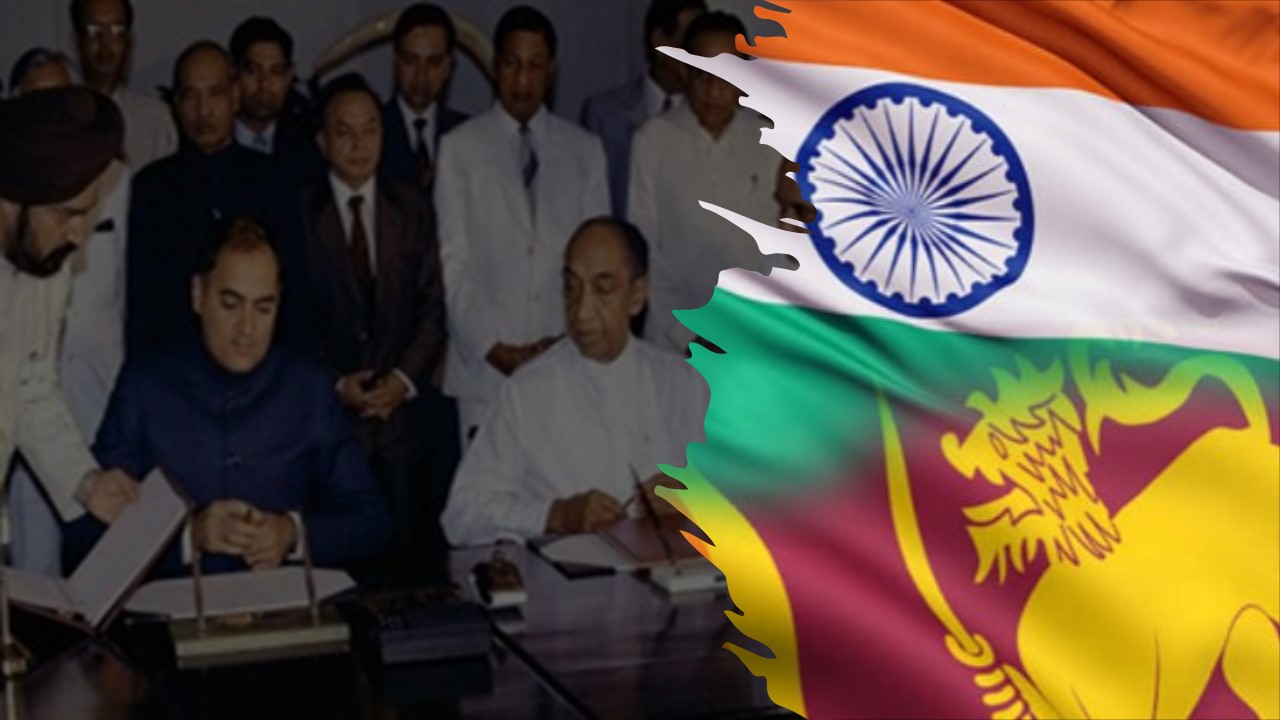
Looking at it another way, the objective of the India-Lanka accord still needs to be fulfilled. One of the main objectives of the Indo-Lanka accord was to conceive a political solution for the Tamil people, who have historically inhabited the North-East. Such a solution is yet to be perfected. Against this backdrop, India is responsible for pushing for the completion of a bilateral agreement. Given this background, the Tamil political parties fighting for the rights of the Tamils have urged India’s mediatory involvement.

The political significance of the amendment has evolved more than before. So far, India has been the only country insisting on it. However, the amendment has now acquired an international dimension. It has been mentioned in the recommendations of the UN Human Rights Council resolution that insists that the Government of Sri Lanka respect local governance, including the holding of elections for provincial councils and ensuring that all provincial councils can operate effectively, in accordance with the thirteenth Amendment to the Constitution of Sri Lanka.

Against this backdrop, the amendment has become central in the post-war reconciliation process. In this context, the ball is now in the Sinhalese court. Because there have been significant changes in the Tamil political environment since the war ended, Tamil nationalist parties have understood the political realities. Most of them understand the practical difficulties in achieving federalism even though they are chanting it for electoral interests. Due to this, demands for implementing the amendment has increased among Tamil parties.

The Sampanthan-Sumanthiran duo believed a new constitution could be brought in during the Ranil-Maithiri regime. It was the last hope of bringing a federal constitution to the island nation. During this period, Sampanthan completely ignored New Delhi. While addressing a meeting held in Colombo, Sampanthan stated that there is no need to talk about 13th Amendment since we have gone beyond it. The failure of this new constitution-making has once again taught a lesson.

It was from this experience that the constituent parties of the Tamil National Alliance (TNA) decided to move away from ignoring the amendment. That later became a letter to the Prime Minister of India. Many in the Tamil intelligentsia had pointed out that engaging in an effort for a new constitution was futile. This author has pointed out in his Tamil writings on various occasions that it is strategically impossible for Tamils to move beyond the 13th Amendment. Sampanthan adamantly refused to realize. Surprisingly, people like Dr Jayampathy Wickramaratne knew the problems; however, they did not try to make Ranil Wickremesinghe and Sampanthan aware of the complex challenges of bringing in a new constitution. The Ranil-Maithri coalition was a great opportunity to take the country forward by implementing the 13th Amendment. President Ranil Wickremesinghe might learn from his experiences.

In any case, Ranil Wickremesinghe has returned and woken up to political realities. The Tamil parties have also returned to the same reality. The opportunity has knocked at the door again. If the amendment is to be abandoned to fulfil the wishes of the fundamentalists in the southern polity, what is next? What is the solution for the Tamil people if the southern polity refuses to implement the constitutional provision?

A small Tamil faction argues that a political solution for the Tamil people can only be found in Sri Lanka with third-party intervention. They completely reject the unitary-based 13th Amendment. Instead, such people argue that a referendum is necessary for Tamil national questions under international monitoring. However, the majority of Tamils want a dignified life in Sri Lanka. If it is denied, then the argument of a minority side will be logically justified. History may answer the question as to what can be expected from those who refuse to give even constitutional provisions to the Tamil people.

Despite international pressure, Colombo did not effort to satisfy Tamil discontent politically in the last thirteen years since the ending of the war. Against this backdrop, the ball is now in the Sinhala court to defend the idea of a united Sri Lanka.

*A. Jathindra, political analyst and head of Centre for Strategic Studies – Trincomalee (CSST)

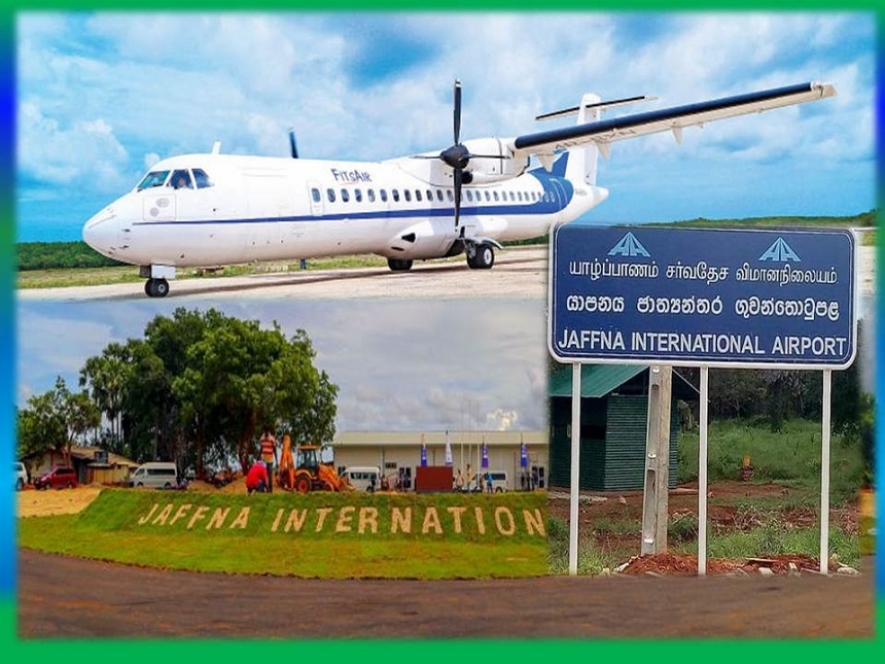
New departure duty-free shopping opens at Jaffna Int’l airport

A duty-free shopping facility was declared open for passengers today at the Jaffna International Airport (JIA).

It was opened by the Chairman of Aviation Services (Sri Lanka) (Pvt) Limited (CAASL), Major General (Rtd.) G. A. Chandrasiri with the objective of facilitating the outbound passengers.

CAASL is planning to make the duty-free shopping facility available to inbound passengers in the near future.

Meanwhile, Alliance Air operates four flights a week with full capacity at present and is exploring the possibility of introducing daily flights between Jaffna and Chennai. A total of 67 passengers arrived and 67 passengers left at the same time.

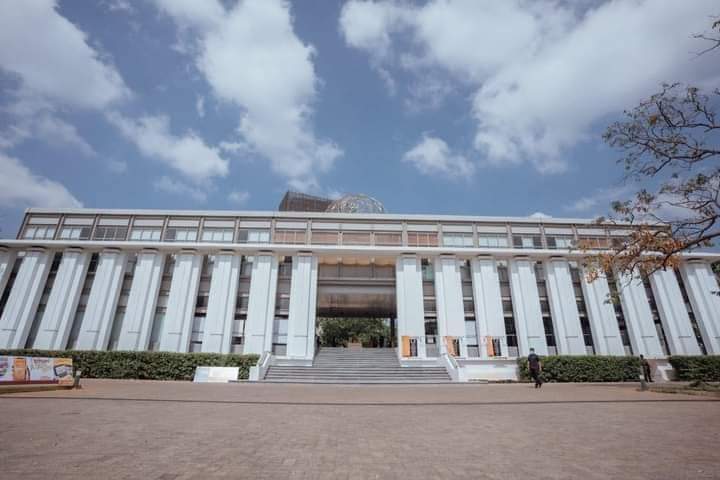
Jaffna Cultural Center: India’s USD 11 million gift to Sri Lanka inaugurated

he Jaffna Cultural Center (JCC), which was built with grant assistance of Government of India (GOI), was dedicated to the people on Saturday by the President of Sri Lanka Ranil Wickremesinghe in the presence of the Indian Minister of State for Fisheries, Animal Husbandry & Dairying and Information & Broadcasting, Dr. L. Murugan.

The High Commissioner of India Gopal Baglay, Douglas Devananda, Minister for Fisheries, Vidura Wickramanayake, Minister for Buddhasasana, Religious and Cultural Affairs, Kadar Masthan, Minister of State for Rural Economy, several Parliamentarians and dignitaries from various walks of life graced the occasion.

A Bharatanatyam performance

The state-of-the-art JCC consists of multiple facilities such as a museum of two floors; an advanced theatre-style auditorium for more than 600 people; an 11-storeyed learning tower; a public square which could also act as an amphitheatre; exhibition galleries (Air conditioned), Open exhibition and a 100-seat Conference facility, among others.

The foundation stone for JCC was laid by Prime Minister Narendra Modi in May 2015 during the first-ever visit by an Indian Prime Minister to Jaffna. Following the construction of JCC, the iconic facility was virtually inaugurated during the visit of External Affairs Minister Dr. S. Jaishankar to Colombo in March 2022.

Describing JCC as a gift from Prime Minister Narendra Modi, President H.E Ranil Wickremesinghe thanked him and GOI for the Center. He thanked India for the support extended to Sri Lanka during the economic challenges. Highlighting cultural similarities between the two countries, he noted that India and Sri Lanka were the two sides of the same coin.

A Sinhalese folk dance

Speaking on the occasion, Minister of State Dr. L Murugan underlined that India’s partnership with Sri Lanka was guided by Prime Minister Narendra Modi’s ‘Neighbourhood First’ policy. He also announced a special financial assistance scheme to 100 students from economically weaker families in the University of Jaffna. He also highlighted that GOI has implemented numerous people-centric projects cutting across sectors in Northern Province.

Ranil Wickremesinghe and Vidura Wickramanayake handed over a special token of gratitude to the Indian Minister Dr. L Murugan for JCC. The wide array of cultural performances showcased the richness and diversity of Sri Lanka’s culture.

The JCC is an outstanding example of GOI’s ongoing commitment to the people of Sri Lanka including in the Northern Province. GOI’s development partnership with Sri Lanka which touches upon all aspects of daily life such as infrastructure development, education, health, housing, livelihood development etc currently stands at USD 5 billion.

Posted in Uncategorized