In Sri Lanka, a national security policy is still a far cry By Asiri Fernando/The Sunday Morning

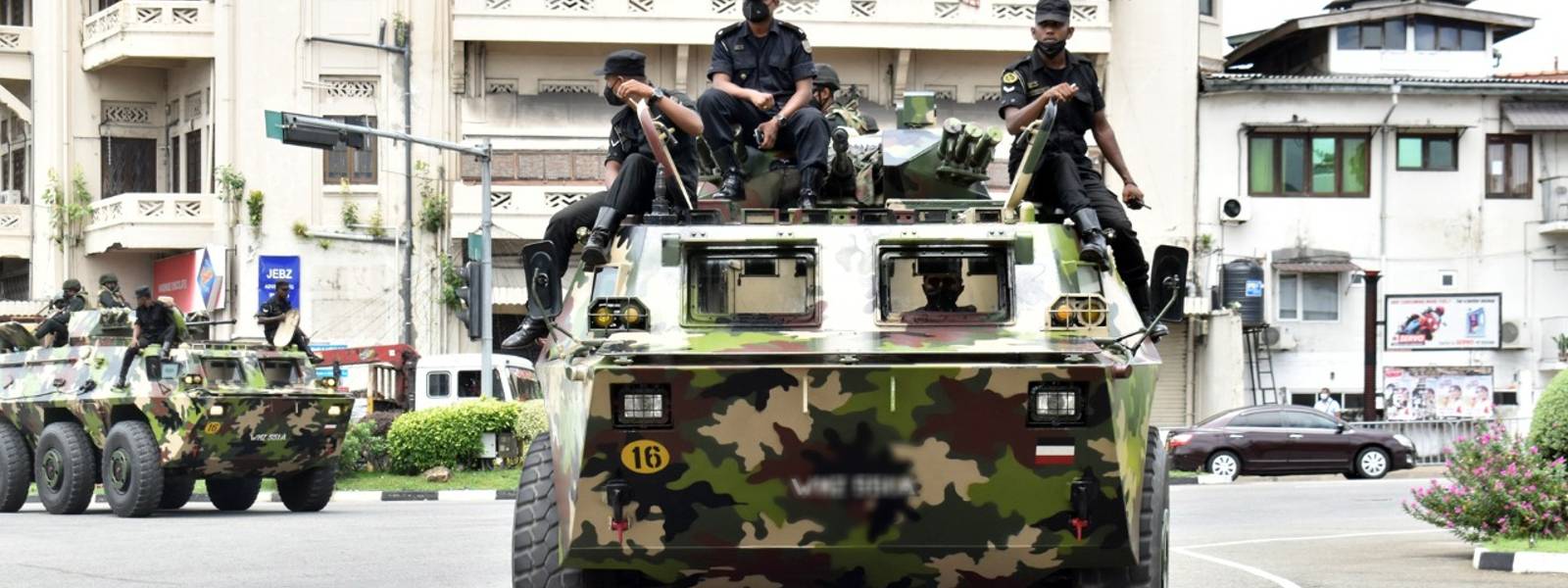
As Sri Lanka celebrates 75 years of independence with military pomp and pageantry amidst the worst economic crisis in the island’s history, the proposed defence reforms by the Government are making slow progress, with stakeholder consultations ongoing, The Sunday Morning learns.

The Sunday Morning reliably learns that about a dozen line ministries have been consulted in the latest attempt to restructure Sri Lanka’s national security architecture.

ADVERTISEMENT
However, a timeline for the completion of the ‘Defence 2030’ review remains elusive, with both the Ministry of Defence (MOD) and the office of the State Minister for Defence not responding to inquiries.

Meanwhile, the National Defence College (NDC) of Sri Lanka responded to The Sunday Morning with approval from the MOD on the ‘Defence 2030’ review ordered by President Ranil Wickremesinghe in late 2022.

It is understood that the MOD has appointed a board to review the initial drafts of the ‘National Security Policy’ and ‘National Defence Policy,’ which were produced in 2016, and update them.

According to NDC Commandant Major General Amal Karunasekara, the MOD-appointed board, which he is a part of, has been tasked with formulating a robust and viable National Security Policy (NSP) for Sri Lanka as part of the ‘Defence 2030’ review.

Early attempts

According to a retired defence official who spoke to The Sunday Morning on terms of anonymity, over the last few decades, there have been several studies carried out by individuals and committees on Sri Lanka’s national security concerns with the aim of producing a holistic policy document.

According to the official, in the early 1990s, a leading diplomat had formulated a basic National Security Policy framework, which had however not been taken up by the then administration.

These efforts have often been interrupted with the transformation of various governments and encompassing administrations and their respective policies which led to inconsistency. It is understood that in 2016, under the patronage of the MOD, a National Security Policy and National Defence Policy was drafted.

However, it was later identified that both draft policies had not included broad consultation when being drafted and were subsequently shelved. The Ministry of Defence had sought assistance from several foreign countries to help in formulating a template to assess national security goals during the period, it is learnt.

According to the official, another draft National Security Policy had been prepared to be approved by the Cabinet of Ministers, but that attempt too had failed to receive approval.

‘Defence 2030’ process

Responding to a question regarding the ‘Defence 2030’ review, Maj. Gen. Karunasekara said: “Presently, a board has been appointed by the Ministry of Defence to review the initial draft of the National Security Policy and the National Defence Policy, which was produced in 2016 and carry out necessary updates and formulate a proper and viable National Security Policy for the country. The board has conducted a detailed review of the draft National Security Policy and conducted several rounds of ministerial consultations covering most of the ministries and obtained their insights for the new NSP.”

According to Karunasekara, internationally, nation-states conduct defence reviews periodically, with many opting to do so every five years and some opting for 10-year defence reviews. Such reviews lead to policy documents such as defence white papers, which are often accessible to the public and other countries.

“For example, it is vital to understand our national values, national interests, and national security objectives according to the national vision of the country. For that, a comprehensive study has to be carried out to identify our strengths, opportunities, threats, and vulnerabilities first. The present committee has almost completed these steps and outputs will be shared with other stakeholders for their comments and inputs and thereafter necessary modifications will be carried out,” Maj. Gen. Karunasekara said, adding that the current review undertaken by the MOD-appointed board had also used a standard framework which many other countries used for the task.

Key national security goals

When asked what national security goals would frame the NSP that the ‘Defence 2030’ review planned to draft, Karunasekara said that the following areas had been identified as of now, with the list evolving as stakeholder consultations evolved.

They are: upholding the Constitution, protecting and preserving territorial integrity and sovereignty, protecting lines of communication, the pursuit of sustainable economic growth and prosperity, strengthening partnerships/relations for regional and international security and stability, upholding democratic institutions and advancement of good governance, preserving national values, ensuring public safety and crisis response, protecting, managing, preservation, and development of natural and physical environment and national heritage sites, prevention of negative domestic developments and events that could affect communal harmony and co-existence of diverse groups in Sri Lanka, and strength of the armed forces and ‘right-sizing’ them.

According to Karunasekara, as a National Security Policy has not yet been finalised, key defence goals or targets have not been identified yet and therefore it is not possible to comment on a future defence forces structure.

“However, it is evident that a strong defence is necessary to deter, deny, and defeat any form of aggression and crisis that threatens our survival. Thus, the existence of credible, sustainable, and adaptable armed forces is inalienable with the aspirations of national prosperity, regional peace, stability, and collaborative security,” the NDC Commandant opined.

Responding to a question regarding security and defence goals envisaged for 2030, Karunasekara said: “Being an island, Sri Lanka needs to enhance the strategic depth for credible defence against possible external aggression. Though the possibility of any external aggression towards Sri Lanka is remote, neglecting the risk of such can be catastrophic.

“Core to Sri Lanka’s defence policy is non-aggression and self-preservation. Thus, fundamental to preserving our sovereignty and territorial integrity is developing our capacity for cohesive defence and credible deterrence along with assertive diplomacy. Hence, cohesive defence, credible deterrence, and assertive diplomacy are to be regarded as pillars of our defence policy which underscore the core of non-aggression.”

Should not be an act of desperation

Defence reforms have been long overdue in the Sri Lankan context. With the armed conflict coming to an end in 2009, the large size of the armed forces raised by the State for wartime demands remained unaltered over the last decade. This, while consuming a large part of the national expenditure – a luxury Sri Lanka cannot afford to sustain given the status of its economy.

However, recalibrating Sri Lanka’s National Security Policy and defence posture should not be done haphazardly.

“The resizing of the military and the security structure of Sri Lanka should not be done in an ad hoc manner – it should not be an act of desperation aimed at expenditure reduction alone. National security is a wide umbrella and needs to be framed well after a good analysis. National goals need to be first formulated and there should be broad consensus on what Sri Lanka wants to be and how we want to get there,” the retired defence official opined.

“The need to reduce defence expenditure is clear. Yes, it should be done. However, the way we do it should be well-planned. If you move to shed thousands of young men trained in the art of war, with only a combat-oriented skill set to fend for themselves, they are at risk of being exploited by organised crime and other disruptors. We need to ask the question – have we equipped them to find employment? How will they support themselves and what social issues will such a flood cause? We need to have a plan and follow it,” the defence official said.
SriLankan Airlines defaults on bond interest

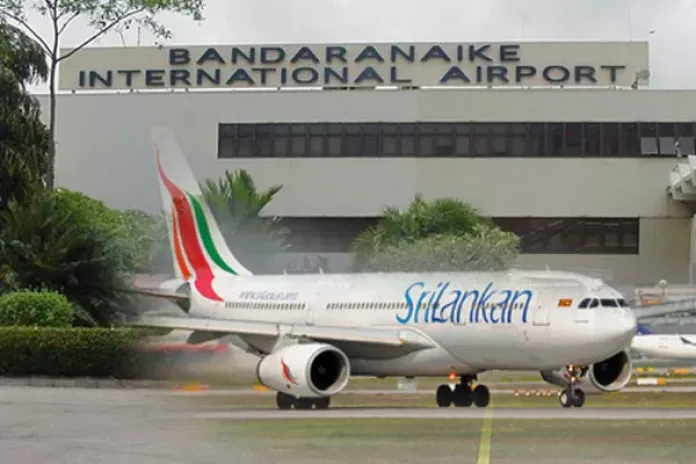
SriLankan Airlines has announced a default on a December coupon payment on its 175 million US dollar sovereign guaranteed bond with the expiry of a grace period.

SriLankan Airlines said in a Singapore Exchange filing that it was giving notice of an event of default, after failing to pay the December 2022 interest, of which notice was given earlier.

“We are engaging with the bondholders to find a solution,” Chairman Ashok Pathirage said.

SriLankan is guided by the advisors to the goverment on re-structuring debt, he said.

SriLankan paid one coupon due in mid 2022 after the government defaulted on its external debt as the airline was keen to maintain operations its standing among suppliers.

But it later told bond holders that from December the coupon will not be paid.

Posted in Uncategorized

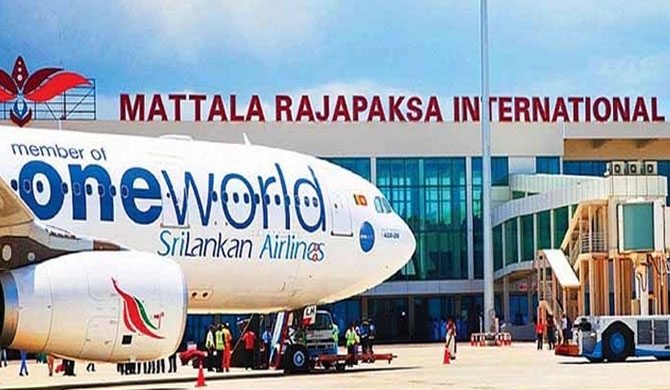
SriLankan Airlines to renew commercial operations to China

SriLankan Airlines is set to renew its commercial operations to China in the first week of April 2023, with a thrice weekly service each to Shanghai, Beijing and Guangzhou as China reopens its borders.

China was a leading source market for inbound tourism to Sri Lanka and one of SriLankan’s premier leisure traveller segments before the pandemic, and SriLankan is positioning for a strong comeback in China upon its return.

SriLankan will launch passenger flights to Shanghai on 3 April 2023. Accordingly, flights will depart from Colombo to Shanghai every Monday, Thursday and Friday, and return from Shanghai to Colombo every Tuesday, Friday and Saturday, respectively.

Flights from Colombo to Beijing will also commence on 3 April 2023, and are scheduled to depart for Beijing on Monday, Wednesday and Friday every week. The return flights to Colombo will depart on the respective subsequent days.

SriLankan Airlines currently operates a weekly flight between Colombo and Guangzhou, and a second flight will be introduced on 4 March 2023. Furthermore, SriLankan’s services to Guangzhou will become a thrice-weekly operation exactly a month later on 4 April 2023, with flights taking off from Colombo to Guangzhou every Tuesday, Thursday and Saturday. The return flights from Guangzhou to Colombo will depart every Wednesday, Friday and Sunday.

With Chinese travellers eager to make up for lost time in globetrotting, SriLankan will be working closely with the local travel trade to reignite enthusiasm for Sri Lanka as a leisure destination in China. In addition to specifically curated holiday packages and deals, SriLankan offers Chinese customers the convenience of paying via Alipay and WeChat Pay.

Posted in Uncategorized

Election Commission releases candidate lists for 2023 LG polls

The Election Commission of Sri Lanka today (09 Feb) released the lists of names of the candidates from each political party and independent group contesting the upcoming 2023 Local Government (LG) election.

Accordingly, the commission has issued a QR code to access the list of candidates contesting for this year’s election and the relevant political parties or independent groups they are contesting under.

Meanwhile, a total of 676,873 postal vote applications have been received by the Commission, with the highest number of applications being submitted from the Anuradhapura district.

The 2023 Local Government election is scheduled to be held on 09 March.

Posted in Uncategorized

Sangha march against full implementation of 13A

The Maha Sangha have launched a protest march against the decision to fully implement the 13th Amendment to the Constitution.

The protest march is organized by the Bhikku Collective representing the three main Buddhist Sects.

Before the protest march, a Sangha convention took place at the Perakumba Pirivena in Sri Jayawardenapura Kotte on Wednesday (8) against the full implementation of the 13th Amendment to the Constitution.
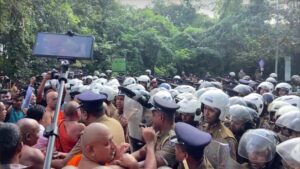
When the protest march reached the Polduwa Junction on Parliament Road, police obstructed the monks and others from proceeding forward.

Several monks clashed with the Police near Parliament today over the 13th Amendment to the Constitution.
The monks attempted to get close to Parliament but were prevented from doing so by the Police.

A heated exchange took place between the monks and the Police.

Some Police officers could be seen being verbally abused and pushed by the monks.

Eventually the monks set fire to a document containing the 13th Amendment to the Constitution.
They also conducted a religious program at the location on Parliament road before dispersing.

Leading monk, the Ven. Dr. Omalpe Sobitha Thera was among those present.

Posted in Uncategorized

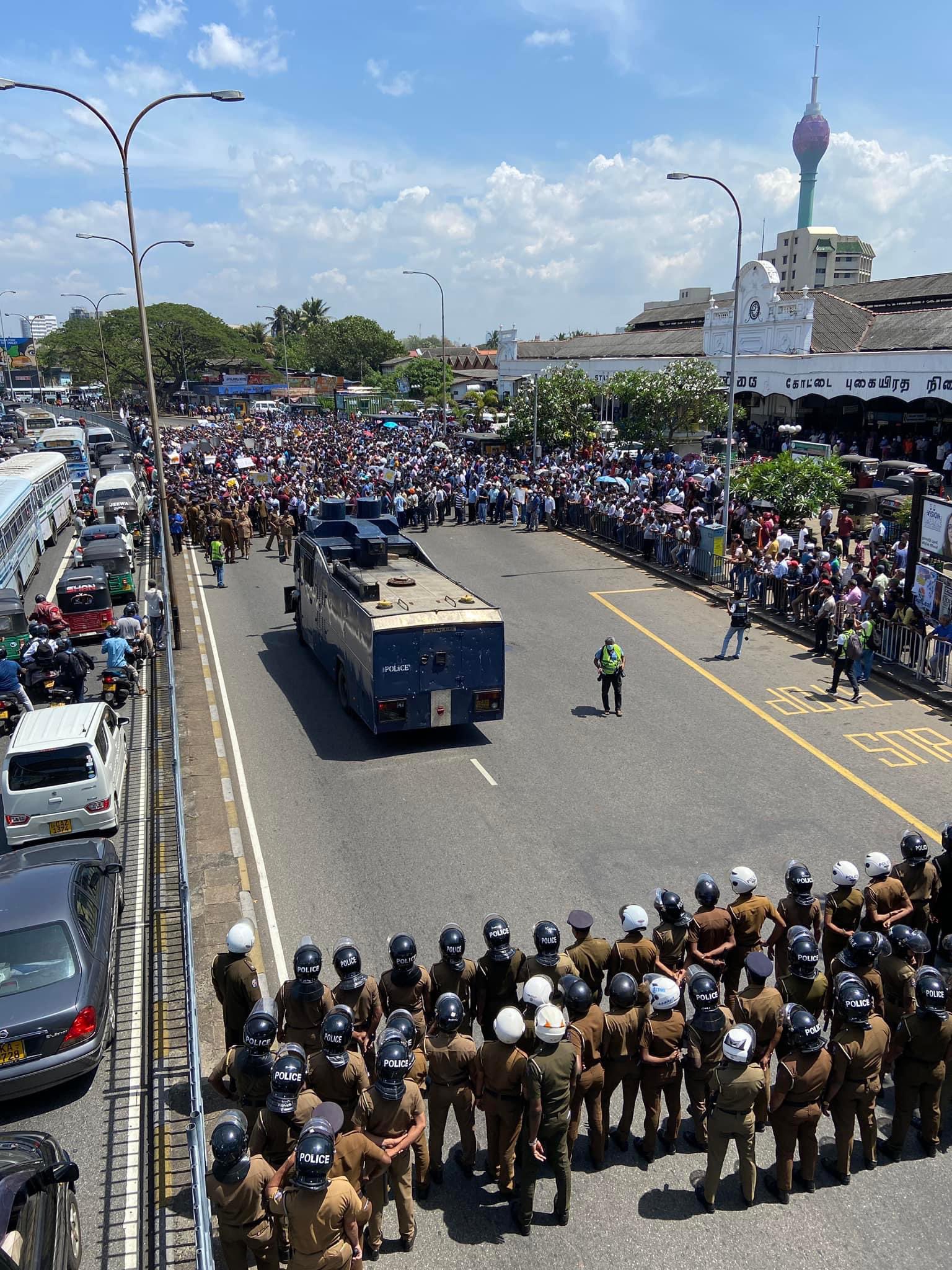
Thousands of Sri Lankans protest against tax hike

Thousands of Sri Lanka’s highly paid state workers protested against tax hikes, citing it as ‘unfair’ with most of them have been caught into the tax brackets for the first time.

The tax hike protest also saw hundreds of private sector workers also gathered in Colombo Fort, demanding a downward revision of the newly implemented taxes.

The protesters later went to a central Colombo Hyde Park to continue their agitation after a court order issued them to clear the area.

Under a theme of ‘Repeal Oppressive Tax Refers’, workers representing 40 trade unions including all private and public sector banks, university lecturers, Port Authority, Ceylon Electricity Board (CEB), Government Medical Officers of Health participated in the protest.

“We don’t mind paying taxes, we know we have to contribute to government revenue,” K L Chandana, representing CEB Engineer’s Union told EconomyNext.

“Moving from one tax bracket to a higher tax bracket is unrealistic, especially with the inflation and global factors. Earlier we were in the green to pay taxes because the country wasn’t in hyperinflation and we had a better quality of life, but our income don’t match with inflation. So there’s no way we can squeeze another expense.”

The ongoing economic crisis has forced President Ranil Wickremesinghe’s government to impose high PAYE and personal income taxes up to maximum 36 percent depending on their income.

A person who paid a tax of 9,000 rupees on a 400,000-rupee monthly income will now have to pay 70,500 rupees as income tax, the latest data showed.

The government took a step back to exempt some allowances partially including for fuel, driver, and vehicle, a government document showed.

“We don’t mind paying fair taxes, we paid them earlier,” Udaya Ekanayake, an Administrative officer from Anuradhapura told Economynext.

“We are opposed to taxation because it is not in line with the economic crisis, inflation is exceeding 50 percent and we are being taxed by 32 percent.”

Meanwhile, the Government Medical Officers Association Media Spokesman, Chamil Wijesinghe said, the protest was the first warning and that if the government fails to respond, the unions will bring the country to a standstill.

“If the government still can’t understand, we are ready to take further actions and we will make the country come to a standstill,” Wijesinghe said.

A renowned actor and a new member of the Ceylon Mercantile Industrial Union Peter d’ Almeida told EconomyNext that the government should bring in higher corporate taxes and taxes on the super-rich reducing the burden on the general public.

“These people had enough of the burden which has been placed on people, with the so-called tax reforms and increased price in utilities, and the general increase in the cost of living,” Almeida told EconomyNext.

“And the sad part is people who ruined this country are still in power and it is people who have nothing to do with this facing the burden of rebuilding the country.
That is unacceptable.”

“A very high cooperate tax and taxes on super rich including wealth and capital gains should be in order.”

Posted in Uncategorized

CID records statement from GR over recovery of millions in cash from President’s House

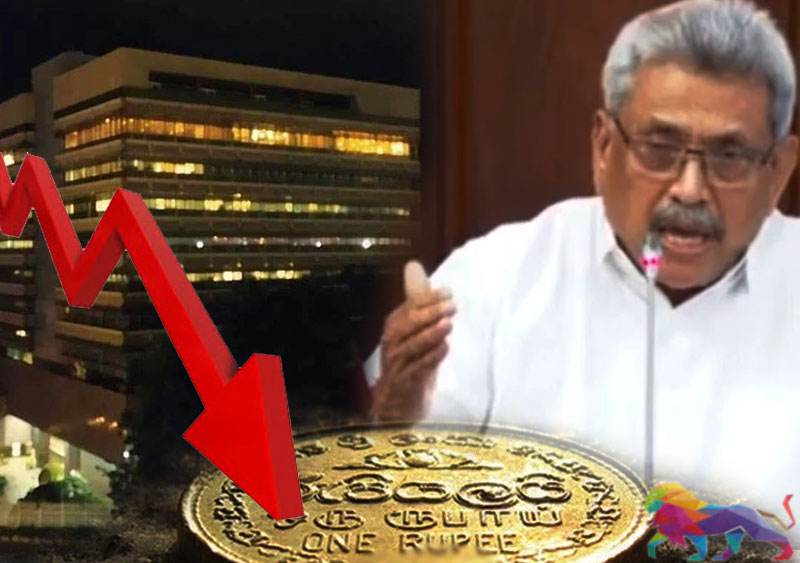
The Criminal Investigations Department (CID) has recorded a statement from former President Gotabaya Rajapaksa over the recovery of Rs.17.85 million from the President’s House on 9th July 2022.

Police Spokesman SSP Nihal Thalduwa said the CID has recorded a nearly three-hour statement from the former President following a court order.

Earlier, the Fort Magistrate’s Court ordered the Police to record a statement from Gotabaya Rajapaksa pertaining to the millions of rupees in cash found at the President’s House during mass protests last year.

The money was found by protesters when they stormed the presidential residence during mass anti-government protests.

SSP Thalduwa said the CID officers visited the former President’s residence on Monday to record a statement in this regard.

Posted in Uncategorized

Sri Lanka bankruptcy to last until 2026: President

Sri Lanka’s President said on Wednesday that the island nation will remain bankrupt for at least three more years as he works to repair battered government finances following an unprecedented economic crisis.

Mr Ranil Wickremesinghe took office in 2022 at the peak of national unrest sparked by months of food, fuel and medicine shortages.

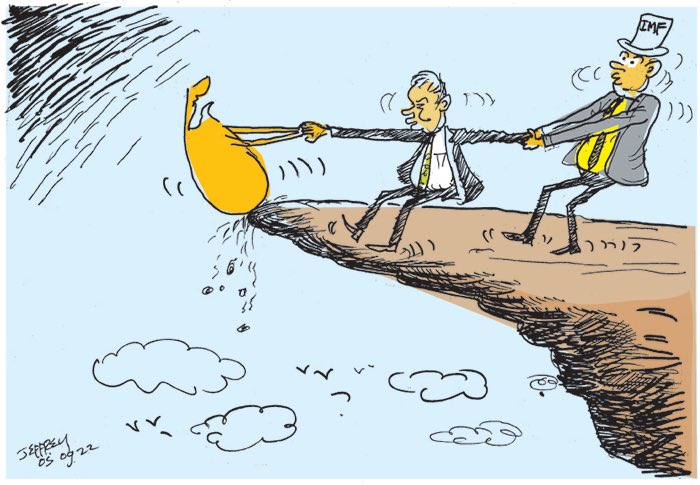
He has since pushed through tax hikes and negotiated with international creditors after a default on Sri Lanka’s foreign debt to clear the way for a sorely needed International Monetary Fund (IMF) bailout.

“If we continue according to this plan, we can rise out of bankruptcy by 2026,” he said during an address to Parliament urging support for economic reforms.

“Introducing new tax policies is a politically unpopular decision. Remember, I’m not here to be popular. I want to rebuild this nation from the crisis it has fallen into.”

He said in January that the economy may have contracted by up to 11 per cent in the last calendar year, when Sri Lanka’s foreign exchange reserves dried up and left traders unable to import vital goods.

But on Wednesday, he said the economy would return to growth by the end of 2023 as new revenue measures boosted government coffers.

Tax increases and the removal of fuel and electricity subsidies have been unpopular with Sri Lanka’s public, already hit hard by the crisis and rampant inflation.

Mr Wickremesinghe’s policy address took place at the same time as a huge trade union strike, with air traffic controllers, doctors and those in several other industries stopping work.

He said Sri Lanka had reached the final stage of IMF discussions to secure a preliminary US$2.9 billion (S$3.8 billion) bailout.

The process has been delayed by protracted debt restructure negotiations with China and other major creditors.

He said Sri Lanka was in direct discussions with China about its outstanding debt but had received “positive responses from all parties” and was working towards a final agreement.

AFP

Swiss government provides funds through UNICEF to support services for children In Sri Lanka

The Government of Switzerland has contributed Swiss Francs (CHF) 500,000 (approximately Rs. 199 million) through UNICEF to meet the urgent needs of children impacted by the economic crisis in Sri Lanka.

With this funding, UNICEF will procure essential medical supplies, including medicines for treatment of illnesses and complications among children and women. In education, the funds will help children in disadvantaged schools continue learning and support catch-up classes to recover learning loss, including by providing transport allowance to teachers and daily snacks to students.

UNICEF will also support case management for children facing violence, neglect and family separation, including children with a disability.

“UNICEF and partners swiftly responded to the needs of the most vulnerable children from the outset of the economic crisis last year, with thanks to the support of donors. This contribution from the Swiss government and people is crucial in sustaining the response and protecting children from the effects of the crisis as it continues”, said Christian Skoog, Representative, UNICEF Sri Lanka.

The Swiss contribution will also be used to support data collection and analysis to assess the impact of the on-going crisis on households’ social and economic well-being and vulnerabilities, to help national and development partners put in place effective response strategies.

“Switzerland has worked closely with many partners, including UNICEF in addressing the needs of communities during crises such as the one that Sri Lanka faces now. This support demonstrates our long-standing cooperation with the people of Sri Lanka”, said Dr. Dominik Furgler, Ambassador of Switzerland to Sri Lanka and the Maldives.

UNICEF has issued an appeal for resources in 2023 to help 2.4 million most vulnerable children receive nutrition support, healthcare, clean drinking water, mental health services and continue learning.

’’Islandwide trade Union action cost Sri Lanka over Rs.1 bn’’ – Economists

The country has lost an estimated revenue of Rs.1 billion due to several crucial sectors launching a protest today, inconveniencing millions of citizens and leading to roads being blocked in the business hub of Colombo, senior economists said today.

Colombo University Department of Economics Professor Priyanga Dunusinghe told Daily Mirror that more than Rs.1 billion of losses had been faced by the country today due to the massive trade union action staged by doctors and several other professionals over the government’s new income tax policy.

Priyanga said this loss at this critical juncture was a blow to Sri Lanka’s development.

Another senior economist who wished to comment off the record said that such protests at a time when Sri Lanka was seeking international assistance for its debt relief sent a wrong signal to its global partners.

He said protests staged by crucial sectors cost the country billions and such losses were not feasible at the moment and also sent wrong signals to its international lenders.

“Opposing taxes is one thing but causing such a loss to the country is another. This sends a wrong message at a time when we are negotiating with our global partners for debt relief,” the economist said.

Over 40 trade unions including the Government Medical Officers’ Association (GMOA), Ceylon Electricity Board (CEB), University Lecturers, Sri Lanka Ports Authority (SLPA), National Water Supply and Drainage Board (NWS&DB), several banks, Sri Lanka Air Traffic Controllers Association (SLATCA) and Ceylon Petroleum Corporation (CPC) staged an island wide trade union action today to oppose the government’s new income tax policy.

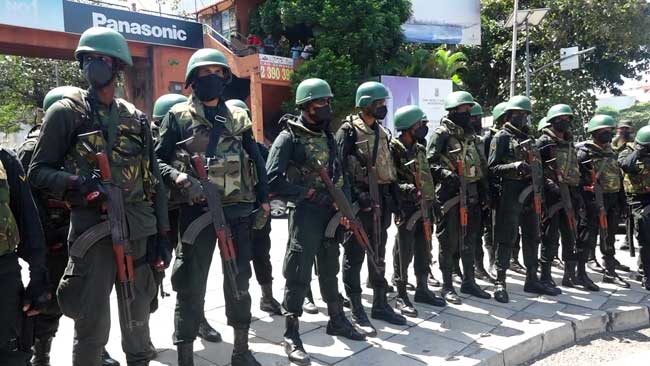
The main business hub of Fort came to a standstill in the early hours of today as large groups gathered near the Fort railway station resulting in the military being called in to maintain calm.

The Trade Union Collective Centre (TUCC) told Daily Mirror that the Trade Union action had been a complete success and gave a direct message to the government on how the people would be affected by the new tax policies.

TUCC Operation Board Member Mahinda Jayasinghe said the sudden implementation of a higher PAYE Tax was unfair to the people who earned a higher salary because they had to adjust to maintain their lifestyle accordingly.

Jayasinghe said most of the professionals including doctors would be forced to migrate because of this. “They have come to a situation where they are unable to survive,”he said.

Posted in Uncategorized