Commissioner General files affidavit and urges SC to facilitate holding LG polls

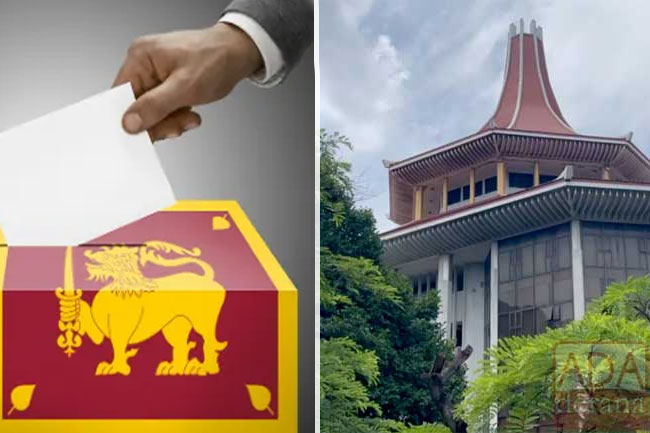
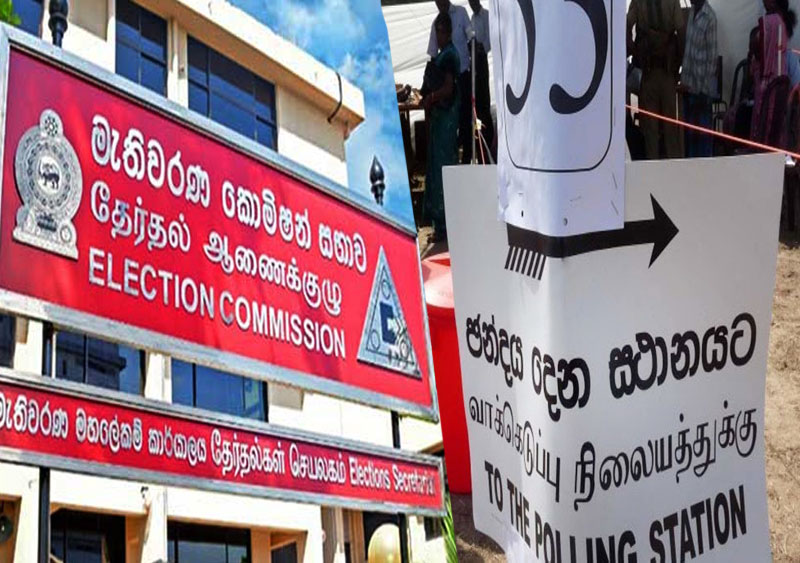
In an affidavit to the Supreme Court, Commissioner General of Election Saman Sri Ratnayake stated that the Election Commission has faced great difficulty in taking necessary steps to hold the Local Government Election due to the failure of the Secretary to the Treasury and other relevant officials to release required funds for the conduct of the election.

Accordingly, Commissioner General of Election Saman Sri Ratnayake urged the Supreme Court to make appropriate orders on the Secretary to the Ministry of Finance and other officials to facilitate the holding of Local Authorities Election in accordance with the law and in accordance with the undertakings given by the Commission to the Supreme Court.
Saman Sri Ratnayake stated that he is submitting this affidavit in consultation with the Chairman of Elections Commission.

Ratnayake stated that the Chairman of the Ceylon Petroleum Corporation in his letter dated 31/01/2023 and the Chairman of the Ceylon Electricity Board in his letter dated 02/02/2023 have informed the Chairman of the Elections Commission about their difficulties to provide electricity and fuel for the election as requested.

He maintained that the Ceylon Petroleum Corporation and the Ceylon Electricity Board has a duty to ensure the provision of fuel and electricity respectively for the purpose of the election and that any move to deny fuel and the supply of electricity for the election purposes will result in a hindrance to the election process.

Ratnayake informed court that an amount of 10,000 million rupees has been allocated in the annual estimates for the year 2023 for the activities of the Local Authorities Election and this has been approved by Parliament.

Ratnayake further said though he requested the Secretary to the Ministry of Finance, Economic Stabilization and National Policies to release the imprest for the initial arrangements of the election, the said request has not been fulfilled.

He further said by his letter dated 24/01/2023, he requested the Secretary to the Ministry of Finance, Economic Stabilization and National Policies to release 100 million rupees by the last week of January and the remaining imprest to be released in the month of February.

He stated that it is not necessary to arrange the aforementioned amount of 10,000 million rupees all at once to carry out the activities of the election. According to data from previous elections, less than 25% of the total expenditure on elections are incurred before the election.

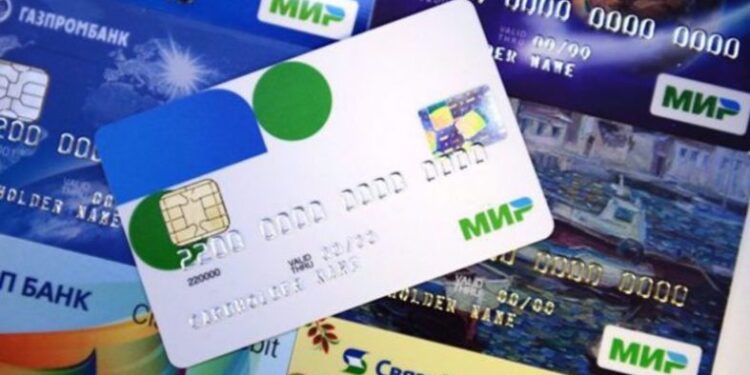
Another request to permit the use of Russia’s Mir cards in Sri Lanka

Ambassador of Sri Lanka to Russia Janitha Liyanage has made another request from the Central Bank to reconsider the possibility of using Russia’s Mir cards in Sri Lanka.

During an interview with RIA Novosti, Ambassador Liyanage has said negotiations on the use of Mir cards are underway.

She said she sent a request to the Central Bank of Sri Lanka and the issue is being discussed at present.

Ambassador to Russia Janita Liyanage said at present the tourists coming to Sri Lanka can use the project of the National Investment and Industrial Bank and the People’s Bank in Sri Lanka.

In order to use the service Russian nations need to create an account with the financial institution and once they land in Sri Lanka they will be issued a local Visa card.

When requested previously, the Central Bank of Sri Lanka said that it could not allow the use of Russian Mir cards in the country due to US sanctions.

Posted in Uncategorized

Sri Lanka invites Russian businesses to invest in the country

Sri Lanka Ambassador to Russia Janitha Liyanage says Sri Lanka is open for investments from Russian businessmen and the government is actively discussing such opportunities, including with representatives of the construction industry.

Speaking to Sputnik Liyanage said, “Sri Lanka is open for investment, and we are discussing with Russian entrepreneurs, and Russian construction companies … There are a lot of opportunities for Russians”.

She said Sri Lanka invited Russian companies to open their branches in the island.

Liyanage said in the near future, Sri Lanka plans to open a trading house in Russia and increase the deliveries of tea, coconut-based products, and spices.

She noted that Minister of Transport Bandula Gunawardana and Minister of Agriculture Mahinda Amaraweera are due to visit Russia in March and April.

Posted in Uncategorized

Paris Club members agree to negotiate Sri Lanka debt restructure: president’s office

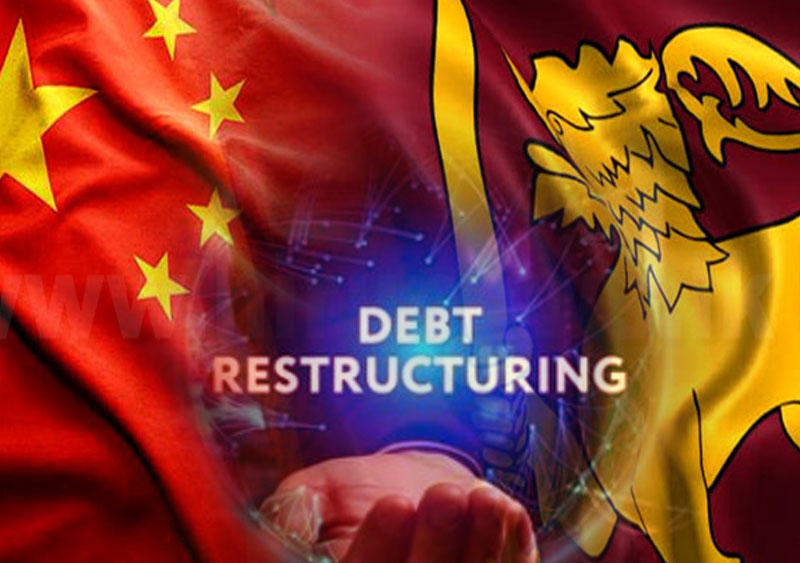
Member states of the Paris Club have expressed their commitment to negotiate debt restructuring with Sri Lanka in accordance with the comparability of treatment principle and with the goal of restoring debt sustainability, President Ranil Wickremesinghe’s office said.

Saudi Arabia and India have also expressed their support and commitment to providing financing assurances, the president’s office said in a statement on Tuesday February 07.

The Paris Club members urged other official bilateral creditors, including China, to do the same in line with the International Monetary Fund (IMF) programme, it added.

Earlier in February, the Paris Club members informed the IMF of their support for Sri Lanka debt restructuring.

Posted in Uncategorized

An Independence Day fete Ranil may still like to forget By N Sathiya Moorthy

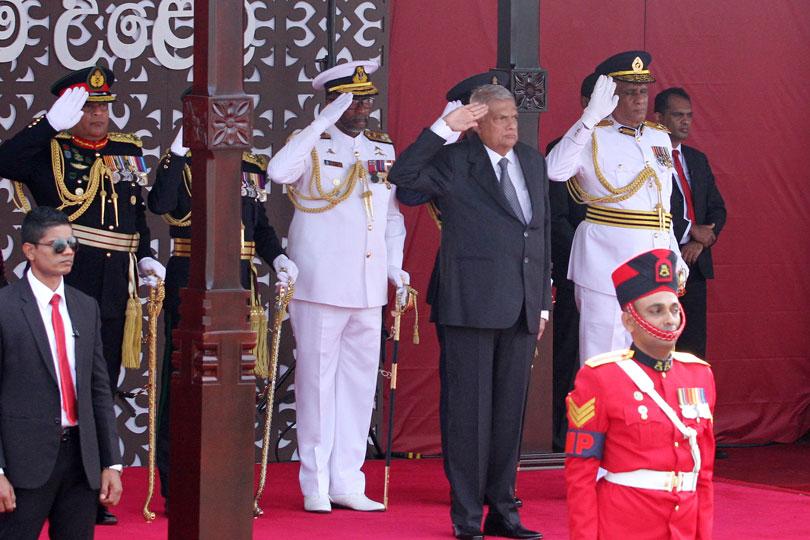
For incumbent Ranil Wickremesinghe, taking the Independence Day as the nation’s President is known to be a dream come true. It should be so for most politicians in the country, especially when they are young, inexperienced and unexposed. It would have been more so for Ranil, as this is not only the first time that he was unfurling the national flag at capital Colombo’s famous Galle Face Green, as his predecessors had done in heir time, but it was also the nation’s landmark 75th Independence Day, which his government spared no effort to celebrate with customary pomp and show, despite criticism and opposition over the high-spending in the midst of unprecedented economic crisis.

Yet, President Wickremesinghe, for all right reasons and wrong, might also want to forget the I-Day honour and the attendant fete. Despite his open appeal and official invitation, most Opposition parties stayed away, citing equally predictable reasons that they called justification. They had also stayed away from the all-party talks called by President Ranil to address the ethnic issue, lest he should take credit for the ‘interim solution’ that was centred on the ‘full implementation’ of the 13th Amendment – if and if alone it succeeded. Thankfully for them, it did not reach that stage, not by Ranil’s self-declared Independence Day deadline.

‘Sole representative’

The reasons are not far to seek. While the southern Sinhala Opposition’s boycott of ethnic talks, though not the Independence Day celebrations, was only to be anticipated, the government possibly was not prepared for the ‘beneficiary’ Tamil polity observing it as a ‘black day’. The list included the vertically-divided Tamil National Alliance (TNA), including the one-time ITAK leader of the coalition, with whose leaders alone the President and the government were holding most of the talks as if they were the ‘sole representative’ of the Tamil community.

In the process, the ITAK itself seem getting divided. Party MPs, M A Sumanthiran and Sanakiyan Rasamanickam, led a rally in eastern Batticaloa (the native district and electorate of the latter). This even as students of the Tamil-majority Jaffna University commenced a North-to-East march on the same theme, but with a different intent and participation.

Protestors at the Batti rally wore typical ‘Gandhi caps’, as if to recall and reassure for the nation, the peaceful path that they have inherited from party founder S J V Chelvanayagam, often referred to ‘Ceylon Gandhi’ or ‘Tamil Gandhi’. It is another matter that that ITAK president Maavai Senathiraja was nowhere to be seen, and the possibility is that he was not ever taken into confidence, making it a two-man show all the way, in the neighbourhood of ailing leader R Sampanthan’s eastern Trincomalee base that too has dwindled over the years.

Loaded statement

Incidentally, it was at Batti, where SJV declared that the just-concluded BC Pact with then Prime Minister S W R D Bandaranaike was only the ‘first step’ (towards a ‘separate state’?). Authors, analysts and international diplomats often fed exclusively on the Tamil information and interpretation of the contemporary ethnic history, seldom mention that SJV’s speech might have been the cause for SWRD tearing up the pact, seeing it as a ‘betrayal’.

Sampanthan, who could not participate in the Independence Day fete (only) owing to overnight hospitalisation for what his family described as a ‘routine check-up’, has since issued what reads like a loaded statement, addressing the Tamils as much as the government and the majority Sinhala polity that is also majoritarian in many parts. He said that if a political solution was not found for the ethnic issue, there was the fear and possibility of the ‘historic Tamil homeland’ being ‘snatched away, step by step’.

There is no denying that despite the controversies surrounding his leadership, Sampanthan might be the last hope for the Tamils, after SJV and LTTE-slain Amirthalingam, and of course, the LTTE and Prabhakaran, too. Tamil critics often see him as too soft on the government and Sinhala polity, always speaking for ‘self-determination within a united Sri Lanka’, and also relying excessively on the ‘international community’ than the domestic constituency and the Diaspora.

Unmet pre-conditions

In this background, Sampanthan was obviously hinting at the real possibility of the government and the Sinhala polity not feeling like having the need to talk to other Tamil leaders after his time – and thus even having the need to address the ‘legitimate aspirations’ of the Tamil people. While they may continue to want hiding their own short-comings or may even be on a denial mode, they all seem to be tired of the Tamils’ way of taking two steps backward after one forward step.

The current situation is a case in point. A year ago, most Tamil parties wrote to Indian Prime Minister Narendra Modi for New Delhi to press/pressure Colombo for the full implementation of 13-A. India’s visiting External Affairs Minister (EAM) S Jaishankar too said as much, and in public, about wanting it that way, and his conveying the Indian message to President Ranil and other government leaders.

However, after the TNA split ahead and over the nation-wide local government elections (LGE), scheduled for 9 March, one after the other, ending with the ITAK, announced their boycott of the Independence Day, and not just the Colombo fete. They introduced pre-conditions for talks, which were not new, and which successive government could have resolved through the stroke of the President’s pen.

Now, Ranil is seen as completing the unfinished task from his long innings as Prime Minister (2015-19). However, there is no knowing why he could not have completed it then and there. After all, issues such as freeing ‘Tamil political prisoners’ and also Tamil private lands in the military’s possession, and even ‘justice for missing persons’ are all issues that needs political will than bureaucratic paper-work.

Rajapaksas too stay away

While in Colombo, India’s Jaishankar also met former President Mahinda Rajapaksa, along with political heir, Namal Rajapaksa, MP, where the subject was believed to have come up for discussion. The Rajapaksas are the real power behind Ranil’s throne, yes, and Jaishankar meeting Mahinda was more than courtesy shown to a former President and ex-Prime Minister. After all, there are three other former Presidents around, and Jaishankar did not meet any of them.

Yet, at the end of the day, all six Rajapaksas in politics, including the non-controversial older brother Chamal (a former Minister and also full-term Parliament Speaker) and his equally invisible son Shasheendra, who is also a state minister in Ranil’s government, stayed away from the official function. According to low-profile, at times delayed reports, Mahinda as also another former President, Maithripala Sirisena, were invited – and both stayed away, unbecoming of the high office they had held, whether or not they were still a part of the government coalition.

It was even more problematic when Ranil’s immediate predecessor Gotabaya Rajapaksa and Chandrika Bandaranaike-Kumaratunga, were reportedly not invited for the I-Day fete. If true, it was odd, especially after the otherwise ‘despised’ Gota was among the guests at the India’s Republic Day reception – as was only proper and protocol-driven – just days earlier. It is anybody’s guess why and how Ranil could expect cooperation from others when his leadership has acted like squabbling school children.

No explanation has been offered as to why the Rajapaksas, stayed away, as Namal is still a parliamentarian, with reported aspirations to be President in his time (though not in the foreseeable future, thanks to uncle Gota’s mis-administration and mal-administration that was thankfully short-lived. Namal is since on record that father Mahinda, though Prime Minister at the time, was not consulted, nor was he involved in Gota’s controversial decisions, one after the other.

It does not explain how Mahinda, because of whom his constituency voted for brother Gota – could abdicate responsibility, and not the position until the Aragalaya protestors made it too late and too difficult. The explanation does not hold for Basi, another of the four brothers, who is no more a parliamentarian only because his national loyalty is still equally divided between Sri Lanka and the U S, which he refuses to give up.

The ‘why’ of Basil choice still remains a mystery, yes, but more than that is the question how the SLPP, going beyond the Rajapaksas’ clannish leadership, could afford to share their secrets with him. It is another matter that Basil is still considered the chief strategist of the party, and also its chief organisers, in reality and otherwise.

Be it as it may, President Ranil’s parliamentary majority tends to become doubtful if there is more to the Rajapaksas’ ‘boycott’ of the Independence Day fete than whatever remains undisclosed. It is not unlikely that they are unhappy with the way the Election Commission desires to go ahead with the local government polls that many predict the SLPP alliance would lose – and very badly so, in the aftermath of last year’s protests and the economic crisis that caused it all.

It could also mean that if not addressed adequately in whatever way, the SLPP may decide to rise questions about Ranil’s approach to economic management, IMF debt-requirements and of course the 13-A. When Ranil raked up the issue in Parliament some months ago, Mahinda went a step further to declare that they were ready to discuss 13-Plus, too.

Some hopes then, but….

(The writer is a policy analyst & political commentator, based in Chennai, India. Email: sathiyam54@nsathiyamoorthy.com)

Posted in Uncategorized

Election Commission to go to court if funds not provided

The Election Commission of Sri Lanka has noted that in the event the relevant authorities fail to comply with their fund request required to cover the basic expenses of the upcoming Local Government (LG) election, the matter will be taken to court.

Accordingly, Chairman of the Commission, Attorney-at-Law Nimal Punchihewa noted that in the event a favourable response is not received pertaining to the sum of Rs. 770 million requested from the Secretary to the Treasury, the matter will be presented before the court on 09 February.

He explained that the funds were requested to cover the basic expenses to be incurred in the month of February, leading up to the 2023 LG election, including the initial payments due to be made to the Department of Government Printing and the Police and Postal departments, in order for them to carry out the preliminary work required to hold the election.

Punchihewa noted, however, that the Secretary to the Treasury is yet to respond to the request which was made earlier this month.

Although the Ministry of Finance had previously handed over nearly Rs. 37 million to the Commission for the upcoming election, the request for Rs. 770 million was made by Punchihewa in writing to the Secretary to the Ministry of Finance, after the Commission noted that an estimated sum of Rs. 4 billion is required for the whole process of holding the upcoming election.

The 2023 LG election is schedule to be held on 09 March.

Posted in Uncategorized

75 Years of Independence and the Tamils of Sri Lanka By D.B.S.Jeyaraj

The resplendent Island of Sri Lanka celebrates her seventy-fifth anniversary of Independence from Britain today – February 4th 2023. Earlier there was some hope in the air that the contours of a political settlement to the Tamil national question would be publicised by President Ranil Wickremesinghe on this 75th freedom day. It was President Wickremesinghe himself who set this deadline in an optimistic mood last December. Alas! the course of events in January was not so conducive to that commendable expectation.

Furthermore, the situation seems to have taken a turn for the worse. Some Sri Lankan Tamil nationalist parties and civil society organizations have declared Feb 4th as a “Black Day” (Kari Naal) and a day of mourning.

It is not clear at the time this article is being written on Thursday evening as to whether a “Hartal” or shutdown will take place but it appears that black flags would be flown in the Tamil areas of the North and East on Independence day.

For anyone being free of colonial bondage, Independence Day would be a day of joy and happiness. But that has not been so for the Ilankaith Thamizhar of Sri Lanka for many, many years.

Many Tamils are not part of the freedom day festivity emotionally and spiritually. Lots of Tamils remain estranged and alienated from the Sri Lankan State still. The resentment manifested currently towards Independence Day is illustrative of that black mood.

It is against this backdrop that this column intends to focus reflectively on the recent past of Post-Independence Sri Lanka and ponder over its future while drawing extensively from earlier writings of a similar nature.

Ilankai Thamil Arasuk Katchi

Independence Day on February 4th being observed as a Black Day of mourning by many Tamils began as a political practice within the first decade of attaining freedom.
The advent of the Ilankai Thamil Arasuk Katchi (ITAK/Federal Party) and the rise of Tamil nationalism in the fifties and sixties of the last century, saw the Tamil polity being asked to treat Freedom Day as a day of mourning.

The rationale was that independence from the British had only resulted in being ruled by the Sinhalese. There was only a change of masters. So, Independence Day was nothing to celebrate, but only to be observed as a black day, it was argued.

These symbolic protests underwent a change after the Republican Constitution of 1972. Thereafter, May 22nd too was observed as a black day. February 4th lost a little of its significance. The symbolism of black flags on Independence Day however continued. The escalation of the conflict and resultant suffering made the very concept of independence meaningless to Tamils. Armed conflict and its impact on the Tamil people was terrible.

Years of perceived oppression and suppression had inculcated among many Sri Lankan Tamils a feeling of alienation in the land of their forefathers.

The Tamil political psyche too has changed over the decades. Tamils saw themselves as being on par with the Sinhalese as a founding race of this nation during the Ramanathan-Arunachalam era; the G. G. Ponnambalam period saw Tamils thinking of themselves as the premier all-island minority; S. J. V. Chelvanayagam years saw the Tamils regarding themselves as a territorial minority of the north-east; the Amirthalingam years and the emergence of the TULF saw Tamils perceiving themselves as a distinct nationality with a separate homeland and the right of self-determination.

Veluppillai Prabhakaran and other Tamil militant organisation leaders led an armed struggle to liberate this ‘homeland’ on the basis of the mandate for Tamil Eelam obtained by the Tamil United Liberation Front (TULF) at the July 1977 elections.

The separatist war waged by the Liberation Tigers of Tamil Eelam (LTTE) has ended after the military defeat suffered by the Tigers in May 2009.

The fighting is now over and the country has been unified militarily but whether the country has been united politically remains an unanswered question.

Tamil Perception of Sovereignty

The Tamil perception of sovereignty too differed over the years. The Jaffna Kingdom had lost its sovereignty on the battlefield to the Portuguese in 1619. It was then ceded to the Dutch in 1658; the British took over from the Dutch in 1796.

It was only in 1833 after the Colebrooke – Cameron Reforms of 1832 that pre-dominantly Tamil territories were integrated into a unified Ceylon. Until then they were administered separately.

In 1948, the British transferred power to the Sinhala majority. It has been the Tamil position that the 1947 Dominion Constitution, which paved the way for Independence in 1948, and the 1972 and 1978 Constitutions were all imposed on Tamils without the consent of the majority of their elected representatives.

Tamil sovereignty, therefore, lies within the Tamil nation still and the Sinhala majority has no right to dominate. This viewpoint often stated on political platforms was argued brilliantly by former Solicitor–General Murugeysen Tiruchelvam QC, in courts at the Amirthalingam trial-at-bar case of 1976.

Vanguard of Freedom Struggle

However, Post-Independence political problems should not blind us to the fact that a significant section of the Tamils was in the vanguard of a freedom struggle against the British in the past.

Sadly, the pioneering role played by Tamils in the quest for Independence is now forgotten. From Sir Ponnambalam Arunachalam’s famous lecture on Our Political Needs which laid the foundation for the National Congress to the activities of the Jaffna Youth Congress, Tamil efforts have been praiseworthy in this regard.

The south after the heroic and historic 1818 and 1848 rebellions was generally quiet during British rule. The dominant Sinhala political class preferred to cooperate with rather than confront the British.

Only the Leftists engaged in anti-colonial struggle through protests such as the Suriyamal movement and Bracegirdle Affair.

There was also much trade union activity and strikes. A very large number of Tamils were associated with their Sinhala comrades in these Left-leaning anti-colonial “Aragalayas”.
Trade Union Pioneer A.E. Goonesinghe in his more radical days founded the Young Lanka league to protest British rule.

However, the political path adopted by prominent leaders such as D.S. Senanayake, Sir Baron Jayatilleka and Sir Oliver Goonetilleka was different. They worked for self-rule through negotiation rather than agitation.

As a result, this nation never had an anti-colonial struggle as what was conducted in India by Mahatma Gandhi non-violently, or Netaji Subash Chandra Bose militarily.

Jaffna Youth Congress

The nearest to an anti-British, pro-freedom struggle, in the country came from the north. It emanated from the now forgotten Jaffna Youth Congress led by the likes of Handy Perinbanayagam, ‘Orator’ Subramaniam, J.V. Chelliah, M.Balasundaram, S.Kulendran, K. Nesiah and C. Ponnambalam.

It was the Jaffna Youth Congress which called first for Poorana Swaraj or complete self-rule from the British and rejected the limited reforms proposed by the Donoughmore Commission.
It is recorded that hundreds of Jaffna youths ran about the streets of Jaffna town shouting out loudly “Swaraj, Swaraj” after listening to an inspiring lecture by the famous female freedom fighter of India Kamaladevi Chattopadhyay.

Fired by the ideals espoused by Mahatma Gandhi the Youth Congress demanded Poorana Swaraj (Complete Independence) and urged a boycott of the first State Council elections in support.

When the first State Council elections were held in 1931, there were no candidates from Jaffna. The four seats allocated to Jaffna remained unfilled until 1934.

However, the 1931 boycott was observed only in Jaffna. The rest of the country did not follow suit and the boycott ultimately ended in failure. British scholar Jane Russell compared the Jaffna boycott to parallel developments during the Indian freedom struggle and observed that it was like the turkey-cock trying to imitate the dance of the peacock.

The metaphor was derived from a poem by the poetess Auvaiyaar “Kaana Mayilaadak Kandiruntha Vaankoali”…….

Later, southern historians tried to distort the boycott call and depicted it as a communal cry. Some conflated H.A.P. Sandrasagara’s threat to Ulsterize Jaffna – stated in a different context -with that of the Youth Congress boycott call.

That, however, was untrue. The Youth Congress boycott was inspired by nobler motives. So forceful was the impact of the Youth Congress, that Philip Gunewardena, the Father of Marxism in Sri Lanka’ and the father of Prime Minister Philip Gunewardena, wrote glowingly in the Searchlight journal that Jaffna had given the lead and asked the Sinhalese to follow.
Prof. Wiswa Warnapala reviewing the book written by Santhaseelan Kadirgamar on the Jaffna Youth Congress expressed his admiration of the Jaffna Youth Congress openly and chastised Sinhala political leaders of the colonial period as Bootlickers of Imperialism.

The Youth Congress also conducted several meetings and Satyagrahas, in support of freedom.

They invited Indian political leaders to the peninsula and held mass rallies and processions. Mahatma Gandhi, Jawaharlal Nehru, C. Rajagopalachariar, Sarojini Nayudu and Kamala Devi Chattopadhyay are some of these.

The Youth Congress also invited several Sinhala personalities from P de S Kularatne to SWRD Bandaranaike to Jaffna for lectures to promote inter-racial amity and unity.

Two noteworthy feats of the youth congress were the boycott of a visit to Jaffna by the then Prince of Wales and the hoisting of the Nandhi flag in place of the Union Jack.
The forerunner of the Youth Congress was the Student Congress of Jaffna formed in 1920 within the precincts of Jaffna College, Vaddukkoddai.

King George the Fifth was reigning then. The Prince of Wales who later mounted the throne as King Edward the Eighth and later abdicated visited Ceylon in 1921.
His visit was boycotted in Jaffna due to the efforts of the Jaffna Student Congress which was re-named the Youth Congress a few years later. The Youth Congress in a symbolic gesture of defiance hoisted the erstwhile Jaffna Kingdom’s Nandhi flag instead of the Union Jack on Empire Day.

The inability of Independent Ceylon

What then went wrong in Sri Lanka? Which was the serpent that entered this idyllic garden of Eden?

A number of reasons could be stated and as is the case in matters of this type the blame cannot be laid on one door alone.

Fundamentally the crisis is due to the pathetic inability of ‘Independent Ceylon’ to redefine and re-structure nationhood after gaining freedom.

Sri Lanka is a modern State with an ancient civilisation, but the attempt to define Sri Lanka as a modern Nation State has led to ethnic conflict and political strife.

Power is concentrated with the majority ethnicity leaving the others out in the cold. It is a case of Maha Jathiyata Kiri, Sulu Jathiwalata Kekiri. (Cream for the majority, bitter fruit for the minorities)

The idea of Ceylon was a colonial construct. The British unified the country into a single administration. Sri Lanka was not the only one in this respect. Most countries ruled by the British were their creations in a modern sense.

Ethnic conflict and strife erupted in many countries after the British left. From the Indian sub-continent to Fiji Islands and from Nigeria to Malaysia, there are many instances of this.
Sri Lanka too can be classified as an example of post-Independence conflict within pre-Independence boundaries demarcated by colonial rulers.

Some ex-colonies have reduced and managed ethnic tensions by evolving new forms of power sharing. They have reinvented themselves as ‘new’ nations on the basis of equality and forged a strong sense of common identity.

In the final analysis, the unity and integrity of a nation do not depend on its military strength or structures of governance but on the will of its people. The nation-State is essentially a State of mind.

Estranged and alienated, the Tamil people may feel at present, but there is no denying the fact that they are an integral part of the Sri Lankan nation. Our destiny is intertwined with those of other ethnicities living on the Island.

The future lies not in pursuing unrealistic political goals but in struggling together with all people seeking justice and equality to forge a brave, new, inclusive nation.
It is up to right-thinking members of the majority community to extend their hand of friendship in a spirit of fraternal amity towards like-minded “others”.

Tryst with Destiny

When India gained freedom at midnight, Jawaharlal Nehru spoke of its “Tryst with Destiny.” India’s southern neighbour has been awaiting its true destiny for 75 years.
The Sri Lankan State needs to be restructured and the Sri Lankan nation re-invented for its inevitable tryst with destiny.

Sri Lanka at 75 faces the unfinished yet challenging task of building a plural and egalitarian NEW nation!

D.B.S.Jeyaraj can be reached at dbsjeyaraj@yahoo.com

Posted in Uncategorized

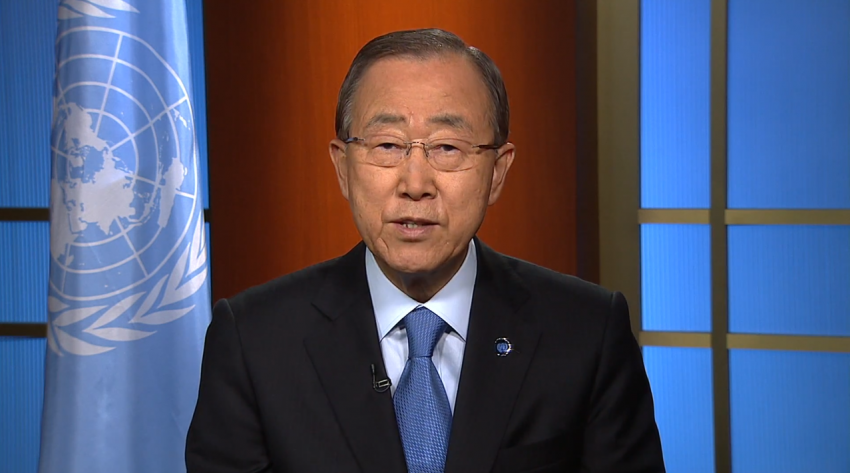
Former UN chief Ban Ki-moon arrives in Sri Lanka

Former UN Secretary-General Ban Ki-moon arrived in Sri Lanka today on an official visit.

He was received on arrival at the Bandaranaike International Airport (BIA) in Katunayake by the State Minister of Foreign Affairs, Tharaka Balasuriya.

The former UN chief is visiting Sri Lanka on an invitation extended by President Ranil Wickremesinghe.

According to reports, Ban Ki-moon, as the current president and chair of the Seoul-based Global Green Growth Institute (GGGI), will be signing several agreements pertaining to sustainable development and climate change.

During his visit, he is also slated to call on the Sri Lankan President on February 07 for bilateral talks which will also focus on the establishment of the proposed climate change university in Sri Lanka.

Sri Lanka private credit negative for seventh month as China assurances awaited

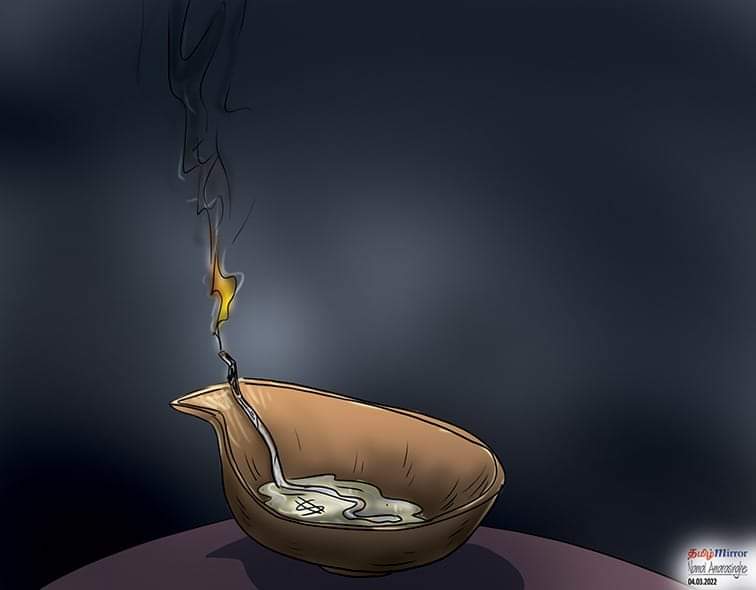
Sri Lanka’s private credit was negative for the seventh straight month in December 2022, data showed while interest rates continued to be elevated amid a delay in an International Monetary Fund program and domestic debt re-structuring fears.

Credit to private sector has fallen 327 billion rupees to 7,426 billion rupees, helping stem a foreign exchange crisis in the past seven months.

In December private credit fell 72.6 billion rupees to 7,426 billion rupees.

Credit to state enterprises fell 25.6 billion rupees to 1,734 billion rupees. Ceylon Petroleum Corporation in 2022 borrowed from an India credit line, the proceeds of which has to be repaid to the Treasury.

Credit to government including central bank credit of 62.7 billion rupees rose by 178.5 billion rupees.

Sri Lanka has to roll-over debt at high interest rates, amid a delay in an IMF program.

Unlike in earlier currency crises triggered by mis-targeting interest rates, this time, the episode ended in external sovereign default and the IMF is not approving its program until China gives debt assurances.

India has already given debt assurances according to IMF requirements but the first Chinese communication from the Exim Bank of China has not yet been accepted by the IMF.

Related China says it will discuss Sri Lanka debt re-structuring during two-year moratorium

There is no official word on the Paris Club assurances yet.

Sri Lanka’s private creditor also wrote to the IMF last week saying they were willing to talk but raising concerns over the ability of domestic debt to reach IMF targets without re-struck

Sri Lanka’s interest rates are also elevated due to fears of domestic debt re-structuring.

Under the current debt workout of program of the IMF no cut off date is given for domestic debt re-structuring allowing rates to fall, when tax revenue and cost cutting reduces budget deficits.

Amid a delay in the IMF program and China, there has been pressure building up on the central bank to print money, which could undermine a fragile stability in the external sector.

The IMF went ahead with Ukraine without debt assurances from Russia using a so-called Most Favoured Creditor Clause (MFCC).

Sri Lanka has also been considering it, according to sources. However officials have said they are still negotiating with China.

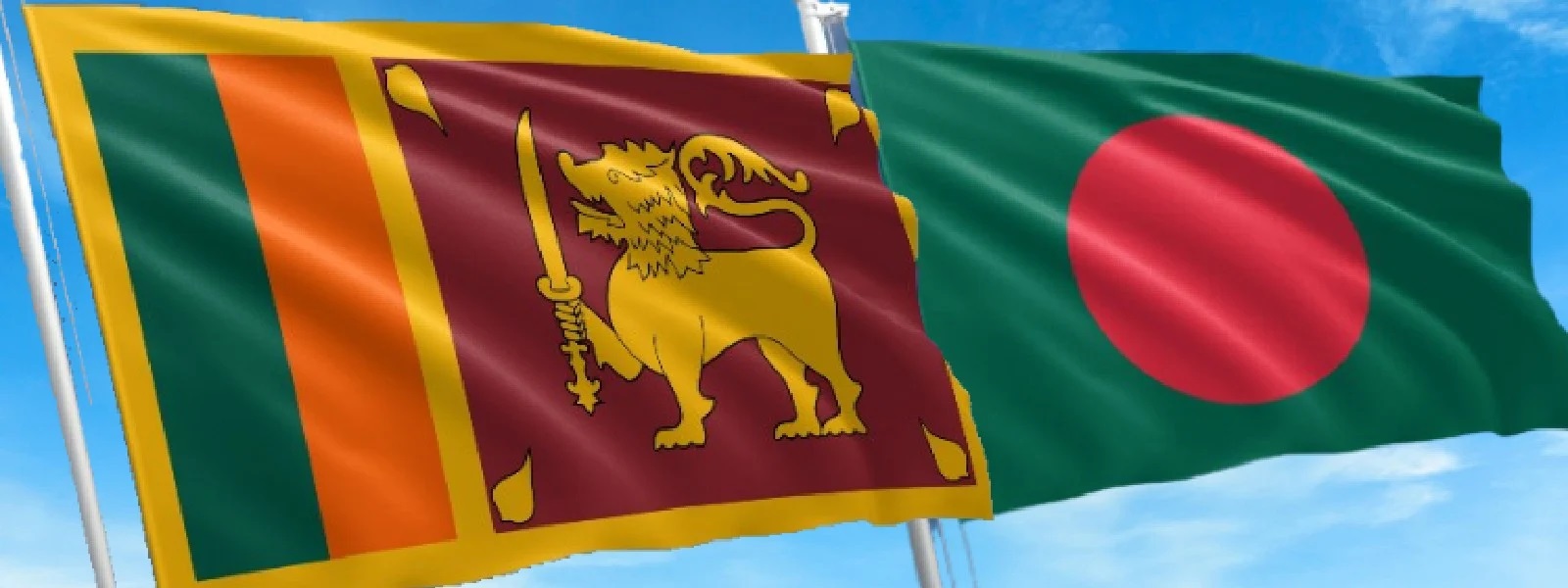
Bangladesh expects Sri Lanka to repay $200m loan from September

Bangladesh is expected to get back the money, which was borrowed by Sri Lanka, from September this year as the country’s economic situation is improving, Bangladesh Foreign Minister AK Abdul Momen has said.

“Sri Lanka is gradually doing better. They are recovering slowly,” Foreign Minister AK Abdul Momen told reporters at State Guesthouse Padma this afternoon.

On January 12 this year, Bangladesh Bank granted Sri Lanka six more months to repay the loan after the Island nation requested to extend the repayment period due to its prolonged economic crisis.

In a friendly gesture, Bangladesh extended the loan to cash-strapped Sri Lanka under a currency swap arrangement in 2021.

Posted in Uncategorized