No Resolution To The Tamil Issue, No System Change By Vishwamithra

“When we are motivated by goals that have deep meaning, by dreams that need completion, by pure love that needs expressing, then we truly live.” ~ Greg Anderson

Illankai Tamil Arasu Kachchi (ITAK) was founded in late 1949 by a group of three Ceylon Tamil parliamentarians, SJV Chelvanayakam, C Vanniasingam and Senator EMV Naganathan. They had withdrawn from GG Ponnambalam’s All Ceylon Tamil Congress (ACTC) over the latter’s decision to enter the United National Party (UNP) government of DS Senanayake. ITAK was commonly called or known as the Federal Party (FP) in English. However, Ceylon being a multi-racial and multi-cultural polity and the ITAK being branded as a the Federal Party, that branding by itself may have contributed largely to the negation of this extraordinary governing concept of ‘Federalism’ by Sinhalese Buddhists, the majority voter-bloc in the country.

Federalism is a combined or compound mode of government that combines a general government with regional governments in a single political system, dividing the powers between the two. Federalism in the modern era was first adopted in the unions of states during the Old Swiss Confederacy. Furthermore, Federalism in most of the countries that have adopted as a mode of government, also have to grapple with issues related to varied cultures, religions and ethnic groups. United States of America, India, Canada and Switzerland are examples that have adopted Federalism as their governing methods. All these countries have not been invaded by a foreign power since the adoption of Federalism.

The relations between the central government, the ‘Union’, as it’s called in India, and the States are not blurry as one would expect. For instance, India’s federal system is so defined as per the three ‘lists’ over the subjects of which, power or authority is to be exercised by the respective institutions, Union, State or Concurrent, as defined in the Indian Constitution. This ‘list’ system must have played a very critical and heavy role in the adoption of the 13th Amendment to our own Constitution. Annexure ‘C’ to the 13th Amendment contained such a list of subjects but unfortunately for our Tamil brethren and more dishearteningly for Sri Lanka, Sinhala-chauvinists in the then JRJ-government of the 1980s did not allow the full implementation of Annexure C’.

Transfer of full powers over the Land and Police policies was a clear ‘no-no’ for these chauvinists in particular and when exploited by the Opposition politicians, to the majority of Sinhalese population in general. Adoption of the 13th amendment and implementation of the Provincial Government system suffered further by the escalation of the armed conflict between the security forces of the Central government and the militant Tamil forces led by Prabhakaran and the Liberation Tigers of Tamil Elam (LTTE) organization.

India at no time wanted this escalation; on the one hand, because it increased the pressure they themselves faced from the Tamil Nadu State government and on the other, a weak Central government in her closest neighbor would not represent a palatable element in their future development as an up-and-coming world power. Everything that could go wrong went wrong afterwards for Sri Lanka.

It is utterly futile to labor the fact that Ceylon, especially her majority Sinhalese Buddhists, has been suffering from a severe ‘minority complex’ all along her history. What our anti-Federalism elements have not realized, or have deliberately ignored, is that before the invasion by the Portuguese in 1505, Ceylon too was ruled on a quasi-Federal system. Ancient Ceylon was divided into three major provinces, Ruhunu (South), Pihiti (what is known today as the Northern, North western and East) and Maya (Western and largely Central provinces). It was King Dutugamunu (our Ultra-chauvinists’ hero) who founded the first central rule covering the whole Island. Yet in 993, when Raja Raja Chola sent a large Chola army which conquered the Anuradhapura Kingdom, in the north, and added it to the sovereignty of the Chola Empire, Ceylon once again became a country with so many kingdoms whose respective powers were limited to the terrain that each kingdom-chief reined. The whole island was subsequently conquered and incorporated as a province of the vast Chola Empire during the reign of his son Rajendra Chola.

Ceylon as one single polity was conquered and ruled by the British after 1815, thus the sovereign Ceylon became a subject of the British Monarch. An unsophisticated type of federalism that Ceylon used to be ruled under various kings and chieftains vanished and the Soulbury Constitution was introduced as our main source of power, law and what followed wherefrom.

What armed the chauvinists on both sides of the aisle, Sinhalese and Tamils, is this concept of ‘sovereignty’. Sinhalese on the one hand never wanted to grant federalist type of powers to Tamils because they mistakenly thought (they are still of that opinion) the sovereignty of the nation would be compromised. Politicians went to town with this concept of sovereignty and what ensued was a 27-year war which claimed some of our youth who would have had a much different life if things were viewed by our leaders through a more farsighted lens.

We are now in the twenty first century. The country has travelled a long seventy five years after it was declared independent. For the first time in those 75 years, we are facing a crisis of unprecedented proportions. The economy has collapsed; the politicians are corrupt beyond redemption and the people are as desperate as never before.

If only Federalism was marketed as a positive mode of government, a mode that decentralized broad powers of the ‘Center’ to a given number of provinces whilst retaining the same powers as the ‘Union’ government of India such as defense, armed forces, foreign affairs, war and peace, citizenship, extradition, railways, shipping and navigation, airways, banking including income tax, customs and export duties, duties of excise, taxes etc., there would not have been suspicion and tension between the two major ethnic groups in the country. Well, it was not to be.

What the current crop of politicians failed to do was to enunciate the ‘decentralization’ aspect of ‘Federalism’ amongst their peers in the provinces. India would not have sustained her democratic way of government and democratic way of life if powers were centralized in the center. With such a vast variation amongst her peoples, a power that solely emanated from the center would have easily contributed to a total collapse of India’s democracy.

Please have look at the following spreadsheets:

Current Provincial and District CompositionProposed Provincial and District Composition

The 1st spreadsheet gives the current district and provincial distribution and their respective vital statistics as to land area, population density etc.

The 2nd Spreadsheet illustrates the proposed provincial divisions and the district assigned to each province. In both sheets the most salient statistic is the population density and the land area. Instead of arbitrary divisions by the British, I attempt to strike a balance between the population density and the cultural and ethnic complexion of each province and also availability of industry, schools, irrigation facilities etc. with a view to maintaining a more cohesive composition of the province. Provinces have come down from 9 to 6. Uva, Sabaragamuwa and Wayamba have been done away with as provinces. Badulla of Uva has been assigned to Central Province while Moneragala to Southern Province. From Sabaragamuwa Province, Ratnapura has been grouped with Central and Kegalle to Western Province. Entire North Western Province has been amalgamated with North Central Province.

What I have presented is not a fully complete proposal. However, I wish that this would encourage discussion and exchange of better input from all parties concerned in order arrive at a more acceptable ‘System Change’ through a sincere commitment to the principles of a) Sovereignty of the nation, b) Viability of the Proposal, c) Sustenance of Democracy and above all d) Extension of equality to all ethnic, religious and cultural segments of the land and her people.

Such changes would provide for inter district, inter provincial and intra provincial migration of the population, making such migration based solely on any reason. Institution of strong and durable architecture to the Union Constitution and Provincial Constitution shall further buttress the process of change. Albert Einstein defined insanity thus: “Insanity is doing the same thing over and over and expecting different results.” We are engaged in this madness. However, that madness is not accidental; it’s deliberate; in order to keep oneself in power, one resorts to all sorts of insanities. Cosmetic changes and superficial remedies are such insanities our leaders have been committing ever since Independence. It’s time we sought another path.

After enduring the whirlwinds of Aragalaya, if Sri Lanka were to learn from her shameful errors, must think anew. They must honestly and deliberately think outside the clichéd box. One might argue that after having been driven to the brink of total economic collapse, how can she think of a Federal System of Government? The answer is simple: it is the very fact that the country was driven to the edge because we have been stagnating in a system that has not served the purpose of its people.

Nevertheless, one unseen yet critical element of this proposal is leadership. Do we have the leadership to implement a new policy? Do we have, as one people, one country and sovereign nation have the guts and stomach to retain those guts to envision and put into action a totally fresh set of proposals whose only vested interest is the wellbeing of the masses?

*The writer can be contacted at vishwamithra1984@gmail.com
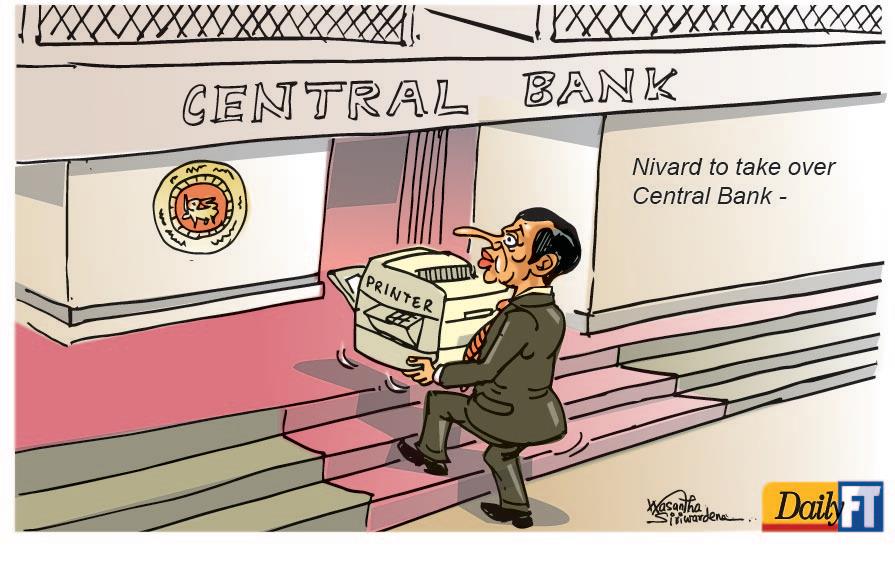
Sri Lanka had been ‘hiding its bankruptcy’ before it was officially announced: CBSL Governor

The Governor of the Central Bank, Dr. Nandalal Weerasinghe said on Tuesday that Sri Lanka had been hiding its bankruptcy which had actually occurred months before it was officially announced.

He said so during a multi-TV channel programme where several key political and public officials responsible for the country’s economy were quizzed by journalists.

“At present, we are taking necessary measures to resurrect such an economy plagued by bankruptcy,” he recalled in response to a query about the economic crisis.

“The first quarter of Sri Lanka had had a negative contraction. One of the short-term measures we had to take was to obtain foreign fund assistance to finance the budget deficit while at the same time increasing our foreign earnings to reduce our dependency on foreign loans. That was the only solution we could take in the short-term,” he said.

When asked whether there wasn’t any other source to increase state revenue other than imposing higher taxes on the people, the Governor said, “Definitely there is one. The loss-making state owned enterprises (SOEs) gobble a huge share of the government’s tax revenue. Although we have identified them as national resources, in real terms, they are not.

‘These SOEs which are widely believed as national assets have become liabilities that burn up government’s tax revenue. SriLankan Airlines carries with it a debt of about USD one billion and that’s why no investors are coming to partner with SriLankan Airlines. Some people identify it as trying to sell the national career. But truly speaking, it is a liability rather than an asset. The government has a lot of assets which should be used productively. Take Sri Lanka Telecom for an example. It had been a fully government-owned entity. It was opened to other investors and today SLT is of great importance to various stakeholders and the entire country. If it was not opened for diversified investments, you wouldn’t have an effective telecommunication service in the country today. It provides its offering competitively in the market in line with international standards. If it didn’t have such a diversified investor profile, SLT would not have been productive and the devices you use and the bills you get today from service providers would be 10 times as high. It provides value to the country and SLT’s asset value has increased. The government of Sri Lanka is still the primary shareholder of SLT and it is not a liability. Likewise if we open our electricity supply, SriLankan Airlnes, Ceylon Petroleum Corporation etc, we could reap its benefits. Another example is the Sri Lanka Ports Authority which does not receive financial allocations from the government but operates on its own revenue and resources. If we could open the loss-making entities to such an investment and operational model, there will be no need to collect and waste tax payers’ money on them.”

“For investors to come to Sri Lanka, there needs to be political stability, macro-economic stability and ease of doing business. Vietnam has all these attractions for investors and even some Chinese businesses are relocating in Vietnam due to these reasons. Sri Lanka also has that opportunity. We have to make necessary reforms for that. We will have to move forward through a competitive, open economy to conquer the world. Being a small country, we can’t progress only with internal competition and internal trade. Only when we are globally competitive in price and quality can we capture a share of the internal market. For that we need to open the country for investment,” he said.

According to the Department of Census and Statistics, the year on year GDP growth rate for the first quarter of 2022 had been estimated as negative 1.6 percent which indicated a considerable contraction of the economy compared to the first quarter of 2021. Within the first quarter of 2022, the economic growth rate had slowed down compared to the first quarter of 2021 due to adverse effects of factors including inflation, foreign exchange devaluation and US dollar deficit in the country.

Posted in Uncategorized

Fitch downgrades ratings of 7 Lankan insurers; maintains ‘Watch Negative’

Fitch Ratings said yesterday it downgraded the National Insurer Financial Strength (IFS) Ratings of seven Sri Lankan insurers following the recent sovereign downgrade and recalibration of the agency’s Sri Lankan National Rating scale. The seven insurers’ ratings have been maintained on Rating Watch Negative (RWN).

The recalibration is to reflect changes in the relative creditworthiness among Sri Lankan issuers following Fitch’s downgrade of Sri Lanka’s Long-Term Local Currency Issuer Default Rating (IDR) to ‘CC’ from ‘CCC’ on 1 December 2022.

Fitch typically does not assign Outlooks or apply modifiers to sovereigns with a rating of ‘CCC+’ or below.

National rating scales are a risk ranking of issuers in a particular market designed to help local investors differentiate risk. Sri Lanka’s national rating scale is denoted by the unique identifier ‘(lka)’. Fitch adds this identifier to reflect the unique nature of the Sri Lankan national scale. National rating scales are not comparable with Fitch’s international rating scales or with other countries’ national rating scales.

The National IFS Ratings of the Sri Lankan insurers take into consideration their creditworthiness relative to other issuers in the country. The recalibration of the Sri Lankan National Rating scale has resulted in downgrades of the National IFS Ratings of the following insurers:

• Sri Lanka Insurance Corporation Limited to ‘A(lka)’/RWN from ‘AA(lka)’/RWN

• National Insurance Trust Fund Board to ‘A-(lka)’/RWN from ‘A+(lka)’/RWN

• People’s Insurance PLC to ‘A-(lka)’/RWN from ‘A+(lka)’/RWN

• HNB Assurance PLC to ‘A-(lka)’/RWN from ‘A+(lka)’/RWN

• HNB General Insurance Limited to ‘A-(lka)’/RWN from ‘A+(lka)’/RWN

• Continental Insurance Lanka Limited to ‘A-(lka)’/RWN from ‘A+(lka)’/RWN

• Construction Guarantee Fund to ‘BB(lka)’/RWN from ‘BBB-(lka)’/RWN

Fitch said the downgrades of the National IFS Ratings of the seven insurers are driven by the downgrade of the sovereign’s Long-Term Local-Currency IDR and the recalibration of the national rating scale while also reflecting the relative creditworthiness among Sri Lankan issuers.

“We believe that the investment and liquidity risks of insurers have increased due to the weaker credit profile of the sovereign and the subsequent rating action on various financial institutions,” it said.

The rated insurers’ investment portfolios, similar to that of other insurers in the country, are dominated by fixed-income securities issued or guaranteed by the Government, deposits and securities issued by local banks, non-bank financial institutions and corporations.

Fitch maintains the ratings of all domestic Sri Lankan banks on RWN amid the likelihood of capital and funding stress as the default risk on domestic debt increases while access to foreign-currency funding remains constrained.

“We have maintained the insurers’ ratings on RWN to reflect the potential for these insurers’ creditworthiness relative to other entities on the Sri Lankan National Rating scale to further deteriorate amid high investment and liquidity risks, pressure on regulatory capital positions and a weaker financial performance outlook. The heightened investment risks and earnings pressure amid the weak operating environment could affect insurers’ regulatory capital profiles,” Fitch added.

Posted in Uncategorized

UNHRC reiterates to hold all those responsible for Easter Sunday attacks accountable

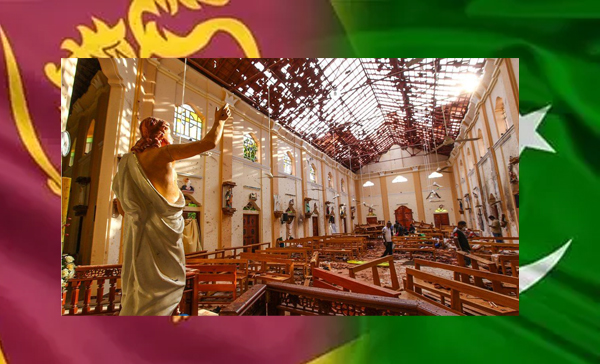
The UN Human Rights Office reiterates its recommendations to the Government of Sri Lanka to release the complete findings of previous inquiries into the Easter Sunday bombings and to establish a follow-up independent, thorough and transparent investigation with international assistance and the full participation of victims and their representatives and to hold all those responsible fully to account.

The Court unanimously held that former President Maithripala Sirisena, the former defence secretary and two other former security and intelligence officials had violated the fundamental rights of the victims by failing to prevent the attacks, and ordered them to pay personally into a victims’ fund to the value of nearly USD 850,000. More than 270 people were killed in the series of explosions at churches and hotels across the country. In a previous decision, the Supreme Court found that proceedings against the current President, who was the Prime Minister at the time of the attacks, could not continue given the immunities that he enjoys while in office.

Whilst no amount of compensation can ever erase the suffering and pain of the victims and families, this judgment marks a step in the victims’ struggle for recognition of the harm suffered and their rights to truth, justice and reparation. The UN Human Rights Office calls on the Government to ensure that victims receive adequate compensation and that they and their representatives are fully consulted in the disbursement of the funds.

In its judgment, the Court expressed “shock and dismay” at the lack of “oversight and inaction” by the security and intelligence officials – ruling that the former President and his top security officials had failed to prevent the attacks, despite detailed intelligence suggesting such attacks were imminent.

The UN Human Rights Office reiterates its recommendations to the Government of Sri Lanka to release the complete findings of previous inquiries into the Easter Sunday bombings and to establish a follow-up independent, thorough and transparent investigation with international assistance and the full participation of victims and their representatives and to hold all those responsible fully to account

Posted in Uncategorized

Embarkation levy to be paid when leaving country through air and sea ports

A new announcement was made by the government regarding the revision of the embarkation levy to be paid by passengers who leave the country through an international airport or seaport.

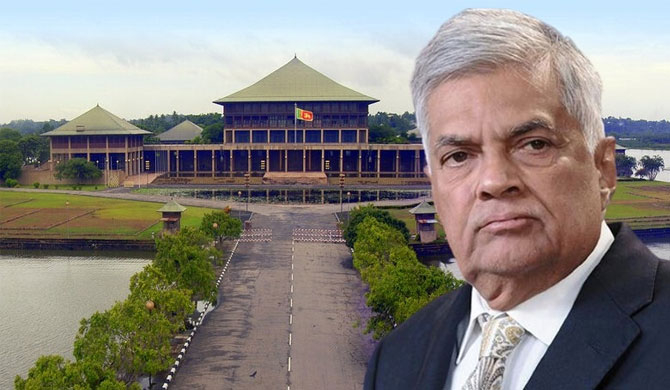
The announcement has been issued with the signature of President Ranil Wickremesinghe as the Minister of Finance.

As a result, passengers who leave Sri Lanka via Colombo International Airport must pay US$ 30 as embarkation fee. These fees are levied from March 27, 2022 to March 26, 2023.

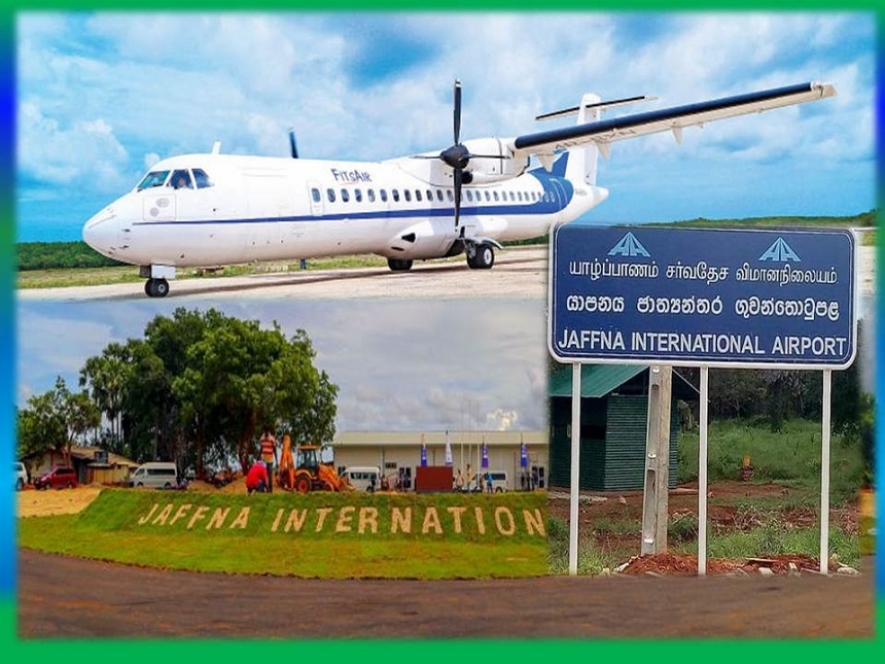
An embarkation levy of US$30 will be charged from every person leaving Sri Lanka from Jaffna International Airport. The charges will be applicable during the period from January 12, 2023 to July 11, 2023.

The announcement further said that anyone leaving Sri Lanka from an airport other than Mattala, Ratmalana, or Jaffna International Airport must pay an embarkation levy of US$60. This rule also applies to those departing from Katunayake Bandaranaike International Airport.

Those who depart from Sri Lanka by sea will also be subject to the embarkation levy of US$60.

International airlines that start operations at Mattala Mahinda Rajapaksa Airport are exempted from being charged this tax for a period of two years from the date of commencement of operations.

These embarkation levy orders are effective from January 12, 2023.

Posted in Uncategorized

Election Expenditure Bill to be debated in Parliament tomorrow

The leaders of political parties have decided to debate the Regulation of Election Expenditure Bill in Parliament tomorrow (19 Jan.).

The decision was taken at the party leaders meeting held this afternoon (18 Jan.), chaired by President Ranil Wickremesinghe.

Earlier today, Speaker Mahinda Yapa Abeywardena informed the Parliament of the aforementioned special party leaders’ meeting.

Posted in Uncategorized

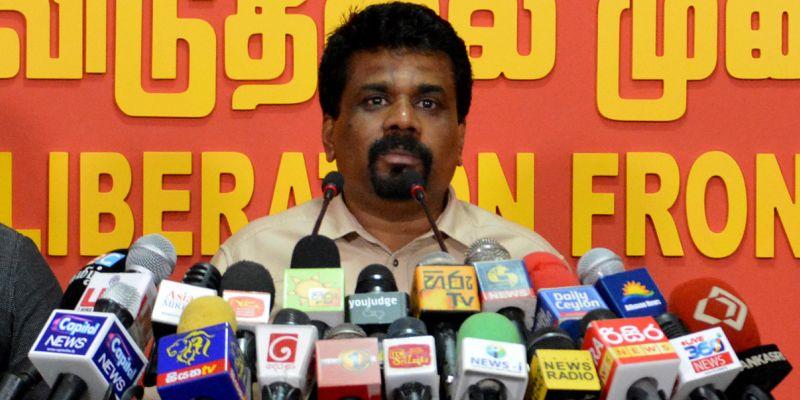
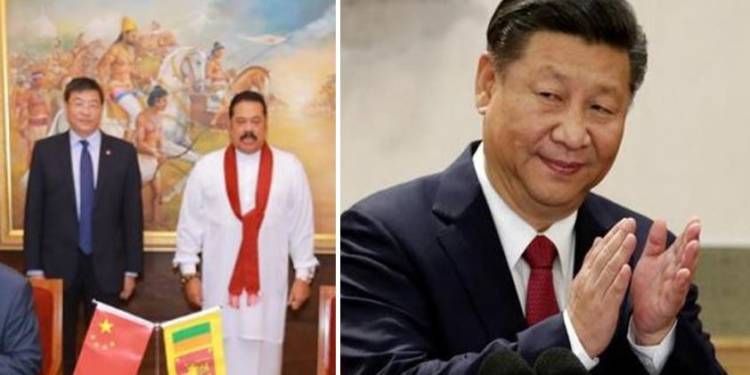
AKD demands details of China FTA be made public

Claiming that there is a great danger of the small- and medium-scale industries being destroyed through the free trade agreement (FTA), which is to be signed between Sri Lanka and China, National People’s Power Parliamentarian and Janatha Vimukthi Peramuna Leader Anura Kumara Dissanayake said that the Government should discuss its contents in Parliament before proceeding with the rest of the process.

Speaking in Parliament yesterday (17), he said: “President Ranil Wickremesinghe said that there is some progress in the talks with China on debt restructuring. Against that backdrop, arrangements have now been made to sign an FTA with China. What are the contents of that Agreement? Today, the industrialists of our country are scared. That is because we all know that China is a technologically advanced country. They produce goods for a large market. Naturally, their production costs are low and it cannot be prevented, but that is not the case in our country. Sri Lankan industrialists produce goods for a small market.”

Noting that local industrialists should also reach the international market, he said that a plan should be formulated for that purpose. However, at a time when the production cost in the country has gone up in the prevailing situation, he said that local industrialists, some of whom he had met recently, are in great fear as to whether the FTA in question would affect their businesses. He said that there is a great danger of small and medium-scale industries which are already in the midst of a crisis, being destroyed through the FTA to be signed.

“Let’s discuss this agreement in the House before reaching an agreement, going to negotiations and signing the contract. What are your (Government) suggestions? How will the FTA affect our industries? Is it favourable to the exporters of our country, or are we trying to promote only an import market? Let’s discuss these matters in Parliament and then make a decision,” added Dissanayake.

Meanwhile, State Minister of Foreign Affairs Tharaka Balasuriya told The Morning in 2021 that Sri Lankan authorities are reviewing the provisions of the proposed FTA with China in order to ensure that it would not turn out to be “another Singapore FTA”. “The proposed China FTA is a huge document and there is a lot of negativity towards Sri Lanka. We are reviewing the contents and assessing harmonised system codes because we do not need a repeat of what happened with the Singapore FTA,” he said.

Posted in Uncategorized

China opposes any country receiving Dalai Lama

China has expressed opposition over the invitation extended to the Dalai Lama, the spiritual leader of the Tibetan people.

Chargé d’affaires of the Chinese Embassy in Sri Lanka Hu Wei recently called on the Mahanayake Thero of the Malwathu chapter of Siam Nikaya, Most Venerable Thibbatuwawe Sri Siddhartha Sumangala Theroand stated that the government and people of China including in the Tibet Autonomous Region strongly oppose any foreign country to receive the Dalai Lama in any name.

A statement from the Chinese Embassy on twitter noted that this is because the 14th Dalai Lama is absolutely not a “simple monk” as he self-claimed, but the head of the feudal serfdom and the theocracy in Tibet prior to 1951, a political exile disguised as a religious figure who has long been engaging in anti-China separatist activities and attempting to split Tibet from China.

Chargé d’affaires of the Chinese Embassy in Sri Lanka Hu Wei has emphasized that China and Sri Lanka have been firmly supporting each other on issues concerning each other’s core interests, including the Tibet related issue.

He had noted that both sides especially the Buddhist communities must prevent a sneaky visit of the Dalai Lama to the island to promote “Tibetan independence” and safeguard the China-Sri Lanka historical relations from being damaged.

Sri Lankan Buddhist monks recently invited exiled Tibetan spiritual leader the Dalai Lama to make his first visit to the island

Chinese Embassy in Sri Lanka slams US envoy

The Chinese Embassy in Sri Lanka today slammed the US Ambassador to Sri Lanka, Julie Chung, calling her a hypocrite for the comments she had made in a recent interview.

The embassy was angered over her view that China was the “spoiler” in Sri Lanka’s efforts to reach a deal with the International Monetary Fund (IMF).

China asked why the US did not take decisive action in the IMF for a more comfortable solution for Sri Lanka or extend a grant to the country instead of sowing discord between Sri Lanka and China.

Chung had told the BBC recently that the greater onus to move was on China, as the biggest bilateral lender.

“We hope that they do not delay because Sri Lanka does not have time to delay. They need these assurances immediately,” Ambassador Chung had told BBC Newsnight.

“For the sake of the Sri Lankan people, we certainly hope China is not a spoiler as they proceed to attain this IMF agreement.”

The Chinese Embassy said that both the Chinese and Sri Lankan people are wise enough to judge without any foreign lecturing who is the spoiler.

The Embassy also questioned the political pre-conditions for US aid while being assured of China’s “no strings attached” commitment.

Election Commission gives undertaking to hold the LG Election

The Election Commission today (Jan 18) gave an assurance to the Supreme Court on the upcoming local government (LG) election.

The election body told a Supreme Court bench that LG polls would be conducted in compliance with the Local Authorities Elections (Amendment) Act, once the nominations accepting process is completed.

Nominations for the LG election are accepted from 8.30 a.m. today until 12.00 p.m. on January 21. Meanwhile, accepting election deposits of the candidates, which began on January 04, will continue until 12.00 p.m. on January 20.

Earlier, Commissioner-General of Elections Saman Sri Ratnayake stated that the date for the LG election would be announced after concluding the acceptance of nominations.

Posted in Uncategorized