Nominations for LG election accepted from today

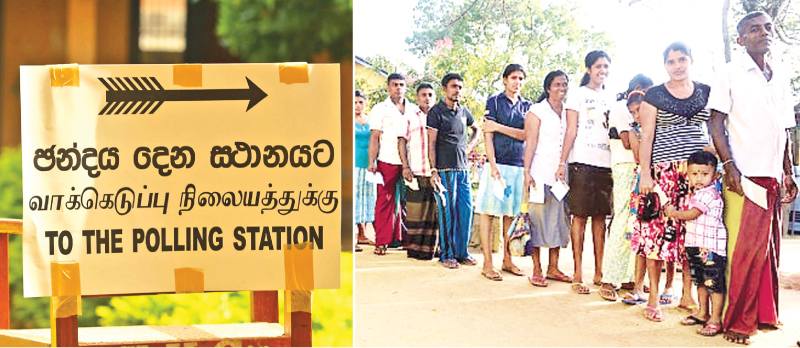
Accepting nominations for the upcoming local government (LG) election begins at 8.30 a.m. today (Jan 18), the Election Commission says.

Accordingly, nominations will be accepted until 12.00 p.m. on January 21.

Commissioner-General of Elections Saman Sri Ratnayake stated that the date for the LG election would be announced on Jan. 21 after concluding the acceptance of nominations.

Meanwhile, accepting election deposits of the candidates began on January 04 and will continue until 12.00 p.m. on January 20.

It is reported that a total of 29 political parties and 52 independent groups have placed deposits for the LG election between 8.30 a.m. and 4.15 p.m. yesterday.

During this period, New Lanka Freedom Party (NLFP) placed deposits for Colombo, Gampaha, Kalutara, Matale, Nuwara-Eliya, Galle, Ampara and Puttalam districts, while the main opposition Samagi Jana Balawegaya (SJB) placed deposits for Colombo, Kalutara, Matale, Galle, Jaffna, Batticaloa, Puttalam and Ratnapura districts.

Meanwhile, Sri Lanka Freedom Party (SLFP) has tendered deposits for Colombo, Nuwara-Eliya, Galle, Vavuniya, Batticaloa, Trincomalee and Ratnapura districts during this period.

In addition, Janasetha Peramuna, Freedom People’s Front and United National Party also lodged their deposits yesterday for the upcoming LG election.

Canada’s ban and TNA’s internal shocks can doom ethnic talks By N Sathiya Moorthy

If anyone thought that the recent Canadian sanctions against former Presidents Mahinda Rajapaksa and brother Gotabaya Rajapaksa, along with two army officers charged with Tamil-killing outside the battle-field could pressure the government of President Ranil Wickremesinghe to fast-track a liberal solution to the ethnic problem, it is not to be. If anything, the timing of the Canadian sanctions that denies entry for the four and freeze of their assets, if any, in any Canadian entity, may only derail whatever progress was expected in the halted (if not aborted) talks that Wickremesinghe has initiated with an already divided polity on yet another self-defeating mission.

All this, when the President initiated the quick-fix talks with a self-imposed deadline for announcing a solution by the nation’s 75th Independence Day, on 4 February. He indicated and TNA parliamentarian M A Sumanthiran detailed that the initial package would derive from 13-A without naming it, but the latter also insisted on fulfilment of Tamils’ pre-conditions for taking forward the four-day talks that was aborted on day one. Therein lies the hitch, and the reasons are not far to seek.

Vicarious culpability

Though selective western nations like the US and the UK have imposed sanctions and ban on individual Sri Lankan military officers for alleged ‘war crimes’ before they were conclusively proved, this is the first time ‘vicarious culpability’ has been passed on, bottom up, all the way to the political leadership, that too the President, who is also the supreme commander of the armed forces. Mahinda was the war-time President and Gota, Defence Secretary at the time.

The world condemned him for granting pardon, as short-lived President (2019-22), to Staff Sergeant Sunil Ratnayake, whose death sentence the Supreme Court had confirmed for the ‘Mirusuvil killings’ of eight Tamils in Jaffna Peninsula. Even without it, Sri Lanka has a principled position, owing to which even court-ordered death sentences have not been carried out for decades. Lt Commander Chandana Prasad Hettiarachchi, also known as Navy Sampath, was involved in the death of at least eight of the 11 ‘Trincomalee victims’.

The US banned the two veterans in 2021, but not the Rajapaksas. The US, the UK, Australia and others have similarly sanctioned ranking war-time army commanders. By its sanctions on Brothers Rajapaksas, Canada is now taking the lead for fixing ‘political accountability’ on allegations of human rights abuses and violations when they were in power. This reverse flow of fixing culpability may have skipped certain levels of commands and commanders, if it came to that, and this could well cause jitters across the nation’s uniformed services, both serving and retired.

This much becomes clear when the statement by Canadian Foreign Minister Mélanie Joly asserts that “Canada will continue to collaborate alongside international partners, including through relevant multilateral bodies to advocate for human rights and accountability in Sri Lanka, which is an important step toward securing a safe, peaceful and inclusive future for the country.”

It further says that “Canada, as part of the Core Group on Sri Lanka at the United Nations Human Rights Council will continue to advocate for the full implementation of resolution 51/1 and support efforts towards attaining accountability and peace on the island.” And, Canada has extended symbolic funding for humanitarian assistance, as Sri Lanka is still reeling under an economic distress that burst out last year.

Incidentally, it was the US-led Core Group’s initiative at the UNHRC in 2012 that aborted the post-war Rajapaksa government’s talks with the TNA for a political solution, which had otherwise made substantial progress on contentious issues from the pre-war past. If anything, the TNA owning up the ownership of the US-initiated resolution that put paid to the peace negotiations nearer home. After that, this was the first time that negotiations have begun with the hope of arriving at a solution, interim if not final, after two false starts under Presidents Maithripala Sirisena and Gotabaya Rajapaksa.

Dragging the feet

Even without the Canadian sanctions, the ethnic talks for finding a political solution were faltering as the government was dragging its feet on the three pre-conditions put forward by the Tamil National Alliance (TNA), which continues to be in the forefront of the government-initiated talks. The demands included ‘accountability for missing persons’, freedom for political prisoners and return of Tamil lands that continue to be in the possession especially of the armed forces in the North and the East.

It is anybody’s guess why the government is not keeping its word. It has also not officially clarified if it was facing any problems, especially from security forces, on all three issues, because they all sort of concern them, after all. Then, of course, there are the hurdles that ‘Sinhala majoritarianism’ could place on the road to recovering ethnic peace in the country – real and imaginary, present and future.

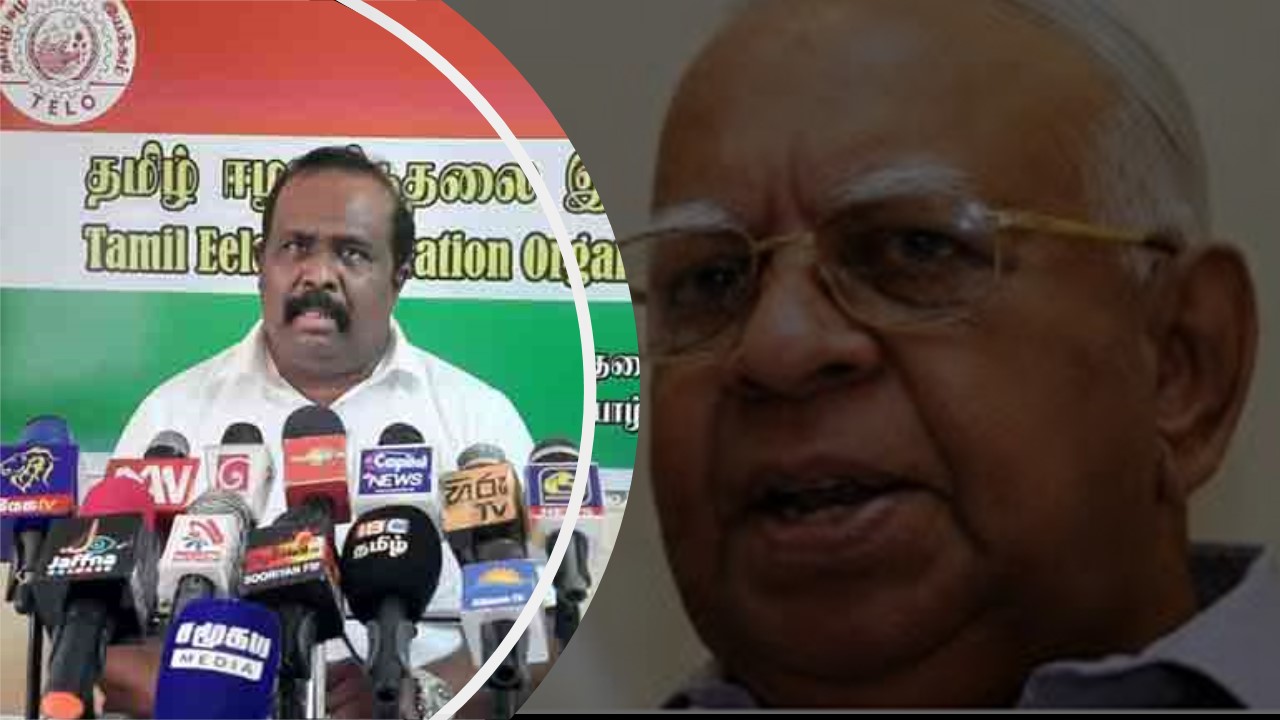
In fact, the government’s perceived lack of sincerity in the matter forced the three-man TNA delegation, comprising alliance chief R Sampanthan, spokesperson M A Sumanthiran and also Selvam Adaikalanathan, leader of the TELO partner, to give upon the four-day ‘marathon talks’ with the promise to return to the negotiations table, as the President-led delegation sought one more week, to tie up loose ends. A clear picture is expected to emerge only in the coming week or ten days.

TNA, not the same

Even without it all, the TNA has broken up as a common, recognisable political entity, in the one week that they gave the Government, and won’t be able to return to the negotiations table the same way it had commenced. After the ITAK leader of the three-party alliance unilaterally decided to contest the promised local government elections on its own and on traditional poll symbol, ‘House’, the TELO and PLOTE partners walked out to join hands with erstwhile TNA partners and LTTE cadres, and claim to be the TNA now.

There was another little drama on the side when C V Wigneswaran, former TNA Chief Minister of the Northern Province, walked out of the still-formed new alliance, after being reportedly denied its leadership. It was not without reason that TELO boss Selvam Adaikalanathan was claiming to be self-appointed joint leader of the ITAK-led TNA before the current break-up.

They have now decided to contest under a new, common ‘Lamp’ symbol instead of attaching to Wigneswaran-led TNPF’s brand new ‘Peacock’ symbol, as sought by the latter. The new group is also keen on registering their TNA with the Election Commission, with a new common symbol – which the ITAK leader has consistently declined, up to now. ITAK has since declared that the Tamil people (voters?) will decide which is the real TNA, even as it is increasingly clear that ITAK is not too keen to have new allies, to be able to form any alliance of any kind.

This will have consequences for the ethnic talks, as the TNA, which the government and the international community identify as the main representative of the Tamil people, would have fewer MPs than at present among the total 16 of them from the community. This is because, in his eagerness to fast-track a solution, President Wickremesinghe has restricted invitation and participation, both of the Tamils and of the larger all-party groups, to parliamentary representation.

In the past, all-party conferences on the issue got stalled as those without parliamentary representation happily stalled the proceedings by throwing up tantrums of different kinds, all flowing from the Sinhalese sense of majoritarian insecurity. It is another matter that not all parties in the non-ITAK grouping can see eye to eye, but they will still have an argument that the TNA is not the ‘sole representative’ as is being projected. They may get a sympathetic echo on the streets of the North and the East, where it matters.

Supreme Court shows the way?

The legality and feasibility of the Supreme Court’s recent verdict in the 2019 ‘Easter blasts case’ against then President Sirisena and others need to be viewed. Taken to its logical conclusion, the court could provide honourable and meaningful compensation to the families of ‘missing Tamils’, where culpability of the accused could be relatively better established. For, the international community or the Tamils nearer home to take off from UNHRC 51/1 or the Canadian initiative, could produce headlines but not any meaningful way out for the victimised families.

In today’s exchange rates, the court verdict may not mean much, but symbolically, the compensation ordered to be paid by Sirisena (LKR 100 m) to the blast-victims, Jayasundara and Jayawardena (LKR 75 m), Fernando (LKR 50 m) and Mendis (LKR 10 m) goes a long way. To this, the seven-judge Bench has unanimously directed the Government to pay a million rupees each to those who died in the attacks, and LKR 500,000 each to the injured.

But there may be a hitch. What if any or all of the persons ordered to pay the compensation do not have the wherewithal. Or, if they had no cash or bank balance, but had only assets? Or, did not even have assets adequate to be liquidated for paying the compensation? Even if they had property, will the current market conditions, in the wake of the economic crisis, fetch them a reasonable price?

If any or all such possibilities exist, what would come of the Supreme Court’s verdict, and more so, those charged with making those payments? And for the Government that has no money to pay for a lot of essentials, what kind of spending is the court talking about? Going by published accounts, 269 persons, including 45 foreign nationals, lost their lives, and around 500 others were injured. The total Government pay-out would work out to LKR 2940 m, or close to LKR 3000 m. It is a lot of money in the current economic situation.

Then, there is the unasked question: Now that the highest judiciary of the land has opened up the flood-gates for compensation/damages, how will it handle petitions from families of those dead, or from that are seriously injured that the said amount was inadequate and the Supreme Court reconsider their claims on an individual basis? What if the Supreme Court verdict implies culpability, and families of any or all the foreigners who died in the serial blasts, move victim-friendly judicial institutions in their country that also have the tendency to assume jurisdiction elsewhere, too?

Having said all this, what about the criminal culpability of those who have been asked to pay compensation? After all, the fundamental rights case flowed from the appeals filed by Fernando and Jayasundara, challenging their arrests for what was made out to be a ‘mass murder’, which otherwise tantamount only to ‘criminal negligence’ on the one hand and ‘dereliction of duty’ on the other?

If such were the complications arising out of the Supreme Court verdict, will it enthuse the families of the Tamil victims of ‘forced disappearances’, to follow suit, without pressing too much for criminal accountability of the kind – which the Bench has seemingly side-stepped in the ‘Easter blasts’ case, at least as for as those that were not directly involved in deaths and destruction?

(The writer is policy analyst & political observer, based in Chennai, India. Email: sathiyam54@nsathiyamoorthy.com)


HC Moragoda meets India’s NSA Ajit Doval; discusses priority areas for cooperation

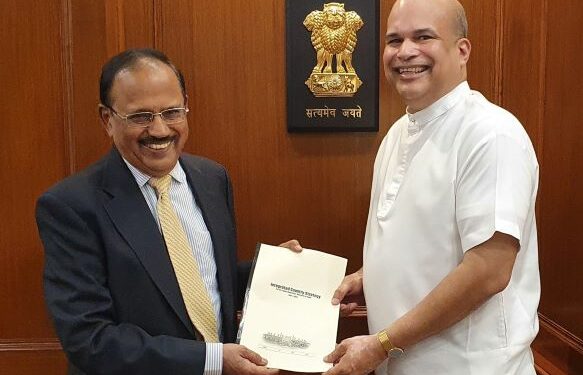
Sri Lanka’s High Commissioner to India Milinda Moragoda met with the National Security Advisor of India Shri Ajit Kumar Doval, on Monday (16).

The High Commission said that duo discussed matters pertaining to India-Sri Lanka relations. The discussion focused on mutual strategic interests of the two countries and priority areas for cooperation, it added.

The meeting took place as part of the regular and ongoing dialogue between the High Commissioner of Sri Lanka and the National Security Advisor of India, noted the High Commission.

The meeting took place days ahead of the reported visit of Indian External Affairs Minister Dr. S. Jaishankar to Sri Lanka.

The Hindu website said that Indian External Affairs Minister S. Jaishankar’s visit to Colombo on Thursday (19) will focus on “supporting Sri Lanka” in its current economic crisis.

The Hindu reported that talks are ongoing in the field of energy security, food security, currency swap arrangements as well as talks about restructuring Sri Lanka’s debt.

The two-day visit is expected to see some announcements.

A source said “India is expected to give a positive response to Sri Lanka’s requirements, in keeping with India’s support last year as well,” citing India’s combined package of about $4 billion including loans, credit lines for the purchase of essentials and a loan deferment through the Asian Clearing Union.

In addition, talks are expected on two possible MoU’s on the Trincomalee development project and the long pending plan for a cross-strait transmission line that would allow Sri Lanka access to India’s plans for an energy grid along with other countries like Nepal, Bhutan and Bangladesh.

While assisting Sri Lanka with its current economic difficultires is a priority, Jaishankar’s visit, his first with the six month old government in Colombo, would see a comprehensive review of bilateral ties.

Posted in Uncategorized

SLFP to contest LG elections under ‘hand’ symbol

The Sri Lanka Freedom Party (SLFP) has decided to contest under the ‘Hand’ symbol for most of the institutions in all the districts at the upcoming Local Government Election.

Sri Lanka Freedom Party’s media spokesperson former MP Weerakumara Dissanayake said the party reached this agreement at the meeting of the Party’s political committee chaired by former President Maithripala Sirisena on Sunday.

He said the decision has been taken on the consent of the vast majority of the party’s Political Bureau.

“The politburo meeting yesterday decided to place deposits for the election for all the institutions as the SLFP. We had decided to contest under an alliance and the last few days we have been negotiating. But lot of problems and obstacles came up when preparing the list of nominations. Mr. Reginald Cooray even passed away due to sudden illness caused by the threats posed by others while preparing these nominations,” Dissanayake said.

He said there are many conspiracies to completely destroy the SLFP and they have come to know about those conspiracies. “The people who tried to destroy the Sri Lanka Freedom Party are trying to come back for another round.

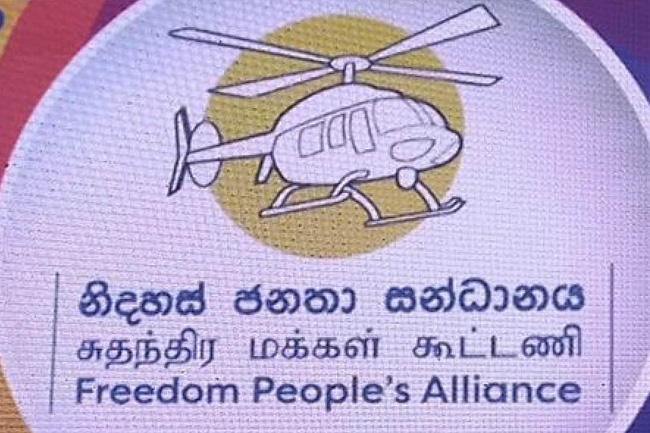
All SLFP candidates will obey the party’s decision and act accordingly, he said adding that for some of the institutions, the SLFP will contest under the ‘Helicopter’ symbol on the consent of the party.

China informs Mahanayake Theras that China opposes Dalai Lama’s possible visit

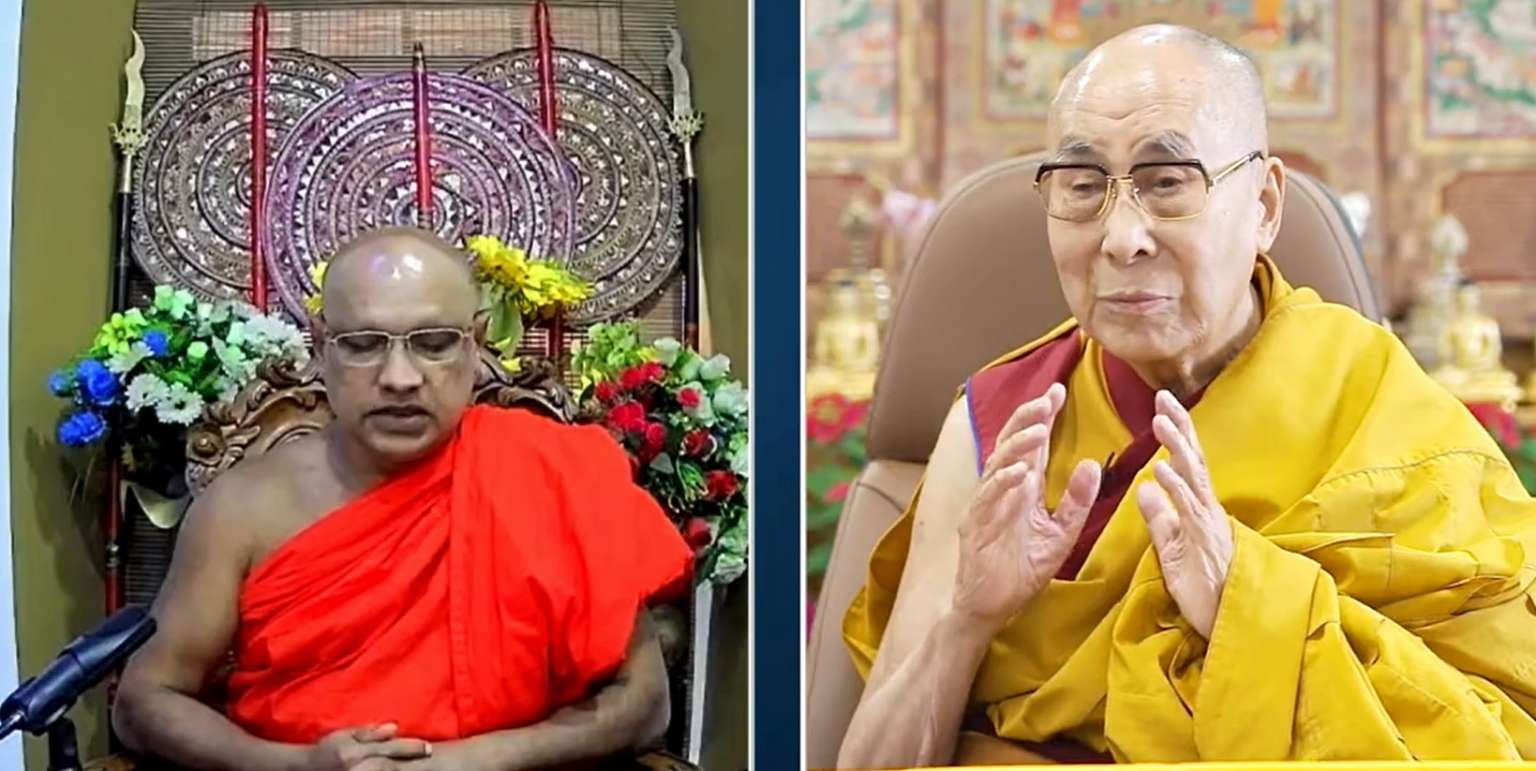
China stongly opposes the visit of the Dalai Lama to Sri Lanka or any country as he is a political exile disguised as a religious figure, engaged in anti-China separatist activities and attempting to split Tibet from China, a Chinese delegation informed the Mahanayaka Theros today.

Chargé d’affaires Hu Wei of the Chinese Embassy in Sri Lanka called on the Mahanayake Thero of the Malwathu chapter of Siam Nikaya, Most Venerable Thibbatuwawe Sri Siddhartha Sumangala Thero in Kandy.

The embassy said the delegation had a friendly conversation about the millennia close exchanges between the two people and Buddhist communities of the two countries, as well as China’s firm support to all walks of life in Sri Lanka to fight against COVID-19 epidemic and the economic crisis.

The issue of the 14th Dalai Lama’s intention to visit Sri Lanka was also discussed.

Chargé d’affaires Hu Wei stated that the government and people of China including in the Tibet Autonomous Region strongly oppose any foreign country to receive the Dalai Lama in any name, because the 14th Dalai Lama is absolutely not a “simple monk” as he self-claimed, but the head of the feudal serfdom and the theocracy in Tibet prior to 1951, a political exile disguised as a religious figure who has long been engaging in anti-China separatist activities and attempting to split Tibet from China.

Smashing the lies of the Dalai Lama group, the Chinese Chargé d’affaires briefed the Mahanayake Thero that in the Dalai Lama era, about 1 million people were serfs accounted for 95 percent of Tibet’s population. Its GDP was only 129 million RMB and the Life Expectancy was only 35.5 years (in 1951).

Under the leadership of the Communist Party of China, the Tibetan people are now enjoying a prosperous economy with a GDP of 210 billion RMB (31 billion USD) and the GDP per capita of USD 8,000 (twice of Sri Lanka and 4 times of India where he resides now), longevity of 72.19 years on average and freedom of religion with 46,000 monks and nuns in over 1,700 temples in Tibet.

Hu emphasized that China and Sri Lanka have been firmly supporting each other on issues concerning each other’s core interests, including the Tibet related issue. Both sides especially the Buddhist communities must prevent a ‘sneaky’ visit of the Dalai Lama to the island to promote “Tibetan independence” and safeguard the China-Sri Lanka historical relations from being damaged.

The Malwathu Mahanayake Thero highly appraised the close friendship between Sri Lanka and China dated from Ven. Faxian Theros visit to the island 1,600 years ago, and China’s continued support to Sri Lanka since the latters independence, particularly during Sirimavo Bandaranaike’s time.

Commenting on the rumor of several monks inviting Dalai Lama to visit the island, the Chief Prelate stressed that China is the closest friend of Sri Lanka.

“Our relations with China must not be hurt. It is better that the government also understand the importance of contribution rendered by China for the upliftment of Sri Lankan economy. We as Sri Lankans are always indebted to China for their continued support and humanitarian assistance to Sri Lanka whenever we are in need,” the Thero said.

Chargé d’affaires Hu Wei also paid courtesy calls to Ven. Dimbulkumbure Wimaladhamma Thero, Anunayake of Malwathu chapter and Ven. Wedaruwe Upali Thero, Ven. Anamaduwe Dhammadassi Thero, Anunayakes of Asgiri chapter on the same day.

Posted in Uncategorized

Chinese Communist Party delegation meets Mahinda, Namal

A high-level delegation of the Communist Party of China (CPC), led by International Department Vice Minister Chen Zhou called on Former Sri Lankan President Mahinda Rajapaksa in Colombo on Sunday (15).

Former Minister Pavithra Vanniarachchi, MP Namal Rajapaksa, State Minister Tharaka Balasuriya, and SLPP General Secretary Sagara Kariyawasam attended the meeting as well.

A high-level delegation of the Communist Party of China (CPC), led by International Department Vice Minister Chen Zhou landed at the Bandranaike International Airport, on Saturday (Jan. 14), the Chinese Embassy in Colombo tweeted.

“Chen Zhou, Vice Minister of the International Department, the Communist Party of China Central Committee has arrived at BIA just now and received warmly welcome,” the Chinese Embassy tweet read.

The CPC delegation led by Chen Zhou will remain in Sri Lanka until the 18th of January.

This is the first official visit of the CPC to Sri Lanka after its 20th National Congress.

According to the Chinese Embassy, the CPC delegation is scheduled to meet leaders of the government and political parties of Sri Lanka.

Source: News 1st

Posted in Uncategorized

Sri Lanka economy to contract 9.2-pct 2022, 4.2-pct 2023: World Bank

Sri Lanka’s economy is estimated to contract 9.2 percent in 2022 and another 4.2 percent in 2023, a World Bank projection has said.

“In Sri Lanka output is estimated to have fallen by 9.2 percent in 2022 as the government ran out of the foreign exchange needed to cover food and fuel imports,” the World Bank said in it January 2023 economic outlook.

“The rupee plummeted, and imports contracted sharply. While the authorities are now implementing a stabilization program, the country faces continuing shortages of food, energy and medical supplies.”

Sri Lanka’s rupee collapsed from 200 to 360 to the US dollar and low wage earners especially in urban areas are finding food too expensive, though there are no ‘shortages’ in the market.

As of January 2023, egg production has collapsed after the Consumer Affairs Authority slammed price controls on eggs forcing farmers to kill their flocks amid high feed prices.

However, rice harvests have improved and farmers are complaining that paddy rice prices are falling.

“The crisis and its repercussions have increased poverty and reversed much of the country’s income gains over the past decade,” the World Bank report said.

Sri Lanka and Pakistan have the worst central banks in South Asia making possible only for the rich to live comfortably and dragging down people who barely move out of poverty back down after each episode of mist-targeting interest rates triggering forex crises, critics say.

There have been calls to tighten laws to restrain the central bank’s open market operations and its ability to mis-target rate but due to a lack of a doctrinal foundation in sound money flexible or discretionary policies are encouraged.

Sri Lanka is to legalize ‘inflation targeting’ without a floating exchange rate called ‘flexible’ inflation targeting shortly.

A separate World Bank survey found that only 2 percent of ‘experts’ knew that forex shortages were caused by central bank mis-targeting of rates while operating a reserve collecting peg.

Related South Asia, Sri Lanka currency crises; only 2-pct know monetary cause: World Bank survey

According to World Bank estimates Sri Lanka’s poverty (measured by the World Bank’s $ 3.65 international poverty line in 2017 Purchasing Power Parity terms) are estimated to have doubled, from 13.1% in 2021 to 25.6% in 2022 following the latest rate flexible exchange rate episode.

The 2020/2022 liquidity injection and flexible exchange rate episode is estimated to have thrown 2.7 million people into poverty. Urban poverty is estimated to have tripled to 15 percent.

In Sri Lanka monetary instability has worsened especially from the fourth quarter of 2014 amid highly discretionary policy operated under ‘flexible’ inflation targeting where previous restraints on domestic operations were removed triggering serial currency crises and output shocks.

Errors in mis-targeting rates with purchases of domestic assets and flooding money markets with excess liquidity (to target middle of the policy corridor up to 2018 and to buy up large volumes of maturing bonds after 2020) were then compensated by depreciation.

Sri Lanka defaulted after fiscal and monetary stimulus unleashed in 2020 to counter a ‘persistent output gap’ from the stabilization policies in the wake of previous two currency crises

“In Sri Lanka, output is expected to contract again in 2023, by 4.2 percent,” the World Bank said.

“The forecast for growth in 2023, like the estimate for 2022, has been revised down owing to ongoing foreign currency shortages, the effects of higher inflation, and policy measures designed to restore macroeconomic stability.”

Sri Lanka was originally expecting an IMF program to be in place and new funds to flow in from January 2023 but the IMF has been delayed due to delays in getting assurances from bilateral creditor on debt re-structuring.

Sri Lanka engages in repeated stabilization programs with the IMF, after mis-targeting rates and triggering external crises and has gone to the IMF 16 times before the default.

The cycle involves enforcing artificially low interest rates with rate cuts based on several claims: an indeterminate portion of inflation seen is not ‘demand driven’, core inflation is low and that the market is wrong.

After the credibility of the exchange rate is lost rates are then hiked to excessive levels, the currency is anyway depreciated, and there is a scramble to hike utility tariff as currency depreciation expands losses of state enterprises.

In earlier currency crises Sri Lanka did not have market access and had lower levels of market debt and managed to avoid default.

Source: Economy Next

Posted in Uncategorized

No economy to pay court ordered Easter Sunday compensation – Maithripala Sirisena

Former President Maithripala Sirisena says he has no income or financial standing to pay the Rs. 100 million ordered by the Supreme Court as compensation to Easter Sunday attack victims. However, the Sri Lanka Freedom Party (SLFP) has said Sirisena will bow to the court’s decision and has taken steps to gather the necessary amount.

Sirisena expressing his views on the judgement said he will have to beg while seated in front of the Pettah Bo tree as he has no means to pay Rs. 100 million. He said his friends and acquaintances have decided to collect the money from various sources on his behalf. Sirisena made these comments while attending a party event in Nittambuwa yesterday.

He said while the law must be respected, he had reiterated on many occasions that information pertaining to an impending attack was never conveyed to him by officials. “In the 85-page judgement it is evident that no official had warned me,” he said.

Sirisena claimed he submitted his assets declaration to the parliament every year after becoming President and it shows he is unable to pay the ordered compensation amount. He said he is being blamed for the failures of the officials despite never receiving any information of an attack and has now been asked to pay compensation to victims.

Source: Asian Mirror

Posted in Uncategorized

Special executive committee meeting of Freedom People’s Alliance today

A special executive committee meeting of the newly-formed coalition, ‘Nidahas Janatha Sandhanaya’ (Freedom People’s Alliance), is scheduled to be held today (Jan. 16).

The new alliance was ceremonially launched on January 11, with the combined participation of 12 different political parties including the political parties representing the ‘Uttara Lanka Sabhagaya’ (Supreme Lanka Coalition) and Sri Lanka Freedom Party (SLFP).

Accordingly, political sources said that the executive committee meeting of the new alliance will be held at 06.00 p.m. this evening at the SLFP headquarters.

It is reported that a final agreement will be reached between the parties regarding the submission of nominations for the upcoming Local Government (LG) elections.

However, it is also reported that the SLFP is likely to leave the alliance, as a proposal has reportedly been made to contest the LG election alone by leaving the alliance.

Several rounds of discussions have been held among the SLFP representatives in this regard yesterday (Jan. 16), and they have reportedly discussed whether to proceed with the new alliance or not.

Thus, the General Secretary of the SLFP, Dayasiri Jayasekara stated that the relevant decisions taken at the discussions in this regard will be announced by the representatives of the party in the special executive committee meeting of the Freedom People’s Alliance, which will be held today.

Meanwhile, former Western Provincial Council member Gamini Thilakasiri claims that the SLFP will not leave the Freedom People’s Alliance.

Source: Adaderana

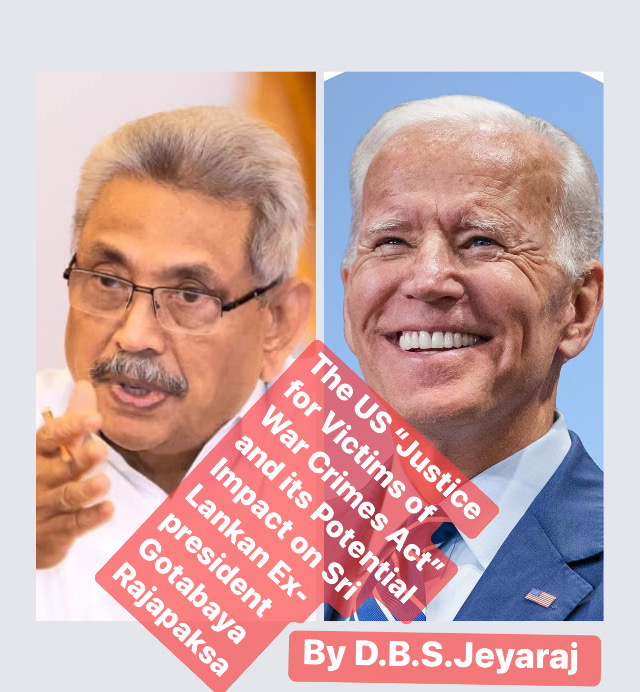
New Bill Signed Into Law by US President Joe Biden may Prevent Ex-Sri Lanka President Gota Rajapaksa from Returning to his Home in California

This law, passed with strong bipartisan support, better aligns the US with her allies and the Geneva Conventions, and gives DOJ the ability to try persons responsible for war crimes in any part of the world should they come to the US.

According to a press release from the White House ,the changes to the “Justice for Victims of War Crimes Act,” have expanded the scope of individuals subject to prosecution for war crimes;
Senators Grassley, Durbin, Graham, and Leahy and Congress Representatives Cicilline and Spartz are reportedly responsible for giving leadership in this regard

The bill, which broadens the Justice Department’s jurisdiction to prosecute war crimes, was passed in the U.S. House of Representatives on Thursday after winning Senate approval on Wednesday.

Known as the Justice for Victims of War Crimes Act, the bill allows the Justice Department to bring war crimes charges against people in the United States, regardless of where the alleged crime occurred.

Current statute only allows for prosecution when an alleged war crime occurs in the United States or when the victim or offender is a U.S. national.

The law is primarily aimed at Russions responsible for alleged war crimes in Ukraine. In fact the Ukrainian lobby in the US strongly canvassed for the law .

However it appears that an unintended consequence of this exercise would be its potential impact on former Sri Lankan President Gotabaya Rajapaksa known as Gota. The Lankan ex- president was earlier a naturalized US citizen holding dual citizenship in Sri Lanka. He served as Defence secretary under his elder brother Mahinda Rajapaksa from 2005 to 2015.

In 2019 Gota was elected as the 7th executive president of Sri Lanka. In July 2022, Gota fled the country and resigned as President due to widespread protests described as the “Aragalaya”(struggle). Thereafter he retuned to Sri Lanka and is living in Colombo with Govt protection

Gota had renounced his US citizenship prior to contesting the Sri Lankan presidential elections to be eligible to contest. His only son daughter in law and grand daughter are all US citizens living in California. Gota’s spouse too is a US citizen

According to various media reports Gota has been trying to return to the US and be reunited with family by staying permanently in the US. However reports say there is no chance of Gota getting a US green card.Even a visitors visa has been refused state media reports

Meanwhile some cases have been filed in US courts by victims of alleged Human rights violations and war crimes that took place under Gota’s watch as Defence secretary. Furthermore Canada -US neighbour and ally-has sanctioned him for alleged acts of omission and commission as President

Under these circumstances there seems very little chance of Gota ever getting a visa to enter the US. But now with the new US law, Gota would be extremely vulnerable on US soil even if he does gain entry. The strengthened US law enables the US dept of Justice to take action against any alleged offender on behalf of war crimes victims regardless of him or her being a foreign national. Also victims can seek justice for war crimes committed in any part of the world

Thus Gota runs the risk of being targeted judicially by his alleged victims if ever he is on US soil. Given the large number of alleged victims in North America and the support given by Human rights organizations, the chances of action being taken against Gota under the US Justice for Victims of War Crimes Act.

This places Gota in a very difficult position. Even if he achieves his dream of returning to the US,it may turn into the nightmare of being prosecuted and possibly convicted under the US Justice for Victims of War Crimes Act. Canada’s sanctions have increased this possibility.

What then will Gota do?

Source: D.B.S.Jeyaraj