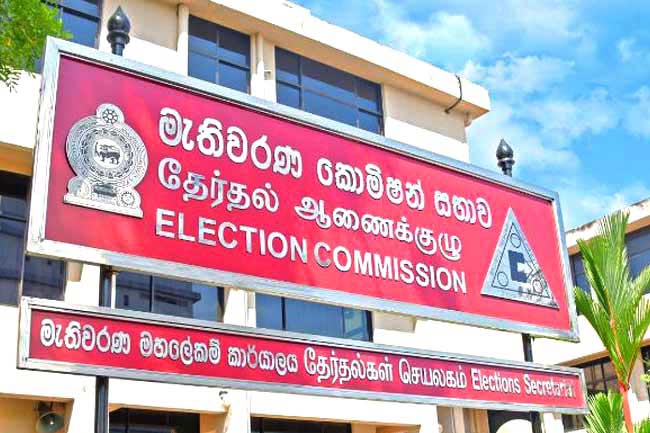
Rs.10 billion allocated for election is sufficient – Elections Commissioner General

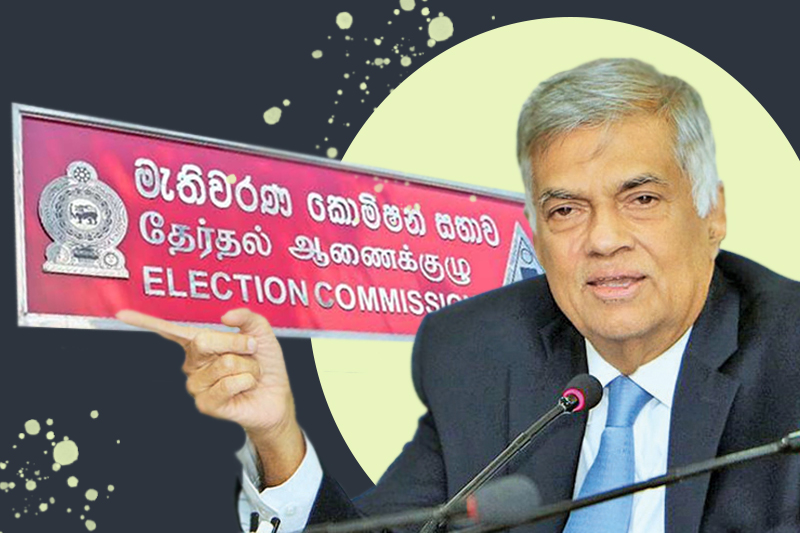
Commissioner General of Elections Saman Sri Rathnayake states that the Rs.10 billion allocated for the Local Government polls is sufficient.

“The previous election cost an estimated Rs. 8 billion due to the COVID-19 pandemic, but we managed to spend only Rs. 5.8 billion,” he added.

The Commissioner General of Elections believes that the final cost for the election will be less than the estimated cost. “We initially asked for Rs. 11 billion, then we estimated it at Rs. 9.3 billion, but Rs. 10 billion was allocated in the budget,” he explained.

Canada offers $3 million to help vulnerable communities in Sri Lanka

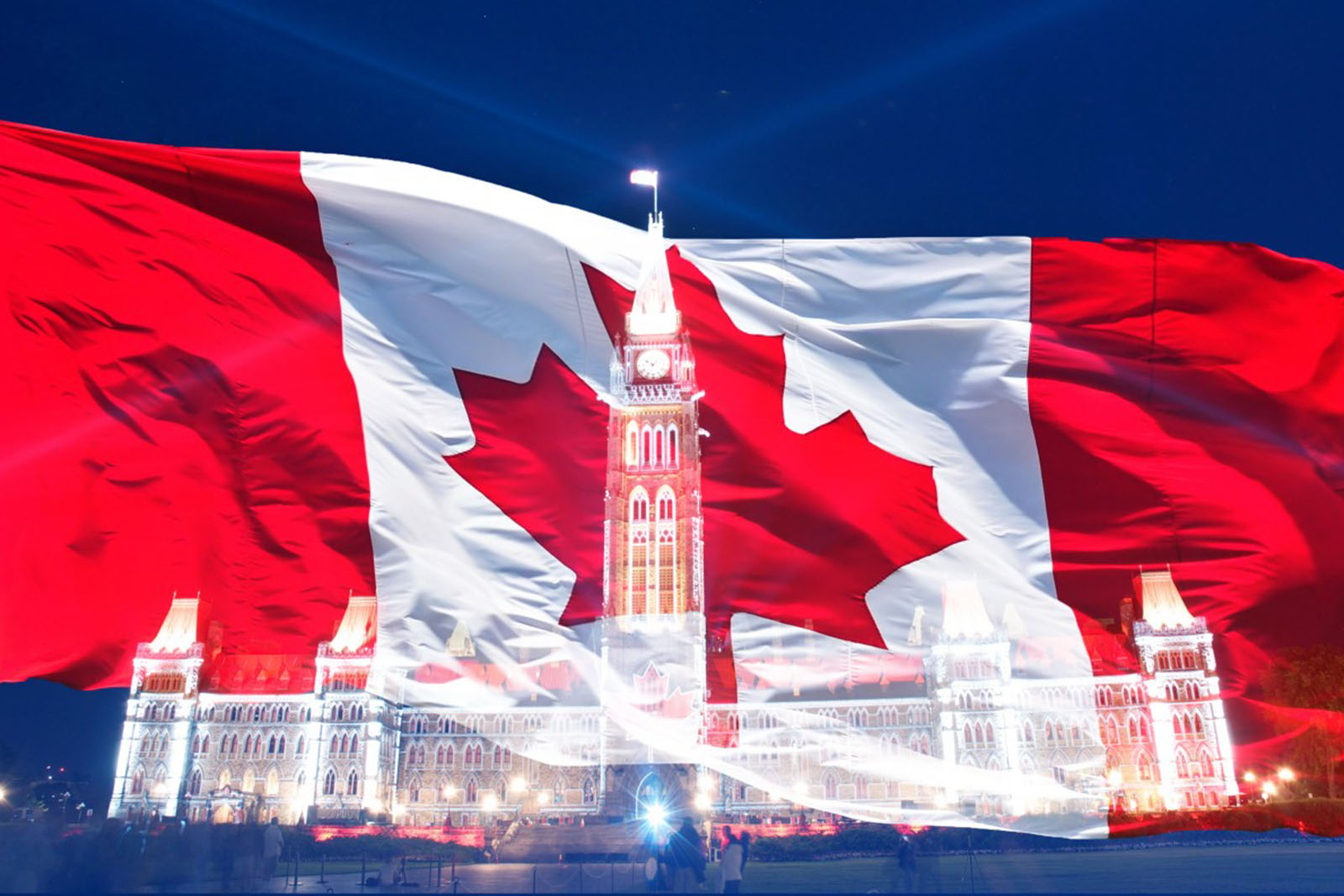
Canada has offered $3 million to help the most vulnerable communities in Sri Lanka.

The Canadian High Commission in Sri Lanka said that in response to the humanitarian appeals launched by the United Nations (UN) and the International Federation of Red Cross and Red Crescent Societies (IFRC), Canada is providing $3 million (approx. LKR817 million) to help address the needs of the most vulnerable communities in Sri Lanka.

This contribution will be delivered through the UN and the IFRC, in collaboration with their local partners, to support the provision of emergency food assistance, health and nutrition services, access to safe water and other essential services to those who need it the most, the High Commission said in a statement today.

In addition, Canada has pivoted ongoing international assistance projects to address immediate needs and help respond to the economic crisis in Sri Lanka, including the procurement of essential medical equipment and supplies.

Canada says it continues to stand with all Sri Lankans in these difficult times and remains committed to supporting an inclusive and prosperous Sri Lanka.

Posted in Uncategorized

14 YEARS ON, LASANTHA’S KILLERS STILL ROAM FREE

A badly damaged white car with broken glass windows, a seriously injured man being rushed to hospital and a scene of carnage and destruction is still etched in the minds of all those who were at the scene on that fateful day – 8 January 2009.

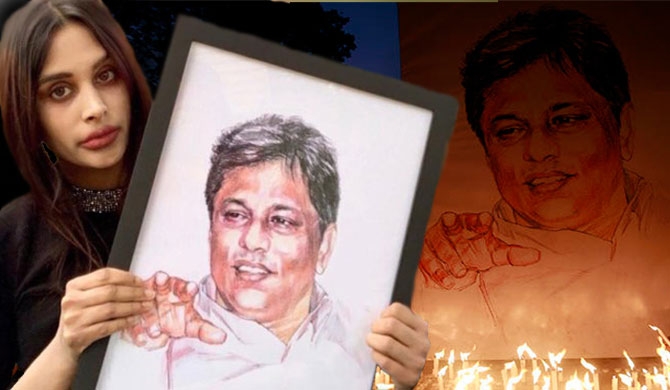
This was the day that Editor-in-Chief of the Sunday Leader Newspaper Lasantha Wickrematunge was assassinated in broad daylight on Attidiya Road while on his way to office at Katukurunduwatte Road, off Templers Road, Mount Lavinia.

His eldest son Avinash was 19, his daughter Ahimsa 17, and his younger son Aadesh 10 when he passed away at the Kalubowila Hospital on that fateful day.

It has been 14 years since the brutal assassination of Lasantha, but sadly his killers still roam free. Justice is yet to be served for the murder of an Editor who sacrificed his life to tell it all.

In her book ‘And Then They Came For Me’ – the Lasantha Wickrematunge story, written by his ex-wife, journalist Raine Wickrematunge his lifestory unravels.

The book states: “One day, Harris, ever on the lookout for some part-time employment for ‘Malli,’ brought home a copy of the SUN newspaper and pointed to an advertisement. It was an in-house ad calling for trainee reporters and sub-editors. “This might be good for you,” he remarked, pointing out that the newspaper office, located as it was on Hulftsdorp Hill, wasn’t too far away from home either.”

First job

“Harris then proceeded to type out an application on his trusty Remington and, instead of posting it to the Independent Newspapers office, took it to No. 5, Gunasena Mawatha and handed it in personally. That act on the part of a determined father was the beginning of a completely new chapter in Lasantha’s life, unleashing as it were, the full force of the remarkable destiny that lay before him,” the book states.

“At this time, I was already working at Independent Newspapers which published the English language SUN and WEEKEND, Sinhala language Dawasa and Riviresa, Tamil language Dinapathi and Chinthamani and a few other periodicals. I had joined the company soon after my Advanced Levels and was a sub-editor on the daily SUN’s Sunday edition, the WEEKEND. I also conducted the women’s and children’s pages and wrote feature stories under the by-line Raine Amarasinghe.”

“The Editor of the SUN was the dashing Rex de Silva whose creative talent took the paper to great heights. Lasantha, a couple of years older to me, joined Independent Newspapers in July 1981, just as I was completing two years there. Within half an hour, Rex came up to my desk followed by two young men. He introduced them as Damodaran Sivalingam and Lasantha Wickrematunge. Rex told me they were new recruits to the subs desk and asked me to train them in the art of sub-editing,” the book says.

The story goes on – on Sundays I would go through the newspaper at home, circling any typos on the pages that Lasantha had overseen. I would take these pages to the office on Monday morning and brandish these in his face, pulling him up for missing a typographical error,” Raine explains.

Tribute

Damo who wrote a tribute article in The Nation newspaper many years later, seems to remember much more than I do, she says. He wrote, “I first met Lasantha when we started our working life on the same day at the WEEKEND Newspaper sub-desk as trainee journalists. We were trained by no other than Raine, his wife-to-be, though she did not know that just then. I think it was love at first sight for Lasantha as he plotted away to win her heart almost immediately. We became good friends right from the beginning as I became his ‘golaya’ in promoting his advances much to the annoyance of Raine who often said, ‘I am NOT interested in you.’ I guess all of you know she had to eat her own words. I remember them as a happy and devoted couple. This story tells you a lot about Lasantha. He always knew what he wanted in life and pursued it with all his heart.”

“During lunchtime each day, many of us would gather in the modest lunch room and everyone eagerly waited for Lasantha’s lunchbox to be opened; his mother packed some tasty morsels for him and we girls would get bits to savour. One day as we sat for lunch, Lasantha opened his lunch box and grinned to himself. When we asked him what he was smiling about, he said, “I only have plain rice today. I had a fight with Chandra (his mother) this morning and she seems to have punished me.” Of course, all of us in the room laughed our heads off and proceeded to share with him whatever we had in our lunches,” Raine said.

After many years at the Sun newspaper, Lasantha’s change to another media institution came when due to a political issue the SUN newspaper management decided that Lasantha was to be suspended.

“The moment the words about the suspension were out, Lasantha retorted, “In that case, I’m quitting this newspaper,” and stomped out of the room. The very next day he was hired by Vijitha Yapa, Editor of The Island and The Sunday Island newspapers. It was here at The Island newsrooms that Lasantha fully unleashed his reporting brilliance,” Raine explains.

Recalling memories

She says consequently, when he investigated a scandal, it wasn’t surprising that he uncovered its every detail, however trivial. “That was the strength of his work: he convinced you not just by making extravagant accusations against the powerful, but by the weight of the detail of his reporting. At his best, Lasantha convinced you that there couldn’t be another side to the story,” the book states.

Gamini Weerakoon, Deputy Editor of The Island recalled, “In the 80s, there were a few rough diamonds around and I was surprised to be introduced to a young man who had left the SUN newspaper for The Island. …. He looked too young to be among ruffians, some of them veterans with 20 to 30 years’ experience who dominated the news desk and the sub-editors’ desks and I had my doubts whether he would last long. However, I was soon to realise that he was a serendipitous find for the newspaper.”

Recalling her memories in those early days when the Sunday Leader was just about to get off the ground Raine says one day in January 1994, Lasantha’s brother Lal arrived at our home bursting with the exciting news about a tentative idea to launch a new newspaper.

“Lal worked for Multi-Packs, a company that printed Sinhala cartoon periodicals among other things and he and Haris Hulugalle, Chairman of Multi-Packs, were considering starting a national, English language newspaper,” Raine said.

No whip-cracking boss

She added, Lasantha was seen as an essential element in the venture, both from the editorial and business aspects. “His journalistic credentials were formidable – as a newsman, he was one of the best the country had produced. From a business standpoint, his vast pool of wide and varied contacts would be an invaluable asset to a new company. Lasantha however was adamant about one thing. He would come on board, he said, only if he was afforded full editorial autonomy with no whip-cracking boss breathing down his neck. No censorial stifling of his pen nor that of other journalists working on the newspaper would be tolerated, he insisted. That assurance given, Lasantha and I threw ourselves into the planning of the project with Lal and Haris and slowly the formative bones of Leader Publications began taking shape,” Raine explained.

Initially, the aim was to publish a Sunday paper which would be called The Sunday Leader she says. “Down the road, they would consider starting a Sinhala edition, and later, if everything went well, even a mid-week. Lasantha and I were to be involved in all the initial planning of the format of the newspaper and be responsible for recruiting staff, steering the editorial department and the newspaper’s content,” she said.

On 5 April 1994, Lasantha’s 36th birthday, we said our fond goodbyes to the Times staff, ………. to see us off. As Lasantha and I drove from the Times building to Ward Place where our new offices were located, there were mixed feelings. There was some diffidence and yet, a spirit of great adventure and excitement bubbled.

The Ward Place office looked like somebody’s abandoned home. The garden – complete with clumps of grass, sand and straggling weeds – was a favourite haunt of stray dogs, one of which was adopted later as part of the Leader family and christened ‘Steffie.’

Designing the paper

“Right from day one – together with Lal and Haris Hulugalle – Lasantha and I rolled up our sleeves and got down to the business of developing the format and design of the newspaper. Haris’ daughter Shani was an asset with her knowledge of computer technology and her design and layout skills. We brainstormed for a catchy slogan, one that encapsulated the essence of the newspaper and the ideals it would champion. Lasantha suggested ‘Unbowed and Unafraid’ which everyone agreed was an excellent motto,” Raine explained.

She added in that first week at the office there was just Lasantha, me, an office helper, driver and a couple of production staffers who had been sourced from Multi-Packs, the parent company, a couple of weeks later Rukshana, a young trainee reporter, a few typesetters and paste-up artists, joined the ranks. The office was equipped with two Apple Mac computers, a Macintosh Quadra and an A3 printer.

“At the outset, Lasantha wanted me to take on the role of Features Editor continuing what I had done at the Times. I however yearned for a break from titles. While applying for media accreditation cards however, it appeared applicants were required to provide their designations and I had none. Defence Analyst Iqbal Athas who had joined the Leader ranks as Deputy Editor, hurriedly conjured the title ‘Features Consultant’ and that remained my designation throughout my Leader life,” she explained.

All of us went about our tasks at a frantic pace in preparation for the first issue due to come out on 19 June 1994, she says and Lasantha and I put in so much back-breaking work in those early days that one desk-head was to quip, “If it ever came to a crunch, Lasantha and Raine can easily run this paper by themselves.” That was a huge exaggeration, in fact an impossibility, but in a sense it encapsulated the simplified version of how the rest of the staff viewed us – Lasantha brought in the news, Raine put it together,” Raine explained.

It was hard, that first year. I remember all I wanted at that stage was to complete our first year in circulation. I was terrified the Leader would be just a three-month wonder, a flash in the pan.

Victory in The Hague

Internal issues notwithstanding, Lasantha at the helm as Editor-in-Chief, was turning the Leader into a much sought after, if somewhat controversial, newspaper. With his investigative journalism, credibility grew and the public was riding the wave with us, egging and encouraging us on. The Sunday Leader was emerging as the standard-bearer of journalistic excellence.

He was also completely fearless in ‘naming and shaming the devil’ whoever it was and whatever office he or she held. He was driven by the principle of the public’s right to know and the knowledge that a good newspaper was not just an agent of change but the upholder of democracy itself.

Lasantha was a journalist and a brilliant one at that, but he was also a political animal wading knee-deep in murky political waters. He and The Sunday Leader were in a sense what gave the Opposition the courage and the drive, in many instances, to take the Government head-on.

“It’s hard to believe that 14 years have passed since Lasantha’s death. Just like every year since 2009, once again all we can do is lament about the fact that the investigation has stalled and the killers roam free. This is not just true with Lasantha’s murder but that of all other journalists killed in Sri Lanka. That such impunity exists isn’t shocking any longer in a country where violence is endemic and murder is routine. So, until the day dawns when a clean, upright administration is installed – one with no hidden agendas nor interference into investigations, we can hope for little more than laughable red herrings and pathetic eyewash,” Raine explained.

She says, anyway this year we got internationally what we never got in SL and that was the victory in The Hague which found the Government of Sri Lanka guilty of Lasantha’s murder.

“All I can wish for at present is that Lasantha’s vision that his murder will ‘galvanise forces that will usher in a new era of human liberty,’ comes to fruition. We had a glimpse of that during the Aragalaya,” Raine said.

By Risidra Mendis

Posted in Uncategorized

Local council polls hang in balance: SC to take up two petitions

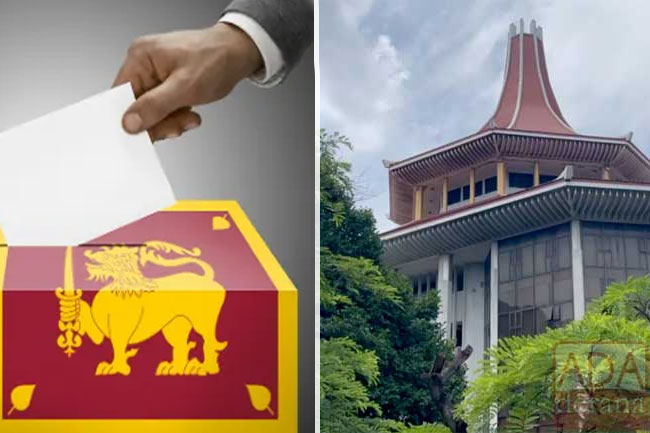
The Election Commission has requested the Attorney General to appear for it when the Supreme Court takes up two petitions calling for the conduct of the Local Government elections scheduled for March.

The request came after the EC consulted the AG on Wednesday. The AG will, however, decide on the matter only tomorrow, the Sunday Times learns.

The elections still hang in the balance with divisions within the EC regarding the decision to call for the nominations. During consultations the EC had with Attorney

General Sanjaya Rajaratnam, at least two of the Commission members said no proper consultations were held to call for nominations, the Sunday Times learns.

Only four of the five members of the Commission were present at the meeting. The fifth member was indisposed.

During the consultation, it transpired that though a decision had been taken to call for nominations, and all the members had signed in favour of the decision, there had been no memorandum put forward or even minutes maintained at the board meeting.

The Attorney General had raised the question whether talks had been held with Delimitation Commission Chairman Mahinda Deshapriya in view of the call by the Government that the number of local council members should be reduced and new wards be drawn up.

The commissioners had stated they had not met the Delimitation Commissioners before a decision to call for nominations was taken. The Elections Commissioners met the Delimitation Commissioners thereafter.

Two petitions have been filed by opposition parliamentarians seeking a Supreme Court directive to conduct elections while another petition has been filed by a retired colonel seeking a postponement of the elections. The opposition MPs’ petition has been listed for hearing before the Supreme Court on January 18.

The AG has not been cited as a respondent in the petitions filed by the opposition members.

“It is up to the government to seek relief through a judicial or a parliamentary process requesting further time to conduct the polls,” he said.

Mr. Punchihewa added that even after the nominations had ended and the date for elections was announced there was still provision for the EC to call for a postponement after seeking a report from the District Secretaries, similar to what happened over the postponement of polls as a result of COVID19.

The Parliamentary elections were postponed on two occasions in 2020 and eventually held in August of the same year.

He said the court too could take a decision on the conduct of the polls.

Nominations for the local council polls will be received from January 18 to 21 in respect of 340 local councils — 24 Municipal Councils, 41 Urban Councils, and 275 Pradeshiya Sabhas.

At the upcoming polls, 16.6 million people are eligible to vote.

Posted in Uncategorized

Reduce Military Presence in Tamil Areas – US Groups Endorse Sri Lankan Tamil Civil Society’s Call

Several US based Tamil diaspora groups have wholeheartedly endorsed a joint call by Sri Lanka based Tamil Civil Society groups to reduce the Military Presence in Tamil areas to pre-1983 level by the time any agreement is reached between Tamil leaders and the Government and as a mark of goodwill Sri Lanka should reduce 25% of the military presence in Tamils areas before any formal talks start.

There is huge military presence in Tamil areas even after the war ended thirteen years ago. Excess Military built-up started in Tamil areas since 1983. These are the same troops who committed mass atrocities against the Tamil people and are stationed among their own victims. According to UN internal review report, around seventy thousand Tamils were killed in the final six months of the war that ended in May 2009. Scores of Tamil women were sexually assaulted and raped by the Sri Lankan forces. Thousands disappeared, including Babies and Children. Despite several UN Human Rights Council Resolutions calling for accountability, not a single political or military leader was brought to justice.

Here is the joint call by the Sri Lankan Tamil Civil Society consisting of Religious Leaders, University Student Federations, Victim Groups and others:

1) Prior to any formal talks, Sri Lanka must demonstrate its goodwill by reducing the military strength in the North-East by 25% of its current level and all the lands are returned to the rightful owners. The reduction of the military should continue during the talks to reach pre-1983 levels in the North-East prior to the conclusion of any agreement that is reached.

2) Any permanent political solution for the Tamil national question should have the mandate from the Tamil people through an internationally conducted and monitored referendum with internationally recognized choices for solution.

Here is the list of Sri Lankan Tamil Civil Society who signed this call.

1) Sri La Shri Somasundara Thaeseeka Gnanasambantha Paramacharya Swamigal Nallai Aatheenam – Jaffna.
2) Reverend Father Joseph Mary SJ, Batticaloa.
3) Mr. A Vijayakumar, President, Jaffna University Students Federation.
4) Mr. N. Tharsan, President, Eastern University Students Federation. (Batticaloa).
5) Ms. Y. Kanagaranjini, President, Families of the Forcibly Disappeared Sangam North-East Provinces.
6) Thavathiru Ahaththiar Adikalarar Thenkayilai Aatheenam – Trincomalee.
7) Reverend Father Kandiah Jegathas – Batticaloa.
8) Thavathiru Velan Swamigal Sivakuru Aatheenam – Jaffna.
9) Reverend Father Sebamalai Princen – Batticaloa.
10) Reverend Father Robert Sasikaran.
11) Mr. M Komahan, Organizer, Voice of the Voiceless (Political Prisoner Group).

Here is the list of US Tamil Diaspora Organizations who endorsed the above call:

1. Federation of Tamil Sangams of North America (FeTNA); contact@fetna.org
2. Ilankai Tamil Sangam; president@sangam.org
3. Tamil Americans United PAC; info@tamilamericansunited.com
4. United States Tamil Action Group (USTAG); info@theustag.org
5. World Thamil Organization; wtogroup@gmail.com
Anandaraj L. Ponnambalam
USTAG
+1 202-595-3123
info@theustag.org

Posted in Uncategorized

GL Peiris set to return as SLPP Chairman?

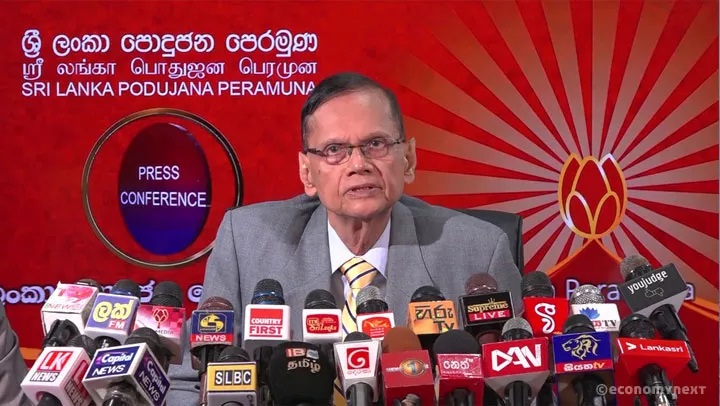
Parliamentarian Professor Ranjith Bandara says they have requested Parliamentarian GL Peiris to take over the Chairmanship of the Sri Lanka Podujana Peramuna once again.

Speaking to media in Kandy, MP Bandara said they believe MP Peiris will return to their fold and continue as the SLPP Chairman.

MP GL Peiris is currently working with a group of SLPP MPs who defected from the government recently. The group includes about 10 MPs including MP Dullas Alahapperuma.

Parliamentarian Ranjith Bandara noted that he believes MP GL Peiris will be back with the SLPP ahead of the Local Authorities Election.

Meanwhile, NewsRadio attempted to contact the SLPP Secretary over the development but to no avail.

On a spate note, MP Ranjith Bandara said members of the National Election Commission are divided over conducting an election at this juncture.

MP Bandara said several factions have raised concerns about spending funds of the state which are limited, to conduct the Local Authorities Election.

The Parliamentarian said some are of the view that the funds should be used to help the people who are struggling to carry out their day-to-day activities instead of on an election.

He said the members of the Election Commission must first come to a consensus on conducting the election.

Meanwhile, MP Ranjith Bandara said the Sri Lanka Podujana Peramuna is not afraid of elections and has already taken steps to contest the election.

He said they have already placed deposits to contest all 17 Local Government Bodies in the Kalutara district.

MP Ranjith Bandara added that they will place deposits to contest all Local Government Bodies in the Kandy district on the 14th of January.

He also noted that the SLPP secretary has already announced that the party will contest the election under the symbol of the Lotus Bud.

Posted in Uncategorized

To hold or not to hold: LG Election debacle

The Local Government (LG) Election, which is due to be held in March 2023, has stirred up a number of controversies, with a faction calling for elections to be held while another wants it postponed.

Whilst differing opinions are common, the controversies are now based on an internal conflict in the Election Commission (EC) over the holding of the LG Election.

As reported in this paper on Friday (6), President Ranil Wickremesinghe has informed the EC to resolve its internal conflicts over holding the LG Election expeditiously and inform him of the collective agreement of the Commission on the matter.

The President met four members of the EC, including its Chairman Nimal Punchihewa, to discuss the LG Polls. One EC member did not participate in the meeting. Prime Minister Dinesh Gunawardena and Attorney General Sanjay Rajaratnam too participated in the meeting.

Ceylon Today learns that the four EC members held different opinions on holding the election and it led the President telling them to resolve their internal conflicts. The President informed them to consult the Attorney General over legal barriers if any and let him know about the EC’s collective decision on the matter. The Attorney General said if there are legal matters, his Department will help the EC to resolve them.

The internal debacle has come to the spotlight in a backdrop where the EC has already called for nominations. As reported in Ceylon Today on Thursday (5), EC announced that the accepting of nominations, for the much-delayed LG Election, will commence on 18 January and close at 12 noon on 21 January.

Accordingly, the nominations will be called for 340 LG Institutions.

Meanwhile, applications for postal voting were being accepted from Thursday (5) to 23 January. On 22 December 2022, the Election Commission issued an Extraordinary Gazette appointing District Returning Officers and Assistant Returning Officers for the LG Elections.

Therefore, it is clear that the notice calling for nominations was issued amidst several debates on holding the election.

Further, the Government has also decided to consult the Attorney General on the reported indecision of EC members on holding the LG Election this year.

The majority of EC members are reportedly against Chairman Nimal Punchihewa’s opinion that the LG Polls should be held. Meanwhile, election monitoring organisations were of the view that many issues would arise due to the differing views of EC members, if nominations are called.

At least Rs 12 billion is required to hold the LG Election whereas only Rs 10 billion is allocated in Budget 2023, sources said. In such a backdrop, the majority of EC members reportedly believe that announcing an Election date should be delayed even if nominations are called. However, according to EC sources, the EC Chairman believes the Finance Ministry would provide additional funds.

To add to the saga, according to an article published in this paper on Friday (6), a tense situation erupted in the Parliament Chamber on Thursday (5) after Prime Minister Dinesh Gunawardena presented a ministerial report on MP Premnath C. Dolawatte’s Private Member’s Bill on amending the LG Election Act.

The Opposition slammed Gunawardena’s report as a sinister attempt to postpone the LG Poll which is scheduled for March this year.

However, the PM said he simply presented the report as per the Standing Orders of Parliament. Meanwhile, Jathika Jana Balawegaya (JJB) Leader Anura Kumara Dissanayake questioned the Government on whether the correct procedure is being followed with regard to Dolawatte’s Bill.

Prior to these controversies, certain Members of Parliament petitioned Courts calling for the LG Election to be held as scheduled.

The petitions were filed by MPs Dayasiri Jayasekara, Lakshman Kiriella, Anura Priyadarshana Yapa, M.A. Sumanthiran, Ranjith Madduma Bandara and G.L. Pieris, instructed by Attorney-at-Law Sandun Gamage.

Whereas, a Petition was also filed seeking an order suspending the holding of the LG Election in March 2023 observing that based on information received from the EC, it costs over Rs 10 billion to hold the Election and that holding an election amidst an economic crisis could be catastrophic.

It is more than evident that the internal conflicts should be cleared and a common decision has to be taken on whether or not an election should be held in two months, in considering all the pros and cons of doing so.

Posted in Uncategorized

Lasantha was a Fearless Editor who Spoke Truth to Power By D.B.S.Jeyaraj

Lasantha Manilal Wickrematunge was brutally assassinated in broad daylight on a public road in Ratmalana

He was not unaware of the dangers he faced. He had encountered innumerable problems in the past

After Richard de Zoysa was killed during the time of President Ranasinghe Premadasa, Lasantha was among the journalists whose lives were threatened. He went to Australia where he stayed for some time

From Chandrika Kumaratunga to Mahinda Rajapaksa, the highest in the land were all targets of his journalistic archery

Finally the end came in a gruesome fashion. In the Sri Lanka of old the barbarians were at the gates. Now they were inside the gates occupying positions of power

He was fully aware of the problems faced by the minority ethnicities in Lanka. He had particular empathy for the Tamil predicament

The sleuths probing the Lasantha killing and other media related offences were replaced. Many were transferred or demoted. Some were penalised

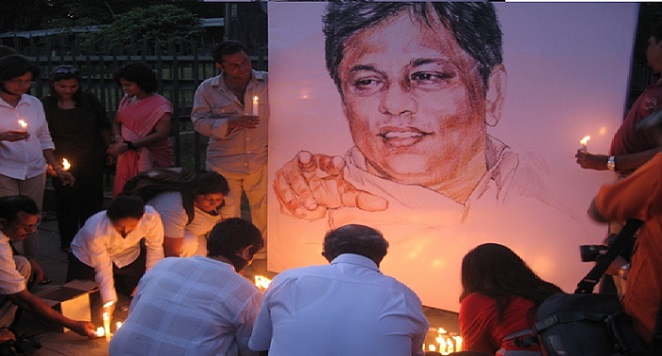
Friends,Family members, colleagues, schoolmates and admirers of Lasantha Wickrematunge are scheduled to meet on Sunday January 8th at the Kanatte cemetery in Borella. They will gather at 9 am by the graveside of the slain “The Sunday Leader”editor to commemorate his 14th death anniversary. There will be prayers,singing of hymns,speeches and of course candles and flowers. Those near and dear to Lasantha keep his memory alive by engaging in this annual act of love and homage.

Lasantha Manilal Wickrematunge was brutally assassinated in broad daylight on a public road in Ratmalana. He was murdered on 8 January 2009 by cowardly minions for courageously speaking truth to power. Lasantha whom I used to call “Lassie boy”was my colleague, editor, friend and above all a kindred soul. How I miss him!
Refusing to be silenced by the powers that be, the fearless editor of The Sunday Leader fought valiantly against overwhelming odds to expose corruption, nepotism, mis-governance, racism and militaristic triumphalism. The motto of The Sunday Leader was ‘unbowed and unafraid’. Lasantha personified the motto in every way and remained to the very end, unbowed and unafraid.

Lasantha was not unaware of the dangers he faced. He had encountered innumerable problems in the past. After Richard de Zoysa was killed during the time of President Ranasinghe Premadasa, Lasantha was among the journalists whose lives were threatened. He went to Australia where he stayed for some time.

The Sunday Leader

He returned after a while and in 1994 co-founded The Sunday Leader. The newspaper under Lasantha’s unprecedented editorial drive and direction charted out a new course in Sri Lankan journalism. He pulled no punches in a zealous quest to cleanse the Augean stables. Lasantha was no Hercules. Yet he went about his task with indomitable courage. Like Prometheus he defied the “gods” (with clay feet).

For a decade and a half, the popular Sunday paper pitched into the powers that be. In the finest embodiment of journalistic values, Lasantha Wickrematunge and his Sunday Leader spoke truth to power. In the process he did not merely ruffle feathers but stripped the ‘birdies’ bald.

From Chandrika Kumaratunga to Mahinda Rajapaksa, the highest in the land were all targets of his journalistic archery. He was a virtual one-man opposition. Under his editorial leadership his staffers and colleagues worked together as a dedicated team for the common good of this country by upholding liberal democratic values.

In the process he underwent much hardship and danger. Thugs assaulted him in the presence of his wife; machine gun fire was sprayed at his house. The paper was sealed under Emergency regulations; numerous Court cases were filed; the press was burnt down. A blatant attempt to arrest him was made, he was the target of hate mail, abusive calls and death threats. He and his loved ones were targets of vulgar attacks in sections of the media. Still he battled on, unbowed and unafraid.

Finally the end came in a gruesome fashion. In the Sri Lanka of old the barbarians were at the gates. Now they were inside the gates occupying positions of power. Lasantha fully realised the dangers he faced. He could have gone abroad to save his life. He was a lawyer and could have simply donned the black coat; he could have capitulated and compromised his journalistic integrity. He could have allowed himself to be bought over by or co-opted into the power structure. These he did not and instead opted to go along the road he had chosen until the very end..

No Chauvinism or Racism

What endeared him to me most was his utter lack of racist consciousness. In this he was influenced by his father Harris Wickrematunge and Kotahena upbringing. The municipal ward represented by Uncle Harris for 28 years is multi-ethnic. So too is the Colombo north electorate which he contested once.. This resulted in Harris Wickrematunge having very good rapport with the Tamil, Muslim and Burgher communities in the area. This rubbed off on Lasantha too, I guess. Besides, the cosmopolitan St. Benedict’s College environment was also conducive.
As a result Lasantha was one who had no racist or chauvinist thinking in his psyche. He was fully aware of the problems faced by the minority ethnicities in Lanka. He had particular empathy for the Tamil predicament. This worldview and mindset was reflected in his journalism and the general editorial thrust of his paper. The newspaper was boldly critical of majoritarian hegemony and strongly supportive of the legitimate aspirations of the Tamil people.

This policy was not hypocritical based on attracting sales. It came from the heart. This naturally made him and the paper popular with readers from the minority communities who recognised a kindred soul who empathized with them. On the other hand, racist and chauvinist elements among the majority community resented this. They hated Lasantha vehemently.

Lasantha Wickrematunge’s murder was not the only act of injustice that was perpetrated during the presidency of Mahinda Rajapaksa. Lasantha paid the supreme price but he was not the only victim from the Fourth Estate fraternity. Prageeth Eknaligoda was made to disappear; Poddala Jayantha was white-vanned and assaulted; Keith Noyahr was abducted and tortured; Upali Tennekoon and his wife were attacked; and the plight of Tamil media personnel has been terrible. Several Tamil journalists have been reportedly killed in the past. Although a large number of journalists have been killed, made to disappear, assaulted and tortured in the past, the murder of Lasantha Wickrematunge has received the greatest attention on a national and international scale.

Emblematic case of Impunity

The main reason for this is that Lasantha Wickrematunge was the most high-profile journalist or Editor to be killed in Sri Lanka. The brutal cold-blooded mode of his murder and the means adopted by the Rajapaksa regime to stifle and obstruct investigations indicated very clearly that Lasantha could not have been murdered without the sanction of those in power at that time. Hence the assassination of Lasantha Wickrematunge is regarded as an emblematic case symbolising the state of impunity in Sri Lanka. If there is justice for Lasantha, then there could be justice for all. If there is no justice for Lasantha, then there wont be justice for the others either.

Fourteen years have passed since Lasantha’s demise but his killers are yet to be brought to justice. This is to be expected in a land where those suspected of being responsible for his murder strut about pompously in the corridors of power. The perpetrators are yet to be brought to justice.

It was during the presidency of Mahinda Rajapaksa that Lasantha was assassinated. The years passed and there was no effective breakthrough in the investigations. Everyone knew why.

Yahapalanaya Government

Then came the ‘Yahapalanaya’ Government of President Maithripala Sirisena and Prime Minister Ranil Wickremesinghe. That Government had derived much political mileage in its election campaign by promising justice for Lasantha. It so happened that the 2015 Presidential Election itself was held on 8 January, the day of Lasantha’s death.

The coincidence made some of us feel optimistic about prospects of poetic justice. Alas! That was not to be. A team of dedicated sleuths did engage in a serious probe and it was widely reported then that investigations had reached a point where a comprehensive indictment was imminent. But there was no political will to prosecute. The Sirisena-Wickremesinghe Government dithered and ultimately withered away “unwept and unsung”.

Persecution of Justice

The second phase of Rajapaksa rule spearheaded by Gotabaya Rajapaksa came ino being in 2019. Few expected miracles to happen vis-à-vis the Wickrematunge assassination case. What happened however was unbelievably terrible. The sleuths probing the Lasantha killing and other media related offences were replaced. Many were transferred or demoted. Some were penalised. At least one officer fled the country with family. On the other hand persons implicated as suspects were cleared and even promoted.It was a persecution of Justice.

The tumultuous events of 2022 saw Gotabaya Rajapaksa deserting office as President. His successor Ranil Wickremesinghe relies on the Rajapaksa-led Sri Lanka Podujana Party to wield power as President.

Audacity of Hope

Under these circumstances there is little chance of any justice for Lasantha in the current context. We have no illusions yet we live in hope. The ‘audacity of hope’ to borrow Barack Obama’s phrase is all that we have. Let me reiterate therefore what I have been saying in the past and will continue saying in the days to come also.

“Lasantha’s killers may think that the gun has silenced the pen but as a fellow scribe and friend I want to remind those responsible that the last word about his death has not been written yet. There will come a time when justice would be meted out to his killers – the archers and the arrows. Until then, we who loved and admired, Lasantha will wait in hope. This is not a challenge, threat or boast but a simple statement of fact.”

D.B.S.Jeyaraj can be reached at dbsjeyaraj@yahoo.com

No action from govt. on most pressing concerns of Tamils, says TNA

Citing the “lack of any action” by the government on Tamils’ urgent demands, Sri Lanka’s Tamil National Alliance (TNA) said it would “rethink” its decision to engage in talks with President Ranil Wickremesinghe, unless his government reports “actual progress” at the next scheduled discussion on January 10.

“We have been highlighting three specific areas for immediate action – the release of political prisoners, answers to families of [forcibly] disappeared persons, and the persisting land grabs in the north and east. Despite making promises, the government is yet to take any action,” TNA spokesman and Jaffna legislator M.A. Sumanthiran told media on Thursday, following the third meeting between the Alliance and the President.

While the contours of a political solution are to be discussed in the next meeting on January 10, the TNA said it would rethink its decision to engage beyond that, if there is still no progress in the government’s response to the three critical issues.

Thursday’s meeting follows an all-party discussion held on December 13, and another round of talks between the TNA and the President on December 21, after Mr. Wickremesinghe pledged in parliament to solve the country’s long-pending national question before February 4, 2023, when Sri Lanka will mark its 75 th anniversary of Independence.

“We have consistently sought meaningful devolution, and firmly believe it is possible only within a federal arrangement…the President not only expressed confidence that we can arrive at such a solution but has also committed to a timeline for this exercise,” Mr. Sumanthiran told Parliament earlier on Thursday.

As the largest grouping representing Tamils in the north and east — it currently has 10 MPs in the 225-member legislature — the TNA has been involved in negotiations with many leaders for decades, but a political solution remains elusive. While past disappointments made the TNA “sceptical” of talks with the government, the Alliance decided to participate in earnest, the Tamil MP said, to avoid blame that they did not engage when an offer was made. On the other hand, the Tamil National People’s Front (TNPF), which has two MPs, has taken a position that there is no point engaging with the President, unless he explicitly agrees to a federal solution.

India has consistently highlighted the need for “meaningful power devolution” in Sri Lanka. Intervening in the debate on Sri Lanka’s rights record at the UN Human Rights Council session in Geneva in October 2022, India observed that Sri Lanka’s progress on that front was “inadequate”.

Meanwhile, the North East Coordinating Committee, a civil society group, on Thursday staged demonstrations across the two provinces urging all political parties to come together and demand a federal model of power-sharing. Civic organisations have also been seeking the release of Tamils held under the draconian Prevention of Terrorism (PTA) Act for decades. The Solidarity Movement for North East People’s Struggle in a statement asked the government to release 33 long-term PTA detainees as a “first step” towards reconciliation.

Source:The Hindu

Sri Lanka crisis: Parents forced to pick which child can go to school -BBC

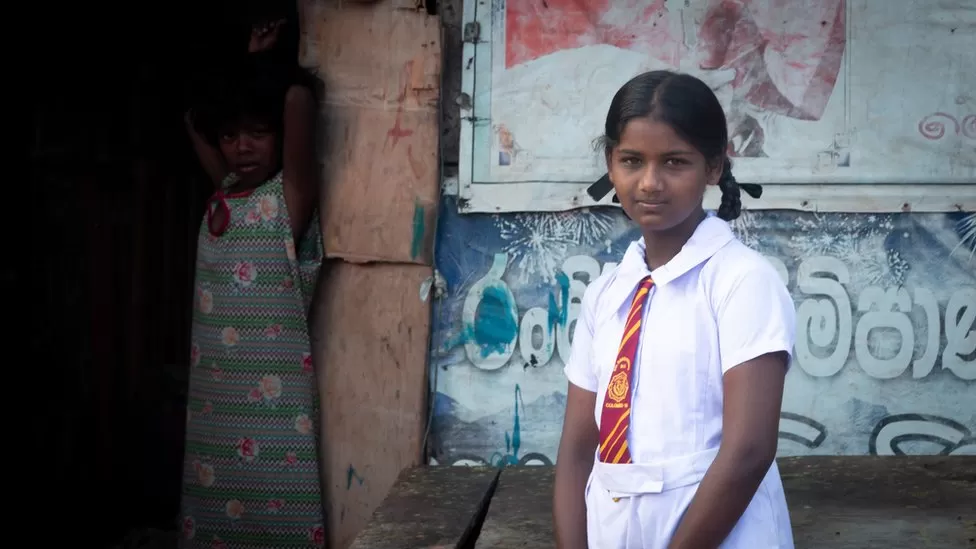
Ten-year-old Malki is too excited to stay in bed.

She’s up an hour before her two sisters and two brothers so that she can scrape some bright red gloss off her fingernails.

Today is her first day back at school and she wants to be spotless.

But her siblings must stay at home – her family can only afford to send her.

Six months ago, Sri Lanka was in the eye of the storm for its worst economic crisis since independence.

While calm has largely returned to the island nation, the full impact of mass unemployment and dramatic price rises is now visible among many families.

Every parent’s nightmare

Malki’s mother Priyanthika has had to pause her children’s schooling so they can earn money by selling fireworks.

Food prices in Sri Lanka reached record levels when inflation hit an all-time high of almost 95%.

Some days, no-one in Malki’s family eats.

While school is free in Sri Lanka, meals are not provided. When you add in the cost of uniforms and transport, education is a luxury Priyanthika can no longer afford.

She says she needs about 400 rupees per day ($1.09, 90p) for each child if they are to return to school.

Sitting in her one-bedroom home on the bed everyone shares, she wipes the tears from her face.

“All these kids used to go to school every day. I don’t have the money to send them now,” she says.

Malki can go to school because her shoes and uniform still fit.

But her younger sister Dulanjalee lies in bed crying, upset that today is not her turn.

“My darling, don’t cry,” says Priyanthika. “I’ll try and take you tomorrow.”

A shattered education

As the sun rises, children who are going to class hurry along dirt roads in white cotton uniforms, jumping on the back of motorcycles or piling into tuk-tuks.

Across town, Prakrama Weerasinghe sighs wearily.

He is the principal of Colombo’s Kotahena Central Secondary College and sees the economic distress every day.

“When the school day begins, when we have the morning assembly, children tend to faint from hunger,” he says.

The government says they have started distributing rice to schools but several schools contacted by the BBC say they have received no help.

Mr Weerasinghe says student attendance fell as low as 40% before he was forced to ask teachers to bring in extra food to keep students returning to class.

Joseph Stalin is General Secretary of the Ceylon Teachers Union.

He believes the government is wilfully unaware of the increasing numbers of families giving up on education because of the cost.

“Our teachers are the ones who see the empty lunch boxes,” he says. “The real victims of this economic crisis are the children.”

“[The government] are not looking for an answer to this issue. It’s been seen and identified by UNICEF and others, rather than the Sri Lankan government.”

UNICEF say it will get harder for people to feed themselves in the months ahead, with inflation in the cost of basic goods like rice continuing to cripple families.

It’s expected more children across the country will be forced to stop attending class.

The last hope?

With the government seemingly unable to manage the situation, charities have had to step in.

Samata Sarana is a Christian charity which has been helping Colombo’s poorest for three decades.

Today, its food hall is packed with hungry students from schools across the capital.

While the charity can help around 200 children daily, it is clear it’s struggling to meet demand.

“They give us food, buses to go home, they give us everything so now we can study,” says five-year-old Manoj as he waits in line for lunch with a group of friends.

When Malki returns home from her first day back at school, she tells her mother how much she enjoyed seeing her friends again.

But she also tells her mother she needs a new workbook and says her teachers are asking for extra money to buy materials for a school project.

Money that the family does not have.

“If we manage to find today’s meal, we go on to worry about how to find something to eat tomorrow,” says Priyanthika.

“That has become our life.”

Posted in Uncategorized