Indian External Affairs Minister to visit Sri Lanka this month

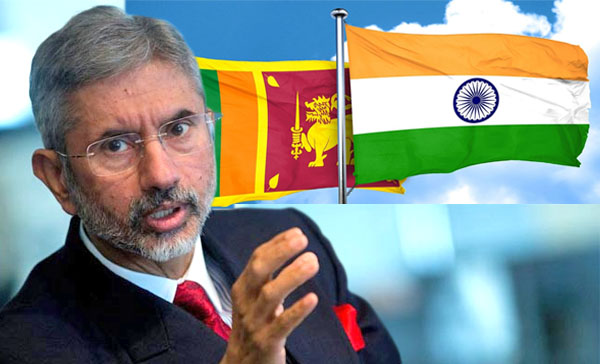
Indian External Affairs Minister Dr. S. Jaishankar is slated to visit Sri Lanka this month for two days for bilateral talks, Daily Mirror learns.

However, the final dates of the visit are still being worked out.

This is his first visit to Sri Lanka after President Ranil Wickremesinghe took office in July, last year. During the crisis period, Sri Lanka and India had made key engagements and framed a four-point package including a line of credit to import food, medicines and fuel. India has already extended US $ 4 billion finance assistance in terms of loans, deferment of payments and currency swap arrangements.

As part of bilateral ties, India has sought greater connectivity with Sri Lanka and investments in areas such as port and energy sectors.

Re-establishment of air connectivity between Jaffna and Chennai, and the proposed ferry links between the north of Sri Lanka and the southern ports of India are part of connectivity programmes.

This is the first high profile visit from India in the New Year. Dr. Jaishankar visited Sri Lanka for the last time in March, 2022.

Last month, the Indian External Affairs Ministry Head of Indian Ocean Region, Puneet Agrawal, arrived in Sri Lanka, and had talks with the ministers in charge of Ports, Shipping and Aviation, Foreign Affairs and Power and Energy. Before him, Head of India’s Research and Analysis Wing (RAW) Samant Kumar Goel had interaction with the highest level, including President Wickremesinghe. Mr. Goel also met with Mr. Basil Rajapaksa, the de facto leader of Sri Lanka Podujana Peramuna (SLPP).

During the upcoming visit, the two sides are expected to review the progress of work on projects in agreed areas.

Posted in Uncategorized

LG Election: Deposits placed to contest for 19 LG bodies

Deposits have been placed to file nominations to contest for 19 Local Government Bodies at the forthcoming Local Authorities Election.

The National Election Commission said one political party and two independent groups from Kalutara and Kandy districts placed deposits yesterday.

The acceptance of deposits for the 2023 Local Authorities Election commenced on the 4th of January and will continue until noon on the 20th of January.

The Election Commission said a recognized political party has to deposit Rs. 1,500 rupees each for its candidates while an independent group has to deposit Rs.5,000 per candidate to contest the upcoming election.

Nominations for the 2023 Local Authorities Election will be accepted from the 18th to the 21st of January.

Notices calling for nominations for 340 local government bodies were issued on the 4th of January.

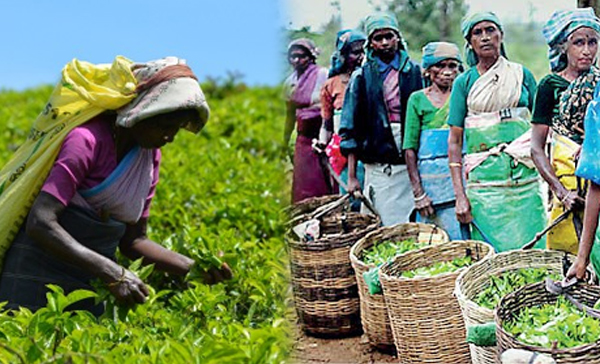
Upcountry Indian Tamils to march from Mannar-Matale

Marking the 200th anniversary of the arrival of the hill-country Tamil community

of Indian origin in Sri Lanka in 1823, a procession is scheduled to be held from

Mannar to Matale from 15-26 March, as this was the route through which the

British colonists sent these people to their relevant destinations.

Speaking to The Morning, Organisation to Protect the Dignity of the Upcountry

Community Advisor priest of Christian faith M. Sakthivel said yesterday (5) that

the upcountry people were made to walk from Mannar to Matale upon their

arrival from India in 1823 to be deployed to coffee estates. From Matale, they

were sent to their relevant destinations, which were jungles where they had to

create their own settlements.

“They were not provided with any transport. People had to walk to any place that

they were directed to by the British. They arrived in a boat from India and reached

Mannar. This was a three-month journey,” he added.

Sakthivel noted that a commemoration will be held on 29 January in

remembrance of those who died in protests, urging for their right to salary

increments and other issues such as those who died in the Galaha estate in the

Kandy District while protesting for a salary increment on 15 September 1940.

“It was also reported that around 70,000 of them died from 1823-1841, during

their travel to various destinations within the country, while creating their own

settlements and due to health issues. Between 1841-1849, another 90,000 people

died. Some areas did not have roads and these people who arrived from India had

to walk through forests. In 1867, the British initiated tea cultivation, since coffee

cultivation was a failure”.

Sakthivel further said: “These commemoration events will make the entire

country understand the difficulties and challenges faced by the upcountry

community since their arrival from India.”

Meanwhile, the Tamil Progressive Alliance will hold a commemoration event in

February this year commemorating the upcountry community in which President

Ranil Wickremesinghe and Opposition Leader Sajith Premadasa are expected to

participate.

‘Affirmative action’ of another kind ? By N Sathiya Moorthy

In his New Year message, President Ranil Wickremesinghe has acknowledged that 2023 will remain a ‘critical year to turn around the economy’.

It is an honest appreciation of the ground reality one more time, yes. In context, he has also injected hope by calling onto “boldly implement the proposed social, economic and political reforms to build a prosperous and productive Sri Lanka in the coming decade”.

The youth have sought a systems-change, the President said, in an obvious reference to the ‘Aragalaya’ protests that stirred the surface but left the core almost unaffected. There are many reasons but the fact remains that such a course has also ensured that the nation remained democratic and the new President is speaking about a systems-change occurring through and from within the existing system.

Yet, there is no denying the force of the social transformation unlike any other since Independence 75 years back, as street-protests caused the resignation of a government, the Cabinet headed by the Prime Minister and the incumbent President Gotabaya Rajapaksa, too, exiting under societal pressure, in turn forced by the social transformation of the past decades.

Subsidies, tax-breaks

A constant complaint against the post-Independence Sri Lankan scheme is that it is either pro-poor or pro-rich, without taking the middle-path. This has translated to the government spending more than advisable on the social uplift of marginalised sections, who are mostly confined to rural areas that are disproportionately large compared to urban centres even this far after Independence. Of course, there are marginalised people even in the urban milieu. Price and tariff subsidies were thought to be enough.

If the idea was to lift the numerically-strong socially downtrodden out of the morass, the system stopped with making clerks still for the European colonial masters, as most students, urban or rural, had to stop their education at A-level. The nation also trained nurses for the overseas market, and prided as being among the major emigrant nations that also received substantial inward remittances owing to their contributions. With Covid lockdown that stopped, and added to the nations’ woes.

Alternatively, pro-rich governments have given huge tax-breaks and other concessions to the nation’s corporates. Even a so-called socialist in the discredited predecessor President Gota did it in his mid-Covid budget, denying the state of the revenues, which also added to the economic crisis that was already enveloping the nation. These concessions are disproportionate to the growth-related contributions of the nation’s corporate sector.

Selective success

Though the President, in his message, has referred also to social reforms along with economic and political reforms, it is unclear what he means by the former, or how he expects the government to interdict and influencing reformative changes. After all, social reforms or transformation, one way or the other, is an evolutionary process with little or no governmental interference or influence, in practical terms, the government’s legislative interference has helped, through the short, medium and long terms.

The question is whether it should be done through the socialist, capitalist of communist models. The former is through affirmative action that keeps the long-term in mind, the second, despite all the hype attaching to the coupon-system and the like in western capitalist countries, has only ensured that the poor remain poor, if not become poorer. The communist scheme seeks to do the former through ‘stricter enforcement’, yet has succeeded only selectively.

The nation’s experience of the past decades is that no imported system has served the purpose. That includes hybrid capitalism, which the socialist SLFP and breakaway SLPP adopted, but without success. On the reverse, the capitalist UNP’s selective use of socialist ideas too has failed. The real problem lies somewhere in between, and maybe even outside of it. So is the solution, if it is any.

Teaching them to fish…

The current Sri Lankan scheme aims at gifting a fish each day to the poor rather than teaching them to fish and give them the required equipment, when they are ready to do it on their own. This means the state should have aimed at the socio-economic uplift of the poor and marginalised sections, based on caste and region, not necessarily class.

In the early seventies, the ‘Standardisation Scheme’ actually help create a level-playing field of some kind, when it fixed higher cut-off marks for university admissions from urban Colombo and northern Jaffna, the centre of learning and cultural renaissance as far as the ‘Sri Lankan Tamil’ population is concerned. It was purportedly given up after the Jaffna Tamils protested by claiming that it was a veiled attempt to deny them near-automatic university admissions, as used to be the wont. The real reason was that even capital Colombo’s Sinhala elite students also suffered, alongside.

Neither side acknowledged that students from lesser-developed districts and less-exposed castes and communities from their midst could make the grade, under the new scheme. Coupled with the opening up of new universities, the Standardisation Scheme changed the face of university education and for corporate employability for those groups. It is one of the unacknowledged success stories of the past decades, but it also stopped there, without being taken forward and sideward, as should have been the case.

Some reservations

It is a bold new step that the government could consider as a part of its politico-economic reforms to trigger social reforms, rather social transformation, even if after a time. ‘Social re-engineering’ or ‘affirmative action’ in the name of the game, though in the contemporary context, it could trigger as much controversy as support. But something similar alone can help lift the political economy and family economy from the morass where they are caught.

Of course, it is all for the medium and long-terms. It cannot produce results over the short-term, but hope for the future can have a transformative effect on the society, especially that which has suffered over the past decades and feels neglected and cheated – as became evident with mass participation of the rural and urban poor in the Aragalaya protests. It had started only as an urban middle class endeavour involving political morals against political targets –- but the mass-involvement flowed from fears of shortages and price-rise, which also hit the rural poor and rich alike.

A system of ‘reservations’, based on castes, incomes or regions, or a combination of one or more of these factors, could be considered as a delayed process that should have been launched at Independence but was not. Definitely, given that the substantial majority of the majority Sinhala population belongs to upper caste Govigamas, there can be protests – but then, an income-link could help address the needs to the community’s poor and needy.

The same applies to the influential Vellala community among the Tamils, who do not constitute the majority, but there are other castes that would stand to benefit –- and over time, come up and stand up. Likewise, there are internal equations within the Muslim community that needs to be studied. In comparison, among the Upcountry Tamils, the social divisions are drawn clear and the community as a whole remains the nation’s underdogs.

Neighbouring India has a lot of experience and expertise in how to do it – and also how not to do it. The tendency is to see the ‘reserved’ communities as electoral constituencies for some. Other political parties adapt the non-reserved people as theirs and develop another constituency of their own.

Neglected aborigines

Recently, aboriginal Vedda community’s leader Uruwarige Wanniyalaaththo went so far as to suggest that they would contest the local government elections in select districts on their own, as the mainline parties have ignored their needs and demands all along. That was a month after he had asked mainline parties to nominate a Vedda representative to Parliament, on their National List.

The charge of marginalisation of the Veddas, which translates as ‘hunters’ in Tamil, is not untrue. It and also speaks volumes about the majority/majoritarian insecurities that the other major communities have inflicted on those who had actually owned this land.

They number only 2,500, and are confined to very few localities. The economic crisis has hit them harder than any other –- but no one is talking about their sufferings because they do not have any political voice. Maybe, the Sri Lankan state and the mainline polity would wake up if and only if the Veddas move the Supreme Court, demanding reparation for the damage caused to their land and culture by other faiths, maybe including mainline Buddhism.

If nothing else, they can quote the Mahavansa for support, because for the Sinhala-Buddhist majroity, especially the substantial number of hardliners, it is history as it happened – and has to be relied upon, if it has to do with the Dutugamunu-Ellara duel and the like…

That is saying a lot, isn’t it?

(The writer is a policy analyst & political commentator, based in Chennai, India. Email: sathiyam54@nsathiyamoorthy.com)


Posted in Uncategorized

Plans to have foreign observers for LG poll

With nominations being called by the Election Commission (EC) on Wednesday (4)for the 2023 Local Government (LG) poll, polls monitor, the People’s Action for

Free and Fair Elections (PAFFREL) yesterday (5) stated that they have already

discussed with the Asian Network for Free Elections (ANFREL), of which PAFFREL is

a part, to bring down international observers to monitor the pre-poll, poll day, and

post-poll periods and situations.

Speaking to The Morning, PAFFREL Executive Director Rohana Hettiarachchi

yesterday said that his organisation is seeking to involve some international

observers at the upcoming poll, in addition to local observers. “We will deploy approximately 8,000-10,000 observers. However, the exact

number would change based on the resources and other circumstances. We will

deploy our long-term observers hopefully by the middle of this month, because

nominations would commence on 18 January,” he added.

Earlier, Commissioner General of Elections Saman Sri Ratnayake, when queried by

The Morning as to whether there will be any international elections monitors,

said: “It is yet to be decided. There were no requests made by the EC either. If

there is any request, the EC can consider that. We think that it is not necessary but

if any international organisation wants to observe, they have to get approval from

the EC.”

PAFFREL will also intervene in the writ application filed at the Supreme Court (SC)

seeking an order to the EC to suspend the conducting of the LG Poll.

“Even though we are now not going to Court asking to hold the election, we will

intervene in this petition that is requesting to suspend it. This person is asking to

postpone the election due to the cost factor. Therefore, we will intervene and

stand for democracy and the citizens. This cost factor is not a reasonable claim.

We know that the economic crisis exists. When will this be over? Afterwards, what

will happen for the next Parliamentary Election? Are they going to stop the

Parliamentary and Presidential Elections, which are scheduled in the next two

years? The economic crisis will not settle within the next two years,” Hettiarachchi

said.

The petitioner in the said case had highlighted the cost factor and moves to

reduce the number of members and councilors in LG Authorities. Hettiarachchi

pointed out that while PAFFREL agrees that the members and councilors should be

reduced, it is currently not the time for that.

“The Government needs to think about that fact in advance. They can even

proceed with delimitation and other things but it can apply for the next election.

We are not against this good proposal on reducing the number of members and

councilors of LG bodies, bringing in the youth quota and the Campaign Finance Bill. However, we cannot allow the Government to use this good proposal as a

delaying strategy,” he added.

Meanwhile, Attorney Sunil Watagala of the Janatha Vimukthi Peramuna told the

media this week that the lawyers of his party would also appear to intervene in

the said petition in court.

On Tuesday (3), a writ petition was filed before the SC seeking an order to the EC

to suspend the conducting of the LG poll. The petition has been filed by Army

Colonel (Retd.) W.M.R. Wijesundara. The petitioner noted in his application that

he had inquired from the Election Commission regarding the expenditure to be

incurred on the LG election, to which the EC had informed him that the estimated

expenditure for the election amounts to Rs. 10 billion.

The EC on Wednesday published a notice calling for nominations for the LG Poll

2023, in 340 LG Authorities excluding the Elpitiya Pradeshiya Sabha in the Galle

District.

Posted in Uncategorized

TNA disappointed with Prez over lack of progress

At a meeting held yesterday (5) at the Presidential Secretariat between the Tamil

National Alliance (TNA) and Government representatives, including President

Ranil Wickremesinghe and Prime Minister Dinesh Gunawardena, the TNA

expressed dissatisfaction regarding the lack of progress pertaining to the release

of Prevention of Terrorism (Temporary Provisions) Act (PTA) prisoners and the

lands originally owned by Tamils that are occupied by security forces.

Speaking to The Morning, TNA Spokesman and MP President’s Counsel (PC) M.A.

Sumanthiran said yesterday that there has been no progress in addressing the

release of PTA prisoners and lands owned by Tamils. “They are telling us the very

same thing that they told us on 21 December 2022. That was discouraging.”

However, Sumanthiran said that he would submit documents on what needs to be

done to implement the current Constitutional provisions with regard to power

devolution as well as on what needs to be achieved for a permanent political

solution.

“They will discuss the issues on 10 January, during which they said they will come

to an agreement. If there is no agreement by 10 January and if there is no

progress on the immediate issues, then we will have to reconsider our continuous

participation in this process. Nevertheless, since we are discussing Constitutional

issues, I will provide a note that doesn’t require any Constitutional amendment

regarding the implementation of the current Constitutional provisions. Also,

another note will be provided with regard to what had been agreed upon

previously. When we meet on 10 January, there must be an agreement on that. If that does not happen and if there is no progress on the other matters also, then

we will have to reconsider our continued participation.”

TNA Leader and MP Attorney R. Sampanthan, Sumanthiran, MPs Dharmalingam

Siddarthan and Selvam Adaikkalanathan participated in this discussion, with

President Wickremesinghe, Premier Gunawardena, Minister of Justice, Prisons

Affairs, and Constitutional Reforms Dr. Wijeyadasa Rajapakshe PC and Minister of

Fisheries Douglas Devananda representing the Government,.

Meanwhile, during a meeting held at the Presidential Secretariat on 21 December

2022, between the same representatives, the release of 14 PTA prisoners by 4

February 2023 on Presidential pardons, was discussed. Speaking to The Morning

on 21 December, Sumanthiran said that during the meeting, issues of PTA

prisoners, the release of lands, and Constitutional issues were discussed. “There

are 31 PTA prisoners, out of whom 14 are convicted. It was discussed to consider

their release on Presidential pardons by 4 February 2023. The cases of the rest of

the prisoners are underway. Also, arrangements have to be made and victims

need to be consulted before their release,” he added. Sumanthiran also said that

during the discussion, the release of some lands was also considered, following

discussions at the National Security Council meetings in January 2023. “We will be

meeting again on 5 January 2023, to prepare an agenda on the Constitutional

issues, following which there will be meetings scheduled to be held from 10-13

January 2023,” he added.

Sumanthiran PC, on 14 December 2022, speaking during the all-party conference,

urged President Wickremesinghe to finalise the draft Constitution created in

January 2019.

President Wickremesinghe stated at the said all-party conference that he will hold

discussions with Opposition and Samagi Jana Balawegaya (SJB) Leader Sajith

Premadasa in January 2023 with regard to the report on Constitutional reforms

submitted by a committee led by Romesh De Silva PC.

Posted in Uncategorized

LG Election: SLPP places deposits in Kalutara

The Sri Lanka Podujana Peramuna has placed deposits at the Kalutara District Secretariat to contest the forthcoming Local Authorities Election.

The SLPP placed deposits to contest all 17 local government bodies in the Kalutara district.

General Secretary of the SLPP Sagara Kariyawasam and Parliamentarians Rohitha Abeygunawardene, Namal Rajapaksa, Johnston Fernando, Sanath Nishantha and several others were present at the Kalutara Secretariat today.

Political parties and independent groups will be able to place deposits for the Local Authorities Election between 8.30am and 4.15pm until the 19th of January except on the 6th, 8th and 15th of January.

On the 20th of January, political parties and independent groups will be able to place deposits for the Local Authorities Election between 8.30am and noon.

Meanwhile, nominations for the election will be accepted from the 18th to the 21st of January.

EC to restrict cost of LG polls

The Election Commission (EC) will take all efforts possible to restrict the cost of conducting the Local Government (LG) polls under Rs.8 billion and not to exceed Rs.10 billion or more as suggested by certain political parties and groups, The Chairman of the Election Commission, Nimal G.Punchihewa said yesterday.

Punchihewa said after announcing the date to accept nominations for the mini-poll yesterday as exclusively reported by the Daily Mirror on Tuesday (3) The EC would take a number of steps to restrict election expenditure to the minimum possible.

The EC has decided to hold the LG polls on a week day as conducting the election on a holiday or during the weekend requires paying for travelling, accommodation, overtime, and meal allowances etc. to election officials.

The number of election officials to be deployed would also be less than 200,000. At the last LG polls held in 2018, the EC had deployed 250,000 election officials and incurred Rs. 5.8 billion to hold the 2018 LG polls. Due to the current inflation and economic woes in the country, the EC expects to restrict the election cost under Rs.8 billion.

Meanwhile, the gazette notification issued yesterday by the Commissioner General of the EC, Saman Sri Ratnayake under the provisions of the ‘Local Authorities Elections Ordinance’ says that the number of candidates including female candidates by the registered political parties and independent groups in the nomination papers have been mentioned in the extraordinary gazette 23/244 issued on 29th of December 2022.

The LG polls, 2023 will be held before March 15, making way to constitute 340 LG bodies except Elpitiya PS by March 19, Punchihewa added..

The acceptance of nominations will begin on 18th January and conclude at 12.00 noon on 21st, Saturday. The day of election will be declared by District Returning Officers (DROs) after objection time of one and half hours given after the conclusion of accepting nominations. The DROs will take another few days to peruse nomination papers before publishing them and allocating numbers to candidates.

The budget 2023 has allocated Rs.10 billion under the vote of Finance, Economic Stabilization and National Policies of President Ranil Wickremesinghe in November out of Rs. 4,667 billion government expenditure in 2023 Ratnayaka said.

The section 26 of the Local Government Authorities Election Ordinance of 2017 says that the Local government polls have to be held between five weeks to seven weeks after the closure of tendering of nominations.

Nominations will be accepted by DSOs from registered political parties and independent groups on the 14th day of notice of nomination.

The total number of 8,711 slots are to be won at this poll by political parties and independent groups while 166,92, 398 voters are eligible to vote according to the 2022 electoral register.

Posted in Uncategorized

‘Govt. won’t interfere in the Election Commission holding the LG poll’

Minister of Justice Wijeyadasa Rajapakshe says the government will not disrupt the National Election Commission from conducting the Local Government Election.

Speaking in Parliament this morning (5), the Minister assured that the government will not intervene in any manner.

The Minister said the government did not reach a decision and neither communicated such a decision to the Election Commission.

He stated that as an independent body, the Election Commission must carry out its operations.

Minister Rajapakshe added that the government nor Parliament has the power to amend decision reached by the Election Commission.