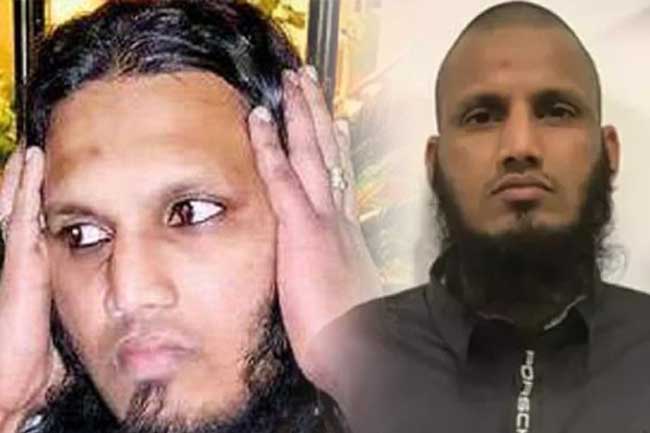
Kanjipani Imran: Tamil Nadu Q Branch sets up massive search

Wanted drug trafficker Kanchipani Imran is on the run from Sri Lankan Authorities and the ‘Q’ Branch of the Tamil Nadu police is actively searching for whether he is hiding in Tamil Nadu.

The Q Branch is one of the Criminal Investigation Department wings of the Tamil Nadu Police.

Look-out notices have been issued to all airports to prevent the criminal from fleeing abroad.

The Sri Lankan government has also sought India’s help to capture Imran. The Central Intelligence Agency has also warned the Tamil Nadu government in this regard.

An intensive search is being conducted in 14 coastal districts of Tamil Nadu and fishing village areas.

Q Branch Officers told Indian media that its personnel are questioning several local people and fishermen to determine if Imran had sneaked into Rameswaram.

A Sri Lankan court has already ordered the guarantors for Najeem Mohammed Imran alias Kanjipani Imran to appear in court.

Kanjipani Imran, who is a leading drug trafficker in the country, had fled to India and is now preparing to enter Pakistan from there.

Imran’s mother, brother, and another individual are listed as guarantors.

Kanjipani Imran faces serious charges in Sri Lanka including murder, and he was released on a Rs. 5 Million personal bail by the Colombo Chief Magistrate’s Court on the 20th of December, and the court also barred him from travelling overseas.

Indian Intelligence put Tamil Nadu on High Alert following information that one of Sri Lanka’s notorious drug lords ‘Kanjipani’ Imran had entered India through the coastal Rameswaram, five days later.

According to the court order, Kanjipani Imran must report to the Maligawatte Police on the last Sunday of every month, and as he failed to appear the Police had reported the matter to the court.

Sri Lanka Police said that the court issued an order on Imran’s mother, brother and another person who were listed as guarantors to appear in court at the next trial date in March 2023.

Indian media have reported that Najeem Mohammed Imran alias Kanjipani Imran, who is a leading drug trafficker in the country, had fled to India and is now preparing to enter Pakistan from there.

However, the main question is, how did he fled to India after his release on bail.

Indian Intelligence put Tamil Nadu on High Alert following information that one of Sri Lanka’s notorious drug lords ‘Kanjipani’ Imran had entered India through the coastal Rameswaram.

An Intelligence alert said Imran had managed to enter the coastal town on Christmas eve along with another individual.

Kanjipani Imran faces serious charges in Sri Lanka including murder, and he was released on a Rs. 5 Million personal bail by the Colombo Chief Magistrate’s Court on the 20th of December, and court also barred him from travelling overseas.

The Sri Lankan government on Tuesday (3) raised concerns over the country’s intelligence network after notorious underworld gangster and drug lord Kanjipani Imran alias Mohammed Imran fled to India after his release on bail.

What is Kajipani Imran’s connection with India?

In December 2021, the Indian National Investigation Agency (NIA) arrested nine Sri Lankan nationals from the special camp for refugees at Tiruchirapalli for their alleged involvement in smuggling of drugs and arms, and for their close ties to a durgs and arms peddler in Pakistan.

The agency said that two of the arrested men were in regular touch with a Pakistan-based drugs and arms runner, Haji Salim, who often travelled between Dubai, Pakistan and Iran.

The Indian National Intelligence Agency says that hese men and Salim were working to revive the LTTE in Sri Lanka and India.

Among these nine men was Gamage Suranga Pradeep also known as Welle Suranga.

He was arrested by the Police Special Task Force in Sri Lanka on the 9th of April 2019.

Interrogation of the suspect at the time revealed that he was closely liked to the now-slain underworld don Makandure Madush and Kanjipani Imran.

Indian intelligence services also said that C. Gunasekaran also known as Kimbula Ele Guna, Nalin Chathuranga also known as Ladiya had maintained ties with Pakistan-based drugs and arms runner Haji Salim as well as with Kanjipani Imran.

Who is Kanjipani Imran?

Najeem Mohammed Imran alias Kanjipani Imran fled to Dubai from Sri Lanka using a fake passport on the 28th of March 2015.

He was spending a luxurious life in Dubai, and was arrested along with Makandure Madush and other gangsters following a party at a Dubai Hotel on the 5th of February 2019.

Thereafter, Kanjipani Imran was deported to Sri Lanka and was arrested in Katunayake when he attempted to flee to the Maldives.

Later, the one-time underworld don Makandure Madush was gunned down while in police custody in Sri Lanka.

On the 23rd of August 2019, the Colombo High Court sentenced Kanjipani Imran to six year of rigorous imprisonment for the possession and trafficking of drugs.

Attorney Lakshman Perera who appeared for Kanjipani Imran told court that his client pleads guilty for the for the possession and trafficking charged.

Accordingly the court sentenced Kanjipani Imran to six years rigorous imprisonment – three years for each charge of possession and trafficking.

Last year, he was released on bail in the case filed for threatening a police officer with death.

Concerns are mounting over what happened to the remaining three year prison term, and did underworld gangster managed flee after his release on bail.
Posted in Uncategorized

Sri Lanka local polls on the cards, but result may not be foregone conclusion

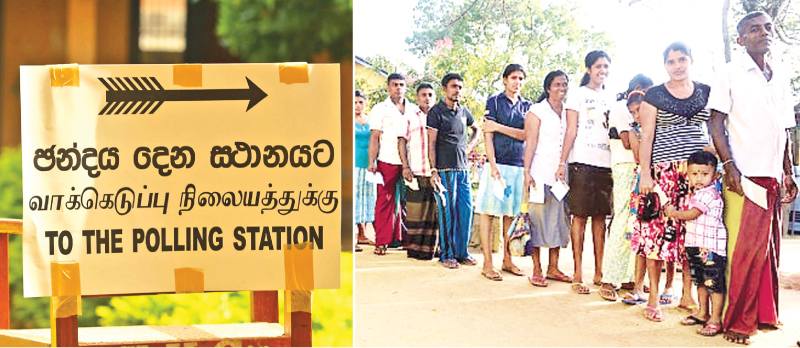
Sri Lanka’s election commission has taken what appears to be the first tentative step towards a decisive round of local government elections due early March, and though the ruling Sri Lanka Podujana Peramuna (SLPP) is far from pumped, its many challengers in the opposition, analysts say, may also be prematurely counting their chickens.

While its detractors are determined to drag the government kicking and screaming through the electoral process in the new year, the result they’re counting on may not quite come to pass; at least not in the way they might expect.

The opposition, namely the main opposition Samagi Jana Balawegaya (SJB) and the leftist National People’s Power (NPP), has accused the government of delaying the polls, cowering in fear of a seething public. Refuting the allegation, the SLPP has claimed that it is in fact the opposition that is quietly shuddering at the thought of revealing their inadequacies and their failure to capitalise on the eroded popularity of the once mighty Pohottuwa.

Either way, with the country still reeling from its worst currency crisis in decades albeit achieving a semblance of stability over the last few months, the outcome of an election at this juncture is becoming increasingly hard to predict. New developments, both political and economic, have unhelpfully complicated what would otherwise have been an easy call just a few moons ago and the proposed election may not turn out to be the convenient “litmus test” that many are expecting it to be.

While the prospects of a recovery in the new year are better than what they were towards the end of 2022 – with headline inflation now on a downward trajectory – slow progress in restructuring debt and securing an eagerly awaited International Monetary Fund (IMF) bailout package, proposed utility tariff hikes, and a sharp increase in personal income tax have done little to improve the public mood.

However, in the absence of scientific opinion polling, any pronouncements on the popularity or lack thereof of Sri Lanka’s mainstream political parties remain conjecture at best; and, though there is no gainsaying that the SLPP has seen better days, who will be vanquished and who will emerge victorious at the upcoming polls – assuming they take place at all and assuming the public even has the appetite for an election – is still anybody’s guess.

Unsurprisingly, these uncertainties have done little to dissuade parties on either side of the aisle from goading each other to enter a 10-billion rupee contest that no one – least of all the country – is adequately prepared for, and it’s looking more and more like the government is resigned to the possibility of a fight from which it will not walk away unscathed.

It’s not for a lack of trying, however. One cabinet minister has already gone on record claiming that an election at this point will mean Sri Lanka won’t have enough funds for rice. Various other government spokesmen have suggested that the country cannot afford an election of any kind. United National Party (UNP) MP Vajira Abeywardena, who entered parliament after his party leader Ranil Wickremesinghe vacated the UNP’s sole seat for a more plush office near the Galle Face Green, said the proposed local polls would be bad for tourism.

“If an election is held at this time the country will slide into another massive crisis,” said Abeywardena.

Meanwhile, a writ petition has been filed at Sri Lanka’s apex court by a retired military official seeking an order suspending the local government elections citing the country’s economic situation. A spokesman for the SJB told reporters on Wednesday that the petitioner is known to former President Gotabaya Rajapaksa, who was forced to resign in July after a wave of mass protests. The Pivithuru Hela Urumaya (PHU), which now functions as an independent group in parliament, has also questioned the need for the petition in question to cite the finance ministry secretary as a respondent. PHU leader Udaya Gammanipla suggested that the entire exercise was a tactic to delay the election, as part of a screenplay already written.

“How is the finance ministry secretary a respondent in a case on postponing an election? According to the script, the secretary shows up in court and says ‘we don’t have the funds for polls, so we can’t hold this election now’,” he said.

SLPP parliamentarian S M Chandrasena has rejected this claim. He told reporters on Wednesday that the Pohottuwa has no desire to postpone elections and that the party has already commenced work in anticipation of soon-to-be-called local government polls. The Anuradhapura district MP insisted that his party is better prepared for elections than any in the opposition.

“The SLPP has taken measures to sign nominations on January 07, 08 and 09. I saw reports about a colonel who had petitioned the Supreme Court regarding the local government polls. We consider it a petition by a citizen. We don’t know what the verdict will be.

“As a party, we’ve already commenced our election work at the party headquarters, before any of the opposition parties that are shouting and demanding an election,” he said.

For its part, the election commission has announced that nominations for the local government elections will be accepted from January 18 to 21. Election Commission Chairman Nimal Punchihewa told EconomyNext on Wednesday, however, that a date for the election can only be announced after nominations have been accepted.

Notices calling for nominations for 340 local government bodies were also released by district secretaries on Wednesday. Members to the local government bodies need to be appointed by March 20, for which elections need to be held before March 10.

However well-intentioned, the election commission’s announcement on Wednesday was seen with scepticism by the main opposition. SJB MP Mayantha Dissanayake claimed at a press conference on Wednesday that the government would like to delay the polls by another year.

“How they plan to do this is by getting the election commission to call for nominations but getting the district secretaries or returning officers to claim that the conditions are not right for an election in their respective districts,” claimed Dissanayake.

President Wickremesinghe, meanwhile, has informed the UNP that he intends to stay out of any election campaigns connected with the local government polls – a likely indication that elections are indeed coming. Though sources claim that the president is not too keen on local government polls – having shown a preference for an early presidential election instead – his message to his own party demonstrates a reluctant acceptance that he may not have a choice in the matter.

A UNP statement said quoting Wickremesinghe that he is mandated only to pull the country out of the abyss it currently finds itself in and not to engage in electioneering, though his critics would take issue with the choice of the word ‘mandate’. His participation will strictly be limited to heading a UNP’s Working Committee meeting to decide whether or not the party should contest. Wickremesinghe also said that, in the event the UNP decides to contest, 40 percent of the nominations should be new faces. More revealingly, the president said that funds have only been allocated for the salaries of 4,000 local government representatives and the remaining 4,000 must indicate whether they wish to work without pay.

The last remark is in reference to a proposal by Wickremesinghe to cut down the number of local councillors by half: from a staggering 8,000 to 4,000. Opposition legislators have claimed that the lengthy delimitation process that this would require is yet another delay tactic by the government.

The fact remains, however, that cash-strapped Sri Lanka cannot afford to keep paying salaries and other benefits to such vast numbers of elected officials. Restructuring the country’s bloated public sector is central to Wickremesinghe’s reform agenda, and whether politically motivated or not, analysts say any move to cut down wasteful offices even at the local level would be welcome. But time is running out, and chances are that the local government elections will be held sometime in March this year without any earth-shattering changes. Whether this highly anticipated event will be of any real consequence, however, remains to be seen.

New allegiances are being forged behind the scenes virtually every day, and, according to a number of analysts, there is no clear victor even at this late stage. Public opinion can turn on a dime no matter what social media sentiments may indicate at present and, depending on how successful or not the shaky — some might call unholy — Wickremesinghe-Pohottuwa alliance is in turning the economy around while also delivering a permanent solution to the ethnic issue by February 04 — a tall order if ever there was one — things could still go any number of ways. Nothing, it appears, is set in stone.

Posted in Uncategorized

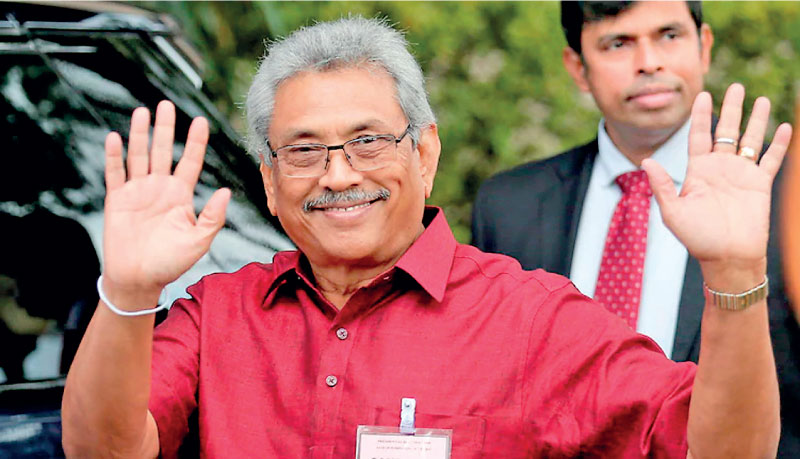
GR returns after holidaying in the UAE

Former President Gotabaya Rajapaksa returned to Sri Lanka today after holidaying in the United Arab Emirates (UAE).

Rajapaksa was earlier pictured at Dubai’s private ‘Fame Park’ with the owner and animals.

Fame Park is an exotic animal farm, owned by Emirati Entrepreneur Saif Ahmad Belhasa, which is a revolving door for celebs when they visit the UAE.

Saif Ahmad Belhasa posted images of Rajapaksa posing with the animals and also having a discussion with him.

Rajapaksa left for the UAE from Sri Lanka recently.

There were reports earlier that he was to travel to the US from Dubai.

Rupee depreciates by 44.8% against the Dollar in 2022

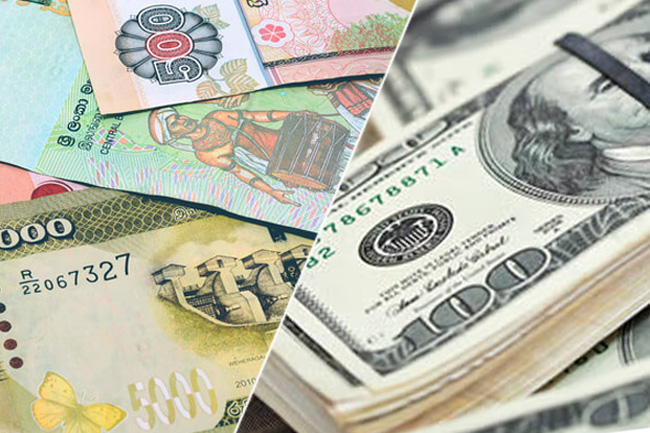
The Sri Lankan Rupee has depreciated by 44.8 percent against the US Dollar in 2022.

According to the weekly economic indicators report published by the Central Bank of Sri Lanka, the depreciation of the rupee has substantially reduced in the last quarter of 2022.

The CBSL said in addition to the depreciation of the Rupee against the US dollar, the Sri Lankan rupee has devalued by 38.6 percent against the Indian rupee.

Furthermore, the Rupee has depreciated by 41.4 percent against the Euro, 38.1 percent against the British Pound and by 36.4 percent against the Japanese Yen in the year 2022.

Posted in Uncategorized

Govt. to seek AGs advice over LG Polls

Government has decided to seek the Attorney General’s advice with regard to holding the local government election, government sources said.

Government has decided to seek the Attorney General’s advice as there is a division among the members of the election commission. It is said that the majority of members in the election commission is against the ideology held by its Chairman Nimal Punchihewa who holds that the local government elections should be held.

The election monitors are of the opinion that there could be issues pertaining to holding the election even if nominations are called in this situation.

It has been said that holding of elections could run into trouble as the total cost of it is said to be rupees 12 billion whereas the total amount allocated for the Elections Commission from the budget is Rs 10 billion.

Some of the Election Commission members are of the opinion that announcing the date of the elections should be delayed even if nominations are called.

However sources close to the Election Commission Chairman is of the opinion that the Finance Ministry will disburse additional funds if needed.

Posted in Uncategorized

Postal voting applications for LG poll accepted from tomorrow

The acceptance of applications for postal voting for the Local Government Election will begin tomorrow (5).

The National Election Commission said the acceptance of applications will draw to an end at midnight on the 23rd of January 2023.

Commissioner General of Elections Saman Sri Ratnayake said the deadline will not be extended under any circumstance.

The Commissioner said state workers, principals, teachers, officers of the Sri Lanka Transport Board, postal and railway workers, Police officers and other security forces personnel are eligible to apply for postal voting.

The requirements in order to complete the application can be accessed via www.elections.gov.lk or by contacting 1919.

The Election Commission said postal voting applications can also be submitted online.

Mahinda holds talks with Sampanthan

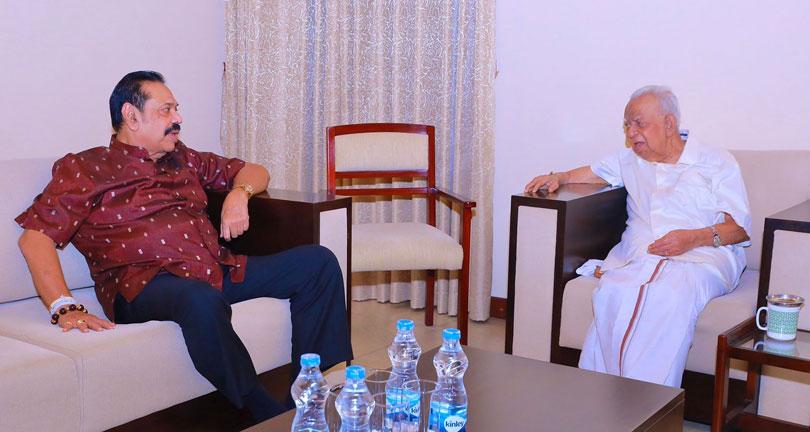
Former President Mahinda Rajapaksa met Tamil National Alliance (TNA) Leader R. Sampanthan today and discussed his health and issues faced by the Tamil community.

Rajapaksa met Sampanthan at his residence in Colombo.

The former President said that he inquired into Sampanthan’s health.

According to reports, they also discussed the issues faced by the Tamil community in Sri Lanka, particularly in the North and East.

Posted in Uncategorized

Japan, Switzerland Among New UN Security Council Members

cuador, Japan, Malta, Mozambique and Switzerland got a formal welcome into the UN Security Council, taking the two-year seats they won unopposed in June, according to The Associated Press.

In a tradition that Kazakhstan started in 2018, the five countries’ ambassadors installed their national flags alongside those of other members outside the council chambers.

Mozambican Ambassador Pedro Afonso Comissário of Mozambique called it “a historic date” and Swiss Ambassador Pascale Baeriswyl said she felt “a deep sense of humility and responsibility” as their countries marked their first-ever terms on UN’s most powerful body. Malta joined for a second time, Ecuador a fourth and Japan a record 12th.

China, France, Russia, the United Kingdom and the United States are permanent, veto-wielding members of the group. Its 10 other members are elected by the 193-nation General Assembly for staggered, two-year terms. They’re allocated by global regions.

To many countries, winning a council seat is considered a signature diplomatic accomplishment that can raise a nation’s global profile and afford small countries a bigger voice than they might otherwise have in the major international peace and security issues of the day.

The council deploys peacekeeping missions, can approve sanctions and speaks out — sometimes — on conflicts and flashpoints, while also surveying such thematic issues as terrorism and arms control.

While many matters are perennials on the agenda, council members also can use the platform to spotlight emerging concerns or topics of particular interest to them.

Countries often campaign for the council for years. Some 60 nations have never had a seat since the group’s formation in 1946.

The five latest members are replacing India, Ireland, Kenya, Mexico and Norway.

Their terms ended Dec. 31.

The other current two-year members are Albania, Brazil, Gabon, Ghana and United Arab Emirates.

First Parliament sitting for 2023 tomorrow

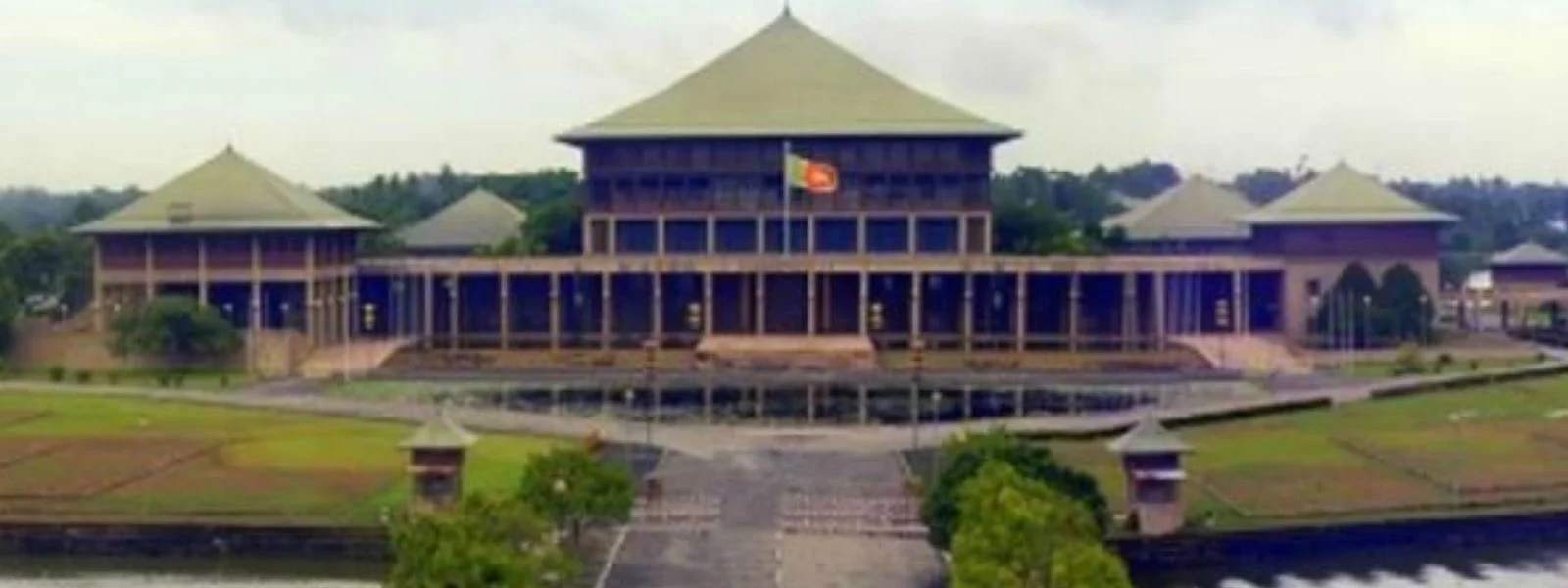
Parliament is scheduled to convene for the first time in 2023, tomorrow.

The first sitting of Parliament for 2023 is scheduled to begin at 9.30am.

Parliament convened on the 13th of December for its final sitting in 2022.

Meanwhile, the Committee on Public Enterprises and Committee on Public Finance are also scheduled to convene tomorrow.

Dates for calling nominations for LG election announced

The National Election Commission announced that the nominations for the Local Government Election will be accepted from the 18th to the 21st of January.

Nominations for the Local Government Election will be accepted until 12 noon on the 21st of January.

Commissioner General of Elections Saman Sri Ratnayake speaking to News 1st said that bonds can be placed until 12 noon on the 20th of January 2023.

The National Election Commission announced that the notice calling for nominations for 340 Local Government Institutions were released by the District Secretaries on Wednesday (4).

The notice will include the date of accepting nominations, location, bonds, candidates, female representation among other matters.

Members for Local Government Institutions need to be appointed by the 20th of March, and for that elections needs to take place before the 10th of March 2023.