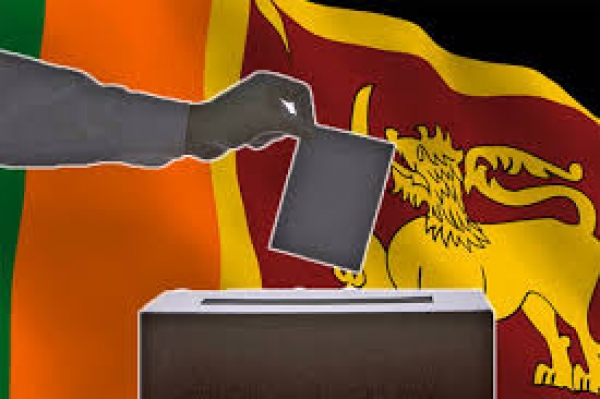
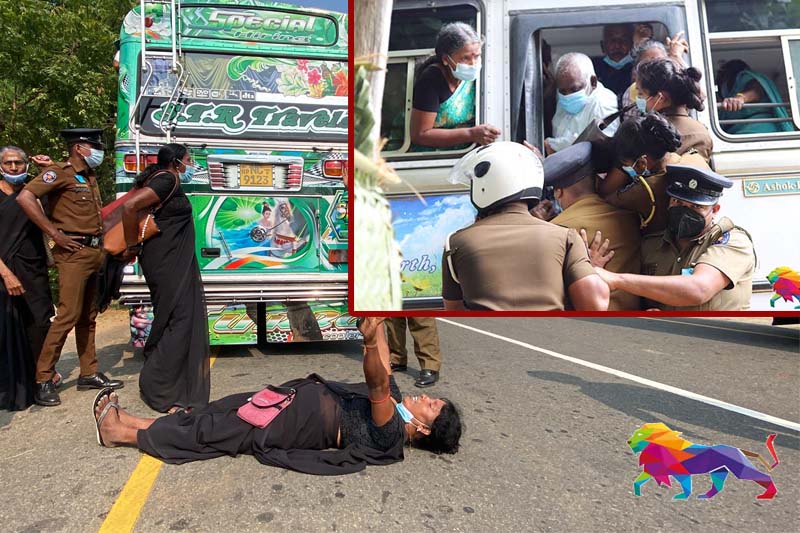
A presidential election in November?

A presidential election is likely towards the end of this year in the event the scheduled local government polls are postponed further, according to ‘Divaina’.

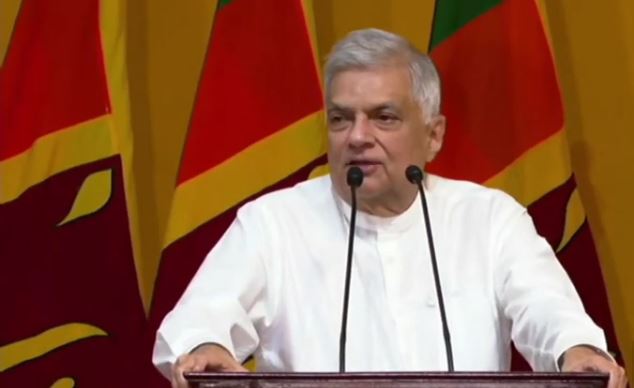
The constitution provides for incumbent Ranil Wickremesinghe to call for the election if he runs for office again.

Opposition parties allege the government wants to put off the LG polls since a defeat will directly impact the result of the next presidential election due after 17 November 2024.

“No provisions for early presidential election”

However, SLPP breakaway group member Prof. Charitha Herath says Wickremesinghe cannot call for an early presidential election.

According to Herath, clause 31 (c) of the constitution does not allow a president elected by parliament to call for an election to vie for office again.

“It is true the result of the LG polls seriously impacts the president and the government. However, that does not allow for a constitutional right to call for an early presidential election,” said MP Herath.

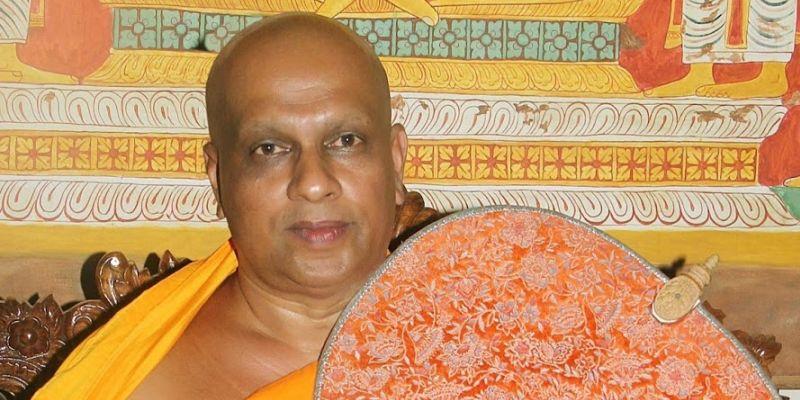
Asgiriya Chief Prelate calls for unity & patience to overcome the challenges

Chief Prelate of the Asgiriya chapter of Siam Nikaya Warakagoda Gnanarathana Thera has called for unity and patience to overcome the challenges in the New Year.

Warakagoda Gnanarathana Thera issuing a message to mark the New Year reiterated the importance of people supporting one another and avoiding conflicts during trying times.

The Chief Prelate said Sri Lankans are enduring a difficult time period and therefore it is essential to navigate it without further conflicts.

Warakagoda Gnanarathana Thera said in order to succeed as a country, people should learn from the past.

Gnanarathana Thera stressed that people will not be able to receive any relief through clashes and arguments.

Chief Prelate of the Asgiriya chapter of Siam Nikaya Warakagoda Gnanarathana Thera added that he is confident that Sri Lanka can overcome the current crises in 2023, if everyone worked together for the best interest of the country.

Sri Lanka stares at food shortage, President Wickremesinghe asks for help -MINT

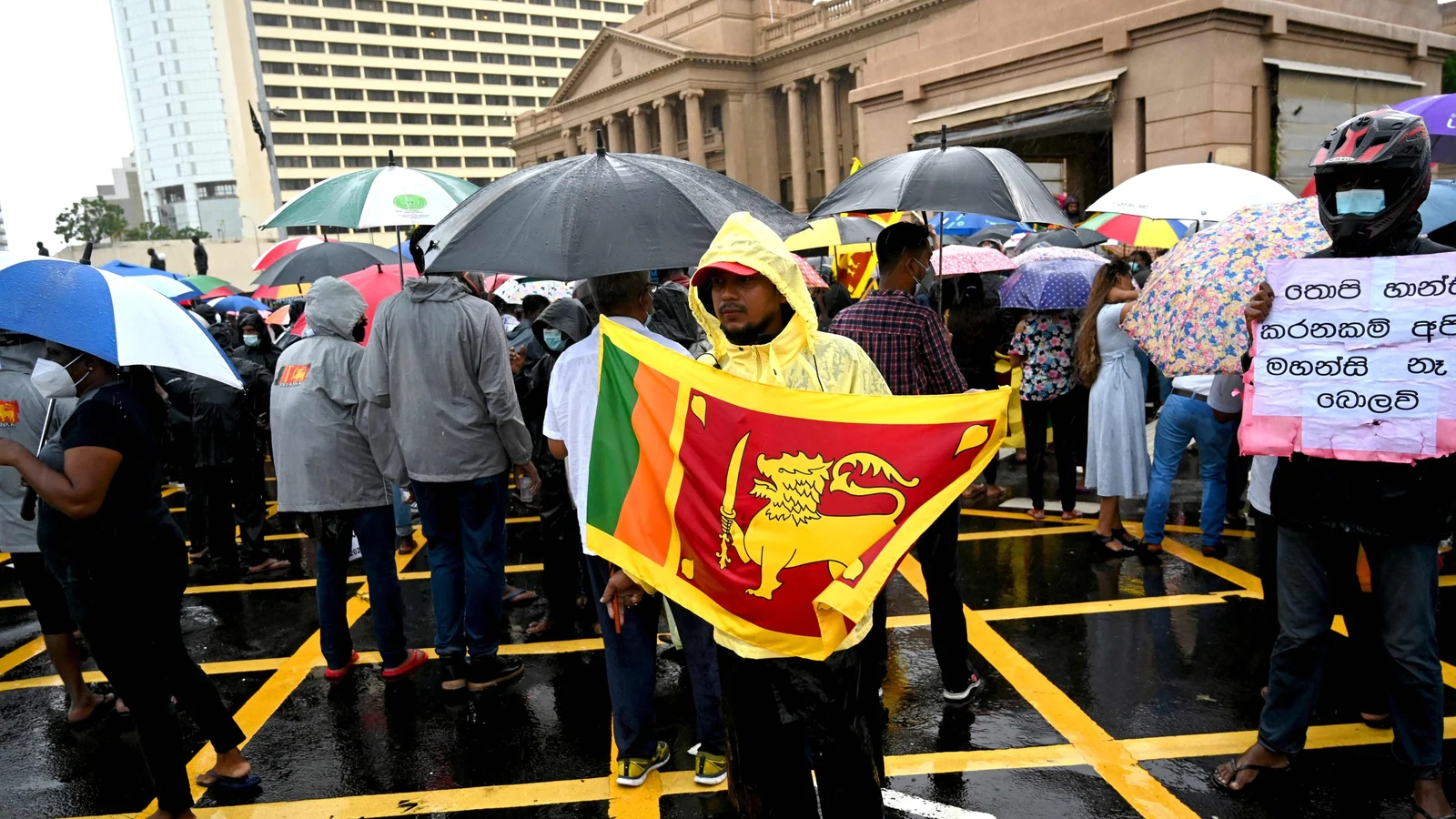
The critical situation of the currency crisis in Sri Lanka has resulted in political, economic and social turmoil. Further, this currency collapse has resulted in a rise in food prices by 100 per cent in two years. Amid all this, President Ranil Wickremesinghe has sought support, The Island Online reported.

In Sri Lanka around 40 per cent of households depend on agriculture. And two out of ten homes have suffered income reduction from June to December 2022. And to recover from the income reduction one out of two households use negative coping mechanisms like loans to cope with the lack of food or money to buy it, according to The Island Online English-language daily in Sri Lanka.

And in addition to this, the salaries and incomes in the country are not able to cope making it difficult to afford food. Further, The Island Online report states that in Sri Lanka it typically takes about two years to recover from a currency crisis.

“Immediate action to provide farmers with quality seeds, fertilisers and pesticides will enable them to protect their livelihoods and feed their communities. It is also critical to provide the most vulnerable farmers, livestock keepers and fishers with cash assistance to enable them to restore their productive assets and fast-track their recovery,” an FAO report said.

The production in agriculture saw a slump since mid-2021. As the country faces major shortages of fertilizers and other essential production inputs; livestock keepers cannot access feed and basic veterinary supplies, and fishermen cannot access fuel for motorised boats, The Island Online reported.

The Island Online quoted president Wickremesinghe who on December 16 this year requested support from everyone keeping aside political differences. He emphasized that everyone should forget their differences and dedicate themselves to building the country’s economy.

He said that “In the year 2023, there is a possibility of a food shortage. We started the food security program to deal with that. I suggest that a review of the implementation of this program be done again in each divisional secretariat. Here you can get new data. Accordingly, we are proceeding with the food security program in a formal manner. This program will not end after 2023. We will continue to do so. Local councils have representatives from each political party. But we all have to implement this program together,”, according to The Island Online report.

Wickremesinghe also mentioned that they have been able to provide fertilisers needed by the farmers. And with the success of the crop season, they have a surplus of rice. Although they had identified the problems like insufficient storage facilities.

“We are also working to solve those problems. At the same time, we have taken measures to control the price of paddy,” he added. These steps may result in the recovery of the country from food shortages and economic problems.

(ANI)

Posted in Uncategorized

Voter register for Local Government Election on display from today

The voter register for the Local Government Election will be on display from today (31).

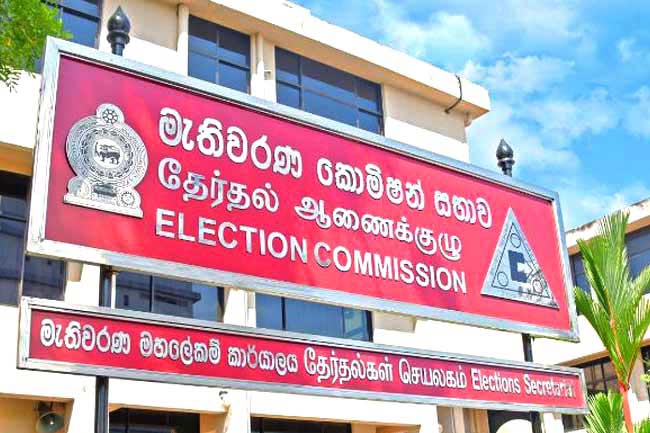
The National Election Commission said the lists are on display at each Local Authority for inspection, free of charge during office hours.

The Commission also stated that Returning Officers have already taken steps to display notifications in this regard at all Local Authorities.

The Gazette read; In terms of Section 12C of the Local Authorities Elections Ordinance (Chapter 262), it is hereby notified that the Electoral Register prepared in relation to the Local Authorities and certified on 26.12.2022, in terms of Section 12B of the said Ordinance from and out of the Electoral Register prepared for the year 2022 and certified on 31st October, 2022 as per the provisions of the Registration of Persons Act, No. 44 of 1980 as amended by the Registration of Persons (Amendment) Act, No. 22 of 2021 and valid for the purpose of Parliamentary Elections, are put on display at each Local Authority for inspection free of charge during office hours. It is also notified that the Returning Officers have already taken steps to display notifications in this regard at all Local Authorities.

U.S. announced more than $240M in new assistance to Sri Lanka in 2022 – Ambassador

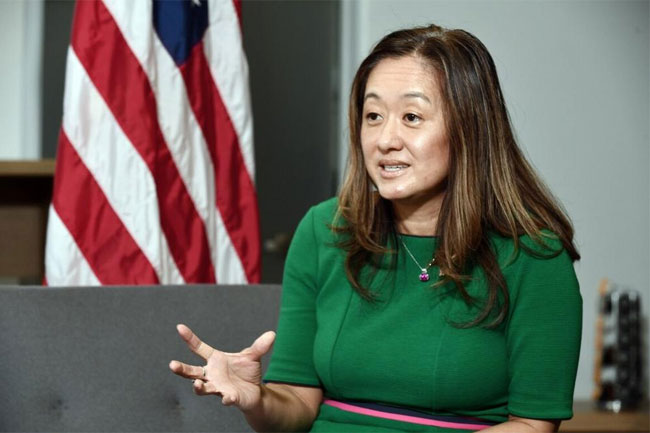
The United States Ambassador to Sri Lanka Julie Chung has recalled the multitude of ways the US and Sri Lanka have come together in 2022 to make a difference.

Reflecting on 2022, the Ambassador said on Twitter that in 2022 alone, the United States has announced more than $240 million in new assistance to Sri Lanka.

The Ambassador noted that the relationship between the two countries, however, is much bigger than just about assistance. “It’s about partnership.”

“Together we’ve taken steps to rid the oceans of plastics, address the crisis of climate change, connect neighbors, build bilateral trade, and advance a free & open Indo Pacific region,” she added.

Ambassador Chung said 2022 has been an unforgettable year and expressed hope that 2023 will bring the economic recovery for the people.

“I am truly grateful for the people I’ve met, experiences I’ve shared, and the differences we’ve made together. And I am hopeful 2023 will bring economic recovery, lasting change, and new opportunities to the people of Sri Lanka.”

Posted in Uncategorized

President says 2023 critical for Sri Lanka

President Ranil Wickremesinghe says the year 2023 will be a critical year for Sri Lanka.

In his New Year Message, the President said that Sri Lanka is looking at the New Year 2023 after having undergone the bleakest of times and immense hardships.

“I understand the great burdens that are placed on all of us and the setbacks that a majority of us have suffered due to the country’s abject economic collapse. Yet I believe that we have already gone through the worst of these times,” he said.

The President also appreciated all of those who are committed to the country first and he thanked the country for the patience and courage as the Government took the critical, initial steps to stabilise the economy.

“Indeed, 2023 will be a critical year in which we plan to turn around the economy. 2023 is also the 75th year of independence from the British Empire. Looking back, it is obvious that we have not done as well as other ex-colonies. This is why the youth of our country are calling for a system change – especially at this juncture. This cannot be ignored,” he said.

The President said that Sri Lanka must boldly implement the proposed social, economic and political reforms to build a prosperous and productive country in the coming decade.

Posted in Uncategorized

Why Sri Lanka’s suffering may not end soon

In May, Sri Lanka defaulted on its overseas debt. Amid political upheaval and human suffering, the Indian Ocean island is still awaiting a $ 2.9 billion rescue by the International Monetary Fund.

Lacking resources to buy even essentials like fuel, the economy is falling into an ever-deepening abyss. The poverty rate has doubled in one year; output has cratered and inflation soared. A decade of welfare gains has been eroded. All of this raises a question: When did sovereign debt restructuring become so hard?

In a less complex world, poor economies defaulted to rich nations. The Paris Club, comprising the US, Japan, UK, and other advanced nations, coordinated rescheduling efforts among its members and with the IMF. Nobody gained much by prolonging the misery of a sovereign debtor that couldn’t be liquidated anyway.

But Sri Lanka’s is a 21st-century insolvency with several competing interests. Big-bulge institutions like BlackRock Inc. and Morgan Stanley Investment Management have formed their own group to pursue $ 12.6 billion in claims, or half of the Government’s foreign-currency debt.

In addition, Sri Lanka’s bilateral creditors include China and India. Neither Beijing nor New Delhi wants the other to extract more financial or geopolitical mileage out of the crisis.

To speed things along, the besieged debtor has broached the idea of a Most Favoured Creditor: Once India has that status, it will get any sweetheart deal offered to China, which holds 52% of the bilateral debt. Such assurances haven’t managed to break the logjam.

If anything, there’s reason to fear that Colombo’s ordeal will continue even after the IMF deal. In a move reminiscent of the hedge-fund boss Paul Singer’s campaign against Argentina, Hamilton Reserve Bank Ltd. has sued Sri Lanka in New York.

The delay in resolution of sovereign crises is increasingly a norm. For 15 years after its 2001 default, Argentina had to worry about its presidential plane or naval fleet being seized by Singer’s lawyers. It was only in 2016 that the billionaire’s Elliott Management got what it wanted and went away. That was hardly a one-time affair.

Until the early 1990s, less than 10% of crisis-hit countries ended up in litigation; now half do. The 3% of restructured debt governments typically get sued for is unusual even for corporate borrowings, according to the European Central Bank’s Julian Schumacher and other researchers. “We are not aware of many fields of law in which such a high share of disputed claims end up in court,” they say.

The chance that some minority investors would try to arm-twist Sri Lanka for better terms is high. The bigger the loss that’s imposed on bondholders, the more likely that some of them will hold out. On the other hand, if it kept the punishment low for all, then Sri Lanka would find it hard to convince the IMF that it won’t be back for a second rescue.

After a 50% haircut on international bonds, and a 25% write-down in the money owed to bilateral and multilateral creditors, the Government’s debt load in 10 years will still exceed 130% of gross domestic product at current bond yields, higher than 121% of GDP at present, according to Verité Research. The think tank’s Sri Lanka policy group estimates that a 10-year extension of maturities on current domestic debt could bring the burden down to 101% of GDP.

Touching local-currency debt would be tricky. A Sri Lankan bank that lent money to the Government in 2021 has lost most of it to 60%-plus inflation. Its investors — and depositors — could balk at holding on to those low-yielding notes for another 10 years. However, it’s also possible that the domestic bond market will see the pain as an unavoidable side-effect of lifesaving surgery.

With a little luck, the near-12% contraction in output may reverse, boosted by tea, textiles and tourism services. As the pressure from a strong dollar and the war in Ukraine begin to fade, an end to shortages could slay inflation; the 28% yield on three-year, local-currency bonds may start sliding toward last year’s 9% level.

That return of confidence will need a spark, though. The new President Ranil Wickremesinghe isn’t wrong when he says there’s no point in reform when his country doesn’t have an economy. But it does have a financial system, which could be put on a surer footing by changing the mandate of the central bank to a Hong Kong-style currency board operating a fixed exchange rate.

The new Central Bank law, which the IMF insisted on, repeats the usual homilies; freedom from political interference, and a commitment to independent monetary policy. The messy politics of this formerly civil war-torn country is unlikely to respect those lofty ideals once the current storm has passed. Besides, there’s no reason why a small, open economy should want its own monetary policy.

For all the warnings routinely repeated about the impending demise of Hong Kong’s dollar peg, the link survives as an important anchor. The Indian counterparts of the wealthy Chinese could do with a similar hard-currency enclave at their doorstep.

It might still be something to consider once the IMF rescue is under way. The disastrous policies of former President Gotabaya Rajapaksa and his powerful family ruined this tropical idyll. Untangling the knots of creditors’ claims has delayed Sri Lanka’s rescue and stalled its recovery. Hopefully, 2023 will bring the island of 22 million people better luck, more money — and fresher ideas.

Source:Bloomberg

Posted in Uncategorized

China must share data on Covid impact: WHO

Chinese officials must share more real-time information on Covid in the country as infections surge, the World Health Organization (WHO) has said.

Many of the country’s strict restrictions have been lifted over the last few weeks, but cases have soared and several countries are now screening travellers from China.

WHO officials say they want to see more data on hospitalisations, intensive care unit admissions and deaths.

It also wants figures on vaccinations.

The United States, Spain, France, South Korea, India, Italy, Japan and Taiwan have all imposed Covid tests for travellers from China, as they fear a renewed spread of the virus. And passengers arriving in England from China will have to provide a negative test before they board a flight.

In a statement issued after talks with Chinese officials the UN health agency said: “WHO again asked for regular sharing of specific and real-time data on the epidemiological situation… and data on vaccinations delivered and vaccination status, especially in vulnerable people and those over 60.”

The agency said it was willing to provide support on these areas, as well as help addressing the issue of vaccine hesitancy.

It also stressed “the importance of monitoring, and the timely publication of data, to help China and the global community to formulate accurate risk assessments and to inform effective responses”.

WHO’s technical advisory group on the evolution of Covid-19 is set to hold a meeting on Tuesday. The agency says it has invited Chinese scientists to present detailed data on viral sequencing. It says it is “understandable” that some countries are imposing fresh restrictions on people travelling from China.

The sudden lifting of many of China’s restrictions follows November’s protests against the government’s management of the disease. Until then, China had one of the toughest anti-Covid regimes in the world – known as a zero-Covid policy.

It included strict lockdowns even if only a handful of cases had been found, mass testing in places where cases were reported, and people with Covid having to isolate at home or under quarantine at government facilities.

Lockdowns have now been scrapped, and quarantine rules have been abolished. People are now free to travel abroad again. Cases have since been on the rise, with the Chinese government reporting about 5,000 a day.

But analysts say such numbers are vastly undercounted – and the daily caseload may be closer to one million. Officially there have only been 13 Covid deaths throughout December, but UK-based health data firm Airfinity said on Thursday that around 9,000 people in China are probably dying each day from the disease.

(BBC)

Posted in Uncategorized

Police make rare probe into Navy’s harassment of Wanni journalist

Police are making a rare investigation into a reported harassment of a Tamil journalist in the Wanni by the Navy.

Kanapathipillai Kumanan gave a statement for more than three hours at the ASP’s office in Mullaitivu yesterday (29) with regard to the incident he faced more than six months ago.

Submitting a copy of video footage which his media colleagues captured, Kumanan has told the police that he could identify the culprits at an identification parade.

The incident happened on June 07, when he was taking pictures of a public protest against an attempt by the Survey Department, police and the Navy to expand the latter’s camp at Vattuvakkal by acquiring private property.

Navy men tried to grab his official accreditation card issued by the Government Information Department, to which he had objected, saying that he doubted what would happen if it would come to their possession.

On the same day, member of Pudukudiirippu Pradeshiya Sabha Muttusamy Mugundakajan complained to the then prime minister Ranil Wickremesinghe in writing.

His complaint was referred by the premier’s senior assistant secretary G.I. Sajiwani Perera to the secretary of the ministry of public security for suitable action.

Kilinochchi missing persons’ relatives allege harassment

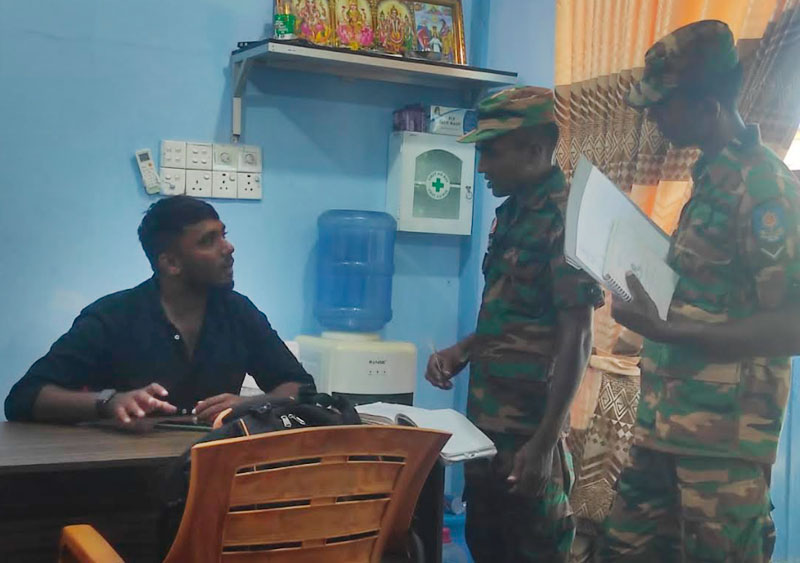
Relatives of missing persons have claimed that individuals manning their office in Kilinochchi are being subjected to constant and unnecessary questioning by the security forces, particularly the Criminal Investigations Department (CID).

Speaking to The Morning, Kathirgamanathan Kokilavani, whose eldest son had gone missing in December 2008, said that in 2017, the families of missing persons had staged a protest in the Kilinochchi town, as their longstanding demands from successive governments for justice for the people who disappeared during the war did not receive a reasonable response. Following the protest, she said that they had established an office in Kilinochchi town for the relatives of missing persons in the Kilinochchi area.

“In the Kilinochchi District alone, more than 1,600 people disappeared during the war. This office was established for all those people. Every day, a relative of a certain missing person comes and stays at this office from morning to evening. They are here for their relatives and not for any illegal activity. All they are doing here is making flower wreaths and performing religious activities for their disappeared relatives.”

However, she claimed that those at the said office are being subjected to constant and unnecessary interrogation by the security forces, mainly the CID.

“When someone comes to meet us here, members of the security forces would arrive at this place or call us on the phone and interrogate us regarding who came and why they visited the office. Even when a vehicle is parked here, they question us as to why the vehicle was there and who arrived in it. Despite knowing that nothing illegal is happening here, they question us unnecessarily,” she said.

Meanwhile, Yogeswaram Wijayalakshmi, who is at the office in Kilinochchi for her daughter who disappeared during the war, told The Morning that she too has been questioned by the security forces on several occasions for being at the said location. She said that she had informed the security forces that she was not engaging in anything illegal in the office and that she is ready to leave the office immediately if the Government makes an official statement regarding what happened to her missing daughter.

The issue of missing persons in the Northern and Eastern provinces has long been a matter of attention both locally and internationally. Families of missing persons engage in various activities such as holding protests and filing complaints with local and foreign institutions to determine what had happened to them. Although various governments have implemented programmes such as the establishment of the Office on Missing Persons to provide justice for missing persons, their families have criticised such measures and questioned the sincerity of the same for a variety of reasons.