Russian Red Wings to fly to Mattala

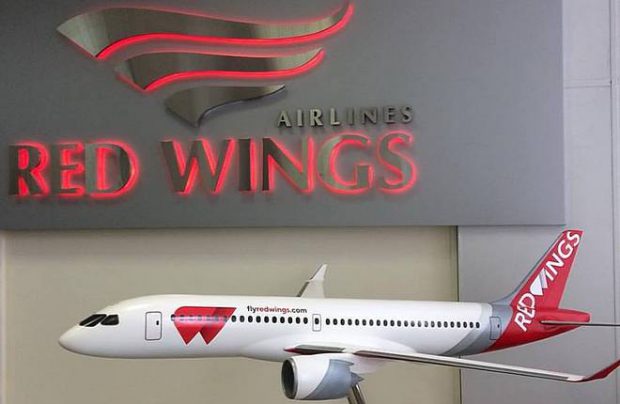
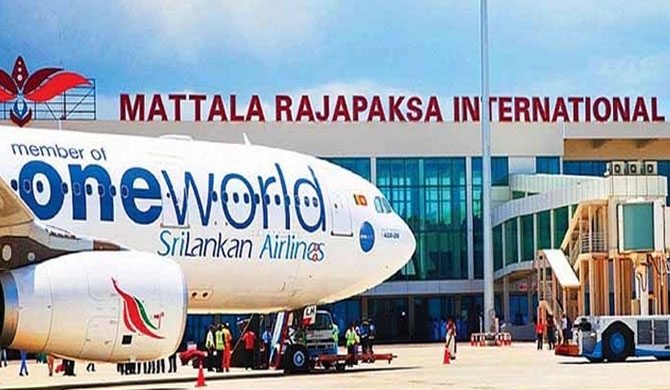
Mattala Rajapaksa International Airport (MRIA) in Hambantota is scheduled to receive its first international passenger flight since the worsening of the economic and political crisis in May 2022, with the arrival of the international flight chartered by the Russian Red Wings Airlines on 29 December 2022.

Speaking to The Sunday Morning Business, Airport and Aviation Services (Sri Lanka) Ltd. (AASL) Chairman Major General (Retd) G.A. Chandrasiri revealed that a charter flight from Red Wings Airlines, which was a Russian airline, was scheduled to arrive at MRIA on 29 December 2022 carrying over 400 tourists.

Elaborating further, he stated: “This is the first international passenger flight to arrive at MRIA following the deterioration of conditions in Sri Lanka amidst the political and economic crisis.”

However, he revealed that a flight chartered by the National Geographic Society had arrived at MRIA last week. “The National Geographic Society was conducting a programme in the Mattala area. They were not tourists and mainly consisted of scientists. They stayed for three days and left for the Maldives, I believe.”

Chandrasiri further stated that there was a possibility that following the success of this charter flight, Red Wings Airlines would consider scheduled flights to MRIA going forward.

The Russian publication RuNews24 reported that Red Wings Airlines was scheduled to commence flights to MRIA and that the first flight was scheduled to depart from Moscow on 28 December 2022. Furthermore, according to the flight programme, Red Wings is scheduled to operate flights to Sri Lanka until 14 May 2023.

“Travel agencies FUN&SUN and PAX will book blocks of seats on Red Wings flights. Thus, tourists will have to pay about RUB 178,000 for a tour for 11 days for two to Hikkaduwa with a flight on 28 December. After the New Year holidays there is a forecasted decline in the cost of tours. A similar tour, but with the departure on 8 January, will cost tourists almost RUB 50,000 cheaper. The price for such a tour will be RUB 122,000,” the news outlet said.

Before the economic crisis, the Sri Lankan Government and the AASL had revealed a plan to develop the MRIA into a fully active airport catering largely to the Central Asian region. Accordingly, they were successful in attracting a couple of Central Asian airlines to commence scheduled flights as well as chartered flights to MRIA.

However, following the deterioration of conditions in the country amidst the mass protests and violence that took place, all international flights to MRIA came to a halt.

Posted in Uncategorized

Chinese-Funded Projects Deepen Sri Lanka’s Economic Woes

During the past decade, China funded the construction of massive infrastructure projects in Sri Lanka meant to boost the island nation’s economy.

However, after the economic collapse of the tiny Indian Ocean country earlier this year, there were questions whether these projects had contributed to the worst crisis it has ever faced.

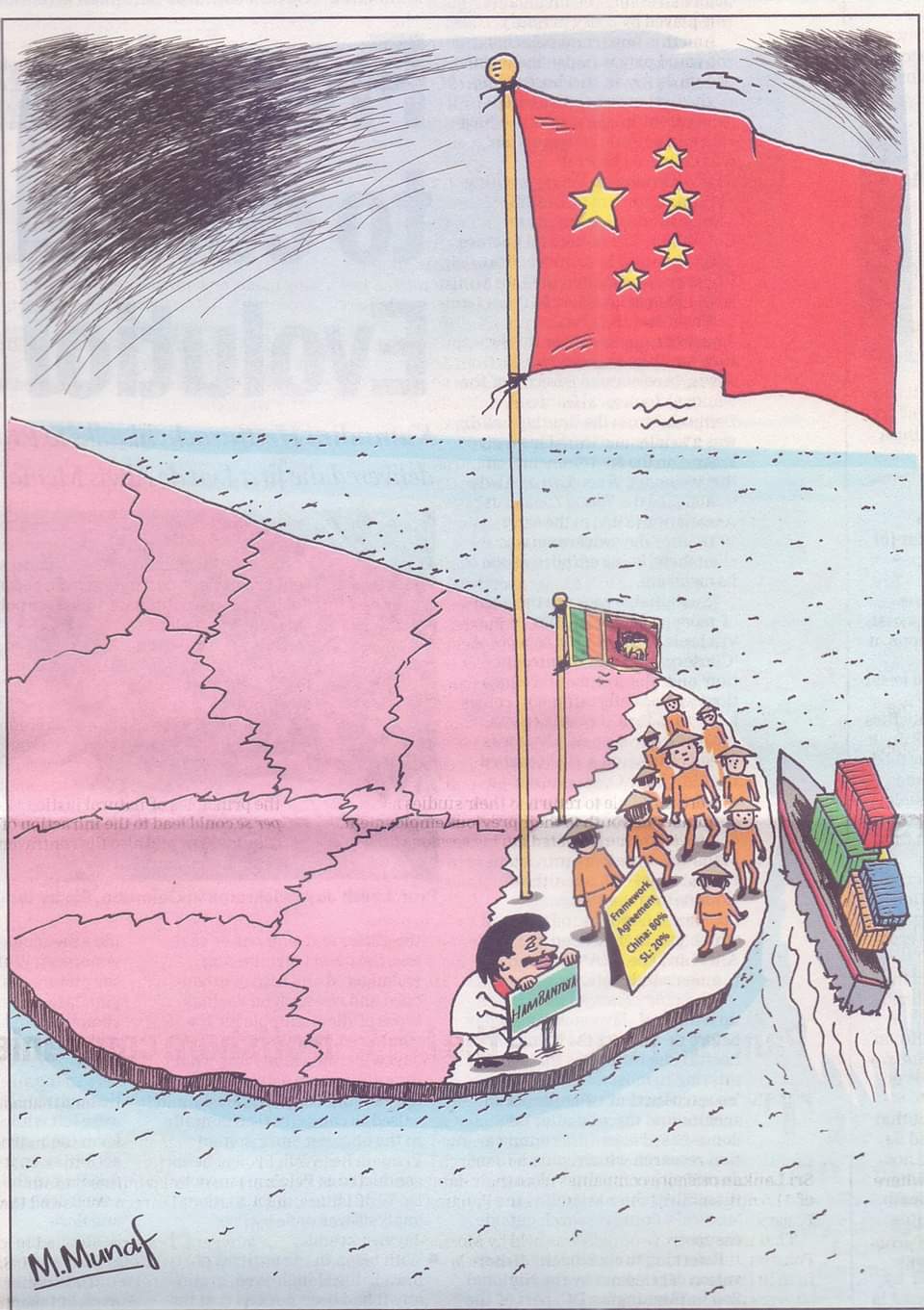
A port city that dominates Colombo’s seafront was built on a 269-hectare patch of land reclaimed from the sea. It was to become a thriving business and financial hub, but it is virtually deserted. An international airport commissioned nearly a decade ago at Mattala city is called the “emptiest airport in the world.” Both the Chinese-funded projects are seen as “white elephants” that have added to Sri Lanka’s debt.

“The airport is not functioning. The Colombo port city was supposed to attract international investors, but there is not a single investor right now,” said Asanga Abeyagoonasekera, a Sri Lankan security and geopolitics analyst. “There is a question over the revenue model of all these projects because they are not financially viable. They were built with unsustainable large amounts of borrowings with high interest rates.”

The focus zeroed in on the Chinese projects when Sri Lanka ran out of foreign exchange to import food, fuel and medicines earlier this year. The catastrophic economic downturn has pushed many in the nation of 22 million people into poverty. In what was once a middle-income country, living standards have plummeted as inflation rages. The World Food Program estimates that nearly 6 million people need food assistance.

The country’s crisis is blamed on economic mismanagement by the previous government led by former president Mahinda Rajapaksa and the COVID-19 pandemic that led to a loss of vital tourism earnings in the scenic Indian Ocean country.

Analysts say the billions of dollars spent on Chinese-funded projects deepened Sri Lanka’s woes. Estimates are that the share of Chinese loans in Sri Lanka’s $40 billion debt range from 10% to 20%.

“China is known for working out arrangements that often turn out much costlier than just looking at the paper would tell you,” said Harsh Pant, vice president for studies and foreign policy at the Observer Research Foundation in New Delhi. “The inability of the Sri Lankan political class to understand the long-term consequences of the kind of short-term gains that they were making from China has allowed this to happen.”

Sri Lanka was one of the countries to sign onto China’s Belt and Road initiative under which Beijing extends loans to developing countries to build roads, airports, seaports and other infrastructure.

Sri Lanka’s debt to China could make it harder to push back against Beijing, according to analysts. In August, Sri Lankan authorities initially refused permission to a Chinese navy ship, Yuan Wang 5, to dock at the Chinese-built Hambantota port following objections by India and the United States, but later allowed it to come.

China has called the ship a scientific and research vessel, but security analysts said India was concerned because it was a surveillance ship packed with space and satellite-tracking electronics that can monitor rocket and missile launches.

The incident reinforced worries that the Chinese projects are linked to its strategic ambitions in the Indian Ocean. The Hambantota port was leased to China for 99 years in 2017 when Sri Lanka was unable to pay back the money borrowed to build it. That raised fears in India and Western countries that the port could be used by China’s navy to project power in the Indian Ocean, a vital seaway for global commerce.

“From my findings I found that these projects are more than a civil operation in Sri Lanka. There could be a military operation that they would introduce in the future such as from Hambantota,” according to Abeyagoonasekera.

China strongly rejects such concerns. At a foreign ministry briefing last month, Chinese foreign ministry spokesperson Zhao Lijian said that “China has never attached any political strings to its aid to Sri Lanka or sought any political interests from its investment and financing in that country.” Saying that Beijing empathizes with Sri Lanka’s difficulties, he said that “China has also been offering assistance to the economic and social development in Sri Lanka within its capacity.”

Sri Lanka is now hoping to hold early talks with China to restructure its debt, which is crucial to secure a $2.9 billion bailout from the International Monetary Fund.

Colombo reached a staff-level agreement with the IMF in September for getting the loan, but it is contingent on assurances from its creditors, including China, India and Japan, that the debts will be restructured.

VOA (Source)

‘Govt. will incur Rs.20M loss daily due to generator shutting down’

The Ceylon Electricity Board Engineers Union says due to one generator of the Norochcholai Coal Power Plant shutting down, the government will incur a loss of Rs.20 million daily.

Co-Secretary Engineer Isuru Kasthuriratne said the generator will be shut down till the 6th or 10th of January.

He said electricity will have to be purchased from private power plants to meet the energy capacity that is lost due to the generator being shut down.

He charged that the public will have to bear the burden of the unnecessary expenditure.

The Norochcholai Power Plant generates 900MW daily.

In order to preserve coal stocks, one of the three generators that generates 300MW of electricity to the National Grid, was temporarily shut down

Election monitors threaten legal action in case of LG polls postponement

The People’s Action For Free & Fair Elections (PAFFREL) will go to Court if the government attempts to postpone polls, its Executive Director, Rohana Hettiarachchi says.Hettiarachchi yesterday said that the Elections Commission had to announce a day for the Local Council elections by the end of the first week of January.

“According to the election laws, and the Constitution, the Commission has to hold elections and gazette the names of those who were elected to the local councils, by 19 March,” he said.

The PAFFREL Executive Director said that it was obvious that the government was trying to postpone elections.

“The government is claiming that the country will be adversely affected if elections are held now. I can’t think how being democratic and transparent would be bad for the country. If anything, the image of the country will improve greatly in the international system,” he maintained.

Hettiarachchi said the Elections Commission has shown interest in holding the election. Already, the Commission has appointed district returning officers and has gazetted their names.

“The Commission has also met the district returning officers. However, we are also seeing the government coming up with various ploys to delay elections. We met Prime Minister Dinesh Gunawardena, two weeks ago, and we told him if you delay elections we will go to Court. The PM said the polls would not be postponed. We will see what the government tries to pull off in the coming weeks,” he said.

Meanwhile, the Executive Director of the Campaign for Free and Fair Elections (CaFFE), Manas Makeen, said that the Local Council elections must be held in the first quarter of 2023.

“We are opposed to delaying elections and we will work with other election monitors to thwart any attempts to delay elections,” he said.

Lankan envoy and IndiGo airlines chief discuss enhanced India-Lanka aviation ties

The Sri Lankan High Commissioner to India, Milinda Moragoda, met with Rahul Bhatia, Founder and Managing Director of IndiGo. They discussed ways to expand collaboration in the aviation sector between Sri Lanka and India including ways and means to make Sri Lankan airports more competitive for Indian carriers. The opportunities presented by the recent permission granted by the Reserve Bank of India to allow VOSTRO accounts were also discussed.

IndiGo is India’s largest airline by passenger carriage and fleet size, and is a pioneer in low-cost aviation in India. The airline has carried over 300 million passengers as of November 2022.

IndiGo currently operates scheduled flights between Chennai and Colombo, and is responsible for transporting a significant portion of tourism traffic from India, Sri Lanka’s largest source market. Tourism from India will play a central role in Sri Lanka’s economic recovery. The recent approval by the Reserve Bank of India to allow VOSTRO accounts to be opened by Sri Lankan banks is a first step towards enhancing rupee-based trade between India and Sri Lanka. This development will be a further catalyst in enhancing tourism and IndiGo will play a key role in this regard.

Posted in Uncategorized

LG Polls: EC initiates logistical operations

The Election Commission instructed the district election authorities yesterday to work out logistical needs to conduct the election to the local authorities, an official said.

The Commission , the apex body authorized in the conduct of elections , called for a meeting with the Assistant Election Commissioners stationed district-wise to enumerate vehicles and public servants to assess the requirement for the conduct of elections .

The Commission is planning to issue the gazette notification calling for elections to 340 local bodies.

More than 8000 representatives will be elected to carry out local administration.

An official who wished to remain anonymous said the new local bodies should be constituted by March 20, next year.

He said instructions were given to work out arrangements for the conduct of postal voting and handing over of nominations.

The last local government election was conducted in February, 2018.

Posted in Uncategorized

Over Rs. 2 bn operational cost of Mattala International Airport is 20 times its income, Audit report reveals

The latest report issued by the National Audit Office states that the operational cost of Mattala International Airport has exceeded 2 billion rupees, but that cost is about twenty times more than the income.

The report also shows that the amount of more than 36.56 billion rupees spent for the construction of this airport has not been used effectively.

Mattala Airport’s net loss after tax in 2021 was 4 billion rupees and the net loss after tax from 2017 to 2021 is more than 2 billion rupees, according to the heads of the audit department.

The audit report states that although the expected annual passenger capacity of the airport is one million, only 91,747 passengers have arrived in the last five years and only 2,396 flights have taken place in the airport in the last five years.

It further states that the company had paid more than 2.6 billion rupees as annual loan installment including interest for the loan of 190 million US dollars taken for the construction of the airport.

The International Airport was opened for operations on 18 March 2013. The Airports and Aviation Services (Sri Lanka) Company Ltd. is in charge of its operations

Posted in Uncategorized

Amend The Constitution: End Racism By Kumar David

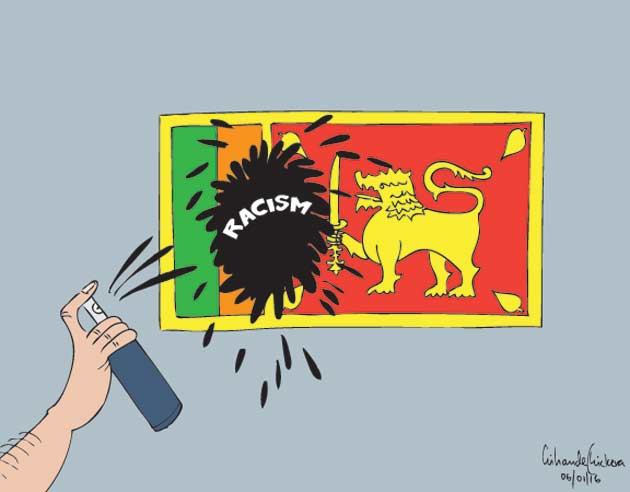
Article 15 of the Indian Constitution states that the State shall not discriminate against any citizen on grounds of religion, race, caste, sex, place of birth and so on. The text-box in this piece is an abbreviation of this Article and had the Sr Lankan Constitution contained such a provision the Sinhala Only Act, the chapter on Buddhism, the Indian & Pakistani Citizenship Acts, caste-based prohibition on entering temples and such abhorrent provisions would, in theory, have been ultra vires. Unfortunately, however, such shameful provisions would actually have been lawful in Sri Lanka subject to a referendum after their parliamentary enactment. The disgraceful thing about this country is that such referenda would have been carried by thumping racist majorities.

Indian Constitution Article 15: the State shall not discriminate on grounds of race religion, caste, sex, place of birth, disability, Access to shops, restaurants, hotels theatres, use of wells tanks, bathing ghats, roads and places dedicated to the public.

Dr Bhimrao Ramji Ambedkar a polymath who headed the committee that drafted the Constitution of the Republic India was a Dalit (“untouchable” or Gandhi’s Harijans, the children of God) and made no bones about it. He was Law and Justice Minister in Nehru’s first Cabinet, an economist, social reformer and human-rights advocate. His early methodological affinity to Marxism is unsurprising. In the land of the Gautama who was born in Nepal, of Gandhi who spent two intellectually formative decades in South Africa and of Mother Theresa of Albanian descent, such things were possible. At home in Lanka those who protected people of another race or faith during riots, rape and arson had to be themselves shielded from miscreants of their own race and faith.

Democracy Stillborn by Rajan and Kirupaimalar Hoole traces the plight of Sri Lanka to the battles of the 1920s over the championship of labour by Ponnambalam Arunachalam. His ouster in 1921 from the Ceylon National Congress, led to the domination of estate capitalism and blended an anti-working-class stance in general with communalism and the disenfranchisement of plantation workers. The legal battle about the citizenship of plantation workers compromised the judiciary too. Habeas corpus affirmed in the Bracegirdle case of 1937 was undermined by the 1947 Public Security Ordinance permitting “murder in good faith.” With the complicity of the Tamil and Muslim elite, politics which was anti- labour at first, turned ethno-chauvinist surrendering Parliamentary political power to Sinhalese exclusivism. Organised labour, weakened by the exclusion of plantation workers, was finally crushed by the UNP government in the General Strike of 1980. The right of habeas corpus, rendered virtually extinct by the 1979 PTA, made way for the cruel joke of the 2007 ICCPR Act.

Global Context

Global growth is slowing sharply and countries are falling into recession with consequences that are devastating for developing economies. As Central Banks simultaneously hike interest rates in response to inflation, the world is edging toward recession in 2023 and the emerging financial crises will do lasting harm in developing economies. Though Central banks are raising interest rates inflation will not come down. Furthermore, the political scenario of spreading global extremism voids usual recession-recovery expectations. The Biden Administration finds it a matter of existential necessity to a take stand against extremism (racism, “election deniers”, reinvigorated Trumpism, a fundamentalist anti-abortion surge a versus feminist outrage and a primitivist majority in the Supreme Court). Therefore, the Administration is pumping money into consumer’s pockets; fiscal stimulation; a $1.9 trillion American Rescue Plan, tax credits and rebates for energy-efficient vehicles and renewable electricity. Then there is the Ukraine war and political uncertainties such as the victory of neo-fascists in the Italian elections and the strengthening of the far-right in France, Poland Hungary, Denmark and elsewhere in Europe. Worry is justified.

Actually, what I am humming and hawing about is the Hooles’ hopes that a revived judiciary will have the courage to declare bad laws invalid. And when they suggest that talk of “revolution is discredited” they oversimplify the “mangled processes” maturing in the innards of global capitalism. Things now are different from the familiar post-war recession-recovery cycle. Global recession, a deep-recession or even a depression cannot be ruled out and complicate the aforesaid purely political picture. The processes are different this time and need to be fleshed out with their own empirical detail. Is a decade of global capitalist durability possible, or will it be a deeper recession than usual?

Comments on coverage

The authors are at their best in the scholarly presentation of how British juridical and colonial administrative practices challenged and eventually ended the denial of habus corpus and even contributed to the downfall of slavery in the Empire (pages 76-79). In Sri Lanka conversely since independence “governments have shown their repressive character by targeting the right of habeas corpus by legislative acts” and since 1978 by muzzling the judiciary. The historical scholarship of chapter 2 may prove to be the most informative section of the book for the lay reader unfamiliar with this history. The early chapters also expose the class bias and racial shakiness, if not worse, of the old “national leaders” DB Jayatilleke, DS Senanayake, James Peries, DR Wijewardena and SWRD Bandaranaike.

The book is a 730-page hagiography of Ponnambalam Arunachalam – I must hasten to add that I am not suggesting that loquacity is the outcome of matrimony. Many share the view that Arunachalam was the greatest Ceylonese political figure of the Twentieth Century. I will not dream of attempting to summarise the book’s argument in my 1700-word column. Read it, you cannot afford not to, or you will miss a wealth of carefully researched detail. Chapter 11 on the Citizenship Act debates, convey a great deal of information about the intrinsic racism of Sinhala leaders and Tamil treachery (not only GG). While the book pays justifiable homage to Sarath Muthetwegama I am surprised it makes no mention of two far more important leftists of the same period, Vijaya Kumaratunga and Vickrmabahu Karunaratna. The Hooles are strong on textual scholarship but alas have little grasp of left-politics.

An edited summary of chapter subheadings of the first part (up to page 480) of this 750+ page book is as follows and gives a flavour of its scope.

Champion of Labour (Arunachalam, Coup in the Ceylon National Congress, Tamil Mahajana Sabhai, Indian Labour Short-changed, Oligarchy of Planter-Politicians, Donoughmore and Status of Indian Labour, Formation of the Left, Blaming Indian Labour for Landlessness, Mooloya, Bandaranaike Cleanses Electoral Rolls, D.S. Senanayake, George E. de Silva, B.H. Aluwihare, Release of LSSP Detenus. Independence, Unions, Extending Colonial Repression, Undermining Working Class, Jayewardene and Keuneman, Ponnambalam and N.M. Perera, Naganathan and Nadesan, Jennings, Citizenship Act, Ponnambalam ditches Plantation Tamils, Chelvanayakam, Political Imperative to Shackle the Judiciary, the Ceylon Act: Invalid, Absurd and Impossible, Supreme Court clears the way for Disenfranchisement, Taming the Judiciary: Undermining Separation of Powers.

The second part of the book from about Independence right up to the present time are dealt with in equal detail in pages 480-649, I am not providing a summary because it is better known and for reasons of space. There are also nine useful Appendices, a Bibliography and an Index in the remaining 80 pages.

I am a believer in the maxim that brevity is the soul of wit. If one can possibly say it in 25 words why drag it on for 250? On this count I should not be an admirer of Hoole & Hool’s tome. But they can be forgiven the length because of their admirable coverage of socio-political and labour movement perspectives.

I will now explore some associated issues. There is for example a comment in a newspaper by Ranga Jayasuriya on 1 Nov.2022 asking how come Britain has an Asian, Hindu Prime Minister, Rishi Sunak, and the US elected Barrack Obama, but no Lankan Tamil or Muslim came even close to reaching the pinnacle? Is it that in the early stages, Tamil politics was not a reaction to a Sinhala Buddhist majoritarian threat, but rather it was driven by Dravidian societal, caste and elitist imperatives? This of course is abundantly clear in the post-independence period where GG Ponnambalam reactionary Tamil Congress, and SJV’s quaint Federal Party and its successors, came to delineate the scope and nature of Tamil politics.

The aforementioned comment does not rub off on Arunachalam who “Kumari Jayawardena describes as far ahead of his colleagues in championing self-government and universal suffrage”. His vision was that of a Ceylon that would in about 20 years be a non-sectarian democracy along the lines of Switzerland. He noted “The slums of the poor, though not so bad as in the big cities of Europe, are nests of filth and disease. Children run about untaught, uncared for, their mortality running into hundreds per thousand.” Michael Roberts says in that M.M. Mahroof, a researcher into cast, makes the distinction “The Tamil system is based a notion of pollution; the Sinhala is not. The former is supplemental to Hinduism the latter antithetical to Buddhism. Non-Govi castes are often wealthy and powerful non-Vellalar castes are not. Govi negation of others is subtle, Vellalar negation of others is overt and offensive”. Was Arunachalam not a champion of the fight against caste prejudice in Tamil society of his day? Or is this an anachronistic question to ask?


NEC & officials to hold talks on LG Polls today

The National Election Commission is scheduled to meet all Deputy and Assistant Election Commissioners in all districts today, for a discussion on the conduct of the Local Government Election.

The discussion will take place at 10am at the Election Secretariat in Rajagiriya.

The summoning notice was issued by the Director General Saman Sri Ratnayake.

The Election Commission noted that they expect to discuss the conduct of the Local Government Election at length.

Posted in Uncategorized

Lankan Tamil parties must clarify what they mean by full implementation of 13 th.,Amendment

Since the advent of the 13th Amendment (13A) to the constitution of Sri Lanka, 13A has been facing denunciations from different quarters in Sri Lanka.

It is undeniable that the purpose of the establishment of the Provincial Councils (PCs) has not yet been achieved. Instead, successive Sri Lankan governments have been consistently degrading it, while socio-political forces among the Lankan Tamil community have been disregarding and disapproving of the Provincial Councils based on the 13A. It is not at all worthy of their aspirations and sacrifices, they feel.

After the end of the war against the LTTE, the Tamil political parties, which together have a large vote bank, have been virulently expressing the notion that no political solution would be acceptable to the Tamils other than one which embodies Federalism with the Right to Self-Determination and the unification of the Northern and Eastern Provinces, the Tamil “Home Land”.

But Ignoring ground realities, the leaders of so-called “Tamil Nationalists” parties and influential social leaders among the Lankan Tamils have been assiduously injecting their claims and ambitions into the hearts and minds of the Tamil masses.

Suddenly, since December 2021, the “Tamil nationalist” parties led by R. Sampanthan and C.V. Wigneswaran, for understandable reasons, have been voicing the demand that the Government of India (GoI) should protect the Provincial Councils and ensure the full implementation of the 13A, as it is the duty and responsibility of the GoI since it was a signatory to the Indo-Lanka Peace Accord of 1987. Accordingly, they wrote a letter addressed to the Prime Minister of India. But so far no official representative of the GoI has responded in any manner to that letter.

Greater Devolution within a Unitary Constitution

India’s stand on 13A is well known. It has often been expressed diplomatically. It is clear that the GoI will not repeat the modus operandi applied in dealing with the Sri Lankan State in the years between 1983 and 1990. It is also very unlikely that the GoI will engage directly in negotiations, mediation, or facilitation on the Tamil issue. Thirty five years have passed since the Indian army that was invited by the then President of Sri Lanka and welcomed by the Tamil people, left Sri Lanka with bitter experiences.

However, it is obvious that the GoI will appropriately deal with, handle and engage the State of Sri Lanka in respect of its national strategic and economic interests. The GoI may probably apply different kinds of soft methods discreetly to persuade the GoSL in the matter of devolution to the PCs in line with the Indo-Lanka Accord. It also depends on how much the Tamil leaders are going to strive actively and consistently to achieve proper and full implementation of the 13A.

The President of Sri Lanka whatever the reasons may be, has begun to show interest in finding a political solution to the issues raised by the Tamil leaders and has already held an all party conference with both major parties, including the Sri Lanka Podujana Peramuna led by Mahinda Rajapaksa and Samagi Jana Balawegaya led by Sajith Premadasa, represented in Parliament. It is important to note that all the leaders of major political parties of all the communities have expressed a positive opinion about implementing the 13A fully and moving forward even beyond the 13A within the framework of the unitary constitutional structure of Sri Lanka.

It is widely expected that the Tamil leaders, keeping their doubts about the motives of the Sinhala leaders aside, will take this opportunity to articulate their experiences and demands to achieve concrete progress towards greater devolution to the PCs and ensure social equity, political equality and economic progress.

It is important to understand that the unitary nature of the state cannot be changed, directly or indirectly, without the approval of the people of Sri Lanka at a referendum. Defeat in such a referendum will only encourage and strengthen the Sinhala-Buddhist and narrow-minded Tamil communal forces and further isolate the progressive democratic and left forces among the Sinhala people.

But if proper and full implementation of the 13A is somehow achieved within the framework of the present unitary system, then the political process will move towards the next stage of constitutional development providing greater devolution to the PCs.

Therefore, the priority of the Lankan Tamil society should be to mobilize the support of all nationalities in Sri Lanka and the major international forces to make the Parliament of Sri Lanka remove the defects and deficiencies and make necessary corrections in the 13A and also in the Provincial Councils Act (PCA), No. 42 of 1987, so that the PCS gain reasonable autonomy and function effectively and efficiently in restoring democracy, rule of law, socio-economic progress and peaceful coexistence of all communities.

Primary Duty & Responsibility Rest with Tamil Leaders

To accelerate the process of the full implementation of the 13A, a comprehensive understanding with proper interpretations of its provisions and necessary legislative and administrative reforms are imperative, particularly in respect of (1) the de facto executive powers and functions of the elected Chief Minister and the Board of Ministers, (2) limitation of the discretionary functions of the Governor, (3) issues in relation to the legislative and executive powers and functions of the subjects listed in the Provincial and Concurrent Lists appended as the 9th Schedule of the Constitution, (5) questions pertaining to the Financial powers, (6) Provincial Public Services and the Provincial Public Service Commission, (7) clear separation of identities in terms of the Provincial Legislative Assembly and the Provincial Government, (8) protocol status of the Chief Minister, Provincial Minister and the officials of the Provincial administration, etc.

It is also important that the provisions of the PCA, No.42 of 1987, are understood in full together with interpretations, in conformity with the corresponding provisions in the Sri Lankan constitution and accordingly amendments are made.

Further, the legitimate representatives of the Tamils should put forward their issues and proposals to the GoSl and GoI, in respect of 13A, not rhetorically, but with an explanatory report encompassing each and every aspect of legislative, executive, administrative and institutional devolution to the PCs.

It is to be clearly understood by the Lankan Tamil leaders that the repeated call of the GoI, asking the GoSL to ensure the security, equality, justice, and dignity of the Tamils in Sri Lanka and to implement the 13A fully in order to provide a meaningful effect to the devolution of powers to the PCs, is only an outcome of her principle stand.

It is the duty and responsibility of the legitimate political representative of Lankan Tamils, to present what they really mean by their demand for the “full implementation of the 13A”. So far, no such report is available. If the Tamil leaders do not want to have another missed opportunity in the political history of Tamils, they should act rationally and prudently with a comprehensive and pragmatic work program.

A.Varatharaja Perumal was Chief Minister of the united North Eastern Province.