21st A: Split SLPP loses ground, BR suffers setback

Former Health Minister Pavitradevi Wanniarachchi recently declared that regardless of who served as the President, that person should abide by the decisions taken by twice President Mahinda Rajapaksa.

Ratnapura District SLPP (Sri Lanka Podujana Peramuna) lawmaker emphasized that Mahinda Rajapaksa’s word, on whatever matter, should be accepted by all, including the President, regardless of the consequences.

Ever the blind Mahinda Rajapaksa loyalist, Wanniarachchi said so at the launch of the SLPP campaign meant to revive the party, amidst continuing deterioration of its position, both in and outside Parliament. The declaration was made at the meeting chaired by Mahinda Rajapaksa, at Kalutara, on Oct 08, close on the heels of calling off the vote on the 21st Amendment to the Constitution. The vote that was to be taken in the first week of October had to be put off due to the warning issued by the SLPP.

MP Wanniarachchi faulted ousted President Gotabaya Rajapaksa for the heavy setbacks suffered by the SLPP. Declaring that only those with political background should have been given top posts in their government, the Ratnapura District MP alleged that the SLPP suffered as a result of its pathetic failure to provide jobs.

Turning towards Mahinda Rajapaksa, and sounding more like a frivolous schoolgirl, rather than the Attorney-at-Law she is, Wanniarachchi recalled how she, in her capacity as Minister of Youth Affairs and Samurdhi, provided jobs for her supporters in the public sector. Appreciating the support extended by the then President Mahinda Rajapaksa for her endeavours, MP Wanniarachchi lashed out at President Gotabaya Rajapaksa for depriving her of that opportunity.

Exposing more of her immature and selfish thinking, despite the terrible situation the country is facing, the former Health Minister alleged that she couldn’t recruit even one supporter, during her tenure as Health Minister whereas her predecessors, Maithripala Sirisena, and Nimal Siripala de Silva, recruited 10,000 each. Obviously, she hadn’t heard, or taken any notice of the ongoing debate over how massive expansion of the public service contributed to the unprecedented economic fallout.

Public Administration Secretary Priyantha Mayadunne, in late May this year, didn’t mince his words when he warned political parties, represented in Parliament, state and private sector trade unions, and the civil society, that they would soon be categorized as traitors unless they agreed to a far reaching economic reforms agenda.

In late August, the Governor of the Central Bank, Dr. Nandalal Weerasinghe, vigorously assailed the political party system when he was invited by Speaker Mahinda Yapa Abeywardena to address the members of Parliament. Soft spoken Dr. Weerasinghe dealt with the current situation, and related issues at hand. The CB Governor flayed those who governed the country, including the present lot, for bankrupting the country.

Obviously, MP Wanniaarachchi didn’t care or seemed to have conveniently turned a blind eye to ground realities. Otherwise she wouldn’t have blamed Gotabaya Rajapaksa for not allowing her, as well, to further expand the public service, now an unbearable burden on the taxpayer. She had also forgotten the daunting challenge posed by Covid-19, at that time, and the national economy was in such a precarious state a large scale recruitment campaign would have been unthinkable.

A week later, the SLPP followed up with the second meeting of its propaganda campaign. The second meeting, held at Mahindananda Aluthgamage’s Nawalapitiya stronghold, was meant to consolidate the SLPP. However, last week it, and the man who behaved as its godfather, dual citizen Basil Rajapaksa, may have suffered an irreparable setback when the Parliament overwhelmingly voted for the 21st Amendment. A staggering 179 members voted for the new amendment, during the division held at the end of the second reading, whereas just one SLPP, MP Rear Admiral Sarath Weerasekera, voted against it. Subsequently, at the third reading of the Bill, 174 voted in favour, and Sarath Weerasekera again voted against the Bill. Of the 179, who voted for the new law, five refrained from doing so in the third division. Weerasekera had the guts to stand by his principles and voted against the 19th Amendment.

The Navy veteran declared, in Parliament that he couldn’t vote for the 21st Amendment that was meant to revive the 19th Amendment that he then, too, opposed it alone. His stand should be applauded as no other MP, serving the current Parliament, had the strength to take a principled stand. On that day, during the crucial vote, 45 lawmakers hadn’t been present.

A large section of the Rajapaksa Camp abstained, though Chamal Rajapaksa, his son Shasheendra Rajapaksa, and Namal Rajapaksa, voted for it. Among those who skipped the vote was the chief organizer of the Kalutara public rally, MP Rohitha Abeygunawardena and Pavitradevi Wanniarachchi. However, in spite of being dubbed as a staunch Rajapaksa loyalist, Mahindananda Aluthgamage voted for the 21st Amendment. The following is the list of government MPs, not present in Parliament, on that day: Mahinda Rajapaksa, Pavitra Wanniarachchi, Gamini Lokuge, Sanath Nishantha, Sagara Kariyawasam, Jayantha Ketagoda, Sanjiva Edirimanne, Prasanna Ranatunga (overseas), Mahinda Amaraweera (overseas), Prameetha Bandara Tennakoon (overseas), Anuradha Jayaratne (overseas), Siripala Gamlath (overseas), Dr. Seetha Arambepola (overseas), Rohitha Abeygunawardena (overseas), S.M.M. Mushraff (overseas), Maj. Pradeep Udugoda (overseas), Nipuna Ranawaka (overseas), Wimalaweera Dissanayake (hospitalized), Sahan Pradeep Withana (hospitalized), Jayantha Weerasinghe (sick), Janaka Bandara Tennakoon (sick), S.M. Chandrasena (State funeral of Ven. Pallegama Siriniwasa), Johnston Fernando (have to attend Court) and Nalaka Bandara Kottegoda (wedding of his brother)

Jathika Jana Balavegaya (JJB) lawmakers, Anura Kumara Dissanayake, Vijitha Herath and Dr. Harini Amarasuriya voted for the new law, while four out of the10 Tamil National Alliance (TNA) MPs skipped the vote. Rebel SLPP MP Prof. G.L. Peiris was out of the country whereas his group voted for the new amendment. The former Foreign Minister would have definitely voted for the new law if he was present in Parliament, on Oct 21. Other notable absentees were Speaker Mahinda Yapa Abeywardena, Chief Government Whip Prasanna Ranatunga, Johnston Fernando and Sagara Kariyawasam. As party General Secretary Attorney-at-law Kariyawasam wielded immense power being close to Basil Rajapaksa.

Of the 40 parliamentarians, who abstained, approximately 30 skipped the vote over the following issues: (a) With the passage of the new Amendment, anyone who is a dual citizen will no longer be allowed to be a member of Parliament, and present dual-citizen MPs will also lose their seats (b) The constitutional amendment also allows the President to dissolve the Parliament after two and a half years of a Parliament being elected.

In addition to the above-mentioned issues that infuriated former Finance Minister Basil Rajapaksa, the new law also ensured a role for the Opposition Leader in the appointment of civil society members to the constitutional council.

Prez consolidates his position

President Ranil Wickremesinghe has consolidated his position at the expense of the SLPP. At the time the then President Gotabaya Rajapaksa invited Wickremesinghe to accept the premiership, on May 12, he wouldn’t have envisaged losing the presidency to the UNP leader. The SLPP, too, wouldn’t have realized the consequences of electing Wickremesinghe, on July 20, to complete Gotabaya Rajapaksa’s term. The SLPP voted for Wickremesinghe, at the expense of Dullas Alahapperuma, who managed to poll 82 votes, while the winner obtained 134. The SLPP’s strategy caused another split in the party as 13 of its members broke ranks. The SLPP dismissed the challenge posed by the dissidents. They were denied the opportunity to speak in Parliament. Key members were also deprived of positions in the coveted parliamentary committees.

Friday’s vote proved that of the 145-member SLPP parliamentary group, elected at the 2020 August parliamentary election, it has been reduced to between 20 to 30. The Rajapaksas, who voted for the 21st Amendment, are among that group. Chamal Rajapaksa, his son Shasheendra Rajapaksa, holding state ministerial post, and Namal, aspiring to re-join the Cabinet, move can be safely described as a precautionary measure. The SLPP is in a dilemma. The once powerful political grouping is now in a political minefield. But, the Rajapaksa group should never be underestimated to prevent unnecessary complications.

It would be pertinent to mention that a section of the SLPP parliamentary group (Vasudeva Nanayakkara, Wimal Weerawansa, Udaya Gammanpila, Gevindu Cumaratunga et al) vigorously campaigned to retain the 19th Amendment provision on dual citizenship. The 19th Amendment, enacted in 2015, disallowed dual citizens from contesting parliamentary or presidential elections. They refused to vote for the 20th Amendment over the discarding of that provision. But, they changed their stand after getting an assurance from President Gotabaya Rajapaksa, that provision would be included in the proposed new Constitution. The new Constitution project never materialized, though a nine-member expert team, led by President’s Counsel Romesh de Silva ,drafted a new Constitution.

Although many asserted that the enactment of the 21st Amendment diluted executive powers, the incumbent President retained sufficient powers to face political challenges. Contrary to speculation, President Wickremesinghe is very much unlikely to exercise conditional authority to dissolve Parliament, two and half years after the first meeting of the incumbent Parliament. Wickremesinghe is expected to complete the remainder of Gotabaya Rajapaksa’s five-year term. The UNP leader wouldn’t, under any circumstances, explore the possibility of holding early parliamentary elections as his party wouldn’t be able to take any advantage from it in the current state of the country.

With just one seat in Parliament, the UNP is not in a position to face early elections at a time the country is experiencing severe economic difficulties. Chances of re-unification with the main Opposition, Samagi Jana Balavegaya (SJB), their erstwhile colleagues at the moment, also seem unworkable, unless the UNP can engineer a mass exodus from the SJB.

The Thilini-Janaki affair reverberates

Before the vote on the 21st Amendment, Justice Minister Wijeyadasa Rajapakse, PC, raised a privilege issue over the reportage of Thilini Priyamali’s case, by a section of the media. Denying a statement attributed to Maithree Gunaratne, PC, that the alleged fraudster was represented by lawyers from Wijeyadasa Rajapaksa’s chambers, an angry Minister alleged that some journalists could be bought for two bottles of arrack. Gunaratne appeared for businessman Abdul Sakthar who had been defrauded to the tune of Rs 226 mn. Minister Rajapaksa requested Speaker Mahinda Yapa Abeywardena to direct the House privileges committee to initiate an inquiry into the alleged unfounded allegations directed by the media. The Minister, who is also the Chairman of the House privileges committee, said that he would step down from his post, temporarily, to allow another member to lead the investigation.

Wijeyadasa Rajapaksa, who first entered Parliament in May 2004 and served different political parties, alleged that some media believed they could manipulate and influence governments. The Minister warned that the media would be appropriately dealt with for propagating lies. Wijeyadasa Rajapakse declared that the day he received a ministerial appointment he closed down his Chambers.

In the wake of the Justice Minister declaration in Parliament, Maithree Gunaratne, in an interview with Chamuditha Samarawickrema (Truth with Chamuditha on social media) said that having seen Attorney-at-Law Dasun Nagasena (Coordinating Secretary to the Justice Minister) and Rakitha Rajapaksa (Justice Minister’s son) at the Fort Magistrate Court, representing Thilini Priyamali, he quipped that the Justice Minister’s full team was here.

Gunaratne said that the media had picked up the conversation between him and the lawyers representing Thilini. Responding to another query, Gunaratne declared that had he served as the Justice Minister he wouldn’t have his sons to represent an accused in such a controversial case.

Gunaratne, no stranger to controversies, questioned the failure on the part of law enforcement authorities so far to apprehend CEO and Director of The One Transworks Square (Pvt) Ltd. Janaki Siriwardena, whose name transpired in the Fort Magistrate Court, and in police investigations. Alleging that a lawmaker in the current Parliament protected Siriwardena and interfered with investigations, Gunaratne said that the matter was brought to the notice of the Fort Magistrate Court. The lawyer asserted that The One Transworks Square (Pvt) Ltd., or Krrish project, built on a five acre land, provided by the Urban Development Authority (UDA), is the eye of the storm. Reference was made to those who had invested in that particular project.

Responding to Chamuditha Samarwickrema’s questions, Gunaratne said that his client invested Rs 226mn with Thilini Priyamali’s Thico Investments based at the World Trade Center on the advice of former Western Province Governor Azath Sally. Gunaratne acknowledged that his client made the investment on the basis of the assurance given by Azath Sally, who is believed to have known Janaki Siriwardena for nearly 20 years.

Gunaratne speculated that the total amount of money collected by Thilini Priyamali and Janaki Siriwardena duo could be as much as Rs 6 to 7 billion though at the moment they estimated the misappropriated sum at Rs 3 bn. The President’s Counsel stressed that an impartial investigation couldn’t be possible as long as Janaki Siriwardena remained free. They discussed whether among those who received calls from Thilini Priyamali after her arrest was Janaki Siriwardena. They also deliberated on the suspect requesting Rs 30 mn from a person to secure bail/release.

Gunaratne questioned the culpability on the part of the Central Bank and the banking system. How could they have failed to detect the transfer of extraordinarily large sums of money within a short span of time?

The Fort Magistrate court was told last week how Rs 3 bn deposited and withdrawn from an account belonging to Thilini Priyamali between January and June this year. Gunaratne disclosed that Thilini Priyamali’s luxurious office at the WTC had been opened by a senior official of the Sampath Bank.

Referring to the yahapalana government allowing the Easter Sunday carnage (April 2019) to take place by ignoring specific intelligence received from India, Gunaratne pointed out that the police and the Attorney General Department pursued an agenda meant to protect the wrongdoers. The lawyer cited the failure on the part of the police and the Attorney General to arrest senior DIG Deshabandu Tennakoon who failed to prevent May 09 attacks on Galle Face protesters in spite of specific directive from the then President Gotabaya Rajapaksa, a glaring case of inaction. Gunaratne acknowledged that he couldn’t say where the embessled money had been secreted to, but expressed the strong belief such a vast amount of money couldn’t have been spent.

Gunaratne asserted that perhaps the Thilini Priyamali-Janaki Siriwardena duo carried out the ‘operation’ within a couple of months.

Over a week ago SJB MP Hesha Vithanage, too, raised the issue at hand. The MP questioned the circumstances under which some interested party posted a list naming several Opposition MPs, including him as investors in the Thico project. The lawmaker questioned the rationale in naming them when former first lady Shiranthi Rajapaksa accepted an invitation from Thilini Priyamali to attend the launch of a movie in March last year. MP Withanage said that former President Maithripala Sirisena, too, had been among the guests. Former President Mahinda Rajapaksa’s Office has denied links between Mrs. Shiranthi Rajapaksa and Thilini Priyamali and also the family.

The Rajapaksas are in a bind, struggling to cope up with new political alliances in the making. The decision for three Rajapaksas to vote for 22nd Amendment and the rest, including Mahinda Rajapaksa to abstain appears to be nothing but a desperate measure that further undermined the party. However, such measures are unlikely to help the Rajapaksa camp to regain lost ground. The SLPP seems unlikely to recover heavy damages suffered with the constitutional impediment imposed on dual citizen Basil Rajapaksa with the passing of 21A.

Source: The Island
Posted in Uncategorized

Stalin seeks release of Indian fishermen in Sri Lankan custody

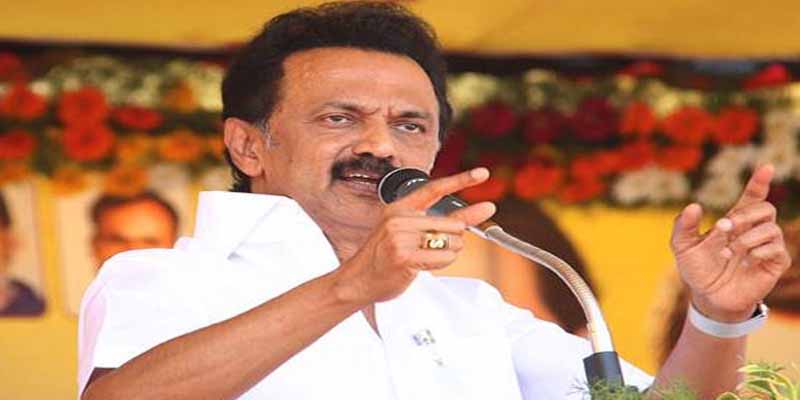
Tamil Nadu Chief Minister M.K. Stalin wrote to Union Minister for External Affairs S. Jaishankar, requesting him to take steps to secure the release of Indian fishermen in Sri Lankan custody.

Referring to the apprehending of seven fishermen from Tamil Nadu along with their boat on October 27 by the Sri Lankan Navy, Stalin said 98 fishing boats belonging to Tamil Nadu fishermen were in Sri Lankan custody, and this affected their livelihood.

“The Government of Tamil Nadu is committed to protecting the traditional fishing rights of our fishermen. The infringement of the traditional rights of our fishermen in the Palk Bay area is a continuous threat to the safety of Indian fishermen,” Mr. Stalin said.

He reiterated his suggestion that strong and coordinated steps be initiated to ensure that Indian fishermen did not face constant threats from across the Bay. He further requested that necessary steps be taken urgently to secure the release of the apprehended fishermen and their boats.

Meanwhile, in his speech during a meeting of Home Ministers and Lieutenant Governors, chaired by Union Home Minister Amit Shah at Surajkund in Haryana, Tamil Nadu Law Minister S. Regupathy spoke about the fishermen issue between India and Sri Lanka.

Referring to the arrest of Indian fishermen by the Sri Lankan Navy, Mr. Regupathy said the Indian fishermen had reported that they were fishing in the “Common Area in Sea – Zero Water Level”, and not in the area belonging to Sri Lanka.

“But the Sri Lankan Navy used to round them up, push them into the Sri Lankan area and then arrest them. Action has to be taken by the Government of India to curtail such activities,” he said.

Reiterating the Tamil Nadu government’s position on the Katchatheevu islet that was ceded to Sri Lanka, he said, “Considering the fishermen issue and other problems, the Government of India may consider taking necessary action to reclaim the islet. If necessary, the International Court of Justice may also be approached for this purpose.”

The Hindu

Posted in Uncategorized

IMF and SL’s creditors in crucial talks on Nov 3

Another crucial discussion between the International Monetary Fund and Sri Lanka’s creditors is due be held on November 3rd.

The Presidential Media Division stated that the discussion will focus on debt restructuring in Sri Lanka.

This has been previously discussed during a meeting between the resident representative of the International Monetary Fund and a group of other officials who are leaving the country after completing their tenure.

The President’s Media Division stated that special attention was paid to the previous measures of debt restructuring as well as the creditor’s conference.

Meanwhile, the call for applications for the program to identify those who are eligible to receive welfare benefit payments ends on 28th October.

The program, which is being implemented on the advice of President Ranil Wickremesinghe is being implemented under the theme “Do not leave anyone behind”.

Accordingly, the deadline was closed after the number of applicants who have registered with the Welfare Benefit Board for state welfare benefits reached 2.4 million.

New fraud hits Sri Lankans by storm, over 8,000 people lose billions

The Criminal Investigations Department (CID) has launched an investigation into a new financial fraud which so far has involved Rs.14 billion with 8,000 people being victims in a fake crypto currency scheme.

Police Spokesman SSP Nihal Thalduwa said that the alleged fraud was carried out by a Chinese couple and a Sri Lankan citizen and 8,000 people had fallen victim to it since 2020.

The spokesman said the suspects had invited selected individuals to five star hotels and influenced them that there would be high profits by investing in crypto currency.

He said the Chinese couple and the Sri Lankan were the masterminds behind the fraud and won the trust of their victims by inviting them to lavish dinners.

However, when the investors had tried to withdraw the profits they had earned through the investments, the suspects had not allowed them to withdraw the funds.

SSP Thalduwa said a number of complaints had been received at the Financial Fraud unit of the CID. After lengthy investigations, they had arrested the Chinese couple at the Bandaranaike International Airport when they had tried to flee the country. The Chinese couple is currently in remand custody.

The Sri Lankan involved in the fraud was arrested on October 11. He was later released on bail after being produced in court.

Meanwhile, the spokesman said several other suspects were also arrested over the fraud and were remanded.

Posted in Uncategorized

Large anti-Govt. rally held by JVP-backed unions at Hyde Park

The Trade Union Co-ordinating Centre (TUCC) and the Combined People’s Movement (CPM) staged a protest rally yesterday (27) backed by the Janatha Vimukthi Peramuna (JVP) at the Hyde Park in Colombo, making several demands of the Government and President Ranil Wickremesinghe.

The demands included providing adequate allowances to public, private, and estate-sector employees, stopping the Government’s suppressive programme, revoking the Prevention of Terrorism (Temporary Provisions) Act (PTA), and ensuring the people’s right to free health and education.

The protest commenced at 3 p.m. and was attended by several political party representatives, trade union activists, civil activists, and religious leaders. Among them were Ceylon Teachers’ Service Union (CTSU) General Secretary Mahinda Jayasinghe, Inter-Company Employees’ Union (ICEU) President Wasantha Samarasinghe, College of Medical Laboratory Science (CMLS) President Ravi Kumudesh, Attorney-at-Law Manoj Nanayakkara, and Catholic priest Jeewantha Peiris.

Activists who spoke during the rally said that yesterday’s rally was the best example of the fact that the “aragalaya” (the people’s struggle) at the Galle Face Green which began by demanding the resignation of former President Gotabaya Rajapaksa is not yet over. They mentioned that even though the Government under the leadership of Wickremesinghe is trying to suppress the people by using the Police and the security forces, the Government will not be allowed to fulfill their needs by scaring the people through those programmes.

“The people’s struggle is not dead yet. Wickremesinghe and other politicians should know that the people will not always tolerate suppression. They will not always tolerate the Police and the Army attacking them. The events that happened in the country on 9 May and 9 July made that very clear. They are not ready to behave like cowards in front of politicians. Therefore, politicians including Wickremesinghe and the officials who act according to their orders seeking various gains such as promotions should remember that,” they said.

They further stated that the Government led by Wickremesinghe does not care about the fact that the people are suffering without being able to meet their food and other basic needs. They said that instead of providing solutions to the people’s issues, the Government is working to suppress the people who take to the streets to demand solutions to their problems. They said that Wickremesinghe, who entered Parliament through the National List and then became President with the support of the Sri Lanka Podujana Peramuna (SLPP) which has been rejected by the people, has no power or moral right to suppress the people.

“We must commit ourselves to establishing a regime that will reclaim everything from people such as Gotabaya Rajapaksa, former Finance Minister Basil Rajapaksa, former President’s Secretary Dr. P.B. Jayasundara, former Finance Ministry and Treasury Secretary S.R. Attygalle, and former Central Bank of Sri Lanka Governor Ajith Nivard Cabraal who destroyed the country, by bringing them before a court. For that, a General Election must be held immediately. The people should be given the opportunity to appoint a Government that they need. We have no faith in this Legislature. No matter what we do, they do what they want inside Parliament. They try to pass suppressive Bills,” claimed the activists.

The main demands that were pointed out by the activists included the provision of an adequate allowance to all Government, private and estate-sector employees, stopping the repressive programme of the Government led by Wickremesinghe and the protection of the right to expression, revoking the PTA, ensuring the better management of institutions pertaining to the sectors of fuel, ports and electricity, ensuring the right of the people to free health and education, sufficiently providing for the universities and higher education sector, and holding a Parliamentary Election as soon as possible.

Posted in Uncategorized

Disciplinary action to be sought on monks

Disciplinary action is to be sought on monks in the event there is evidence to back any allegations against them.

Minister of Buddhasasana, Religious and Cultural Affairs Vidura Wickramanayaka said that he hopes to propose a mechanism to inform the Mahanayaka Theros (Chief Prelates) through the Police and his Ministry, if there is an allegation raised against a monk.

He said that they will look to enforce the law on such monks and take disciplinary action.

The Minister also said that new laws will be introduced to deal with such issues in future.

The Minister expressed these views at the Ministerial Consultative Committee on Buddhasasana, Religious and Cultural Affairs.

The committee drew attention to the damage caused to the order by monks who are engaged in certain business activities.

There was also a discussion about the release of lands that do not belong to the Department of Archaeology in connection with the Mulathivu Kurundi Vihara.

The Minister instructed officials of the Department of Archaeology to release property for the purposes of agriculture and other activities in coordination with the relevant institutions, except for property that has been surveyed by the Department of Archaeology.

Basil not out for good By M.S.M Ayub

On what grounds the majority of Parliamentarians of the Sri Lanka Podujana Peramuna (SLPP) voted in favour of the 22nd Amendment to the Constitution Bill on October 21, while the so-called “strategist” of the party, Basil Rajapksa had been campaigning against it is yet to be known.
It was Basil who had until then been planning and executing all affairs of the Party. He was also said to be the “brain” behind the scuttling of the 22nd Amendment being debated in Parliament as late as on October 6 and 7, despite it being in the order paper of the House.

Until this Amendment was passed with 174 votes, majority members of the SLPP was not expected to cross the line so soon to defy the dictates of its powerful National Organiser, despite two small groups of the party and around 10 small parties having defected the ruling coalition. Besides, the Amendment deprived the dual citizens like Basil of the right to contest election in Sri Lanka. Then why did they vote for the Amendment?

There cannot be any policy decision that prompted them to vote, despite SLPP General Secretary Sagara Kariyawasam having stated that his party cannot support the 22nd Amendment that negates the gist of the 20th Amendment brought in by the party in October 2020. Principled politics is a far-flung issue in Sri Lanka. One of the best case in point in Sri Lankan political history is that many MPs of the SLPP had voted for the 17th, 18, 19th and 20th Amendments to the Constitution which alternately curtailed and strengthened the powers of the President. Hence, various theories are now being floated to explain as to why they voted for the 22nd Amendment.

President Ranil Wickremsinghe, even after taking over the top-most job has been serious about the Amendment which was meant to strengthen the Parliament, by way of curtailing the powers of the President. He has been pushing the MPs of all political parties to support it. Since he had instiled a sense of security among the MPs of the SLPP by cracking down the anti-government protesters, they have decided to support the Amendment. This is one view.

Another theory is that the MPs had been in fear that the President might dissolve the Parliament once he is constitutionally empowered to do so, when the current Parliament completes two and a half year of its tenure, in February, next year. And they wanted an assurance from him not to do so. They even wanted a clause in the 22nd Amendment extending that duration from the existing two and a half years to four and a half years. And media quoted the President days ago as assuring that he would not heed anyone’s request to dissolve the Parliament next year, even the latter worships him traditionally offering a wad of betel.

The statement indicates a threat that he would dissolve the Parliament if they defeated the 22nd Amendment. Hence, they supported it. This is a stronger view than the former. JVP leader Anura Kumara Dissanayake also ridiculed the SLPP MPs after the passage of the Amendment claiming that they supported an amendment to the basic law of the country keeping their Parliamentary pension in mind, instead of the interests of the country. Besides, this is a good opportunity for the MPs of the SLPP to get into the good books of the President which might shower them later with powers, portfolios and perks.

A crack in the Rajapaksa family also seems to have contributed this development. It must be noted that Chamal, Namal and Sashindra of that family had voted in favour of the Amendment, meaning against Basil. And former President and the Leader of the SLPP Mahinda Rajapaksa was absent at the time of the voting. He might have been of the view that if Basil succeeded Wickremesinghe as President, Namal’s chances would be pushed decades away.

The MPs of the SLPP had voted in favour of the then Prime Minister Ranil Wickremesinghe at the Parliamentary vote for the election of the President on July 20, at the instance of Basil, but interestingly, exactly in three months they voted the 22nd Amendment ousting Basil from Parliament for good, at the instance of Wickremesinghe who so took over as President.

However, in fairness to the President it has to be pointed out that the President did not seem to be interested in the dual citizenship issue. He wanted to pass the provisions that empowered Parliament, the gist of the Amendment. He even requested the SLPP on October 19, two days prior to the adoption of the Amendment to vote for it inserting any provisions during the committee stage of the debate on it.

Hence, if the SLPP members were serious about the issues they seem to be worried about, they could sometimes have allowed the provisions on dual citizenship to continue and prevent the President from dissolving Parliament in two and half years. Though he is said to be a pro-Parliament politician and the 19th Amendment brought in under his premiership contained that four and half-year limit, the President also did not subscribe to their view to go for that same provision.

The main purpose of the 22nd Amendment which later became the 21st Amendment was overshadowed by the residual issues in the Amendment such as the dual citizen’s right to contest elections, throughout the social discourse on it. The Amendment which was initiated first by former President Gotabaya Rajapaksa in April in response to the people’s agitations for a “system change” was meant to bring back the provisions of the 19th Amendment. However, the Bar Association of Sri Lanka (BASL) on Thursday said that the Amendment failed to revive the situation that prevailed prior to the 20th Amendment. Yet, the Opposition parties, SJB and the JVP voted for it considering the essence of it, claiming that it was somewhat better than the 20th Amendment.

Cracks seem to have emerged all over the SLPP and the Rajapaksa family which might be a windfall for the President. Using powers, portfolios, and perks he would now be able to attract MPs from SLPP and also from the SJB to his party’s fold.

In practical sense, whatever the laws that a government passes will serve their professed purposes only if commitment is evident on the part of the relevant officials and the leaders have the political will to achieve those purposes. It has to be recalled that the head of the Criminal Investigation Department (CID), Shani Abeysekara was made a subordinate to a high ranking police officer in the South soon after Gotabaya Rajapaksa took over as the President. It was clear then that it was not the independent decision of the independent Police Commission. And a member of the National Election Commission (NEC) openly called on the people on the eve of the 2020 general election not to vote for a particular political party. These are instances where the so-called independent commissions under the 19th Amendment were in fact not independent.

So long as people are not principled in achieving their rights, politicians will play politics with anything sacred to the masses. Hence, even Basil Rajapaksa might come again and roll back the effects of the 21st Amendment. Those who voted for the 17th, 18th, 19th, 20th, and the 21st Amendments would not hesitate at all then to vote for another Amendment that would negate the 21st Amendment as well. He turned tables last time by forming the SLPP while his right to contest elections had been deprived of.

Posted in Uncategorized

The AIIB outlines a $100 million fund for Sri Lanka -Reuters

The China-backed Asian Infrastructure Investment Bank (AIIB) has outlined a $100 million fund for crisis-hit Sri Lanka.

The AIIB is also expected to announce a major support package for Pakistan at the upcoming COP summit following the country’s devastating floods.

AIIB President Jin Liqun said “In our uncertain era, one of the lingering pandemic disruptions and rising geopolitical tensions, we remain prepared to respond swiftly to help members who may fall prey to the volatile global economic conditions ahead”.

The AIIB has warned governments against building new fossil fuel power stations out of panic during the current global energy crisis, saying such moves could result in decades of environmental harm.

There is now a real risk that worried governments rush to open or reopen coal and other heavily polluting power stations to bolster their energy supplies, Jang Ping Thia, one of the AIIB’s lead economists, warned.

“We should avoid making serious mistakes in this panic,” he said. “Don’t let a one-year crisis lock you in for the next 25-30 years.”

Beijing-headquartered AIIB’s annual infrastructure finance report, published on Thursday, lays out its stance for what is shaping up to be a difficult United Nations Climate Change COP 27 summit in Egypt next month.

It called for heavily-polluting state-owned firms to be rapidly turned into green energy “leaders”, putting special focus on China, India and Indonesia, noting that a global net-zero transition would not succeed without their cooperation.

AIIB President Jin Liqun also gave a clear nod to what is likely to be the key point of tension in Egypt – that while richer countries have produced most of the CO2 and other greenhouse gases, it will be the world’s poorest countries that bear the brunt of climate change.

“Emerging and developing economies deserve more than just access to necessary financial and technical support to address the legacies of environmental injustice. They also deserve more attention,” Jin said.

China, which accounts for around 30% of global CO2 emissions, is the largest shareholder in the AIIB holding 26.5% of its voting power.

The report called for pollution-cutting technologies to be shared globally and for countries to stop subsidising fossil fuels – something many have done this year as Russia’s invasion of Ukraine sent energy prices soaring – so that a “meaningful carbon price” can emerge and make investing in fossil fuels more costly.

The bank also pledged support for countries now facing serious debt problems.

PAFFEREL requests PM not to delay LG Polls

Election watchdog People’s Action for Free and Fair Elections has written to Prime Minister Dinesh Gunawardena over the proposed amendments to the Local Authorities Election Act.

Executive Director of PAFFEREL Rohana Hettiarachchi in his letter has requested Prime Minister Gunawardena not to take any steps that will delay the conduct of the Local Authorities election.

Rohana Hettiarachchi said the Prime Minister led a Parliament Select Committee on Electoral Reforms which deliberated a number of issues and table recommendations.

The Executive Director of PAFFEREL said he also presented documentations to the Committee in order to amend the electoral system.

Rohana Hettiarachchi said the report of the committee was tabled only recently and now proposals have been made to appoint another committee.

He said this will undermine the committee and the observations of the Parliament Select Committee which was headed by the Prime Minister itself.

Executive Director of PAFFEREL Rohana Hettiarachchi noted that they do not oppose the move to amend the electoral system or the decision to reduce the number of councilors in local government bodies.

He said however under the pretext of reforms, delaying elections further is unacceptable. Rohana Hettiarachchi also noted that the Provincial Councils have been functioning without elected representatives for nearly five years while the Local Authorities election has been postponed for one year.

Executive Director of PAFFEREL Rohana Hettiarachchi therefore urged the Prime Minister not to take any steps that will prevent the conduct of Local Authorities election before the 19th of March 2023.

Bangladeshi banks asked to stop ACU transactions with Sri Lanka

The Bangladesh Bank, the central bank of Bangladesh, has instructed banks in the country to refrain from transactions with Sri Lanka through the ACU system, foreign media reported.

The central bank’s Foreign Exchange Policy Department issued a circular yesterday and sent it to top executives of banks, reports The Business Standard.

The Asian Clearing Union (ACU) is an arrangement through which participating countries settle import payments for intra-regional transactions.

Bangladesh, Bhutan, India, Iran, the Maldives, Myanmar, Nepal, Pakistan, and Sri Lanka are members of the ACU, which has headquarters in Tehran. The central banks of the countries have to make payments every two months.

If any Bangladeshi bank wants to settle a transaction with a Sri Lankan commercial bank, it can do that by ignoring the ACU system, the report further said.

–Agencies