The Constitution of Sri Lanka, Buddhism and Other Minorities

The process of ethnic assimilation, common in the pre-British era, largely ceased under colonial rule when communal identities were fostered and emphasized. It can arguably be said modern Sinhala nationalism emerged in the nineteenth century as a counter colonial movement that used Buddhist identity to mobilize popular support. Buddhism was portrayed as under threat, first from Christian missionaries and later from British capitalist interests, especially in the form of the plantation industry and its perceived deleterious effects including the rising use of alcohol.

As a challenge to the missionaries and a response to the state’s failure to provide the “traditional” patronage to Buddhism, monks began to challenge Christians to religious debates (e.g. Panadura debates of 1862). Pioneering Sinhala nationalists such as Anagarika Dharmapala developed a revivalist movement, which began publishing journals dedicated to promoting Buddhism, Buddhist religious (Dhamma) schools, a Buddhist flag, codes of disciplinary conduct, the codification of Buddhist dogma in opposition to popular folk religious practices and the empowerment of laity to engage actively in Theravada Buddhism and of the Sangha to participate in social and political action.

This early Sinhala Buddhist revivalism deliberately mixed nationalist politics and religion. Its leaders agitated for restoring the tie between state and religion. Their interpretation of history propounded a sense of mission in which the Sinhalese were bound to protect Sri Lanka as an outpost of Buddhism against invaders, colonizers and other religions. This world view was partly informed by the Mahavamsa chronicle. The Mahavamsa gave rise to what can often called a “majority with a minority complex” vis-à-vis the millions of Tamils in India. The perception was that Tamils are essentially tied to a homeland in Tamil Nadu, India. This has remained, and remains, quite widespread. By 1910, there were more than 400,000 Indian immigrant plantation workers and by 1931, 651,000 – a fifth of the island’s population. The first major act of government after independence in 1948 was to deny citizenship and voting rights to some 800,000 Indian workers. This was supported by parts of the Sri Lankan Tamil leadership, undermining their own later claims for minority rights.

Against this backdrop, the aim of the present article is to follow in broad outline the various constitutional provisions for the interaction between Buddhism, the religion of the majority and other groups. Sri Lanka’s political system has been shaped by its history as a British colonial possession, dating from 1801. The British attempted to develop a representative government on the island through an 1833 constitution that created a legislative council. This council was largely powerless, however, and resigned in 1864 when their censure of the British government was ignored. The British attempted several other Constitutions to appease the populace in 1910, 1920 and 1924 but these constitutions did not provide for local governance by the native population.

Provisions of 1910

The Crew-Mcallum constitutional reforms of 1910 show some distinct features. In the history of the constitutional development of the country, for the first time the principle of electing members to the Legislative Council was introduced. However communal representation was not abandoned.

The Sri Lankans were not satisfied with the nominal power granted by the reforms of 1910. Therefore in 1919, they formed the National Congress and began to agitate for systematic constitutional reforms. In response to this in 1920, once again the Legislative Council was reconstituted. Meanwhile on behalf of the Ceylon National Congress which was the organization of those who were clamoring for constitutional reforms, Sir James Peris, submitted proposals to Governor Manning.

Donoughmore Constitution of 1931

The Donoughmore Constitutional reforms were a long stride in the process of the march towards independence of Sri Lanka. This came into operation in 1931. The following are some of the main features of the Donoughmore Constitution. The extension of territorial representation, grant of universal franchise, the establishment of the State Council, the setting up of the Executive Committee system and establishment of a cabinet, curtailment of the Governor’s powers. Communal representation was done away with.

The Donoughmore Constitution, which was in operation from 1931-1947, did not satisfy the aspirations of the Sri Lankans. They continued to clamor for a fully responsible government or dominion status. As a result, the Soulbury Commission, which was sent to Sri Lanka in 1944, proposed a new constitution. Its main features: the position of Governor was abolished and it was replaced by a position of Governor General and a bicameral legislature with a House of Representatives and Second Chamber or Senate was introduced, the appointment of a Cabinet of Ministers with the Prime Minster as its head and the establishment of the Public Service Commission and Judicial Service Commission.

Soulbury Constitution

The Soulbury Commission’s 1945 report, which advocated the British Westminster parliamentary model for the island, explained some of the reasons behind its decision: “It must be borne in mind that a number of the political leaders of Ceylon have been educated in England and have absorbed British political ideas. When they demand responsible government, they mean government on the British parliamentary model and are apt to resent any deviation from it as ‘derogatory to their status as fellow citizens of the British Commonwealth of Nations and as conceding something less than they consider their due”. To put it more colloquially, what is good enough for the British people is good enough for them.

1972 Constitution

Ceylon achieved the status of an independent dominion within the British Commonwealth of Nations on February 4, 1948. Its leaders who inherited power did not deem it necessary to enact a new constitution and preferred to be governed by the Soulbury Constitution of 1946. Initially the major reason for this seemed to be the fact that the Soulbury Constitution was mainly based on the proposals drawn by the ruling elites who, joining hands under the banner of a newly created United National Party (UNP) continued in power when the country attained independence. During 1948-55 the ruling United National Party did not deem it necessary at all to question the efficiency of the Soulbury Constitution. During 1955 however, the question of making Ceylon a republic (a perennial demand of the left parties since 1948) was however discussed inconclusively by the party’s parliamentary group.

In 1970, the Joint Election Manifesto of the United Front asked the voters to permit the Members of Parliament to function co-terminously as a Constituent Assembly to draft, adopt and operate a new constitution which would declare Ceylon a free sovereign and independent Republic. This was reiterated in the Governor General’s Address on 14 June 1970. Consequently on 24 June 1970, a resolution proposing the formation of the Constituent Assembly was passed without division. The draft was finalized and promulgated on May 22, 1972.

In regard to Buddhism, Chapter 2 states:

6. The Republic of Sri Lanka shall give to Buddhism the foremost place and accordingly it shall be the duty of the State to protect and foster Buddhism while assuring to all religions the rights granted by section 18 (1) (d)

18 (1) (d) under fundamental rights reads

(d) every citizen shall have the right to freedom of thought, conscience and religion. This right shall include the freedom to have or to adopt a religion or belief of his choice, and the freedom, either individually or in community with others and in public or private, to manifest his religion or belief in worship, observance, practice and teaching;

It needs to be stated that these freedoms under fundamental rights could according to the proviso of the same article be curtailed

(2) The exercise and operation of the fundamental rights and freedoms provided in this Chapter shall be subject to such restrictions as the law prescribes in the interests of national unity and integrity, national security, national economy, public safety, public order, the protection of public health or morals or the protection of the rights and freedoms of others or giving effect to the Principles of State Policy set out in section 16.

Since its introduction in 1972, the range of interpretations of the Buddhism Chapter has expanded, keeping pace with and reflecting a growing number of political and social concerns. The very mechanisms designed to expand the availability of public law remedies – protocols of judicial review and fundamental rights jurisdiction inspired by traditions of liberal constitutionalism – have made available channels for making public, constitutional claims about Buddhism. In fact, today one even finds a consistent, almost routinized, legal format for Buddhist-interest litigation. In many cases, litigants use judicial review or fundamental rights petitions to advance specific arguments about how to protect Buddhism: they claim that a certain bill or a certain government initiative contravenes or is likely to contravene the state’s duties to Buddhism and/or certain fundamental rights. The most extensive interpretations of Buddhism’s foremost place remain the majority and dissenting opinions of the Rev. Sumana case in 1977 (an application of Rev. Sumana to be admitted and enrolled as an Attorney-at-Law to the Supreme Court).

1978 Constitution

It could be argued that the second Republican Constitution of 1978, introduced by the United National Party government of J.R. Jayewardene was more autochthonous in character than its predecessor. The constitution adopted several features from the French and American Constitutional traditions while preserving several British traditions as well and to that extent was a creative document which according to its champions, suited the needs of Sri Lankan society, but according to its detractors, “the Constitution of the Second Republic like that of the Fifth French Republic was Gaullist not only in the similarity to it of its institutional arrangements, so in that it was designed to suit the personal vision of one man – Junius Richard Jayewardene. The constitution of the Second Republic embodies a profound and cynical realpolitik, a contempt for ideology and a deep concern for that kind of “stable” executive that was believed conducive to development”? Stability for rapid economic development seemed to be the dominant consideration of the framers of the new constitution. Jayewardene himself pleaded for the need to establish political stability and provide for ‘strong’ leadership, an executive freed from the “whims and fancies” of parliament. Apart from the issue of whether the executive should be thus insulated from the whims and fancies of the representatives of the people in a liberal democratic society, it is pertinent to ask whether the Ceylon/Sri Lanka prior to 1978 was particularly unstable. The changing of governments through peaceful, free and fair elections at periodic intervals should surely not be considered a symptom of instability.

Chapter II Buddhism

9. The Republic of Sri Lanka shall give to Buddhism the foremost place and accordingly it shall be the duty of the State to protect and foster the Buddha Sasana, while assuring to all religions the rights granted by Articles 10 and 14(1)(e).

Article 10 (again under fundamental rights)

10. Every person is entitled to freedom of thought, conscience and religion, including the freedom to have or to adopt a religion or belief of his choice.

14. (1) (e) the freedom, either by himself or in association with others, and either in public or in private, to manifest his religion or belief in worship, observance, practice and teaching;

It should be noted that 14 A(3) envisages limitations on these fundamental rights

(2) No restrictions shall be placed on the right declared and by Article, other than such prescribed by law as are necessary in a democratic society, in the interests of national security, territorial integrity or public safety, for the prevention of disorder or crime, for the protection of health or morals and of the reputation or the rights of others, privacy, prevention of contempt of court, protection of parliamentary privilege, for preventing the disclosure of information communicated in confidence, or for maintaining the authority and impartiality of the judiciary.

Choosing Buddha Sasana rather than Buddhism (Sinhala: buddhagama) highlighted the distinctiveness of the Buddha’s dispensation; everything else was simply religion. Choosing Buddha Sasana also supported those who favored a territorialized definition of Buddhism because Buddha Sasanaya implicated not only the Buddha’s teachings but his entire legacy, which included properties, shrines, statutes, temples, other material objects and geographic spaces. The language of protecting and fostering Buddhism was chosen because it neither implied nor denied the possibility of state oversight over Buddhist institutions and monastic life.

Litigants rendered this view of protecting Buddhism – as explicitly including the protection of Buddhist spaces – nationally visible and legally influential in three cases from 1987, 2003 and 2008. In each case, Buddhists petitioned the Supreme Court, requesting that it require the government to guard Buddhist places (temples, historic sites, villages) from threats by Hindu Tamils, Christians and Muslims, respectively. Basically the litigation covered four areas – protecting Buddhist autonomy from the state, protecting Buddhist orthodoxy, protecting Buddhist places and protecting Buddhism from profanation.

A committee of experts under Romesh de Silva was established to prepare a draft Constitution for Sri Lanka and handed it over in July 2022. Currently, it seems to be only of academic interest but it points out the direction of the development of the relation between Buddhism and the minorities.

Draft of 2022 Constitution

Ch 2: 10 The republic of Sri Lanka shall give to Buddhism the foremost place and accordingly, it shall be the duty of the state to protect and foster the Buddha Sasana, while assuring to all religions the rights granted in Articles 26 and 27

In Chapter on Fundamental Duties and Rights

26 (1) Every person is entitled to freedom of thought, conscience and religion

(2) Every person shall have the freedom to have or to adopt a religion or belief of his choice. No person shall be subjected to coercion which would impair his freedom to leave or to adopt a religion or belief of his choice.

(3) Subject to the provisions of the Constitution and any law, parents and guardians as the case may be, have the right to provide for the religious and moral education of their children that is in accord with their own convictions

(4) In this article “coercion” shall include the use of force, allurement and fraud.

27 Every citizen has the freedom either by himself or in association with others, either in public or in private, to manifest his religion or belief in worship, observance, practice and teaching.

It should be noted that #49 broadens the range of the possible restrictions to fundamental rights guaranteed by article 24 (freedom from torture or cruel, inhuman or degrading treatment of punishment) and 26 (freedom of thought and religion). Why these two rights are specifically mentioned is questionable. The range of situations in which the rights can be restricted, arguably can be extended to cover any whim of the executive and legislature.

In Ch 3: Directive Principles of State Policy

13 (1) A council of the Maha Sanga is established to advise and guide the Government in fulfilling the constitutional obligation embodied in Chapter 2 (Buddhism) and 7 (Protection of National Heritage of the Republic of Sri Lanka) and on any other matter the Government may seek the advice of the Council.

235 (4) provides for the National State Assembly to provide special courts for matters dealing with the Buddha Sasana.

Finally, one cannot omit to mention the draconian provisions of 79 under the title “People not to be deprived of their Sovereignty”

79 (1) Whoever within or outside the Republic

Deprives or attempts to deprive or conspires or encourages of promotes the deprivation of the People of the Republic of their Sovereignty
Encourages, promotes, or instigates the United Nations or any organ of the United Nations, any other international organization, any State of person to apply any measures involving the use of armed force against the Republic of Sri Lanka or for the termination or suspension or the interruption of economic relations with the Government of Sri Lanka, or to prosecute, charge or punish any citizen of Sri Lanka in any other jurisdiction, for any offence alleged to have been committed by such person within the territory of the Republic
(h) by words either spoken or intended to be read or by signs or by visible representations, cause insult or show disrespect of the National Flag, National Emblem or National Anthem, of the republic of Sri Lanka commits an offence and upon conviction be punishable with imprisonment of either description for a term not exceeding twenty years and forfeiture of property.

(2) Any person convicted of any offence under paragraph (1) shall be subjected to civic disability for such period not exceeding twenty years.

(3) In this Chapter “war” includes acts of terrorism

The brief outline of the development of constitutional embodiments of the place of Buddhism and the role of the state, on the one hand, and the place of other religions on the other remains unbalanced. There is a clear predominance for Buddhism and additionally in 1978 and the draft the Buddha Sasana. This situation engenders the possibility of conflict and even violence. Gehan Gunatileke suggests that three vital drivers remain at the core of ethno-religious violence in Sri Lanka.

First, the Sinhala-Buddhist community has undergone decades of socialization that has led to a distinct entitlement complex. This complex has prompted many within this community to view themselves as the rightful owners and hosts of Sri Lanka. Any serious threat to this hegemonic status by a minority community has been met with sharp resistance and has often led to violence. Second, global identities pertaining to Tamils, Christians and Muslims have engendered a minority complex among Sinhala-Buddhists, who essentially see Sri Lanka as their only homeland. Thus, local discourses such as Tamil demands for autonomy, Christian proselytism, and Islamization have created existential fears among the Sinhala-Buddhist community. Such fears explain why the nationalist rhetoric of militant groups often resonates with Sinhala-Buddhists, and how ethno-religious tensions can so easily escalate to violence. Third, the Buddhist clergy remains a powerful socio-political force that state law is often subordinate to. This monastic exceptionalism has led to a culture of impunity, as law enforcement agencies have remained reluctant to hold perpetrators of ethno-religious violence to account – particularly at the local level where such violence is often at the behest of Buddhist monks. These three factors combine to entrench ethno-religious violence within cultural, socio-political and state structures in Sri Lanka. The development will go ahead. It is more based on emotional conviction than rational understanding of the issue in other parts of the world.

The draft Constitution concludes by citing a Pali verse which in the translation provided reads:

May the rain be timely

May the crops be bountiful

May the people be happy

May the ruler be righteous.

We add our agreement and hope that this wish may be realized.

Source:Ground Views

Posted in Uncategorized

Russian Red Wings to fly to Mattala

Mattala Rajapaksa International Airport (MRIA) in Hambantota is scheduled to receive its first international passenger flight since the worsening of the economic and political crisis in May 2022, with the arrival of the international flight chartered by the Russian Red Wings Airlines on 29 December 2022.

Speaking to The Sunday Morning Business, Airport and Aviation Services (Sri Lanka) Ltd. (AASL) Chairman Major General (Retd) G.A. Chandrasiri revealed that a charter flight from Red Wings Airlines, which was a Russian airline, was scheduled to arrive at MRIA on 29 December 2022 carrying over 400 tourists.

Elaborating further, he stated: “This is the first international passenger flight to arrive at MRIA following the deterioration of conditions in Sri Lanka amidst the political and economic crisis.”

However, he revealed that a flight chartered by the National Geographic Society had arrived at MRIA last week. “The National Geographic Society was conducting a programme in the Mattala area. They were not tourists and mainly consisted of scientists. They stayed for three days and left for the Maldives, I believe.”

Chandrasiri further stated that there was a possibility that following the success of this charter flight, Red Wings Airlines would consider scheduled flights to MRIA going forward.

The Russian publication RuNews24 reported that Red Wings Airlines was scheduled to commence flights to MRIA and that the first flight was scheduled to depart from Moscow on 28 December 2022. Furthermore, according to the flight programme, Red Wings is scheduled to operate flights to Sri Lanka until 14 May 2023.

“Travel agencies FUN&SUN and PAX will book blocks of seats on Red Wings flights. Thus, tourists will have to pay about RUB 178,000 for a tour for 11 days for two to Hikkaduwa with a flight on 28 December. After the New Year holidays there is a forecasted decline in the cost of tours. A similar tour, but with the departure on 8 January, will cost tourists almost RUB 50,000 cheaper. The price for such a tour will be RUB 122,000,” the news outlet said.

Before the economic crisis, the Sri Lankan Government and the AASL had revealed a plan to develop the MRIA into a fully active airport catering largely to the Central Asian region. Accordingly, they were successful in attracting a couple of Central Asian airlines to commence scheduled flights as well as chartered flights to MRIA.

However, following the deterioration of conditions in the country amidst the mass protests and violence that took place, all international flights to MRIA came to a halt.

Posted in Uncategorized

Chinese-Funded Projects Deepen Sri Lanka’s Economic Woes

During the past decade, China funded the construction of massive infrastructure projects in Sri Lanka meant to boost the island nation’s economy.

However, after the economic collapse of the tiny Indian Ocean country earlier this year, there were questions whether these projects had contributed to the worst crisis it has ever faced.

A port city that dominates Colombo’s seafront was built on a 269-hectare patch of land reclaimed from the sea. It was to become a thriving business and financial hub, but it is virtually deserted. An international airport commissioned nearly a decade ago at Mattala city is called the “emptiest airport in the world.” Both the Chinese-funded projects are seen as “white elephants” that have added to Sri Lanka’s debt.

“The airport is not functioning. The Colombo port city was supposed to attract international investors, but there is not a single investor right now,” said Asanga Abeyagoonasekera, a Sri Lankan security and geopolitics analyst. “There is a question over the revenue model of all these projects because they are not financially viable. They were built with unsustainable large amounts of borrowings with high interest rates.”

The focus zeroed in on the Chinese projects when Sri Lanka ran out of foreign exchange to import food, fuel and medicines earlier this year. The catastrophic economic downturn has pushed many in the nation of 22 million people into poverty. In what was once a middle-income country, living standards have plummeted as inflation rages. The World Food Program estimates that nearly 6 million people need food assistance.

The country’s crisis is blamed on economic mismanagement by the previous government led by former president Mahinda Rajapaksa and the COVID-19 pandemic that led to a loss of vital tourism earnings in the scenic Indian Ocean country.

Analysts say the billions of dollars spent on Chinese-funded projects deepened Sri Lanka’s woes. Estimates are that the share of Chinese loans in Sri Lanka’s $40 billion debt range from 10% to 20%.

“China is known for working out arrangements that often turn out much costlier than just looking at the paper would tell you,” said Harsh Pant, vice president for studies and foreign policy at the Observer Research Foundation in New Delhi. “The inability of the Sri Lankan political class to understand the long-term consequences of the kind of short-term gains that they were making from China has allowed this to happen.”

Sri Lanka was one of the countries to sign onto China’s Belt and Road initiative under which Beijing extends loans to developing countries to build roads, airports, seaports and other infrastructure.

Sri Lanka’s debt to China could make it harder to push back against Beijing, according to analysts. In August, Sri Lankan authorities initially refused permission to a Chinese navy ship, Yuan Wang 5, to dock at the Chinese-built Hambantota port following objections by India and the United States, but later allowed it to come.

China has called the ship a scientific and research vessel, but security analysts said India was concerned because it was a surveillance ship packed with space and satellite-tracking electronics that can monitor rocket and missile launches.

The incident reinforced worries that the Chinese projects are linked to its strategic ambitions in the Indian Ocean. The Hambantota port was leased to China for 99 years in 2017 when Sri Lanka was unable to pay back the money borrowed to build it. That raised fears in India and Western countries that the port could be used by China’s navy to project power in the Indian Ocean, a vital seaway for global commerce.

“From my findings I found that these projects are more than a civil operation in Sri Lanka. There could be a military operation that they would introduce in the future such as from Hambantota,” according to Abeyagoonasekera.

China strongly rejects such concerns. At a foreign ministry briefing last month, Chinese foreign ministry spokesperson Zhao Lijian said that “China has never attached any political strings to its aid to Sri Lanka or sought any political interests from its investment and financing in that country.” Saying that Beijing empathizes with Sri Lanka’s difficulties, he said that “China has also been offering assistance to the economic and social development in Sri Lanka within its capacity.”

Sri Lanka is now hoping to hold early talks with China to restructure its debt, which is crucial to secure a $2.9 billion bailout from the International Monetary Fund.

Colombo reached a staff-level agreement with the IMF in September for getting the loan, but it is contingent on assurances from its creditors, including China, India and Japan, that the debts will be restructured.

VOA (Source)

‘Govt. will incur Rs.20M loss daily due to generator shutting down’

The Ceylon Electricity Board Engineers Union says due to one generator of the Norochcholai Coal Power Plant shutting down, the government will incur a loss of Rs.20 million daily.

Co-Secretary Engineer Isuru Kasthuriratne said the generator will be shut down till the 6th or 10th of January.

He said electricity will have to be purchased from private power plants to meet the energy capacity that is lost due to the generator being shut down.

He charged that the public will have to bear the burden of the unnecessary expenditure.

The Norochcholai Power Plant generates 900MW daily.

In order to preserve coal stocks, one of the three generators that generates 300MW of electricity to the National Grid, was temporarily shut down

Posted in Uncategorized

Election monitors threaten legal action in case of LG polls postponement

The People’s Action For Free & Fair Elections (PAFFREL) will go to Court if the government attempts to postpone polls, its Executive Director, Rohana Hettiarachchi says.Hettiarachchi yesterday said that the Elections Commission had to announce a day for the Local Council elections by the end of the first week of January.

“According to the election laws, and the Constitution, the Commission has to hold elections and gazette the names of those who were elected to the local councils, by 19 March,” he said.

The PAFFREL Executive Director said that it was obvious that the government was trying to postpone elections.

“The government is claiming that the country will be adversely affected if elections are held now. I can’t think how being democratic and transparent would be bad for the country. If anything, the image of the country will improve greatly in the international system,” he maintained.

Hettiarachchi said the Elections Commission has shown interest in holding the election. Already, the Commission has appointed district returning officers and has gazetted their names.

“The Commission has also met the district returning officers. However, we are also seeing the government coming up with various ploys to delay elections. We met Prime Minister Dinesh Gunawardena, two weeks ago, and we told him if you delay elections we will go to Court. The PM said the polls would not be postponed. We will see what the government tries to pull off in the coming weeks,” he said.

Meanwhile, the Executive Director of the Campaign for Free and Fair Elections (CaFFE), Manas Makeen, said that the Local Council elections must be held in the first quarter of 2023.

“We are opposed to delaying elections and we will work with other election monitors to thwart any attempts to delay elections,” he said.

Posted in Uncategorized

Lankan envoy and IndiGo airlines chief discuss enhanced India-Lanka aviation ties

The Sri Lankan High Commissioner to India, Milinda Moragoda, met with Rahul Bhatia, Founder and Managing Director of IndiGo. They discussed ways to expand collaboration in the aviation sector between Sri Lanka and India including ways and means to make Sri Lankan airports more competitive for Indian carriers. The opportunities presented by the recent permission granted by the Reserve Bank of India to allow VOSTRO accounts were also discussed.

IndiGo is India’s largest airline by passenger carriage and fleet size, and is a pioneer in low-cost aviation in India. The airline has carried over 300 million passengers as of November 2022.

IndiGo currently operates scheduled flights between Chennai and Colombo, and is responsible for transporting a significant portion of tourism traffic from India, Sri Lanka’s largest source market. Tourism from India will play a central role in Sri Lanka’s economic recovery. The recent approval by the Reserve Bank of India to allow VOSTRO accounts to be opened by Sri Lankan banks is a first step towards enhancing rupee-based trade between India and Sri Lanka. This development will be a further catalyst in enhancing tourism and IndiGo will play a key role in this regard.

LG Polls: EC initiates logistical operations

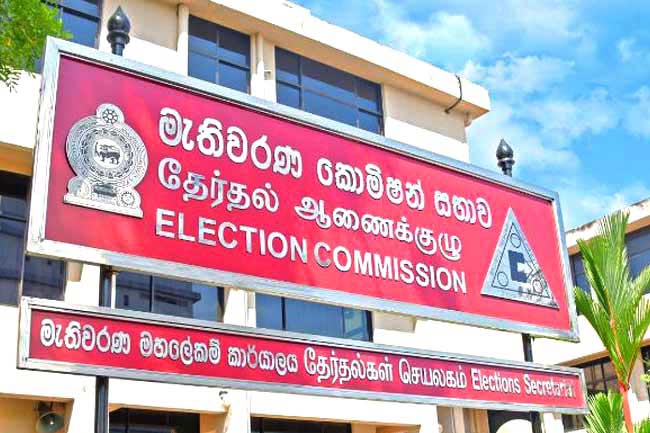
The Election Commission instructed the district election authorities yesterday to work out logistical needs to conduct the election to the local authorities, an official said.

The Commission , the apex body authorized in the conduct of elections , called for a meeting with the Assistant Election Commissioners stationed district-wise to enumerate vehicles and public servants to assess the requirement for the conduct of elections .

The Commission is planning to issue the gazette notification calling for elections to 340 local bodies.

More than 8000 representatives will be elected to carry out local administration.

An official who wished to remain anonymous said the new local bodies should be constituted by March 20, next year.

He said instructions were given to work out arrangements for the conduct of postal voting and handing over of nominations.

The last local government election was conducted in February, 2018.

Posted in Uncategorized

Over Rs. 2 bn operational cost of Mattala International Airport is 20 times its income, Audit report reveals

The latest report issued by the National Audit Office states that the operational cost of Mattala International Airport has exceeded 2 billion rupees, but that cost is about twenty times more than the income.

The report also shows that the amount of more than 36.56 billion rupees spent for the construction of this airport has not been used effectively.

Mattala Airport’s net loss after tax in 2021 was 4 billion rupees and the net loss after tax from 2017 to 2021 is more than 2 billion rupees, according to the heads of the audit department.

The audit report states that although the expected annual passenger capacity of the airport is one million, only 91,747 passengers have arrived in the last five years and only 2,396 flights have taken place in the airport in the last five years.

It further states that the company had paid more than 2.6 billion rupees as annual loan installment including interest for the loan of 190 million US dollars taken for the construction of the airport.

The International Airport was opened for operations on 18 March 2013. The Airports and Aviation Services (Sri Lanka) Company Ltd. is in charge of its operations

Amend The Constitution: End Racism By Kumar David

Article 15 of the Indian Constitution states that the State shall not discriminate against any citizen on grounds of religion, race, caste, sex, place of birth and so on. The text-box in this piece is an abbreviation of this Article and had the Sr Lankan Constitution contained such a provision the Sinhala Only Act, the chapter on Buddhism, the Indian & Pakistani Citizenship Acts, caste-based prohibition on entering temples and such abhorrent provisions would, in theory, have been ultra vires. Unfortunately, however, such shameful provisions would actually have been lawful in Sri Lanka subject to a referendum after their parliamentary enactment. The disgraceful thing about this country is that such referenda would have been carried by thumping racist majorities.

Indian Constitution Article 15: the State shall not discriminate on grounds of race religion, caste, sex, place of birth, disability, Access to shops, restaurants, hotels theatres, use of wells tanks, bathing ghats, roads and places dedicated to the public.

Dr Bhimrao Ramji Ambedkar a polymath who headed the committee that drafted the Constitution of the Republic India was a Dalit (“untouchable” or Gandhi’s Harijans, the children of God) and made no bones about it. He was Law and Justice Minister in Nehru’s first Cabinet, an economist, social reformer and human-rights advocate. His early methodological affinity to Marxism is unsurprising. In the land of the Gautama who was born in Nepal, of Gandhi who spent two intellectually formative decades in South Africa and of Mother Theresa of Albanian descent, such things were possible. At home in Lanka those who protected people of another race or faith during riots, rape and arson had to be themselves shielded from miscreants of their own race and faith.

Democracy Stillborn by Rajan and Kirupaimalar Hoole traces the plight of Sri Lanka to the battles of the 1920s over the championship of labour by Ponnambalam Arunachalam. His ouster in 1921 from the Ceylon National Congress, led to the domination of estate capitalism and blended an anti-working-class stance in general with communalism and the disenfranchisement of plantation workers. The legal battle about the citizenship of plantation workers compromised the judiciary too. Habeas corpus affirmed in the Bracegirdle case of 1937 was undermined by the 1947 Public Security Ordinance permitting “murder in good faith.” With the complicity of the Tamil and Muslim elite, politics which was anti- labour at first, turned ethno-chauvinist surrendering Parliamentary political power to Sinhalese exclusivism. Organised labour, weakened by the exclusion of plantation workers, was finally crushed by the UNP government in the General Strike of 1980. The right of habeas corpus, rendered virtually extinct by the 1979 PTA, made way for the cruel joke of the 2007 ICCPR Act.

Global Context

Global growth is slowing sharply and countries are falling into recession with consequences that are devastating for developing economies. As Central Banks simultaneously hike interest rates in response to inflation, the world is edging toward recession in 2023 and the emerging financial crises will do lasting harm in developing economies. Though Central banks are raising interest rates inflation will not come down. Furthermore, the political scenario of spreading global extremism voids usual recession-recovery expectations. The Biden Administration finds it a matter of existential necessity to a take stand against extremism (racism, “election deniers”, reinvigorated Trumpism, a fundamentalist anti-abortion surge a versus feminist outrage and a primitivist majority in the Supreme Court). Therefore, the Administration is pumping money into consumer’s pockets; fiscal stimulation; a $1.9 trillion American Rescue Plan, tax credits and rebates for energy-efficient vehicles and renewable electricity. Then there is the Ukraine war and political uncertainties such as the victory of neo-fascists in the Italian elections and the strengthening of the far-right in France, Poland Hungary, Denmark and elsewhere in Europe. Worry is justified.

Actually, what I am humming and hawing about is the Hooles’ hopes that a revived judiciary will have the courage to declare bad laws invalid. And when they suggest that talk of “revolution is discredited” they oversimplify the “mangled processes” maturing in the innards of global capitalism. Things now are different from the familiar post-war recession-recovery cycle. Global recession, a deep-recession or even a depression cannot be ruled out and complicate the aforesaid purely political picture. The processes are different this time and need to be fleshed out with their own empirical detail. Is a decade of global capitalist durability possible, or will it be a deeper recession than usual?

Comments on coverage

The authors are at their best in the scholarly presentation of how British juridical and colonial administrative practices challenged and eventually ended the denial of habus corpus and even contributed to the downfall of slavery in the Empire (pages 76-79). In Sri Lanka conversely since independence “governments have shown their repressive character by targeting the right of habeas corpus by legislative acts” and since 1978 by muzzling the judiciary. The historical scholarship of chapter 2 may prove to be the most informative section of the book for the lay reader unfamiliar with this history. The early chapters also expose the class bias and racial shakiness, if not worse, of the old “national leaders” DB Jayatilleke, DS Senanayake, James Peries, DR Wijewardena and SWRD Bandaranaike.

The book is a 730-page hagiography of Ponnambalam Arunachalam – I must hasten to add that I am not suggesting that loquacity is the outcome of matrimony. Many share the view that Arunachalam was the greatest Ceylonese political figure of the Twentieth Century. I will not dream of attempting to summarise the book’s argument in my 1700-word column. Read it, you cannot afford not to, or you will miss a wealth of carefully researched detail. Chapter 11 on the Citizenship Act debates, convey a great deal of information about the intrinsic racism of Sinhala leaders and Tamil treachery (not only GG). While the book pays justifiable homage to Sarath Muthetwegama I am surprised it makes no mention of two far more important leftists of the same period, Vijaya Kumaratunga and Vickrmabahu Karunaratna. The Hooles are strong on textual scholarship but alas have little grasp of left-politics.

An edited summary of chapter subheadings of the first part (up to page 480) of this 750+ page book is as follows and gives a flavour of its scope.

Champion of Labour (Arunachalam, Coup in the Ceylon National Congress, Tamil Mahajana Sabhai, Indian Labour Short-changed, Oligarchy of Planter-Politicians, Donoughmore and Status of Indian Labour, Formation of the Left, Blaming Indian Labour for Landlessness, Mooloya, Bandaranaike Cleanses Electoral Rolls, D.S. Senanayake, George E. de Silva, B.H. Aluwihare, Release of LSSP Detenus. Independence, Unions, Extending Colonial Repression, Undermining Working Class, Jayewardene and Keuneman, Ponnambalam and N.M. Perera, Naganathan and Nadesan, Jennings, Citizenship Act, Ponnambalam ditches Plantation Tamils, Chelvanayakam, Political Imperative to Shackle the Judiciary, the Ceylon Act: Invalid, Absurd and Impossible, Supreme Court clears the way for Disenfranchisement, Taming the Judiciary: Undermining Separation of Powers.

The second part of the book from about Independence right up to the present time are dealt with in equal detail in pages 480-649, I am not providing a summary because it is better known and for reasons of space. There are also nine useful Appendices, a Bibliography and an Index in the remaining 80 pages.

I am a believer in the maxim that brevity is the soul of wit. If one can possibly say it in 25 words why drag it on for 250? On this count I should not be an admirer of Hoole & Hool’s tome. But they can be forgiven the length because of their admirable coverage of socio-political and labour movement perspectives.

I will now explore some associated issues. There is for example a comment in a newspaper by Ranga Jayasuriya on 1 Nov.2022 asking how come Britain has an Asian, Hindu Prime Minister, Rishi Sunak, and the US elected Barrack Obama, but no Lankan Tamil or Muslim came even close to reaching the pinnacle? Is it that in the early stages, Tamil politics was not a reaction to a Sinhala Buddhist majoritarian threat, but rather it was driven by Dravidian societal, caste and elitist imperatives? This of course is abundantly clear in the post-independence period where GG Ponnambalam reactionary Tamil Congress, and SJV’s quaint Federal Party and its successors, came to delineate the scope and nature of Tamil politics.

The aforementioned comment does not rub off on Arunachalam who “Kumari Jayawardena describes as far ahead of his colleagues in championing self-government and universal suffrage”. His vision was that of a Ceylon that would in about 20 years be a non-sectarian democracy along the lines of Switzerland. He noted “The slums of the poor, though not so bad as in the big cities of Europe, are nests of filth and disease. Children run about untaught, uncared for, their mortality running into hundreds per thousand.” Michael Roberts says in that M.M. Mahroof, a researcher into cast, makes the distinction “The Tamil system is based a notion of pollution; the Sinhala is not. The former is supplemental to Hinduism the latter antithetical to Buddhism. Non-Govi castes are often wealthy and powerful non-Vellalar castes are not. Govi negation of others is subtle, Vellalar negation of others is overt and offensive”. Was Arunachalam not a champion of the fight against caste prejudice in Tamil society of his day? Or is this an anachronistic question to ask?

NEC & officials to hold talks on LG Polls today

The National Election Commission is scheduled to meet all Deputy and Assistant Election Commissioners in all districts today, for a discussion on the conduct of the Local Government Election.

The discussion will take place at 10am at the Election Secretariat in Rajagiriya.

The summoning notice was issued by the Director General Saman Sri Ratnayake.

The Election Commission noted that they expect to discuss the conduct of the Local Government Election at length.