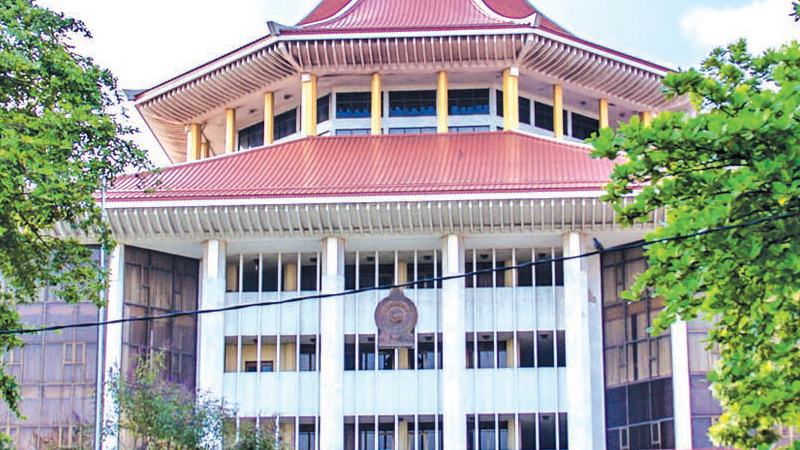
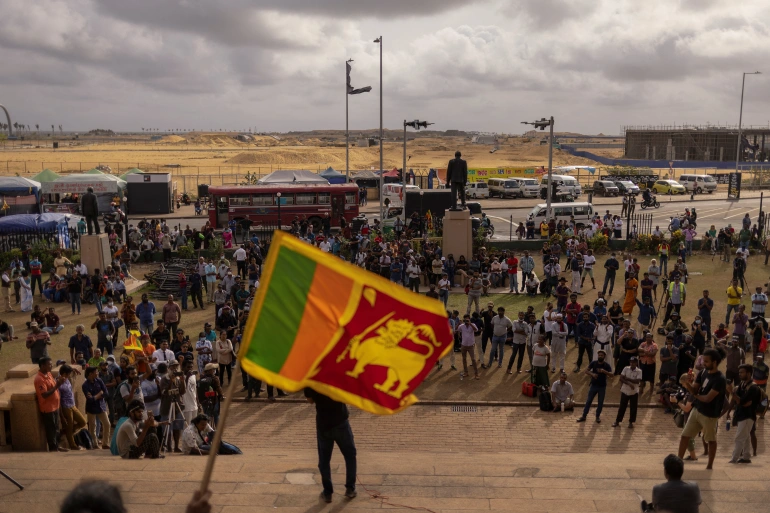
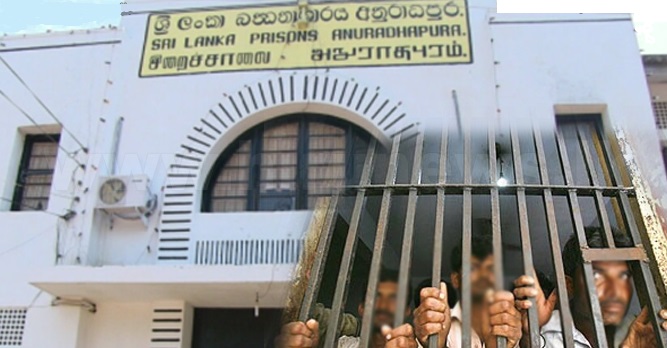
MPs who holds dual citizenship asked to resign

The Elections Commission said that an announcement regarding the issue of MPs with dual citizenship cannot be made unless through a court determination.

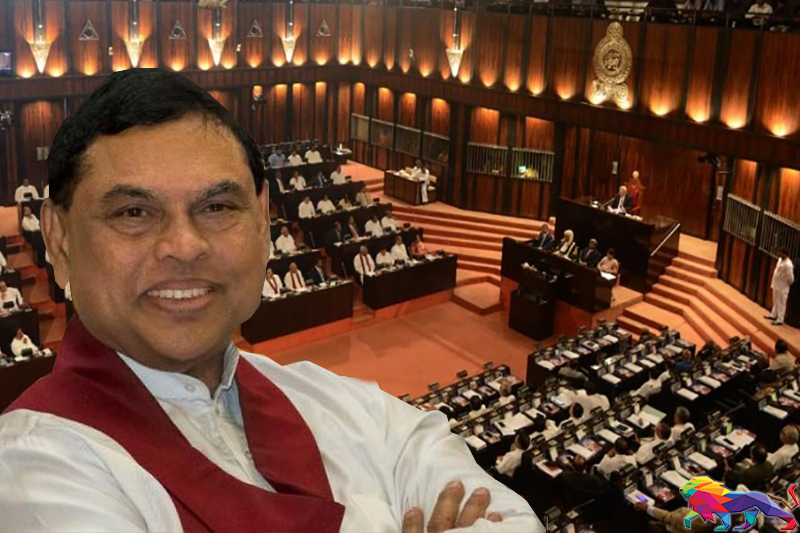
With the passage of the 22nd Amendment to the Constitution, people with dual citizenship are no longer eligible to hold the position of Member of Parliament.

However, the Election Commission said that it is not in a position to immediately announce whether someone is an MP with dual citizenship.

In such a scenario, the commission said such individuals should immediately resign.

Commenting on this matter, MP Prof. Charitha Herath said that if there are MPs with dual citizenship, they should immediately step down before the laws are executed.

Posted in Uncategorized

China to enhance ties with SLPP

China says it looks forward to enhancing ties with the Sri Lanka Podujana Peramuna (SLPP) led by former President Mahinda Rajapaksa.

The Chinese Embassy in Sri Lanka thanked former President Mahinda Rajapaksa after he congratulated Chinese President Xi Jinping on his re-election as the General Secretary of the Chinese Community Party (CPC).

“Thank you Your Excellency. We look forward to further enhancing the friendship and exchanges between the CPC and Podujana Party,” the Chinese Embassy tweeted.

Rajapaksa said that the re-election of Xi Jinping has confirmed the strength and courage his leadership holds for the people of China.

“My heartiest congratulations to H.E. Xi Jinping on his re-election as the CPC General Secretary. China has achieved great feats under his leadership & his re-election has confirmed the strenght & courage his leadership holds for the people of China,” Rajapaksa tweeted.

Xi Jinping secured a historic third term as China’s leader on Sunday and promoted some of his closest Communist Party allies, cementing his position as the nation’s most powerful leader since Mao Zedong.

The Central Committee of the Chinese Communist Party elected Xi as its General Secretary for another five-year term, Xinhua reported, tilting the country decisively back towards one-man rule after decades of power-sharing among its elite.

22A and Basil’s Catch-22 -The Island Editorial

The passage of the 22nd Amendment to the Constitution (22A) cannot be considered a personal achievement of any individual politician. It was born out of a collective effort. Most of those who voted for the 22A Bill acted out of expediency rather than principle. Among those who backed it are some ardent supporters of the executive presidency. They voted for the 18th and 20th Amendments in 2010 and 2020 respectively to strengthen that institution. It was to settle political scores with their bete noire, Basil Rajapaksa, that they backed the 22A Bill overwhelmingly on Friday.

The problem with Sri Lanka’s supreme law as well as most amendments thereto is that they have been tailor-made to meet the needs of some power-hungry political leaders. The Constitution itself was created to enable J. R. Jayewardene to satiate his thirst for unbridled executive powers. His mighty hurry to introduce the presidential system resulted in numerous flaws in the Constitution, which we have had to live with.

The 13th Amendment, made in India, sought to solve Indian Prime Minister Rajiv Gandhi’s problems in Tamil Nadu rather than Sri Lanka’s ethnic issue. The 18th Amendment, made in Medamulana, helped President Mahinda Rajapaksa become a king in all but name. The 20th Amendment restored the executive powers of the President for the benefit of Gotabaya Rajapaksa. Only the 17th and 19th Amendments, introduced in 2001 and 2015 respectively, could be considered pro-people, but the latter unfortunately smacked of a move to further the interests of the then Prime Minister Ranil Wickremesinghe and place the Rajapaksa family at a disadvantage. The 22A also contains a section aimed at keeping Basil at bay; it has disqualified dual citizens from entering Parliament.

President Ranil Wickremesinghe has been praised in some quarters for the passage of 22A, which reduces his presidential powers, but he has only made a virtue of necessity. It was drafted on President Gotabaya Rajapaksa’s watch. President Wickremesinghe has neither gained nor lost anything significant due to 22A. He promised consensual governance and undertook to strengthen the independent commissions. He would not have been able to exercise the powers that the executive presidency has now been stripped of. With only a single MP on his side, he cannot do anything without the concurrence of the SLPP, which controls Parliament.

The outcome of Friday’s vote in Parliament could be thought to indicate the emergence of another dissident group in the SLPP with some more ruling party MPs apparently becoming responsive to public opinion, which is not in favour of the government. Basil has the habit of making himself scarce whenever things go wrong for his family and party. He rushed to the US after the 2015 regime change. He would have left the country last July as well but for protests at the BIA. He can always run away to the US, where he is safe. But most SLPP MPs cannot do so; they have to be here facing the people’s wrath.

Interestingly, even some members of the Rajapaksa family—Chamal, Namal and Shasheendra—voted for the 22A Bill; in so doing, they endorsed the ban on dual citizens like Basil from entering Parliament! Maybe they are running with the hare and hunting with the hounds.

It is said that Basil may renounce his US citizenship and re-enter Parliament. But it is doubtful whether he will take such a gamble, having witnessed the predicament of his brother, Gotabaya, a former US citizen, who tried to migrate to the US after his ouster, in July, only to be denied a visa. Finally, he had to take refuge in Thailand, of all places, before returning home. What the passage of 22A signifies is that President Wickremesinghe and the SLPP can extricate themselves from the Rajapaksas’ clutches, serve the interests of the people and perhaps even regain public support, if they pluck up the courage to do what is right and enlist the backing of the Opposition.

Hindu devotees celebrate the Deepavali festival today

Hindus across the World Celebrate the Deepavali Festival today (24).

Diwali (also called Divali or Deepavali) is a “festival of lights” that celebrates the triumph of light over dark and good over evil, and the blessings of victory, freedom, and enlightenment.

The name comes from Sanksrit dipavali, meaning “row of lights.”

On the night of Diwali, celebrants light dozens of candles and clay lamps (called diyas), placing them throughout their homes and in the streets to light up the dark night.

In most of India, Diwali consists of a five-day celebration that peaks on the third day with the main celebration of Diwali. In other places where Diwali occurs, usually only the main day is celebrated.

Diwali is primarily celebrated by followers of the Hindu, Sikh, and Jain faiths. However, the holiday is celebrated throughout India, Singapore, and several other South Asian countries as a national holiday, meaning that people outside these religions may participate in Diwali celebrations, too. Hindu, Sikh, and Jain communities in the United Kingdom, United States, Australia, and elsewhere around the globe also regularly celebrate Diwali.

Diwali occurs annually in autumn (or spring, in the southern hemisphere), during the Hindu month of Kartik. (To put it in Western terms, Kartik begins around mid-October and ends in mid-November.) Specifically, Diwali occurs on the darkest day of the lunar month, which is the day of the new Moon.

Because Diwali is celebrated by so many people worldwide, traditions are diverse, though there are a few common themes, including the lighting of candles and the gathering of families.

The main celebration of Diwali takes place on the day of the new Moon, when the sky is at its darkest, so a big part of the celebration revolves around light. Candles, clay lamps, and oil lanterns are lit and placed throughout the home, in the streets, in areas of worship, and floated on lakes and rivers. Fireworks are also set off on the night of Diwali—said by some to ward off evil spirits.

Another central theme of Diwali is family. Wearing their best new clothes, families gather together to eat sweets and other special foods, light diyas (decorative oil lamps), and pray for their ancestors. Businesses are generally closed (or close early) on Diwali to allow workers to celebrate with their families, too.

The feast can be quite extravagant, with the table filled with special dishes and sweets.

India, Israel joint collaboration in agriculture sector in Sri Lanka

India and Israel are planning to invest jointly in the development of the agriculture sector in Sri Lanka, Daily Mirror learns.

The Agriculture Ministry has initiated this move to establish the centres of excellence in Agriculture in Sri Lanka in collaboration with Israel’s Agency for International Development Cooperation.

According to an informed source, Israel will provide technical assistance by sharing knowledge and agro technologies.

India has agreed to provide financial support to Sri Lanka, the source said.

The Agricultural Ministry has identified five locations – Horana, Seetha-Eliya, Mahailluppallama, Angunukolapelessa and Gannoruwa – for the development of cultivation of fruits, potato, non-rice cereals, legumes and oil crops. Besides, there is a proposal for establishing a horticulture research and development institute.

The Agricultural Ministry has requested the Sri Lankan mission in New Delhi to initiate direct dialogue with the Israeli embassy in New Delhi to identify demand-driven goals, road map, stakeholders, responsibilities and the timeline to establish there’s centres. Israel does not have a resident mission in Sri Lanka.

Sri Lanka High Commission organised a virtual meeting with the officials from the Israeli Embassy, the Indian High Commission in Colombo, the Ministry of Agriculture, the Department of Agriculture and the Department of External Resources of Sri Lanka.

Sri Lanka High Commissioner Milinda Moragoda and Indian High Commissioner Gopal Baglay have liaised with each other regarding the pilot project.

Posted in Uncategorized

Sri Lanka to allow airlines to import own fuel amid currency crisis

Sri Lanka will allow airlines to import their own fuel, Power and Energy Minister Kanchana Wijesekera said as the country grappled with the worst currency crisis in the history of its soft-pegged central bank.

Sri Lanka’s state-run Ceylon Petroleum Corporation was unable to import enough aviation fuel in 2022 as money printing created forex shortages, forcing airlines to top up at neighboring countries or bring extra fuel, pushing up ticket prices.

Sri Lanka’s new domestic airline Fits Air is importing their own fuel. This week parliament voted to liberalize the sector by changing the country’s petroleum law.

“We gave companies permission to import oil,” Minister Wijesekera told parliament. “After we liberalize the petroleum sector any airline would be able to import their own fuel.

“We will give our storage facilities and pipelines for a fee.”

Minister Wijesekera said CPC has already started earning service fees.

Posted in Uncategorized

Don’t push us to take estate workers’ issue to Geneva – Ganesan

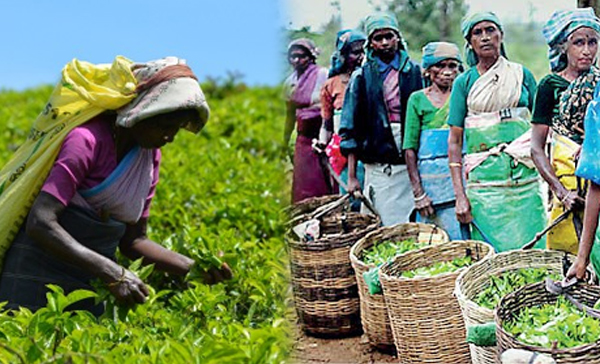
An upcountry politician has urged the government to look into the plight of estate workers before they die of hunger.

Leader of the Tamil Progressive Alliance Mano Ganeshan moved an adjournment motion in parliament on October 20, while referring to a warning by international agencies over food and other issues of these workers.

He warned of strong action by political groups and trade unions against the authoritarian conduct of estate companies.

If the world community is told about the violations of rights of estate workers, the market for tea will collapse, Ganeshan said.

He cited the warning signals issued about the food crisis, especially affecting estate workers, by the UN’s FAO, ICRC and Sri Lanka Red Cross Society, and asked that immediate steps be taken to prevent a famine-like situation.

Racism is also involved in the maltreatment of estate workers, he said, quoting a UN official Tomoya Obokata, and asked that they be not pushed to take matters to the UN Human Rights Council session due in Geneva in April next year.

Ganeshan said the authorities should not entrust estate companies with the social security of their workers, since they are not prepared to share their profits with the workers.

A promise given by Ranil Wickremesinghe when he was the prime minister to handover uncultivated land to estate workers for farming is yet to be fulfilled, he also said.

Posted in Uncategorized

Lankan Supreme Court points out major flaws in the Rehabilitation bill By P.K.Balachandran

The Sri Lankan Supreme Court earlier this week ruled that the “Bureau of Rehabilitation” Bill presented to parliament on September 23 violated the constitution and that some of the key clauses will require a two-thirds majority and a referendum was enjoined in one case.

Principally, the court rejected clauses stating that the process of “rehabilitation” would apply not only to drug addicts but also to ex-militants and those with violent and extremist tendencies. It also objected to the involvement of the armed forces in the rehabilitation process. The court reprimanded the government for vague and imprecise wordings in the bill which could facilitate arbitrariness or wanton misuse by State personnel.

If the government of President Ranil Wickremesinghe, backed by the Rajapaksas-led Sri Lanka Podujana Peramuna, the single-largest party in parliament, had got the bill passed with all its draconian clauses intact, Sri Lanka’s international image, already tarnished by its handling of the peoples’ protest or the Aragalaya, would have suffered a further blow. Fortunately, the Sri Lankan system gives citizens the right to seek the Supreme Court’s determination on the constitutionality of a law before it is passed. Several leading figures had filed petitions against the Bill. This rescued the country from a major embarrassment.

The Bill sought to provide for the establishment of a “Bureau of Rehabilitation” for the rehabilitation of “misguided combatants, individuals engaged in extreme or destructive acts of sabotage and those who have become drug dependent persons.” The rehabilitation Bureau was meant to take over the functions of the existing Office of the Commissioner-General of Rehabilitation created under the Public Security Ordinance. This organization, set up at the end of the 30-year war, “rehabilitated” thousands of ex-cadres of the LTTE. After the August 2019 bomb blasts, some Muslims were also earmarked for rehab.

The Supreme Court, however, wanted the Bureau to rehabilitate only drug addicts. It said that the Bill enables the rehabilitation of an “extremely wide category of persons, without any criteria being laid down by the Bill in determining who is an ex-combatant, a member of violent extremist group or any other person who requires treatment and rehabilitation. “To that extent, we are of the view that Clause 3 is arbitrary and is violative of Article 12(1),” the court said.

Lack of a definition of these categories of persons raises the possibility that persons earmarked for rehab may not necessarily be subjected to a judicial process. They could be categorized by executive action arbitrarily. For example, Annex I to the Cabinet Memorandum on the Bill seeks to include even “suspects arrested during the course of investigations.”

“The Bill as a whole is inconsistent with Article 12(1) of the Constitution and therefore needs to be approved by the special majority of Parliament (two-thirds).” However, the court added that the inconsistency shall cease if all references to “ex-combatants,” “violent extreme groups” and “any other group or/persons” are deleted from the Bill and it is limited to the rehabilitation of drug-dependent persons and such other persons as may be identified by law.”

Involvement of Armed Forces

Clause 17 of the Bill says that the President may, upon the request of the Minister, designate all or any of the members of the Sri Lanka Army, Navy or Air Force “may exercise, perform and discharge the powers, duties and/unctions under the Rehabilitaion Act.” The Minister in charge, may, by Order published in the Gazette, specify the areas which the powers, duties and functions under this Act may be exercised, performed and discharged by the authorized members of the Forces. The powers, duties and functions conferred or imposed upon authorized members of the armed forces by this section shall be exercised, performed and discharged “notwithstanding that such powers, duties and functions are not conferred or imposed upon them by the provisions of the Army Act, the Navy Act, and the Air Force Act.”

Commenting on this, the court said: “it is clear that the administration and management of not only the Council but even the entire Bureau could be entrusted to the members of the Armed Forces by the President upon the request of the Minister. It is in this background that Mr. Hewamanna (a petitioner) submitted that there is no rational and proximate nexus between the objective of the Bill and the use of members of the Forces in the rehabilitation of persons and that in the absence of a nexus, the said Clause is inconsistent with Article 12(1).”

On the petitioner’s plea, the court said: “It is our view that the course of action provided in Clause 17 is not contemplated by the Cabinet Memorandum and therefore, such an action is contrary to the policy objective set out in the Cabinet Memorandum and the rationale. Furthermore, there is lack of clarity with regard to the status of the members of the Forces within the Bureau — i.e., are they officers or employees of the Bureau, and if so, whether the provisions of the Bill that applies to officers and employees shall apply to the designated members of the Forces. As the powers, duties and functions exercised by the said members of the Armed Forces are not powers, duties and functions conferred on them under the respective Acts [Army Act, Air Force Act or the Navy Act], it is not clear if such members would be subject to the disciplinary procedures contained in such Acts, thus leaving Clause 17 vague.”

“It is also noted that the provisions of Clause 26 in terms of which an employee of the Bureau who strikes, wounds, ill-treats or neglects a person undergoing rehabilitation shall be guilty of an offence may not apply to the members of the Armed Forces in view of the above lack of clarity.”

“In these circumstances, we are of the view that Clause 17 lacks clarity and is overbroad in its application and is therefore arbitrary, with the result that the said Clause is inconsistent with Article 12(1) of the Constitution. Clause 17 shall therefore have to be approved with the special majority (two-thirds) of Parliament.”

Norms for Judicial Oversight

On the need for proper judicial oversight, the court said that Clause 23 should be amended to say that “it shall be the duty of every Magistrate to visit every Centre for Rehabilitation situated within the Judicial Division in respect of which he is appointed, at least once in every month to ensure that the persons undergoing rehabilitation at the Centre are protected to the extent provided for in the Convention Against Torture and other Cruel, Inhuman or Degrading Treatment or Punishment Act No. 22 of 1994.”

“The Magistrate who visits the Centre for Rehabilitation, shall personally see the person undergoing rehabilitation, and look into his well-being, welfare and conditions under which he is kept at such Centre; and record his observations and any complaint the persons undergoing rehabilitation may make. Where the Magistrate is of the opinion, that the persons undergoing rehabilitation may have been subjected to torture, the Magistrate may direct that the person undergoing rehabilitation be produced before a judicial medical officer or a government medical officer for medical examination, and a report be submitted by such medical officer to the Magistrate. Where the report of such medical officer reveals that the person undergoing rehabilitation has been subjected to torture, the Magistrate shall make an appropriate order.”

“The Magistrate shall also direct the Inspector General of Police to commence an investigation into the alleged torture in order to enable the Attorney-General to institute criminal proceedings against the person who is alleged to have committed the torture.”

Human Rights Commission’s Role

Further, the “Human Rights Commission of Sri Lanka may on its own volition or on a complaint received, visit every Centre to ensure that the rights of the persons undergoing rehabilitation at the Centre are protected to the extent provided by law, and make appropriate recommendations in terms of the HumanRrights Commission of Sri Lanka, Act No. 21 of 1996.”

Referendum on Clause 26

Necessitating a Referendum on Clause 26, the court said that to avoid criminality in the administration of rehabilitation, the use of harsh methods cannot be allowed under any circumstance. The bill only banned use of such methods “without reasonable cause”.

Clause 26 of the Bill reads as follows: “Any person employed in a Centre for Rehabilitation who without reasonable cause strikes, wounds, ill-treats or willfully neglects any person under rehabilitation commits an offence under this Act and shall be liable on conviction after summary trial by a Magistrate to a fine not exceeding two hundred thousand rupees or imprisonment of either description for a period not exceeding eighteen months or to both such fine and imprisonment.”

On this the court said: “ Although Clause 22 provides that any act done in good faith will not give rise to any civil or criminal liability, we are of the view that the words, “without reasonable cause” recognize that an employee of a Rehabilitation Centre can violate Article 11. We are therefore of the view that Clause 26, as it presently reads, is inconsistent with Article 11 and shall be approved by the special majority (two-thirds) of Parliament and by the people at a Referendum.”

The court however said that “the inconsistency shall however cease and the said provision may be passed by a simple majority if the words, “without reasonable cause” are deleted.

Given the Supreme Court’s observations, the Rehabilitation bill will have to be drastically amended or passed with a two-thirds majority. A hard option seems unlikely in the present fluid political situation, especially when there is no urgency about setting up a Rehabilitation Bureau of the kind envisaged originally.


‘Aragalaya’ protesters travel to Beliatta to protest arrests under PTA

A group of activists of the ‘Aragalaya’ protest movement have commenced a journey from Fort to Beliatta railway station by train this morning (Oct 23), demanding the release of Inter-University Students’ Federation (IUSF) convenor Wasantha Mudalige and Ven. Galwewa Siridhamma Thero who have been detained under detention orders.

Several representatives from the IUSF, civil organizations and other activists of the ‘Aragalaya’ protest movement had joined the protest campaign, Ada Derana reporter said.

Accordingly, after reaching the Beliatta railway station, they will reportedly travel towards the Tangalle prison, where Wasantha Mudalige and Ven. Galwewa Siridhamma Thero are detained.

Joining the protest, activist Lahiru Weerasekara stated that the 22nd Constitutional Amendment has been passed by the majority vote in the Parliament, whereas some people think that democracy can be won with them, whilst a young man and a young monk have been imprisoned for more than two months using a law which is not accepted anywhere else in the world.

“Today we will start from Fort railway station and go to Tangalle to express a symbolic protest”, he added.

“If the government is thinking of suppressing the ‘Aragalaya’ of the people in this way, we say that each day that Ven. Siridhamma Thero and Wasantha are detained, we will go village by village to deliver the message of wave of general public struggle all over the country.”

Posted in Uncategorized

Deepawali gift: Eight PTA prisoners being released

Eight convicted Tamil Political prisoners serving their sentences under the Prevention of Terrorism Act (PTA) received presidential pardons this week, a senior Cabinet Minister said.

Four detainees were freed on Friday while three others are expected to leave prison tomorrow. The eighth inmate has to undergo a period of rehabilitation before being released.

The men had been carrying out long terms of rigorous imprisonment in various prisons after having been convicted by courts of law, Justice Minister Wijeyadasa Rajapakshe told the Sunday Times.

The goodwill gesture came ahead of the Deepawali Festival to be celebrated tomorrow by Hindus, in anticipation that most of the released detainees will now be reunited for celebrations with their families after extended periods in incarceration, the Minister said.

“There was a brief delay in the cases of three detainees, since they had already begun legal action by filing appeals against their convictions,” he explained. “Once those appeals are withdrawn, they will be released by tomorrow.”

President Ranil Wickremesinghe signed the relevant documents on Wednesday after studying the recommendations from the Attorney General’s Department and the Ministry of Justice.

Since the end of the war in 2009, many Tamil political parties have repeatedly called for public amnesty to be granted to at least 102 detainees either convicted or detained for years without being prosecuted. They said it would be a goodwill gesture that would contribute towards meaningful reconciliation.