Sabry calls for party leaders’ meeting on truth mechanism

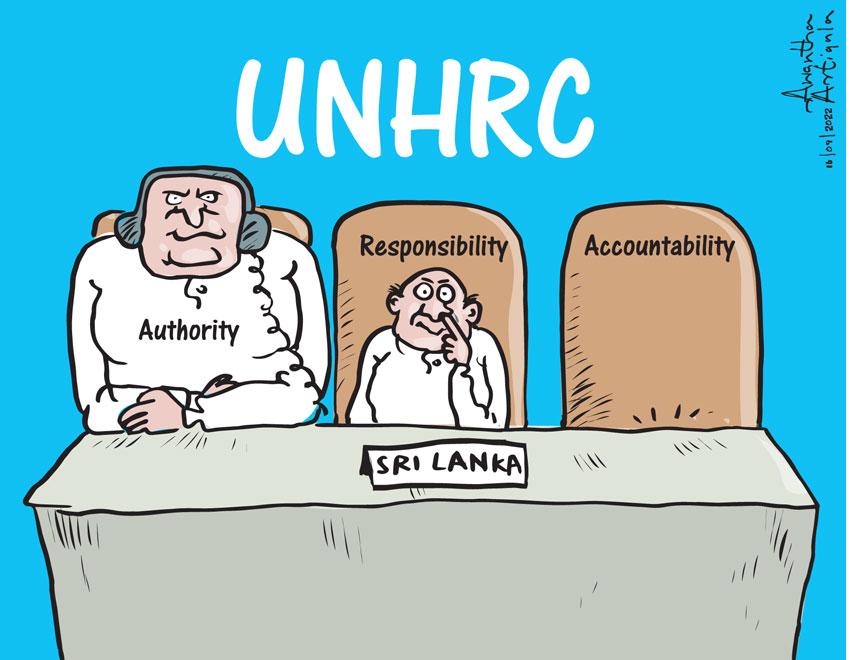
Minister of Foreign Affairs President’s Counsel (PC) M.U.M. Ali Sabry urged the office of the Speaker of Parliament Mahinda Yapa Abeywardena to take the lead and call for a meeting of all party leaders to decide on a domestic truth-seeking mechanism that will deliver results and thereby protect everyone, and in turn prevent the imposition of an external mechanism.

“It is very important, and I therefore urge that we should have multi-party consensus on the truth-seeking mechanism. I would urge your (the Speaker’s) office to take the lead and call for a meeting of all party leaders so that we agree on the mechanism that will deliver domestically and will prevent an external mechanism, and will thereby also protect everyone,” he said while addressing Parliament yesterday (19).

He further noted that the Government will invite Sri Lankans who are living in various parts of the world to build a united Sri Lanka.

“We will invite our Sri Lankans who are living in various parts of the world, belonging to all races, ethnicities, and religions to come forward and march towards building a united Sri Lanka,” he added.

Sabry said that the opportunity should be given to those grieving to tell their stories, as well as for those unfairly accused to redeem themselves through a common platform.

“In the meantime, give an opportunity for the people who are grieving to come and tell their stories, as well as a platform for people who have been unfairly accused to come and redeem themselves. It is important that we do so, as otherwise, this mechanism will go out of the country,” he further added.

Sabry further noted that a domestic truth-seeking mechanism must be implemented as envisaged by the Presidential Commission of Inquiry for the Appraisal of the Findings of Previous Commissions and Committees on Human Rights and the Way Forward to investigate, inquire into, and report or take necessary actions on the findings of preceding commissions or committees appointed to investigate human rights violations, serious violations of international humanitarian law and other such offences.

“We must provide a platform where people can have their grievances addressed and find closure, however difficult that process may be. We are of the firm view that any solution should be within the Constitutional framework of a sovereign Sri Lanka. We seek the co-operation and understanding of all sectors of society and all political parties in carrying this process forward,” he elaborated.

He noted that this will prevent external forces from meddling in the country’s internal affairs, and also stressed that it is important for all governments to deliver on their promises.

“By doing so, we will prevent external actors from meddling in our own affairs, and therefore it is important that all governments, and our Government today, deliver on promises that we have made in order to seek a truth-seeking mechanism,” he added.

He further said that no country has a greater interest in bringing about reconciliation and promoting and protecting human rights among its people than Sri Lanka, a point that has repeatedly been emphasised during proceedings of United Nations Human Rights Council (UNHRC) sessions.

“No sovereign Government is bound to work according to external prescriptions, but they should be guided by the democratic aspirations of its own people. Sri Lanka has a well-established, time-honoured legal system that is capable of ensuring the dispensation of justice according to the Constitution.”

He also noted that the Government remains committed to protecting the armed forces and the Police, who have made immeasurable sacrifices to defeat terrorism, protected the territorial integrity of the country, and regained the right to life for all people in Sri Lanka.

“The time is now opportune for us to get together and make good on the promises made by successive governments to the people in the areas of the reconciliation of human rights. We need to look beyond the UNHRC resolution and continue with vigour the work that has been initiated in this area. It is important that we deliver on the promises that we have repeatedly given to the international community, and to win over people of Sri Lankan origin in various parts of the world,” he added.

SLFP will vote for 22A: Maithri

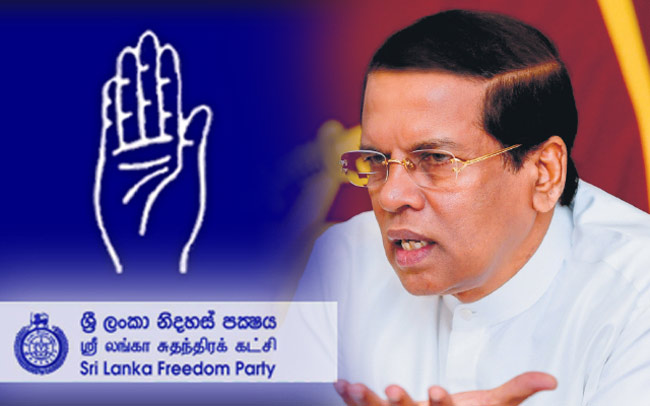
Sri Lanka Freedom Party (SLFP) would support the 22nd Amendment to the Constitution as it was a progressive Amendment on the part of the people, former President Parliamentarian Maithripala Sirisena said today.

Speaking during the debate on the 22nd Amendment, he told Parliament that they were voting for the Amendment and not to strengthen the government.

“Some people may claim that we are voting for the Amendment to strengthen the government. We are voting for the Amendment only because it is a progressive Amendment on the part of the people,” he said.

The MP said issues faced by the people would not be resolved by passing constitutional amendments alone and that the government must take steps to resolve the issue concerning fertilizer and high cost of living.

He expressed hope that the 22A would strengthen democracy, public service and restructure corrupt state institutions.

Posted in Uncategorized

Mahinda’s make-believe, the Trincomalee trap and Ranil’s political unsustainability BY Dr.Dayan Jayatilleka

…Unable to summon the full resources of its vaunted intelligence or its political will to meet the formidable challenges issued by an unprecedented crisis, the elite presented other bizarre exhibitions of helplessness, bewilderment and naivete…Various theories were put forward like… “For God’s sake give them Trinco” …’

– The Marooned Elite, Crisis Commentaries: Selected Political Writings of Mervyn de Silva, International Center for Ethnic Studies, Colombo, 2001, pp. 55-67.

Mahinda can’t comeback

Critiquing the policies of the last decade of Chairman Mao Zedong’s life, Fidel Castro once remarked sadly that there are some leaders “who break with their feet, what they built with their hands”. That would be even truer of Robert Mugabe and Alberto Fujimori than Mao. It fits Mahinda Rajapaksa. It wouldn’t fit Gotabaya who simply broke with his feet what generations had built with their hands (i.e., agriculture).

Mahinda and his SLPP cannot come even close to anything remotely like an electoral comeback for six reasons:

1. MR nominated Gotabaya as candidate even though he could have picked Chamal. In mid-2018, I had personally warned him of the dangers of a GR candidacy (which I had supported in 2016-17) and pitched for Chamal or Dinesh in print.

2. MR could have but didn’t challenge Gotabaya when as President the latter centralised all power in his hands through the 20th Amendment, thereby devaluing the PM who happened to be GR’s vastly experienced older sibling.

3 MR could’ve but didn’t pushback publicly against the catastrophic fertiliser policy which has destroyed most of the SLPP’s and the Rajapaksas’ traditional rural peasant support base including in the South.

4. MR turned his back on his own rebellious street-agitator past which should have enabled him to empathise with the Aragalaya youth. Instead, utterly unprovoked he gave a very hardline militarist speech on 11 April 2022, well before ‘MynaGoGama’ or 9 May. His son Namal has eschewed the path of progressive dissent that Chandrika adopted even against her mother Sirimavo and brother Anura, which translated itself later into considerable political capital.

5. MR has abandoned what he symbolised and championed, and installed as President his traditional foe Ranil who still stands for everything in economic policy that Mahinda stood against.

6. The people are suffering as never before in living memory; the Rajapaksas are held responsible, and will remain indelibly associated for decades in the mass mind with this anguish and nepotism, just as Madam Bandaranaike was for 17 years after the material hardships and nepotism of 1970-1977.

Trincomalee three-card trick

The Tamil political leadership has commendably brought to light the attempt of the Sri Lankan regime, operating octopus-like through state authorities, to unilaterally alter the demographic composition, i.e., the population ratios, of the North and East. What they have not done is to grasp the perfidy of the plan in its entirety. They have not connected up the dots.

President Wickremesinghe’s grand (or sordid) design can be glimpsed in his Trincomalee Strategic Development Plan. This Plan must be read together with the demographic changes that are sought to be made through an array of administrative-cartographic operations. Districts, provinces, must not remain static and population ratios should and do change, but that has to be through evolutionary trends, chiefly of economics, not of unilateral, top-down state intervention.

The Wickremesinghe administration is trying to qualitatively add value to Trincomalee while subtracting the Tamil percentage and proportion of the populace and the land by administrative land-swaps. If his ‘strategic plan’ works, Trincomalee will be another Port City, the jewel in the crown not of the place and people as they exist or have historically existed, but of a district and province that are ‘Sinhalised’ and ‘de-Tamilised’ by several strokes of a pencil through maps and of the pen on new administrative regulations—the method greatly favoured by imperialist-colonial powers throughout history (e.g., Sykes-Picot).

The administrative exercises now under way, going by the letter to the President authored by Hon Sampanthan and the speeches by M.A. Sumanthiran and Gajan Ponnambalam, will render the 13th Amendment, the Northern and Eastern Provincial Councils and the Indo-Sri Lanka Accord automatically meaningless because the configuration and composition of those two provinces would have been drastically altered.

This is the method used by Israel’s Netanyahu to render meaningless the two-state solution of the Oslo peace accords.

The Wickremesinghe administration’s plan in effect displaces the Tamil people of the district, province and region since they will find themselves on the other side of district and provincial boundaries, as small minorities in Sinhala majority areas, overnight, while the Sinhalese majority areas will be annexed to the remaining part of the district, creating enclaves that serve as settlements.

Most cynically of all, President Wickremesinghe’s move seeks to tempt and co-opt India, a country with 80 million Tamil people, into partnering the Sri Lankan state and powering the economic success of this project which disempowers the Tamils through downsizing, while enshrining through cartographic chicanery, the hegemony of one community in an area historically inhabited by another and of a multi-communal composition and character.

Ranil Wickremesinghe is probably counting on the trade-off within the trade-off, namely that the installation of Sinhala dominance over Trincomalee will more than neutralise, or at least offset, Sinhala nationalist outrage at handing over Trincomalee to India as he handed over Hambantota to China.

The Trincomalee triple-cross is signalled in these recent remarks of High Commissioner Milinda Moragoda to the Times of India:

“Sri Lanka is in a transition phase and there is a need to renegotiate the social and political compact in the country. Sri Lanka is a complex country with many regions and ethnicities. This issue (13th amendment) also falls under the same category. We have to work out a new compact.”

The imminent/ongoing changes on the ground in the Eastern Province seem to have been ‘renegotiated’ without the Tamil and Muslim parties or the main parliamentary Opposition.

The 13th Amendment issued from the Indo-Sri Lanka Accord, the product of protracted bilateral negotiations, and cannot be ‘renegotiated’ without India.

While the Ranil regime strives to strategically shrink the Tamil geopolitical space on the island, the Tamil political parties and civic organisations have newly expanded space in the public consciousness to avail themselves of in resisting the regime’s political expansionism.

I cannot recall a time when Sinhala racism was as socially and politically marginalised as it is now and sentiments of anti-racism and pluralist democracy as widespread as they are now due to the economic crisis and a new enlightened consciousness among a whole generation. It is the Age of the Aragalaya; our May ’68.

The wording of the UN High Commissioner’s report, the latest UNHRC resolution, the statements of the Indian delegate to the UNHRC and the US Senate Foreign Relations Committee resolution could frame a joint Sinhala-Tamil-Muslim platform against renewed supremacism.

If the Trincomalee area, including its port and oil tank farm is sold or leased to India as Ranil is signalling, instead of adhering to the Indo-Sri Lanka accord and developing the oil-tank farm jointly, the populist backlash that is inevitable in the context of economic contraction and IMF cutbacks, will take a patriotic or nationalist-populist character, not merely a socioeconomic populist form

Reading Ranil’s mindset

With the sophistication that characterises European political theory as distinct from the Anglo-American, the French introduced the category of ‘history of mentality/mentalities’ (‘histoire des mentalités’) also known as ‘history of attitudes’ into the study of social history and politics. When the history of Sri Lanka’s current crisis is written it would be useful to note the particular attitudes or mentalities that characterised the contemporary political leadership—Gotabaya Rajapaksa and Ranil Wickremesinghe.

President Wickremesinghe’s mentality was very much on display last week, in a number of episodes. He appointed Erich Solheim his advisor on Climate Change. This was the week after Sri Lanka’s Prof. Mohan Munasinghe, 2021 Blue Planet Prize Laureate (known as the Environmental Nobel Prize) and co-winner of the 2007 Nobel Prize for Peace, delivered a keynote speech at the Presidential Palace in Hanoi, Vietnam in the presence of that country’s President. President Wickremesinghe preferred Erich Solheim. The Government swerved from Gotabaya’s Rajapaksa’s disastrous taxation policy to Ranil’s calamitous one last week. GR’s policy was influenced by what George HW Bush referred to as his boss Ronald Reagan’s ‘voodoo economics’ by which he meant the economics of Arthur Laffer, the main policy instrument of which was a massive tax cut. Reagan abandoned it along the way.

For his part, Ranil has just committed one of the biggest possible mistakes in the playbook of politics: imposing a huge tax burden on the middle-classes and small and medium businesses.

He has just ensured that when the Aragalaya comes around again, the middle, upper-middle, professional and middle-bourgeois classes and strata which had peeled-off after Gota left and Ranil came in, will be back again with the struggle, and this time for the long haul, i.e., until an election.

Why Ranil would do this when the obvious place to go from Gotabaya’s savage tax cuts is not savage tax burdens on the middle classes and employment-generating small and medium businesses, but precisely a policy advocated by the US Democrats and European social democrats, of slashing taxes on the middle-classes and shifting to steeply graduated taxes on the ‘super-rich’, combined with heavy corporate taxes.

Ranil has burdened the 99% rather than the 1% which benefited from the GR tax cut and the policies of the years the economy was going downhill and the middle-classes were getting poor, the poor getting poorer.

“No taxation without representation” was a founding slogan of the American Revolution of 1776. The Sri Lankan citizens didn’t elect Ranil Wickremesinghe, therefore he doesn’t represent them—but his administration is imposing taxes on them. The JVP has already signalled that it would support a taxpayers revolt.

President Wickremesinghe would do well to remember that Sri Lanka’s 1848 rebellion led by Puran Appu, which required the British troops on the island to be reinforced from India to quell it, was occasioned by an array of unfair taxes imposed on the people by the British colonial rulers.

Soon, Sri Lankans will feel that their economic agony is attributable (not entirely accurately) to decisions made by outsiders, bureaucrats sitting in Washington DC, together with a national leadership which they didn’t elect, rather than by a leadership democratically chosen by the citizens of this country.

If the Trincomalee area, including its port and oil tank farm is sold or leased to India as Ranil is signalling, instead of adhering to the Indo-Sri Lanka accord and developing the oil-tank farm jointly, the populist backlash that is inevitable in the context of economic contraction and IMF cutbacks, will take a patriotic or nationalist-populist character, not merely a socioeconomic populist form.

President Wickremesinghe said a few days ago that the Trincomalee give-away project should have been implemented in 2003 when he first started on it. The facts are that he was turfed out by President Chandrika because the nationalist backlash became too threatening on the one hand and tempting on the other. Having been fired as PM, when the country went to the polls in 2004 it endorsed his ouster by defeating him. It kept him unelected for almost 15 years since his election in 2001, until it next tried him out in 2015. At the end of that 2015-2019 term, the electorate kicked him and his party right out of Parliament.

President Mahinda Rajapaksa went to the Supreme Court and took back the oil-tanks, and his foe and successor President Sirisena dragged his feet on giving more oil tanks to neighbouring India.

Ranil is trying to override the evidence of the negative electoral verdict on his two stints as an elected PM (2001-2003/4, 2015-2019), when he strove to implement his economic policies with a partial mandate (as PM not President).

If he feels that the people have since learned their lesson and endorses his economics of sell-out, he should hold an election, win it, and return with a mandate to implement the policies which were anathema to the majority of citizens earlier.

Ranil Wickremesinghe transparently intends to do without a mandate, that which he was never given a mandate to do on all the occasions he sought the Presidency, i.e., to lead the country, because the public knew or feared he would sell out the country.

He intends to implement policies that he was twice thrown out by the electorate for trying to implement. Put differently, not only does he not have a mandate for these policies, he has a negative mandate for them—meaning that he is focused on implementing policies that the people have manifestly and repeatedly voted against.

The Wickremesinghe administration is trying to qualitatively add value to Trincomalee while subtracting the Tamil percentage and proportion of the populace and the land by administrative land-swaps. If his ‘strategic plan’ works, Trincomalee will be another Port City, the jewel in the crown not of the place and people as they exist or have historically existed, but of a district and province that are ‘Sinhalised’ and ‘de-Tamilised’ by several strokes of a pencil through maps and of the pen on new administrative regulations—the method greatly favoured by imperialist-colonial powers throughout history

Political sustainability and economic stability

Only a reckless politician would go against the grain—the representative democratic electoral ethos—of Sri Lankan politics and public opinion, and do so at a time of grave crisis in which instability is unaffordable.

International experience shows that economic contraction overturns incumbent administrations. That overturning can either be done the easy, systemic way i.e., elections or the a-systemic/extra-systemic way. Economic contractions coupled with an IMF package increase the probability of convulsions. Those convulsions can either be contained or channelled through elections, so that a government or successive governments with a sufficient measure of popular consent can stabilise the situation e.g., Greece, Lebanon.

The best practices clearly call for timely elections, and most often, the fast-forwarding of elections. Stuck in his 1970s-1980s mindset, Ranil Wickremesinghe and his backers, the Rajapaksa cartel are determined not to hold elections. The UNP chairman Vajira Abeywardena reiterated Ranil’s position that no elections will be held for many months until all the electoral reforms are completed.

The Rajapaksa-run SLPP’s backtrack on the 22nd Amendment proves that the ruling party cannot be the agency of democratising political and governance reforms.

By kicking the electoral can down the road, President Wickremesinghe has done the impossible. He has caused a convergence, in two conclaves, of 16 Opposition political parties, the broadest seen in living memory in Sri Lanka, ranging from the SJB and the SLFP, through the FPC to the FSP.

The first meeting was convened at the Monarch hotel by the Dullas Alahapperuma-G.L. Peiris group (FPC), the second, at the Public Library by the trade unions. The question is not why the FSP was present but why the JVP-JJB was absent. The Opposition conclaves announced 2 November as the kick-off date for their campaign.

Ranil will meet protests with repression. Repression would rapidly re-activate a cycle of revolt and rebellion.

Debt sustainability requires political sustainability. Without electoral legitimacy the Ranil Presidency is politically unsustainable. Ranil is treading water these days. However, that is temporary survival, not structural sustainability. Given his lack of a mandate, his polarising unilateralism and the deepening and widening of the economic pain, Ranil’s presidency is politically unsustainable in the structural and systemic senses.

Without political sustainability, there is no stability, political or economic. Sustainable economic reform must be preceded and made safe, or more simply, feasible, by restructuring the political leadership.

The only way to ensure political sustainability and stability is a steely insistence by the International Financial Institutions, the creditor states and private creditors, as well as EU states deliberating on GSP Plus, that immediate elections at all levels, front-end loaded with the presidential, constitute conditionality for support.


Posted in Uncategorized

“I’ll try to bring investors to Sri Lanka” – Erik Solheim

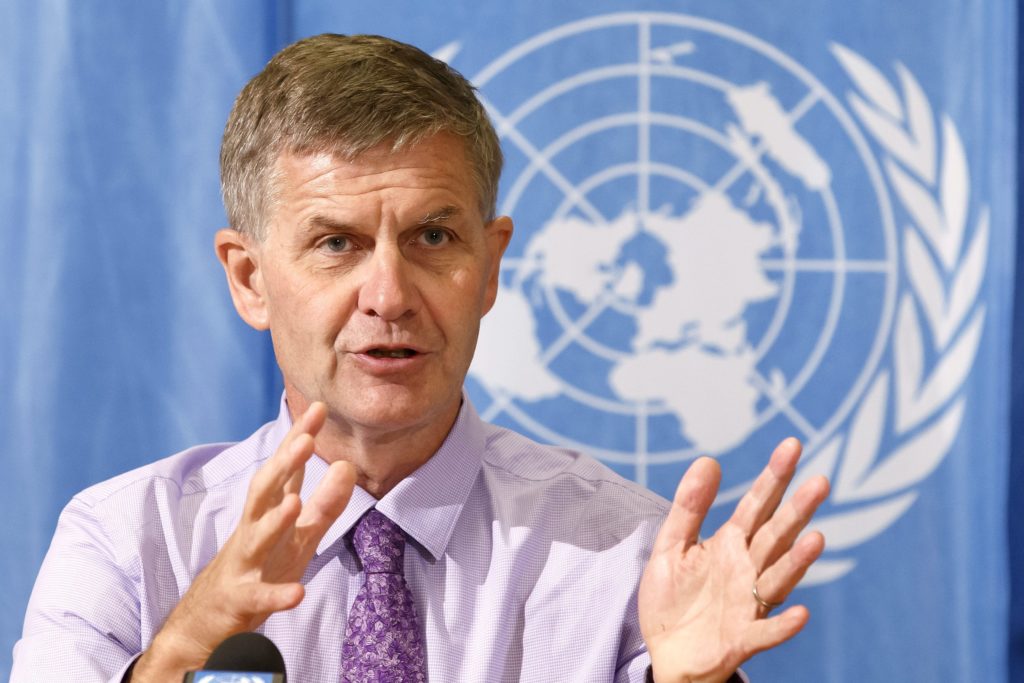
Eric Solheim played a critical role in Sri Lanka as peace negotiator during the civil war. Solheim returned to Sri Lanka at the invitation of President Ranil Wickremesinghe. Solheim has been assigned a new task by President Wickremesinghe. He has been appointed as an advisor on climate change to President Wickremesinghe. Following are excerpts of a brief interview done with Solhiem.

Q How does it feel to be back in Sri Lanka?

Let me start by telling you how happy I am to be able to come back to Sri Lanka. This is the most beautiful island in the world with so many great people and I’m happy if I can make a small contribution to help Sri Lanka to find a way out of the economic crisis, but a green way out of the economic crisis. Because there are so many jobs to be had if you move into renewable energy, electric mobility, tree planting and green agriculture. You can get out of the crisis economically providing jobs, but also being much kinder to modern earth.

Q The last time you were here was in 2006. What sort of changes do you see in the country since then?

I see a lot of positive changes. Of course I have this time only been to Colombo. There’s a completely new motor road from the airport to town. If you go around in Colombo you see a well-organised city. There are very few potholes and lots of skyscrapers and new and nice buildings have come up. So, I see a lot of development. Of course, I know that many Sri Lankans are suffering from power cuts, some people in the countryside may have difficulties getting enough meals a day, inflation is hitting a lot of people hard, so I know that many people are suffering. But I also want to celebrate the enormous progress in Sri Lanka since I was here last time.

Q So your last role in Sri Lanka was as a peace negotiator and now you are advisor on climate change. What do you expect to achieve in this new role?

All the main decisions will be made by the President and by the Parliament of Sri Lanka. I can only advise. I think I can bring the best practice from other parts of the world. Interestingly enough the two main developing countries, China and India, are now global leaders of environment putting out into practice green policies. I can bring the best knowledge from other parts of the world. I can help bring expertise and maybe I can also help bringing investors from Europe, China, India. Which can invest in solar energy and green hydrogen, in all the technologies which Sri Lanka will need to provide jobs for future generations of Sri Lanka.

Q Ranil Wickremesinghe seems to have taken a special liking towards you. You were peace negotiator when he was Prime Minister. Then he met you when you were the UN Executive Director for the Environment Program and he sought your assistance even then. Now he has sought your assistance again. This is coming at a time when there are other politicians in Sri Lanka who don’t really like you. So what does Ranil Wickremesinghe see in you that others don’t?

Well first of all, of course, I developed a very close relationship with Ranil Wickremesinghe through many years of peace talks. But I would add that contrary to what many people believe I have a good relationship with so many other Sri Lankan politicians. I met with Mahinda Rajapaksa and we gave each other a big hug. I of course know so many Tamil leaders like Mr. Sampanthan and Sumanthiran. So, my love is not for one particular politician, but for the nation of Sri Lanka and for the most beautiful island on planet earth. I’ve been asked by the President if I can help. Me and President Nasheed of the Maldives. This is to see if we can mobilise International expertise, knowledge and potential investment for the greening of not just Sri Lanka, but also for the greening of the entire region, Maldives, Seychelles, South Asian and the Indian Ocean.

Q So, Sri Lanka is trying to take a lead role in promoting a green economy in the region?

Absolutely. Of course the President is very dedicated to green development. I think he will make a very strong speech in the climate talks in Egypt next month where he will set out the need to place a much bigger emphasis globally on the environment, but will also try to put Sri Lanka in the lead role on this and that will happen when you invest heavily in renewables in Sri Lanka in the Greening of the land in tree planting, green agriculture, ecotourism. Tourism creates numerous jobs. I will do my utmost and appeal to every tourist to go back to this fantastic land. Of course tourists will also be doing better if people can come with good consciousness seeing this as a green tourist destination.

Q Climate change is something that Sri Lanka has not really taken very seriously in the past. What do you think Sri Lanka needs to do to face the impact of climate change?

First of all to see going green as an enormous opportunity. The Chinese President XI says green is gold. What does it mean? By going green they can create enormous prosperity, getting jobs and bringing all Chinese up to the middle class. India is also exactly the same. Prime Minister Modi is starting up new solar programs in India every day and there is so much happening in this space. He has launched a green hydrogen mission for India and all this is with the double purpose of going green and providing jobs and getting people out of poverty. So, I think Sri Lanka should take this lesson from both India and China to see how it’s an enormous opportunity for Sri Lanka to get out of the economic crisis, get everything into the middle class, but doing it by renewable energies and all the green technologies which are now available. Solar energy by the way is much cheaper than coal, so by going solar you do much better and you also save money and create more jobs.

Q Is Sri Lanka going too slowly in its attempts to reduce the dependency on coal power? Should Sri Lanka expedite the process to switch to renewable energy?

Absolutely, they need to do that, but not just Sri Lanka the entire world. Last year President XI of China promised that China will stop all overseas cold investments. That was the most significant decision for the environment done anywhere in the world that year. In India when Prime Minister Modi has launched the solar mission, green hydrogen mission, electric mobility mission. And the big players of the industry in India are reacting immediately and going very fast to green. So if we look into the next five years China will be the number one solar and renewable power in the world, India will most certainly be the second. But Sri Lanka can benefit from the examples by these two major nations. Of course Sri Lanka can also do better than them in certain areas.

Q You spoke earlier about the development that you see in the country. Since the end of the war Sri Lanka went through rapid development. We saw new highways coming up, bridges and other infrastructure. This seems to have been done at the expense of the environment. In places like Hambantota we saw highways being built, a new airport, etc. But at the same time forests were destroyed as a result. How do you see this?

I do not know what happened in all these cases in Sri Lanka, but that is the old development model. True in the 20th Century if we wanted to develop we couldn’t do it without a substantial degradation of a nature. If you really wanted to get rich you needed to destroy nature and they needed to build the development on fossil fuels and particularly on coal. But in the 21st Century solar is much cheaper than coal, so you save money, create more jobs and do better financially if you go into the solar industries. The Indian state of Telangana, which is one of the most modern, most fast developing states of India, has increased the tree cover by three percent over the last decade. Indonesia, which is also a very fast developing country, had zero deforestation last year which is such an achievement. Why? Because the government had put in place their drive policies and because all the big players of the industry understand that they can make the moment, they can have palm oil, they can have timber, but they can do all that without destroying nature.

That’s what’s new in the 21st Century. We have win-win policies. It’s good for nature, good for people and the economy at the same time. But this is also what happened basically everywhere in the world. Now in most nations, business is far ahead of political leaders when it comes to understanding the need to protect mother earth.

Q The economic crisis in Sri Lanka has gone from bad to worse. Are you considering getting involved in a big way there as well to help Sri Lanka?

I’m very happy to help Sri Lanka in modest ways; like helping to bring more tourists to Sri Lanka and helping to bring more green investment to Sri Lanka. But of course the negotiations with the International Monetary Fund and the big decisions on the economic development of Sri Lanka will always be made by Sri Lanka. No foreigner can help. But we need to understand our role and the decisions will have to be made by the President and by the Parliament.

Posted in Uncategorized

US Assistant Secretary for South & Central Asia arrives

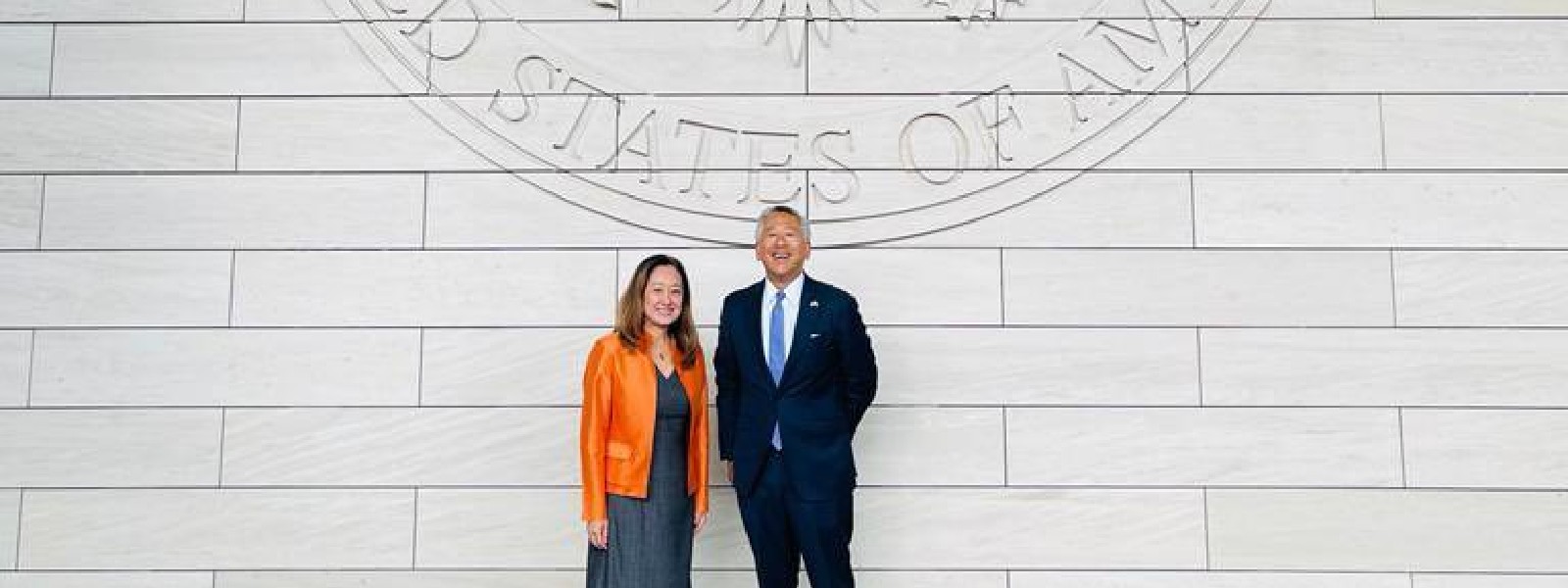
US Assistant Secretary of State for South and Central Asian Affairs Donald Lu arrived in Sri Lanka on Wednesday (19) to discuss U.S.-Sri Lanka relations and Sri Lanka’s economic situation.

US Ambassador to Sri Lanka Julie Chung tweeted that she welcomed US Assistant Secretary of State for South and Central Asian Affairs Donald Lu/

Assistant Secretary Lu will meet with senior Sri Lankan officials to discuss ways in which the United States and Sri Lanka can promote economic stability, regional security, human rights, and responsive, transparent, and inclusive governance.

Posted in Uncategorized

Sri Lankan mission secures long-term credit from Russia

The Embassy of Sri Lanka in Moscow secured a long-term Credit Line from the Government of the Russian Federation

The Embassy of Sri Lanka in Moscow announced that on the 17th October 2022, a productive discussion was held with the Russian Government on the possibility of obtaining a long term credit line in order to procure fuel to Sri Lanka.

Ambassador of Sri Lanka to the Russian Federation, Prof. Janitha A. Liyanage attended this discussion representing Sri Lanka and emphasised the significance of such a credit line to Sri Lanka to procure fuel, especially at this trying time.

The mechanism of the said credit line and the modality to procure fuel from the Russian Federation were discussed at length with the Ministry of Finance of the Russian Federation.

From the Russian Government, Maksimov Timur, the Deputy Minister of Finance of the Russian Federation and Levan Jagaryan, Ambassador of the Russian Federation to Iran and a few officials representing the Ministry of Finance and the Ministry of Foreign Affairs were also present at the discussion.

The Embassy is of the view that this credit line facility will play an important role to make adequate fuel supplies available to Sri Lanka at a competitive price in the months to come

Posted in Uncategorized

Sri Lanka firms could be hit from import ban, rising costs, rates: Fitch

About 50 percent of the companies could rated by Fitch could see their credit pressured if economic conditions worsens in the next 12 to 18 months, the rating agency said as Sri Lanka grapples with the worst currency crisis in the history of its central bank.

Sri Lanka printed money for two years to keep rates down on top of a tax cut for ‘stimulus’ which led to steady depletion of foreign reserves especially at the economy recovered from a Covid lockdown.

An extension of an import ban beyond the next six months, a further rise in interest rates, prolonged high inflation leading to difficulties in raising selling prices could hurt firms.

In April 2022 Sri Lanka defaulted on its foreign debt and has also tightened domestic payments.

“..[D]elays in receipts from government counterparties could lead to a rapid deterioration in some companies’ liquidity positions while leverage and interest coverage could weaken beyond our negative rating sensitivities,” Fitch said.

Many companies rated by Fitch had shown good results up to June 2022.

“Most rated corporates posted strong revenue growth and expanding margins in their June 2022 quarterly results due to inflation-led price hikes and sale of lower-cost inventory purchased prior to the sharp devaluation in the local currency in March 2022,” the rating agency said.

“However, the cost of new inventory has risen sharply since then, while high inflation and falling affordability will make it challenging to raise selling prices further.

“There is also a significant increase in operating costs, which will be reflected more acutely in the next few quarters, and it is likely to pressure cash flow.”

Sri Lanka has since raised energy prices and also taxes.

Posted in Uncategorized

Govt under pressure to enact 22A

The ruling party is now under pressure to proceed with the enactment of the 22nd Amendment to the Constitution , particularly after Foreign Affairs Minister Ali Sabry briefed that the International Monetary Fund (IMF), the World Bank and the creditor nations are watchful on measures to improve democratic governance.

Minister Sabry is reported to have briefed the parliamentary group of the government on Monday evening in this regard.

He said that the western powers wield more power over these multilateral agencies and they are keen to see Sri Lanka enacting this piece of legislation.

He stressed the need for the government to enact the 22nd Amendment as part of reforms to qualify for any financial arrangement with the IMF. He said creditor nations such as India are also keen in this regard.

Justice Minister Wijeyadasa Rajapakshe also emphasized the importance of incorporating this piece of legislation into the Constitution.

Gampaha district MP Nimal Lansa also spoke in favour of the bill.

The ruling party MPs who are loyal to its National Organizer Basil Rajapaksa have expressed reservations about the bill. The bill will be taken up for debate in Parliament this week. It seeks to empower Parliament on the appointment of members to Parliament. Also, the bill seeks to bar dual citizens from holding parliamentary seats.

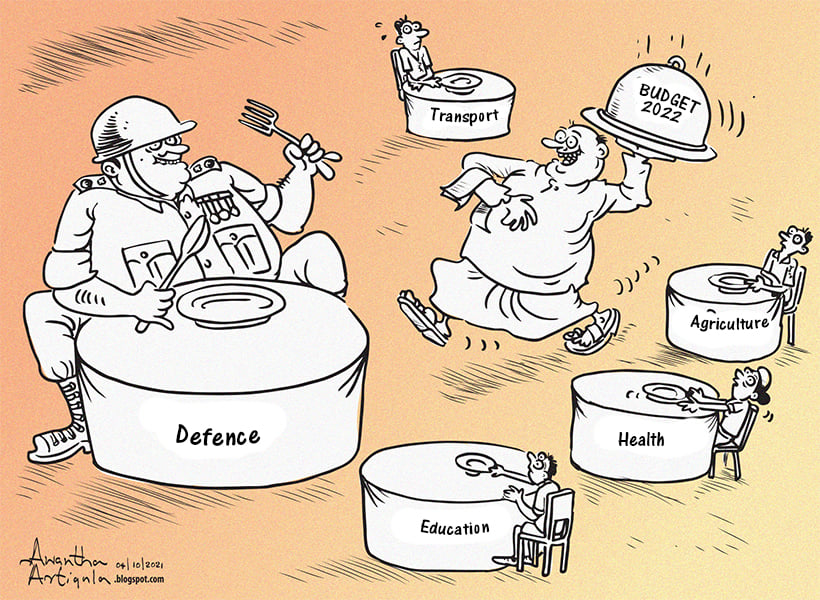
Sri Lanka budget 2023 makes top allocations for defence, pensions, debt service

Sri Lanka is to present an Appropriation Bill to parliament detailing allocations for ministries and departments as the first step to presenting a budget for 2023 next month.

The Appropriation Bill which is to be tabled in parliament has allocated 613 billion rupees to the Finance Ministry which includes debt service costs.

The Ministry of Defence has been allocated 410 billion rupees, with the army getting 209 billion rupees, Navy 75 billion rupees and Air Force 66 billion rupees and a multi-task force started by President Gotabaya Rajapaksa getting 9.8 billion rupees.

The Ministry of Public Security has been allocated 129 billion rupees with 116 billion going to the Police. The police and military have received 539 billion rupees.

The Ministry of Health has been allocated 322 billion rupees.

The Ministry of Education has been allocated 232 billion rupees.

It is not clear whether the funds include money for provincial education and health.

The Ministry of Public Administration has been allocated 856 billion rupees of which 353 billion went to pensions.

The Ministry also runs provincial councils.

The transport ministry has been given 372 billion rupees.

Supreme Court rules Chinese law firm is not entitled to engage in legal professional work in Sri Lanka

The Supreme Court today held that Baqian Law Group Lanka Pvt. Ltd, a Chinese law firm is not entitled in law to engage in any legal professional work within Sri Lanka.

Attorney at Law Nayantha Wijesundara had filed this Fundamental Rights petition challenging the decision of the Registrar General of Companies to incorporate a limited liability company which purports to provide legal services in Sri Lanka.

The Supreme Court further held that hold that the Registrar General of Companies has acted in violation of the law of the country when he had incorporated Baqian Law Group as a limited liability company under the Companies Act No. 07 of 2007 as itsprimary objective is illegal.

Posted in Uncategorized