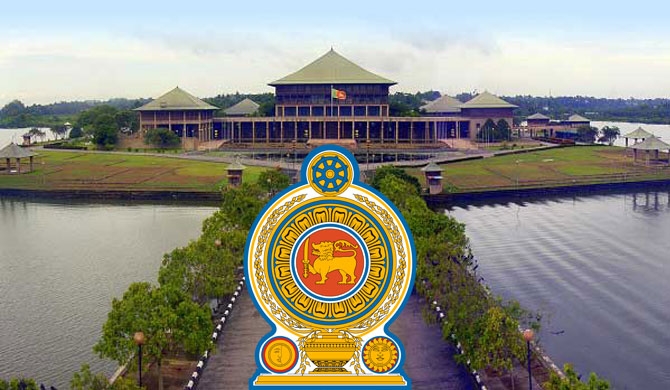
First reading of 2023 Appropriation Bill today (18)

First Reading of the Appropriation Bill for the year 2023 is scheduled to be presented on Tuesday (18).

This was decided at the Committee on Parliamentary Business held previously (07) under the chairmanship of Mahinda Yapa Abeywardana, Speaker of Parliament.

From 18th to 21st time is allotted from 9.30 am to 10.30 for Questions for Oral Answers.

It was decided to hold the debate on the Second Reading of the Petroleum Products (Special Provisions) (Amendment) Bill from 10.30 am to 5.00 pm on the 18th of October.

Thereafter, time has been allotted from 5.00 pm to 5.30 pm for the Motion at the Adjournment Time brought in by the Government, the Secretary General said.

The Committee also decided to take into debate 6 Bills presented by the Ministry of Justice on October 19th from 10.30 am to 5.00 pm. Accordingly, Poisons, Opium and Dangerous Drugs’ (Amendment) Bill, Notaries Ordinance (Amendment) Bill, Powers of Attorney Ordinance (Amendment) Bill, Wills Ordinance (Amendment) Bill, Registration of Documents (Amendment) Bill, Prevention of Frauds Ordinance (Amendment) bill are scheduled to be taken up for debate.

From 5.00 pm to 5.30 pm time has been set aside for Questions at the Adjournment Time.

On October 20th and 21st from 10.30 am to 5.00 pm, the Second Reading debate on the Twenty- Second Amendment to the Constitution Bill is scheduled to be held. Thereafter, time has been allotted from 5.00 pm to 5.30 pm for the Motion at the Adjournment Time brought in by the Opposition.

Furthermore, a vote is scheduled to be held at the end of the debate on the Second Reading on the Twenty-Second Amendment to the Constitution Bill, which will be held on the 21st until 5:30 p.m.

Madras court observes Tamils from Sri Lanka can obtain Indian citizenship

The Madurai bench of the Madras High Court has observed that the principles of the 2019 Citizenship (Amendment) Act could be applied to Hindu Tamils who were forced to abandon Sri Lanka.

The single-judge bench of Justice GR Swaminathan held that although Sri Lanka is not covered under CAA, the Hindu Tamils in the Island country could obtain Indian citizenship under the Act as they were the “primary victim of racial strife.”

Notably, the humanitarian law brought in by the Modi government seeks to expedite the citizenship process for religiously persecuted minorities from Pakistan, Bangladesh, and Afghanistan who arrived in India as refugees before December 31, 2014. Though the persecuted Hindus of Sri Lanka currently do not fall under its ambit, the Madras High Court has asked the central government to decide on the matter within 16 weeks.

“Though Sri Lanka does not fall within the said amendment, the very same principle is equally applicable,” he said. “One can take judicial notice of the fact that the Hindu Tamils of Sri Lanka were the primary victims of the racial strife,” Justice Swaminathan noted.

The court was hearing a petition filed by S Abirami, a 29-year-old girl from Sri Lanka who moved to India due to ethnic victimisation. Abirami applied for Indian citizenship.

Abirami was born in a Trichy nursing home on December 14, 1993. She went to school in India, received an Aadhar Card, and has lived there for the past 29 years. Her efforts to get citizenship, however, were futile, so she filed the current petition.

The petitioner requested that the District Magistrate/District Collectors grant her permission to send her application for citizenship to the Central Government. She further requested that the Central Government issue orders within six weeks of receiving her application. Abirami’s plea stated that the Central Government should take note of the unique situation in which she is placed.

The single-judge panel noted that Abirami is the daughter of migrant parents and was born in India. The court went on to say that because she has never been a Sri Lankan citizen, the issue of renunciation does not arise. The court stated that if her motion is denied, she will become “stateless.”

Finally, the court asked the Assistant Solicitor General and the Additional Government Pleader to forward Abirami’s appeal to the Central Government for consideration and gave the latter 6 weeks to respond.

Notably, last year, the Centre for Democracy, Pluralism, and Human Rights (CDPHR), an organisation that advocates for equality, justice, and human rights, released a report on India’s seven neighbouring countries last year, emphasising major human rights crimes against minorities, particularly Hindus. According to the research, Sri Lanka is one of India’s seven neighbouring countries where Hindus have been persecuted for years.

The Center for Democracy Pluralism and Human Rights report has also raised concerns over the status of human rights and religious minorities in Sri Lanka. Talking about the civil war, the report suggested that at least 100,000 people lost their lives and 20,000 Tamils ​​disappeared in the 26-year-long civil war.

Chinese model that Rajapaksas got wrong By RangaJayasuriya

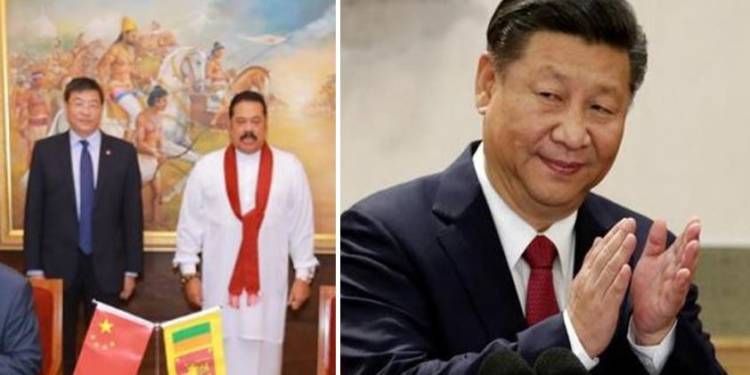
China’s President Xi Jinping would be anointed for an unprecedented third term at the end of the 20th National People’s Congress that began in Beijing on Sunday.

In all substance, that move would take China’s political structure and its governing principles right into the reign of Chairman Mao Tse Dong, a period characterized by absolute leadership and cult worship of Great Helmsman, man-made famine and needless chaos of the Cultural revolution.

Xi borrowed from Mao’s textbook. He purged the party and military through the much-vaunted anti-corruption drive – through no research explains whether it resulted in a decline in high-level corruption in China

At the end of Mao Tse Dong’s death in 1976 – after 27 years at the helm of the party and the state, China descended into anarchy and jockeying for power by the party stalwarts until Deng Xiaoping, was brought back from ‘rehabilitation’ and appointed as the general secretary, and was later elevated as the paramount leader.
Deng who said ‘Mao was 70% right, 30% wrong’ – nonetheless took lessons from Mao’s mayhem and set up guardrails that would avoid the repetition of the tumultuous times similar under Mao due to the concentration of the power of the party under a single absolute leadership. He introduced a mandatory two-term limit for China’s presidency, the provision was incorporated into China’s constitution in 1982.

Also under the new reforms, the Politburo Standing Committee, the innermost sanctum of the Communist Party, was entrusted with the collective leadership of governing China. The General Secretary of the CCP, who ex-officio becomes the head of the other two key positions, the President of China and the Chairman of the Central Military Commission, was considered one among equal among the 6 to 9 members of the Politburo Standing Committee.
Alongside, China’s economic opening ushered by Deng’s economic reforms made China the juggernaut it is now. Political reforms provided a veneer of accountability and democracy in China’s monopolistic political system.
Deng – with the exception when the party elders clawed back to take control from moderates during the Tiananmen riots- and his successors, Jing Zemin and Hu Jintao played by the rule. Over the next three decades, economic opening deepened while the party went through a three-generation of leaders at the helm until Xi Jinping was elected the General Secretary of the CCP in 2012 and the President of China, the following year.

Xi borrowed from Mao’s textbook. He purged the party and military through the much-vaunted anti-corruption drive – through no research explains whether it resulted in a decline in high-level corruption in China, rival factions of the CCP were effectively silenced, some of the former top leaders, such as former security chief Zhou Yongkang, were imprisoned for life.

As it appears now, if there are any factions now, that is only those allied to Mr. Xi.

Xi also elevated himself from being one among equals to becoming the ‘core’ of the CCP and encrusted China’s constitution with the Xi Jinping thought.

He instructed the rest of the CCP politburo members to write proposals and confessions and send them to him for review before publication. The standing committee receded to a second pillar, looking more like other rubber-stamped institutions of the Chinese Communist Party.

He set the ground for the third term when the 19th National People’s Congress in 2017 voted en masse to remove the term limits of the presidency.

Thus a third term for Mr. Xi is a fait-accomplie at this week’s congress. The greater worry would be whether this would be a precursor for a presidency for life. Effectively, the political reforms of the CCP have not only come to an end, the party had reverted to decades into the past.

China set an unofficial retirement age of 65 for high officials of the party. Mr. Xi, 69 is immune to the rule.
However, the possible retirement of the rest of the politburo, who are all over 65, would leave Xi with a younger generation of new leaders. That would effectively make Xi, not just the paramount leader, but the Supreme Leader similar to one in the Iranian theocracy. On the other hand, if Xi decides to stick with the current members of the politburo standing committee, then that would lead to decades of stagnation of the party promotions.
China’s economic miracle was driven by a combination of economic factors as well as the determined low-key foreign policy and less adversarial foreign policy posture as personalized by Deng’s famous dictum, ‘hide your strength, bide for your time.’

However favourable economic conditions are evaporating and under Mr. Xi, China has become increasingly adversarial to the West, leading to foreign investors to flee, fearing the consequences of potential geopolitical upheaval.

Domestic economic conditions are no longer conducive. CCP was known as competent taskmasters, but Mr. Xi’s botched handling of the Zero covid policy has left a hole in that assessment. Youth unemployment is rising and the property bubble is about to pop.

In the absence of electoral legitimacy, CCP has relied on two primary forces to justify its model of government: performance legitimacy through the efficient delivery of economic growth; and Chinese nationalism.With the first layer of legitimacy under attack, it is likely to rely more on Chinese nationalism.

This week, China marks an end to four decades of political reforms of the CCP and the country. From Stalin to Mao to Hitler, authoritarian political systems that are at the behest of a single man have historically produced monsters

This is a recipe for dangerous foreign policy misadventure- more so in the light of the concentration of power under a single leadership of Mr. Xi. Russia is an example. Xi is not the only leader of a great power that got rid of the mandatory term limits.

After using Dmitry Medvedev, his former prime minister, as a stopgap president for one term in 2008-12, Vladimir Putin threw away pretence and signed a law in 2021 that would allow him to rule for two more consecutive terms, ending in 2036. Under the absolute leadership of Putin, Duma, the Russian Parliament became a rubber stamp and decision-making was undertaken in an echo chamber of yes-men, leading to the Russian invasion of Ukraine.
Similarly, with China’s belt and road confronted by potential sovereign defaults and the domestic economy stagnating, Mr. Xi may find recourse in Chinese nationalism and resort to an escalation over Taiwan, even short of a direct military confrontation. Even a mild misadventure over Taiwan would send geopolitical ripple effects, bringing nascent balancing arrangements, alliances and alignments into full effect, leading to Russian-style isolation of China. That would feed into further volatility.

This week, China marks an end to four decades of political reforms of the CCP and the country. From Stalin to Mao to Hitler, authoritarian political systems that are at the behest of a single man have historically produced monsters. Would China under Mr. Xi, with a modern economy, but sliding back into the quasi- Mao -Stalinist model of cult worship avoid this fate is a question that would decide the future not just of China, but of the whole world.

Follow @RangaJayasuriya on Twitter

Posted in Uncategorized

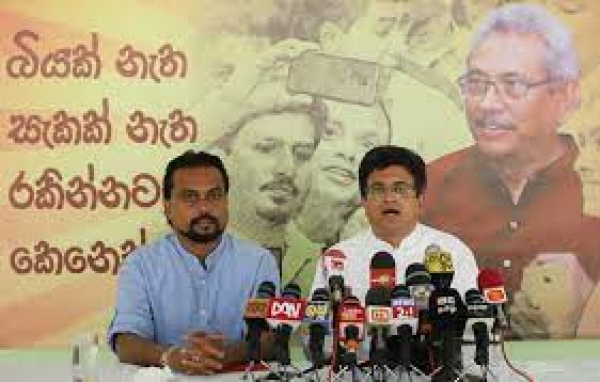
Gammanpila challenges Govt. to dissolve Parliament

Parliamentarian Udaya Gammanpila has challenged the Government to dissolve Parliament if it is confident of a win at a forthcoming general election.

The MP, speaking at a press conference held yesterday, said the Parliament should be dissolved and elections called as it appears the Sri Lanka Podujana Peramuna (SLPP) led Government is agreeable to this suggestion and is confident of a resounding victory. “Those who claimed in Nawalapitiya that they would win at an election are the very ones who are against elections being held as scheduled,” he said in reference to the SLPP.

“If they are so confident of a win, then we urge them to dissolve Parliament and call for a parliamentary election immediately,” he said. Gammanpila also demanded to know who put forward the proposal to delay the local Government elections by claiming electoral reforms must be implemented prior to holding polls. “We ask the President to reveal the names of those who requested him to delay elections through this tactic in fear of facing a vote. Earlier we assumed it might be the SLPP group. However, since they have claimed they are not afraid to face elections, we ask who wants the polls to be delayed. It is the responsibility of the President to reveal this information to the country,” he said.

Japan to organize Sri Lanka creditors’ meeting over debt crisis

Japan is working to organize a meeting of Sri Lanka’s creditors by the end of this year in hopes of solving that country’s debt crisis, The Yomiuri Shimbun has learned.

The meeting, which will discuss such issues as finding ways to reduce debt payments, aims to curb China’s influence by helping Sri Lanka cope with its so-called debt traps, which arose after China provided huge loans to the country to fund infrastructure developments and other projects.

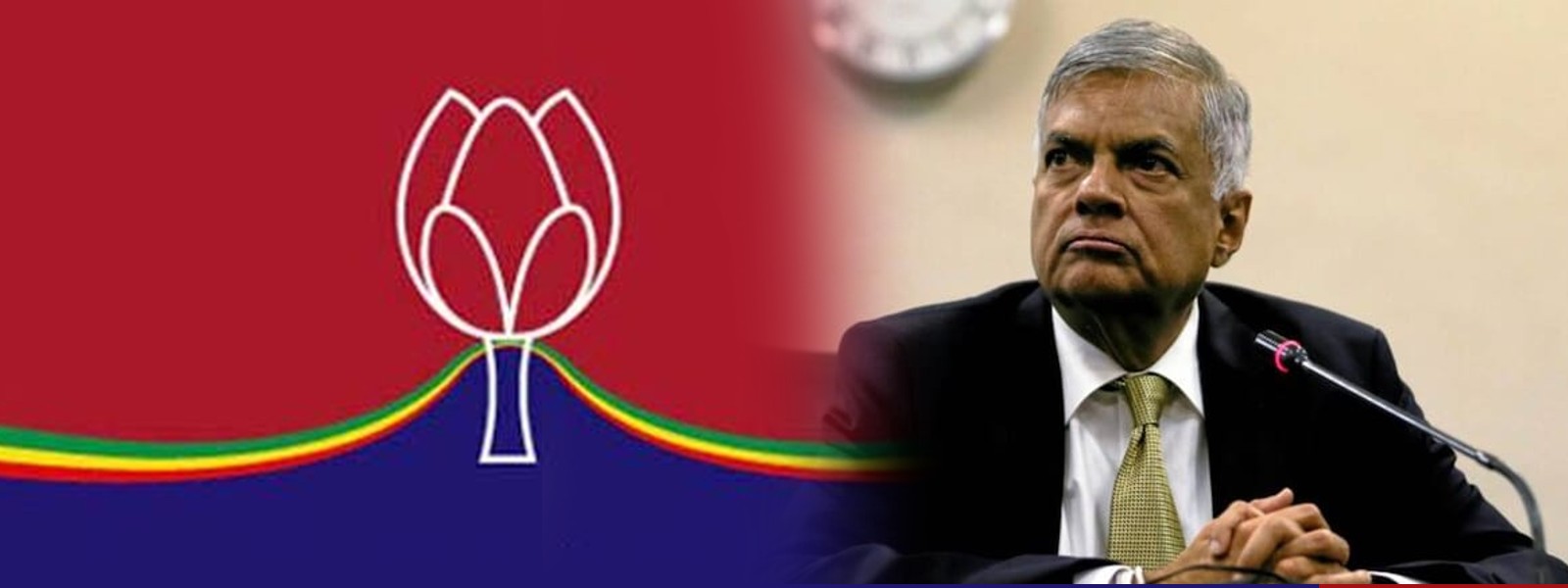
Sri Lankan President Ranil Wickremesinghe asked Japan for help during talks with Prime Minister Fumio Kishida and other people during a visit to Japan at the end of September to attend the funeral of former Prime Minister Shinzo Abe, according to Japanese government sources.

The meeting is expected to focus on measures to reduce debt payments and postpone repayment deadlines, among other related steps. Japan continues to urge other creditor countries to play a proactive role in dealing with the issue.

Sri Lanka’s economy has suffered due to sluggish tourism during the novel coronavirus pandemic and soaring food and resource prices following Russia’s invasion of Ukraine. In April, the Sri Lankan government introduced an emergency measure to suspend its repayment of external debts.

According to the Sri Lankan government, the nation’s external debt at the end of June stood at $46.6 billion (¥6.93 trillion), accounting for about 70% of its gross domestic product.

Sri Lanka has more than 20 creditors, with China topping the list at $7.3 billion (about ¥1.086 trillion), followed by Japan at $2.7 billion (about ¥402 billion) and India at $1.7 billion (about ¥253 billion).

While struggling to repay its debts, Sri Lanka in 2017 effectively transferred to China the operating rights of one of its ports.

China — which has come under criticism from the international community for causing Sri Lanka’s economic collapse — will not play a leading role in restructuring Sri Lanka’s debts, and the Japanese government will have to tread carefully in its efforts to reach agreement among creditors in a manner acceptable to Beijing.

Posted in Uncategorized

Sri Lanka’s draft ‘Rehabilitation Law’ would spur abuse – HRW

The Sri Lankan government should withdraw a draft law that would give the authorities broad powers to detain people in military-run “rehabilitation” centers, placing them at great risk of abuse, Human Rights Watch said today.

The Bureau of Rehabilitation Bill, submitted to parliament on September 23, 2022, would allow the compulsory detention in centers of “drug dependant persons, ex-combatants, members of violent extremist groups and any other group of persons.”

The Bureau of Rehabilitation Bill would establish a new administrative structure controlled by the Defense Ministry to operate “rehabilitation” centers staffed by military personnel. The proposed law, which human rights advocates have already challenged in the Supreme Court, does not describe the basis for being sent for “rehabilitation,” but other recent government policies provide vague and arbitrary powers to forcibly “rehabilitate” people who have not been convicted of any crime.

“The Sri Lankan government’s proposed ‘rehabilitation’ efforts appear to be nothing more than a new form of abusive detention without charge,” said Meenakshi Ganguly, South Asia director at Human Rights Watch. “The Rehabilitation Bill would open the door widely to more torture, mistreatment, and endless detention.”

The Sri Lankan government has previously used coercive “rehabilitation” centers to enable arbitrary detention and torture. Following the civil war, which ended in 2009, thousands of people whom the government identified as members of the defeated separatist Liberation Tigers of Tamil Eelam were detained in military-run “rehabilitation” centers, where some were allegedly tortured and subjected to other abuses, including sexual violence. The current bill seeks once again to “rehabilitate” “ex-combatants” 13 years after the war ended.

The Rehabilitation Bill is the latest measure in a long history of laws, such as the Prevention of Terrorism Act (PTA), that authorize arbitrary detention and torture in Sri Lanka. The law could be used to target minority communities or anti-government protesters whom President Ranil Wickremesinghe has labeled “extremists.”

Under the Rehabilitation Bill, which would allow prolonged detention without judicial oversight, government officials would be protected from criminal liability for their actions if they act “in good faith.” The bill also empowers officials to use undefined “minimum force” to “compel obedience” from detainees. Another provision provides that an official who “without reasonable cause” strikes, wounds, ill-treats, or willfully neglects anyone under rehabilitation can be punished by up to 18 months in prison, suggesting that there might be a “reasonable cause” to harm detainees. International law absolutely prohibits torture, and other cruel, inhuman or degrading treatment or punishment.

A separate bill to amend Sri Lanka’s Poisons, Opium and Dangerous Drugs Ordinance, which was presented to parliament on September 9, provides for the compulsory rehabilitation of alleged drug users. The legislation would worsen already abusive laws and practices under Sri Lanka’s “war on drugs,” which Sri Lankan military officers have repeatedly compared to the “war on terror.”

Sri Lanka already has a system of forced “rehabilitation” for alleged drug users, which is run by the armed forces at two sites previously used to “rehabilitate” former combatants. There have been allegations of forced labor and ill-treatment, including the collective punishment of inmates, who are denied access to medically appropriate treatment for drug dependency while undergoing coercive “de-addiction.” The death of an inmate at the Kandakadu rehabilitation center in June led to the arrest of four army and air force sergeants acting as “therapists.”

International standards for the treatment of addiction maintain that treatment should always be voluntary and addiction regarded primarily as a health condition. The abstinence-based “rehabilitation” programs operated by the military are not based on scientific evidence and provide no harm reduction services.

In 2017, the United Nations Working Group on Arbitrary Detention expressed concern at the involvement of the Sri Lankan military in drug treatment and at the lack of medical care, as well as irregularities in the judicial process. The detention of alleged drug users for coercive “rehabilitation” is incompatible with medically appropriate drug dependency treatment and contravenes international law, Human Rights Watch said.

The proposed amendment to the drug law contains provisions to weaken evidentiary standards and deny bail to suspects in some criminal cases related to the possession of drugs. Sri Lanka continues to impose the death penalty for some drug offenses, contrary to international law standards and despite a national moratorium on executions since 1976.

The Rehabilitation Bureau Bill and the proposed amendment to anti-narcotics legislation are only the latest measures in President Wickremesinghe’s assault on fundamental rights, Human Rights Watch said. An attempt to use the Official Secrets Act to restrict public gatherings in the capital, Colombo, was withdrawn earlier in October amid widespread objections that the action was unlawful.

On October 6, the United Nations Human Rights Council adopted a resolution expressing concern at the human rights situation in Sri Lanka and mandating enhanced UN monitoring, as well as renewing a mandate for the UN to collect and analyze evidence of past human rights violations for use in future prosecutions.

“President Wickremesinghe is pursuing abusive and repressive policies that make it difficult for Sri Lanka’s international partners to wholeheartedly back desperately needed economic measures,” Ganguly said. “Foreign governments should make clear that they will support the urgent needs of the Sri Lankan people, but they will also take action through targeted sanctions and other measures against those committing serious human rights violations.”

Posted in Uncategorized

40 Govt. MPs to form new political entity

Around 40 MPS of the government will form a new political entity independent of Sri Lanka Podujana Peramuna(SLPP), a top source said. These MPS include some Cabinet Ministers such as Sports Minister Roshan Ranasinghe.

The proposed party will continue to support President Ranil Wickremesinghe. Minister Ranasinghe has already resigned from the Polonnaruwa district leadership of SLPP.

According to the source, some MPS such as Diana Gamage and Aravinth Kumara who joined the government from Samagi Jana Balawegaya (SJB) will team up with the new formation.

Two factions of MPS – one led by MP Dulles Alahapperuma and the other by MP Wimal Weerawansa – have already broken ranks with the government. These two groups now sit in the opposition, but the proposed party will continue to be part of the government.

Posted in Uncategorized

Paris Club assures fullest support to Sri Lanka – Semasinghe

The Paris Club has assured its fullest support to Sri Lanka in its ongoing efforts to find an early resolution to its debt crisis, said State Minister Shehan Semasinghe.

Paris Club is a group of officials from major creditor countries whose role is to find co-ordinated and sustainable solutions to the payment difficulties experienced by debtor countries.

State Minister Shehan Semasinghe said that he meet with William Roos, Co-Chairman of the Paris Club during the IMF/World Bank Annual Meetings.

“Mr. Roos assured The Paris Club’s fullest support for Sri Lanka’s ongoing efforts to find an early resolution to its debt crisis,” he tweeted.

What Is the Paris Club?

The Paris Club is an informal group of creditor nations whose objective is to find workable solutions to payment problems faced by debtor nations. The Paris Club has 22 permanent members, including most of the western European and Scandinavian nations, the United States, the United Kingdom, and Japan.

The Paris Club stresses the informal nature of its existence. As an informal group, it has no official statutes and no formal inception date, although its first meeting with a debtor nation was in 1956, with Argentina.

The objective of the Paris Club, an informal group of creditor nations that meets each month in the French capital, is to find workable solutions to payment problems faced by debtor nations.

The group is organized around the principles that each debtor nation be treated case by case, with consensus, conditionality, solidarity, and comparability of treatment.

In addition to the Paris Club’s 22 member nations, there are observers—often international NGOs—who attend but cannot participate in the meetings.

Understanding the Paris Club

The members of the Paris Club meet each month, except for February and August, in the French capital.

These monthly meetings may also include negotiations with one or more debtor countries that have met the Club’s preconditions for debt negotiation.

The main conditions a debtor nation has to meet are that it should have a demonstrated need for debt relief and that it should be committed to implementing economic reform.

In effect, that means the country must already have a current program with the International Monetary Fund (IMF) supported by a conditional arrangement.

Posted in Uncategorized

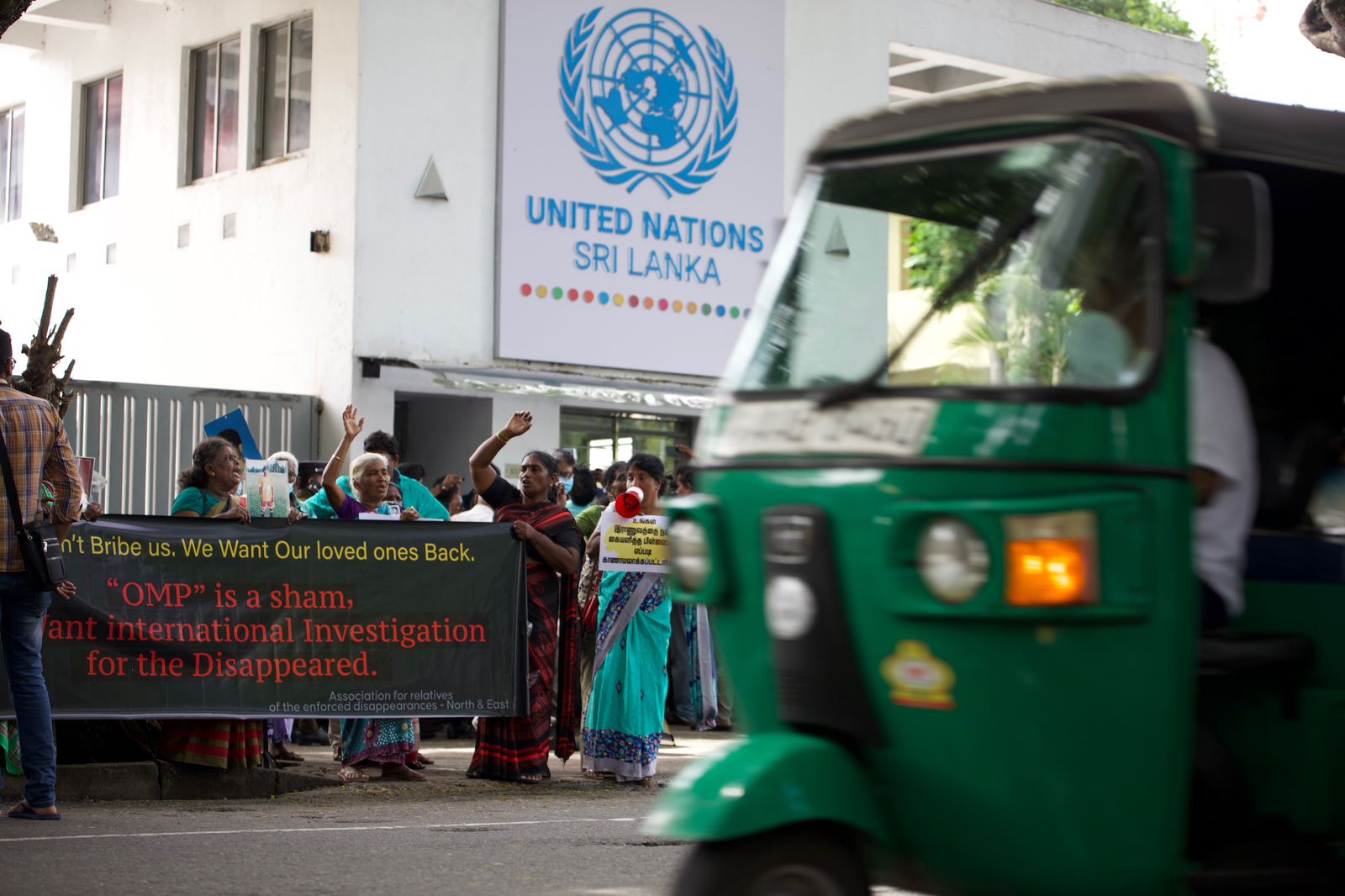
We don’t need your money, we want our children back’ – Tamil families of disappeared take their protest to Colombo

War-affected women from the north and the east have told the government that they are prepared to pay double of what it is offering to avoid revealing the fate of their missing children, if it finds them.

During a protest in front of the United Nations office in Colombo, they condemned a recent cabinet decision to pay Rs. 200,000 in lieu of each person who disappeared 13 years ago.

As they continued their protest for the 2,066th day, these women handed over a petition to the UN that sought international mediation to find their children.

A Tamil woman among them said in Sinhala that they did not want the government’s Rs. 200,000, but will give it Rs. 500,000 if the bones of their children are shown to them at least

They handed over similar petitions to several foreign diplomatic missions in Colombo.

During a recent media briefing, president of the association of missing persons in Mullaitivu Mariyasuresh Ishwari alleged a plot to disrupt their struggle for justice by bribing them.

She accused president Ranil Wickremesinghe of following in the footsteps of his predecessor Gotabaya Rajapaksa and scheming against them.

A series of Satyagraha began in February 2017 in Vavuniya, Kilinochchi, Jaffna, Mullaitivu, Trincomalee and Ampara demanding to know the whereabouts of the victims of enforced disappearances during the final stages of the war.

An Office of Missing Persons set up in 2018 has failed to find a single missing person, with its first head Saliya Peiris, presently president of the Bar Association, having said that the number of the missing was at least 20,000, most of them who had surrendered to the military.

SJB offers conditional support to 22nd amendment

SJB has decided to offer conditional support to the 22nd amendment to the constitution which is to be debated in Payment this week, MP Tissa Attanayake announced at a media briefing a short while ago.