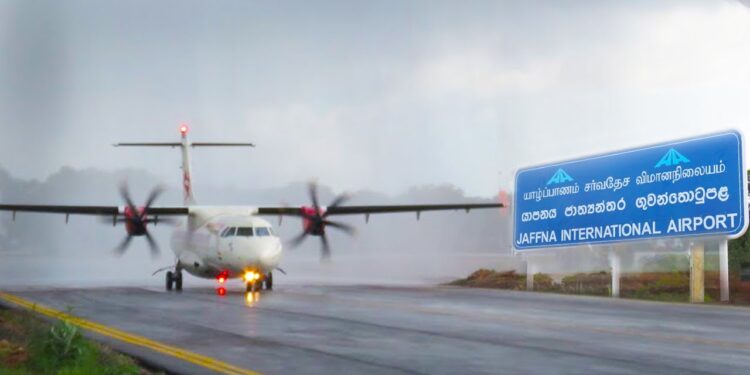
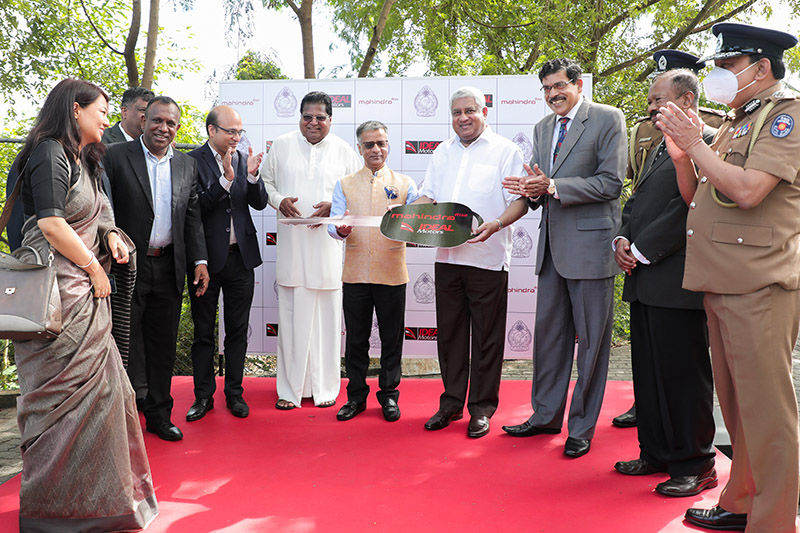
India recommences e-visas for Sri Lankans

India has resumed the issuing of electronic visas (e-visas) for Sri Lankan nationals.

Accordingly, Sri Lankans seeking to visit India for leisure, business, conferences and other purposes, are now once again able to apply for travel visas in an entirely virtual environment, the Indian High Commission in Colombo assured in a Tweet.

Travellers have been requested to visit indianvisaonline.gov.in/evisa/tvoa.html to apply for their visas.

Sri Lanka’s children go hungry as food prices soar

Nitisha cannot play as much as she used to.

The three-year-old is losing weight and complains of leg pains and weakness. The doctor’s diagnosis is clear – Nitisha is underfed and malnourished.

But the treatment suggested is difficult to come by for her family – wholesome meals.

Like many people in Sri Lanka, this family from a tea estate village in Hanthana, in the centre of the country, have seen their finances collapse.

“We manage two meals a day and it’s the same thing – rice with potatoes or lentils. We can’t afford anything else,” says Harshini, Nitisha’s mother. For weeks, the family has not had milk or eggs, she added.

Harshini’s younger daughter – just a month old – was also born underweight. The baby lacks thyroxine, a key growth hormone. The child joins the growing list of infants born with low birth weight – a direct impact of depleting gestational nutrition.

Food has been at the centre of Sri Lanka’s economic crisis. Incomes are shrinking and food prices soaring. Families are forced to skip meals and go hungry.

Many children in Nitisha’s village are becoming ill more often now. Doctors in the region say they are seeing more younger patients who are not getting enough to eat.

“Effects of malnourishment takes time to show,” according to one doctor who asked not to be identified. “Currently most underfed children are using the stored reserves in the body, but a continued nutrition insufficiency would have long term impact.”

UNICEF estimates approximately 56,000 children in the country are suffering from severe acute malnutrition.

Around a third of Sri Lankan households do not have a secure source of food and almost 70% are reducing meal sizes, according to the latest World Food Program figures.

Malnutrition and mothers
In Hanthana, 24-year-old Kanchana is in her fourth month of pregnancy and is expecting twins.

“With the twins I often get hungry, so I eat rice. Fish, eggs, fruits is better but expensive. We have to choose between paying for the tests and medicines or buying expensive food.”

In another village a few kilometres away, we met Devi. She is pregnant with her second child but is severely anaemic and underweight. Options to improve her health are limited – a rice meal and free vitamin supplements from the government clinic.

“I wanted my second pregnancy to be healthier, but this is worse. Doctor says my child’s development will be affected if I don’t eat well.”

The situation is precarious. The BBC spoke to 10 pregnant women in the area. Everyone was looking for assistance to go about their daily life. A government programme providing nutritional packets for pregnant women was suspended last year due to a lack of funds.

It restarted last month, but only a few have received the benefit.

“Many of us have applied for it, but almost half my pregnancy period is over and I haven’t received even one packet,” Devi said.

Christian Skoog, Unicef’s country representative in Sri Lanka, said: “The mothers are not as nourished or as well-fed as they were before. It was already an issue, and it has gotten worse. Low birth weight is a big issue in Sri Lanka because women do not get enough nutrition during pregnancy or during gestation.”

Hungry school children
“Most of these children, from primary grades, were coming to school without eating anything,” according to Anoma Sriyangi Dharmawardhane, Vice Principal of Horawala Maha Vidyalaya in Mathugama in Southern Sri Lanka. “Daily, at least 20-25 children were fainting during school assembly three to four months ago”.

The school started offering porridge and a midday meal programme with support of parents who volunteered to cook. It relies on donations to continue the program.

Community kitchens and food handouts like these are helping to fill the gap in parts of Sri Lanka, but still many children are going hungry.

“At least 20% of children get no breakfast and go to school [on an] empty stomach,” according to S Visvalingam, President of the Food First Information & Action Network (FIAN), Sri Lanka.

For the last six months, FIAN has been organising food programmes for primary and secondary school children.

Mr Visvalingam said more students are dropping out of school, particularly in the worst-affected tea plantations areas in north and east Sri Lanka.

“These school food programmes, an assured meal a day, are helping get these children back to schools,” he said.

“The food programmes are helping, saving lives and preventing things from getting worse. But it is still a stop-gap measure,” said Mr Skoog.

After initially denying it, Sri Lankan government officials have acknowledged the growing crisis of acute malnutrition. Recent data from the health ministry’s family health bureau showed stunting, low height for age, wasting and low weight-for-height among children has gone up significantly in the last one year.

In October, the government said it would double its initiative to give out free lunches at school and hand out supplements for toddlers.

However, Mr Visvalingam warns that Sri Lanka’s problems are likely to get worse before they get better.

“I don’t think [the] financial crisis can be resolved in the short term, and through this period the problem of nutrition is only going to get worse,” he said.

Source: BBC

LG Poll gazette will be issued soon, says NEC

The Chairman of the National Election Commission Nimal Punchihewa says the gazette notification for the local government polls will be issued soon.

According to the Local Government Polling Act, to hold the election on 20th March 2023, the relevant gazette notification must be issued before January 5th 2023.

Therefore, several rounds of discussions have been held regarding the upcoming elections.

The Chairman of the NEC further said the related discussions will also be held in the coming days.

Posted in Uncategorized

Sri Lanka virtually let down by China in securing a $2.9 billion IMF loan in December

The 20th Communist Party Congress of China may put a hold on the Chinese restructuring talks with Sri Lanka to secure the $2.9 billion facility to revive the ailing economy.

The deadline was set for December, but it may be extended to January, according to the Central Bank of Sri Lanka. China is the main bilateral debtor, and the party congress may hinder December talks aimed at restructuring.

The next meeting of the IMF executive board is scheduled for March 23.

Hence, Sri Lanka will probably miss the December deadline for securing an IMF loan as its main bilateral debtor, China, was involved in the 20th Party Congress and had little time to hold debt restructuring talks with Sri Lanka. The next meeting of the IMF executive board is in March 2023.

Meanwhile, NIKKEI Asia reported in its latest dispatch that dollar-strapped Sri Lanka is hoping for a still-elusive $2.9 billion IMF bailout before beginning to rebuild usable foreign reserves, according to the head of the country’s central bank in a recent exclusive interview.

“Once the IMF starts disbursing their commitments following the IMF board’s approval, it will be the point at which we will start building our foreign reserves,” Gov. Nandalal Weerasinghe said.

The bankrupt South Asian nation reached a staff-level bailout agreement with the IMF in early September, subject to board approval. But Sri Lankans will soon be welcoming a new year amid continued economic hardship. For now, limited imports are being paid for with export earnings, remittances from migrant workers, and a trickle from the tourism sector as the authorities cling to paltry remaining funds.

Usable coffers slumped to historic lows of $20 million by April and have now inched up to $300 million. Officially, reserves hover at $1.7 billion, but this includes a $1.4 billion swap from the People’s Bank of China that cannot be tapped because of restrictive conditions. For example, Sri Lanka would have to save up its reserves to finance three months of imports, an estimated $5.1 billion, before China’s central bank approves access.

The two-step approach to restoring the reserves is part of the recovery program Sri Lanka is pursuing with the IMF’s blessings, said Weerasinghe, 61, a veteran central banker who was called out of retirement in April. “The gradual buildup of reserves is one of the key objectives of the IMF program going forward,” he said.

Until the IMF money starts flowing, he added, “we will not get any external financing from anyone.”

Crossing that threshold, however, depends on the island nation’s three largest foreign bilateral creditors: China, Japan, and India. Colombo has been forced to plead with them for restructuring after the government of former President Gotabaya Rajapaksa confirmed in May that Sri Lanka had run out of dollars to pay its foreign lenders, precipitating its first sovereign default since independence from the U.K. in 1948.

NIKKEI Asia, quoting well-placed government sources, said President Ranil Wickremesinghe’s administration is focused on securing “creditor assurances” in behind-the-scenes talks with these lenders. Wickremesinghe, who doubles as the finance minister, was chosen by the Sri Lankan parliament to finish Rajapaksa’s term after the latter fled the presidential palace in July in the wake of unprecedented public rage triggered by scarcities of food, fuel, and pharmaceuticals in the import-dependent country.

At the end of 2021, as the economic crisis began to bite, total external debt stood at $47 billion in what was an $81 billion economy. According to Sri Lanka’s Finance Ministry, China accounts for 52% of the total bilateral debt, followed by Japan at 19.5% and India at 12%.

Meanwhile, the Hindustan Times said Sri Lanka has headed for major political turbulence ahead as it will not be able to secure the much-needed IMF loan in December for its main ally and debtor China, which was involved in the 20th Party Congress and is still to initiate a dialogue on debt restructuring with the island nation.

According to financial analysts based in Washington, Sri Lanka likely will miss the December IMF deadline and will have to wait until March 2023 to secure a USD 2.9 billion loan from the lending institution in eight equal tranches. In the meantime, the Sri Lankan debt has increased further due to forex depreciation, a deep recession, and a burgeoning fiscal deficit. Since the end of 2021, inflation has considerably eroded the real value of domestic debt.

While debtors India and Japan have already initiated a dialogue with Colombo on debt reconciliation and restructuring, China has yet to engage in the dialogue, as Beijing was involved in the 20th National Party Congress and had little time for client state Sri Lanka. The total debt of the island nation was USD 36 billion at the end of 2021. Of this, Sri Lanka owes USD 7.1 billion to China or 20 per cent of its debt. The total public debt, which was 115.3 per cent of the GDP at the end of December 2021, has now gone up to 143.7 per cent of the GDP by the end of June 2022. Of this, the bilateral debt has climbed from 12.7 per cent of the GDP to 20.4 per cent of the GDP. On October 31, 2022, Sri Lankan President Ranil Wickremesinghe went on record stating: “Now, this is the process; we had to move.” If we can move forward and come to an agreement by December, which means coming to an agreement by mid-November and going up to the IMF Board in mid-December, we will gain a big advantage. However, I’m not sure we can do it because, in China, the focus has already begun following the party conference. However, we must aim to have it by January.

Sri Lanka is in need of a bridge loan of USD 850 million to survive until the next IMF board meeting in March and avert burgeoning public discontent with the Ranil Wickremesinghe administration.

Delays by the government in providing the essentials for the consumption of the general public may give some leverage for the leftist JVP (Janatha Vimukthi Peramuna) and Front Line Social Party (FSP) to gain political mileage. It may create havoc with public protests akin to the Aragalaya in July 2022. The main opposition party, SJB, seems more responsible and less likely to rouse public protest when the government is going through a historically difficult period.

The pertinent question that remains to be answered is who would grant the USD 850 million bridge financing facility to help the government survive.

The economic fallout in Sri Lanka is mainly due to mismanagement, poor fiscal discipline, and corruption by the previous Gotabaya-Mahinda Rajapaksa regime, which secured a massive Chinese loan to construct the 900-megawatt Norochcholai Coal Power Plant apparently at 11 per cent interest. The projects undertaken by Sri Lanka have created an economic black hole with no signs of recovery, at least for the next five years.

Besides, India has already had two rounds of talks in respect of debt restructuring, while China has been dragging its feet for reasons best known to itself. India is also in discussion with Japan to explore an early solution.

Sri Lanka owes nearly USD 1.7 billion in bilateral debt to India, with another USD 4 billion in emergency assistance, as the Modi government has gone out of its way to keep the island nation afloat, the Indian media said.

It also said this is even though Sri Lanka is still playing around with India’s adversaries, China and Pakistan, in the Indian Ocean region. Perhaps Sri Lanka is waiting for China to lift its “zero-corruption” policy and allow Han Chinese tourists to spend money in the island nation to revive its economy. The political and economic future of Sri Lanka is very bleak.

Meanwhile, the Hindustan Times reported that because Sri Lanka has yet to initiate talks with the Xi Jinping regime, the chances of the IMF executive board approving a USD 2.9 billion extended fund facility to the deeply indebted island nation this month are virtually nil.

Putting equal onus on the rich global north and the developing global south, the Paris Club creditor nations are proposing a 10-year moratorium on Sri Lankan debt and another 15 years of debt restructuring as a formula to resolve the current financial crisis in the island nation.

While the Paris Club is still to formally reach out to India and China, two of Sri Lanka’s biggest creditors, with Beijing holding near 50 percent of external debt, Colombo on its part is still to initiate a formal dialogue with the Xi Jinping regime, and the chances of getting an extended fund facility of USD 2.9 billion approved from the IMF executive board this month range from very low to non-existent. This means that Sri Lanka will have to wait for the March IMF meeting before any aid is extended by the Bretton Woods institution.

Parents in Sri Lanka forced to admit kids to childcare institutions

More parents in Sri Lanka are seeking to admit their children to childcare institutions due to increasing food insecurity, poverty and internal and external labour migration, the United Nations (UN) said.

UNICEF said that child protection issues increased significantly in 2022, especially in rural and estate areas.

“Children face protection challenges, with more parents seeking to admit them to childcare institutions due to increasing food insecurity, poverty and internal and external labour migration,” UNICEF said.

Sri Lanka is in the middle of an acute economic crisis that is expected to continue throughout 2023, with an estimated 6.2 million people, including 2.9 million children, in urgent need of humanitarian assistance in 2023.

In a context of soaring inflation, heightened income insecurity and scarce availability of essential products (e.g., food, fuel, fertilizers and medicines), families are unable to meet their basic needs, UNICEF said.

Throughout 2022, recurring and frequent natural hazards continued to affect the agriculture sector, contributing to low yields.

According to UNICEF, with the forecast 40 per cent reduction in food production compared with previous years, food insecurity could further deteriorate from October 2022 to February 2023.

UNICEF says while 5.3 million people were already skipping meals as a coping strategy, this number is expected to increase drastically in the coming months with the combined impact of climate-induced natural hazards and a political impasse.

Posted in Uncategorized

Sri Lanka abstains from UN vote on resolution against ASAT tests

Sri Lanka has abstained from voting on a resolution at the United Nations (UN) against ASAT tests.

The United Nations General Assembly overwhelmingly voted in favor of the resolution for countries not to conduct direct-ascent antisatellite tests that create space debris.

The United States initiated the effort to get countries to stop creating space debris by shooting missiles at their own satellites after Russia’s antisatellite test on November 15, 2021.

US Vice President Kamala Harris, as chair of the White House National Space Council, pledged that the United States would not conduct destructive direct-ascent ASAT tests on April 18, 2022 and called for other countries to join.

The UN General Assembly adopted by draft resolution II, “Destructive direct-ascent anti-satellite missile testing” by a recorded vote of 155 in favour to 9 against (Belarus, Bolivia, Central African Republic, China, Cuba, Iran, Nicaragua, Russian Federation, Syria) with 9 abstentions (India, Lao People’s Democratic Republic, Madagascar, Pakistan, Serbia, Sri Lanka, Sudan, Togo, Zimbabwe).

“Back in April, I announced the United States will not conduct destructive direct-ascent anti-satellite missile tests, and I called on other nations to join us. Today, 155 countries voted in favor of a UN resolution, helping establish this as an international norm for space,” US Vice President Kamala Harris said today.

Among its terms, the Assembly called on all States not to conduct such tests and to continue discussions to develop further practical steps and contribute to legally binding instruments on the prevention of an arms race in outer space.

Posted in Uncategorized

India’s economic support to Sri Lanka not based on communal approach: Jaishankar

India’s External Affairs Minister S Jaishankar on Wednesday justified the government’s support to Sri Lanka, saying India would be shirking its responsibility if it did not step forward to support a crisis-hit neighbour.

The economic support that India offered to Sri Lanka during its worst post-independence economic crisis was for the entire country and not based on any communal approach, he said.

On the issue of Palestine, he said India stands for a two-state solution, with the two states living peacefully side-by-side.

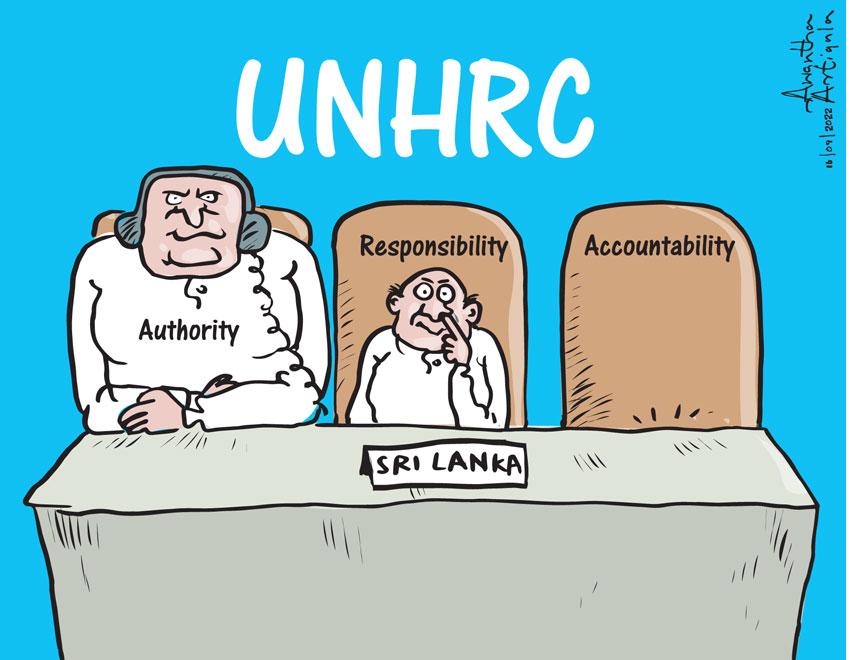
MDMK member Vaiko had sought explanation from the minister for India abstaining from voting on a draft resolution of the UN Human Rights Council on Sri Lanka in Geneva.

The voting was on the UN Human Rights Council draft resolution on promoting, reconciliation, accountability and human rights in Sri Lanka.

Vaiko said lakhs and lakhs of Tamils were killed, women were raped, children were killed and the then government in Sri Lanka gave weapons and still the Indian government is providing support to Sri Lanka.

In his response, the minister said India absenting from a vote against Sri Lanka in the UN Human Rights Commission was in accordance with the long-standing position — which was also followed by previous governments — that it “is the most constructive way of addressing, advancing the interest of Tamil community in Sri Lanka.”

“That continues to be our approach,” he said.

On the support to the island nation, he said, “We have given support to the entire Sri Lanka which also include the Tamil community.”

“We have not taken the communal approach in giving support,” he said. “To have a neighbour in this kind of a serious economic situation, we would be shirking our responsibilities if we did not step forward at that moment and that is exactly what we have done.”

In response to a question from AIADMK member M Thambidurai on the status of India-Sri Lanka agreement of 1987 which was signed to protect rights of Tamils, Jaishankar said the agreement has been the basis for changes in Sri Lanka, including provincial councils.

“In our view, it is still an agreement that continues to remain the foundation of how both our relationship with Sri Lanka is conducted and how Sri Lanka itself looks at its own future. I would like to assure him that we continue to do it. It is very much on our radar. We are very, very supportive of it,” the minister said.

On the concerns of some members about India’s stand on the Palestine issue, he said New Delhi supports a two-state solution.

“We want a two-state solution with the two states living peacefully side by side,” he said.

“Some of the members suggested that our support or empathy for the Palestinians has changed. In fact, our financial support for the Palestinian refugee welfare agency has gone up in the tenure of this government.”

BJD member Sujeet Kumar raised the matter of former Navy officers being in detention in Qatar for closed to 100 days on allegations of espionage.

Jaishankar said that it is a very sensitive case. “…Because their interests are foremost in our minds, I can only say we have been seized of the matter. Our ambassador, senior officials have been in continuous touch with the Qatari Government on this. Our effort is obviously to ensure that they are not treated unfairly and that the sooner we can bring them back…so I can I assure you that they are very much, very, very strongly in our priorities in respect of Qatar,” the minister said.

CPI(M) member A A Rahim raised the issue of detention of 16 Indian sailors in Nigeria.

Jaishankar said the government has been in touch with the crew since August.

“They are facing a number of charges in court. There are a number of charges including oil smuggling against them. We have given them consular support. Out High Commissioner has gone to see them. It is again our endeavour to ensure that they are not unjustly treated,” the minister said.

Source: PTI

Posted in Uncategorized

Unilaterally terminating Light Rail project cost nearly Rs. 6 Billion to Sri Lanka, audit report reveals

Sri Lanka incurred nearly Rs. 6 billion loss due to the previous government’s decision to unilaterally cancel the Light Rail Transit (LRT) project, which was started under Japanese loan assistance with the aim of reducing traffic congestion in Colombo and providing a better transport service to the passengers, a report compiled by the National Audit Office revealed.

According to the Auditor General’s Department, it has been revealed during a special audit regarding the cancellation of the project that the amount of Rs. 5.978 billion spent on the project until then has been wasted.

In addition to the above expenses, the Japanese consulting company has demanded Rs. 5.16 billion, including the consultancy fees provided until the termination of the project and the loss caused to them by the cancellation of the project without any prior discussion.

If the amount is not paid and the company goes to an arbitration procedure in the future, Sri Lanka will have to pay a huge amount like the full consultancy fee and compensation etc., the Audit report says.

Also, at the beginning of this project, an amount of 60,080,000 Japanese yen (Rs. 1.04 billion) has been applied to the project as an advance payment fee and 50 percent of that amount was to be refunded after the project was fully completed. That payment has been wasted since the project was abruptly terminated, the report states.

The audit report states that while the funding for the project was provided by the Japan International Cooperation Agency (JICA) on a the request of the Government of Sri Lanka from the Government of Japan in 2016 under a concessionary interest basis with a grace period of twelve years to be paid in forty years, no acceptable reason has been given for canceling the project.

This project has been cancelled according to a cabinet memorandum submitted on September 24, 2020.

The Auditor General has recommended that in presenting its observations related to the Cabinet Memoranda, the Treasury should make maximum efforts to provide its independent professional observations beyond supporting the decisions expected by the Memoranda.

These facts are included in a special audit report issued by the Auditor General’s Department in November 2022 regarding the Japanese light rail project.

The objective of the project was to boost the transportation capacity and improve the safety and comfort of public transportation by introducing a light rail transit (LRT) system 17 km in length with 16 Stations from the Multi-Model Transport Hub in Colombo Fort to Malabe Depot.

The previous Yahapalana Government in March 2019 entered into agreement with the Japan International Cooperation Agency (JICA) for a Japanese soft-loan of $ 1.86 billion for the construction work of the LRT project.

On 21st September 2020, Dr. PB Jayasundara, the Secretary to the then President Gotabaya Rajapaksa has sent a letter to the Secretary to the Ministry of Transport NB Monty Ranatunga on the requesting him to stop the $ 2.2 billion Light Railway Track (LRT) project immediately and close its project office.

“It has been observed that Light Railway Track System is very costly and not the appropriate cost-effective transport solution for the urban Colombo transportation infrastructure,” the letter said adding that the President has directed the Secretary to request the Ministry Secretary to terminate the project with immediate effect.

Posted in Uncategorized

PAFFREL threatens to take legal action if elections are delayed

Executive Director of People’s Action for Free & Fair Elections (PAFFREL) Rohana Hettiarachchi says the National Election Commission and the government must take necessary measures to conduct the Local Authorities Election before the end of February.

Speaking during a media briefing in Colombo, Hettiarachchi said if the election is not conducted before the end of February, they will take legal action.

He also said his organization met with the Prime Minister who is also the Minister of Provincial Councils and Local Government and requested him to take steps promptly to conduct the Local Authorities Election.

Rohana Hettiarachchi also stated that they will take legal action if any steps are taken to delay the conduct of the election.

Sandya Eknaligoda named one of world’s most influential women by the BBC

Sri Lanka’s human rights activist Sandya Eknaligoda has been named one of the world’s most influential women of 2022 by the BBC.

The BBC has published the list of 100 most influential women in the world and has included women from several areas such as politics, science, sports, entertainment, and literature.

Sandya Eknaligoda is the wife of investigative journalist and cartoonist Prageeth Eknaligoda who is reported missing since 2010.

She was a strong critic of the then President Mahinda Rajapaksa-led administration.

She received several accolades for her work carried out to support mothers and wives of missing persons in Sri Lanka.

Sandya Eknaligoda is also a strong advocate of human rights and has made several statements at UN Human Rights Council sessions.

The list also includes global music phenomenon Billie Eilish, Ukraine’s First Lady Olena Zelenska, actress Selma Blair, the ‘tsarina of Russian pop’ Alla Pugacheva, Iranian climber Elnaz Rekabi, record-breaking triple jump athlete Yulimar Rojas, and Ghanaian author Nana Darkoa Sekyiamah.

The list also reflects the role of women at the heart of conflict around the world in 2022 – from the protesters bravely demanding change in Iran, to the female faces of conflict and resistance in Ukraine and Russia.