More countries sign resolution on Sri Lanka

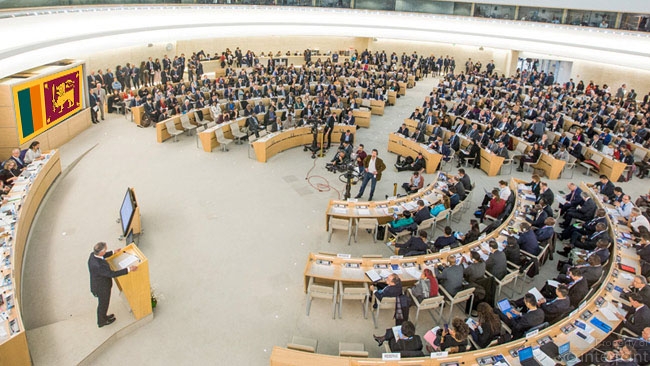
More countries have signed the resolution on Sri Lanka in Geneva as co-sponsors, Daily Mirror learns. The resolution has now been signed by Albania, Australia, Austria, Belgium, Canada, Czechia, Denmark, Estonia, Finland, France, Germany, Iceland, Ireland, Latvia, Liechtenstein, Lithuania, Luxembourg, Marshall Islands, Netherlands, New Zealand, Norway, Slovakia, Sweden, Türkiye, United Kingdom of Great Britain and Northern Ireland and the United States of America.

The draft resolution, titled ‘Promoting reconciliation, accountability and human rights in Sri Lanka’ was initially sponsored by the UK, US, Germany, Canada, Malawi, Montenegro and North Macedonia.

Sri Lanka is to call for a vote on the resolution this week.

The draft text requests the Office of the High Commissioner for Human Rights to enhance its monitoring and reporting on the situation of human rights in Sri Lanka, including on progress in reconciliation and accountability, and on the human rights impact of the economic crisis and corruption. The office has also been requested to present oral updates to the Human Rights Council at its fifty-third session and fifty-fifths sessions, and a written update at its fifty-fourth session and a comprehensive report that includes further options for advancing accountability at its fifty-seventh session in 2024, both to be discussed in the context of an interactive dialogue.

The resolution recognises the severe economic crisis which deteriorated in Sri Lanka since late 2021, exacerbated by the COVID-19 pandemic and the profound impact that this has had on the people of Sri Lanka, including women-led households.

The new resolution also expresses concern over the human rights developments since April 2022 including violence against and arrests of peaceful protesters, as well as violence against Government supporters, resulting in deaths, injuries, destruction and damage to houses of members of Parliament and stresses the importance of independent investigations into all attacks and for those found responsible to be held to account.

The resolution has also sought to extend and reinforce the capacity of the Office of the High Commissioner to collect, consolidate, analyse and preserve information and evidence and to develop possible strategies for future accountability processes for gross violations of human rights or serious violations of international humanitarian law in Sri Lanka, to advocate for victims and survivors, and to support relevant judicial and other proceedings, including in Member States, with competent jurisdiction.

Posted in Uncategorized

UNHRC draft resolution on Lanka rights violations supports prosecution in member countries

The UN Human Rights Council’s draft resolution on Sri Lanka of October 2022 supports relevant judicial and other proceedings, including in Member States, with competent jurisdiction; to go into human rights violations in Sri Lanka.

The draft resolution recognizes the importance of preserving and analyzing evidence relating to violations and abuses of human rights and related crimes in Sri Lanka with a view to advancing accountability and decides to extend and reinforce the capacity of the Office of the High Commissioner to collect, consolidate, analyze and preserve information and evidence and to develop possible strategies for future accountability processes for gross violations of human rights or serious violations of international humanitarian law in Sri Lanka, to advocate for victims and survivors, and to support relevant judicial and other proceedings, including in Member States, with competent jurisdiction

The draft resolution on “Promoting reconciliation, accountability and human rights in Sri Lanka” has been sponsored by 26 countries including ten Council members. The council member countries with voting rights are Czechia (former Czech Republic), Finland, France, Germany, Lithuania, Luxembourg, the Marshall Islands, the Netherlands, the United Kingdom and the United States.

Other sponsoring countries are Albania, Australia, Austria, Belgium, Canada, Denmark, Estonia, , Iceland, Ireland, Latvia, Liechtenstein, New Zealand, Norway, Slovakia, Sweden and Turkey.

Here is the full text:

51/… Promoting reconciliation, accountability and human rights in Sri Lanka

The Human Rights Council,

Guided by the purposes and principles of the Charter of the United Nations, reaffirming the Universal Declaration of Human Rights, and recalling the International Covenants on Human Rights and other relevant instruments,

Recalling General Assembly resolution 60/251 of 15 March 2006 and Human Rights Council resolution 5/1 of 18 June 2007,

Recalling also Human Rights Council resolutions 19/2 of 22 March 2012, 22/1 of 21March 2013, 25/1 of 27 March 2014, 30/1 of 1 October 2015, 34/1 of 23 March

2017, 40/1 of 21 March 2019 and 46/1 of 23 March 2021 on promoting reconciliation, accountability and human rights in Sri Lanka,

Recalling further that, in its resolution S-11/1 of 27 May 2009, the Human Rights Council welcomed the resolve of Sri Lanka to begin a broader dialogue with all parties in order to seek a political settlement and to bring about lasting peace and development in Sri Lanka based on consensus among and respect for the rights of those from all ethnic and religious groups, and endorsed the joint communiqué of 26 May 2009 of the President of Sri Lanka and the Secretary-General, in which the Secretary-General, inter alia, underlined the importance of an accountability process for addressing violations of international humanitarian law and human rights law,

Reaffirming its commitment to the sovereignty, independence, unity and territorial integrity of Sri Lanka, Reaffirming also that it is the primary responsibility of each State to respect human rights and to ensure the full enjoyment of all human rights and fundamental freedoms by its entire population,* State not a member of the Human Rights Council.

Recognizing the severe economic crisis that has deteriorated in Sri Lanka since late 2021, exacerbated by the coronavirus disease (COVID-19) pandemic, and the profound impact that this has had on the people of Sri Lanka, including women-led households,

Underscoring the importance of addressing the underlying governance factors and root causes that have contributed to that crisis, including deepening militarization, lack of accountability in governance and impunity for serious human rights violations and abuses, which remains a central obstacle to the rule of law, reconciliation and sustainable peace and development in Sri Lanka,

Recognizing the recent efforts of the Government of Sri Lanka to address the on going economic crisis, and welcoming the staff-level agreement reached between the Government and the International Monetary Fund,

Recognizing also that the promotion and protection of human rights and the prevention of and fight against corruption are mutually reinforcing, that corruption can have a serious negative impact on the enjoyment of human rights, and that the poor and those in marginalized and vulnerable situations, including women and girls, are at particular risk of suffering from the adverse impact of corruption on the enjoyment of human rights,

Emphasizing that peaceful protests can make a positive contribution to the development, strengthening and effectiveness of democratic systems and to democratic processes, including elections and referendums, as well as to the rule of law, and stressing the importance of full respect for the freedom to seek, receive and impart information, including the fundamental importance of access to information, and for democratic participation, transparency and accountability, and of combating corruption,

Noting the declaration of four states of emergency in Sri Lanka since August 2021, and stressing the obligation to comply with article 4 of the International Covenant on Civil and Political Rights, including in the context of declarations of states of emergency,

Acknowledging the stated commitment of the Government of Sri Lanka to constitutional reforms while stressing the importance of the independence of key commissions and institutions, including the Human Rights Commission of Sri Lanka, the Election Commission, the National Police Commission, the Judicial Service Commission and the Commission to Investigate Allegations of Bribery or Corruption, and of the judiciary,

Calling upon the Government of Sri Lanka to fulfil its commitments on the devolution of political authority, which is integral to reconciliation and the full enjoyment

of human rights by all members of its population, and encouraging the Government to respect local governance, including through the holding of elections for provincial councils, and to ensure that all provincial councils, including the northern and eastern provincial councils, are able to operate effectively, in accordance with the thirteenth amendment to the Constitution of Sri Lanka,

Reaffirming that all individuals in Sri Lanka are entitled to the full enjoyment of their human rights without distinction of any kind such as religion, belief or ethnic origin, and the importance of a peaceful and unified land to the enjoyment of human rights,

Acknowledging the progress made by the Government of Sri Lanka in rebuilding infrastructure, demining, land return, facilitating the voluntary resettlement of internally displaced persons and improving livelihoods, and encouraging further efforts in these areas,

Welcoming the continued commitment of the Government of Sri Lanka to remain engaged with the United Nations and its agencies, including human rights mandates and mechanisms, in capacity building and technical assistance, and to achieve sustainable peace, Reaffirming its unequivocal condemnation of all acts, methods and practices of terrorism, including those committed in Sri Lanka in April 2019 that led to a large number of injuries and deaths, and reaffirming also that all measures taken to combat

terrorism must comply fully with States’ obligations under international law, in particular international human rights law, and, as applicable, international refugee law and international humanitarian law,

Emphasizing the importance of a comprehensive approach to dealing with the past, incorporating judicial and nonjudicial measures, to ensure accountability, to serve justice, toprovide remedies to victims, to avoid the recurrence of violations of human rights and to promote healing and reconciliation,

Recognizing that mechanisms to redress past abuses and violations work best when they are independent, impartial and transparent, and use consultative and participatory methods that include the views of all relevant stakeholders, including, but not limited to, victims, women, youth, representatives of various religions, ethnicities and geographic locations, as well as people from marginalized groups,

Recalling the responsibility of States to comply with their relevant obligations under human rights law and international humanitarian law, including, where applicable, to prosecute those responsible for gross violations of human rights law or serious violations of international humanitarian law,

Noting with appreciation the work of the Office of the United Nations High Commissioner for Human Rights towards the promotion and protection of human rights and truth, justice, reconciliation and accountability in Sri Lanka,

1. Welcomes the oral update presented by the United Nations High Commissioner for Human Rights to the Human Rights Council at its forty-ninth session and the report of Office of the United Nations High Commissioner for Human Rights presented to the Councilat its current session;1

2. Also welcomes the engagement of the Government of Sri Lanka with the Office of the High Commissioner and the special procedures of the Human Rights Council, encourages the continuation of such engagement and dialogue, and calls upon Sri Lanka to implement the recommendations made by the Office and to give due consideration to the recommendations made by the special procedures;

3. Expresses concern at the human rights impact of the economic crisis, including as a result of increased food insecurity, severe shortages in fuel, shortages in essential medicines and reductions in household incomes, while stressing the need to promote and protect the rights of the most marginalized and disadvantaged individuals, including daily wage earners, women, children, older persons and persons with disabilities;

4. Also expresses concern at other human rights developments since April 2022,including violence against and the arrests of peaceful protestors, as well as violence against government supporters, resulting in deaths, injuries, destruction and damage to the houses ofmembers of Parliament, and stresses the importance of independent investigations into all attacks and that those found responsible be held to account;

5. Stresses the importance of protecting civilian government functions from militarization and of addressing the independence of the judiciary and key institutions responsible for the promotion and protection of human rights and fundamental freedoms; the grievances and demands of Tamil and Muslim populations; prolonged internal displacement; land disputes; the surveillance, intimidation and harassment of journalists, civil society activists, human rights defenders, families of disappeared persons, and persons involved in memorialization initiatives; and of combating sexual and genderbased violence;

6. Also stresses the importance of a comprehensive accountability process for all violations and abuses of human rights committed in Sri Lanka by all parties, including those abuses by the Liberation Tigers of Tamil Eelam;

7. Notes the persistent lack of independent, impartial, and transparent domestic mechanisms, and stresses the importance of ensuring investigations and, as applicable, appropriate punishments for allegations relating to grave violations of human rights;

8. Recognizes the importance of preserving and analysing evidence relating to violations and abuses of human rights and related crimes in Sri Lanka with a view to advancing accountability, and decides to extend and reinforce the capacity of the Office of 1 A/HRC/51/5. the High Commissioner to collect, consolidate, analyse and preserve information and evidence and to develop possible strategies for future accountability processes for gross violations of human rights or serious violations of international humanitarian law in Sri Lanka, to advocate for victims and survivors, and to support relevant judicial and other proceedings, including in Member States, with competent jurisdiction;

9. Notes the initial outreach of the Government of Sri Lanka to overseas persons of Sri Lankan origin encompassing all communities and generations, and encourages the Government to engage further in a broad-based consultative process with stakeholders from all affected communities and to provide remedies to achieve meaningful reconciliation, devolution of political authority, an improved situation of human rights, and lasting peace;

10. Urges the Government of Sri Lanka to foster freedom of religion or belief and pluralism by promoting the ability of all religious communities to manifest their religion, and to contribute openly and on an equal footing to society;

11. Also urges the Government of Sri Lanka to take measures to address the marginalization of and discrimination against persons from the Muslim community, and to ensure that Muslims and members of other religions are able to continue to practice their own religious rites, including burial rites;

12. Calls upon the Government of Sri Lanka to ensure the prompt, thorough and impartial investigation and, if warranted, prosecution of all alleged crimes relating to human rights violations and serious violations of international humanitarian law, including for long-standing emblematic cases, with the full participation of victims and their representatives;

13. Also calls upon the Government of Sri Lanka to address the ongoing economic crisis, including by investigating and, where warranted, prosecuting corruption, including where committed by public and former public officials, and stands ready to assist and support independent, impartial and transparent efforts in this regard;

14. Stresses the importance of the effective and independent functioning of the Office on Missing Persons and the Office for Reparations, while noting that the tangible results expected by victims and other stakeholders are yet to be achieved, including resolving the many cases of enforced disappearance so that the families of disappeared persons can know their fate and whereabouts, and also the importance of the effective and independent functioning of the Human Rights Commission of Sri Lanka;

15. Calls upon the Government of Sri Lanka to protect civil society actors, including human rights defenders, to investigate any attacks and to ensure a safe and enabling environment in which civil society can operate free from hindrance, surveillance, insecurityand threat of reprisals;

16. Notes the introduction in March 2022 of amendments to the Prevention of Terrorism Act, that detentions under that law continue, and the expressed intention of the Government of Sri Lanka in this regard to introduce new legislation on combating terrorism, and encourages the Government to engage in consultations with civil society, the Office of the High Commissioner and relevant special procedure mandate holders in the preparation of new legislation, in order to ensure that any legislation on combating terrorism complies fully with the State’s obligations arising from international human rights law and international humanitarian law;

17. Notes with appreciation the continued engagement of the Government of Sri Lanka with the special procedures of the Human Rights Council, and encourages the Government to continue that cooperation, including by responding formally to outstanding requests from them;

18. Encourages the Office of the High Commissioner and relevant special procedure mandate holders to provide, in consultation with and with the concurrence of the Government of Sri Lanka, advice and technical assistance on implementing the above- mentioned steps;

19. Requests the Office of the High Commissioner to enhance its monitoring and reporting on the situation of human rights in Sri Lanka, including on progress in reconciliation and accountability, and on the impact of the economic crisis and corruption on human rights, and to present an oral update to the Human Rights Council at its fifty-third and fifty-fifth sessions, and a written update at its fifty-fourth session and a comprehensive report that includes further options for advancing accountability at its fifty-seventh session, both to be discussed in the context of an interactive dialogue.


India woos Lanka’s Eastern province

High Commissioner of India to Sri Lanka, Gopal Baglay paid a visit to Batticaloa and Trincomalee on October 1 and 2, 2022. In these two days, the High Commissioner had multiple engagements which underscore the multidimensional nature of the India-Sri Lanka partnership and India’s deep and enduring cultural and socio-economic ties with Eastern Sri Lanka, the Indian High Commission said in a release.

Among other places, the High Commissioner visited the Meththai Grand Jumma Mosque and Badriyyah Jum’ah Masjid at Kattankudy in Batticaloa and offered prayers for peace, progress and prosperity of the people of India and Sri Lanka. He unveiled plaques of Indo-Lanka Sufi Friendship Association and a media unit in Badriyyah Jum’ah Masjid. He interacted with representatives of All Ceylon Jamiyyathul Ulama (ACJU), religious and community leaders at Meththai Grand Jumma Mosque.

It is significant that the Chinese Ambassador in Sri Lanka Qi Zhenhong had visited the Eastern province in May and September this to distribute food packets.

The Indian High Commissioner began his visit to Batticaloa by attending the convocation ceremony of the Eastern University on October 1 as the Chief Guest. On this occasion, he announced a special financial assistance scheme to support the studies of 100 University students from economically backward families.

The Indian envoy called for enhanced cooperation in higher education and skills training through various initiatives of the Government of India, including ITEC, scholarships, and cooperation with Indian institutions of excellence.

He reviewed the progress of the construction of Surgical Unit in the Batticaloa Teaching Hospital, being undertaken under grant assistance from India. The project, which is nearing completion, is in line with the people-centric nature of development cooperation partnership between India and Sri Lanka, under which projects have been carried out in diverse areas including health, education and livelihood development in all the 25 Districts of Sri Lanka.

High Commissioner Baglay then visited the Ramakrishna Mission in Batticaloa and appreciated the contribution and services of the Mission in the fields of health, education and spirituality, to help the people of Sri Lanka. He assured them of all possible support from the High Commission of India in this endeavor.

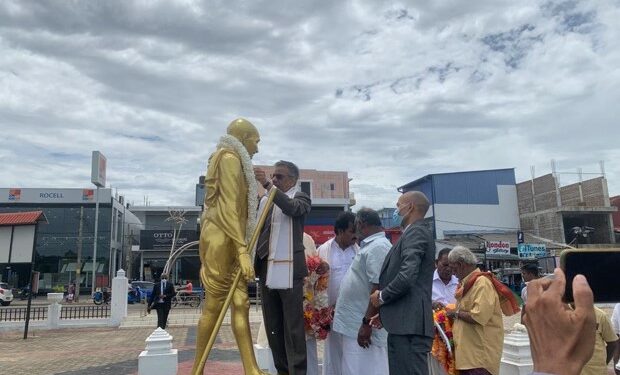
On the eve of the birthday of Father of the Nation, Mahatma Gandhi, falling on October 2, the High Commissioner offered floral tributes to the statue of Gandhiji in Batticaloa which was put up in 1967. The event was graced by the TELO Secretary General MP Govindan Karunakaran and Batticaloa Mayor Thiyagarajah Saravanapavan.

The High Commissioner began his visit to Trincomalee on October 2, with a puja at the Thirukoneswaram kovil, an ancient Hindu temple. The chief priest blessed the High Commissioner after observing special religious rites on the auspicious occasion of Navaratri. The Temple trust President Thusyanthan briefed the High Commissioner on the history of the temple and submitted a proposal for its restoration as a pilgrimage destination for devotees from near and afar.

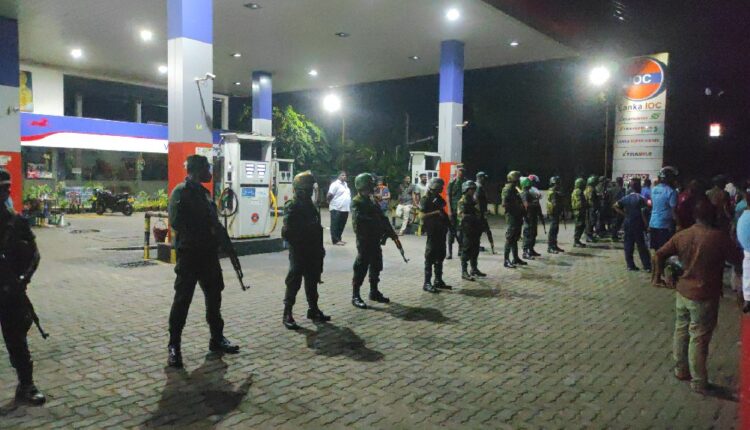
To mark the 153 rd birth anniversary of Mahatma Gandhi, an event was organized at the Lanka Indian Oil Corporation (LIOC) in Trincomalee, which was attended by High Commissioner. The High Commissioner led floral tributes to Gandhiji and recalled the Mahatma’s visit to Sri Lanka in 1927 and his close association with the Sri Lankan people. Managing Director LIOC, Manoj Gupta thanked the High Commissioner for his presence at the LIOC Facility and briefed him on LIOC’s plans for further expansion and diversification of their businesses at Trincomalee.

The High Commissioner appreciated LIOC’s role in ensuring Sri Lanka’s energy security, especially in the last few months, and in meeting the growing needs of its industries. He visited the Lube blending plant and the newly inaugurated grease plant at the facility, which is the first such plant in Sri Lanka. The Managing Director briefed him on the plans for the joint development of the Upper Tank Farms by LIOC and the Ceylon Petroleum Corporation.

Later in the day, High Commissioner met the Commander Eastern Naval Area Rear Admiral Jayantha Kularatne and Commandant of the Air Force Academy Air Commodore Asela Jayasekera. He interacted with the Technical Team from the Indian Navy which is supporting the Sri Lankan Armed Forces with operations of the Dornier aircraft gifted by India to Sri Lanka on 15 August this year to strengthen the maritime security of Sri Lanka and contribute to the overall security of the region.

Attesting to India’s ongoing commitment to the people of Sri Lanka, during the two-day visit, the High Commissioner donated humanitarian ration packages to 400 low income families in Batticaloa and Trincomalee. The event at Batticaloa was held in the presence of S. Viyalanderan, State Minister of Trade. The event at Trincomalee was attended by MP Kalaiyarasan on behalf of MP and leader of the Tamil National Alliance (TNA) R. Sampanthan. At both the places, the organizers expressed their gratitude for the donations and India’s unstinted support to the people of Sri Lanka. The High Commissioner said that, India, like a twin brother, has and will always stand by Sri Lanka, especially in times of need.

Why The Global South Should Support UN Action on Sri Lanka By Meenakshi Ganguly

The economic, political, and human rights calamity gripping Sri Lanka has made news around the world, but its roots go back years – or even decades. In September, the former United Nations High Commissioner for Human Rights, Michelle Bachelet, underscored in her report on Sri Lanka that “impunity for serious human rights violations [has] created an environment for corruption and the abuse of power.”

The UN Human Rights Council will soon consider a resolution to address this issue. Countries in the global south that serve on the council, – —including Benin, Côte d’Ivoire, Gabon, Gambia, Namibia and Senegal, have an important role in supporting the people of Sri Lanka to address the current crisis and its underlying causes.

Between 1983 and 2009 Sri Lanka endured a devastating civil war between the government and the separatist Liberation Tigers of Tamil Eelam (LTTE). The decades of brutality against civilians and the government’s continuing attempts to shield those responsible from justice, have cast a long shadow over the country. Both sides committed widespread violations of international law.

In the final months of the conflict in 2009, the LTTE used human shields, while tens of thousands of Tamil civilians were killed when government forces shelled no-fire zones and hospitals. As the war ended with the defeat of the LTTE and the destruction of its leadership, government forces were implicated in summary executions, rape, and enforced disappearances.
Since then, many Tamils have sought to learn what happened to those who did not return. In August, a group known as the Mothers of the Disappeared passed 2,000 days of continuous protests demanding to know the fate of their loved ones. Instead of receiving answers they have been subject to intimidation and surveillance by the government’s security apparatus. Nevertheless, representatives of the group have travelled to Geneva to ask the Human Rights Council to keep their hopes of justice alive.

Over many years, people from all of the country’s faiths and communities have taken their accounts of suffering and their search for justice to the Human Rights Council. As the prominent Sri Lankan activist Ruki Fernando recently wrote, “It is the inability to get truth and justice in Sri Lanka despite many efforts, and the subsequent loss of confidence and hope in domestic processes, that drive many Sri Lankans to Geneva.”

Successive Sri Lankan governments have appointed people allegedly responsible for these atrocities to high office, and blocked investigations, undermining the independence of the judiciary and the rule of law. In one rare case in which a soldier was convicted of murder, the president pardoned him.

Earlier this year, following years of mismanagement and corruption, Sri Lanka ran out of foreign exchange – meaning that it could no longer finance essential imports such as fuel, food and medicine, causing the government to default on its foreign debts. As inflation spiralled and people were unable to obtain basic necessities, massive protests broke out leading to the resignation of the prime minister in May and of the president in July.

On the streets, huge numbers of ordinary Sri Lankans called for constitutional reform and action to address corruption. A 2020 amendment to the constitution weakened human rights institutions and gave the president the power to appoint senior judges. It also undermined institutions such as the Bribery Commission that are responsible for combatting economic crimes.

The new president, Ranil Wickremesinghe, has promised reform. But he has responded by suppressing dissent, using the military to disperse peaceful protests and arresting dozens of alleged protest organizers. He has used the notorious Prevention of Terrorism Act to detain three student activists for up to a year without charge.

The use of the this law shows that the government’s assurances to the international community on human rights cannot be trusted. As recently as June the then-foreign minister told the Human Rights Council that there was a moratorium on the use of that law, which has repeatedly been used to enable arbitrary detention and torture, and which successive governments have promised to repeal.

The resolution currently before the Human Rights Council extends the mandate of a UN project to gather and analyze evidence of war crimes and other crimes under international law that have been committed in Sri Lanka and to prepare them for use in possible future prosecutions. It also mandates the UN to continue monitoring and reporting on the human rights crisis in Sri Lanka. As people struggle for daily necessities and the government cracks down on dissent, that is more important than ever.

The Sri Lankan government has opposed these measures, falsely claiming that it is already acting to protect human rights. To support Sri Lankans who are calling for change and accountability, Council members from the global south should fully support the resolution.

European Commission says Freedom of Expression is essential in Sri Lanka , & GSP+ to be assessed soon

Ursula von der Leyen, President of the European Commission congratulating President Ranil Wickremesinghe on his election as the President of the Democratic of Socialist Republic of Sri Lanka has assured its support to the government of Sri Lanka for the efforts to overcome the crisis successfully.

Issuing a statement, Ursula von der Leyen noted that at a time of unprecedented challenges faced by the people of Sri Lanka, the European Union remains committed to support Sri Lanka’s efforts to overcome the crisis successfully, including the necessary reforms that will bring the country back to a path of inclusive prosperity and lasting national reconciliation.

She further stated that in this process, freedom of expression and assembly, dialogue among all stakeholders, as well as respect for the rule of law and fundamental rights will remain essential.

She has also made a reference to the assessment by the European Union on the progress made by Sri Lanka on GSP+ commitments. Accordingly, the European Union will assess the progress made on Sri Lanka’s GSP+ commitments very soon.

The report is scheduled to be released towards the latter part of this year or early 2023.

She also commended the success in the efforts to introduce and steer policies that will ensure the short and long-term interests of all Sri Lankans and address the devastating efforts of the unprecedented economic downturn as well as the negotiations with international financial institutions and creditors.

Ursula von der Leyen expressed her interest in working closely to strengthen further the ties and cooperation, based on commitments to shared values and common interests.

Source: President’s Media Division

Posted in Uncategorized

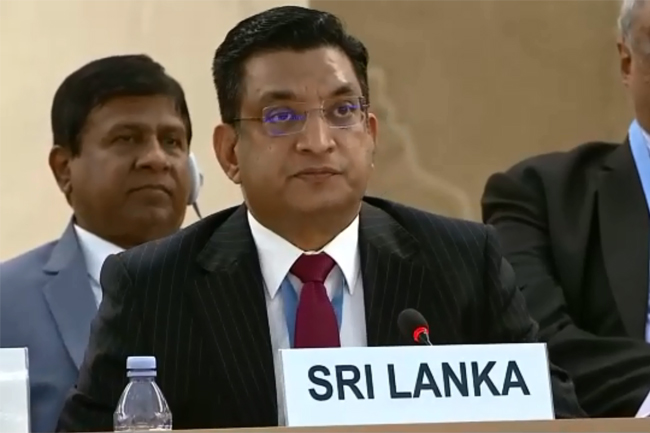
Ali Sabry to lead delegation to UNHRC session in Geneva

Minister of Foreign Affairs, Ali Sabry will be traveling to Geneva for the concluding segment of the 51st Session of the Council.

The 51st session of the United Nations Human Rights Council is currently ongoing in Geneva and is scheduled to conclude on 07 October 2022.

It is expected that the draft resolution, A/HRC/51/L.1, titled “Promoting reconciliation, accountability and human rights in Sri Lanka” tabled by the United Kingdom, Canada, Germany, Malawi, Montenegro, North Macedonia, and the United States will be taken up for action on 06 October 2022.

Minister of Foreign Affairs, Ali Sabry will be accompanied by officials from the Ministry​ of ​Foreign ​Affairs.​​ ​

Posted in Uncategorized

Sri Lanka stock market closes after index plunges 5% led by heavyweights

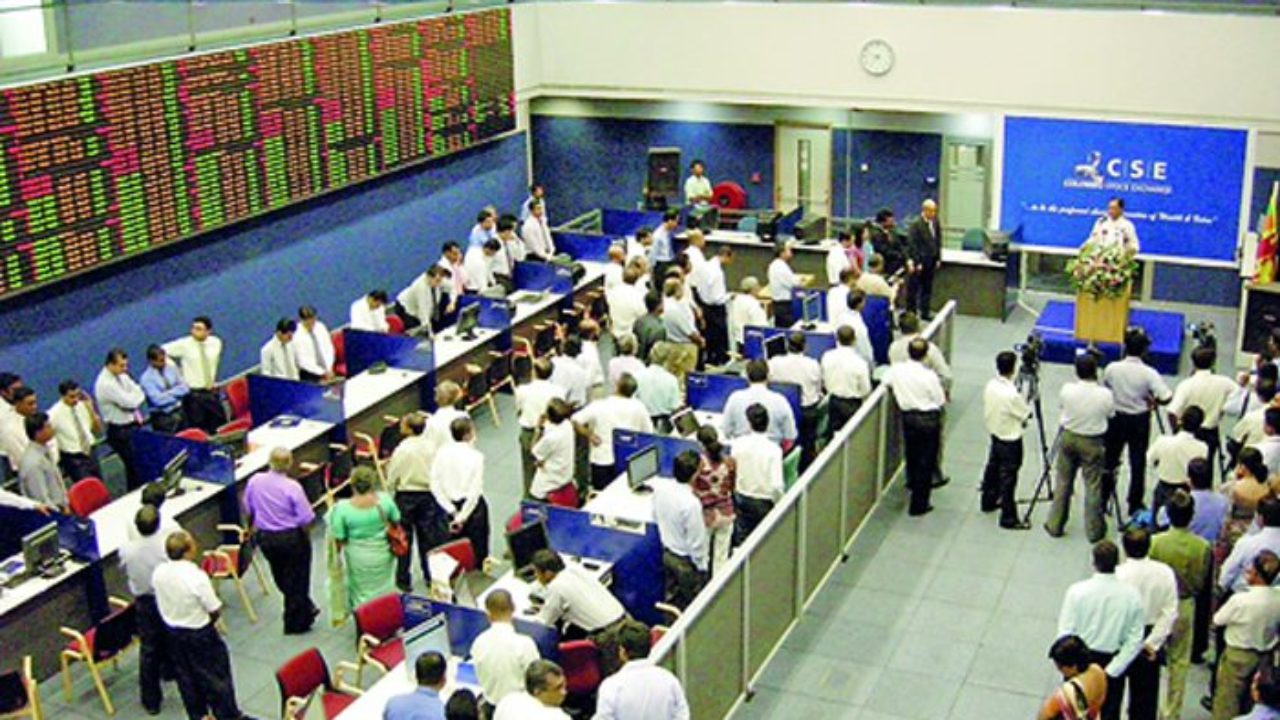
Sri Lanka’s Colombo Stock Exchange (CSE) closed 26 minutes before its official ending time on Monday after one of the indices plunged more than 5 percent led by market heavyweights, the official data showed.

“Please note that the market has been halted due to the S&P SL20 index dropping over 5% from the previous close, as set out in SEC (Securities and Exchange Commission) Directive dated 30th April 2020. Accordingly, the market has been halted for the rest of the day,” the CSE said in a statement.

Market heavyweight Expolanka fell 9.3 percent while Lanka IOC slipped 5.2 percent, leading the index fall.

The main All Share Price Index (ASPI) fell 3.8 percent while more liquid S&P SL20 dropped 4.9 percent when the market was halted.

Posted in Uncategorized

Estate workers to strike if they’re denied pay talks

The Ceylon Estate Staff Union (CESU) yesterday (2) warned that estate workers would opt for an islandwide strike unless they are invited to another round of discussions with the plantation companies within this week regarding a salary hike.

CESU General Secretary Robert Francis told The Morning yesterday that they would engage in an islandwide strike if they are refused appointments to meet the officials of the Employer’s Federation of Ceylon (EFC).

“We would have to engage in an islandwide strike if we are not called for another round of discussions. We would have to go ahead with an islandwide struggle. Our Talawakelle picketing campaign on 1 October was to protest against the considerably low proposed pay hike by the plantation companies, and was a starting point to our trade union action on this issue,” he added.

The CESU members held a rally in Talawakelle on 1 October urging for an equal pay hike, in which around 3,000 trade union activists participated.

“We walked from the Malliyapoo Junction and reached the Talawakelle town, where we addressed the gathering,” Francis added.

He noted that the CESU will not accept the proposed 25% pay hike they were offered by the EFC, and that another round of discussions must thus be scheduled in this regard.

“The companies said they are unable to give more than a 25% increment, and stated that the collective agreement can be signed if we agree to their offer,” he added

Speaking to The Morning, EFC Plantation Group Chairman Roshan Rajadurai said: “We have made our offer very clear – even during these very dark times, when industries are closing down, we have offered a 25% increment of pay.”

Two rounds of discussions were held earlier on 30 August and 5 September between the CESU and EFC officials.

Accordingly, the CESU demanded for a 70% pay hike blaming the ongoing economic crisis, however, the EFC only agreed to a 25% increment.

According to the CESU, the 25% salary increment offered by the EFC amounts to only Rs. 7,000 for the lower category of estate staff, while the higher category will see an increase of Rs. 9,700.

Three categories of collective agreements are signed in the estate sector, namely the Executive Agreement, Staff Agreement, and Labour Agreement.

Demand for beer may increase as affordability declines: Fitch

Rating agency Fitch states that the demand for beer may increase in the near future as the affordability for Sri Lankans may decline.

The US based credit ratings firm states that consumers may trade down from spirits to strong beer, given beer’s lower price point.

Moreover, Fitch forecasts that the drop in sales volumes will be moderated in the next 12-18 months, assuming an ease in inflation spikes.

Fitch also forecasts mild beer sales to rise on a gradual recovery in tourism.

Excise duties from alcoholic-beverage makers made up 11% of government tax revenue in the past year, however with the imposition of a social security tax of 2.5% on revenue in addition to the increase in Value Added Tax to 15% from 12% may increase the price of alcoholic beverages.

Posted in Uncategorized

Gazette reversed : No more High Security Zones in Colombo

The President and the Minister of Defence, Ranil Wickremesinghe has issued an extraordinary gazette revoking the order issued declaring the High Security Zones.

On Friday (23), Sri Lankan President Ranil Wickremesinghe declared multiple areas in Colombo as High Security Zones.