SJB goes to court challenging High-Security Zone gazette

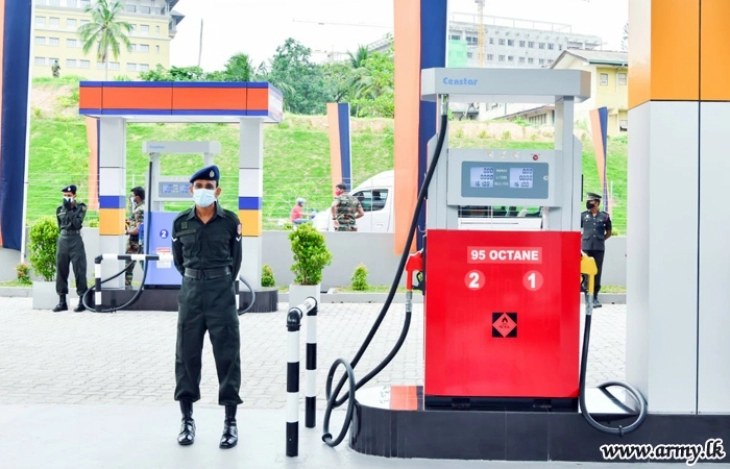
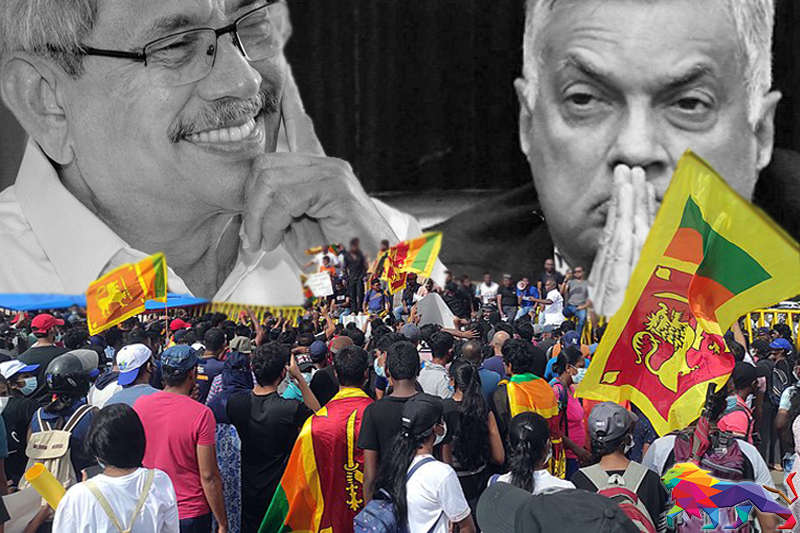
The Samagi Jana Balavegaya filed Fundamental Rights applications with the Supreme Court challenging the gazette issued by President Ranil Wickremesinghe declaring High-Security Zones in Colombo.

The applications were filed by SJB MPs Harshana Rajakaruna, and Mujibur Rahuman on Wednesday (28).

The FR applications name the Attorney General as the respondent and note that the President has no right to declare High-Security Zones, and no law allows the President to do so.

The petitioners request the Supreme Court to rule that the conduct of the President had violated the Fundamental Rights of the people of Sri Lanka, and thereby issue an order to invalidate the said gazette.

Source: News 1st

Posted in Uncategorized

President holds bilateral talks with Japanese PM

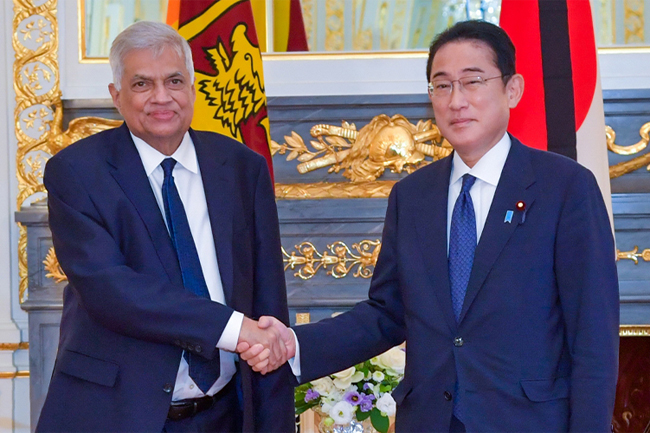
President Ranil Wickremesinghe held bilateral talks with Japanese Prime Minister Fumio Kishida in Tokyo today (Sep. 28), the President’s Media Division (PMD) says.

The meeting took place at Akasaka Palace in Tokyo.

The Japanese Prime Minister warmly welcomed President Wickremesinghe and extended his best wishes on his appointment to the Office of President.

The two leaders held discussions on further strengthening relations between the two countries.

President Wickremesinghe left the island on Sep. 26 on an official visit to Japan and the Philippines.

During his two-day official visit to Japan, the President also attended the funeral ceremony of former Prime Minister of Japan Shinzo Abe to pay his last respects to the assassinated leader.

After concluding his Japan visit, President Ranil Wickremesinghe is scheduled to leave for the Philippines later today to preside over the meeting of the Governors of the Asian Development Bank (ADB).

During his visit to the Philippines, President Wickremesinghe will hold discussions with the President of the Philippines Ferdinand Romualdez Marcos Jr. and the President of the Asian Development Bank (ADB) Masatsugu Asakawa.

The President is scheduled to return to the island upon completion of his official tour on September 30.

Sri Lanka plans to sell tickets in US dollars to tourists: Minister

Sri Lanka is considering selling tickets to tourists in US dollars in a bid to raise money to import spare parts Transport Minister Bandula Gunawardana said amid the worst currency crisis in the history of the island’s intermediate regime central bank.

“I plan to ask permission from the central bank to charge for tickets in US dollars,” Minister Gunawardana said.

“Hotels charge in US dollars, I do not see why we cannot.”

Sri Lanka’s Department of Railways is finding it difficult to import spare parts for its old engines, he said.

Minister Gunawardana hiked fares to half that of buses and has sharply reduced operations losses, he said.

Minister Gunawardana has also proposed to call international tenders to sell metal scrap to raise dollars for Sri Lanka Railways.

Related

Sri Lanka railways seek forex from scrap metal amid currency crisis

Sri Lanka has an intermediate regime central bank (a soft-peg) which collapses and forex shortages emerge whenever aggressive open market operations are employed (liquidity is injected) to artificially suppress interest rates.

Sri Lanka’s economists got the power to print money in 1950 through US designed Latin America style, though they were not explicitly given the power to depreciate the currency, as the agency was required to maintain a peg to gold at 1.99 grains of gold.

However the rules were relaxed in 1980s, after the US dollar was floated in the 1970s and it was made earlier to depreciate the rupee to compensate for monetary policy errors under so-called basket, band, crawl (BBC) policy that was peddled by Washington based Mercantilists, critics say.

Latin America style central banks also started to default from the 1980s.

Once the power was given, economists are now unwilling to give up the power to print money and depreciate the currency though calls are intensifying to harden the peg block monetary instability.

Over the year economists have lobbied politicians to control and exchange control and import control laws and curtail the economic freedoms of citizens during successive currency crises and money printing depleted reserves.

Money laundering laws were deployed against citizens who use US dollars in the current crises to enforce a state monopoly in money, legal tender.

Source: Economy Next

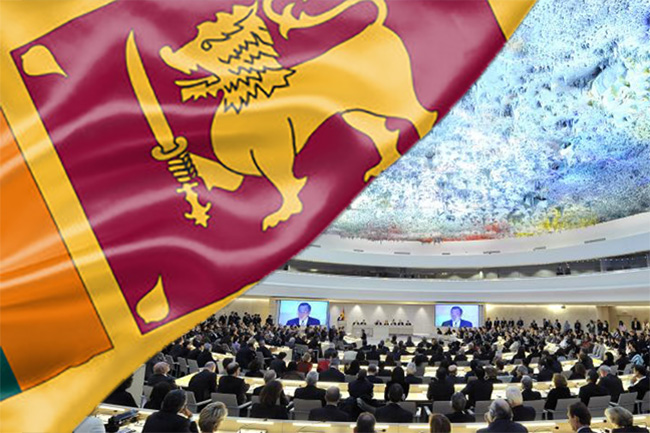
UNHRC sessions: Sri Lanka struggles to gain confidence

Sri Lanka’s stance of advocating for a domestic truth-seeking mechanism earlier this month at the 51st Session of the UN Human Rights Council (UNHRC) to address long-standing allegations of rights violations and war crimes will do little to build international and local confidence in meaningful action, experts told The Sunday Morning.

Sri Lanka’s hurried submission to the international watchdog this year is bound to create confusion within the ranks of the international community whose assistance the bankrupt nation desperately needs, as the interim Government led by President Ranil Wickremesinghe is seen to backpedal on Resolution 30/1, which Sri Lanka co-sponsored at the 30th Session of the UNHRC in 2015, when Wickremesinghe was the then Prime Minister.

Sri Lanka’s stance at the UNHRC came in the backdrop of a Staff-Level Agreement between the Government and the International Monetary Fund (IMF), which, if approved, will provide a much needed $ 2.9 billion conditional assistance programme over a four-year period. The IMF agreement is viewed as a confidence-building mechanism, opening doors for Sri Lanka to enter a dialogue with its creditors to negotiate debt restructuring, and providing an opportunity to seek bridging finance needed for the nation of 22 million to recover from an unprecedented economic crisis.

Addressing the UNHRC session in the wake of a scathing report by the Office of the United Nations High Commissioner for Human Rights (OHCHR), which for the first time included concerns about economic crimes that may have contributed to the ongoing crisis, Sri Lankan Minister of Foreign Affairs Ali Sabry stated: “The Government will endeavour to establish a credible truth-seeking mechanism within the framework of the Constitution. The contours of such a model that would suit the particular conditions of Sri Lanka are under discussion.”

Minister Sabry, who is a former Minister of Justice in the Gotabaya Rajapaksa Government, argued that if reconciliation and human rights in Sri Lanka were to be meaningful and sustainable, they must be carried out in cooperation with the country, being compatible with the aspirations of its people, and in accordance with its constitutional framework.

“The international community is aware that unconstitutional and intrusive external initiatives have repeatedly failed to yield meaningful results on the ground and are in effect an unproductive drain on member state resources,” Sabry stressed.

The Foreign Minister called on the UNHRC to acknowledge “actual progress on the ground” and to assess the situation in a realistic manner.

“It is 13 years since the end of the conflict in Sri Lanka, and since then a new generation has emerged with their own aspirations. While issues of reconciliation and accountability are being comprehensively addressed through a domestic process, it is time to reflect realistically on the trajectory of this resolution which has continued on the agenda of the Council for over a decade and undertake a realistic assessment on whether it has benefited the people of Sri Lanka. There is a need to acknowledge actual progress on the ground and support Sri Lanka,” Sabry stated.

However, what such a domestic truth-seeking mechanism may look like remains unknown, with no guiding document nor dialogue from the Government on the matter made available to the public.

The Ministries of Justice and Foreign Affairs would not comment on the matter, with both Ministers overseas on official visits. Attempts by The Sunday Morning to contact Minister Sabry and Justice Minister Dr. Wijeyadasa Rajapakshe regarding how the Government plans to enact a domestic mechanism proved unsuccessful.

Delaying tactics weaken credibility?

When asked about the Government’s continued stance on a domestic mechanism, former Faculty Member at the University of Colombo Department of Political Science and Public Policy and Centre for Policy Research and Analysis Founder-Director Prof. Jayadeva Uyangoda told The Sunday Morning that the Government was aware that it lacked credibility in the eyes of the international community and political will locally to effect a meaningful truth-seeking mechanism, calling the stance expressed at the UNHRC sessions a delaying tactic and a diplomatic tool to secure support from other countries to face a vote at the sessions.

“People, locally and internationally, don’t trust the words of the Government. I think the Government also knows that by making these empty promises, it may be able to persuade some countries to vote in its favour at the UNHRC. If we are to take the Government’s stance on truth-seeking seriously, it should prepare the background within the country to accept it.

“In the past, there has been a lot of opposition to truth-seeking by the bureaucracy, Sinhala nationalists, and some segments of the military. The Sri Lanka Podujana Peramuna (SLPP) which is a partner of this Government has opposed it. This Government hasn’t done anything to initiate a new discussion about this mechanism locally before going to Geneva and making these promises. Therefore, there is very little credibility in what the Government is doing in Geneva [UNHRC sessions]. This is very unfortunate because a truth-seeking mechanism is one of the most important steps towards reconciliation and democratisation. However, every government has been misusing it,” Prof. Uyangoda observed.

According to Prof. Uyangoda, the Government’s annual representation at the UNHRC is a delaying tactic due to lack of political will to pursue meaningful reconciliation and justice mechanisms. He charged that the Government’s “annual pilgrimage to Geneva” uses lofty undertakings to pacify Western nations which pressure Sri Lanka on human rights issues.

“I think this time is no different. With the economic crisis, Sri Lanka will likely try to gain a little sympathy from the West as plan A, while rallying countries like Russia, China, and others to vote against any resolution, pointing out that if a precedent is set with Sri Lanka, they will be targeted next. That is plan B.”

Commenting on the progress on human rights since 2015, Prof. Uyangoda argued that the Yahapalanaya Government had not spoken on the issue with a unanimous voice and had faced much resistance. He stressed that over the years, Sri Lanka had been making excuses for the slow progress or lack thereof on truth-seeking, reconciliation, and peacebuilding, adding that each government used a “culture of commissions” to prolong the issue and avoid being decisive on human rights issues.

He also said that there were serious obstacles to a truth-seeking mechanism, since after the war, many bureaucrats, policymakers, and senior members of the armed forces with rights violations allegations against them remained in powerful positions, making it difficult to proceed with a meaningful mechanism.

Ranil’s backflip?

Sri Lanka risks losing what little credibility it has in the international arena with the Foreign Minister’s statement, a former diplomat who was attached to the Permanent Mission of Sri Lanka in Geneva told The Sunday Morning on condition of anonymity.

“The problem is that the Foreign Minister has now said that Sri Lanka is against the 2015 resolution which we as a country co-sponsored. But the current President, who was the then Prime Minister of the Yahapalanaya Government, is the man who wanted Sri Lanka to co-sponsor it. The incumbent President took this step, along with late Minister Managala Samaraweera, and Wijeyadasa Rajapakshe was also a part of it.

“Today, we see Ali Sabry, the former lawyer of the Rajapaksas, going to Geneva with Wijeyadasa Rajapakshe and saying otherwise. Having the same people who co-sponsored the resolution now backtrack creates confusion among the international community, especially the Core Group. It also raises the question of who is really in charge of Sri Lanka at the moment,” the diplomat said.

He pointed out that some of the people who would be most affected by Resolution 46/1 were those in the Rajapaksa family and several key officials in the defence establishment. “It is hard to contemplate why the Government is pushing this stance and doing so now at this stage, when we need international assistance. If this is the Government’s stance, has Wickremesinghe abandoned his vision for reconciliation? Has he been reborn?” the former diplomat questioned, adding that such mixed messaging to the international community would not contribute to clarity and would make Sri Lanka look unreliable.

Following Resolution 30/1 in 2015, a number of political groups and political commentators pushed the narrative that ‘foreign participation’ in truth-seeking mechanisms would amount to foreign judges sitting in judgement over Sri Lankans accused of war crimes and rights violations. The narrative led to erosion of support among the public for any international involvement in a truth-seeking or justice process.

However, according to former Yahapalanaya Minister Dr. Harsha de Silva, the ‘foreign participation’ mentioned in 30/1 was not envisaged as what was spun through such narratives.

“At no time was the co-sponsored Resolution 30/1 a ‘hybrid system’. What was there was ‘with the participation’ of foreign judges or prosecutors. I recall very well discussing this with late Minister Mangala Samaraweera. His view was that ‘participation’ was a broad term. Certain people, for their political interest, claimed that it would have foreign judges sitting in judgement, but there was no such thing. It was an extreme take on the word ‘participation’.

“On the other hand, you have ‘observers’. There have been occasions, some during when Mahinda Rajapaksa was Prime Minister, where there were observers. Furthermore, in the resolution, it clearly states that any mechanism would be done within the constitutional framework of Sri Lanka. There are no provisions for foreign judges to deliver judgements within the Constitution of Sri Lanka. So, these narratives were a complete manipulation of a word. In defence of Mangala I must say this. Of course, Ranil Wickremesinghe sanctioned this. And he [Wickremesinghe] must be truthful to what he advocated at the time,” de Silva told The Sunday Morning.

Lack of credibility

Bhavani Fonseka, a lawyer and rights activist with the Centre for Policy Alternatives (CPA) told The Sunday Morning that the Yahapalanaya Government in 2016 had appointed a Consultation Task Force which, following a countrywide survey, reported that there was a desire from the public for some international involvement in a truth-seeking mechanism due to a trust deficit in local institutions.

“They appointed a Consultation Task Force in 2016, which went around the country, and one of their key findings was that people wanted a hybrid mechanism because they didn’t trust the domestic system. They felt there were failures in the domestic system and that foreign judges needed to be involved in the process,” Fonseka said, adding that it had been a recommendation made when Ranil Wickremesinghe was Prime Minister.

Fonseka questioned why the present Government, with Wickremesinghe at the head, was taking a contradictory stance. “It doesn’t build confidence within Sri Lanka or internationally. The Government is now sending a different signal. I think if they are very clear in their message and communicate in one voice, the international community will listen. But this doesn’t seem to be happening.”

No confidence in domestic mechanism

Speaking to The Sunday Morning, Global Tamil Forum (GTF) Spokesman Suren Surendiran stated that given the Government’s actions regarding truth-seeking and reconciliation over the last decade, they did not have confidence in a domestic mechanism to deliver justice for the victims of alleged war crimes.

“Going by the track record over the last 13 years since the end of the armed conflict, I am not very confident at all! Successive governments have promised domestic mechanisms and made various commitments to victims, locals, bilateral partners like India, as well as the international community at the UN which have not been fulfilled at all, but intended to fool all concerned. Sri Lanka has backtracked publicly from some of these commitments. For example, it withdrew from co-sponsorships of resolutions at the UNHRC.

“Also, the truth-seeking mechanism is only one of the four transitional justice pillars. Although it is an important initiative, on its own it will not resolve or be accepted as part of serving justice to victims. Addressing accountability through a credible international mechanism needs to be part of the programme. That’s what the 2015 UNHRC Resolution 30/1 was aiming to address.

“However, successive governments kept deferring or intentionally avoiding addressing this. Hence, the Resolution 46/1 of 2021 went with the recommendations of the High Commissioner to address accountability via collecting and preserving evidence and serving justice through other international mechanisms, including universal jurisdiction. We know how successive governments have pathetically tried to hoodwink the international community with a half-baked Office on Missing Persons (OMP) and other reparation ideas.

“Until Sri Lanka acknowledges that international laws were breached during the war, especially towards the end of the war, and charges persons who had command responsibility, including the then political, civil, and defence service leaders, the international community will not let it go. This is not just to punish for alleged crimes committed but also to ensure that there won’t be any such breaches of international law elsewhere in the world, in the future.

“Instead of punishing war criminals, in Sri Lanka, they are regarded as war heroes, and are promoted or given high posts in State institutions. On rare occasions where courts convict these criminals, they are evidently pardoned by successive presidents. Against this backdrop, who will and why should anyone have any confidence or faith that any such local mechanisms will address accountability or serve justice to victims?” Surendiran questioned.

Source: The Sunday Morning

UNHRC resolution vote on 6 October

The resolution by the United Nations Human Rights Council (UNHRC) Core Group of countries on Sri Lanka will be taken up for voting on 6 October, while the final day for submitting resolutions is scheduled for tomorrow (28).

The informal session on the Core Group resolution was held on 23 September, and the revised version of the recommendations was made public.

The resolution on Sri Lanka is co-sponsored by the Core Group of countries, which consists of countries such as the US, the UK, Canada, Germany, North Macedonia, Montenegro, and Malavi.

As the main point, the resolution called on the Government of Sri Lanka to fulfil its commitments on the devolution of political authority, which is integral to reconciliation and the full enjoyment of human rights by all members of its population, and encouraged the Government to respect Local Government authorities through the holding of elections for Provincial Councils (PCs), and to ensure that all PCs, including the Northern and Eastern PCs, are able to operate effectively, in accordance with the 13th Amendment to the Constitution of Sri Lanka.

The importance of a comprehensive approach to dealing with the past, incorporating judicial and non-judicial measures to ensure accountability, to serve justice to provide remedies to victims and to avoid the recurrence of violations of human rights, and to promote healing and reconciliation were also emphasised.

Posted in Uncategorized

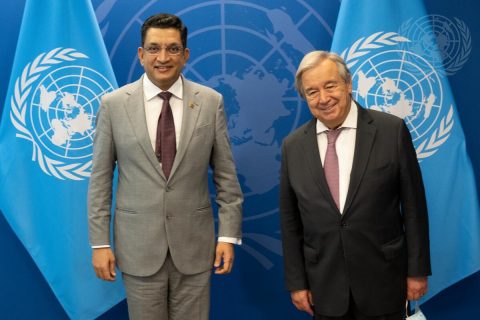
Sabry meets UN Sec-Gen in NY

Minister of Foreign Affairs Ali Sabry called on Secretary-General of the United Nations António Guterres and briefed him on the steps being taken by Sri Lanka to overcome current challenges.

The discussion also focused on further UN assistance to Sri Lanka.

Foreign Minister Ali Sabry on Saturday (24) sought for cooperation and support of the international community including the United Nations for Sri Lanka’s new resolve to “build back better” with political, economic, and social reforms following the unprecedented crisis faced by the country.

Addressing the UN’s 77th General Assembly in New York, Sabry said measures include a review of the present procedures, the strengthening of the institutional framework of democratic governance, and the adoption of urgent measures to restore long-term economic stability.

Posted in Uncategorized

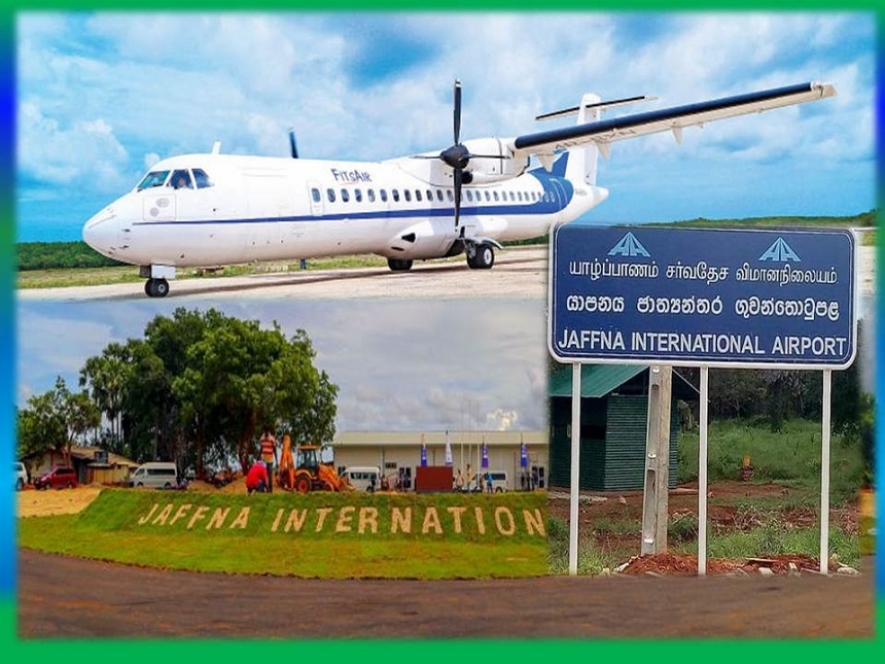
Private airline to launch international flights from Sri Lanka

A private airline, FitsAir, today announced the launch of international flights from Sri Lanka.

FitsAir, promoted by Fits Aviation, a member of the Aberdeen Holdings group, said that commercial operations will commence from 5th October.

The privately-owned airline, operating A320-200 aircraft, has opened bookings for its international flights, connecting Colombo to Dubai, Male and Trichy.

Top aviation expert Peter Hill, the Vice President, Passenger Operations, FitsAir, said that the airline also hopes to launch flights from Ratmalana to Jaffna and from Jaffna to India.

“FitsAr will cater to the needs of the modern Sri Lankan traveller who wants competitive fares, an in-flight service that is efficient without any ‘frills’ combined with options of baggage allowance, where you do not pay for the weight of baggage which you carry – where there is no obligation to pay the full fair if your baggage is less in weight” explained Peter Hill, Vice President, Passenger Operations.

The premise is that we do not want to waste a passenger’s time, money or energy in the process of travelling,” added Hill, who went on to note that FitsAir, due to its pricing competitiveness, will make air travel a viable option for many Sri Lankans.

“However, in true Sri Lankan hospitality, all passengers will get a complimentary refreshment pack, although substantial meals, beverages and snacks will be available for purchase on board plus pre-bookings.”

A free checked-in baggage allowance of 30kgs will be provided to all customers, and a free carry-on bag of 7 kgs. FitsAir will also offer reduced fares for baggage of no more than 20 kgs. Passengers can purchase excess baggage at the airport, subject to space availability.

The airline has been operating through its predecessor, Expo Aviation, predominantly in the cargo sector for the past 25 years. A year ago, the owners decided on the scheduled regional passenger market and now have a fleet of three Airbus A320-200 aircraft in its fleet.

Posted in Uncategorized

Sri Lanka President likely to revoke High Security Zone Gazette – sources

Sri Lanka President Ranil Wickremesinghe is likely to revoke a gazette he declared High Security Zones (HSZ) in the commercial heart of Colombo, two government sources who are aware of the process said.

The Bar Association of Sri Lanka has raised concern over the latest HSZ, citing that using Official Secret Act to declare HSZ was legally wrong.

“The president has sought Attorney General’s advise on this. If the legal basis is wrong, then the president is likely to revoke the gazette,” a source who has seen the official documents on the process told EconomyNext.

Another source also confirmed the move.

The second source said the president signed the gazette on the facts and recommendations submitted by “top officials of the ministry of public security”.

There had been adverse impact on the economic activities due to the recent declaration of HSZ. Economists have briefed the president on the impacts due to his HSZ declaration, the sources said.

“They (economists) showed the impact due to the HSZ is far worse than the impacts of often protests by anti-government protesters. They also said there could be different issues due to the new gazette,” the first source said.

The President has urged the Ministry of Public Security and relevant authorities to replace the HSZ with a special security plan with the coordination of intelligence unit and with the advice of the Attorney General, Wickremesinghe is likely to revoke the gazette once he comes back from Japan visit, sources said.

Wickremesinghe on Friday (23) declared war-time high security zone (HSZ) in capital Colombo after months of protests in those areas ousted his predecessor and previous government.

The move came amid fears that some groups could start protests against the government amid worsening economic conditions with reports of higher cost of living and food prices have left many to cut down foods and other essentials.

Wickremesinghe through a gazette extraordinary declared the following areas as the HSZ: Presidential Palace, Presidential Secretariat, Parliament, Supreme Court, High Court, Colombo Magistrate Court, Attorney General’s Department, Prime Minister’s official residence Temple Trees, Prime Minister’s office, Ministry of Defence, Head Quarters of Army, Navy, Air Force, and Police. and Official Residences of Defence Secretary and Commanders of Army, Navy, and Air Force.

All these areas were declared as HSZ during the island nation’s 26-year civil war ended in 2009. Since then successive governments gradually removed the HSZ to facilitate economic activities led by tourism as many of these areas are located in the commercial heard of capital Colombo.

The area around Presidential Secretariat was the center of Sri Lanka’s youth-led protest which finally forced former president Gotabaya Rajapaksa to flee the presidential palace before stepping down from the post after he went to Singapore via Maldives in mid July.

Later protesters occupied Presidential Palace, Presidential Secretariat, Prime Minister’s official residence Temple Trees, and Prime Minister’s office before they were forced out by the security authorities after Wickremesinghe became the president through a parliamentary election on July 20.

Sri Lankan fishermen oppose Chinese exploitation of their maritime resources

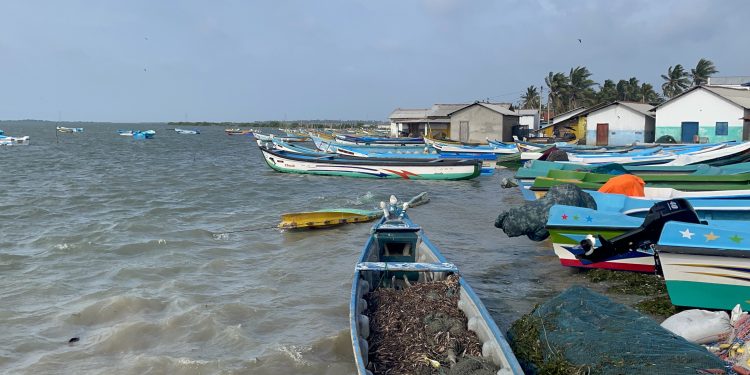
Local Sri Lankan fishermen in the northern part of the island nation come forward to oppose the Chinese exploitation of maritime resources in their waters.

Led by several Chinese corporations and entities, Beijing has launched a campaign to gain dominance in the sea near Sri Lanka, according to Mawrata News.

Beijing appears to be eyeing the cultivation of sea cucumbers, which is one of the island nation’s primary economic activities, the report said.

Media reports indicate that Sri Lanka shipped approximately 336 tonnes of sea cucumbers to China, Singapore and Hong Kong in 2021.

“Consequently, breeding and exporting the aquatic creature like a sausage that is considered a delicacy in China and Southeast Asia is a profitable market for Chinese businesses,” the report said.

This comes as Colombo is pursuing a Cabinet-authorised plan for large-scale commercial sea projects in Jaffna, Mannar, Kilinochchi, and Kilinochchi.

After the Sri Lankan cabinet plans were made public, a Macau-based Chinese firm offered to establish a large-scale sea cucumber farming operation in the Puttalam and Jaffna districts.

According to Mawrata News, this 10-year project looks to include more than 36,000 acres of water to yield 8.6 million kilograms of sea cucumber.

Due to fear of possible marine depletion, locals are reportedly opposed to the project under discussion.

Annalingam Annarasa, the President of the Jaffna Fisheries Federation, was quoted as saying in local media that the proposed project will bring more harm than benefit to locals.
Even as Sri Lankan government continues to promote these sea projects, the fishermen believe that this would lead to lasting damage to the local marine ecology and hurt their livelihoods in the long run.

Earlier, a similar Chinese project in the Kilinochchi district faced stiff opposition last year from local fishermen who objected to the fencing of the land adjoining the sea.
(ANI)

Posted in Uncategorized

Wiggy proposes regional councils at provincial level

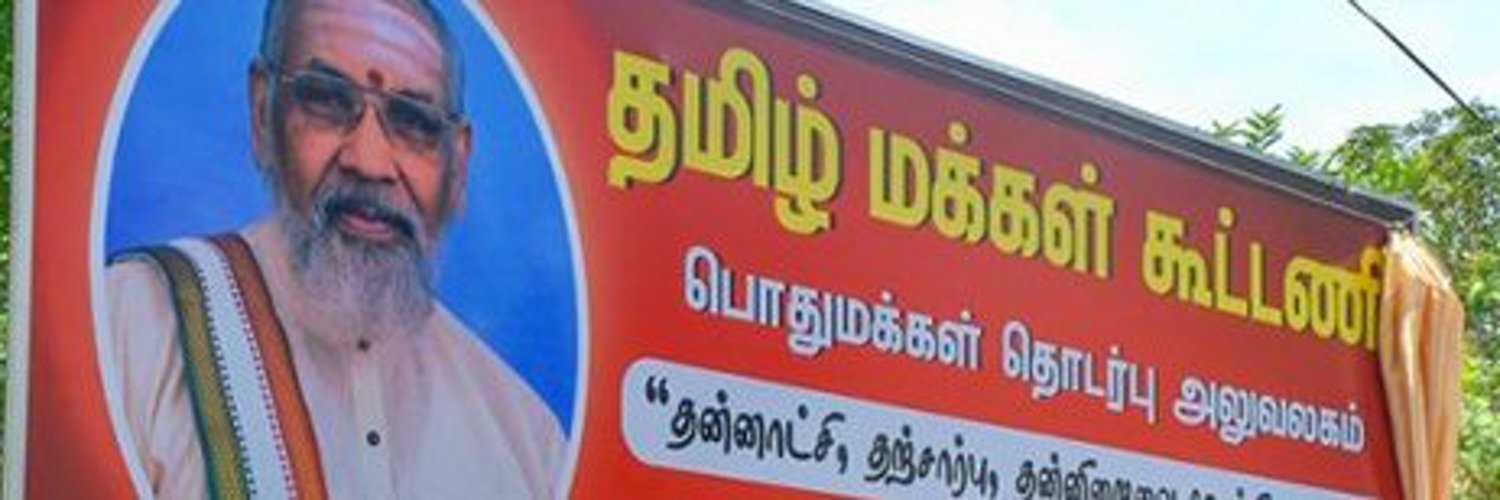
hamil Makkal Thesiya Kuttani (TMTK) Leader and Jaffna District MP C.V. Wigneswaran said yesterday (26) that he had requested Prime Minister Dinesh Gunawardena to constitute Regional Councils for each province since every province has different issues.

Speaking to The Morning, Wigneswaran said that since the problems in the North are different to those in the South, he had therefore suggested to Gunawardena to establish regional councils in every province. “Our problems in the North are different to those of the South. I suggested that we have Regional Councils for each province,” he added.

When queried on his role if any in the newly established National Council, Wigneswaran stated that he had not consented to be a part of the National Council. However, following a meeting with Prime Minister Gunawardena, his name appeared in the list of members.

“Since Gunawardena wanted to see me with others in his office in Parliament, I went and met him. He wanted us to join the Council. I said that it would be difficult for me to attend meetings as I have to travel continuously for seven to eight hours from Jaffna, and because there is no point in me attending as the Council would deal with matters of importance to the South,” he added.

He also noted that he had suggested that Prime Minister Gunawardena visit the North to ascertain the problems there and seek solutions.

“The Prime Minister should visit us and find out about our problems and seek solutions to them,” he noted.

Wigneswaran stated that Gunawardena can also give a report of his observations in the North to President Ranil Wickremesinghe.

“I suggested to the Premier to visit the North and examine the issues there. He could give a report to the President asking him to implement his proposals after having discussions with us. He agreed to discuss this suggestion with the President,” he added.

Wigneswaran noted that following the above conversations with the Prime Minister, he saw his name in the membership list of the National Council.

Commenting further on the National Council, he said: “So far, we have not been told anything in detail except to say that we should share our views on important political and economic matters that are coming up.”

Wigneswaran also said: “Let me wait until the Prime Minister informs us of the decision taken by the Government in relation to my suggestion. Our role as such would be advisory, I believe. The Government may not be obliged to accept our views.”