Sri Lanka keen to upgrade Indo-Lanka Free Trade Agreement: President Ranil Wickremesinghe

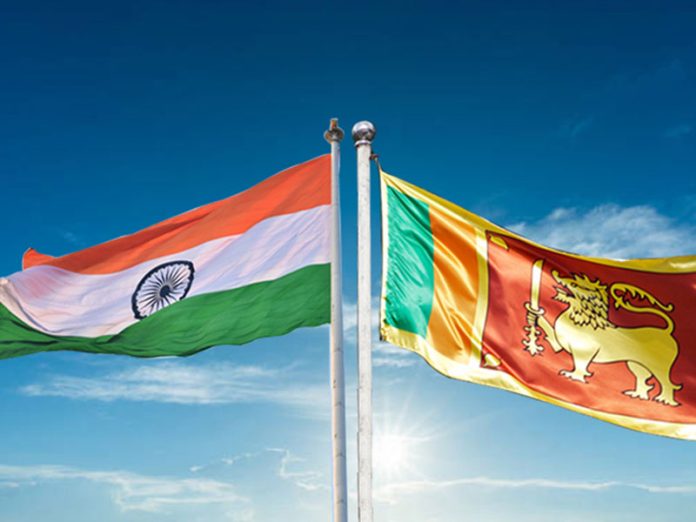
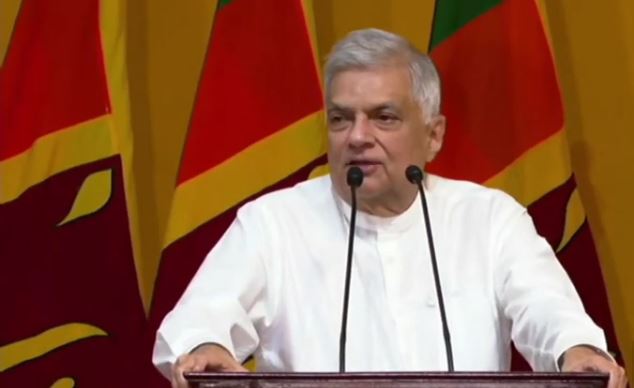
Sri Lanka is keen to upgrade the Indo-Lanka Free Trade Agreement into a comprehensive economic and technological partnership, President Ranil Wickremesinghe said on Friday, asserting that the work which started in 2018 and 2019 has not found much progress.

The Free Trade Agreement (FTA) between India and Sri Lanka was the first-ever bilateral trade agreement for both countries, signed in 1998 and enforced in 2000. The pact is aimed at further boosting the economic ties between the two countries by liberalising trade norms.

“Sri Lanka and India gradually have to wean themselves out of the barriers to investment and the non-tariff barriers to trade especially in relation to Sri Lanka Indo economic relations,” Wickremesinghe said while addressing a gathering of the Sri Lanka-India Society to mark the 75th anniversary of Indian Independence.

He said the future relations of India with its neighbours will be determined by trade integration.

“Trade integration gives an economic base. The common economic base is a prerequisite for better national security and better political relations,” he said.

The first such step would be to revive and upgrade the FTA into a comprehensive economic and technological partnership. The FTA-related work which started in 2018 and 2019 has not found much progress, he said.

Wickremesinghe said the second step was to look at all the projects which India and Sri Lanka had agreed to, but got delayed at the Sri Lankan end.

Two key such projects are the power grid connection between India and Sri Lanka, offshore wind energy, a solar power plant at Sampur in the eastern province and renewable energy projects on three islands of Jaffna in the north, he said.

“We have a tremendous scope of potential renewable energy, and India has stepped in first. There’ll be others. But from Puttlam to Mullativu, if we exploit renewable energy and go in for green hydrogen and also provide power to India, you will see the upliftment of the Northern economy, which had not happened earlier.

“The big impact on the northern economy and the implementation. Then we come to promoting Indian higher education institutes to come into Sri Lanka, especially Jaffna is one area we have identified, again another development,” he said.

Wickremesinghe referred to the Trincomalee oil storage tank farm development with India.

“We are developing logistics because of the fact that we are one of the main ports for India and Bangladesh. So together with India, Adani Group has already taken over part of the West terminal of the south port,” he said.

Adani Group sealed a deal with Sri Lanka to develop and run the strategic Colombo Port’s Western Container Terminal in September last year.

USAID signs new five-year agreement with Sri Lanka

Building on the USAID Administrator Samantha Powers’s recent visit, US Ambassador to Sri Lanka Julie Chung announced today that the United States, through USAID, will provide an additional estimated $65 million (more than 23 billion Sri Lankan rupees) in assistance to Sri Lanka over a five-year period.

The assistance falls under the Development Objectives Assistance Agreement (DOAG) signed by Gabriel Grau, Mission Director for USAID Sri Lanka and Maldives and Mahinda Siriwardena, Secretary, Ministry of Finance, Economic Stabilization and National Policies, the US Embassy in Sri Lanka said.

This funding is in addition to over $60 million (21 billion Sri Lankan rupees) of new humanitarian and fertilizer assistance that Administrator Power announced last week in response to the current economic and political crises in Sri Lanka

In celebration of the start of this new bilateral agreement, Ambassador Julie Chung remarked, “The United States and the American people are proud of our enduring and robust partnership with the people and government of Sri Lanka. We remain fully committed to supporting locally led initiatives to advance a stable, prosperous, and peaceful Sri Lanka – critical to promote a free and open Indo-Pacific in which all nations are connected, prosperous, resilient, and secure,”

The U.S., through the U.S. Agency for International Development (USAID), is committed to supporting Sri Lanka to advance market-driven growth, environmental sustainability and resilience, and good governance. All USAID funding for Sri Lanka is provided as gifts or grants and is implemented by local and international organizations that adhere to strict monitoring standards.

The U.S. has provided more than $2 billion (approximately 720 billion Sri Lankan rupees) in development assistance to Sri Lanka since 1956.

Posted in Uncategorized

President to depart for UK tomorrow

President Ranil Wickremesinghe is to depart for the UK tomorrow (17) to attend the funeral of late Queen Elizabeth II.

The royal funeral is to be held of Sep. 19 and the day has been declared a special public holiday as well as a day of mourning in Sri Lanka.

Queen Elizabeth II, who was the head of the Commonwealth, reigned as Queen of Ceylon from 1952 to 1972.

Posted in Uncategorized

Seven Urban Councils dissolved to form Municipal Councils

An extraordinary gazette has been issued dissolving seven Urban Councils to transform them into Municipal Councils with the aim of developing a capital city in each administrative district.

Accordingly, the Local Government Bodies of Vavuniya, Kalutara, Kegalle, Puttalam, Trincomalee, Mannar and two cities in Ampara have had their Urban Councils dissolved.

The extraordinary gazette has been issued by Prime Minister Dinesh Gunawardena in his capacity as the Minister of Public Administration, Home Affairs, Provincial Councils and Local Government.

Posted in Uncategorized

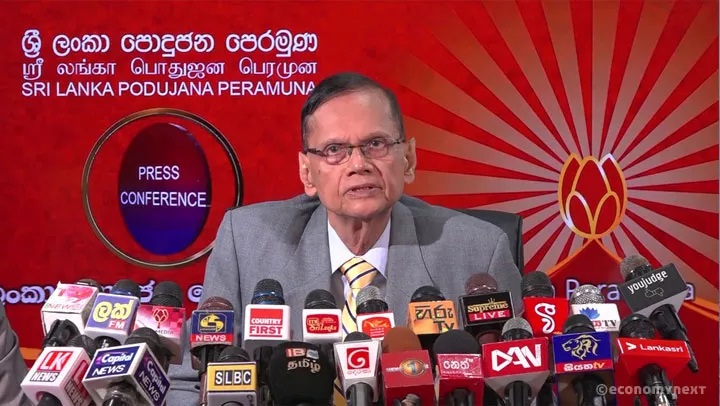
G.L claims invisible hand controlling SLPP

Sri Lanka Podujana Peramuna (SLPP) Chairman Professor G.L Peiris says an “invisible hand” is controlling the SLPP and as a result even the Government.

In an interview with Daily Mirror, Peiris said that the SLPP can pull the rug from under the feet of President Ranil Wickremesinghe at any time.

“The fact is it is an invisible hand that controls everything. There is so much feeling in the country about the excessive powers attached to the Executive Presidency. People are saying it is too powerful and that it has a chilling effect on other institutions. But don’t forget that the Executive Presidency operates within the framework of the law. But today you have a majority of SLPP members controlled by a force outside Parliament who is not accountable to anybody under the sun,” he said.

The SLPP Chairman, who crossed over to the opposition with a group of SLPP members recently, said that the President is totally dependent on the SLPP.

“The President, powerful as he is, has only one member of Parliament, Wajira Abeywardena. So, the President is reliable on the SLPP. The SLPP can pull the rug from under his feet at any time. The President is totally dependent on the SLPP,” the former Minister said.

The SLPP Chairman said that he does not attend party meetings anymore as a small group of people have taken over the party.

“You have decisions being made by a small group of people whether that reflects the aspirations of the vast mass of the party is questionable,” he said.

Posted in Uncategorized

Sri Lanka’s Economy Shrinks 8.4 Per Cent Amid Fertiliser, Fuel Shortages

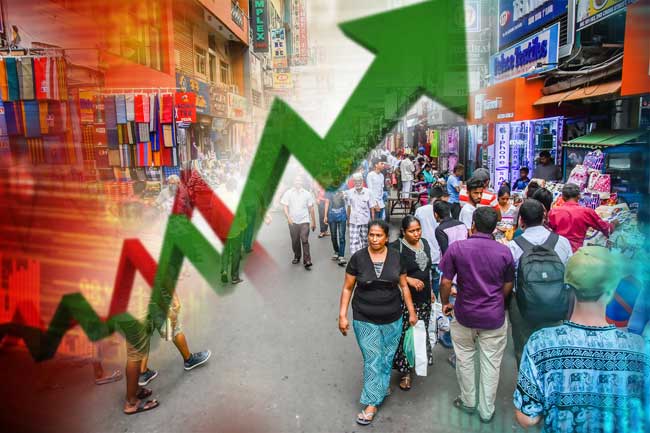
Sri Lanka’s economy shrank 8.4% in the quarter through June from a year ago in one of the steepest declines seen in a three-month period, amid fertiliser and fuel shortages during the nation’s most severe financial crisis in more than seven decades.
An acute dollar shortage, caused by economic mismanagement and the impact of the COVID-19 pandemic, has left residents struggling to pay for essential imports including food, fuel, fertiliser and medicine.

The state-run Census and Statistics Department said agriculture shrank 8.4% in the second quarter and industries by 10%, while services dropped 2.2%, compared to a year ago.

A shortage of chemical fertilizers during the quarter impacted agriculture production, especially the country’s staple rice, while restrictions imposed on fuel imports reduced manufacturing activity, the government said.

In the first quarter, the island of 22 million people saw its growth contract by 1.6%. Sri Lanka’s central bank estimates the economy to contract by about 8% in 2022.

“This is the second steepest contraction we have ever seen. The last was when Sri Lanka posted negative growth of 16% in the Q2 of 2020 due to COVID-19 pandemic lockdowns,” said Dimantha Mathew, head of research at First Capital.

“We are expecting Q3 and Q4 growth to be negative as well and for overall growth to contract by 10% to 12%. Inflation has continued to grow in the Q3 and has hit private sector consumption, which will likely spill over into the fourth quarter.”

Sri Lanka reached a staff-level agreement for a $2.9 billion bailout with the International Monetary Fund (IMF) earlier this month, but it has to restructure its debt with private bondholders and bilateral creditors before getting disbursements.

Reuters reported on Thursday that India, the biggest provider of aid this year to its southern neighbour, does not plan to provide fresh financial support on top of the nearly $4 billion it has extended to Sri Lanka in 2022.

Posted in Uncategorized

India is not planning any more funding for Sri Lanka as the IMF talks progress – sources

India does not plan to provide Sri Lanka with fresh financial support in addition to the nearly $ 4 billion it extended this year, told Reuters two sources as the island’s aggrieved economy begins to stabilize after a preliminary loan deal with the IMF .

India was the largest aid provider this year to its southern neighbor, which has been battling its worst economic crisis in more than seven decades and struggling to pay for imports, although the situation is now less severe than in May-July.

“We’ve already provided $ 3.8 billion in aid. Now it’s all about the IMF, ”an Indian government source who has direct knowledge of discussions with Sri Lanka told Reuters. “Countries cannot continue to provide aid.”

A source in the Sri Lankan government said India’s decision was no surprise and that New Delhi “signaled” them a few months ago that there would be no further large-scale support.

However, the source said India would be invited to a donor conference Sri Lanka plans to hold with Japan, China and possibly South Korea later this year.

Another Sri Lankan government source said talks between India and Sri Lanka on a $ 1 billion swap deal and his request for a second $ 500 million credit line for fuel purchases, made in May, had made little progress.

Sources refused to name names as they were not allowed to speak to the media.

India’s Finance Ministry, Sri Lankan Finance Ministry and Central Bank did not immediately respond to requests for comment.

Sri Lanka and the IMF reached a provisional agreement in early September on a loan of approximately $ 2.9 billion, which is contingent on the country receiving a guarantee of funding from official creditors and negotiations with private creditors. read more

“Our goal is more to continue the IMF program and get out of this mess on our own,” said one Sri Lankan source.

Sri Lanka has worked to use its limited foreign exchange reserves to meet fuel imports and reallocate funds from multilateral agencies to other critical imports including fertilizers, cooking gas and medicine, a second Sri Lankan source said.

A country of 22 million has been struggling with a shortage of essentials, including fuel, food and drugs, for months after its foreign reserves fell to an all-time low, delaying imports and fueling unprecedented civil unrest.

RegisterWriting by Devjyot Ghoshal; Editing by Krishna N. Das and Raju Gopalakrishnan

Source: Reuters Trust Principles.

Posted in Uncategorized

UN alarmed by living conditions of Sri Lankan workers

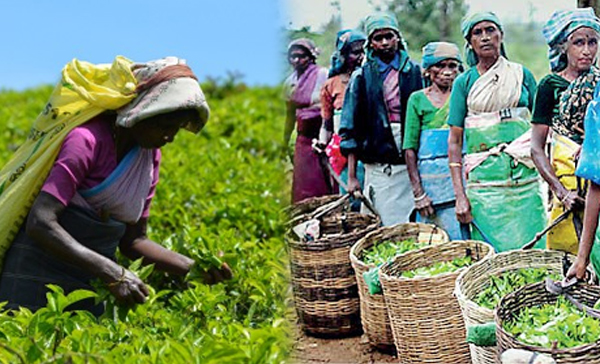
The UN Special Rapporteur on contemporary forms of slavery delivering his report to the UN Human Rights Council raised concern about the living conditions of Sri Lankan workers, especially in tea plantations.

Tomoya Obokata, the UN Special Rapporteur on contemporary forms of slavery speaking to the 51st Regular Session of Human Rights Council said one of the main concerns in Sri Lanka was the living conditions of Sri Lankan workers.

“In a tea plantation, for example, I was disturbed to learn that women generally have to work twice as long as men and under the same salary due to the low wages of plucking tea leaves,” he added.

The UN Special Rapporteur said that he also found that cast-based discrimination persists in some areas of the country where workers experience similar obstacles, in addition to identified indicators of forced labor in the garment industry and domestic work, among others.

“A major issue of concern is sexual harassment and violence against female workers which are not often reported due to fear of reprisals and a lack of trust in existing complaints mechanisms,” he said adding that many workers are also exploited by microfinancing companies as their low wages do not align with the rising cost of living in Sri Lanka.

The UN Special Rapporteur stressed that furthermore needs to be done to protect Sri Lankan nationals who travel abroad to work.

“I discovered that Sri Lanka diplomatic commissions are not always well equipped to protect Sri Lankan migrant workers who have been exploited and there is scope to improve reintegration and support programs,” said the UN Special Rapporteur.

Sri Lanka also responded to the concerns raised by the UN Special Rapporteur on contemporary forms of slavery.

“The government of Sri Lanka is aware of the challenges faced by the Plantation sector employees from all ethnic communities and has taken a number of steps through the relevant line ministry to mitigate these challenges,” said the Sri Lankan representative.

He added that the remaining challenges are not linked to the origin or ethnicity of the employees but are common issues that the government is cognisant of, and is endeavoring to resolve.

“With regard to the reference made by the special rapporteur to the vulnerable financial status of rural women, the government of Sri Lanka wishes to state that several progressive steps are taken to alleviate poverty and indebtedness among women in rural areas,” said the representative.

“Regarding the concern expressed in the special rapporteurs report that the EU GSP plus benefits are not passed down to workers it must be emphasized that over the years GSP plus benefits have led to the growth of employment opportunities and this has helped to empower grassroots to level vulnerable communities including women, as well as to enhance their living conditions,” noted the Sri Lankan representative.

He added that the government of Sri Lanka accords high priority to the welfare of migrant workers, adding that Sri Lankan migrant workers can lodge complaints from any part of the world through the SL bureau of foreign employment and its online branch network in SL as well as through the e-connect app.

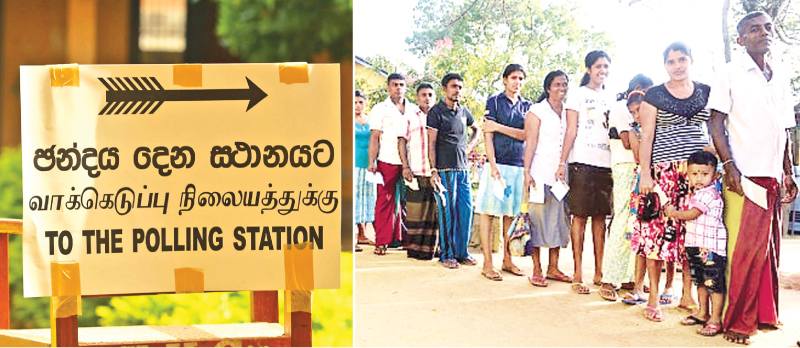
An election to be held in Sri Lanka before March 30

The Election Commission says that it is expected to hold an election before March 20, 2023.

Chairman of the Election Commission Nimal G. Punchihewa stated that according to the Local Authorities Elections Ordinance the commission will have the authority regarding the election polling after September 30.

“Thus, the commission can hold an election before March 20.”

He said that the local government elections have been postponed by a year, however, one of the requests of the Selection Committee on Elections is that the commission should have the power that is wielded by the minister, as no matter how good a reason a minister has in implementing it, it is possible to appear that he is carrying it on for a political sense.

The chairperson, who further emphasized that the voter list in 2022 is expected to be certified on October 31, while the supplementary list is expected to be certified on November 11, added that if an election is announced to be held before certifying these two, the 2021 voter list will be valid.

“The commission hopes to hold the election before March 30, taking the relevant dates into account”, said the chairman.

Election Commission to suspend SLFP constitutional amendments?

Sri Lanka Freedom Party (SLFP) Executive Committee member Montague Sarachchandra has requested the Election Commission (EC) to suspend the implementation of the recent amendments made to the SLFP’s constitution until the verdict of the case filed in the Colombo District Court challenging the Chairmanship of former President and incumbent MP Maithripala Sirisena is delivered.

In a letter addressed to Election Commission Chairman Nimal Punchihewa, Sarachchandra claimed that since the appointment of Sirisena as the SLFP Chairman is against the party’s constitution, he has filed a case, bearing number DSP/197/2022 in the Colombo District Court, requesting that an order be issued to suspend Sirisena’s appointment.

He also said that the court, which had taken up the case, had ordered the respondents including Sirisena, SLFP General Secretary and MP Dayasiri Jayasekara, SLFP Treasurer and State Minister Lasantha Alagiyawanna, and SLFP National Organiser Duminda Dissanayake to raise objections. Claiming that the respondents have delayed the submission of objections until 5 September, he said that the respondents had however amended the party’s constitution on 2 September.

Noting that the SLFP Chairman has the power to remove any official of the party, and that the number of appointments that the Chairman can make to the Central Committee of the Party has been increased to 35 through the relevant amendments, he said in the letter that it is apparent that Sirisena has gained unlimited powers through these amendments in order to take revenge on the party members who oppose him.

Therefore, considering the matter, Sarachchandra, who is a former Central Committee member of the SLFP, requested Punchihewa to suspend the implementation of the relevant amendments to the SLFP’s constitution until the case filed in the Colombo District Court challenging Sirisena’s Chairmanship is over and the verdict is delivered, and to inform of the same to Jayasekara.

According to the Parliamentary Elections Act, No. 1 of 1981, a recognised political party must notify the Election Commission of all amendments made to its office bearers or constitution within a period of 30 days from the implementation of the relevant amendment.

Several amendments were implemented to the constitution of the SLFP recently, including a clause empowering the SLFP Chairman to remove any officer or member at their discretion. Despite the opposition of several members of the SLFP’s Parliamentary group such as Ministers Nimal Siripala de Silva and Mahinda Amaraweera, and MP Chamara Sampath Dassanayake, the amendments were passed in the SLFP Central Committee and its All-Ceylon Committee.

Posted in Uncategorized