New Govt. and the UNHRC sessions in Geneva BY M.M.Zuhair

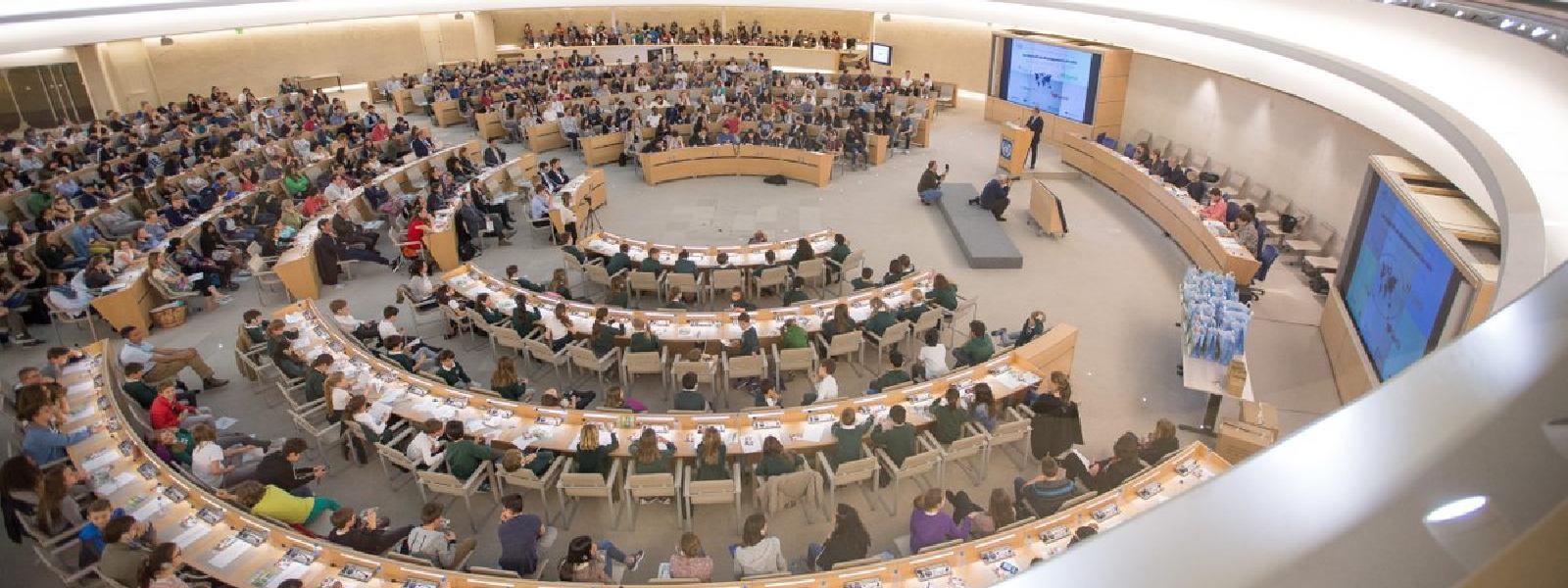
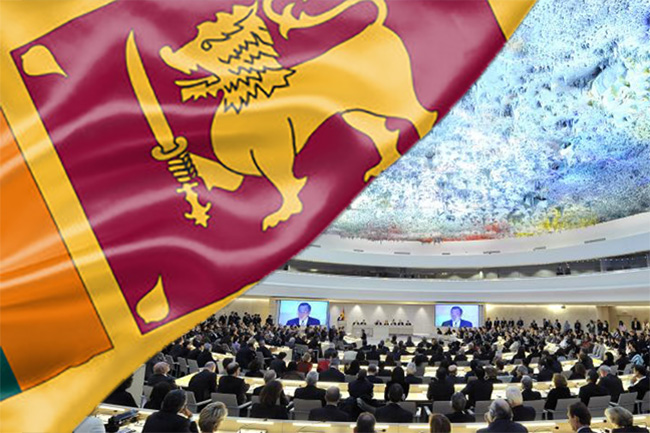
At a time when the country is increasingly dependent on the assistance of foreign countries to tackle the deepening economic crisis and the steeply rising cost of living, the Government must objectively address the human rights concerns alleged against Sri Lanka in the UN Human Rights Council (UN HRC) commencing sittings in Geneva.

Addressing the media in Colombo last Monday, Foreign Minister M. Ali Sabry was quoted by Associated Press (AP), that the Government cannot agree to any “external mechanism, external evidence gathering mechanism, charging citizens outside the country, getting hybrid judges to come and hear the cases, all these are against the Constitution. So we can’t agree to that”.

While welcoming the Foreign Minister’s assertion that ‘Sri Lankan citizens will not be allowed to be charged outside the country’ and ‘foreign judges will not be permitted to sit in judgment over cases in Sri Lanka’, the question that needs to be raised is, how can the Government delegation to UN HRC now refuse UN HRC mechanism to gather evidence of human rights violations in Sri Lanka, having in 2019 allowed foreign agencies to freely investigate 21/4 Easter Sunday attacks? That too without approval of the relevant Sri Lankan Magistrates!

As a respected lawyer, Minister Ali Sabry must surely be aware that none of these foreign non-accountable investigators were authorised by any Magistrate to visit the sites of the explosions, give instructions to the Sri Lankan investigators or to be a part of the investigative team! There were also well known locals, who were not authorised police officers and who too were allowed without any judicial approval to enter protected crime sites, talk to alleged witnesses resulting in polluted investigations. At that time, I cautioned publicly through media statements that those who allowed ‘external investigative mechanisms’ into the country on Easter attacks were virtually laying the groundwork for others to argue later to allow foreign judges to hear cases in Sri Lanka.

The then Minister of Public Security told Parliament on 19 May 2021, during the Gotabaya Rajapaksa presidency that the US Federal Bureau of Investigations (FBI) and Australian Federal Police (AFP) were conducting investigations into the Easter attacks together with the CID.

These and other similar agencies are not similar to the UNHRC gathering evidence of human rights violations. If a US Federal intelligence and security agency, whose Government had been notorious for invading several Middle East and regional countries for over 40 years under various pretexts, often false pretexts, could have been allowed to investigate 21/4, what form of credible unbiased investigations could Sri Lankan investigators claim in Courts? Foreign invasion of third world countries was an issue raised by a 21/4 suicide bomber shortly prior to the reprehensible attacks!

In October 2021, British Member of Parliament Sir David Amess was killed, stabbed multiple times at his Essex constituency in the UK. Father Jeffrey Woolnough who rushed to perform the sacrament on the devout Catholic MP was refused access by the Essex Police to perform a simple religious rite. Essex Police told the priest that preserving the integrity of the crime scene was a fundamental part of any investigation and refused entry.

US author William C. Chasey in his 1995 book ‘Pan Am 103-The Lockerbie Cover Up’ reveals how the “United States, Great Britain and Scotland conspired to cover up the true identities of those responsible for the world’s most heinous terrorist bomb explosions in Pan Am 103”. The doomed flight exploded in mid-air 31,000 feet over Lockerbie in Scotland killing all 270 persons on board on 21 December 1988. Chasey exposes how the FBI and the CIA tried to keep out the true story of who did it. Chasey reveals how the crime scene was prostituted to accuse Libya of Muammar Gadhafi fame and that the real master minds were others!

Will Minister Ali Sabry and co-delegate Justice Minister Wijeyadasa Rajapakshe find a way to cooperate with UNHRC than confront, as that would be at present the wiser course for the country, similar to the 22 million Sri Lankans now having to take the IMF decoctions?

(The writer is a former Member of Parliament.)

Posted in Uncategorized

Sri Lanka at Geneva: human rights & accountability take center stage

The 51st session of the United Nations Human Rights Council is scheduled to be held from 12th of September and the 7th of October.

During this period, the situation with regard to human rights in Sri Lanka and ways to promote accountability are due to be discussed.

The Minister of Foreign Affairs Ali Sabry PC and the Minister of Justice Wijeyadasa Rajapaksa PC have left for Geneva to represent Sri Lanka at the session.

Meanwhile, representing the Opposition, Samagi Jana Balawegaya’s head of human rights MP Dr. Kavinda Jayawardena, MP Mujibur Rahuman and Attorney-at-law Eranda Weliange have also left for Geneva.

SJB MP Jayawardena stated that he hopes to discuss the lack of reconciliation for people for nearly three years after the Easter Sunday attacks, and furthermore, hopes to discuss the difficult economic situation in the country, in addition to the necessity of support from the international community.

“We hope that the leaders at the UNHRC would provide us with the necessary political leadership to provide justice and equality to the people of our country to recover from this economic crisis and to establish democracy, rule of law, equality and human rights in the country,” he said.

Meanwhile, Attorney-at-law Nuwan Bopage also left for Geneva on Saturday (10) to participate in the UNHRC sessions.

Minister Ali Sabry met with the Core Group on Sri Lanka at the UNHRC and held further discussions on constructive engagement and working together to achieve effective and sustainable progress.

Moreover, he had met with Nadia Nashif, the acting UN High Commissioner for Human Rights and discussed the progress Sri Lanka has made and the current steps being taken to improve human rights practices in Sri Lanka.

Posted in Uncategorized

President says he will give Parliament 6 months to agree on electoral reforms

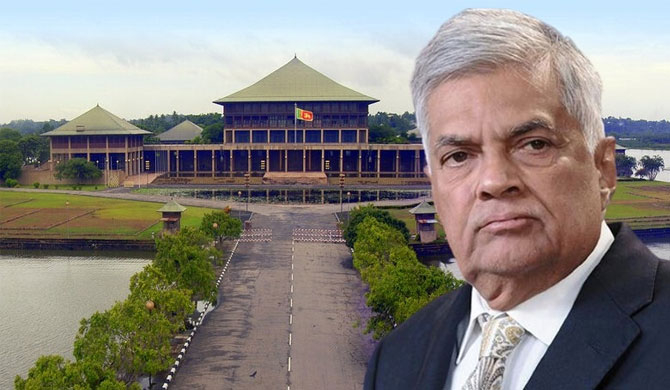
President Ranil Wickremesinghe said that he is focusing on an export oriented, very competitive market economy for Sri Lanka as the country has the opportunity of supplying South Asia, Southeast and east Asia.

“Our focus is on competitiveness and export markets. That’s what we are working on looking at the industry for technology and modernizing agriculture. If you look at the region by 2050 from Saudi to Indonesia there will be an addition of 500 million mouths to feed at high income level.”

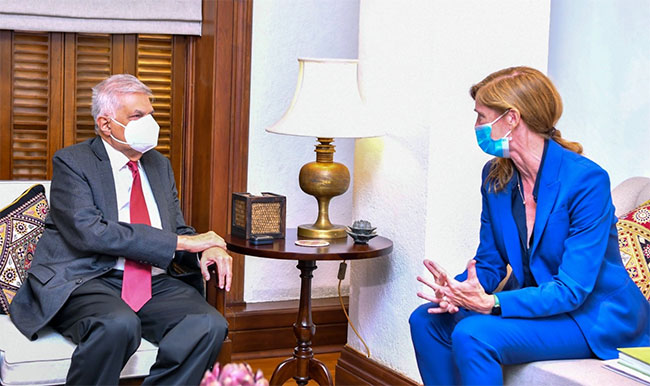
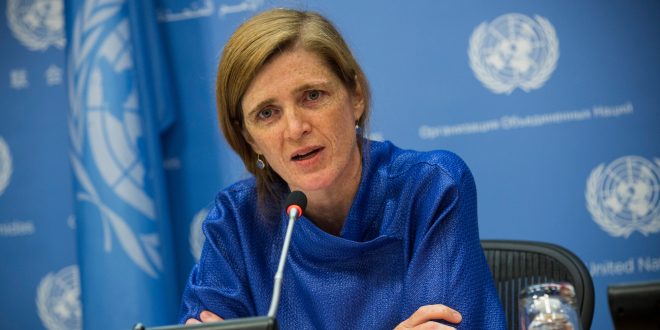
He said this during the meeting with the visiting Administrator of the United States Agency for International Development (USAID), Samantha Power who is currently in Sri Lanka on a two-day official visit.

President Wickremesinghe said that the wheels have been set in motion to make Sri Lanka a prosperous nation by 2048 as we reach the centenary of our independence.

He noted that Sri Lanka is an aging population and automation and semi automation is one way out for Sri Lanka. He also noted that a 25-year program has been planned from 2023, adding that Sri Lanka will need the assistance of USAID for its 25-year program to go ahead.

He also noted that as far as democracy is concerned, the 22nd Amendment is before parliament. “We are waiting for the parliament to pass it. In administrations, we have brought out the first cabinet manual in Sri Lanka. Hence, that will have to go before the cabinet and we’ll establish procedures for the whole of the cabinet. The oversight committees are back again and we’ll be looking forward to support from the USA.”

The President also said that increased economic committees from Public Finance, committee on Public Accounts, committee on Public Enterprise to include the Ways and Means Committee, committee on Banking and Finance because the banking sector is relatively weak and the Committee on State Enterprise Restructuring, they will start a parliamentary budget office and for the first time, legislative research service in Parliament.

“We are also bringing in the new anti-terrorist legislation. I’m going to call the parliament to say once and for all that they must agree on electoral reform. This has been going on. The parties are arguing among themselves. I give them six months. If they don’t, I’ll have a referendum and ask the country which system they want. The political parties can’t be putting this off forever. They have to bite the bullet at some stage. So, if they are not willing, I have not told them yet. They’ll I will go for a referendum on the major reforms,” he said.

The President also said that former Speaker Karu Jayasooriya and Victor Ivan have come up with the concept of People’s Councils at grassroots level. “We are giving them support, whatever finance they require. And officials at grassroots level have been asked to promote the concepts. So, it will be done not by us. And that’s a request, even with the Galle Face Green that the people at Village level must be allowed to express their views. So, there will be 14,000 people’s councils in the 14,000 basic units.”

He also added that discussions have been held with the Tamils regarding the PTA detentions. “We’ve agreed on a formula that will set off against the judgment, the period in detention, since they have all had more than ten years, no judgment will be more than ten years. It will be out. Except for the few who had bombed the Temple of the Tooth Relic and the assassination one or two other Parliamentarians.”

The President also noted that he intends to bring in some of the associate degree here, which can be an employment-oriented degree with two years rather than go for the bachelor’s degrees for fall.

“So, help in having your associated degrees that are in community colleges would certainly be welcomed by Sri Lanka.”

President Wickremesinghe also noted that there’s much that can be done towards agricultural modernization of the ongoing projects.

He thanked Ms Power for the $ 40 million for the farmers, which will certainly be a big help as the country is about to launch a food security and nutrition initiative which will go down to the 14,000 basic administrative units in the country. “And we are making use of all the officials, plus the private sector and others to push to ensure that we are self-sufficient in rice and many other food stuff. We have a good Maha season cultivation, that’s the main season. Then the economy gets stabilized and if you go to the next smaller season, also in 2023, that will help us certainly in a big way.”

He also highlighted the novel concept of including youth representation in committees, where the ideas of the youth will receive due focus. “In addition to the members of Parliament, there will be five youth representatives, people under 35 who will be there. They have the right to ask questions through the chairman and they cannot contribute to the main report. But we are giving them addendum so they can say whatever they want on the report. Thereafter it will be in print. This is the first time it’s happening in the world and we have to select the five members. We have what’s called a youth parliament that will legislate for that and bring it under the law.”

The President also highlighted the anti-corruption laws which have to be brought in, which were just approved, and the women’s caucus has been requested to prepare the Women’s Equality and Empowerment Bill. “That’s the first one, I think. The first one for the region. A private member bill has come to decriminalize homosexuality. And I said the government will not oppose it. We are for it, but you have to get the support of individual members. It’s a matter of their private conscience,” he added.

Meanwhile, the President also touched on the topic of the Easter Sunday terror attack investigations and said that the Scotland yard has been asked to come in, review the reports and come to a final conclusion on this whole issue to determine if there was a hidden hand behind the bombing.

He also mentioned that land issues and how much land can be released. The missing persons, he said would also be accelerated.

Reconstruction plans will be also be reviewed and accelerated, the President said, adding that the Northern Plan development plan is also on the cards. “With renewable energy, the north will become big economic center followed by the Trincomalee development scheme. So with renewable energy and Trincomalee development we have a big opportunity there.” The President also said that he intends on bringing in the new anti-terrorist legislation. He also said that he plans to call the parliament to say once and for all that they must agree on electoral reform.

Meanwhile, the visiting administrator of the United States Agency for International Development (USAID), Samantha Power said she conveys on behalf of President Biden that the US stands with Sri Lanka.

“We certainly are here to come together with you and to help take advantage of this rare window of opportunity. Also, for you to be able to make the kinds of changes that have been proposed for so long.”

She also highlighted Sri Lanka’s vibrant private sector and said measures should be taken to unleash the potential of the private sector. “You have such an incredible private sector, such entrepreneurship. But the government, over so many years has largely stood in the way of unlocking that potential instead of fueling it. Mangala used to say, as you know, government has no business running business. And you know what was done in the telecom sector? If that could be done in other sectors in an expeditious and transparent way, to unlock the potential of your people, it would be incredible.”

She said that the political reform agenda and the economic agenda go hand in hand which they have already seen this in the United States in trying to engage the business community to look at Sri Lanka now and to see the opportunities that exist here.

Ms. Power assured assistance of $60 million in new assistance. “But compared to the challenges you face, that is very, very small and very modest. But we want to use our convening power to be catalytic as best we can, at the international financial institutions, with the private sector, with other countries that themselves are looking anew at Sri Lanka and thinking where to go.”

Samantha Power, Administrator, U.S. Agency for International Development (USAID), Julie Chung, United States Ambassador to Sri Lanka, Sonali Korde, USAID Deputy Chief of Staff, Änjali Kaur, USAID Deputy Assistant Administrator for the Bureau of Asia, Gabriel Grau, USAID Sri Lanka Mission Director, Anamika Chakravorty, Political Officer, U.S. Embassy, State Minister of Foreign Affairs Tharaka Balasooriya, Chief of staff Mr. Sagala Rathnayake, President Secretary Mr. Saman Ekanayake, Foreign Ministry Secretary Ms. Anuni Wijewardhana, Finance Ministry Secretary Mr. Mahinda Siriwardhana and Advisor Dr. R.H.S. Samarathunga participated in the meeting.

Source: PMD

USAID Administrator Samantha Power calls on President Ranil

The Administrator of the United States Agency for International Development (USAID) Samantha Power is currently engaged in an official meeting with President Ranil Wickremesinghe at the Presidential Secretariat in Colombo.

U.S. Ambassador to Sri Lanka, Julie Chung and the Deputy Chief of Staff for Policy in the Office of the Administrator at USAID, Sonali Korde are also present for the discussion, according to the President’s Media Division.

Accompanied by a delegation of four, Samantha Power arrived in Sri Lanka yesterday (Sep 10) for a two-day official visit. She later engaged in a cordial discussion with farming communities in Ja-Ela area to talk about the issues faced by them.

The Administrator is scheduled to meet with government officials, private sector representatives, as well as farmers and other Sri Lankans most impacted by the complex emergency to discuss how their lives have been affected and how the US can best support them as they rebuild and recover.

She is also expected to meet with parliamentary leaders representing various parties to learn their views on how to address the economic and political crises in Sri Lanka.

During her trip, the Administrator will highlight the United States’ enduring support for the people of Sri Lanka and discuss issues related to food security, fuel and essential item shortages, economic stability, and the impact of Russia’s war against Ukraine on the region, a statement said.

The United States is committed to addressing the urgent and intermediate needs facing Sri Lankans and to supporting a return to stability. The Administrator will also reinforce USAID’s support for inclusive development that promotes human rights, democracy, and good governance, it added.

Posted in Uncategorized

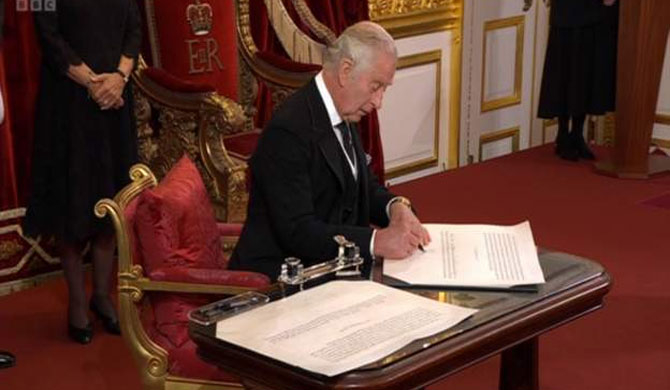
Charles III proclaimed as king

Charles III has officially become the British monarch in historic ceremonies in St James’s Park and the Royal Exchange in London.

In both locations, crowds sing ‘God save the King’ as the band plays, before giving three cheers.

Earlier, Charles III swore an oath and paid tribute to the late Queen at a meeting of the Accession Council.

Prince William, Queen Camilla, serving politicians and former prime ministers were in attendance.

A wave of further proclamations will take place across the UK until Sunday.

The Queen, the UK’s longest-reigning monarch, died peacefully at Balmoral Castle on Thursday afternoon at the age of 96.

(BBC News)

Posted in Uncategorized

Sri Lanka is getting stable, but tough times ahead – Samantha Power

USAID Administrator Samantha Power, speaking to News 1st stated that USA will continue to support Sri Lanka at this vulnerable time.

In an exclusive interview with News 1st’s Zulfick Farzan, the Administrator Power revealed that one of the most important topics of conversation with the Indian Foreign Minister Dr. S. Jaishankar in India was the crisis in Sri Lanka.

Administrator Power, while appreciating India for stepping forward and providing financial assistance at the height of the crisis, emphasized that the USA joins India and all friends of the Sri Lankan people in supporting the country.

She also commented on the IMF program, and said that the progress that has been made in the engagements with the IMF are significant, and that USA supports Sri Lanka as it seeks to obtain the IMF program that it has reached the preliminary agreement stage.

However, she said that debt distress in this country is quesitionable, and how the Government and Sri Lankans can get access to the kind of credit that they need to keep the economy fueled remains an issue.

Moreover, Administrator Power said that she will be meeting later this evening with Sri Lankan private sector actors, business leaders in order to hear about what more the US can do but also how the private sector feels the crisis is being managed, or needs to be managed, and what adjustments and reforms need to happen and how it needs to be prioritized.

“And what is so heartbreaking is there are a set of dynamics beyond the control of the ordinary people that have left ordinary people and vulnerable people facing challenges the likes of which they have not encountered before,” she added.

Amnesty International urges UNHRC to strengthen its oversight of Sri Lanka

Amnesty International has urged the United Nations Human Rights Council (UNHRC), when it meets for the 51st session between September 12 and October 07, to strengthen the existing Sri Lanka accountability project of the Office of the UN High Commissioner for Human Rights (OHCHR), that was established to collect, consolidate, analyse and preserve information and evidence for future.

In a briefing paper, the rights organization also called on the UNHRC to set up an expert mechanism on Sri Lanka to monitor, report, provide recommendations on human rights concerns that are at the core of the current crisis.

Amnesty International said the document details how the international mechanisms it recommends have a critical role to play in addressing the human rights, economic and political crisis in Sri Lanka, which are strongly interlinked and deeply rooted in the culture of impunity that has plagued Sri Lanka for decades.

The rights organization called on UN member states to reflect the gravity of the situation on the ground and recognise the necessity for these mechanisms and take action to advance human rights protection and accountability in Sri Lanka.

Posted in Uncategorized

Rajapaksas looking to regroup in Sri Lanka -The Week

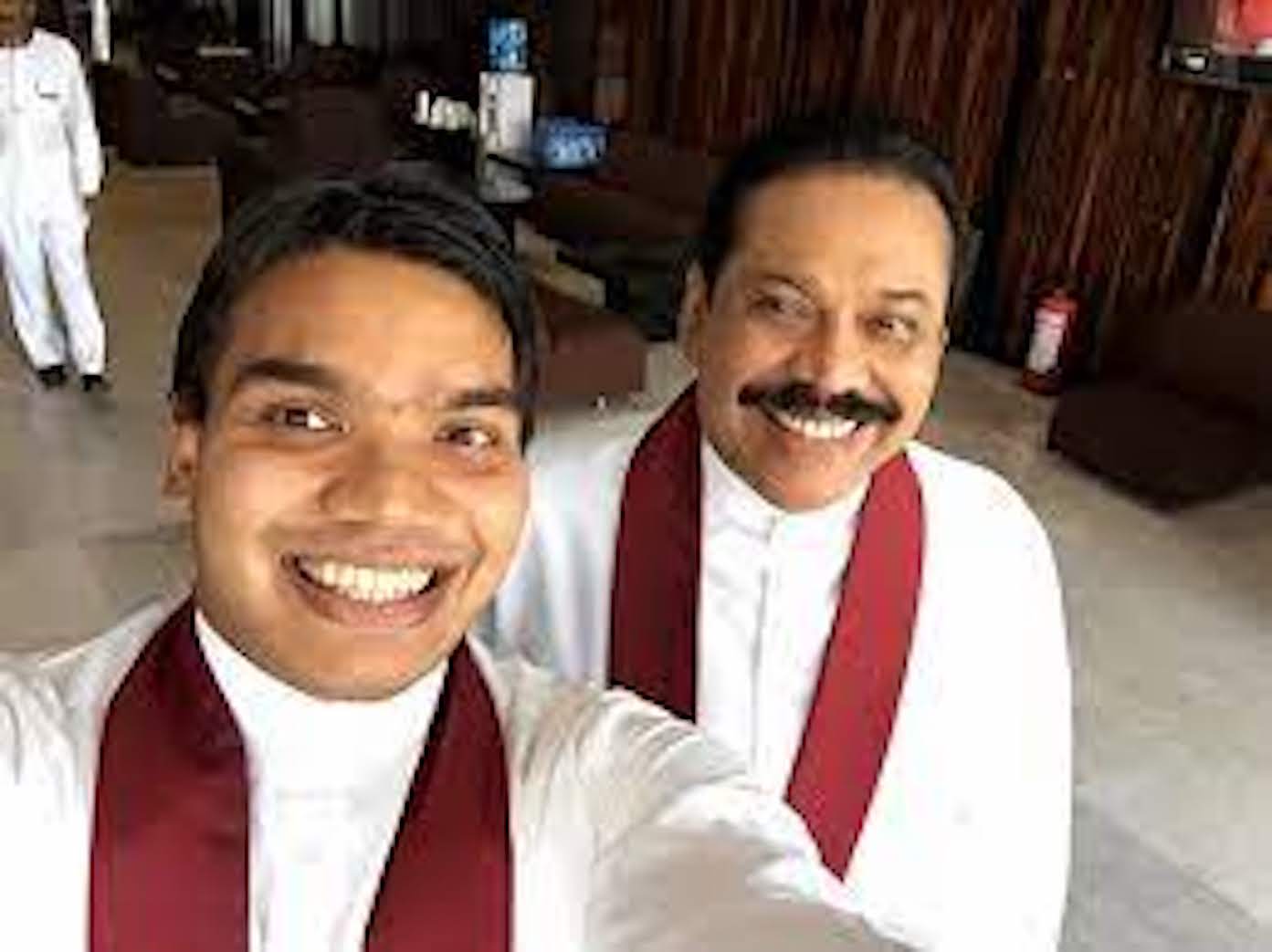
Sri Lanka’s politically under-siege Rajapaksa family will return to dominate once again by forming a new alliance, Namal Rajapaksa, the son of the former president and prime minister Mahinda Rajapaksa, said on Friday. “We will form a new political alliance under the leadership of Mahinda Rajapaksa,” he told a political gathering of the ruling Sri Lanka Podujana Peramuna (SLPP) in the southwestern province of the crisis-hit country.

The SLPP has been at the receiving end of public anger when the island plunged deep into the current economic crisis, leading to street protests in late March, blaming the government for its incompetence. A continuous public protest which lasted over three months saw the ouster of Gotabaya Rajapaksa, the then president. Namal Rajapaksa said Gotabaya Rajapaksa’s inability to crack down on the protests, which he claimed had turned violent, was the reason for the ousted president’s downfall.

Sri Lanka is at a critical juncture in its political life, a UN report has said, noting that impunity for the past and present human rights abuses, economic crimes and corruption were the underlying causes for the collapse of the island nation’s economy. The UN report also suggested fundamental changes to address the current challenges and to avoid repetition of the human rights violations of the past.

Interestingly, it comes ahead of the 51st session of the UN Human Rights Council Session, to be held in Geneva from September 12 to October 7, where a resolution on Sri Lanka is expected to be tabled. This is also the first time that the top UN body has linked the economic crisis with Sri Lanka’s gross human rights violations.

For sustainable improvement to take place, it is vital to recognise and assist Sri Lanka to address the underlying factors, which have contributed to this crisis, including embedded impunity for past and present human rights abuses, economic crimes and endemic corruption, the report said.

The broad-based demands by Sri Lankans from all communities for accountability and democratic reforms presented an important starting point for a new and common vision for the future, it said.

Fundamental changes will be required to address the current challenges and to avoid repetition of the human rights violations of the past, the report said.

A possible resolution by Core-Group underway

A faceoff between the Government of Sri Lanka (GoSL), the Office of the High Commissioner for Human Rights (OHCHR) and several Tamil Diaspora organisations, with a possible new resolution over rights violations in all dimensions is imminent. This time too, a strong debate is expected in Geneva, Switzerland, at the United Nations Human Rights Council’s (UNHRC) 51st Session.

Foreign Minister Ali Sabry, before his departure to Geneva told local media last week that Sri Lanka will stand its ground despite a resolution in favour or not against the country at while Foreign Secretary Aruni Wijewardane said that the Foreign Ministry has worked closely with the UNHRC on many matters at all times. Sabry said, they will cordially work with the UN body but is not interested in confrontations and will not work in the manner that will cause harm to the sovereignty and independence of
Sri Lanka. He referred to the international probe calling to investigate alleged war crimes and human rights violations.

Already, a delegation comprising of the Foreign Minister, Justice Minister Wijeyadasa Rajapakshe and many other officials are currently readying to attend the session. They are preparing to vehemently contest the 46/1 Resolution, the remarks on the OHCHR report and face the resolutions on Sri Lanka by the Core-Group led by the UK in the second week of October.

The OHCHR has also announced that a public meeting has been arranged on the 12 September session at 10 a.m., Geneva time, during which a tribute to victims of enforced disappearances will be held featuring testimony of a victim of enforced disappearance from Sri Lanka.

A vote on the resolution is also expected in the second week of October.

The draft of the resolution would be debated thereafter with the Sri Lankan Government over which a decision would be drawn at the end.

Rejection of resolutions and inclusion of economic crisis by OHCHR

The Government of Sri Lanka has clearly rejected several resolutions from 2011 and also rejected the co-sponsored resolution in 2015 by the then Prime Minister Ranil Wickremesinghe and former Foreign Minister late Mangala Samaraweera.

The resolutions and the co-sponsored resolution despite refuted, are active and not shelved by the UNHRC who might also keep adding many more matters related to Sri Lanka as it did in the past.

The initial resolution was mainly about the Tamil minority, the war related rights violations and issues but as time went by, the OHCHR began to cover vast areas of matters related to Sri Lanka and its negligence. Some of them are related to the current economic crisis where the OHCHR’s report of 6 September 2022 talks about Sri Lanka experiencing an unprecedented economic crisis and is now at a critical juncture in its political life, bringing into sharp focus the indivisibility of human rights, with calls for the international community to urge Sri Lanka to address the underlying causes of the crisis, including impunity for human rights violations and economic crimes.

The OHCHR also called the international community to support Sri Lanka in the investigation of economic crimes that impact human rights and the tracing and recovery of stolen assets.

The High Commissioner Michelle Bachelett also called on authorities to independently, thoroughly and transparently investigate all attacks that have occurred, including the destruction of property, and ensure that those found responsible are held to account.

As of July 2022, the OHCHR said that GoSL has six pending requests for visits by United Nations special procedures. Three special procedures have issued joint statements expressing concern regarding the impact of the economic crisis on human rights, calling for an immediate moratorium on the use of the Prevention of Terrorism Act (PTA), urging the Government to guarantee the fundamental rights of peaceful assembly and expression.

Evidence-gathering mechanism rejected

But the biggest blow for GoSL was Resolution 46/1 which announced an evidence-gathering mechanism on Sri Lanka and all claims of human rights violations and alleged war crimes. It was the only major stumbling block for the Wickremesinghe Government which strongly rejected it to be allowed.

Over this, the OHCHR in its report noted that GoSL has already informed the OHCHR that they have rejected Resolution 46/1, Paragraph 6 that mainly talks about an evidence-gathering mechanism, as it could be used to prosecute troops guilty of war crimes as well as the constitutional framework.

However, using rights activists, the OHCHR has already mapped existing United Nations material, and integrated all of the material from the OHCHR Investigation on Sri Lanka (OISL), where consistent with the applicable conditions and consent. The office has also commenced identifying material held by other actors and engaging with information providers. To date, two organisations’ databases have been migrated into the repository, and negotiations with other information providers are on going.

The OHCHR said, the Sri Lankan Government responded on 18 July, indicating that given its rejection of Resolution 46/1, the team cannot visit the country. But the UNHRC said, it will continue to seek cooperation and request information from the Government in regard to this work.

The UN Rights Commissioner’s Office said for long, successive governments have failed to ensure accountability for gross human rights violations and abuses and serious violations of international humanitarian law in Sri Lanka, especially where alleged perpetrators are State agents. Recognising “the importance of preserving and analysing evidence relating to violations and abuses of human rights and related crimes in Sri Lanka with a view to advancing accountability,” the Human Rights Council decided in Resolution 46/1, Paragraph 6 to strengthen the capacity of OHCHR, “To collect, consolidate, analyse, and preserve information and evidence relating to violations and abuses of human rights and related crimes in Sri Lanka, and to advocate for victims and survivors, and to support relevant judicial and other proceedings, including in Member States, with competent jurisdiction.”

The UN Rights Chief’s Office said, they had formed a dedicated project team to further strengthen its capacity in line with resolution 46/1 on the evidence-gathering mechanism and the team has been fully staffed and operational since May 2022, although the United Nations budget process impacted its configuration and delayed some recruitment. In carrying out this mandate, OHCHR is considering violations and abuses by all parties in Sri Lanka, and against any group, in any geographical area. It is also integrating a gender perspective and child-sensitive approach.

The report of further said, they continued to develop information and evidence repository using an e-discovery platform. This includes configuration to facilitate collecting, organising, crosschecking, collating, searching, and analysing large quantities of data from multiple sources to preserve material and support accountability efforts.

The process of information collection requires great care and a victim-centred approach, the Human Rights Commissioner’s Office said. “The integration of material into the repository is carried out in line with United Nations regulations and policies and OHCHR’s procedures, and taking into account potential future requests for sharing of information.”

OMP needs strengthening

Bachellet said, the confidence and trust of the relatives of victims in the OMP as an independent and credible national mechanism has been severely eroded, particularly since 2020, following a series of problematic appointments of chairpersons and commissioners, and needs to be re-established. In May 2022, one of the Commissioners, Shiraz Noordeen resigned from the OMP, publicly stating that the OMP was unable to act independently to bring justice to victims. Although the purpose of the OMP is to trace and search for the missing, it has not been able to trace a single disappeared person or clarify the fate of the disappeared in meaningful ways, and its current orientation is to expedite the closure of files.

The Government informed OHCHR that the OMP has so far interviewed 1,207 applicants (out of the original list of more than 14,000) for the purposes of verification after which it makes recommendations for relief, further tracing or investigation. As of August 2022, 1,341 families had been issued with “Certificates of Absence”. Apart from the excavation and exhumation of a mass grave in Mannar in 2018, the OMP has not taken a proactive approach in investigating other suspected mass grave sites or leading the process of exhumation of mass graves to identify remains.

Tamil Diaspora going to ICC, TNA fighting to repeal PTA

In the background, there are also some 10 Tamil Diaspora organisations that are busy lobbying UN member states to refer Sri Lanka to the International Criminal Court (ICC).

U.S. Tamil Diaspora organisations wrote a letter to US Secretary of State Antony Blinken about justice and accountability, which Sri Lankan Tamil legislators, civil society, and victim groups forwarded to the Core-Group on Sri Lanka. They stated that they believe that anything short of referring the case to the ICC will forever end any prospect of justice for the vast atrocities committed against their people. In the meantime, GoSL has continuously held talks with like-minded UN member states that have stood by them for their support this time in Geneva as well.

As the session sets to begin, the TNA is gearing for a petition to be signed island-wide starting Saturday (10) calling for the repeal of the draconian PTA brought in 1979 as a temporary provisions Act for six months but continues to be in operation for over 40 years.

The campaign would start in the Northern Province in Mavittapuram, Kanthaswami Kovil, at 9.00 am. The TNA says this campaign is to urge the Government to honour its promise to repeal the PTA. TNA previously also held a campaign against the PTA in Colombo and various other places.

Also, five Sri Lankan Tamil political parties have written a joint statement with six requests to the UN High-Commissioner for Human Rights, Michelle Bachellet ahead of the UN Human Rights Council Session sets to commence tomorrow (11).

They requested to refer Sri Lanka to the ICC; to reduce Sri Lankan military presence in Tamil areas to pre-1983 level before the war started. Also, they request to stop government sponsored Sinhala–Buddhist settlements in Tamil areas, including re-demarcation of divisional boundaries to incorporate Sinhala–Buddhist areas into Tamil districts and annexing Tamil areas into Sinhala-Buddhist areas; calling for an internationally conducted and monitored referendum to bring about a permanent political solution to the protracted Tamil conflict, thereby preventing further atrocities against the Tamil people, which they repeatedly faced inter-alia in 1958, 1977, 1983 and 2009.

The letter had been signed by Tamil Makkal Kootani (TMK) leader MP C.V. Wigneswaran, Leader of Tamil Eelam Liberation Organization (TELO) MP Selvam Adaikalanathan, Leader of the People’s Liberation Organisation of Tamil Eelam (PLOTE) MP Dharmalingam Sithadthan, President of the Eelam People’s Revolutionary Liberation Front (EPRLF) Kandiah Premachandran, Former MP Jaffna District and Leader of Tamil National Party (TNP) Nallathamby Srikantha. They also call on governments around the world to arrest and prosecute Sri Lankan political and military officers in their territories, under the principle of Universal Jurisdiction, which allows for the prosecution of serious international crimes, even if they were not committed in the country’s territory.

Furthermore, they said that the freedom of expression is severely restricted in Tamil areas for several years, facilitated by the extremely large military presence and restrictive laws. Chief among the restrictive laws is the Sixth Amendment to the Constitution, which limits and criminalises political expression.

GoSL and PTA

The Government however has informed the OHCHR that it plans to table a new Counter-Terrorism Act, to replace the PTA, along with a number of other draft laws to regulate cyber-security in the digital space, including an Online Safety Bill to ‘combat online falsehood and manipulation’, which are also in the preparatory stage, the OHCHR noted.

Government informed the OHCHR that the Advisory Board established under Section 13 of the PTA in August 2021 has facilitated the release of 103 detainees charged under the PTA as of July 2022.

According to information available to OHCHR, there remain 47 long-term prisoners under the PTA, 22 of whom are serving sentences and 25 of whom are at various stages of appeal; there are a larger number of detainees from recent years, particularly after the Easter Sunday attacks.

On 1 August 2022, the Government delisted six entities and 316 individuals who had been listed under counter-terrorism regulations, although three organisations and 55 individuals were added including the young Muslim poet, Ahnaf Jazeem, who was detained for 18 months under the PTA before being released on bail in December 2021.

Over the claims of emblematic cases such as truth and investigate the terrible Easter Sunday bombings not addressed the GoSL informed OHCHR of plans to update laws to strengthen commissions dealing with bribery and procurement and other anti-corruption measures.

In the midst of a financial crisis, Sri Lanka must deal with mounting international criticism. They have also become entangled in the IMF bailout. If Sri Lanka wants a bailout, the IMF has many recommendations to agree upon. When it comes to the European Union’s demand to keep the GSP Plus, Sri Lanka must also work hard to improve its human rights record. The conflict would continue, but Sri Lanka will never be able to break free from the grips of international community and other external factors. Unless GoSL takes serious steps to correct its human rights record and bring about changes through constitutional reforms. These have now affected everyone, regardless of race, caste, or religion and many more unrest are imminent if not addressed. Also, many promises have been made to the people of Sri Lanka by successive governments, and they are meant to be honoured, not broken.

– amiesulo@gmail.com

By Sulochana Ramiah Mohan

Norway to shut Sri Lanka embassy from 2023

Norway will close its embassy in Sri Lanka’s capital Colombo from July 2023 as part of a reform of diplomatic missions abroad, a statement said.

“The decision to close the Embassy in Colombo does not have any bearing on the bilateral relationship between Norway and Sri Lanka,” the Norwegian embassy in Colombo said in a statement.

“The Government of Norway remains committed to continue further development of friendly and constructive relations between our two countries.

“To ensure the continuation of the amicable and long-standing bilateral diplomatic relations, going forward, Norway intends to accredit a Head of Mission and assign diplomatic staff based at another Norwegian Embassy in the region to cover Sri Lanka.”

Five Norwegian missions abroad will be closed.

“I am sad to share the news of the planned closure of the Norwegian Embassy in Colombo,” Norwegian Ambassador Trine Jøranli Eskedal said.

“This is a result of a wider process to determine how the Norwegian Foreign Service should be set up to deal with the changing geopolitical environment and safeguard Norwegian interests and is not related to Sri Lanka in particular.

“We will continue to maintain our warm bilateral relations with Sri Lanka. Development assistance will also continue.”

Norway opened the Embassy in Colombo in 1996, having had a Norad office in the country since 1976. An important part of the rationale for Norway’s presence in Sri Lanka was linked to Norway’s role in the peace and reconciliation process.

Once the Norwegian Embassy in Colombo is closed, consular services in Sri Lanka will be provided from another Norwegian Embassy in the region.

There is already a visa hub in New Delhi which handles visa applications from Sri Lanka and Maldives, and applicants can visit a VFS office in Colombo for visa appointments.