US to back Sri Lanka’s debt restructuring efforts

The United States has said that as a creditor country it will back restructuring Sri Lanka’s debt, the President’s Media Division said today.

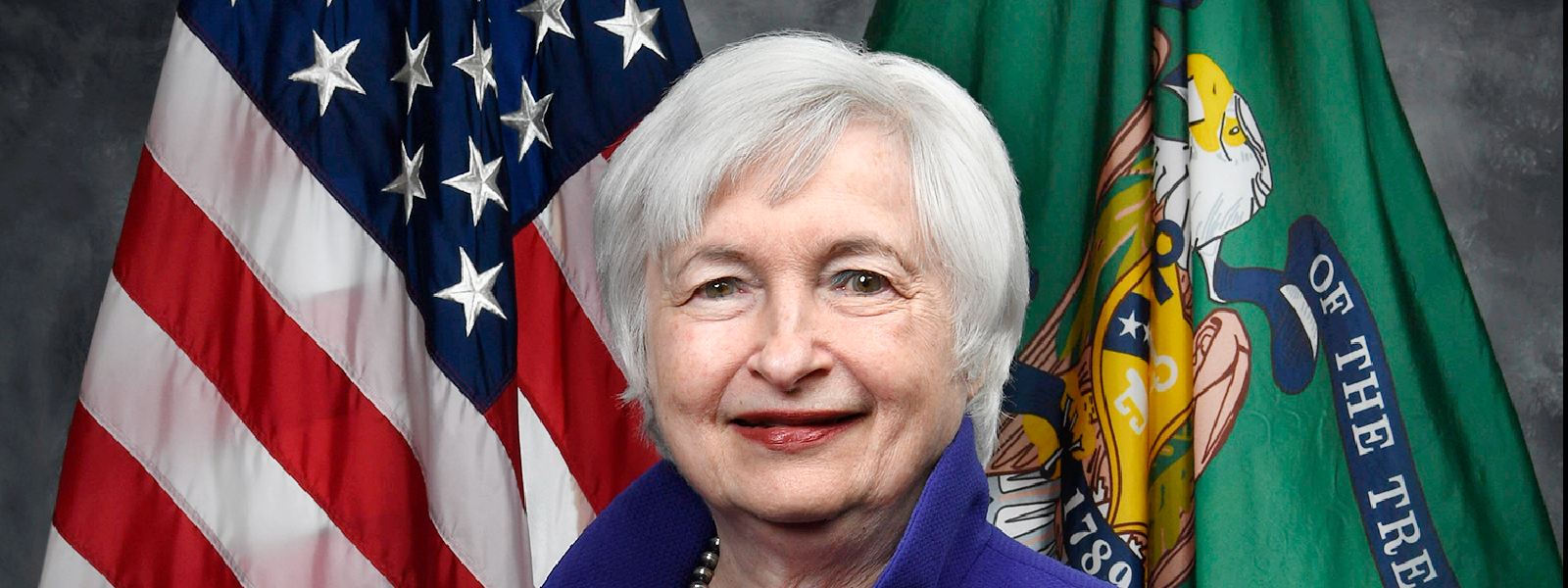
US Treasury Secretary Janet Yellen noted critical need for full cooperation of all official creditors in debt negotiations and restructuring through timely participation and equal burden sharing.

These observations were conveyed by the US Treasury Secretary in a communication addressed to President Ranil Wickremesinghe.

The US Treasury welcomed President Ranil Wickremesinghe’s proposal for a Coordination Platform for Sri Lanka’s official bilateral creditors, and has urged engagement in this regard.

Sharing the common goal with Sri Lanka of expediting financing assurances, the US has expressed readiness to join other Paris Club members in this process, in keeping with its principles.

Further the US Treasury has pledged to continue to engage with their other government agencies, as well as the World Bank and Asian Development Bank, to assist the people of Sri Lanka.

The US has supported the people of Sri Lanka inter alia through the provision of school nutrition for children, food vouchers for pregnant women and new mothers, and fertilizer and cash transfers for small and medium scale farmers to increase food production.

The US Department of Treasury has welcomed the Sri Lankan government’s decision, to seek IMF assistance through an Extended Fund Facility (EFF), and thereby the recently concluded staff level agreement.

Posted in Uncategorized

Tamil Nadu CM seeks release of fishermen detained in Sri Lanka

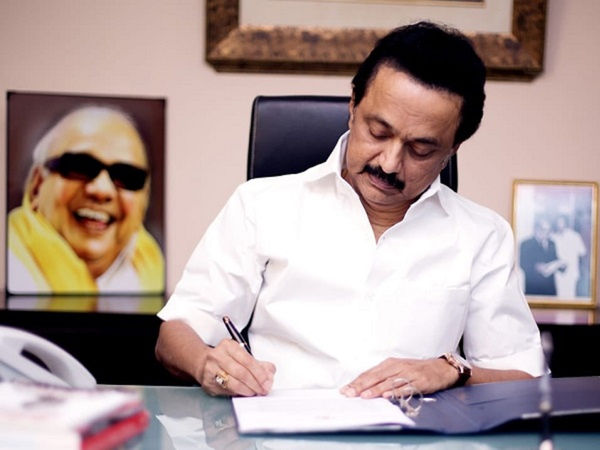
Tamil Nadu Chief Minister M K Stalin requested the Centre to take up at appropriate diplomatic channels with Sri Lanka and secure the early release of Indian fishermen and their fishing boats.

In a letter addressed to Union External Affairs Minister S Jaishankar, a copy of which was made available to the media here, the Chief Minister thanked him for the support extended through diplomatic channels for the release of 150 Tamil Nadu fishermen, who were apprehended by Sri Lanka over the past 9 months.

“This is also to draw your attention to the apprehension of 12 Indian fishermen along with their Puducherry based mechanised fishing boat on September 6 by the Sri Lankan navy. Of them, 5 are from Tamil Nadu’s Mayiladuthurai district,” he said in the letter.

As of now, 23 fishermen and 95 fishing boats of Tamil Nadu fishermen are still under Sri Lanka’s custody, the Chief Minister said and urged the Union Minister to take steps for the early release of the fishermen and their fishing boats.

(PTI)

Food insecurity in Sri Lanka

While claiming that millions of the poorest Sri Lankans can no longer afford an adequate diet, a top official of the UN’s World Food Programme (WFP) expressed fear that the “situation may get worse in the weeks to come.”

“This makes WFP’s response extremely critical. Our priority is to reach families with life-saving food and nutrition assistance, with children and women at the heart of our response,” WFP Regional Director for Asia and the Pacific John Aylieff said, concluding a two-day visit to Sri Lanka.

“The latest WFP surveys show that hunger is rising sharply in Sri Lanka, where nearly half of the households interviewed were facing challenges in accessing food, amid income losses, record levels of food price inflation, disruptions to the food supply chain and severe shortages of basic commodities including fuel,” the WFP said in a statement at the conclusion of the official’s visit.

During his discussion with a group of recipients of WFP’s assistance, Aylieff heard first-hand accounts of how the deepening food crisis is impacting them. Four out of five households are limiting portion sizes and skipping meals to cope, a significant number of urban households are among them.

Aylieff who met Prime Minister Dinesh Gunawardena and the Minister of Foreign Affairs, Ali Sabry, discussed the immediate priorities in addressing food insecurity in Sri Lanka.

Sri Lanka must ‘reverse the drift towards militarisation’: UN

The latest United Nations report calls on Sri Lanka to end its human rights violations as the country faces its worst economic crisis yet.

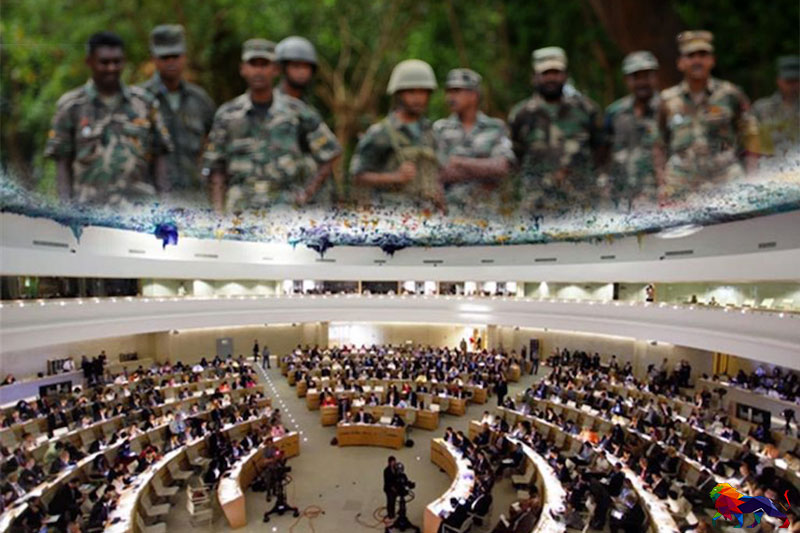
Sri Lanka must immediately reverse its “drift towards militarisation”, the United Nations has said in a human rights report, calling on the new government to engage in dialogue “to advance human rights and reconciliation”.

The South Asian island nation has suffered acute food and fuel shortages, lengthy blackouts and spiralling inflation this year after running out of foreign currency to import essentials amid its worst economic crisis to date.

The crisis sparked months of protests against the government over economic mismanagement, culminating in a huge crowd storming the residence of former President Gotabaya Rajapaksa, who then fled for the Maldives, Singapore and Thailand before returning to Sri Lanka last weekend.

President Ranil Wickremesinghe has been criticised for launching a crackdown on peaceful protesters since he succeeded Rajapaksa in July.

“The new government should immediately reverse the drift towards militarisation, end the reliance on draconian security laws and crackdowns on peaceful protest,” the UN Office of the High Commissioner for Human Rights (OHCHR) said in its latest report on Tuesday, referring to the new government which took over after Gotabaya Rajapaksa was forced to step down as president in July in the wake of mass protests.

“Fundamental changes will be required to address the current challenges and to avoid repetition of the human rights violations of the past,” said the OHCHR report.

It added that the government should also “show renewed commitment to security sector reform and ending impunity”.

Sri Lanka’s government defaulted on its $51bn foreign debt in April and is in ongoing negotiations for an International Monetary Fund bailout.

The country’s central bank is forecasting a record eight-percent gross domestic product (GDP) contraction for the year.

Rajapaksa’s government was accused of introducing unsustainable tax cuts that drove up government debt and exacerbated economic problems just as the country was struggling with the impact of the COVID-19 pandemic.

The 73-year-old issued his resignation from abroad after fleeing the country in July, but he flew back to Colombo on Saturday and was garlanded with flowers by political allies on his return.

He is now living in a new official residence with a security detail, both provided by Wickremesinghe’s government, to the dismay of protest leaders who campaigned for him to face legal action.

Former UN High Commissioner for Human Rights Michelle Bachelet, whose term ended last month, said in the report that those responsible for bankrupting the island should be prosecuted.

“The High Commissioner hopes that the new administration will respond to the popular demand for accountability for economic crimes, including corruption, and abuse of power with a renewed commitment to end impunity,” she said.

It was the first time the UN rights office raised the economic crisis, in a report repeating its calls for those who perpetrated atrocities during the island’s long civil war to be brought to justice.

“The High Commissioner encourages the international community to support Sri Lanka in its recovery, but also in addressing the underlying causes of the crisis, including impunity for human rights violations and economic crimes,” the 16-page report said.

The report also repeated long-standing calls by the rights office for the prosecution of those responsible for atrocities during the island’s decades-long civil war, which ended in May 2009.

Sri Lanka has been resisting international calls to investigate allegations that its troops killed at least 40,000 Tamil civilians in 2009.

SOURCE: AL JAZEERA AND NEWS AGENCIES

How will Sri Lanka’s new administration respond to the propositions of the UNHRC this September?

The 51st session of the United Nations Human Rights Council will convene between the 12th of September and the 7th of October. Sri Lanka is to send over a delegation headed by Minister of Foreign Affairs Ali Sabry and a team of officials from the Foreign Ministry and the Attorney general’s department.

At the 50th session held in June and July of this year, whilst the UNHRC condemned the supression of protestors, the Sri Lankan delegation headed by foreign minister at the time, G. L. Pieris postulated a rather hapless, pitiful appeal to the UNHRC in Geneva; stating that the country needed the empathy and understanding of the international community and furthermore the space to deal with the present socio-economic issues. In July, the subjects of police brutality, lack of military accountability and the overall collapse of Sri Lankan democracy were raised. It is expected that the delegation heading to Geneva this month will be tasked with addressing similar points of discussion with a focus on how the economic crisis has spiralled into a humanitarian crisis with escalating levels of unemployment and poverty.

Ahead of arriving at the 51st session in Switzerland, Ali Sabry held a press conference to address the most pressing questions regarding the agenda of the Sri Lankan delegation at the UNHRC. Sabry made statements indicating that the fundamental priority of the nation is economic recovery alongside securing the IMF loan, and this will be presented by the delegation at The Council meeting. Sabry also stressed that despite Sri Lanka’s endeavour to build cordial relations with the international community, the country is bound by the constitution; “we are bound to protect the constitution. So whatever the solution wether its acountability or anything else, we have to provide that within the framework of the Sri Lankan constitution”.

The overarching theme of the Sri Lanka UNHRC delegation is pursuing solutions that are purely within the framework of the Sri Lankan constitution. Sabry’s delegation has recieved stringent instructions from the centre not to pursue reccommendations or proposals advanced by the Council if they require action outside the parametres of the sovereignty or constitution of Sri Lanka.

Resolutions 30/1 (2016) and 46/1 (2021) drawn up by the UNHRC suggests that Sri Lanka work with external enmities (such as hybrid courts) to “Promoting reconciliation, accountability and human rights in Sri Lanka”. When questioned about the positon of the visiting delegation, Sabry responded that “we are willing to discuss with the UNHRC but the solution should lie within the constitution” if not, it would have to be disregarded.

The issue was raised of how the UNHRC resolution 30/1 was co-sponsored by the Wickremesinghe adminstration in 2015 but rejected by Gotabhaya government in the latest sessions. What will be the position of the current government, A hybrid or coalition of ministers/politicians from all majority parties? The stand is that any judicial process should be in keeping with the Sri Lankan constitution, any external process that tries to pressurise and take power away from Sri Lankan sovreignty is not agreeable.

The agenda in Geneva will be the implementation of a tangible truth seeking mechanism to implement programs to grant alleged perpetrators and victims of the civil war redemption, in an attempt to work towards post-war recconcilliation.

Ahead of the UN meeting, China has already pledged its support to Sri Lanka at the Council. As the delegation departs for Switzerland today the 5th of September, the nation anticipates exceptional representation at one of the most esteemed gatherings in international politics.

Posted in Uncategorized

Sri Lanka has an IMF deal, now it courts China and India

Sri Lanka’s International Monetary Fund bailout plan could be a turning point in its worst economic crisis, but far-from-stable politics and a need to get debt relief from competing powers China, India and Japan means some of the hardest work is still to come.

President Ranil Wickremesinghe knows a lot of circles will need to be squared for IMF’s $2.9 billion lifeline to become a reality.

Spending cuts, tax hikes and debt write-downs are a common formula for bankrupt countries, but crisis veterans say there are some uniquely difficult elements here.

An impoverished population that forced former President Gotabaya Rajapaksa to flee in July still needs to accept Wickremesinghe, seen by many as of the same political ilk and a man who faces a bristling opposition.

The country’s borrowings are so complex that estimates of the total range anywhere from $85 billion to well over $100 billion. To get it to a sustainable level Beijing, New Delhi, Tokyo, multilaterals and global asset managers must all swallow losses.

“This one of the biggest messes I’ve ever seen,” said Renaissance Capital’s chief economist Charles Robertson who has watched emerging market crises unfold for decades.

“The government destroyed its revenue base with unsustainable tax cuts, it tried to hold the currency when tourism revenues collapsed and now it has no reserves in the bank and a population facing widespread poverty.”

Estimates from the United Nations say the crisis has left more than a quarter of Sri Lanka’s 22 million population struggling to secure adequate, nutritious food.

The IMF’s 4-year rescues plan provisionally agreed last week demands serious fiscal repair work and more autonomy for the central bank, which was ordered to frantically print money under Rajapaksa.

To hit the IMF’s target of lifting its primary budget surplus to 2.4% by 2025, Sri Lanka would get its economy growing by around 6%, something not achieved for about five years. This year it expected to contract at least 8%.

COURTING ASIA’S HEAVYWEIGHTS

Just as challenging, the IMF wants Colombo to secure “financing assurances” – Fund speak for debt relief and new loans – from regional heavyweights China, Japan and India who have long jostled for influence.

The World Bank estimates Beijing’s lending, which has funded costly projects from ports to stadium, adds up to $7 billion, or 12% of Sri Lanka’s $63 billion external debt. Japan has provided another $3.5 billion while India has given around $1 billion.

Without the “assurances” from those countries, the Fund’s money cannot flow, IMF Mission Chief Peter Breuer stressed.

“Finding creative ways to have a collaborative platform to advance these debt restructuring discussions is very useful,” Breuer told Reuters. “How debt relief is distributed amongst creditors…that is something we don’t insert ourselves into.”

UNCOMMON FRAMEWORK?

The crisis has culminated in Sri Lanka’s starkest crisis first debt default since independence from Britain in 1948. The rupee almost halved in value since the central bank abandoned its peg in March, basic goods have become scarce and inflation is now running at 64%.

Economists say the restructuring could have been far simpler if the country had been part of the G20 “Common Framework” plan – a programme set up at the height of COVID-19 to help debt-crippled countries. At the time, Sri Lanka was classified as a middle-income country and did not qualify.

China automatically provides debt relief alongside “Paris Club” countries and private sector creditors under that arrangement. Colombo’s absence from the setup means an alternative is needed.

Step up Japan – which is now pushing for China, India and others to join talks. read more Beijing, which did not respond to a request for comment, has not yet signaled if it will, although there are hopes its lead role in Zambia’s restructuring may encourage it to do so. India has not commented so far.

Pessimists worry though that if China doesn’t take a writedown others won’t either, including global asset managers who hold nearly $20 billion of Sri Lanka’s international bonds.

“China is the largest creditor country. Without its participation, any scheme won’t succeed,” a Japanese government official who requested anonymity said.

DOOM LOOP

Another problem is what to do about the country’s $50.5 billion of “local” debt mostly dominated in rupee and largely held as capital by commercial banks and local pension funds.

Sanjeewa Fernando, Head of Research at CT CLSA Securities said it won’t be a straightforward decision, especially with elections looming in 2024.

“From a realistic point of view, banks are preparing for a 40% haircut (on Sri Lanka’s international bonds and ‘development’ bonds which are also dominated in dollars) as a base case scenario,” he said.

Even that might not be enough though, given the IMF wants the debt-to-GDP ratio slashed to under 100% from 140% currently.

That would put domestic debt in play but David Beers, a Senior Fellow at the London-based Center for Financial Stability who has compiled a global database of sovereign defaults said there are always tradeoffs.

“If the domestic debt is predominately held by domestic banks and you get haircuts, then that eats into their capital,” he said, adding that they might then require bailouts which add to the government’s costs again.

Reuters (Source)

Posted in Uncategorized

Gotabaya Rajapaksa could face legal action

Sri Lanka’s ousted President Gotabaya Rajapaksa, who returned home after seven weeks in exile following protests over economic hardships, could face legal action over forced disappearances of activists now that he has been stripped of constitutional immunity, a lawyer said.

Rajapaksa flew to Colombo around midnight Friday from Thailand and was escorted under military guard to his new home in the capital.

He has no pending court cases because he was protected by constitutional immunity as president. A corruption case against him during his time as a top defense official was withdrawn soon after he was elected in 2019.

However, Rajapaksa will be served a summons next week to appear at the Supreme Court, where his immunity from testifying on the forced disappearance of two young political activists is challenged, said lawyer Nuwan Bopage, who represents the victims’ families. He said Rajapaksa fled the country when he was about to be served a summons in July.

The disappearances took place 12 years ago soon after the end of the country’s long civil war when Rajapaksa was a powerful official at the Defense Ministry under the presidency of his older brother.

At the time, Rajapaksa was accused of overseeing abduction squads that whisked away rebel suspects, critical journalists and activists, many of them never to be seen again. He has previously denied any wrongdoing.

Rajapaksa escaped from his official residence when tens of thousands of people, angry over economic hardships when the country slipped into bankruptcy and faced unprecedented shortages of basic supplies, stormed the building on July 9. Days later, he, his wife and two bodyguards flew about a military plane to the Maldives. A day later he went to Singapore, and later Thailand.

Sri Lanka has run out of dollars for imports of key supplies, causing an acute shortage of essentials like food items, fuel and critical medicine.

The foreign currency shortage has led the country to default on its foreign loans. Sri Lanka’s total foreign debt exceeds $ 51 billion of which $ 28 billion must be repaid by 2027.

The International Monetary Fund on Thursday agreed to provide Sri Lanka $ 2.9 billion over four years, subject to management approval that will come only if the island nation’s creditors give assurances on debt restructuring.

Economic difficulties led to monthslong street protests, which eventually led to the collapse of the once-powerful Rajapaksa family that had controlled the affairs of the country for the most part of the last two decades. Before Rajapaksa resigned after fleeing, his older brother stepped down as prime minister and three other close family members quit their Cabinet positions.

President Ranil Wickremesinghe, who took over from Rajapaksa, has since cracked down on protests and dismantled their main camp opposite the president’s office.

Some protesters said they were not opposed to his return as long as he faces justice.

“Whether he is president or not, he is a citizen of Sri Lanka and he has the right to live in this country,” said Wijaya Nanda Chandradeva, a retired government employee who had voted for Rajapaksa and then participated in protests to oust him. He said Rajapaksa should be given necessary protection if there is a threat to his safety.

“I reject him because we elected him and he proved himself to be unsuitable,” said Chandradeva.

Bhavani Fonseka of the Center for Policy Alternatives, an independent think tank, said although Rajapaska is not going to be seen favorably, “the anger we saw in July has diminished. But there are still many questions about his role in the economic crisis and the call for accountability is still there.”

(Courtesy AP)

Posted in Uncategorized

Lankan PM does puja to protect the unitary constitution

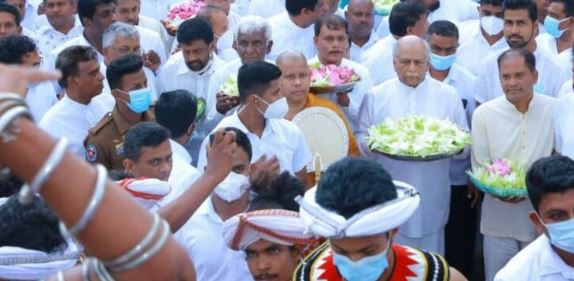
The Sri Lankan Prime Minister Dinesh Gunawardena on Sunday performed the Adhishtana Poojawa and Satyakriya at the Kirivehera in Kataragama. Gunawardena performed the ritual to preserve the unitary character of Sri Lanka and the wellbeing of its people. The ceremonies were organized by the Mahajana Eksath Peramuna (MEP) which is Gunawardena’s political party.

The Prime Minister gave a solemn pledge to protect the unitary state, sovereignty and territorial integrity of the country, which was safeguarded by our forefathers for several centuries. The pledge delivered by the Prime Minister to the vast gathering further promised to safeguard the Buddhism, the teachings of the Buddha and the Mahasangha as it was protected by the ancestors for over 2500 years and to protect environment, flora and fauna, forest and water resources and to make the country self-sufficient. They also pledged to protect the women and children, provide skills to the youth to strengthen them to reach their rightful place.

The Prime Minister stated his policy of participatory democracy in which more powers will be devolved to the Parliament and Local Government bodies by establishing a mixed system of elections of representatives in a constitutional amendment.

The religio-political ceremony was meant to signal that in the confused political situation in Sri Lanka, Gunawardena is preparing to strike a distinct political path based on Sinhala-Buddhist nationalism which does not support devolution of power to the provinces, two of which are ethnically defined (Tamil and Muslim), but to local bodies which are very small territorial units.

Ven. Kobawaka Dhamminda Thero, the incumbent of the Kiriwehera Rajamaha Vihara, stated that Prime Minister Dinesh Gunawardena has done a great service to the country for a long time, especially since the establishment of Mahajana Eksath Peramuna.

“I pray that you, as the second citizen of the country, will have the strength to build this country as the most suitable person to hold the position of Prime Minister and we highly appreciate your decision to accept this great burden at this difficult time with the commitment and determination to uplift the country,” he said.

Ven. Kapugama Saranatissa Thero, Kataragama Abhinavaramadhipati explained that, “The special quality we have seen from Mr. Dinesh Gunawardena is the sacrifice he makes by supporting the existing government and the country whenever there is a disaster in the country and the people irrespective of the fact he is in the ruling party or in the opposition. It is because of his nationalism that he makes such sacrifices for the sake of the country, regardless of race, religion and party.”

“I think this quality came to him from his father Mr. Philip Gunawardena. Mr. Philip Gunawardena made great sacrifices for the nation and for the freedom of this country. Gunawardena’s generation is such a generation. At a time when this country is in a great disaster and no one is coming forward to take over the country, you came forward and took over a fire that was lit from all four corners,” he said.

Those who were present included, Ven. Omare Kassapa Thera, Anunayaka of Sri Rohana Parshwa of Shyamopali Maha Nikaya, Ven. Heelle Gnananda Thera incumbent of the Vadasitikanda Rajamaha Vihara, Ven. Murutthettuve Ananda Thera incumbent of Narahenpita Abhayarama, Ven. Kotahene Narada Thera incumbent of Kotte Naga Vihara, Ven. Kokawala Kosala Thea incumbent of Sankhapala Raja Maha Viharaya, Ven. Thangalle Gotama Thera, Ven. Malewana Dharmavijaya Thera, Ven. Madawalathanne Jinarathane Thera, Ven. Wagegoda Sheelananda Thera.

The other dignitaries including MEP General Secretary Tissa Yapa Jayawardena, Vice President Member of Parliament Sisira Jayakodi, Deputy Secretary Member of Parliament Yadamini Gunawardena, Minister Nimal Siripala de Silva, Deputy Speaker Ajith Rajapakshe, Members of Parliament Chamal Rajapaksa, Wimalaweera Dissanayake, Vijitha Berugoda, Shashindra Rajapaksa, Anupa Pasqual, Chamara Sampath, Rohana Dissanayake and other public representatives, representatives of national organizations and members of Mahajana Eksath Peramuna participated at this occasion.

Rajapaksas & friends thought they owned this country – CBK slams

Former President Chandrika Bandaranaike Kumaratunga today slammed the Rajapaksas saying that the actions taken by the Rajapaksa regimes had led to the serious crisis situation in the country.

“Not only the Rajapaksas, but the government representatives around them, their friends, and associates are also to be blamed for the prevailing crisis,” she said during the opening of the new office of the ‘Nawa Lanka Freedom Party’ in Battaramulla.

The party is led by former minister and Kalutara District parliamentarian Kumara Welgama.

Speaking during the opening, te former president said that the Rajapaksa regimes and those who ruled the country after 2005 had thought they owned this country and its assets. ” They thought they can act in any manner they want and that they can get away with anything, every the dirty work they do,” she said.

She said if anyone raised objections against the regimes action, they were killed.

Posted in Uncategorized

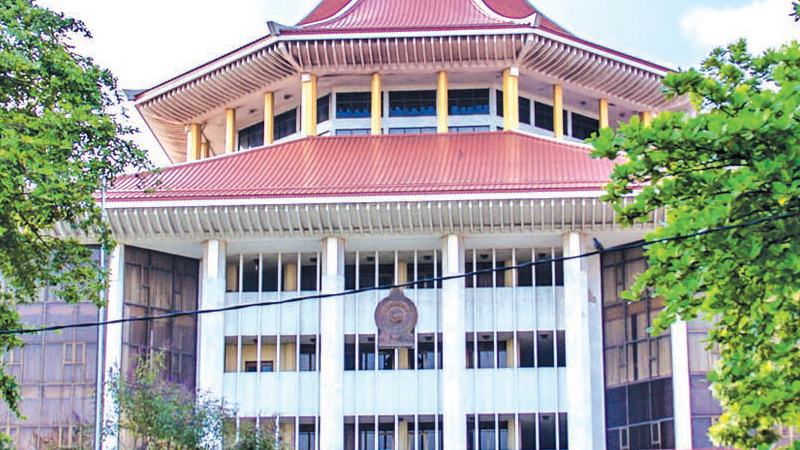
SC determines certain provisions of draft 22A inconsistent with Constitution

Some provisions of the draft of the 22nd Amendment to the Constitution are inconsistent with the Constitution, Speaker of Parliament Mahinda Yapa Abeywardena said today announcing the Supreme Court’s determination to the House.

Accordingly, the Supreme Court has arrived at the conclusion that the draft constitutional amendment should be passed by a special majority and a referendum or the clauses in question should be amended.

The draft of the 22nd Amendment to the Constitution was challenged in the Supreme Court in terms of Article 120(1) (1) of the Constitution.

The Speaker’s announcement is as follows:

I wish to announce to Parliament that I have received the determination of the Supreme Court in respect of the Bill entitled “Twenty Second Amendment to the Constitution” which was challenged in the Supreme Court in terms of Article 121(1) of the Constitution.

On an overall consideration of the provisions of the Bill, the Supreme Court has made the following Determination:

1. The Supreme Court states that the Bill complies with the provisions of the Article 82(1) of the Constitution and requires to be passed by the special majority specified in Article 82(5) of the Constitution.

2. Clause 2 of the Bill contains provisions inconsistent with Article 3 read together with Article 4(b) of the Constitution and as such may be enacted only by the special majority required by Article 82(5) and upon being approved by the People at a Referendum by virtue of Article 83. However, the necessity for a Referendum shall cease if the proposed Articles 41A(6) and 41B(4) in Clause 2 are suitably amended to remove the deeming provision set out therein.

3. Clause 3 of the Bill contains provisions inconsistent with Article 3 read together with Article 4(b) of the Constitution and as such may be enacted only by the special majority required by Article 82(5) and upon being approved by the People at a Referendum by virtue of Article 83. However, the necessity for a Referendum shall cease:

(a) If the proposed Article 44(2), the proviso to Article 44(3), Articles 45(1), 46(1), 47(3)(a), 48(3) and 50 in Clause 3 are suitably amended by deleting the reference to the President acting on the advice of the Prime Minister and replacing instead with the President acting in consultation with the Prime Minister;

(b) If the provisions of Article 47(2)(a) are restored in the proposed Article 47(2) in Clause 3. I order that the Determination of the Supreme Court be printed in the Official Report of today’s proceedings of the House.